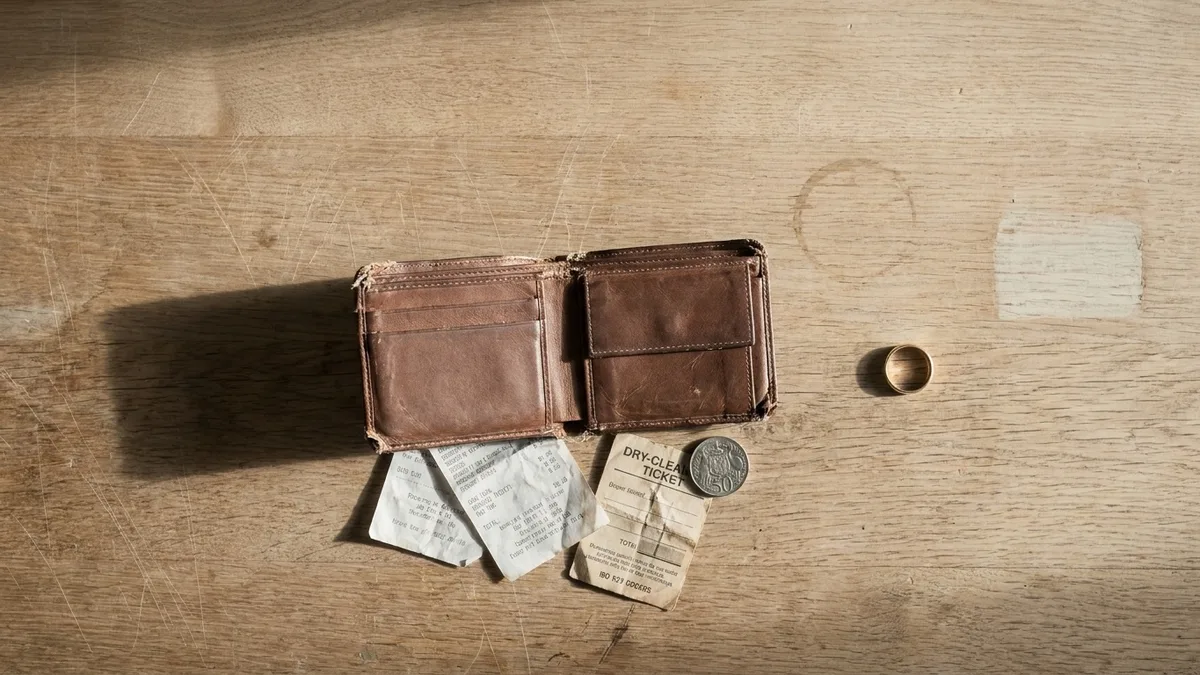
The couples who last forty years are not the ones who fight less. They are the ones who stopped paying twice for the same argument, and the second payment is the one most people never notice making. If you are past twenty years, or watching a forty-year marriage from the outside, you may suspect the long-married have simply stopped caring or quietly given up. What the 44-year couple shows is a trade, not a retreat.
Wed at 23 and 25, now 67 and 69, two grown children, both retired within the past three years, one house, one calendar, two cars of different ages – they carry fewer contests, ledgers and performances. Not less closeness. Lower overhead.
Letting go is strength when it removes a recurring weekly cost and puts something cheaper in its place. It is surrender when it removes conflict, safety or honesty. Ten habits are worth retiring at this stage, each with words or an action that replaces it, one caveat where the advice does not apply, and a single habit to drop first this week – no announcement, no project, no appointment. You will finish knowing which one to retire first, which two need outside help, and the one sentence to say at home instead of a plan.
Quick Tips Before You Start
Pick one habit
Choose the one that costs you the most per week, not the one that sounds most noble.
Say it outside a fight
Name the old pattern in a calm hour, not mid-argument when defenses are up.
Set a review date
Put a date on the calendar to check back in a month, so you notice what changed.
Know the safety line
Contempt, cruelty, addiction, or safety concerns need a licensed counselor, not a retired phrase.
Fights That Stop Being Contests

The first three retirements all happen inside a disagreement. They are the cheapest to start because they cost minutes, not months — and they set the tone for everything that follows. When a fight stops being a contest, the rest of the list gets easier.
1. Winning the argument stops being the point

The argument about the dish is not about the dish. It is a standoff over a verdict: who was right, who was wrong, who has to carry the guilt of this particular Tuesday. The couples who last stop trying to win that verdict. The sturdier move is to trade it for a roughly ten-minute conversation over how to get the plates cleared before dinner gets cold, and whether either of them can get back to the shape the evening had before the complaint landed.
The habit that needs a self-test: take ten seconds and ask yourself what you are actually after in a quarrel. If it is a win, notice that the win buys a partner who remembers the specific point long after you have both forgotten what the fight was for, and who comes into the next one with a shorter fuse. If it is repair, say the other side out loud first. Something like, “You’re saying I leave it because I’m home first; is that right?” Then answer only the part that is still in dispute.
This is not turning into a couple that never disagrees. That pair is not the model. Repair still names the disagreement and still asks for a change; it just stops asking for the resignation first. Relationship researchers who study conflict and repair keep circling the same small finding, and this is worth looking up in the original rather than taking on faith, because the gap between the hours a won fight costs and the minutes a repair costs is where this habit earns its place.
💡 Tip: Before your next reply, repeat their point in one sentence. If they say 'yes, that's it,' you've earned the right to answer.
| What stops | What replaces it |
|---|---|
| Winning the argument | Saying the other person’s position out loud, then answering only the part still in dispute |
| The exit threat | A stated pause with a time and a return: ‘I need an hour’ |
| Scorekeeping chores and favors | Whole domains owned outright, with a yearly review |
| Performing independence | Accepting help when it’s offered, without keeping score |
| Hiding small worries | One plain sentence in a calm hour, no apologetic preamble |
| Grading intimacy against a younger standard | Everyday touch, shared humor, and a doctor’s appointment when needed |
| The campaign to change a temperament | Three explicit requests about specific behaviors, then silence |
| Fixing the problem first | Asking ‘Do you want me to fix it or just hear it?’ and obeying the answer |
| Refereeing each other’s relatives | Each partner handles their own family, including the awkward call |
| Waiting for a milestone | One thing moved forward on the calendar this month |
2. The exit threat leaves the quarrel

“Fine, then maybe I should just leave.” The line lands, and the room changes temperature. Whatever was being argued, the stakes leap to the survival of the whole thing. Both partners start defending from the floor, and the dishes stop being dishes and become evidence about a marriage. That is what the threat does: it swaps a quarrel over a Tuesday chore for a crisis that has to be handled before anything else can be.
A quieter replacement keeps the fight the size it started. It is one sentence with a clock on it: I need an hour, and I will be back. Note what that is not: it does not say where the door goes, only that the person is stepping away and returning. Retiring a line used for years does not require pretending it was never said. Pick a calm evening, say it plainly, and then use the pause the next time the room heats up.
The exception has to be named. If the leaving is a real safety concern, or a real decision one of you is genuinely making, a counselor or a lawyer is the call, not a retired sentence. For everyone else, the exit threat charges a small emergency each time it is used; the hour out charges nothing more than the hour, and the dish stays a dish.
Three things people get wrong about long marriages
3. Scorekeeping of chores and favors ends
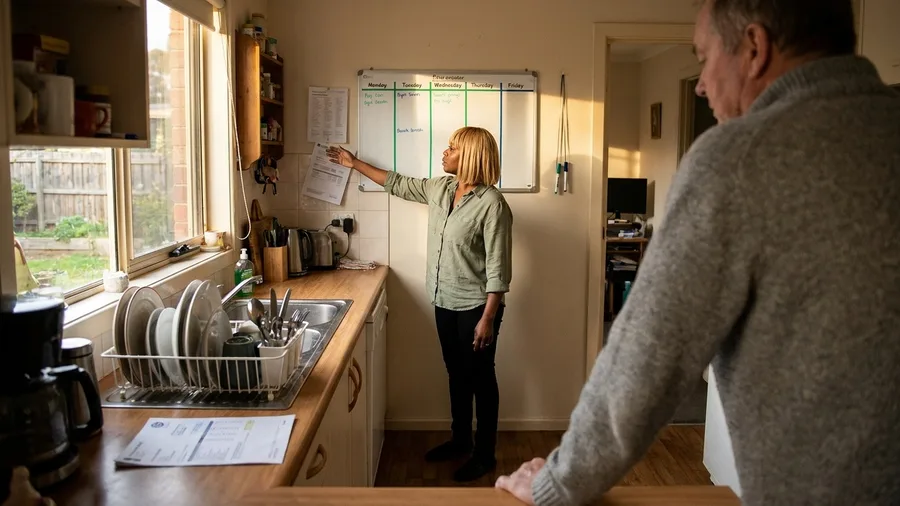
You’ve been doing the dishes all week, the bins went out both Tuesdays, the lawn got mowed, and the bills got paid, and you can feel the count building in your head by Thursday. The visible things get tallied. Meanwhile someone planned a birthday, remembered a prescription refill, and noticed the son seemed off on the phone and called him back – and none of that made it onto the ledger, because it never does.
Relationship researchers keep finding the same shape here: visible chores get counted, invisible planning work gets resented, and the resentment grows even as the tally looks balanced. The couples who stop resenting each other usually give up the split and own whole domains instead. One person owns the cars and the maintenance; the other owns the calendar and the medical appointments. The rule inside a domain is reporting, not permission – “I’ve booked the dentist for the 12th” – and nobody audits the owner.
The watch-out is a domain that quietly swells. The calendar owner absorbs the aging parents, the adult children’s arrangements, the retirement paperwork, and a few years on, the territory is twice what it was. Once a year, sit down and each list what you hold; if one side has grown, transfer one item. And if the imbalance is real right now, name it once, concretely – “I did all six hospital visits and all the groceries this month” – and ask for one domain transfer rather than drop it. The yearly review costs an hour. The ledger costs a little every week.
💡 Tip: At your next Sunday dinner, each of you lists your domains out loud. Pick one to move if the list feels lopsided.
💡 PRO TIP
One yearly check beats weekly negotiation
Put a recurring date in the calendar — the first Sunday after New Year's, for example — and spend twenty minutes listing who holds what. If one domain has grown, transfer one item. One review costs less than fifty renegotiations.
The Performance Drops Away

Somewhere in the middle decades, many couples start performing a version of themselves for each other — the capable one, the unbothered one, the one who never needs anything. The next two retirements are about letting that performance go.
4. Nobody performs independence for the other anymore

The usual advice is to keep your own life so the marriage does not swallow you, and there is something to it. But the couple that announces every solo plan like a press release, that answers every offer with a flat refusal, has not built independence – they have built a wall and called it strength.
Watch the kitchen. One partner, halfway to the car with a bag of groceries in each hand, hears from the doorway, ‘Leave it, I’ve got it.’ The other stands in the hall holding nothing. Ten seconds later, someone is carrying four bags alone, and the one in the doorway is pretending not to have been refused. Multiply that small shrug by every day for twenty years.
In the middle decades the refusal reads as capability to the one performing it. To the other it reads as a locked door. Two cars of different ages, two sets of keys, two calendars – and one of them has a great many blank evenings in it, the other not noticing because not asking for company has become a point of pride.
So the real test is not whether you can manage alone. It is one question you can ask yourself next time a hand reaches for the heavy bag: do you say ‘I’ve got it’ on reflex, or do you say ‘yes, take that one’ and let your hand fall? The first costs a sliver of closeness every single time. The second costs nothing and settles no score.
Leaning in like this is not merging, and it is not the same couple who share every friend, every room, every morning. Long-married pairs keep separate friendships, separate shelves, separate early hours with coffee before the other is up. That separateness is the thing that makes coming back possible. The rule is not that no one carries a bag alone – it is that the choice to carry one is made out loud, not performed.
The price of the performance is small refusals scattered through the week, each one ordinary enough to ignore and each one adding a sliver of distance. The replacement is smaller still: a hand that lets go of the handle, a sentence that begins with yes. It is cheaper than the day it was protecting.
Performing independence vs. accepting help
The performance
- 'I'm fine on my own' said as proof
- Announcing solo plans without discussion
- Never asking for help
- Treating need as a weakness
The replacement
- 'Yes, take the heavy one' said as fact
- Saying 'I'd like company' when you would
- Asking for help with one specific thing
- Keeping separate friends and mornings anyway
5. Hiding small worries to protect each other stops

The cost arrives months later, in a partner learning something important from someone else – a receptionist, an adult child, a bank letter – and the wound is not the bill or the dizziness. It is being told, after the fact, that they were outside the circle for all of it. That is the ordinary price of protecting someone who did not ask to be protected.
The mechanism is not secrecy in the dramatic sense. Small worries sit and multiply: a bill held back until it reaches collection, a dizzy spell managed alone until it becomes a fall on the stairs, a son’s job trouble kept quiet until it is a crisis the other is now scrambling to absorb. Each worries less than a real secret, which is why they get kept – and each repeats, which is why they do the damage.
Timing matters, so this is not a case for blurting it at the door while one of you is putting on a coat for an appointment. Save it for a calm hour, the kitchen table after dinner, no audience. Then say it plainly, with no apology in front of it: ‘The dentist wants to see me about a crown; I’ve been putting off telling you.’ No preamble about how it is probably nothing.
Holding it back costs you the silence now and a larger repair when it surfaces. Saying it costs one awkward sentence in a quiet hour. That is the whole trade.
💡 Tip: If you've been sitting on something for more than a week, say it tonight. Pick a calm moment and skip the apology.
What long marriages actually run on
6. Intimacy stops being graded against a younger standard

What happens to closeness over forty years is that the body keeps changing and the standard does not. Menopause, changes in erection, a new medication, a surgery, skin that is drier, stamina that runs shorter – sex may become less frequent, positions shift, evenings rearrange themselves. None of that is a verdict. Most of it is a question for a physician.
So the question underneath is not whether you are still doing what you did at thirty-five. It is whether you still measure against it. The measure that holds is touch that asks nothing: a hand flat on a back in the kitchen while the kettle boils, the same tired joke that has been funny since the children were small. Warmth that is easy rather than counted is the actual thing. What is not fair is answering an unhappy partner with ‘we’re not that age’ – that shuts the topic rather than opening it.
The script that works is one line and a question: ‘I miss this. Can we make an appointment with the doctor about what’s changed and hear what they say?’ Then the appointment, together, and a licensed counselor if the conversation is what has gone stiff. What this moves off the table is shame. What it costs is one visit and one honest sentence.
The intimacy trade — at a glance
🩺 Skip the visit if
Both content; no pain, no change
📅 Book it if
Pain, a new med, or one partner quietly unhappy
💬 Who says it first
Whichever of you notices the silence
🚫 What not to bring
A comparison to thirty-five
📉 Where the habit sits
Grading, not touching
Do this first
Drop the scoreboard this week. Keep the hand on the back. The appointment is the second move.
The Other Person Stops Being a Project
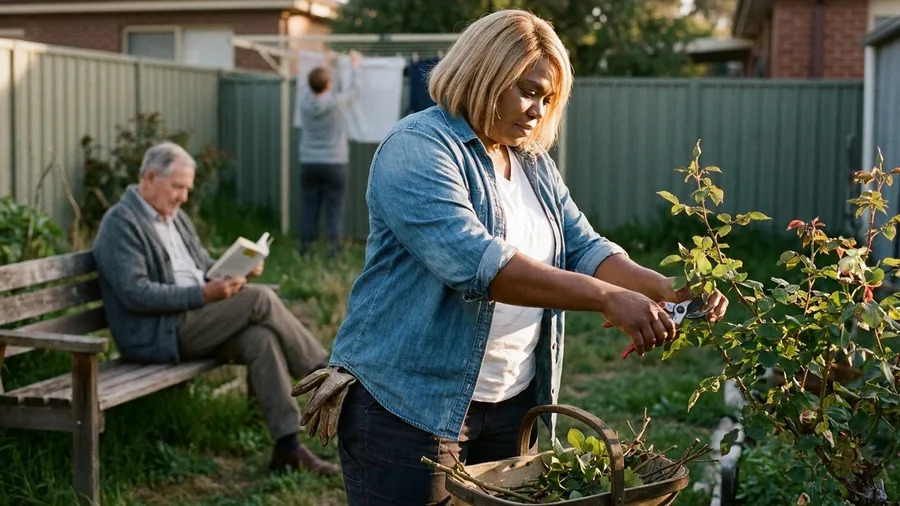
The longest-running fight in many marriages is the one about who the other person should become. These next retirements are about giving up the renovation and getting specific about what actually needs to change.
7. The campaign to change a temperament ends

You can change how often your partner books the dentist. You will not change the fact that they move slowly, like a crowded room, or say yes to plans a week out and regret it by Friday.
Temperament holds. Pace, tidiness, how much company a person wants, how much risk they will take are the same at 67 as they were at 30. What changes is behavior, and only when it is named. Pick the three habits behind most of the friction in your house and ask for them outright, without the personality attached: who books the appointments, an apology after a sharp remark, a check with you before accepting a dinner invitation from the adult children. Three requests, then silence.
The line to hold is that acceptance stops at contempt, cruelty or addiction. Those need a licensed counselor or the right professional, never patience. For everything else, a couple both retired within three years spends the shared day on each other instead of on reminders, and the campaign that cost daily disappointment closes quietly.
8. Fixing the problem gives way to listening first

Two minutes. That is roughly how long the other person needs before your plan turns from help into a second problem.
they wanted someone to take their side, and got a project manager instead. If you have stopped trying to rebuild their temperament, the next thing to set down is the reflex to rebuild their day before you have heard the end of it.
The fix is a two-part move. First, give them air: “That sounds maddening, tell me what they said,” then close your mouth and let the whole thing come out, interruption free, for those two minutes. When they have finished, ask one plain question: do they want it solved, or do they want it heard? Then honor the answer, with your opinion held back. If the answer is solved, keep it to a single clarifying question and then act: “Want me to call with you tomorrow at ten?” If the answer is heard, no plan, just say back what you understood. Keep an ear out for the case where the same problem returns for the fourth week running; that is when it is fair to ask whether a plan is wanted now, since endless listening on a thing that needs solving becomes a grievance all its own. What you get for the two minutes is a partner who feels met and an evening that does not end in the same argument, which is a very low price for something that used to cost the whole night.
💡 Tip: Set a two-minute timer in your head. No advice until it runs out.
9. Refereeing each other’s relatives stops

The common advice is to stand up for your partner in front of your family. Defend them, correct your mother, set your brother straight, and everyone will see you are united. That advice is why the two of you are still fighting about the same visit a month later.
The older pattern it protects looks like this. Your mother makes a comment about your partner’s cooking, and you jump in, firmly, defensively, publicly. Your partner watches you side with them, feels something lift, and then the car ride home reverses it. Your mother is hurt, your partner is now indebted to you and quietly annoyed that they needed rescuing, and you spend a week absorbing phone calls from a woman who wants to know why you have turned on her. You have added hours of churn to the week, triangulated every conversation through a third party, and settled nothing. If you can hear your partner out before jumping to their defense, the same instinct applies to their people: the older fight ends when you stop trying to referee relatives who are not yours to manage.
The rule that removes the churn is plainer than the instinct. You take the phone call to your own mother, and your partner takes the one to their brother. Nobody relays a message through the spouse about a relative. You both handle your own side, including the irritating part.
It is worth saying where this stops. This covers your family, not your partner. If your partner is rude to your mother, that is their own behavior and needs to be addressed directly between the two of you, not managed through the family. The line does not mean you avoid the hard conversation; it means you stop putting a spouse between you and a person who is actually yours to speak to.
In front of the family, the boundary stays quiet. “We have sorted the holiday plan, I will call you tomorrow.” Or “That is between me and my sister, we will handle it.” No scene, no exposed loyalty contest, no need to make anyone else the villain. The bill comes down to a single awkward phone call per relative, which you were already having, only now you have it without the fallout the two of you then have to live down.
The Waiting Ends
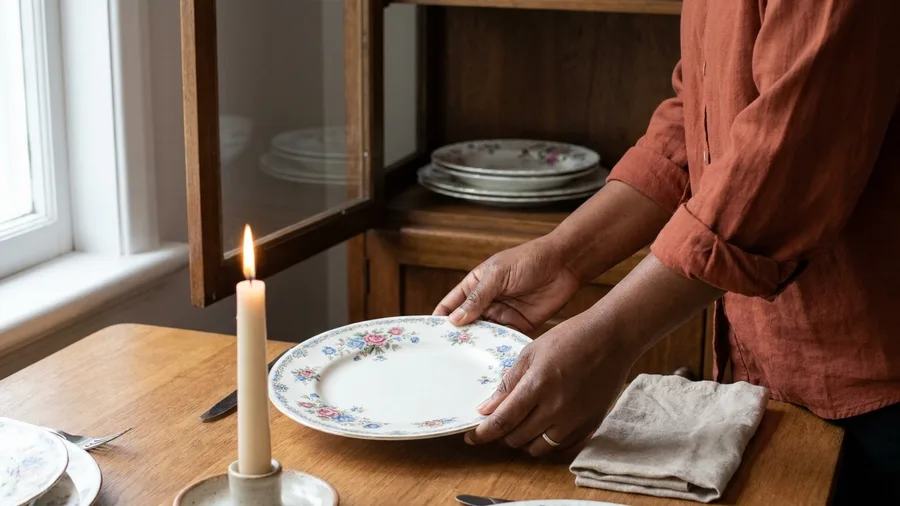
The final retirement is the one that costs the most in cancelled trips and unused china. It is also the easiest to start, because it requires one calendar entry and one conversation.
10. Good things stop waiting for a milestone
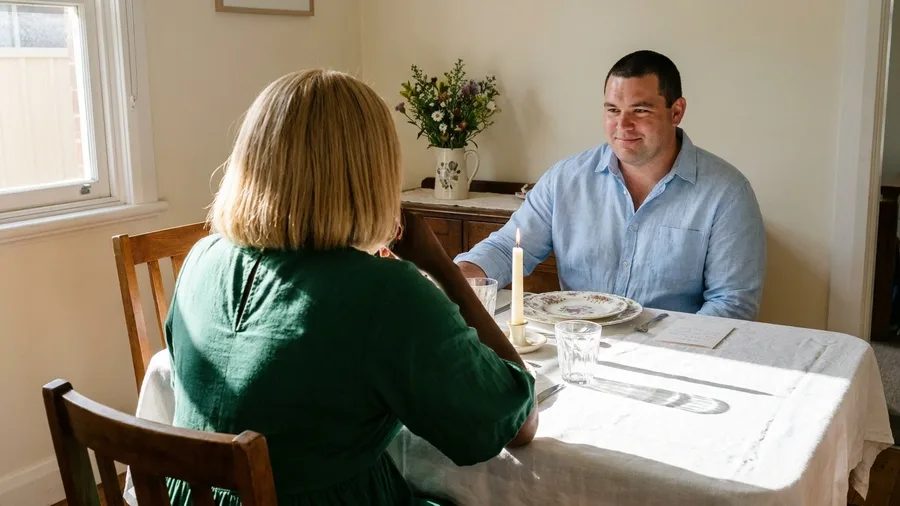
Postponing the good things has a few familiar shapes: the trip put off for the anniversary, the retirement list, the phrase “when things settle down” that keeps the good china shut in the cabinet and the hard conversation parked until after the holidays. Each postponement sounds sensible on its own. Together they build a life where nothing happens until a date arrives. Start counting from where the illustrative couple sits now, at 67 and 69. Ten more summers at their own unhurried pace puts them at 77 and 79; twenty puts them at 87 and 89. That is arithmetic on one marriage, not a prediction about anyone.
This is not permission to spend money you don’t have. Small, soon and certain beats big, distant and cancelled – the good china can be used on a Tuesday, and a night nearby can replace the anniversary trip saved for years. The failure is not wanting the big thing. It is letting the big thing stop the small one.
Pick one item this month and move it past the excuse it hides behind. The anniversary trip deferred until after tax season becomes one night nearby booked this week; the hard conversation deferred until the kids visit becomes twenty minutes before they arrive. Name the excuse out loud, then schedule what it has been blocking.
The cost of waiting is not the trip you skip. It is the cabinet full of china that no one ate off, and the conversation that finally happens years later than it needed to. Acting now costs one calendar entry this month.
💡 Tip: Pick one item you've been saving for 'later' and put it on the calendar for this month. Use the good plates.
⏳ The order that works: retire one habit, then the next
Pick the exit threat or the scorekeeping
Start with the habit that costs you the most per week and costs the least to retire.
Name it outside a fight
Say the old phrase and the replacement in a calm hour, not mid-argument.
Use the replacement once
Say 'I need an hour' instead of a threat; own one domain instead of tallying.
Add the next retirement
Once the first is steady, move to the next habit on the list.
Review in a month
Put a date on the calendar and ask what changed — not whether it was perfect.
Frequently Asked Questions
Is it a bad sign that we used to threaten to leave and now we don’t?
No — it’s usually a good sign. The threat turns a disagreement into an emergency and stops all reasoning. Replacing it with a stated pause (‘I need an hour’) keeps the fight about the actual issue. If there is a real safety concern or a genuine decision to leave, that calls for a counselor or lawyer, not a retired phrase.
How do couples stop resenting who does more around the house?
Stop counting visible chores and start owning whole domains. One partner owns cars and maintenance; the other owns the calendar and medical appointments. Report instead of asking permission. Check once a year to see if one domain has swollen, and transfer one item if it has.
Should I tell my partner about the small worries I’ve been sitting on?
Yes, in a calm hour. Small withheld worries repeat and grow: the dizziness becomes a fall, the bill becomes a collection notice. One plain sentence with no apologetic preamble does the job. Real secrets like hidden debt or an affair need professional help, not a listicle.
Will my partner ever change, and should I keep trying?
Temperament is stable. Behavior is specific and changeable. Stop working on personality and name the three behaviors behind most of the friction — booking appointments, apologizing after a sharp remark, confirming plans with the adult children. Then stop coaching. Contempt, cruelty, or addiction call for a licensed counselor, not acceptance.
How do we stop putting everything off until retirement?
Move one thing forward on the calendar this month, with the excuse it hides behind. The anniversary trip becomes one night nearby; the hard conversation becomes twenty minutes before the kids visit. Small, soon, and certain beats big, distant, and cancelled.
Rank the habits by what they cost you this week
Rank these by what they cost you this week, not by how good they sound. In order: the exit threat, the scorekeeping, winning the argument, fixing before listening, performed independence, withheld worries, the campaign to change a temperament, refereeing relatives, graded intimacy, and waiting for a milestone. Retire the exit threat first wherever it still shows up; where it does not, retire the ledger, which charges you every week whether or not you notice.
Two are not safe to drop alone. Contempt goes to a licensed couples counselor. Anything involving safety or addiction goes to a physician or the appropriate safety professional, not to a retired phrase. The 44-year couple is not a couple who stopped caring or gave up – they made closeness cheaper, not smaller. A marriage this long keeps retiring the expensive habit and replacing it with a cheaper way back to each other. Say this at home this week instead of a plan: ‘I’m going to stop threatening to leave and stop keeping score; when I need a break I’ll say I need an hour, and I’d like to hear what you need.’
Pick one habit and retire it tonight
Re-read entry #2 and #3, then say the sentence out loud before bed. That's the whole project for this week.