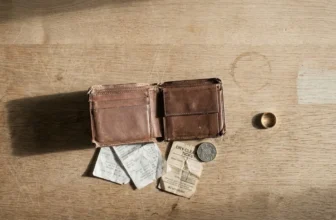
The coffee maker clicks off at 6:30 on a Friday morning in Dayton, Ohio, and two mugs are already on the table, mine with the chipped handle, his with the phone company logo worn to a ghost. Fifty-two years of Fridays, and I can still tell you what the first one sounded like.
I married my husband on June 16, 1973, when I was 22 and he was 24. The wedding cost $1,800. My parents paid $1,200 and we paid the other $600, and walking in I believed the number proved something, that loving each other enough was the engine and the wedding was where the story started.
That day was over by midnight. By fall we were in two rooms above a bakery for $140 a month, sharing a used 1968 Chevrolet. Nothing about the wedding carried us 52 years. The mornings did.
Love is the reason you start, and it matters, but it is not the mechanism. Nine repeated practices are, and not one of them looks like a wedding. Pick the one already going wrong for you and begin the ten-minute Sunday check-in this week, and stop asking the feeling to do work it cannot do.
Quick Tips Before You Start
Pick a daily anchor
Choose one small repeated ritual — coffee, a walk, a phone call — and protect it over grand gestures.
Delay the late fights
No bringing up a grievance after 9 p.m. Give it a morning hearing or let it go.
Name the fear, not the number
In money talks, say what you are afraid of before you argue about the amount.
Log less, say more
If you catch yourself keeping a silent tally, say the item out loud that week.
Fix small things early
A broken screen door or an unspoken hurt costs one Saturday now, years later.
The daily maintenance
1. Love Is Not the Thing That Keeps You Married

Not the feeling you had that day. We spent $1,800 on June 16, 1973 in Dayton, Ohio, and my parents covered all but $600 of it, but that money bought us one afternoon that we barely remember. The vow is what starts a marriage. The routine that comes after it is what keeps it standing.
Our first routine started that same year in two rooms above a bakery at $140 a month. Every Friday the alarm went off before light, and we sat at a small table with two cups while bread started rising in the shop below us. Eighteen hundred dollars for the wedding, and the thing that lasted fifty-two years cost whatever coffee cost in 1973.
And it did break once. After our second child arrived in 1981 we skipped the Friday mornings for weeks, and we turned into two people passing a house back and forth, no shouting, just a slow widening gap. So we started the coffee again, and we did it before we fixed anything else. On an ordinary Tuesday nobody feels in love. Someone puts the water on and someone else takes the car in, and that quiet traffic is the whole machine.
💡 Tip: Pick a small daily ritual and treat it like a meeting you cannot cancel.
The Daily Maintenance
The maintenance is not the wedding album. It is not the vows you wrote, either, or the anniversary dinner, or any of the things that get photographed. It is the small, repeated proof that you are still here and still paying attention, offered on days that will never appear in a frame.
In our house it looks like this: the coffee started at 6:30 on a Friday in 1973, in two rooms above a bakery, and it is still going at the same table fifty-two years later. Same two cups. Nobody announces it. Nobody is thanked for it.
It also looks like the unglamorous split. I took the bills and the school forms; he took the car and the gutters, and the car in those years was a used 1968 Chevrolet we shared, oil changes and brakes and all. No scoreboard on either side. The day one of us starts counting, the split stops being a partnership and turns into a debt.
And it looks like the morning after it slipped. After our second child in 1981, the Friday coffee was skipped for weeks — no blowup, no cold silence, just two people handing off a house and a baby at the door. That is what a marriage looks like when the maintenance stops: not a crisis, a drift. We put the coffee back before we put anything else back, and the drift reversed.
The wedding is one afternoon. This is the rest of it, and it is built out of nothing more dramatic than showing up again.
Before and After the Friday Coffee
2. You Cannot Change Them; Change How You Fight

The advice is always the same: work on the marriage until the other person becomes someone easier to live with. I spent years trying to turn a careful driver out of a man who has taken the same highway the same way since the Carter administration, and what I got for it was fifty miles of me narrating his braking from the passenger seat, Dayton to Columbus and back. A forty-year habit is not a project.
So I quit. I did not get a different husband; I got the wheel. On the highway stretches I drive now, and the car is quieter for it. That is the whole trick with the things that will never change — stop negotiating with them and route around them, out loud, without a speech about it.
What we did change was the fighting. The rule we adopted: nothing heavy after 9 p.m. Not a ban — a delay. If a grievance is still there in daylight, it gets a morning hearing. If it has dissolved by breakfast, it was mostly the hour talking, and it did not deserve to be on the record.
It changed what the 6:30 coffee was for. For years that table was where the late-night fight got re-litigated over the first cup. Now the fights that reach that table are the ones that survived the night, and those turn out to be the ones actually worth having.
40 at night: “This is real and I want to talk about it, but not now — tomorrow morning, after coffee.” In the morning: “Last night I was angry about the dishes, but what I am actually angry about is that I have asked three times.” And when the grievance has gone flat overnight: “I was going to bring something up. It is smaller than it was. Let us leave it.”
One exception, and it is not a small one. If there is fear in the room, or contempt — a spouse you are afraid of, or one you have quietly stopped respecting — a bedtime rule is not going to touch it. That is not a communication tweak. That needs help from outside the two of you, and sooner than feels polite.
⚠️ COMMON MISTAKE
The 9 p.m. Rule Is Not a Cure-All
Delaying a fight works for ordinary irritations. It does not work for fear, control, or contempt — those need a counselor, not a bedtime rule.
3. Money Fights Are About Safety, Not Dollars

I thought our worst fight in 1979 was about $43,500 – the price of the three-bedroom, one-bath on a street I can still name. It was not the price. I had it wrong for years.
What we were actually doing was dressing two fears in the price and arguing with the costume on. His was specific: a mortgage carried on a phone company check and a teacher’s check, and a man who could not pay for it standing in his own front room. Mine was the opposite fear – a payment so wide it swallowed the August trip, the book club list, the garden, until we owned the house and nothing else.
So we named the fears instead of the dollars. We set a monthly ceiling of $265 and each said it out loud, and we kept sharing the used ’68 Chevrolet two more years rather than buy a second. The number barely mattered. A fear nobody has said aloud cannot be negotiated with, and it will keep showing up disguised as an argument about a figure.
One limit. If debt or spending is being hidden, the ceiling conversation is the wrong one – disclosure has to come first, before any budget. Two honest people can arm-wrestle a number down; a balance one of you has never seen cannot be talked down at all.
Money Talks: What Works and What Doesn't
Do This
- Name your fear before you name a number.
- Agree on a monthly ceiling together.
- Share every account and debt openly.
Not This
- Argue about the price tag only.
- Keep a secret credit card or loan.
- Let one person control all the numbers.
The Repair Work
Every marriage breaks something — a screen door, a promise, a Tuesday night. The repair work is how you fix it before the break becomes the story you tell about each other. These next three truths are about what saves you when things go wrong.
4. Resentment Grows in the Small Unspoken Moments

Fourteen months. That is how long our screen door stayed torn – slammed by children until the mesh gave – and how long I said nothing about it. We were in the three-bedroom, one-bathroom house by then, two kids born in 1977 and 1981, and I was keeping a ledger in my head that he did not know existed. The Sunday visits to his mother went into that ledger too.
On a Tuesday I finally said it plainly: the door had been broken fourteen months, and every time I looked at it I thought he did not see me. He fixed it that Saturday. He said he had thought I liked the Sunday visits. He had not been keeping a ledger at all – I had been writing a bill, dating it, and hiding it in a drawer. Silence is not a message. It is an unpaid bill.
The math is simple and it took me years to do it. A small repair early costs one Saturday. A ledger kept for years costs years.
💡 PRO TIP
Say the Small Thing This Week
If you are keeping a silent tally of anything — a chore, a slight, a broken thing — say it out loud before the week ends. The other person cannot read a ledger you have not shown them.
5. Friendship Carries You Through the Dry Seasons

You are up at 2 a.m. with the baby, and he is up at 5:30 for work, and somewhere in that fog you notice you have not had a conversation that was not a schedule in weeks. Not a fight. Not a problem. Just no warmth, and you are wondering whether that means something is wrong with the marriage. After our second child in 1981, that was us. We were tired more than we were romantic, and the months got measured in who got up in the night.
What I would tell you is that the dry stretch does not mean the marriage is failing. It means you are tired. What we did was unglamorous: we kept Friday coffee at 6:30, and we kept the two weeks each August at Indian Lake, Ohio. No big conversation, no fix. We kept the appointments and let the feeling catch up whenever it was ready.
Friendship is part of it, but not the roommates version, where you split the chores and pass in the hall. We still touched, still talked, still planned a sitter on a Tuesday and closed the door. Roommates divide the work; friends keep choosing each other, out loud.
And a limit worth saying plainly. If there is scorn in the house, or one of you is alone inside the marriage, a lake trip will not touch it. That needs help from outside the two of you, and waiting only costs more time.
6. A Real Apology Names Harm and Changes Next Time

Can we be done with this now?” That sentence has ended more conversations than it has ever repaired, and the person who hears it usually says yes and means no.
Liking each other gets you through a dry stretch, but it cannot undo harm. The harm I am talking about is small and specific, the kind that happens at a table with family in the room. Shortly after my husband retired, at a dinner in front of his brother, I made a joke about the phone company not noticing his 34 years there. He said nothing. The drive home to Dayton was 20 minutes of silence and I counted every one of them.
The apology came at the kitchen table, and it named things in order. I said I had made a joke about his 34 years in front of his brother, that it made his work small, that it was my own worry about retirement talking and not his to carry, that I would not do it again, and that any worry I had about retirement would come here, to this table, not to a dinner. Then the part that is not words: the retirement material stopped, and the next month, in front of the same brother, I said out loud what those 34 years had bought us.
Here is the ten-second test. Think of the last time you apologized. Did you name the specific act, say what it cost the other person, and change one thing afterward? If you cannot name the act without the word “if” or “but” in the sentence, it was not an apology, it was a defense with a soft ending. If you cannot name what changed in the weeks after, you offered a feeling and called it repair.
An apology is not a bargaining chip, and it is not a way to hurry the other person’s hurt along. No asking whether you are done with it now, no score settled, no ledger. He brought that dinner up again two weeks later, and it had gotten smaller, and I did not tell him it should be over.
The other person gets to be hurt for as long as they are hurt. Your job is to make the apology true enough that time can do its work on it.
The Apology That Works — At a Glance
🎯 Name the harm
Say exactly what you did
🗣️ Own the impact
Describe how it landed
🔁 Change the behavior
Show it, don't just say it
⏳ Give time
No rushing the hurt
The test
If the other person still brings it up weeks later, the apology was not finished — the behavior change was missing.
The Long Years
The long years are where a marriage either becomes a habit you are glad to keep or a room you slowly leave. These last three truths are about what happens after the children grow up, after retirement, after the decades stack up.
7. Separate Interests Make You Better Company
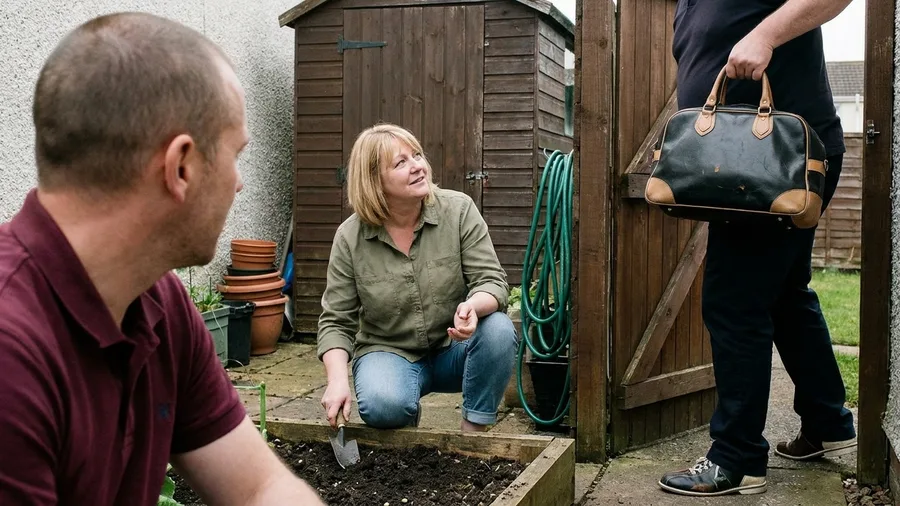
The cost arrives quietly: two people who do everything together slowly run out of things to say, and they do not notice for years.
I garden and belong to a Tuesday book club. He bowls on Thursdays and fishes with his brother. That is 52 years of weeks with hours in them that had nothing to do with each other, and at Friday coffee we had things to say the other had not been present for. Fewer demands on each other to be everything, and the marriage stopped being our only identity, which is part of why it got easier to carry.
The line between separate and secret is a shared calendar and a shared account. I knew what the bowling league cost and when the fishing trips were; he knew the book list and the August dates at Indian Lake. Privacy is a room with the door unlocked. Secrecy is a locked one.
This does not suit couples who use Thursday night to avoid every hard conversation. If the bowling league is the only reason you are not fighting, that is not independence, it is an exit with a schedule.
📅 How Our Week Stays Ours
Tuesday book club
I go to my book club; he has the evening to himself.
Thursday bowling
He bowls with his league; I catch up on reading or the garden.
Friday coffee
6:30 a.m. at the kitchen table — two cups, no phones.
Saturday errands
We split the list and meet back for lunch.
Sunday call
We call the grandkids and plan the next lake trip.
8. Hard Seasons Ask for Lower Standards, Not Exit
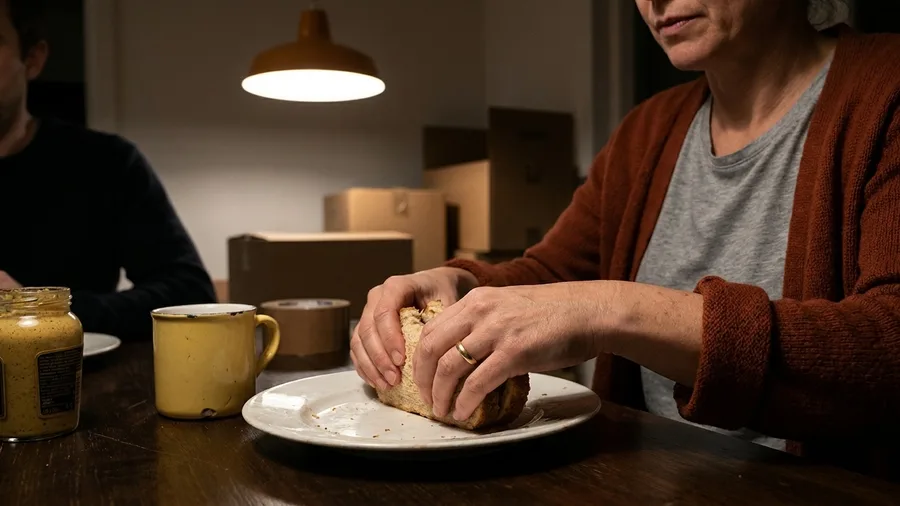
Some years ask you to lower the standards for everything except how you speak to each other.
In 2008 my husband retired after 34 years at the phone company and was home all day while I kept teaching until 2010, and the 6:30 coffee now had two people at the table who had not been apart all day. We let things slide on purpose. Elaborate dinners became sandwiches, the garage stayed a wall of boxes, the ironing went to permanent press. We said out loud that a season is not a verdict, so neither of us could turn it into one. Three things we did not let slide: Friday coffee, kindness at the door, greeting him first before anything else got said, and no contempt.
Retirement can rearrange the cooking. It cannot rearrange how you speak to each other at the door, and that is the line the exception never crosses.
9. Marriage Is a Choice You Remake Every Morning
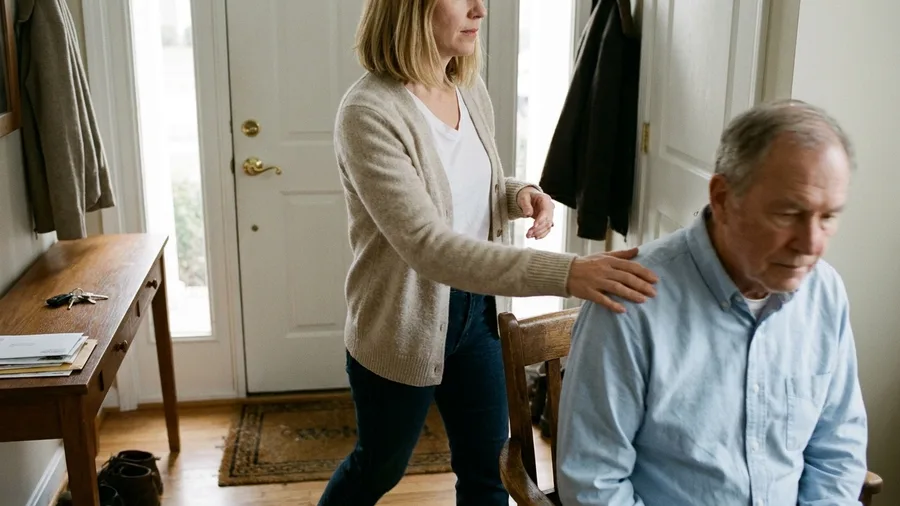
You get up and choose it again, most days before you have decided anything. The big acts are rare; the small ones are daily. I bring him his coffee at the kitchen table and say good morning before I say anything else, and I put my hand on his shoulder as I pass the chair. None of those is a decision to stay married. All of them are.
What I quit trusting was the feeling. For years I used being in love as the daily proof, and when it was not there in the morning I read that as trouble. Feelings are weather. If you need the sun to know the marriage is sound, you will write it off every January, and every marriage has a January.
Researchers who study how couples last keep finding the same thing: the ordinary gestures of attention, the good morning, the hand on the shoulder, do more work than any single grand declaration. That was our June 16, 1973 wedding in its $1,800 dress, over by midnight. The coffee the next morning, the used Chevrolet to the shop, the apology at the table years later, those are the 52 years. All of it is still there to pick up.
The first thing to try this week: ten minutes on Sunday, same time each week, and each of you names one thing that was hard and one thing the other did well. No fixing, no defending. Sunday will not feel like much. Neither did the first Friday in 1973.
Frequently Asked Questions
What is the single most important thing that kept your marriage going for 52 years?
The daily rituals — the 6:30 Friday coffee, the greeting at the door, the small touch as we pass. Those repeated acts did more than any grand gesture or anniversary dinner.
How do you handle money disagreements without fighting?
Name the fear behind the number. When we bought our first house in 1979, the fight was not the $43,500 price — it was his fear of not being able to pay and my fear of shrinking our lives. Once we said those fears out loud, we could agree on a monthly ceiling.
What should you do when you feel resentful about something small?
Say it plainly and soon. I once stayed silent about a torn screen door for 14 months and added it to a mental ledger. When I finally spoke, he fixed it that Saturday. The silence cost more than the repair.
Is it normal for passion to fade, and what do you do about it?
Yes, especially in the tired years of raising children. What carried us was friendship — keeping our weekly rituals and annual trips, and protecting time alone. The feeling caught up on its own schedule once we kept the appointments.
How do you make an apology that actually helps?
Name the harm specifically, own the impact, change the behavior, and give the other person time. A real apology is not a bargaining chip to end the conversation.
Do we need to share all the same interests?
No — separate hobbies gave us things to talk about and kept us from expecting each other to be everything. The key is sharing schedules and money so the separation never becomes secrecy.
The Ten-Minute Sunday That Changes the Week
a marriage is built in ordinary days, not the wedding. One day cost $1,800 and held nothing up. What held it up was the 6:30 coffee, the rule that we finish an argument before 9 p.m., the apology said out loud at the table, and the lowered standards of a bad year.
So take ten minutes each Sunday. Each of you names one thing that felt hard that week and one thing the other did well. No solving, no defending. Put it in the week the way we put the coffee in the morning, and keep the appointment when nothing is wrong, because that is when it gets built.
Two rooms above a bakery at $140 a month. A used 1968 Chevrolet. Six hundred dollars of our own money in an $1,800 wedding. The day was the smallest thing we ever paid for and the least of what we did. The wedding is over by midnight. The marriage is the morning after, and the morning after that, and the one you get to choose again at 6:30 tomorrow.
Start This Sunday
Set a ten-minute reminder for Sunday morning. Two chairs, two cups of coffee, one hard thing and one good thing each. That is the whole practice.