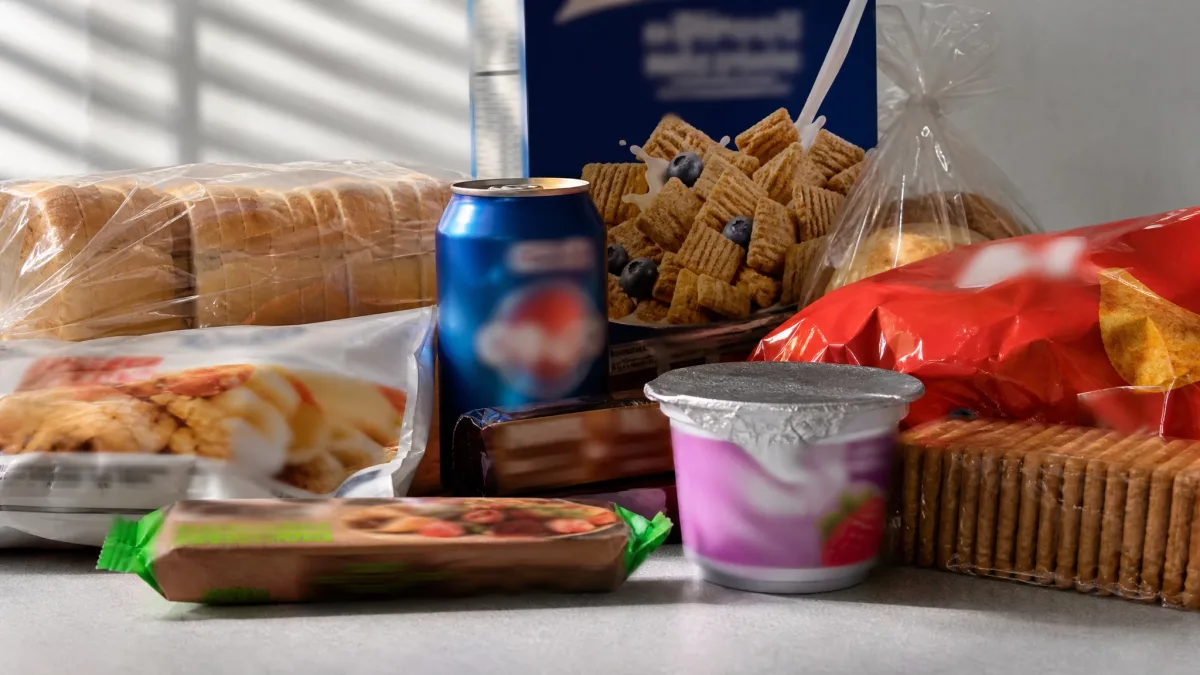
How bad is processed food, really? People have asked some version of that question for as long as factories have made it – and the latest answer comes with a name, a scoring system, and headlines that have pushed ahead of what the research can honestly support.
Foods labeled ultraprocessed now make up more than half of all calories consumed in the United States. This is not a story about a fringe habit. It is a story about the middle of most people’s diets, which is why the alarm in recent headlines feels so urgent.
The science behind that alarm is real, but it is fractured. Sodas and processed meats show a clear and consistent link to harm. Breads, yogurts and cold cereals sit inside the same category and are actually linked to lower rates of heart disease. The trials that could prove cause and effect are too few and too short. And the system used to sort all these foods into one bucket is disputed by many of the scientists who use it.
‘Ultraprocessed’ is a serious scientific idea built on a genuinely shaky foundation. Knowing where the evidence holds – and where it cracks – is the only way to judge which headlines are worth heeding and which ones are running far ahead of the data.
Half Your Calories Already Come From These Foods
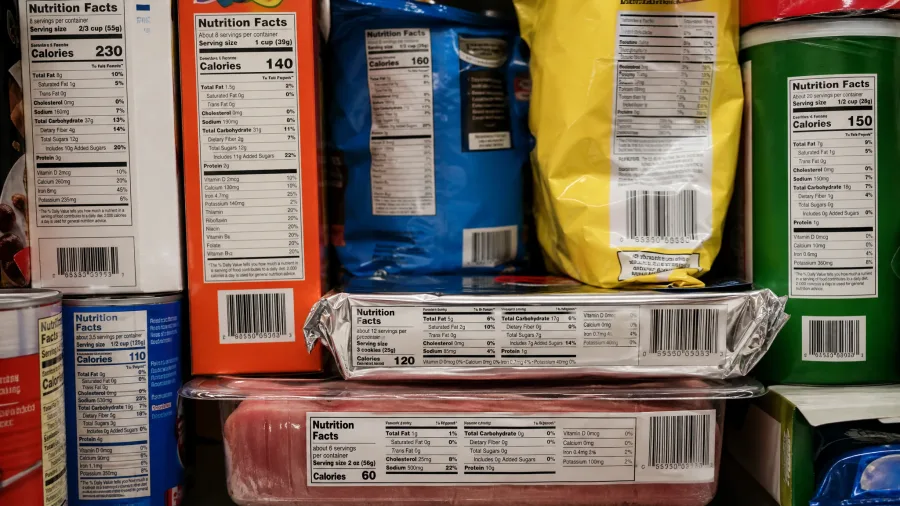
These foods are not a fringe habit – more than half of all calories consumed in the United States come from ultraprocessed products, which puts them squarely at the centre of most people’s daily eating.
The category has a precise origin. In 2009, Brazilian epidemiologist Carlos Monteiro named it and built a framework called NOVA around it. NOVA sorts all food into four groups by how much industrial work went into making it. The fourth group – the one that fills the headlines – covers products that factories manufacture and that no home kitchen could reproduce.
Before going further, one limit on this article is worth naming plainly. The primary source it draws on is a single commentary piece by a social-movement researcher. That piece contains no original data, and no underlying study record was reachable to check it against. That sets a specific ceiling on how confident any claim here can be.
The research base itself carries its own limit.
Study after study links ultraprocessed food consumption to health outcomes such as heart disease and obesity. But the word ‘links’ is doing real work there. Almost all of that research is observational – it tracks what people eat and what happens to their health over time. Observational research cannot show that one thing caused another. That distinction between a pattern and a cause runs through every finding that follows in this article.
Sodas Look Harmful; Bread and Yogurt Do Not
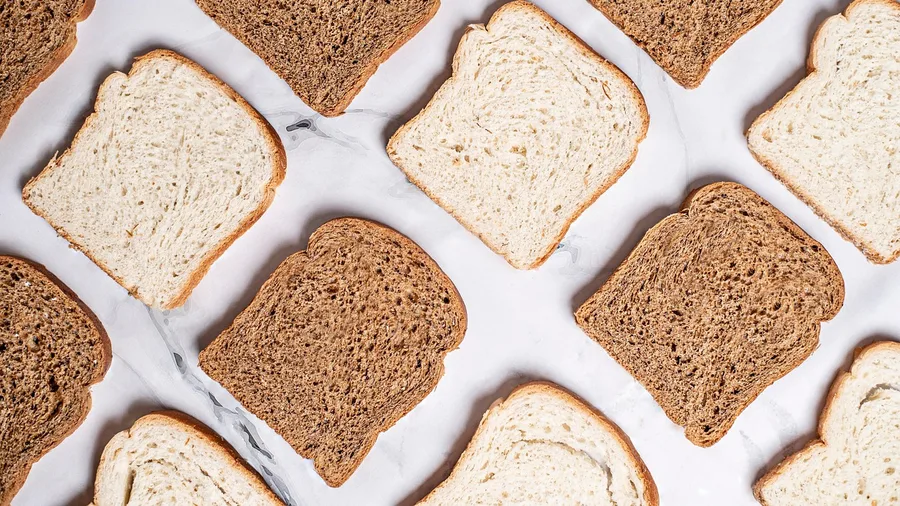
Not all ultraprocessed foods behave the same way in the research, and the differences are large enough to matter.
Sodas and processed meats – deli cuts and the like – are consistently linked to heart disease and stroke across multiple studies. That association is about as solid as correlational evidence in this field gets. Popular coverage has treated this finding as the story of the entire category, but it is the story of two subcategories.
The rest of the picture rarely makes headlines. Breads, cold cereals, yogurt and savory snacks are all NOVA Category 4 products, yet the evidence correlates them with lower rates of heart disease and stroke – the opposite direction from sodas and deli meats. That finding sits in the same body of research as the alarming results, drawn from the same studies, using the same classification system.
A third group lands nowhere in particular. Sauces, condiments and ready-to-heat frozen dishes show no consistent health link either way – no reliable sign of harm, no reliable sign of benefit.
What this means is that NOVA Category 4 is not a single block of uniform risk. It groups products whose health associations point in sharply different directions. Treating the label as one undivided warning – avoid all ultraprocessed food – is not what the subcategory evidence supports. The category is real; the single verdict is not.
What the Numbers Actually Show
One Trial Found Harm; Others Found Nothing

Experimental trials – the kind that can actually show cause and effect – do not settle this question the way the popular coverage suggests.
The most-cited result came from a two-week clinical trial in which one group of participants ate ultraprocessed foods while a second group ate minimally processed ones. Those on the ultraprocessed diet took in more calories and put on more weight by the end of the fortnight. That finding gets repeated often, and it is real.
Other experiments, run under similar conditions, found no such effect.
The results do not line up. One positive finding does not make a consensus, and across the full set of trials the picture is inconsistent. Beyond that, most research in this field is not experimental at all – it is observational, tracking large populations over time. Those studies cannot rule out the role of factors that travel alongside ultraprocessed food consumption: lower income, less education, dietary patterns that differ in many ways at once. Any of those could help explain the associations without the processing itself being the cause.
The honest answer to whether these foods independently cause disease – setting aside their calorie, sugar, salt and fat content – is that science has not yet established it.
⚠️ COMMON MISTAKE
Correlation is not the same as cause
The vast majority of ultraprocessed foods research shows associations, not proof that the foods themselves cause harm. People who eat more ultraprocessed foods also tend to have lower incomes and less access to fresh food — factors that independently affect health outcomes. Treating a correlation as a verdict skips the hard part of the science.
The NOVA Line Moves With One Ingredient

NOVA is not a clear scientific standard – and that ambiguity is part of why the experimental results keep disagreeing.
Consider a cake. Bake one at home and it sits in NOVA Category 3 – processed, but not ultraprocessed. Have a factory make the same cake with a commercial preservative added, and it jumps to Category 4. The two cakes could have identical nutritional profiles. The classification shifts because of one industrial ingredient, not because of calories, fat or sugar.
That single-ingredient logic creates real problems. Many food scientists describe the NOVA definition as ambiguous and frequently subjective. Where Category 3 ends and Category 4 begins can change depending on how a researcher interprets one ingredient or one production method.
The knock-on effect matters. Two studies can both claim to use NOVA and still be sorting the same foods into different categories. When that happens, their results are not really measuring the same thing – which makes it hard to pool findings or compare them across the literature.
This is not a minor technical complaint. The source frames it as a fundamental problem for reading the accumulated research on ultraprocessed foods. If the measuring tool shifts between studies, the body of evidence built on it is shakier than the headline numbers suggest.
Processing Is Ancient; This Panic Targets One Era

All food processing is not the same thing, and the current concern is not about all of it – it targets one specific period in history.
Humans have been processing food for about 2 million years. Cooking came first. Then came grinding grain, baking bread, fermenting milk into cheese, drying meat, pressing oil from seeds. These techniques arrived one by one over a very long stretch of time. Processing was never some modern mistake; it was how people made food safe, storable and edible.
Before the industrial age, though, most food stayed local. A village ate what was grown or raised within a few dozen miles, and it ate that food quickly to avoid spoilage. There was no other option.
That changed. Canning, pasteurisation and refrigeration let food travel far and last much longer. Supply chains stretched across continents.
Then a second shift happened. Manufacturers went further still, creating products that were highly standardised and built for convenience. That era brought the salt loads, sugar levels and saturated fat content that first raised public health concerns.
NOVA was built to isolate that era, not to condemn all processing. The panic in the headlines is not about cooking or fermentation. It is about one narrow band of industrial food history, and keeping that distinction clear is the only way to read the evidence straight.
NOVA Was Built to Implicate Factories, Not Nutrients
NOVA came out of a specific argument: that decades of focusing on individual bad nutrients had not worked, and that something else was driving chronic disease.
By the mid-2000s, some researchers and public health advocates had grown frustrated. Warnings about salt, sugar and saturated fat had been circulating for decades. Chronic disease rates had not meaningfully fallen. Their case was that the problem was not any single nutrient – it was industrial processing itself as the missing variable.
Carlos Monteiro coined ‘ultraprocessing’ in 2009 and built NOVA with colleagues to test that idea directly – to ask whether processing level, set apart from nutrient content, tracks with chronic disease outcomes.
The cultural ground had already shifted. Michael Pollan had captured a popular mood with the formulation: “Eat food. Not too much. Mostly plants.” That line expressed suspicion of industrial food as a whole category, not just of any one ingredient inside it.
NOVA was designed as a population-level research tool – a way to study broad patterns across large groups. Using it to guide what a single person eats, or to design warning labels, came later. That is a use the framework was never built for, and the gap between those two purposes is where a lot of the confusion in today’s headlines lives.
What NOVA Category 4 Lumps Together
Consistently Harmful Associations
- Sodas and sweetened beverages
- Processed meats such as deli meats
- Linked to higher rates of heart disease and stroke
- The findings that dominate news headlines
Neutral or Protective Associations
- Breads, cold cereals, yogurt
- Savory snacks — correlated with lower heart disease rates
- Sauces, condiments, frozen dinners — no consistent link either way
- All classified as ultraprocessed alongside sodas
A Few Weeks Cannot Answer a Lifetime

The experiments that could most directly test NOVA’s central claim face a wall that money alone cannot knock down.
Heart disease and stroke build over decades. A clinical trial, by contrast, puts people on a controlled diet for a matter of weeks and then measures what changed. Researchers can count calories consumed and record weight gained or lost. They cannot watch an artery narrow over thirty years inside a controlled setting.
That gap is the structural problem. The one trial that found people on an ultraprocessed diet ate more and gained more weight ran for just two weeks. Other short experiments found no clear effect at all. Neither result tells anyone much about what happens to a heart over a lifetime, because no trial of that length could.
There is a second problem worth noting. The commentary this article draws on could not be traced to a reachable study record. That means the specific trial results it describes cannot be checked against the original papers. Readers cannot confirm whether those studies were characterised accurately.
So correlational research ends up doing the heavy lifting. Those studies track what people eat and what diseases they develop, but they cannot rule out the fact that people who eat more ultraprocessed food also tend to have lower incomes and fewer fresh-food options nearby. All of those factors shape health too. When the causal experiments are this few and this short, associations from population studies start to sound like settled answers. They are not.
The Warning Lands Unevenly on Cheap Foods
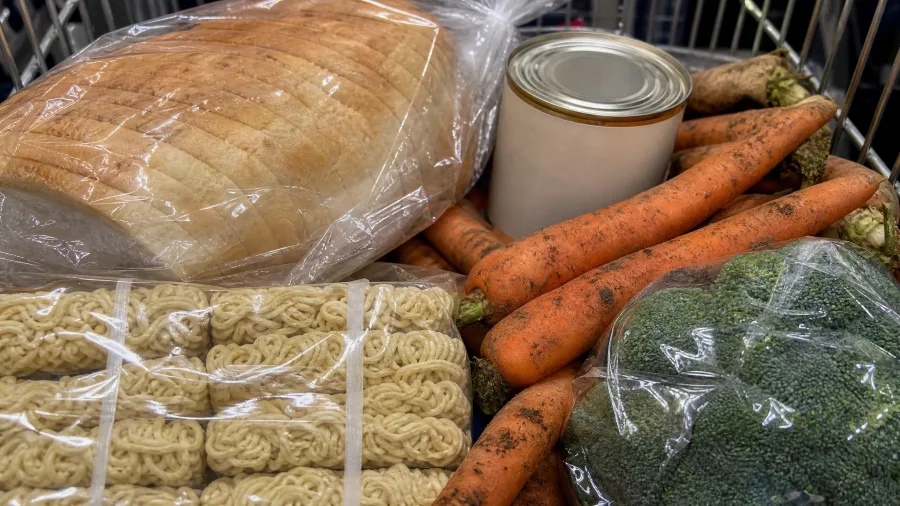
Guidance built on thin evidence does not land the same way for everyone.
Consider two products that sit firmly inside NOVA’s Category 4. Infant formula keeps babies alive when breastfeeding is not possible. Some plant-based meat alternatives are marketed as healthier or more sustainable choices. Telling someone to avoid all ultraprocessed foods covers both of those products, which is not a straightforward instruction for the people who rely on them.
The harder case is cost. Many families choose ultraprocessed foods because those foods are cheap, last a long time on the shelf, and take little time to prepare. Those are real advantages, not just talking points from food companies. A blanket warning built on population-level correlations that do not separate sodas from bread asks people with the fewest alternatives to pay the steepest price.
That is where the science ends and the policy argument begins.
The evidence, such as it is, points at specific products – sodas and processed meats – not at every item in Category 4. But the warnings that reach most people are written at the category level. Who bears the cost of acting on a broad label, when the harm behind it is concentrated in a few subcategories and the causal proof has not arrived, is not a question the data can answer on its own.
Targeting the Label or the Product Stays Open
Sodas and processed meats show a consistent link to heart disease and stroke. Breads, yogurts and savory snacks show the opposite pattern. All of them sit inside the same category. Pointing at the label and saying ‘avoid this’ treats those products as one thing, when the evidence treats them as very different things.
The deeper question runs underneath that. Can any system built around how much a factory touched a food – rather than what that food actually contains – ever be precise enough to guide real choices for real people?
That is not a rhetorical hedge. It is the honest state of the field right now. The trials are mixed, the category definition is disputed, the long-term causal evidence does not exist, and the specific study claims in the main source cannot be independently checked.
The science has found something worth paying attention to, especially around certain products. But the single broad label may be too blunt a tool to act on – for individual choices, for doctors giving advice, or for policymakers writing rules. Whether the next step is a finer set of categories, product-by-product guidance, or something researchers have not yet proposed is a question the field has not worked out.
Frequently Asked Questions
What foods count as ultraprocessed (heavily factory-made) under the NOVA system?
NOVA Category 4 covers factory-made products that are impossible to make at home. That includes sodas, packaged deli meats, commercially made breads, breakfast cereals, flavoured yogurts, savory snacks, sauces, condiments and frozen ready meals. The category is deliberately wide — which is both what makes it useful as a research tool and the main reason people criticise it.
Is there proof that heavily factory-made foods cause disease?
Not in the strict cause-and-effect sense. The vast majority of research finds links between eating heavily factory-made foods and health outcomes; it cannot rule out other factors like income or overall eating habits. One two-week trial found higher calorie intake and weight gain on a heavily factory-made-food diet, but other trials found no clear effect, and two weeks is far too short to say anything about long-term disease.
Why do bread and yogurt end up in the same category as soda?
NOVA sorts foods by how much factory work went into making them, not by what nutrients they contain. A commercially baked loaf uses additives or methods that cannot be copied at home, which puts it in Category 4 alongside sodas. That is exactly how the system was designed — but it means the category holds foods whose actual health links point in completely different directions.
Who created the NOVA classification and why?
Brazilian epidemiologist Carlos Monteiro introduced the term ‘ultraprocessing’ (heavy factory-making) in 2009 and built the NOVA framework with colleagues. The goal was to test whether the level of factory work, separate from nutrient content, predicts long-term disease rates across whole populations. It was a research tool; using it as direct eating advice for people came later and is not what it was originally built for.
Does the evidence mean I should avoid all heavily factory-made foods?
The evidence does not support one blanket rule for the whole category. Sodas and processed meats have the most consistently bad health links. Breads, cereals and yogurts inside the same category are actually linked to lower heart disease rates. Avoiding all heavily factory-made foods would mean treating foods with completely different health profiles as the same risk — which is not what the more detailed data shows.
Why are long-term clinical trials on heavily factory-made foods so rare?
Running a controlled eating trial for years or decades is very hard to organise and raises ethical problems — you cannot keep people on a fixed diet forever. The trials that have been done usually run for a few weeks, which is useful for measuring short-term calorie intake and weight but cannot tell you anything reliable about heart disease or diabetes building up over a lifetime. That gap is unlikely to be filled by short-term studies alone.
Whether ‘Ultraprocessed’ Is the Right Unit of Analysis
Sodas and processed meats do show a more consistent record of harm than most other foods that carry the same broad label. But that evidence is almost entirely built on studies that can show links, not causes. The claim that ultraprocessed foods as a whole are uniformly bad for you does not yet have solid experimental proof behind it.
That same more than half of American calories that opened this question sits at the center of it still. The category is so large and so varied that bread and soda share a bin. At that scale, the label may be hiding more than it shows.
Real caution about specific products – particularly sodas and processed meats – is backed by the evidence. Blanket alarm about every food in NOVA Category 4 is not. The question that still needs answering is a practical one: can any system built around how much a factory touched a food, rather than what that food actually contains, ever be sharp enough to help a real person make a real choice at the grocery store?
Sources
- The science and politics behind the panic over ultraprocessed foods – theconversation.com (news report) · 2026-10-19