
The predator is the easy answer. Ask anyone why prehistoric humans rarely lived past 40 and they picture the saber-tooth, the cave bear, the ambush at the water’s edge. The fossil record tells a quieter, grimmer story.
Infection from a bad tooth. A birth that went wrong. A winter that ran three weeks longer than the stored food lasted. These were the actual killers, and they did not work randomly. They killed along specific lines, culling the socially isolated, the unskilled, and the unlucky in ways that selected, over generations, for particular bodies and particular behaviors.
The predator was not the primary filter. Infection, obstetric crisis, interpersonal violence, and starvation were.
The first humans to routinely survive past middle age were not lucky outliers. They were the product of a brutal sorting process, and their survival permanently altered human cognition, language, and the psychology of aging that every person alive today carries. Name the killers, understand the narrow path through them, and the psychological inheritance those first long-livers left behind becomes something you can actually see in yourself.
Infection Killed More Reliably Than Predators
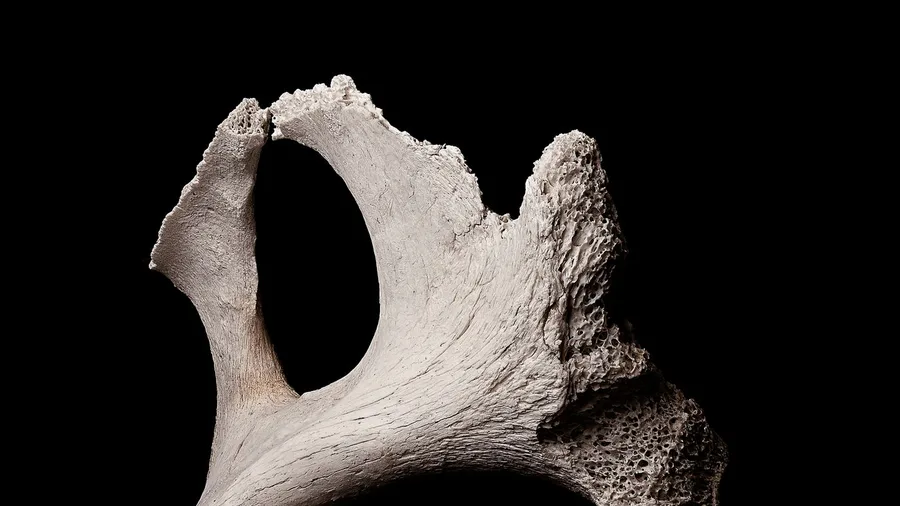
Infection killed early humans far more reliably than predators did – and the evidence for this is written directly into ancient bone.
Paleopathology, the study of disease and injury in fossil remains, consistently identifies sepsis and infection as the dominant cause of death across all age groups, well ahead of the animal attacks that dominate popular imagination. The mechanism was brutally simple: no antibiotics, no wound closure beyond held pressure and available plant material, and a world full of small injuries that could not be kept clean.
A cut from a stone flake during tool-making. A splinter of bone pushed too deep while butchering an animal. Either one could progress to fatal systemic infection within days.
The clearest physical evidence comes from skulls. Dental abscesses leave unmistakable marks: bone dissolving around tooth roots, hollow channels where infection tunneled through jaw tissue, and in severe cases full necrosis of the mandible itself. These lesions appear repeatedly across prehistoric specimens from multiple populations. Oral infection alone was killing people at scale – not as an occasional misfortune, but as a predictable, recurring cause of death.
What made infection such an effective killer was its indifference. A healthy adult in their physical prime died from an infected wound the same way a child or an elderly person did. This was not a killer that targeted the already-weakened. It was a democratic pressure that ran through every age group with equal efficiency.
For frequency data on infection-related skeletal lesions across prehistoric populations, the Paleopathology Association’s catalogued literature is the appropriate source – the patterns are well-documented, even where precise counts remain contested.
Childbirth Was the Leading Killer of Young Women
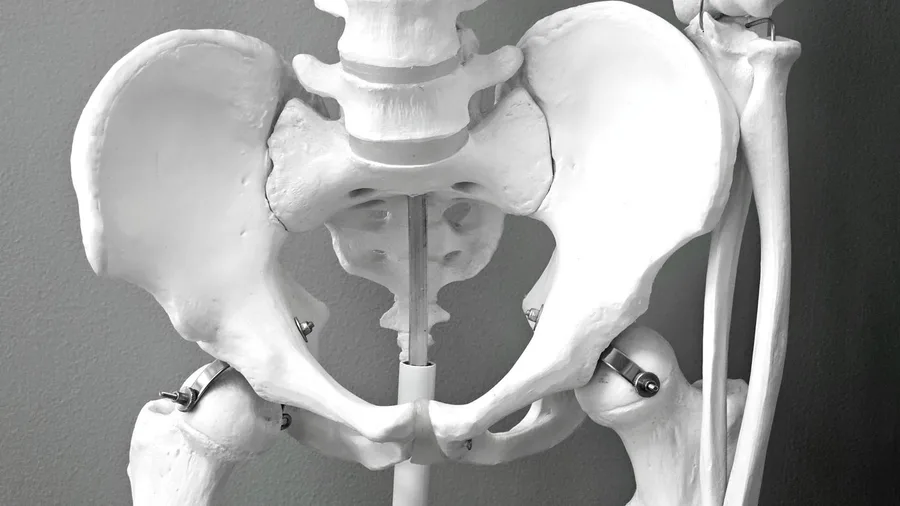
One cause of death carved a line almost exclusively through women, and it was built into the species by the same forces that made humans recognizably human. Growing a larger brain required a bigger skull. Walking upright required a narrower pelvis. Those two pressures ran directly against each other, and the birth canal sat at their intersection – too tight for a head that evolution kept widening. No other primate faces this mismatch at anything close to the same severity.
The fossil record holds the evidence in unusually direct form: the skeletons of young adult women, some with fetal remains still within the pelvic cavity, appear across multiple prehistoric populations and push female mortality sharply higher than male during the reproductive years. The causes – obstructed labor, hemorrhage that could not be stopped, infection spreading from a torn birth canal in the days after delivery – required nothing extraordinary. A labor that stalled was enough.
What made this worse was the compounding. A woman who survived a first birth did not return to the same baseline. The physical cost accumulated – pelvic damage, uterine scarring, cumulative depletion – and each subsequent pregnancy carried more risk than the one before it. Surviving childbirth once was not a reliable predictor of surviving it twice.
The result was that women who reached their late 30s intact were genuinely unusual, visible in the fossil record as outliers rather than the norm. Not because of any physical weakness, but because the architecture of human reproduction made repeated pregnancy a structural hazard the body was never fully designed to handle.
⚠️ COMMON MISTAKE
The Predator Story Is Mostly Myth
Popular accounts of prehistoric death center on large carnivores because the image is vivid. The skeletal evidence does not support it as the primary killer. Infection, childbirth, and group violence left clearer marks on more bones. Predator encounters mattered — but they were not the engine driving short life expectancy.
Group Violence Claimed More Lives Than Wild Animals
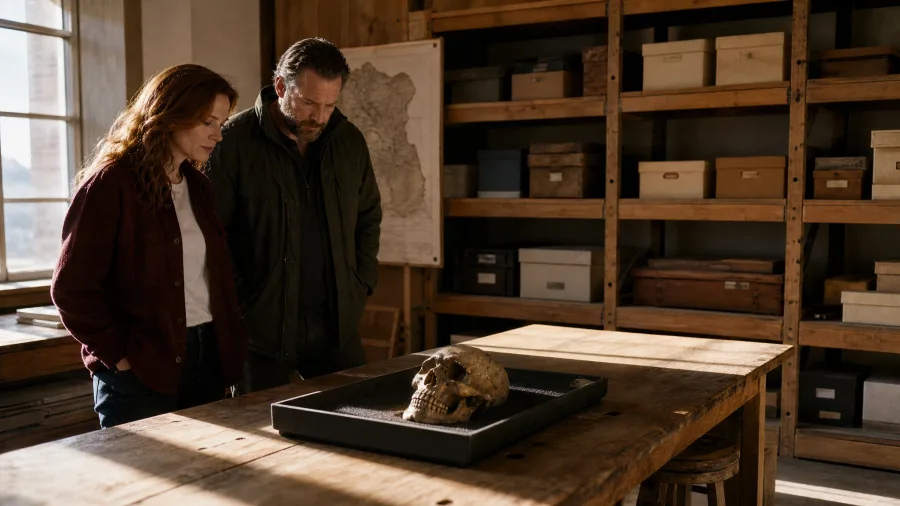
The most consistent external threat did not have claws. The bones say so plainly: when forensic anthropologists examine cranial fractures in prehistoric skeletal assemblages, a pattern shows up that animal predation alone cannot explain. Strikes delivered to the back of the skull. Defensive fractures on forearm bones – the shape a break takes when an arm is raised to block a blow. Projectile points lodged in bone. These are signatures of human-on-human violence, not of predators ambushing prey.
The distinction between healed and unhealed trauma is what makes the record readable. A healed fracture means the person took a serious blow and survived it – the bone knit back together over weeks or months. An unhealed fracture at the time of death means the violence was the end. Both types appear with enough frequency across different sites and populations to describe a pattern rather than a run of accidents.
The pressure intensified as groups grew. Water that only flowed seasonally, corridors where game migrated, stretches of land with predictable plant harvests – these were worth fighting over, and fighting over them repeatedly. Raiding was not a failure of early human society; it was one of its organizing activities.
The contradiction worth sitting with is that the same group bonds that made humans effective hunters and child-rearers also made them effective at organized violence. The cooperation was real. So was what it was sometimes turned toward. Researchers who have examined injury frequencies across prehistoric skeletal populations – Lawrence Keeley’s work on prehistoric warfare being among the most cited – find rates that complicate any picture of early human life as fundamentally peaceful.
What the Bones Say — The Real Killers
Paleopathology estimates of prehistoric adult mortality by cause category
Proportions are schematic based on paleopathology literature patterns, not a single study.
Starvation Struck Fast, Not Slowly
Hunger’s role in prehistoric death was rarely the dramatic wasting of a long siege – it was faster and more mechanical than that, and it did most of its damage by making every other cause of death worse.
The physical record of food stress is preserved in teeth. When enamel growth stalls during severe nutritional deprivation – whether from famine or serious illness – it leaves a horizontal groove or pit across the tooth surface, a mark formed at the precise moment the body could not sustain normal development. Paleoanthropologists read these lines in specimens thousands of years old to identify when, and how often, an individual’s body hit a hard deficit in childhood. Many fossil teeth carry more than one such groove, suggesting repeated episodes rather than a single bad season.
Chronic mild shortage was the quieter version of this pressure, and it killed indirectly. A person running on too few calories for weeks does not die of hunger; they die of the infected cut that a well-nourished body would have closed, or the respiratory illness their depleted immune system cannot clear. Starvation was the silent multiplier that made every other killer on this list more lethal.
Acute famine worked differently – fast and without discrimination by age or health status. When it hit, most groups resolved the shortage through an implicit, brutal logic: available food moved toward adults doing physical work, while children and the elderly absorbed the gap first.
The baseline varied widely. Populations near reliable, calorie-dense food sources in favorable seasons could go long stretches without significant nutritional stress. But the pressure was never permanently absent – only deferred. Surviving required not just avoiding wounds or violence but maintaining enough caloric reserve to recover from them.
Who Survived — The Filter in Plain Terms
Traits That Predicted Survival
- Tool competence — fewer lacerations, fewer sepsis entry points
- Social integration — fed and protected through illness
- Accumulated knowledge — worth investing in during scarcity
- Conflict de-escalation — avoided becoming violence's target
- Contribution to the group — labor, care, navigation, fire
Traits That Predicted Early Death
- Social isolation — no one to share resources during lean seasons
- Low skill level — higher injury rate, less caloric return
- Violence-prone behavior — lethal retaliation from group or rivals
- Non-contribution — abandoned or under-rationed in acute scarcity
- Poor wound hygiene — fastest route from injury to fatal sepsis
Better Tools Cut Accidental Death at the Source
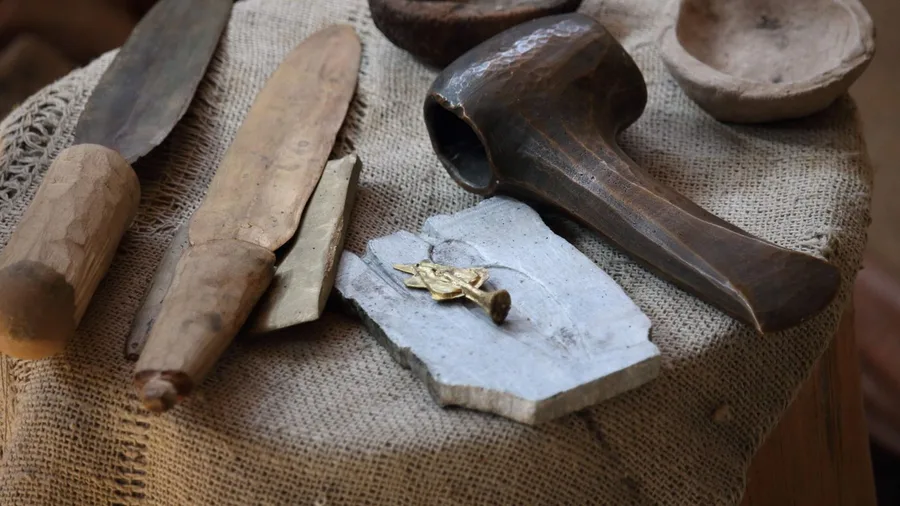
What began lifting the ceiling on lifespan was not a biological change but a change in the geometry of daily injury. Early stone-tool work was close-contact by necessity: knapping a flint core, scraping hide with a hand-held blade, butchering an animal carcass at arm’s length. Deep lacerations to the hands, wrists, and forearms were close to unavoidable – not occasional accidents but a near-constant occupational hazard for anyone doing the work that kept the group fed.
Hafted tools changed the physical relationship between the worker and the cutting edge. A blade bound to a wooden handle moved the fingers back from the sharpest part of the tool. A spear-thrower extended the effective reach enough to keep the body several meters from the point of impact with a large animal. Neither invention was designed with sepsis prevention in mind – but that was the practical result.
The mortality connection is direct, not circumstantial. Fewer serious lacerations meant fewer open wounds, which meant fewer entry points for the infections that progressed to fatal sepsis. The real cause of death that tool improvement addressed was not the cut itself but what the cut let in.
This is a narrow claim, not a broad one. Tools did not eliminate injury. They changed the specific injury profile – reducing the frequency of the deep, contaminated wounds that were most likely to kill – which made the sequence of tool development a genuine variable in who survived and who did not. The dates of those transitions belong to archaeological literature; the logic of why they mattered belongs here.
How Tool Improvement Broke the Infection Cycle
Being Useful to the Group Was a Survival Filter
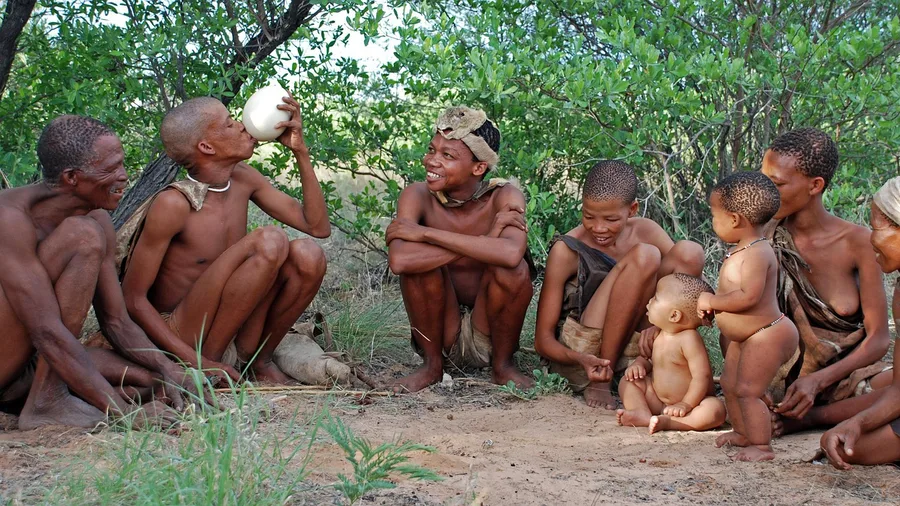
Reducing physical danger was only part of the equation for living past middle age. The other part was whether the group around you considered you worth the calories.
Subsistence groups were operating on margins that did not allow for passengers. Food, warmth, and protection flowed toward people who generated them – those who could locate and bring back food, keep fire alive through a cold night, treat a wound, or carry an injured person to safety. When someone fell ill or was injured, the group’s decision about whether to feed and shelter them through recovery was not sentimental; it tracked what that person was worth when healthy. Contributing members got nursed back. Non-contributing ones faced reduced shares, and in real scarcity, abandonment.
That calculus was especially consequential for older adults, and here the logic inverted in an important way.
Knowledge that took thirty or forty years to accumulate – the specific water source that only surfaced during drought years, the plant that was edible after one preparation and lethal after another, the route a particular herd followed in an unusual season – could not be improvised by a younger group member on short notice. An adult who held that knowledge was worth feeding through an illness in a way that a healthy but inexperienced younger person could not substitute for. Experience was a form of contribution.
The ethnographic record from contemporary forager societies makes the conditional nature of this protection explicit: abandonment of elderly individuals who can no longer contribute is documented, not exceptional. The fossil record carries the same inference in cases of severe disability with no evidence of sustained care.
What that selection pressure built, over many generations, were groups that rewarded social integration, accumulated skill, and the capacity to manage conflict rather than generate it – because those were precisely the traits that made someone worth keeping alive when keeping them alive was costly.
💡 PRO TIP
The Safety Net Had Conditions
Group care was not unconditional generosity. Ethnographic and skeletal evidence both show that support was extended to individuals whose skills, knowledge, or labor gave the group a return on the investment. The implication for understanding human psychology is significant: belonging, in its earliest form, was earned through contribution — and the psychological architecture for seeking that belonging is what we inherited.
Cooking Let People Survive With Worn-Out Teeth
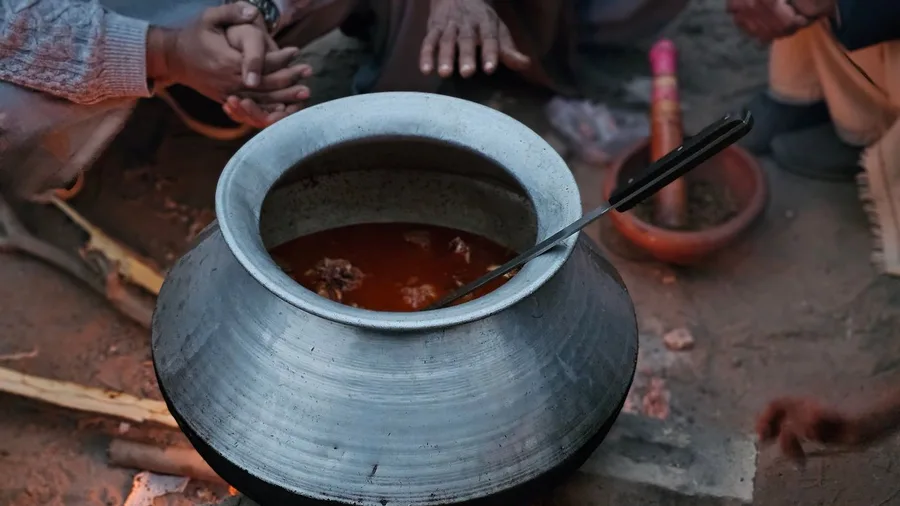
Social standing kept an older individual fed and protected, but there was a more basic problem underneath that one: the physical capacity to eat at all.
Fossil teeth tell this story with unusual clarity. In populations that cooked rarely or not at all, enamel wore down fast – grit from stone-ground food, the constant use of teeth to grip and work hides and plant fibers, the toughness of raw and barely processed meat. By the late 30s, many specimens show surfaces worn to the gumline. Researchers use that attrition pattern as one of the primary methods for estimating age at death, which means the damage was consistent enough to function as a biological clock.
The lethal consequence was not what most people would guess.
It was not starvation from food scarcity. It was starvation from mechanical failure: an adult standing inside a camp with adequate food could no longer extract enough calories from it. The teeth were gone. Raw tubers, dried meat, unprocessed seeds – none of it was manageable. Scarcity and abundance became equally irrelevant once the ability to chew collapsed.
Habitual cooking removed that ceiling. Not occasional fire use, but the systematic softening of food as a daily practice. Cooked tubers break down under almost no pressure. Softened meat requires no grinding force. An adult with severe dental attrition, or with missing teeth, could still meet basic caloric needs – which meant surviving into the decades where the killers described in the earlier entries had not yet finished the job.
The connection to tools is direct: both changes extended life not through a single sweeping improvement but by closing off one specific, previously guaranteed exit. Better hafting moved fingers away from stone edges; regular cooking moved the dentition out of the way of death. The mechanism in each case was the same – remove the inevitable, and let other factors decide who survives.
Cooking as Survival Technology — At a Glance
🦷 Tooth attrition timeline
Gumline wear by late 30s
📉 Without cooking
Caloric collapse despite food availability
🔥 What cooking changed
Softened food accessible to worn dentition
🧓 Survival impact
Extended viable feeding window past 40
📌 Evidence method
Attrition used to estimate age at death
Key point
Cooking did not just improve nutrition — it removed the mechanical ceiling that prevented adults from surviving into middle age regardless of food supply.
Grandparents Became the First External Memory

For most of human prehistory, knowledge died on schedule.
When no one in a group reliably survived past the age their children were starting families, what any individual learned across a lifetime – where a particular water source appeared only in drought years, which plants caused the illness that swept through two summers ago, the exact sequence of steps that made a specific tool functional rather than merely sharp – died with them. The next generation started the same reconstruction from scratch.
The first long-livers broke that cycle.
One hypothesis, developed through fieldwork with contemporary forager populations and comparative primate data, proposes that post-reproductive women specifically drove this shift – not by having more children but by feeding their grandchildren directly, which freed their daughters to carry additional pregnancies to term. The evidence supports the plausibility of this mechanism, not its certainty; it remains a working hypothesis, with Kristen Hawkes’s research among the Hadza providing the most developed empirical thread to follow if this question interests you.
But the food-provisioning piece, significant as it is, may be the smaller part of what changed. A person who has lived 50 years holds knowledge that cannot be reconstructed quickly. A group with several such people holds a collective memory no single lifetime could build – drought patterns, epidemic cycles, neighboring groups’ behavior across decades. That is a qualitatively different cognitive resource.
What cooking and tool development enabled was not just longer lives. The same individuals whose survival those changes made possible became the first mechanism by which human knowledge could compound across generations rather than reset with each one.
Language Complexity Needed Old People to Exist

Storing knowledge across generations only works if there is a way to move it between minds – and that is where the presence of older speakers changed something fundamental about language itself.
A warning shout, a pointed finger, a specific gesture toward a water source: these work fine with a young speaker. Chimpanzees manage rough equivalents. The signal carries, the group responds, and no one needs a past tense to make it happen.
But picture a dry season unlike any the younger adults have seen. The riverbed is cracked, the usual game routes are empty, and the group has no obvious next move. What that moment needs is not a warning but a sentence that reaches back decades: something like ‘when the river looked like this before, the animals had moved east toward the ridge.’ That sentence requires a speaker old enough to have been there the first time – and a listener whose mind can take a memory that belongs to someone else and use it as a map for a decision not yet made.
Those are different cognitive operations entirely. One is perception and response. The other is temporal reasoning, narrative structure, and the transfer of stored experience across individuals. A group whose oldest member is in their early 30s does not lack language – it lacks the raw material that makes the more complex forms of language worth developing.
Language leaves no bones, and this point belongs in the category of well-reasoned hypothesis rather than settled record. But the structural logic is hard to dismiss: narrative cognition – building identity across time, projecting past events onto future choices, organizing experience into transmissible story – may have expanded not only because brains grew larger, but because for the first time there were people old enough that their stories carried information no one else in the group could supply.
🧠 From Short Lives to Inherited Psychology — The Sequence
Infection, violence, childbirth cull the majority
Most adults die before 40 from infection, obstructed labor, group conflict, or nutritional collapse — predators are a secondary cause.
Tool sophistication reduces wound frequency
Hafted blades and spear-throwers cut the rate of deep lacerations, removing the most reliable pathway from injury to fatal sepsis.
Cooking removes the dental ceiling
Habitual food softening lets adults with worn teeth maintain caloric intake, extending viable survival into the 40s and beyond.
First cohort of grandparents appears
Individuals surviving past their children's reproductive years become living repositories of multi-decade knowledge — a resource no single lifetime could hold.
Language gains a past tense worth using
Old speakers with real long-term memories make narrative planning, seasonal strategy, and cross-generational skill transmission possible for the first time.
Selection pressure builds a longevity psychology
The traits that got individuals past the killers — social integration, skill depth, conflict de-escalation — are passed on at higher rates as long-livers become grandparents.
The Survivors Reshaped the Psychology of Aging We Inherited

The kind of person who made it to grandparenthood was not a random draw from the population. Every killer described in this article had a profile: the wounds that turned septic most often came from careless tool handling; the individuals abandoned when rations collapsed were the ones who had nothing to teach or contribute; the ones who died in raids were frequently the ones who had escalated conflict rather than managed it. Long life, where it appeared at all, clustered around a specific set of traits – practical competence, social embeddedness, and the steady preference for de-escalation over confrontation.
Those traits had heritable components. The long-lived population passed its psychological profile forward at higher rates than the population that died young, for the simple reason that grandparents who survived long enough to provision grandchildren and transfer knowledge shaped which children thrived. The socially isolated, the unskilled, and the chronically aggressive left fewer descendants – not through any moral arithmetic, but through the cold mechanics of infection, abandonment, and violence. The filter ran quietly for tens of thousands of years.
What makes this more than ancient history is that the filter has a measurable echo. Longitudinal research – including decades of work associated with the Harvard Study of Adult Development – consistently identifies social integration as one of the strongest predictors of healthy aging, cognitive resilience, and early death avoidance. That is the same trait that determined who got fed through illness in a subsistence group, who received care after injury, who was worth keeping alive when keeping anyone alive was expensive. The ancient selection pressure and the modern finding describe the same thing from opposite ends of time.
Frequently Asked Questions
What was the average life expectancy of prehistoric humans?
Average life expectancy figures for prehistoric populations are often cited around 30–35 years, but that number is pulled down dramatically by extremely high infant and child mortality. Adults who survived to their mid-20s had a reasonable chance of reaching their 40s. The average masks the bimodal distribution: many died very young, and a meaningful minority of adults lived considerably longer. The figure is not a ceiling — it is a statistical artifact of high early-death rates.
Did prehistoric humans ever live to old age?
Yes, though rarely by modern standards. Skeletal evidence shows individuals estimated to be in their 50s and even 60s in some prehistoric populations. These were outliers, and their survival required a specific combination of factors — tool competence, social integration, adequate nutrition, and avoidance of lethal violence. They were rare enough that their presence in a group constituted a meaningful cognitive and informational resource.
What does paleopathology actually reveal about how prehistoric people died?
Paleopathology — the study of disease and trauma in ancient skeletal remains — can identify infection-related bone lesions, healed and unhealed fractures consistent with violence, dental attrition patterns indicating diet and age, and enamel hypoplasia marking childhood nutritional stress. It cannot tell us about soft-tissue diseases that left no bone trace. The picture it gives is partial but direct: physical evidence of what happened to specific bodies, not inference from modern analogy.
Is the grandmother hypothesis about human longevity actually accepted science?
It is a well-developed and empirically supported hypothesis, not settled consensus. The strongest evidence base comes from Kristen Hawkes’s fieldwork with the Hadza in Tanzania, which documented a measurable relationship between grandmothers’ foraging contribution and grandchild nutritional outcomes. The theoretical model connecting post-reproductive female survival to human lifespan evolution is taken seriously in evolutionary anthropology, but researchers continue to debate the relative weight of grandmother provisioning versus other explanations for extended human lifespan.
Why did humans evolve such large brains if they killed women in childbirth?
The obstetric dilemma describes exactly this tension: brain expansion increased cognitive capability and survival in multiple domains, while also making childbirth far more dangerous for humans than for other primates. Evolutionary selection does not optimize for any single outcome — it operates on net reproductive success across the whole life course. Brain size kept increasing because the survival and social benefits it conferred outweighed the reproductive mortality it caused, even though that mortality was severe and real.
What connection does prehistoric survival psychology have to healthy aging today?
The connection is a proposed selection effect: the traits that got prehistoric individuals past the specific killers described in this article — social integration, skill accumulation, conflict de-escalation — were inherited at higher rates because the individuals who carried them survived long enough to be grandparents. Modern longitudinal research, including findings from the Harvard Study of Adult Development, consistently identifies social integration as one of the strongest predictors of healthy longevity and cognitive resilience — a pattern consistent with that ancient selection pressure still running in the background.
Descended From the Anomalies
Every person alive today is descended from the outliers — the ones the infection did not take, the ones the group kept feeding, the ones who built enough social capital to be worth protecting through the hard seasons. That selection was not gentle or gradual; it was brutal and specific, and it filtered for a recognizable set of psychological traits: the capacity to accumulate skill, to sustain cooperative relationships, to de-escalate rather than ignite. Those traits are not incidental to healthy aging — they are its evolutionary architecture.
The Harvard Study of Adult Development and the broader longitudinal literature on social integration and longevity are the sharpest modern lens onto what that ancient filter built. The prehistoric killers are gone. The psychology they shaped is not.
The Longevity Filter Is Still Running
The traits that got the first long-livers past the killers are the same ones the research on healthy aging keeps returning to. Scroll back to the comparison section and check which column describes you more honestly.