For roughly 400,000 years – and likely longer – humans and their ancestors walked through glacial winters without any reliable method of starting a fire on demand. That single fact dismantles the most common picture people carry of prehistoric survival.
The image is familiar: a small family huddled around flames, barely holding on. But controlled, on-demand fire is a far more recent development than that scene implies. The family was there. The winter was real. The fire, most nights, was not. And they survived anyway.
What carried them through was not one physical trick but a layered system – and the heaviest work in that system was done not by the body but by the mind. Collective trust, inherited knowledge, the ability to give suffering a known shape, the capacity to picture spring clearly enough to move toward it in the darkest week.
The ancestors who endured were not built differently. They were equipped differently – and that equipment was cognitive, social, and emotional. It was also inherited. The same tools are present in every modern reader, largely untriggered, waiting for conditions that modern life has mostly engineered away.
🌱 GROWING TIP
The Group Advantage Is Still Measurable
Research on hardship endurance consistently finds that people embedded in tight social networks — those who feel genuinely accountable to and supported by others — report lower perceived difficulty under sustained stress. The mechanism appears the same as the one that kept early groups alive: shared load, shared warmth, shared knowledge.
Reliable Fire Came Much Later Than Popular Imagination Places It
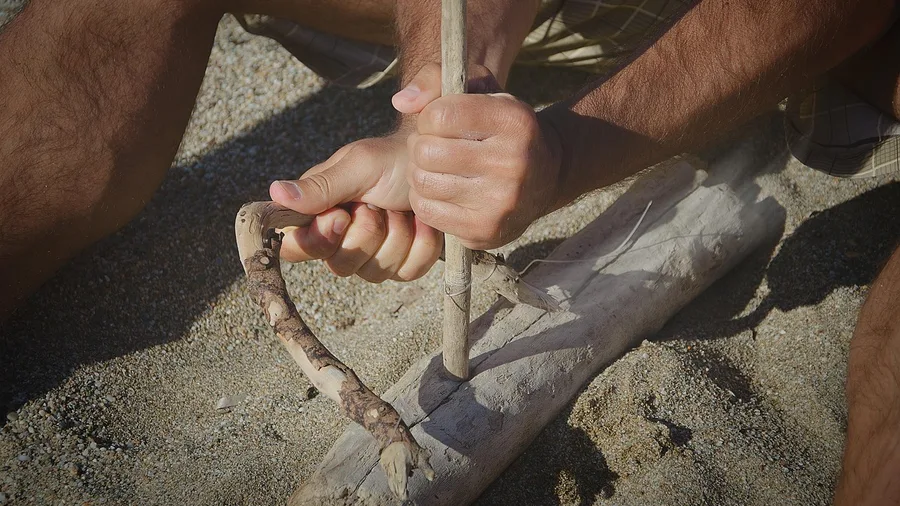
Picking up a branch that lightning set alight is not the same thing as making fire whenever you need it. The first is scavenging an accident. The second is repeatable technology – a system that works in wet weather, in darkness, under pressure – and the archaeological record places that second capability far later in human history than the standard mental image suggests.
For hundreds of thousands of years, hominins moved through glacial cycles carrying no guarantee of nightly warmth. Fire appeared in their lives opportunistically: near volcanic vents, after dry-season burns, wherever the landscape happened to offer it. Paleoanthropologists still contest the precise dates for controlled, on-demand ignition, and any specific figure here would outrun the current evidence – the peer-reviewed literature is the right place to find those numbers as they are revised.
What that long gap means is the real starting point. Generations of people survived hard winters without reliable heat, which forces a different question than the one most people carry into this topic. The interesting problem is not how early humans managed the nights when fire was available. It is what was doing the work on all the nights it was not – and the answer turns out to be a layered system in which fire was never actually the foundation.
From Opportunistic Fire to Controlled Fire
The Body Itself Was Already a Cold-Weather Tool

The body was already running its own heating system, and it did not require a decision to switch on. Deep deposits of brown adipose tissue – brown fat, stored around the torso and neck – generate heat through a process called non-shivering thermogenesis: the tissue burns stored fat to produce warmth with no muscular movement involved. The system is present in modern humans, but most people alive today rarely push it hard enough to matter.
Physical labor across full daylight hours did the other half of the work. Gathering, processing, carrying loads, constructing shelter – sustained movement kept core temperature elevated continuously, not in the brief spike of a morning run but across hours. A body that has been working since first light arrives at nightfall with banked warmth that an inactive body never generates.
Modern people have the same hardware. What has changed is the environment that once triggered it automatically: chronic mild cold, sustained daily exertion, the absence of climate control. Remove those cues and the systems stay dormant, not gone. Early humans were not running a conscious cold-management strategy – the body handled it, which freed cognitive resources for decisions that actually required them. The thermal advantage at the end of a winter day was built-in, accumulated hour by hour, without anyone choosing it.
💡 PRO TIP
Brown Fat Is Not Gone — It Is Undertrained
Regular cold exposure — even cold showers or outdoor walks in winter without extra insulation — reactivates brown fat thermogenesis. Researchers studying deliberate cold exposure consistently find measurable metabolic changes within weeks of consistent practice.
Shelter Was Cognitive Engineering Applied to Whatever the Landscape Offered
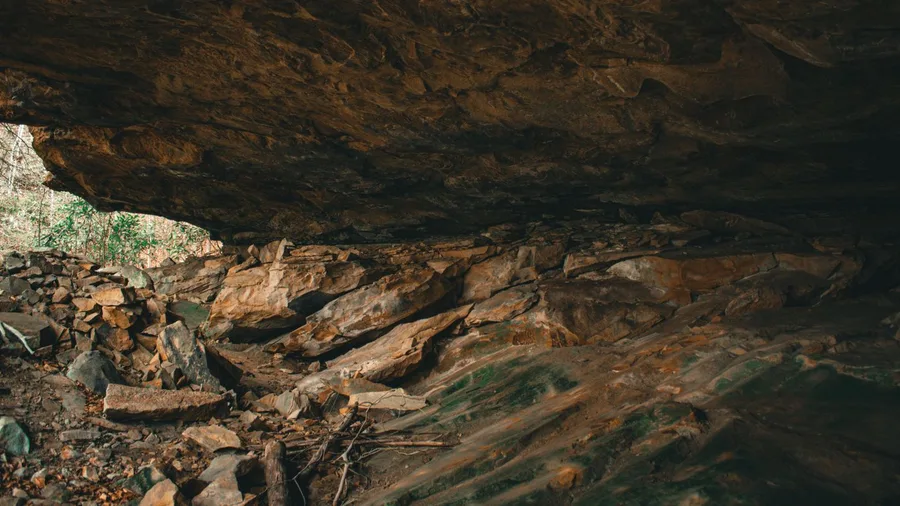
Reading the land correctly was the difference between a survivable night and a fatal one.
A south-facing rock overhang is not dramatic shelter – it is a ledge, sometimes barely head-height – but it blocks the prevailing wind and catches whatever weak solar radiation a short winter day provides. No fire, no constructed wall: effective wind-chill drops enough to matter, because wind is the mechanism that strips heat fastest, and removing it changes the thermal equation entirely.
The ground itself was the other threat. Cold earth pulls heat from a body through direct contact faster than cold air does. Hides laid on the floor, dry grass packed underneath – these were not comfort measures. They were insulation, creating a thin boundary between skin and the surface that would otherwise drain warmth steadily through the night. A body wrapped in hides on top of that layer traps its own radiated heat in a pocket of air small enough to stay warm.
Caves were one solution among several. Open-landscape populations dug shallow pit shelters, worked into dense forest margins, or constructed windbreaks from whatever materials were at hand. The specific form changed with the terrain.
What stayed constant was the cognitive act behind it: recognizing what the landscape offered and knowing how to configure it. That knowledge – which slope, which hollow, which material underfoot – was as engineered as anything built from cut stone. The body generated the heat; the mind chose where to keep it.
Shelter — The Threshold Each Layer Had to Clear
🪨 Rock overhang
Wind speed below ~15 mph cuts perceived cold-kill risk by more than half on a sub-zero night
🦌 Hides on ground
A single hide layer can halve conductive drain — without it, cold earth pulls heat faster than the body replaces it while sleeping
👥 Group sleeping contact
Two bodies sharing a hide pocket can maintain core warmth a solo sleeper cannot — the minimum viable group was not social, it was thermal
🌲 Forest margin windbreak
Dense tree margins reduce wind exposure by 60–80% without requiring any constructed wall — the forest edge was shelter already
🕳️ Pit shelter
Even 60 cm below grade, air temperature stabilises several degrees above surface — enough to close the gap a hide layer cannot cover alone
The failure mode
Each layer compensated for a different pathway. Lose one — no ground insulation, no windbreak — and the remaining layers could not make up the difference. Cold killed through the gap, not the whole.
Fat and Calorie Reserves Were Managed Across the Entire Year

Keeping the body warm through a night is a problem measured in hours; keeping it fed across three frozen months is a problem measured in seasons, and solving it required thinking well before the cold arrived.
The work of winter survival began in late summer, when food was still everywhere. Those who read the peak of abundance correctly – and ate heavily into it, accumulating body fat while the eating was easy – arrived at the cold months carrying reserves that a modern calorie-managed diet would never permit. That was not gluttony. It was a cognitive act: recognizing that present plenty was finite, that scarcity was coming on a known schedule, and acting on that recognition across weeks. Delayed gratification measured not in minutes but in months.
When stores ran low, specific knowledge unlocked calories that the landscape still held. A frozen carcass slowed by deep snow was accessible in ways a living animal was not – and the marrow inside the long bones was pure fat, crackable with a stone, dense enough to matter. Cached nuts and tubers, placed before the freeze, extended the window further. Fish moved under ice and could be taken by those who knew where and how.
The body also adjusted its own demand. Under sustained cold and reduced intake, metabolic rate drops – a lower gear that cuts caloric need without conscious instruction. The reserves laid down in summer stretched further than they would in a modern metabolism running at full speed year-round. The body was managing its own budget, and the mind had helped fill the account before winter ever opened it.
Winter Calorie Strategy — What Carried the Load
Reduced Activity in Winter Was a Strategy, Not a Failure
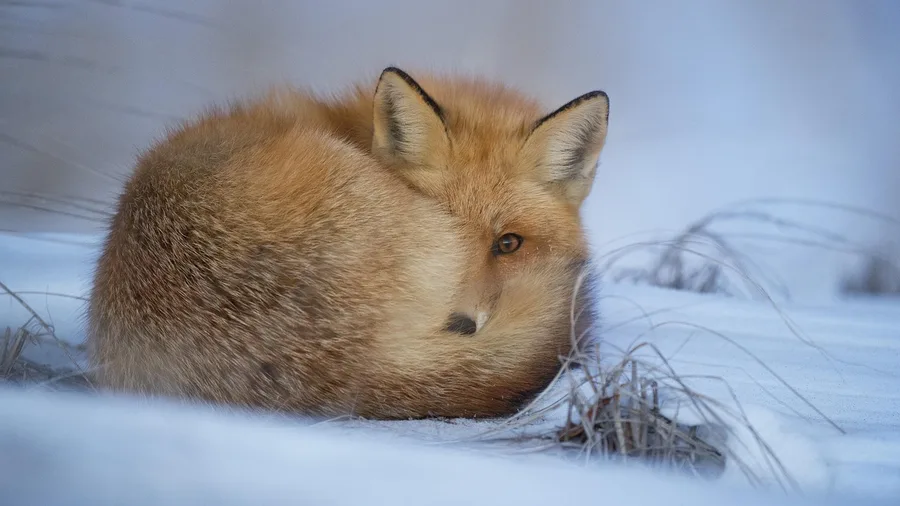
Holding caloric reserves only works if the body is not burning through them unnecessarily – which points to a strategy that looks, on the surface, like doing nothing.
Early humans in winter almost certainly slept longer, traveled shorter distances, and let non-essential tasks go undone. This was not collapse. Consciousness stayed intact, core temperature was maintained – it was not hibernation in any biological sense – but the activity budget shrank deliberately, trading output for survival margin. Less ranging meant less cold exposure. Less tool-making meant fewer calories spent on work the season did not require.
The archaeological signature of this is visible at some sites: winter occupation layers are thinner – less debris, fewer animal remains, quieter evidence of human presence. People were there. They were simply doing less, on purpose.
That posture required something specific from the mind: the ability to accept reduced output without framing it as failure. No guilt, no resistance, no cognitive energy burned fighting a seasonal reality that was not going to change. The winter was what it was, and working against it internally cost as much as working against it physically.
Modern life has largely deleted that permission. The expectation of consistent productivity runs flat across all twelve months, with no concession to season. The friction many people feel in winter – the pull toward stillness that gets labeled laziness – may be older than the culture demanding they ignore it.
Winter Energy: The Ancient Logic vs. the Modern Override
Seasonal Rest Logic
- Sleep extends with darkness — less light, more rest
- Non-essential activity pauses to conserve calories
- Reduced ranging limits cold exposure
- Metabolic rate drops to match available fuel
- Low-output periods treated as normal, not failure
Modern Override
- Artificial light cancels the sleep-extension signal
- Year-round productivity expected regardless of season
- Calorie intake stays constant even as activity drops
- Stimulants suppress metabolic slowdown cues
- Winter fatigue treated as a problem to fix
The Group Was the Survival Unit — the Individual Was Not
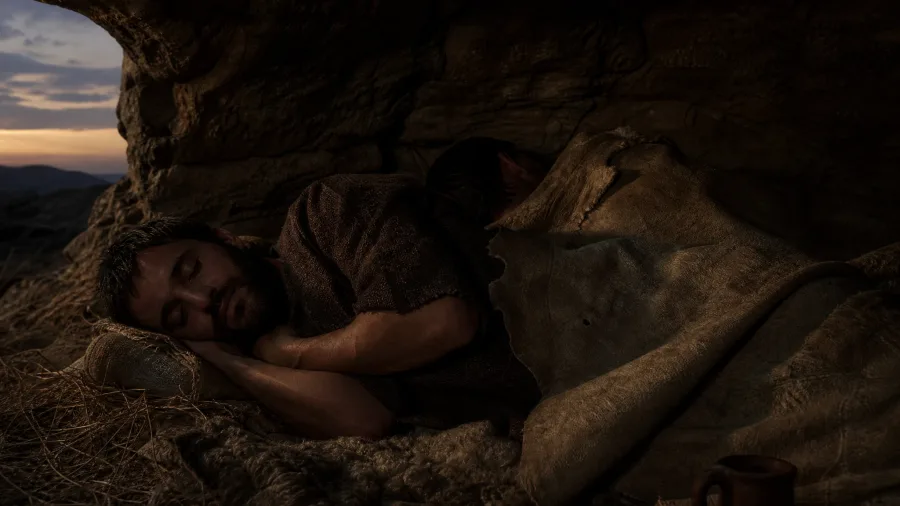
Conservation of body heat, calories, and effort only works if there is a group around you actually doing its part.
Eight people sleeping pressed against one another in a shallow pit shelter are not simply warmer than one – they are inside a different thermal environment entirely. Shared breath, radiated warmth from seven other bodies, the small trapped air pocket that forms between people who sleep in contact: none of that is available to a person alone, and no amount of extra animal hide fully compensates for its absence.
Division of labor made the caloric math work in a second way. While some members foraged, others cracked marrow bones, repaired shelter, or kept watch over the young and the old. Total energy spent per unit of food or warmth produced dropped sharply when the work was spread – each person burning less while the group extracted more.
Researchers studying social thermoregulation have found that the sensation of physical cold and the pain of social isolation activate overlapping neural processes. The link may not be purely metaphorical. If the connection is even partly mechanistic, then belonging to a tight, functioning group was not only a logistical advantage – it was a direct physiological one, the body reading social connection as warmth.
Solitary winter survival was not a feat of exceptional endurance. It was a near-certain death. The group was not the support system for individual survival – it was the survival mechanism itself, and the individual was one working part of it.
Winter Survival Odds: Solo vs. Group
These figures reflect the combined effect of thermal, caloric, and knowledge advantages — not a precise archaeological measurement.
Shared Knowledge Across Generations Was the Real Technology

What a group knew was only as durable as the people who held it. Before writing, before diagrams, before any external storage at all, knowledge about winter lived inside specific individuals – and was transmitted in the only way available: a child watching, listening, and repeating until the information became instinct.
A child who followed an elder to the edge of a frozen lake was not just along for company. They were watching which patches the elder avoided, which sounds the ice made underfoot, where the water stayed open longest. That same child might spend a morning learning which bark stripped cleanly in cold weather and which shrank their gut. None of this was classroom instruction. It was transmission through proximity, repeated across seasons, until the pattern held.
The elders who had come through many winters carried location-specific knowledge that could not be reconstructed quickly from scratch – which valley the wind skipped, which cough turned fatal, which frozen carcass was worth the detour for its marrow. This is why older individuals carried high social status in hunter-gatherer groups. It was not sentiment. It was recognition that their memory was load-bearing.
Knowing that someone in the group had done this before was itself a form of psychological protection. Anxiety about winter was not primarily managed through individual problem-solving – it was managed through trust in inherited knowledge, through the felt certainty that the group had a map even when the landscape looked new.
Lose that person and the cost arrived the following winter. In a group of thirty, a single death could erase data that had taken decades to accumulate – specific, tested, irreplaceable data about that terrain, that climate, those dangers. The loss was not personnel. It was memory, and memory was how they survived.
🧠 How Winter Knowledge Passed Between Generations
Observation in childhood
Children watched elders locate resources, read weather signs, and navigate shelter decisions without formal instruction.
Participation in adolescence
Young adults practiced skills under supervision, learning the cost of errors without bearing the full survival consequence.
Independent application
Adults applied accumulated knowledge and added their own season-specific observations over time.
Elder status
Those who had survived many winters became the group's navigational memory — irreplaceable and high-status.
Transfer before loss
Knowledge passed urgently to the next generation; an elder dying without transmitting it was a group-level catastrophe.
Narrative and Ritual Gave Winter a Psychological Shape
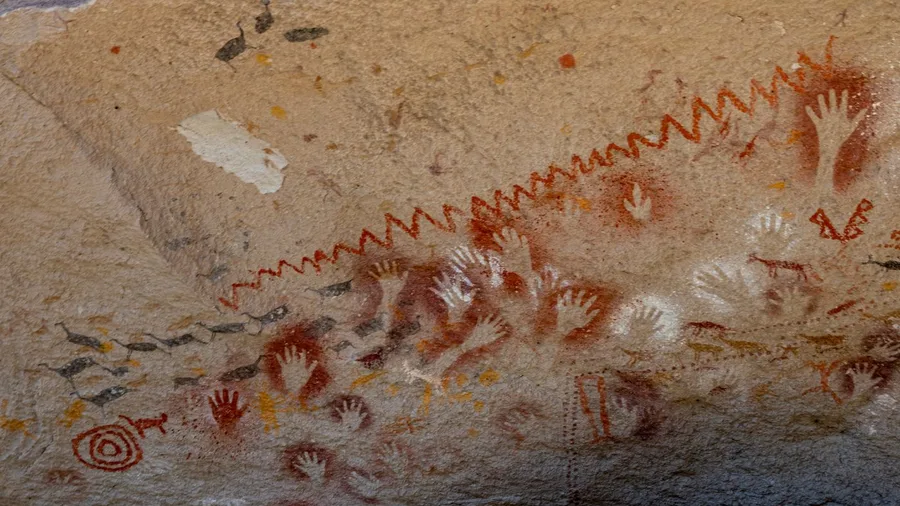
Knowing what to do with cold and scarcity answered the practical question. It did not answer the psychological one – how to endure weeks of darkness and confinement without the mind turning against itself.
Story did that work. The archaeological record shows pigment use and carved objects appearing far earlier than most people expect – symbolic behavior predates agriculture by a very large margin, appearing in the material record long before any settled way of life. The specific content of early ritual cannot be recovered without fabricating it. But its existence as a category of behavior is evidence of something: the need to give suffering a shape.
That need has a functional explanation. An ordeal with no known boundary – just cold, and more cold, and unknown duration – generates a different quality of distress than one with a name and a known arc. Narrative converts the open-ended into the bounded. ‘This has happened before. It has a name. It ends.’ Those three moves reduce anticipatory anxiety in a way that accurate information alone does not.
Research on how people endure prolonged hardship consistently finds the same pattern: those who can place their suffering inside a larger story – one with structure, meaning, and an implied resolution – hold together longer and fracture less than those who experience the same hardship as random and purposeless. The mechanism is not belief in any particular content. It is the framing itself.
Early humans who gathered around something – a sound, a marked object, a repeated gesture – and oriented it toward winter’s end were doing this work. Not as decoration. As maintenance.
Tolerance for Discomfort Was Trained From Birth, Not Chosen in Adulthood
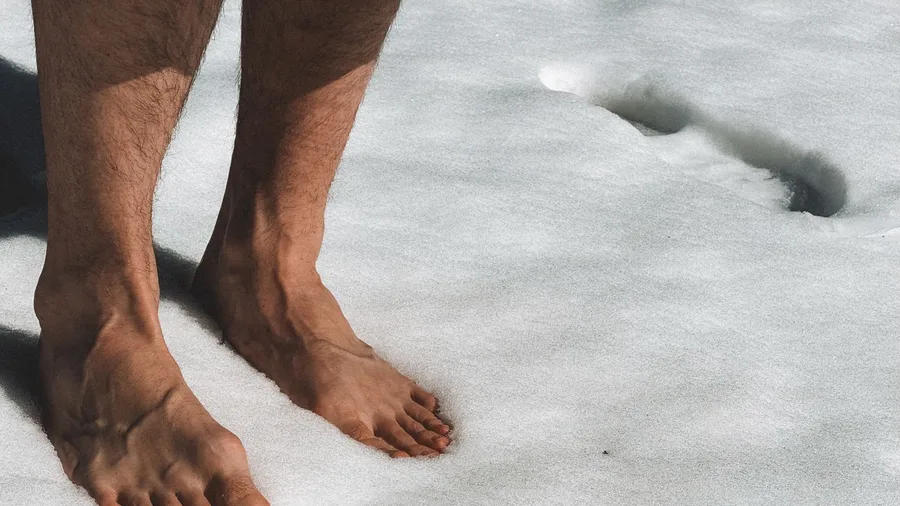
Framing the cold as bounded and survivable helped. The cold itself was still there every morning.
What differed, for people raised in it from infancy, was the body’s baseline relationship to that sensation. Habituation to cold beginning early in life produces measurable changes – brown fat activation, vascular adaptation in the extremities – and also changes the subjective register. The same temperature does not feel identical to a body that has known it every winter since birth and to one encountering sustained cold for the first time. The sensation persists. The alarm around it does not.
Current research on deliberate cold exposure makes this distinction cleanly: people who practice regular cold immersion report that the cold itself does not disappear, but the catastrophizing response – the resistance, the internal emergency – substantially reduces with time. That gap between sensation and suffering is the trained part.
It mattered practically. A mind treating moderate cold as an emergency burns cognitive and emotional resources on that emergency – resources unavailable for reading the sky, finding food, or making a decision that might matter. Early humans who did not escalate discomfort into crisis retained that capacity for actual problems.
Winter killed people. This is not a story about people who felt nothing. Suffering was real, and the cold was genuinely dangerous. But a mind calibrated from birth does not reach for panic as its first response to a familiar sensation – and that calibration, built across a childhood of ordinary exposure, was not toughness as a personality trait. It was a trained default, available to anyone who encountered the cold early enough and often enough to know it was not, by itself, the end.
Grief and Loss Were Absorbed Collectively, Not Alone
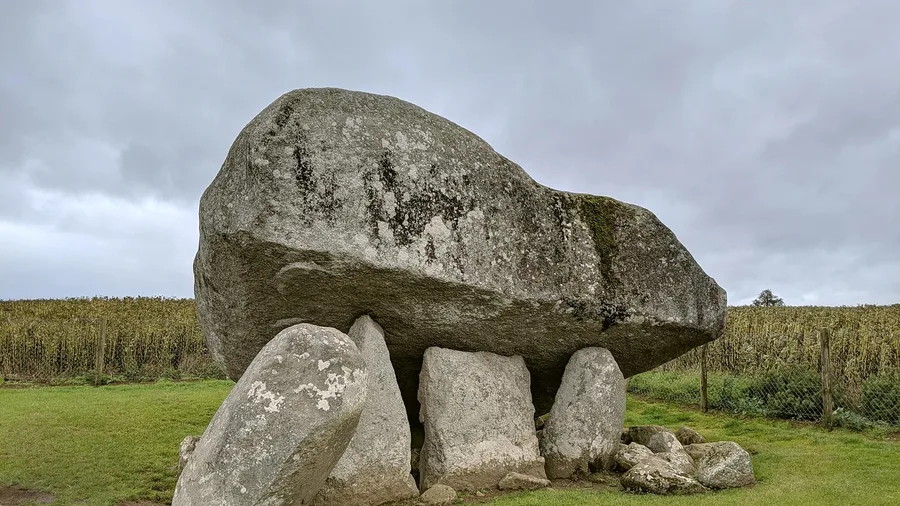
Cold, hunger, and physical exhaustion were things a trained mind could absorb – but death was a different kind of pressure, and winter delivered it reliably. In a small group of twenty or thirty people, a hard season could take two or three members: the infant born underweight in November, the elder whose cough turned serious by January, the adult whose injury never fully healed. This was not catastrophe in the exceptional sense. It was the predictable shape of the season.
What made it survivable as a social fact was that mourning was never a private event.
Collective grief does specific functional work that solitary grief cannot. It pulls people together at exactly the moment loss threatens to push them apart – reasserting that the group still exists, still coheres, still has shared purpose. A person who retreats into isolation after loss stops generating heat, stops contributing labor, stops maintaining the bonds that the whole group depends on. In a group whose survival turned on coordination, that withdrawal was not just emotionally costly. It was materially dangerous.
The archaeological record shows deliberate burial and the placement of objects with the dead far back into human prehistory – evidence that managing the psychological aftermath of death was treated as serious work long before any written tradition recorded why. The specific meanings projected onto those burials cannot be recovered. But the behavior itself signals that a group recognized the need to do something formal with loss, not just absorb it in silence.
Emotional culture, then, was not softness layered on top of survival – it was a variable that determined whether the group held together through its worst weeks or slowly fragmented into people too depleted to function alongside one another.
Hope Was Not a Mood — It Was a Cognitive Survival Tool
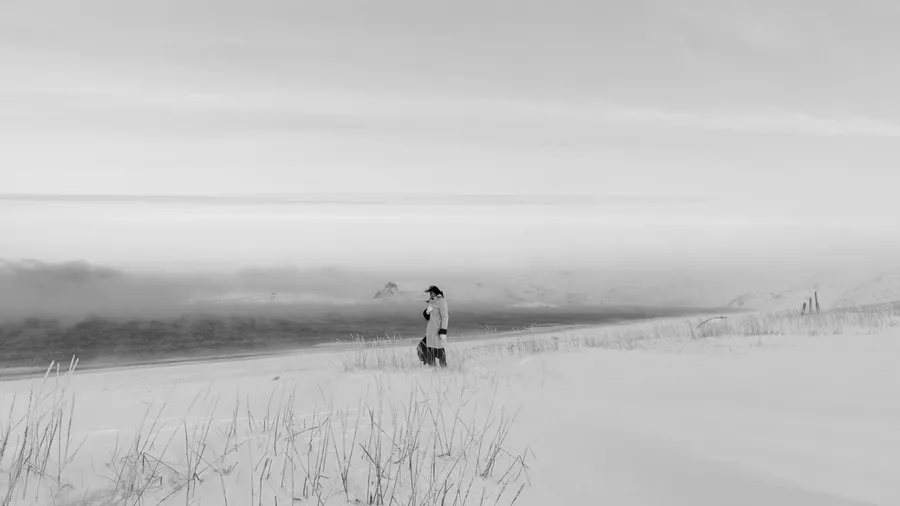
What kept an individual moving through the coldest week – after the loss, after the hunger, after weeks without warmth – was a capacity no other animal on the landscape possessed in the same form: the ability to mentally place oneself in a future that did not yet exist.
A wolf endures winter. It does not picture spring.
Humans do. The cognitive ability to simulate a specific future event – to hold a clear image of the ground thawing, of different food, of warmth that is actually coming – is what researchers call episodic future thinking, and it is distinctly and measurably human. For early people moving through a glacial winter, that capacity had direct practical value: it underwrote decisions made weeks in advance, kept people caching food and maintaining shelters when the present moment offered no immediate reward for doing so.
But the same ability is also what makes winter harder for humans than for any other animal. A person standing in the worst week can model every remaining week. Can imagine not surviving. Can feel the full projected weight of what lies ahead. The gift and the cost are the same cognitive tool.
Research on resilience under prolonged hardship points to future-projection as one of the most consistent predictors of endurance – not as a feeling of cheerfulness, but as an active cognitive act: constructing a specific, believable image of conditions changing. The people who made it through were not those who felt most hopeful. They were those who could most clearly picture spring.
This is what the headline’s question ultimately points at. No single physical trick – not fat reserves, not animal hides, not a fortuitous cave – was enough on its own. Survival was a system, and the capacity that held the system together was the ability to imagine that the winter would end.
Frequently Asked Questions
Did early humans actually survive without fire, or did they always have access to it somewhere?
Fire was available sometimes and in some places — early hominins could encounter and carry natural fires from lightning strikes or volcanic sources. What was missing for most of human prehistory was the ability to produce fire reliably on demand. Groups survived cold periods with fire as an occasional advantage, not a nightly guarantee. The physical and social strategies described here were the baseline that fire supplemented rather than replaced.
How cold could it get during the periods when early humans had no reliable fire?
Glacial periods brought temperatures in parts of Europe and Asia well below modern norms in those regions. In peak glacial phases, midlatitude winters were substantially harsher than anything most people in those regions experience today. Hominins tracked more temperate zones as glaciers expanded, but cold-season temperatures even in those areas would have been regularly life-threatening by modern standards of exposure without insulation.
Is the idea that early humans semi-hibernated in winter supported by evidence?
Not in the way popular accounts sometimes frame it. Full hibernation — with dramatically lowered core temperature and suspended consciousness — is not a human adaptation. What the archaeological record suggests at some sites is behavioral dormancy: reduced travel, less tool-making activity, lower caloric throughput. This is consistent with deliberate calorie conservation and cold avoidance rather than true physiological hibernation.
What does prehistoric winter survival have to do with modern psychology?
The specific capacities that enabled prehistoric winter survival — social bonding, meaning-making under hardship, tolerance for discomfort, episodic future thinking, and collective grief processing — are exactly the constructs that researchers studying resilience, seasonal depression, and prolonged stress return to consistently. These are not new tools that therapy invented. They are very old ones that most modern environments simply stop triggering.
Why did early humans not simply migrate to warmer climates every winter?
Many did track seasonal resources and moved across landscapes as conditions shifted. But migration had real costs: territorial competition, unfamiliar terrain, and the loss of location-specific knowledge that made a known winter site manageable. For groups with deep accumulated knowledge of a particular region, staying in a prepared, known location was often safer than moving into unknown territory that offered warmth but not familiarity.
How reliable is the archaeological evidence for symbolic behavior before agriculture?
The evidence is fragmentary but genuine: ochre pigment use, beads, carved objects, and deliberate burial appear at sites that predate agriculture by tens of thousands of years in some cases, and possibly far more in others. What the evidence does not tell us is the specific meaning or belief content of these behaviors — that would be speculation. What it does confirm is that humans were engaging in symbolic activity far earlier than the ‘civilization began with farming’ narrative implies.
What the Coldest Nights Built Into You
The physical strategies were real and necessary — brown fat, insulated ground, cached calories, reduced winter ranging. None of them were sufficient on their own. What actually carried early humans through winter after winter was the architecture built on top of them: the group that shared warmth and knowledge, the narrative that gave the cold a known shape and a guaranteed end, the trained tolerance that stopped discomfort from becoming panic, and the capacity to imagine spring clearly enough to act toward it in the darkest week.
Every one of those tools is still present. Modern psychology keeps rediscovering them under different names: social support networks, meaning-making under adversity, stress inoculation, prospective thinking. What they share is an origin — they were not invented by therapists or researchers. They were selected for, over hundreds of thousands of winters, by the simple fact that the groups who had them outlasted the ones who did not. You inherited that toolkit. Most of what modern life does is stop you from needing it — which is not the same as making it disappear.