You spent the last three summers dodging crowds in overpriced European beach towns, desperate for something that still feels genuinely alive.
Your friend booked a boutique riad in Marrakech on a whim, returned with unedited photos of desert light bouncing off hand-carved plaster, and changed your entire travel radar overnight.
Morocco is no longer just a budget backpacker route or a quick-stop desert tour.
It is a multi-faceted design, culinary, and wellness capital built on centuries of craft.
💡 PRO TIP
The 2026 Travel Shift
Experiential tourism bookings across North Africa have jumped by forty percent as travelers abandon saturated European hotspots for design-forward itineraries.
The Infrastructure Pivot: Why This Year Is Entirely Different
Travel friction used to define the Moroccan overland experience.
Delayed buses and grueling multi-hour drives across mountain passes kept many travelers confined to single-city loops.
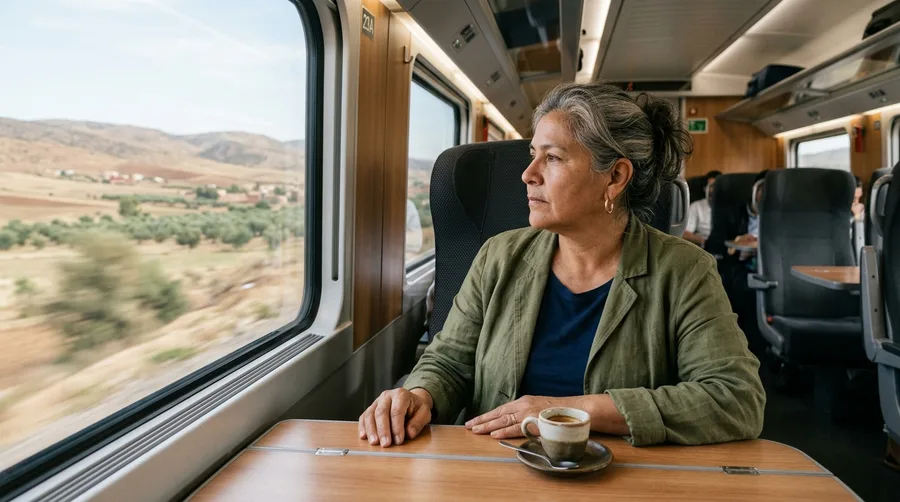
The expansion of the Al-Boraq high-speed rail network completely rewrites that math by connecting Tangier, Rabat, and Casablanca in a fraction of the time.
You can now step off a morning flight in Tangier, grab espresso at a harbour café, and check into a coastal riad hours before sunset.
Solar-powered eco-lodges in the Agafay Desert and foothills of the Atlas mountains offer modern architectural minimalism without sacrificing off-grid privacy.
Pair these stays with open-jaw flight routes flying into Marrakech and exiting via Fes to eliminate tedious backtracking entirely.
The New Moroccan Transit Map
Key metrics driving the current travel wave
Marrakech Beyond the Medina: The New Creative Vanguard
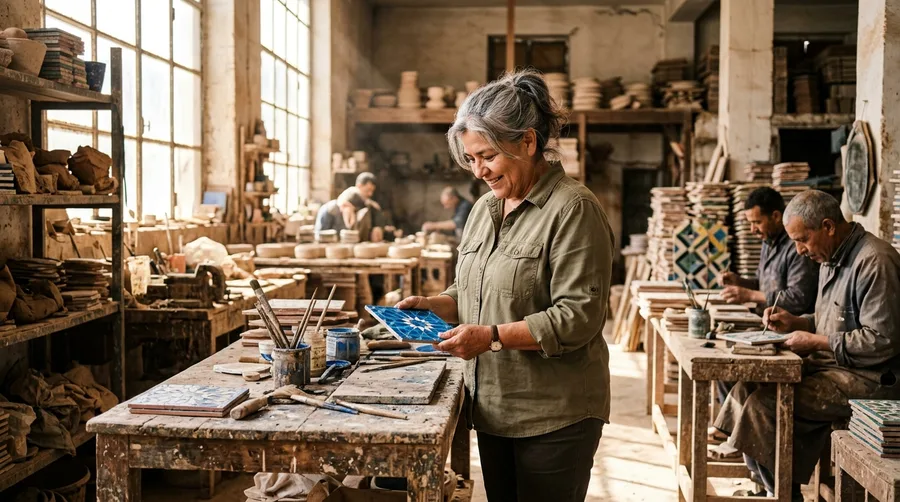
The old medina will always demand your attention, but the real creative energy lives in the industrial zone of Sidi Ghanem.
Artists, ceramicists, and furniture designers converted dusty auto-body shops into sleek minimalist showrooms.
Traditional Berber craftsmanship merges seamlessly with clean European interior architecture in these sunlit workspaces.
Watch artisans hand-glaze vibrant Zellige tiles or forge brass pendants using centuries-old techniques.
Young Moroccan chefs are modernizing classic tagines and street food using hyper-local, farm-to-table ingredients sourced from nearby organic co-ops.
Skip the generic tourist trap restaurants and book a communal tasting table at one of Sidi Ghanem’s hidden garden bistros.
Traditional Berber craft meets minimalist modern architecture in a way no European design capital can replicate.
— What creative directors keep repeating
The High Atlas and Beyond: Redefining Mountain Escapes
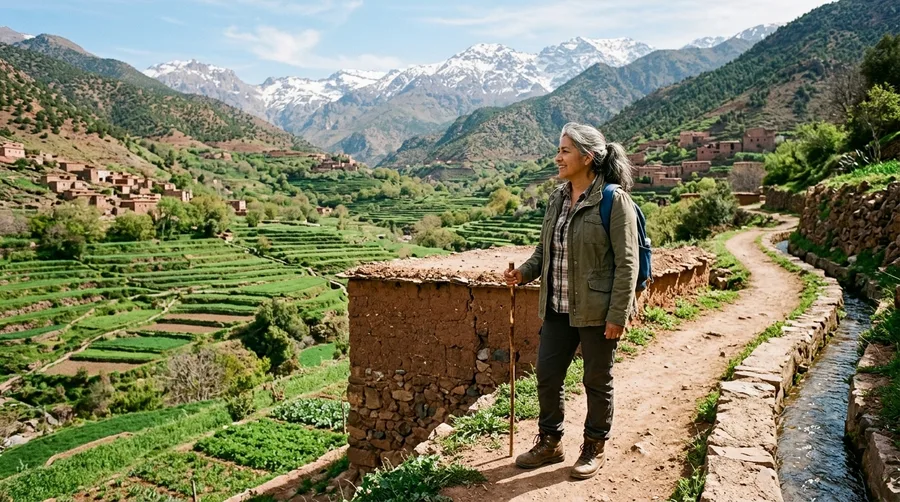
City noise fades instantly the moment you climb winding switchbacks toward the Ourika and Imlil valleys.
Traditional earthen architecture made from compressed red clay blends invisibly into the mountain ridges.
Community-based tourism initiatives managed directly by Amazigh cooperatives ensure your lodging fees support local families.
Bypass the crowded tourist buses and hire an accredited local mountain guide for high-altitude shepherd paths.
You will walk past terraced walnut orchards and alpine streams where mules carry fresh harvest down to village markets.
End your trek with a home-cooked tagine served on a woven rug overlooking snow-dusted peaks.
The Ideal Two-Week Route
The Atlantic Coast: Surf, Wind, and Slow Living
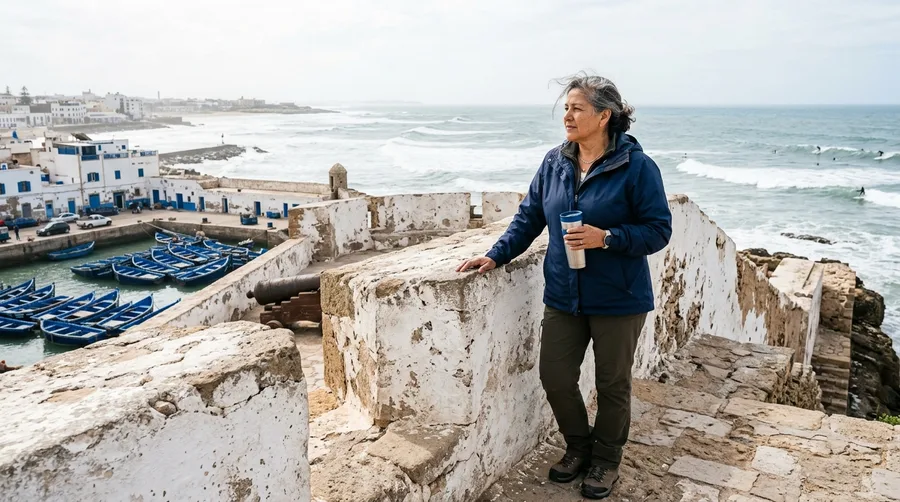
Mass-market beach resorts have no place on the rugged Moroccan coastline.
Bohemian wind-and-surf culture defines towns like Essaouira, Taghazout, and remote Mirleft.
Trade bustling city squares for bracing Atlantic spray and whitewashed Portuguese ramparts.
Coastal wellness retreats blend daily yoga sessions, surf coaching, and traditional Moroccan hammam therapies.
The local microclimate keeps temperatures mild even during peak summer heat.
Sample grilled sea bass straight from wooden docks while local fishermen mend blue wooden skiffs nearby.
⚠️ COMMON MISTAKE
The Coastal Rush Pitfall
Do not try to drive the entire Atlantic coastline in three days. Pick one surf village like Taghazout and stay put to actually experience the slow rhythm.
The Consensus Turning Point: Navigating Overtourism Responsibly
Popular medinas reach capacity quickly during peak autumn and spring holiday windows.
Official tourism boards now actively push travelers toward secondary destinations like Taroudant, Meknes, and Tafraoute.
Choose family-run riads that reinvest profits into neighborhood restoration rather than absentee foreign investors.
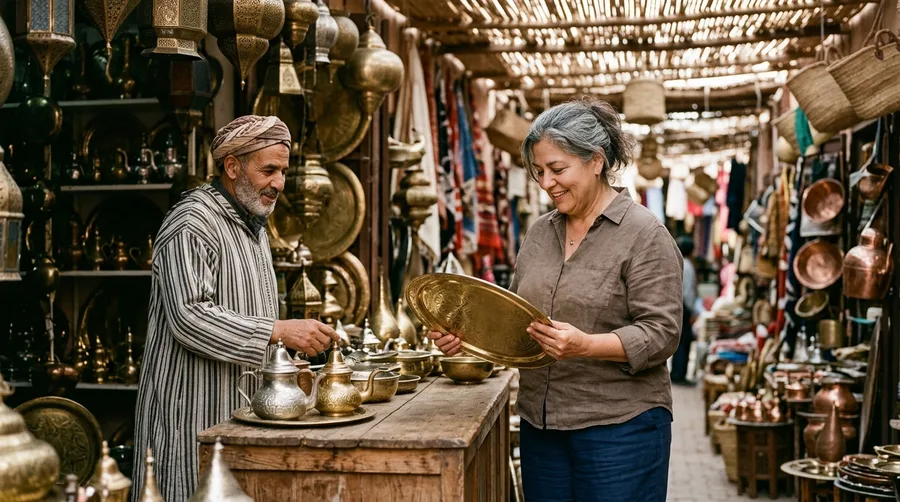
Tip local guides fairly and buy handmade brassware or rugs directly from artisan cooperatives in rural souks.
Your purchasing power dictates whether historic craftsmanship survives or gets replaced by cheap plastic imports.
Respect cultural norms by dressing modestly in rural interior towns while enjoying relaxed coastal beachwear.
Mass Tourism vs. Slow Travel in Morocco
Old Mass-Market Route
- Rushing four cities in five days by bus
- Staying in generic Western-style mega hotels
- Buying mass-produced factory souvenirs
- Sticking only to crowded tourist hotspots
Modern Slow-Travel Way
- Riding high-speed rail between regional hubs
- Booking family-run design riads and eco-lodges
- Purchasing direct from artisan cooperatives
- Exploring secondary towns like Taroudant
Decision Matrix: Which Morocco Route Fits Your Travel Style?
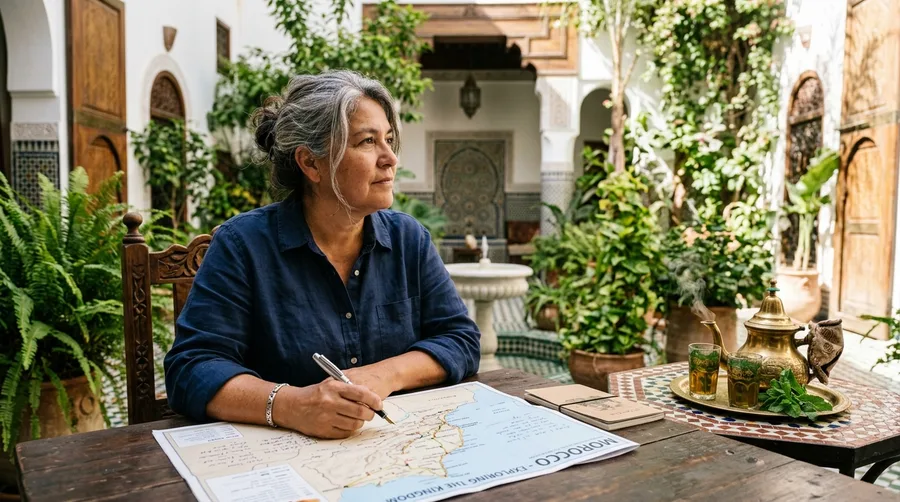
Every traveler approaches Morocco with different priorities and energy levels.
Design and food lovers should anchor their trip between Marrakech and Sidi Ghanem for gallery tours and culinary workshops.
Active travelers must head straight to the High Atlas for multi-day ridge treks supported by local mule teams.
Slow-living seekers will find their pace along the windy Atlantic surf belt between Essaouira and Taghazout.
Map your ideal pacing carefully to avoid travel fatigue across these diverse microclimates.
Book high-speed rail tickets at least two weeks in advance during peak autumn holiday windows.
Daily Travel Budget Breakdown
🗺️ Your 10-Day Slow Travel Blueprint
Arrival in Marrakech
Check into a medina riad and explore Sidi Ghanem design workshops.
Atlas Mountain Trek
Drive to Imlil valley for a two-day guided hike with local Amazigh hosts.
High-Speed Rail North
Board the Al-Boraq train to Tangier for coastal architecture.
Atlantic Surf Retreat
Wind down your trip with a beachfront stay in Essaouira.
Frequently Asked Questions
What is the best season to visit Morocco for cities, mountains, and coast?
Spring (March to May) and autumn (September to November) offer ideal weather across all regions without extreme desert heat.
How has high-speed rail changed getting between Marrakech and Tangier?
The Al-Boraq and connecting lines cut transit times drastically, allowing smooth travel without grueling highway hours.
What are the cultural norms around photography and dress code?
Always ask permission before photographing locals. Dress modestly in rural interior towns while relaxed attire works on the coast.
Is English widely spoken alongside French and Darija?
French and Arabic/Darija dominate, but English is increasingly common in boutique hotels, design shops, and restaurants.
How much cash should I carry versus relying on digital payments?
Keep Moroccan Dirhams on hand for souks, small tips, and rural transport, though major riads and restaurants accept cards.
Make It Stick: Your Next Step
Morocco rewards travelers who abandon the checklist mentality and commit to a single slow-paced regional loop.
Book your open-jaw flights today, secure your riad stays early, and experience the design renaissance firsthand.