The bathroom. It’s supposed to be our sanctuary, right? The place where we start the day with a hot shower and end it brushing our teeth in peace.
But here’s the honest truth that keeps geriatricians up at night: for anyone over 60, the bathroom is statistically the most dangerous room in the house.
I know, I know. You’ve been using the bathroom the same way for decades. You’re careful. You’re steady. But our bodies change in ways we don’t always notice until it’s too late. Our skin gets thinner, our blood pressure gets finicky, and our sense of balance quietly shifts.
The habits that were harmless when we were 40 can actually turn against us when we’re 70.
I’ve dug through the latest research—from dermatology to cardiology—to find the 10 specific habits we need to break. And don’t worry, this isn’t about wrapping yourself in bubble wrap. It’s about making smart, small tweaks so you can stay independent and safe.
Let’s get into it.
1. The “Breath-Hold and Push” (Straining)
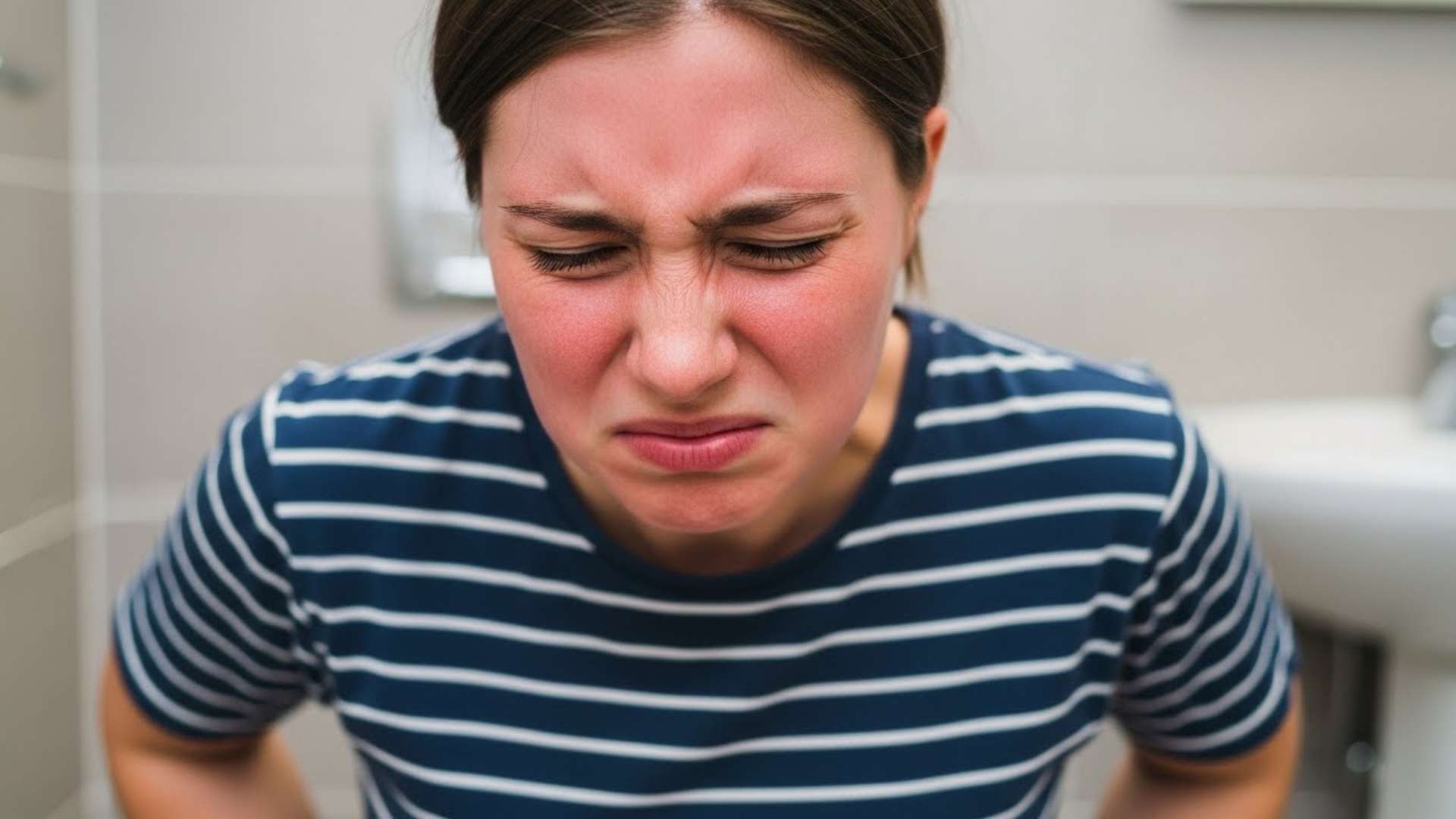
We need to talk about poop. Specifically, the way we handle constipation. There’s a natural instinct when things aren’t moving: you hold your breath, clench your chest, and push.
Doctors call this the Valsalva Maneuver, and honestly? It’s dangerous.
Why it’s risky: When you hold your breath and bear down, you send the pressure in your chest skyrocketing. This squeezes the major blood vessels leading to your heart, causing your blood pressure to spike and then crash rapidly.
For a younger heart, this is a workout. For an older heart, it can trigger fainting (syncope) or, in severe cases, cardiac arrest. In Japan, where they track this closely, a significant number of cardiac events happen right on the toilet.
The Fix: Change the Angle
Don’t hold your breath. If you have to push, exhale through your mouth like you’re blowing out a candle.
Get a footstool. Our modern toilets are too tall. They force our hips into a 90-degree angle which actually “kinks” the rectum. Putting your feet on a small stool brings your knees above your hips (a squat), unkinking the hose and making gravity do the work for you.
2. The Scalding Hot Bath
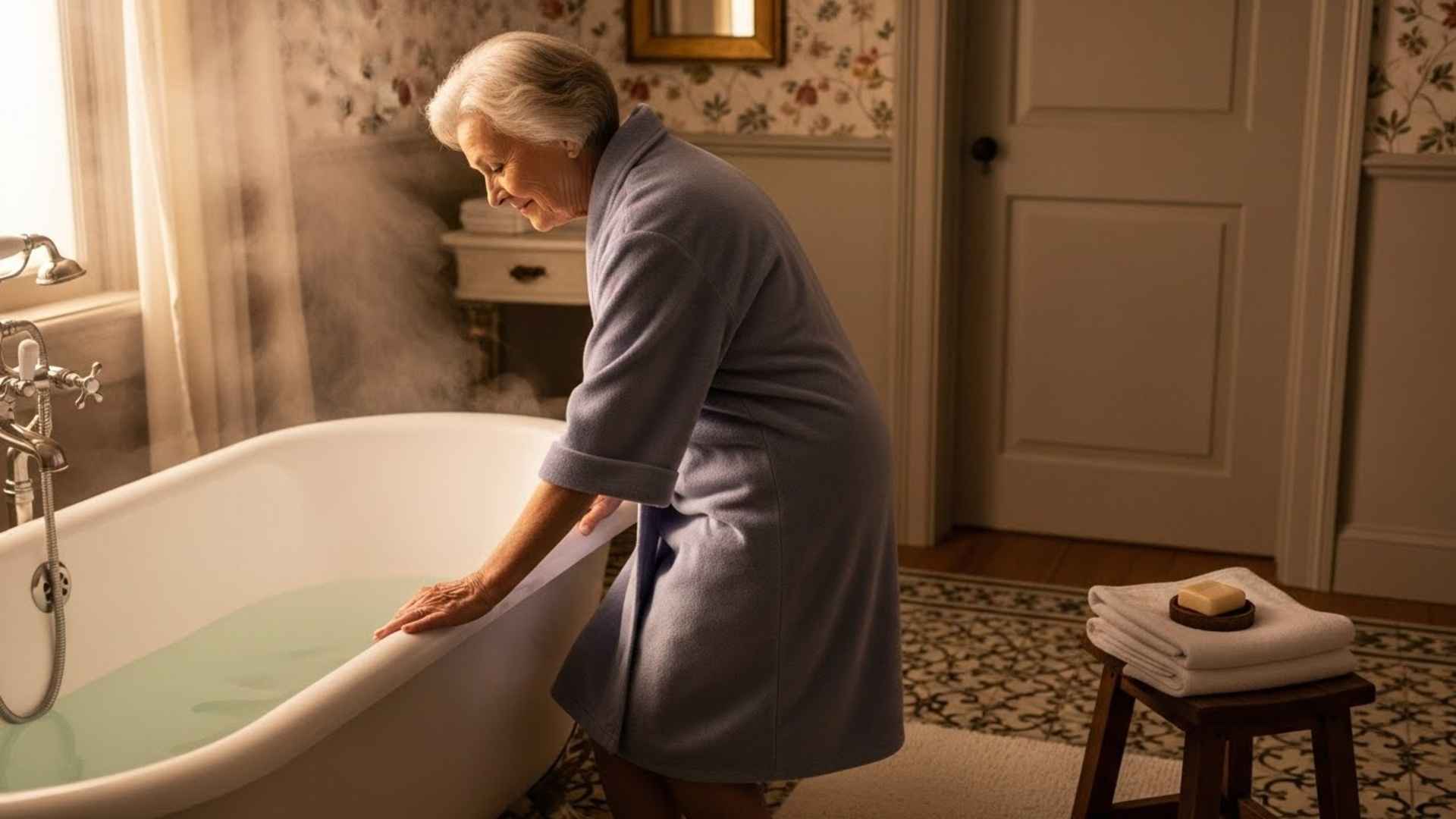
There is nothing quite like sinking into a steaming hot bath to soothe achy joints. But if you’re over 60, your body’s ability to handle that heat has likely changed.
Why it’s risky: Hot water opens up all your blood vessels (vasodilation). This causes your blood pressure to drop. At the same time, the heat makes your heart beat faster. It’s a “double load” on the heart.
The real danger comes when you try to stand up. Your blood pressure is low, and gravity pulls the blood from your head to your legs. This is a prime moment for orthostatic hypotension—a fancy way of saying “dizziness upon standing.” Fainting while trying to step out of a wet tub is a recipe for disaster.
The Fix: The “Warm” Standard
Check the temp: Aim for around 100°F (38°C). It’s warm enough to relax, but cool enough to keep your blood pressure stable.
Hydrate first: Drink a glass of cold water before you get in. It helps keep your blood volume up.
3. The “Squeaky Clean” Scrub
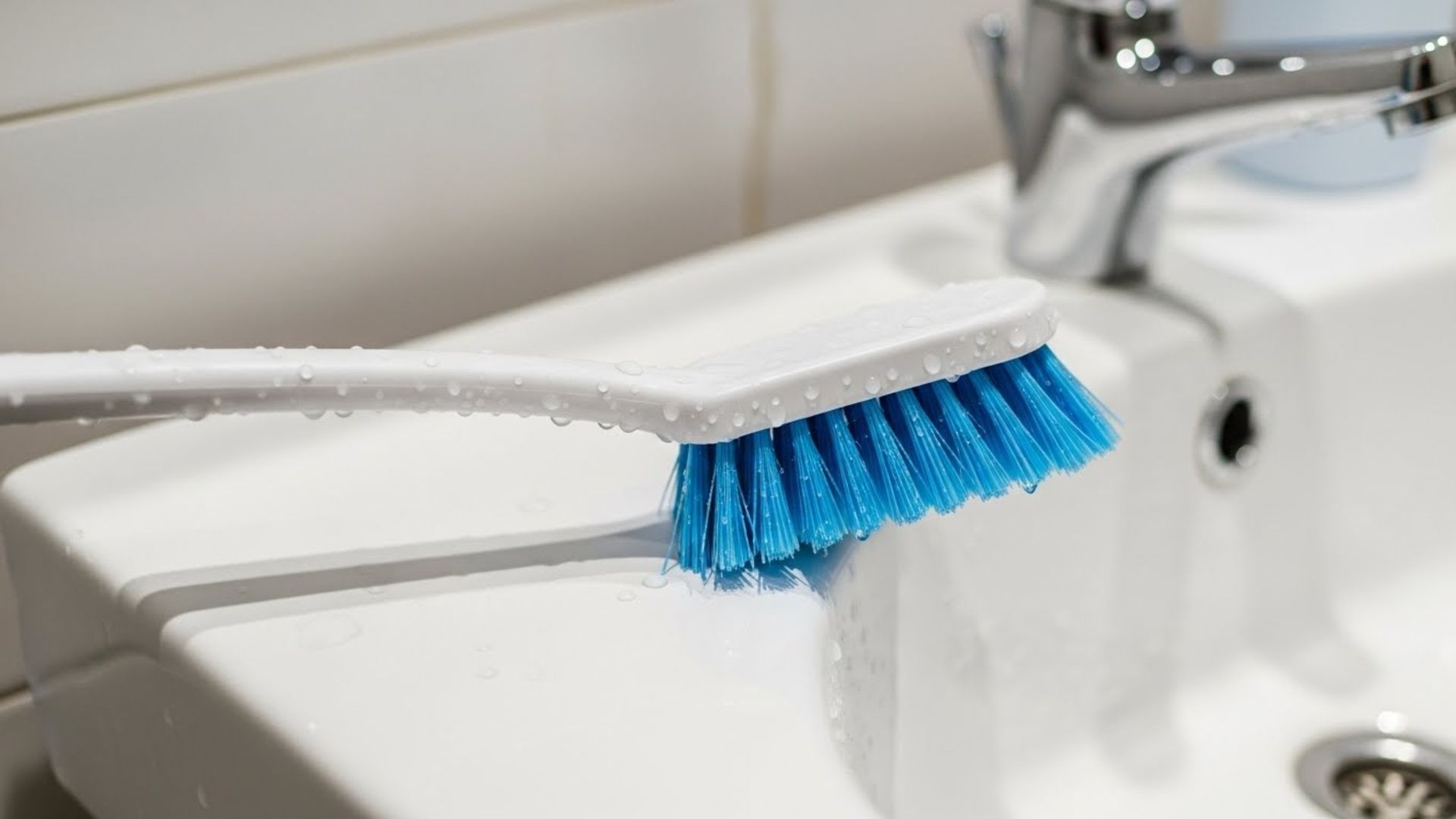
We were raised to believe that we need to scrub every inch of our bodies with soap and a washcloth every single day.
Dermatologists are begging us to stop.
Why it’s risky: Our skin has a protective layer called the acid mantle. It keeps moisture in and bacteria out. As we age, our skin produces less oil, and that mantle gets thinner.
Daily scrubbing with alkaline soaps strips this layer off. This leads to “xerosis”—chronic dry, itchy skin that cracks. Those microscopic cracks are open doors for infections.
The Fix: Strategic Washing
The “Pits and Bits” Rule: You really only need to soap the areas that produce odor (armpits, groin, feet). Warm water is enough for your arms, legs, and back.
Ditch the bar soap: Switch to a pH-balanced cleanser or “syndet” (synthetic detergent) that doesn’t strip oil.
The 3-Minute Rule: Apply moisturizer within 3 minutes of drying off, while your skin is still damp. This traps the water inside.
4. Furniture Walking (The Towel Bar Grab)
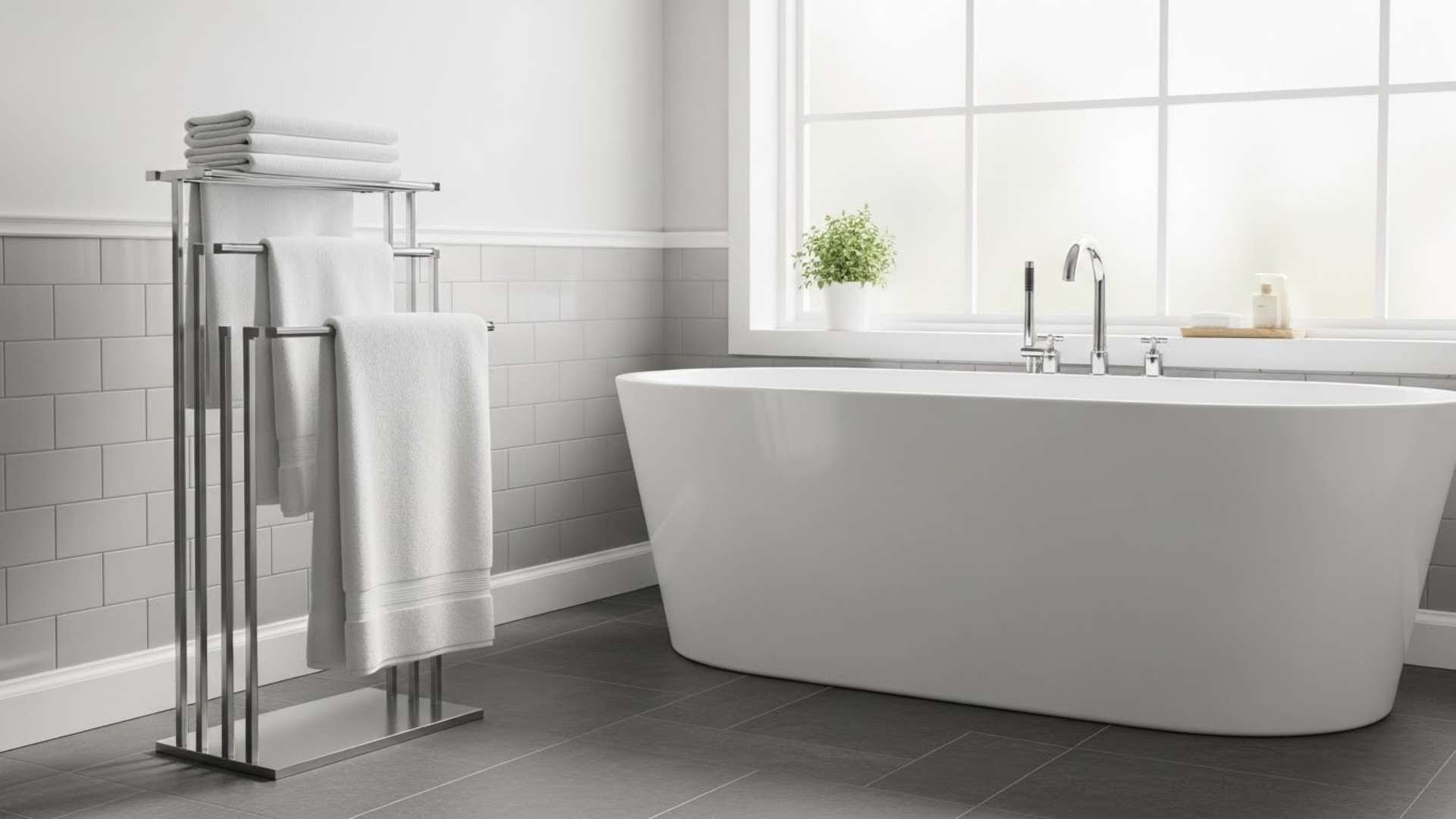
You know the move. You grab the towel bar to steady yourself as you step out of the shower. Or you lean on the sink vanity to stand up from the toilet. We call this “furniture walking.”
Why it’s risky: Here’s the scary truth: Towel bars are usually glued to the wall or held in by tiny drywall anchors. They are designed to hold a 1-pound towel, not a falling adult. If you slip, that bar is coming off the wall, and you are going down with it.
This happens because of a loss of proprioception—our body’s “sixth sense” of knowing where we are in space. As we age, we lose this sense and rely more on touch to orient ourselves.
The Fix: Anchor It
Real Grab Bars: Install bars that are anchored into the wall studs. They need to support at least 250 lbs (though 500 lbs is better).
High Contrast: If your tiles are white, get a colored grab bar. If you can’t see it clearly without your glasses, it’s not safe.
5. Locking the Door
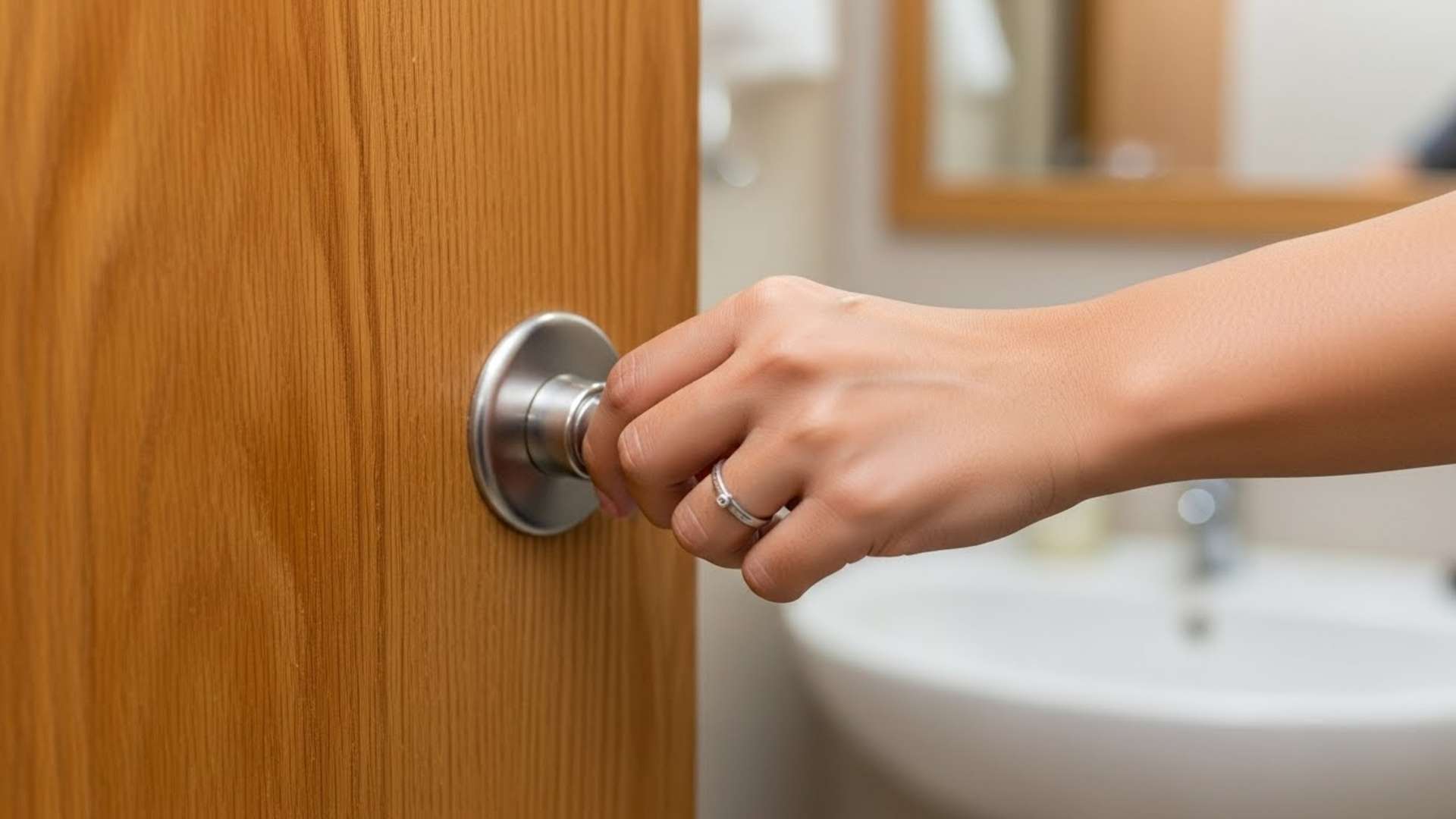
Privacy is a big deal. It’s about dignity. But locking the bathroom door is a habit that can cost precious minutes in an emergency.
Why it’s risky: If you fall, have a stroke, or faint behind a locked door, you have created a fortress that Emergency Medical Services (EMS) have to breach.
Trauma doctors talk about the “Golden Hour”—the window where treatment is most effective. Waiting 15 minutes for firefighters to break down a door can mean the difference between recovery and permanent damage.
The Fix: Accessible Privacy
Reversible Locks: Switch your hardware to “privacy sets” that can be popped open from the outside with a simple pin or coin.
Outward Swing: If possible, have the door swing out into the hallway. If you fall against an inward-swinging door, your own body weight can wedge it shut, making it impossible to open even if it’s unlocked.
The Water Strike
“I don’t want to pee!”
Why It Backfires
Thinking of skipping water to avoid the bathroom? It’s a trap!
Dehydration creates acidic, concentrated urine. This irritates the bladder lining and causes it to spasm.
Paradox: Drinking LESS actually makes you feel the urge MORE often!
Timed Voiding
Drink Up: Aim for clear or pale yellow urine to soothe the bladder.
The Schedule: Don’t wait for the urge. Go every 2-3 hours.
Keeps you empty enough to avoid accidents without dehydration dizziness.
I hear this constantly: “I’m going out later, so I’m not going to drink water today. I don’t want to deal with finding a bathroom.”
Why it’s risky: It sounds logical, but it backfires. When you dehydrate yourself, your urine becomes concentrated and acidic. This acidic urine actually irritates the bladder lining, causing it to spasm.
Paradoxically, drinking less water makes you feel the urge to go more often and more urgently. Plus, dehydration causes dizziness, which leads to falls.
The Fix: Timed Voiding
Drink up: Aim for clear or pale yellow urine. It’s less irritating to the bladder.
The Schedule: Instead of waiting for the urge, go to the bathroom on a schedule (say, every 2-3 hours). This keeps the bladder empty enough to avoid accidents without dehydrating your body.
7. Navigating in the Dark

You wake up at 2 AM. You don’t want to turn on the blinding overhead lights because you want to fall back asleep. So, you shuffle to the bathroom in the dark.
Why it’s risky: A 60-year-old retina receives only about one-third of the light that a 20-year-old retina does. It also takes much longer for older eyes to adjust to darkness.
Walking in the dark leaves you effectively blind to tripping hazards like bath mats or the edge of the tub.
The Fix: Amber Light
Amber Nightlights: Blue light wakes you up. Red or amber light doesn’t disrupt your sleep hormone (melatonin). Put motion-sensor amber nightlights in the hallway and bathroom. You’ll see where you’re going, but you’ll stay sleepy.
The “Just In Case” Pee
Why It’s Risky
Your bladder is a muscle. If you empty it when it’s only half full, it essentially “shrinks”.
It learns to scream “I’m Full!” when it’s barely holding anything.
The Fix: Retrain It
Listen to your body. Only go when you actually need to.
If you’ve already trained your bladder to be small, try to wait a few minutes after the first urge hits.
This helps stretch the capacity back out!
You’re about to leave the house. You don’t really have to go, but you force yourself to squeeze out a few drops “just in case.”
Why it’s risky: Your bladder is a muscle. If you constantly empty it when it’s only half full, it eventually “shrinks” (loses capacity). It learns that it needs to send you the “I’m full!” signal when it’s only holding a tiny amount.
You are accidentally training your body to need the bathroom constantly.
The Fix: Listen to Your Body
Only go when you actually need to. If you are training your bladder, try to wait a few minutes after the first urge hits to stretch that capacity back out.
9. Standing to Groom
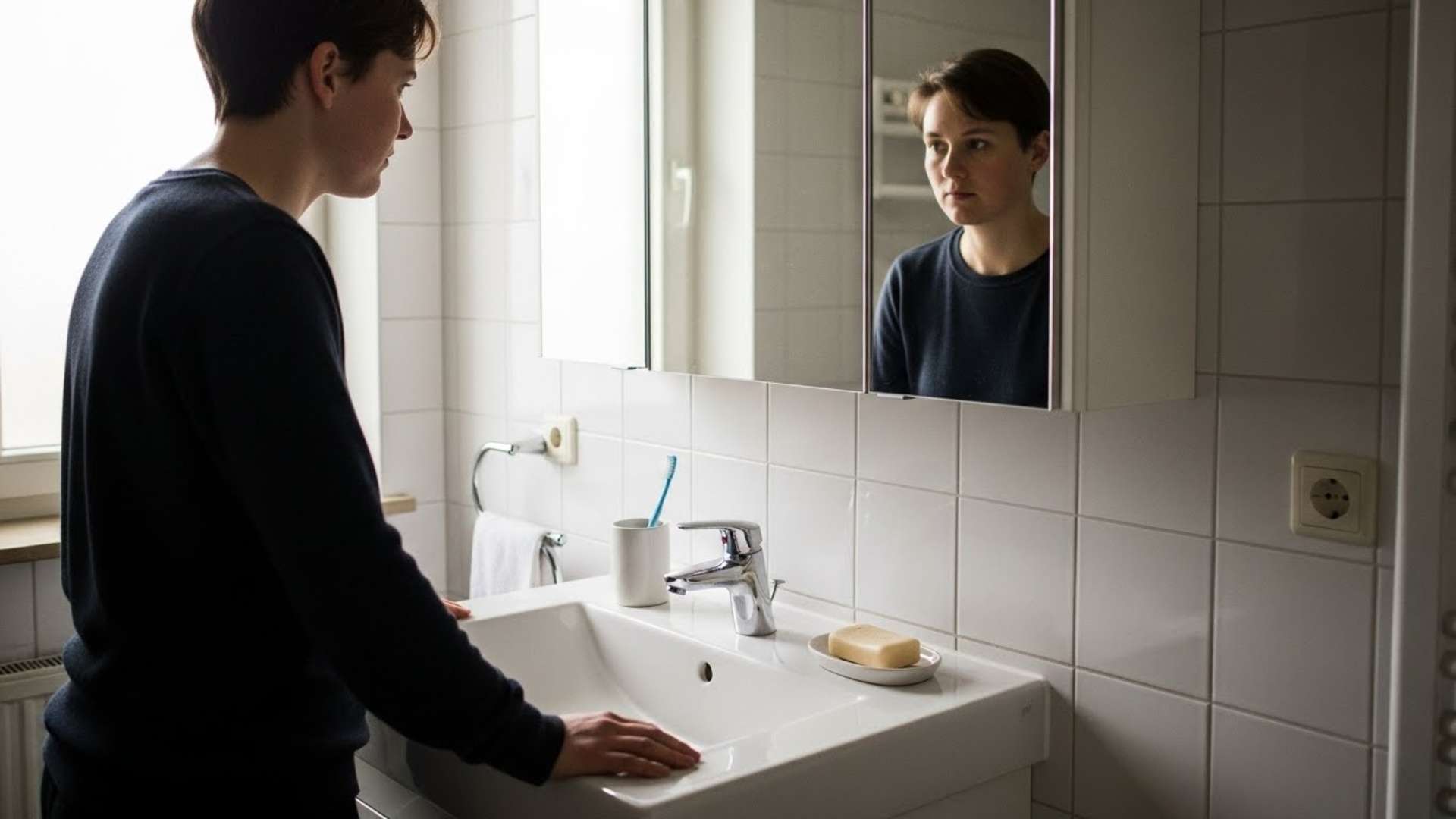
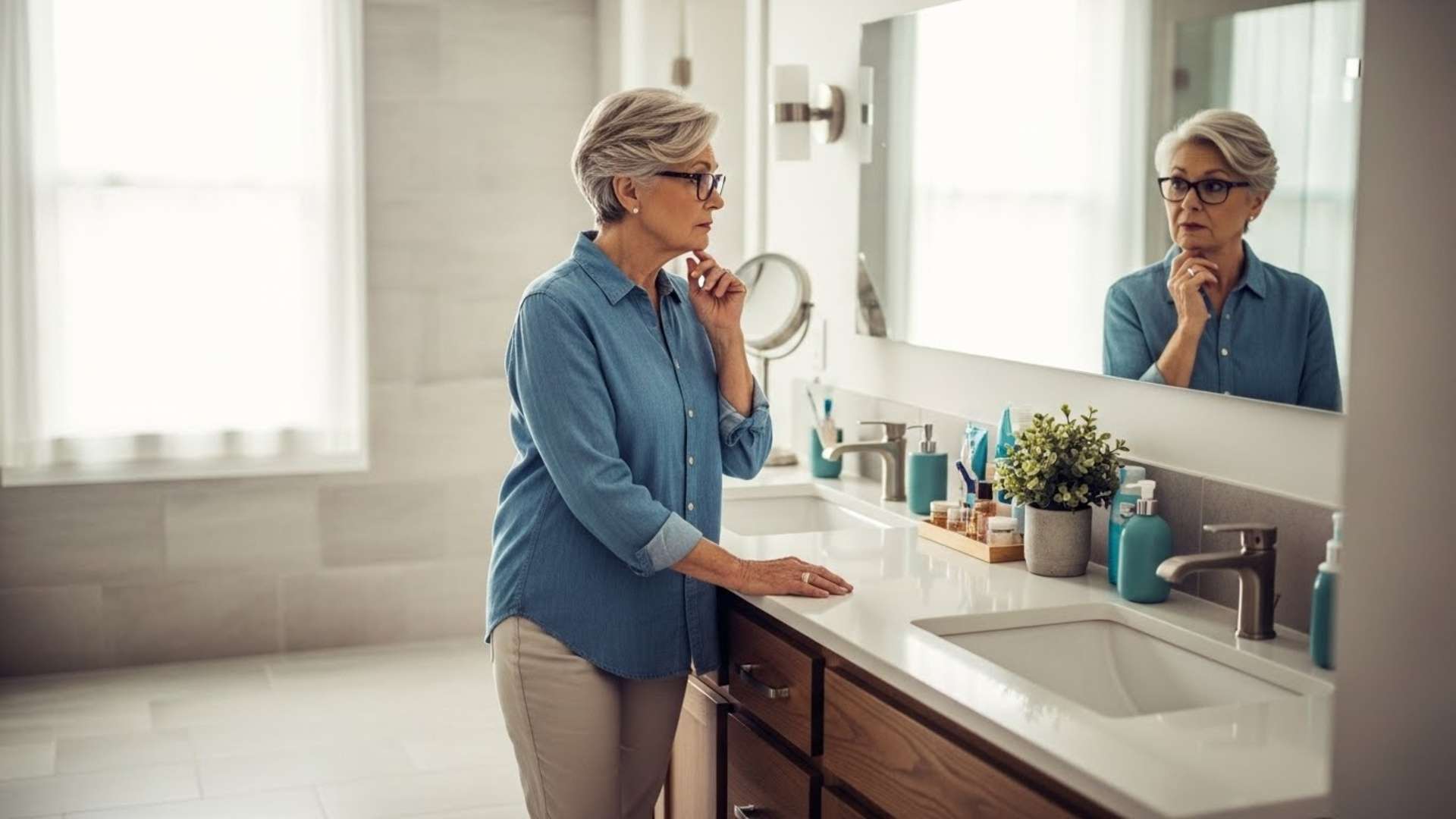
Shaving, doing hair, applying makeup, brushing teeth. We usually stand at the sink for this.
Why it’s risky: Standing still in one spot for 10-15 minutes allows blood to pool in your legs. For older adults, this can lead to a drop in blood pressure and lightheadedness.
Also, looking up into the mirror (tilting the head back) can pinch the arteries in the neck, causing a “drop attack” of dizziness.
The Fix: The Vanity Bench
Sit down. It feels indulgent, but it’s actually safer. Bring a small stool or chair into the bathroom for your morning routine. Save your energy for the walk, not the shave.
10. The Fluffy Rug
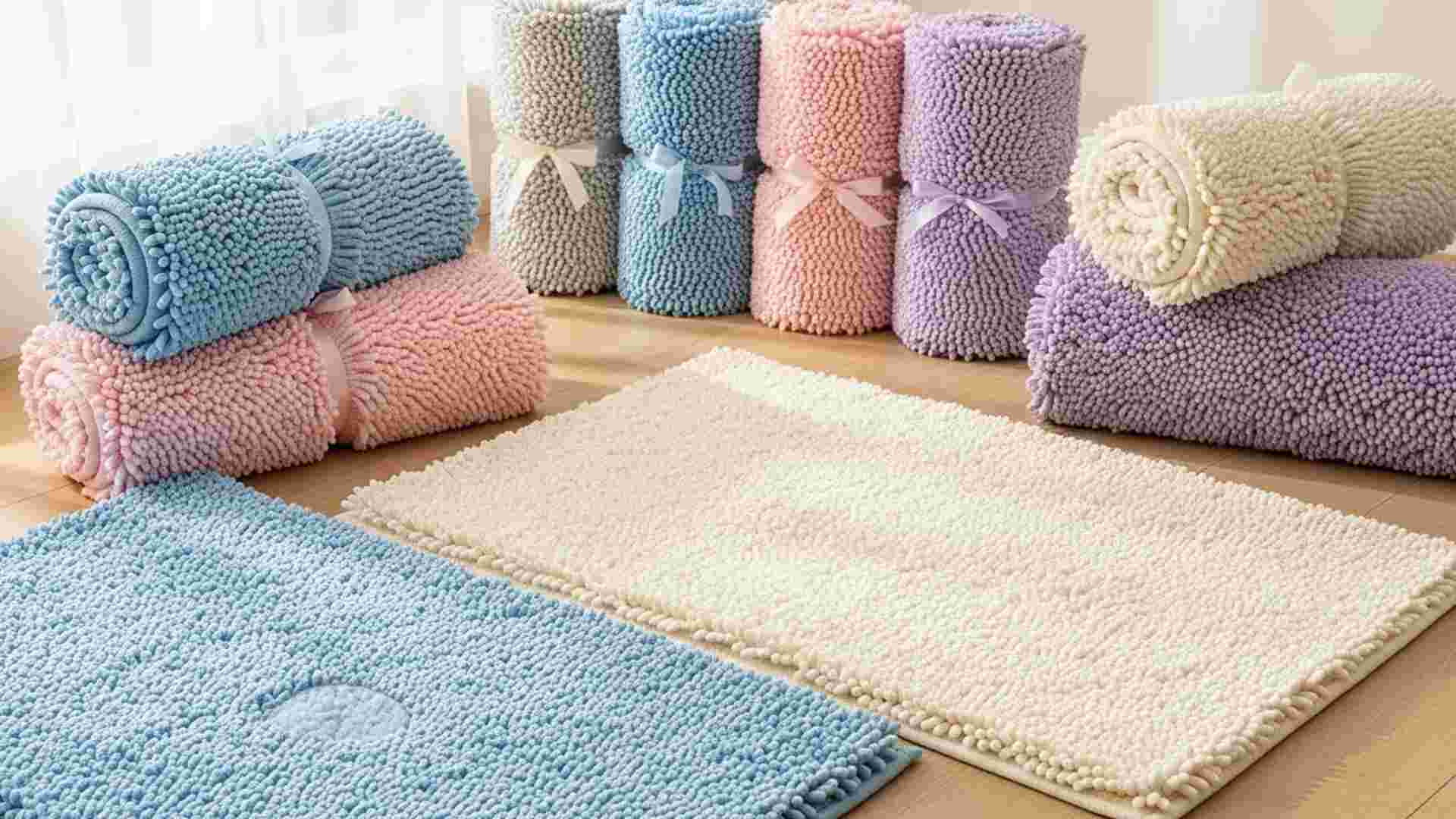
We love those plush, soft bath mats. They feel great on bare feet.
Why it’s risky: If you shuffle your feet when you walk (common as we age), the edge of a thick rug is a major trip hazard.
Even worse are the rugs without rubber backings. Stepping out of a shower onto a sliding rug is like stepping onto a banana peel. A lateral (sideways) fall in the bathroom is the number one cause of hip fractures.
The Fix: Low Profile & High Friction
Toss the fluff: Get low-profile mats that lie perfectly flat.
Rubber backing: Ensure every mat has a non-slip rubber backing that actually grips the floor.
Need a Little Help? 5 Simple Tools That Can Make a Big Difference
Sometimes, willpower isn’t enough. You need the right gear. I’ve scoured Amazon for products that solve the exact problems we just talked about. These aren’t “medical devices” that make your home look like a hospital—they are smart, affordable upgrades that make bathroom time safer and easier.
1. The “Un-Kinker”: Squatty Potty Original Toilet Stool

If you struggle with straining (Habit #1), this is the simplest fix. It tucks neatly under the toilet when not in use, but when you need it, it elevates your legs to mimic a natural squat. This un-kinks the colon and reduces the need to push, protecting your heart and blood pressure.
2. The Sleep Saver: Amber Motion Sensor Night Lights (Pack of 2)

Stop walking in the dark (Habit #7). These plug-in lights detect when you walk by and turn on automatically. The key here is the amber color—unlike harsh blue or white LEDs, amber light doesn’t wake your brain up, so you can find the toilet safely and fall right back asleep afterward.
3. The Hygiene Hero: LUXE Bidet Neo 185

This solves the “Dry Wiping” issue instantly. It’s a mechanical attachment that fits under your existing toilet seat (no plumber needed!). It washes you with water, which is gentler on thinning skin and far more hygienic than paper. It has a self-cleaning nozzle and adjustable pressure, so you’re always in control.
4. The Fall Stopper: Gorilla Grip Original Patented Bath Mat
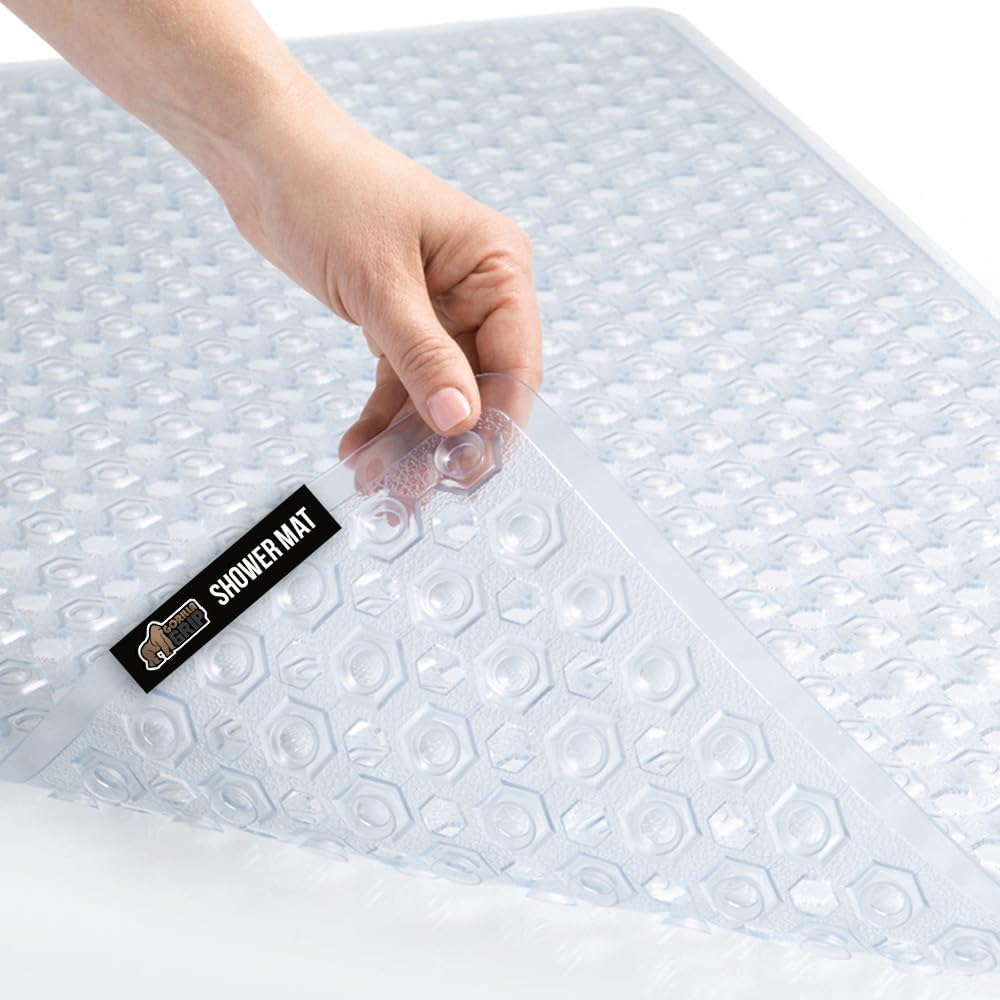
If you are still using a mat that slides around, swap it for this. It features hundreds of suction cups to lock it to the tub floor and has a textured surface that provides actual traction for your feet. It’s also machine washable, preventing that slippery soap scum buildup.
5. The Energy Saver: Dr. Kay’s Adjustable Height Bath Bench

Stop standing to shower (Habit #9)! This bench is lightweight, incredibly stable, and fits in most tubs. Sitting down to shower isn’t “giving up”—it’s a smart way to prevent dizziness and enjoy your shower without the fear of slipping. It’s height-adjustable so you can get up and down easily.