
Concealment almost never gives itself up in a week. It accumulates across a season, sometimes several, which is why you are still guessing in June about a cough that started in March.
You have watched the subject go quiet, vague, or short-tempered at the mention of a doctor, and you cannot tell whether you are imagining the shift, being shut out, or making too much of it. What looks like one closed subject is usually a small system: the test-balloon mention at dinner that never comes back, the pulmonologist’s name you heard from a sister, a $38 receipt in the glove box, a Tuesday appointment moved twice.
The job here is not to diagnose anyone or prove anything. It is to sort ordinary privacy from a pattern by checking three things: change from this person’s own baseline, repetition, and whether the details are being routed around the routines you share.
Quick Tips Before You Start
Check the baseline
Compare this behavior to how they handled health two years ago, not to how you would handle it.
Look for repetition
One silent symptom is thin; a pattern of three or more is worth naming.
Ask if it routes around you
Concealment avoids shared routines, like the kitchen counter or the insurance portal.
Say one sentence, not a case
Name the specific thing you noticed once, without a lecture attached.
Skip the conversation if red flags appear
Breathlessness, a lump, bleeding or unexplained weight loss means a same-week appointment, not a talk.
How the conversation changes
The first sign is rarely a secret. It is a sentence that lands on the table and then gets taken away. You hear something once — a cough, a twinge, a doctor’s name — and then the topic stops coming up. That silence is where concealment starts, and it is easy to miss because it looks like nothing.
These three entries cover what happens to the conversation itself: when a symptom stops being mentioned, when you hear it from someone else first, and when your direct questions turn into jokes.
1. A symptom is mentioned once, then never again

Usually it is the first sign, and the obvious advice – let it go, they will tell you when they are ready – is how a test balloon gets spent and never sent up again.
The cough starts in March. It comes up once at dinner, gets called allergies, and by June it is still allergies and still there. Try to bring it back and the subject slides sideways or the answer goes vague – ‘it’s nothing, it’s the pollen’ – and weeks pass with no update, no appointment, no pharmacy bag on the counter.
That single mention was a probe. They put the topic on the table to see what came back, and the reaction at that dinner decided whether it would reopen. Silence after it is a decision, not a report that the symptom cleared.
The innocent version looks different: a cough that genuinely faded in someone who never narrates their body anyway, with nothing else changed – no late-night searches, no moved appointment, no stripped packaging in the garage. Name the one symptom once, without a lecture: ‘The cough from March – still there?’ Then leave the next move with them.
One silent symptom is thin on its own. It thickens when the same person who once described a root canal and a colonoscopy in detail, unprompted, over dinner now gives you nothing at all.
💡 Tip: Name the symptom once, then wait a week. If they bring it up themselves, you have your answer.
| What you notice | Ordinary privacy | Concealment |
|---|---|---|
| The cough is mentioned once, then never again | They mentioned it at dinner and it cleared up; no appointment, no pharmacy bag | It is still blamed on allergies in June, with no update and no appointment |
| You hear the specialist’s name from someone else | A friend had the same test and they mentioned it in passing | A pulmonologist referral was discussed at dinner once and never again at home |
| Direct questions get a joke and a subject change | They have always deflected medical talk with humor | The deflection is new and only around the doctor |
| Pharmacy bag lives in the car | A one-off short course left in the car | A $38 generic prescription receipt in the glove box, no discussion |
| Appointment booked then quietly moved | A work conflict explained out loud | Booked for a Tuesday, moved twice in six weeks with vague reasons |
| They pay cash so no insurance letter reaches home | They run their own insurance and give you the summary | Cash at the desk so no explanation of benefits lands in the shared mailbox |
| Phone active at 2 a.m. on searches about the symptom | Night owl searches once or twice, no secrecy | Searches six weeks running, screen face down when you walk in |
| Irritation spikes when checkups or aging come up | Short fuse about everything, including work and traffic | Anger spikes only around health and aging topics |
| They book your physical and skip their own | A naturally managerial person who also books their own care | Your mammogram and blood pressure are arranged; theirs unbooked |
2. You hear the specialist’s name from someone else

The mistake is treating every confidant as a betrayal. A spouse who mentions a test to a friend who had the identical one, and nothing since, is doing what people do – borrowing courage from someone who has been there. That is not the same fact as a specialist’s name that never once reaches home.
A symptom kept quiet at the dinner table can still leave the house. The referral gets mentioned once, then a sister says the pulmonologist’s name like it is old news, and it lands that the visit was booked, attended and reported to someone – just not to you. A test result surfaces in someone else’s conversation while your kitchen stays silent.
The question worth asking is not whether they have a confidant. It is who knew first, and when. Ask the sister plainly what she was told and when, then ask your spouse the same question once, and compare the dates and details without turning it into an interrogation.
The sign here is the route, not the listener. A private person can have a friend and still hand you the summary in one sentence. A specialist’s name that only ever exists outside the house is a different kind of fact, and it is worth noticing which one you are holding.
3. Direct questions get a joke and a subject change
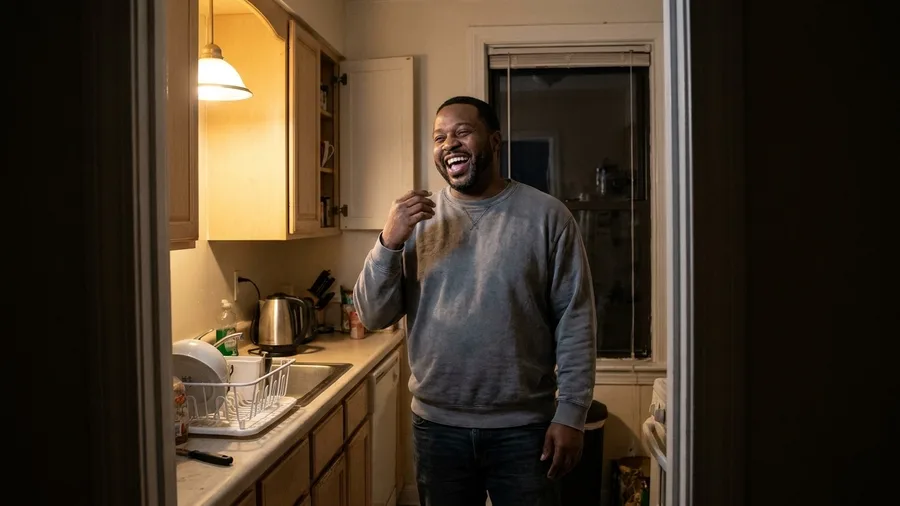
Count how many times the doctor question has ended in a joke. Three times, four – and they all follow the same script: the laugh, the compliment, the sudden interest in your day, in that order, every time the appointment comes up.
Two years ago this person described a colonoscopy and a root canal in unhurried detail over dinner, unprompted. Now the same kind of question earns a grin and a subject change. That is the cost: a household that quietly stops asking, which is exactly the room concealment needs. Name the move once, without chasing the answer – ‘That is the second time the doctor question turned into a joke – I will leave it there.’ – and let it sit.
The check is baseline. A lifelong deflector whose humor predates all of this and covers everything from money to the dishwasher is showing temperament. A new dodge around one topic, repeated, is a different animal.
💡 Tip: The deciding comparison is baseline: a new deflection around one topic is a sign; a lifelong style with no other changes is temperament or privacy.
The trail they leave
Once the conversation closes, the evidence moves to the physical world. It shows up in the car, in the glove box, in the insurance portal and in the appointment book. These three entries cover the trail: the pharmacy bag that never reaches the kitchen, the appointment that gets moved, and the cash payment that keeps a letter out of the mailbox.
Each of these is a shared routine being routed around. Ordinary privacy withholds details; concealment reroutes them.
4. The pharmacy bag lives in the car, not the kitchen

“It’s nothing, I just didn’t want to make a thing of it.” That is usually what comes back when a receipt turns up somewhere it shouldn’t, and it is worth hearing the whole sentence before deciding what it means. The finding itself is small: a pharmacy bag wedged under the passenger seat, a bottle in a coat pocket, a strip of blister pack torn open in the garage and dropped in the bin out there rather than left by the kettle. The $38 generic prescription was paid at the counter, no card tapped, no chat about it at dinner.
someone already takes this medicine daily, has for a while, and has decided the fact should not pass through the kitchen. The shared insurance portal will show the visit. No explanation of benefits ever gets opened between the two of you.
Stripping a label off in a cold garage takes time and a certain amount of nerve, and people do not spend that on a sore throat. They spend it on something that frightens them. Which means the question worth asking is not what is in the bag. It is how long this has been going on under your roof without a word.
The innocent reading exists and should be checked first. A one-off short course, antibiotics for a chest infection, picked up on the way home and left in the car because the kitchen was busy. That version leaves no second receipt, no repeat, no moved appointment, no daily pill rattling in a coat pocket three weeks later. A pattern does.
Raise it once, plainly, and hand the explaining back. The receipt is evidence of nothing except that a prescription was filled, so say only what you found and what you think of it: “I found the $38 receipt in the glove box – I am glad you got it filled.” Then leave the room. How much comes back is theirs to decide, and the silence after that sentence tells you more than the sentence did.
For you, the test is effort. Ordinary privacy keeps a detail to itself and costs nothing. Concealment pays in time and trouble to make sure a shared routine never looks shared, and a person does not do that work unless the thing has grown heavy enough to carry alone.
💡 Tip: Check the garage bin for empty packaging. If it's there, the medicine is already part of their day.
Concealment Signals at a Glance
📄 Paper trail
Cash, no EOB
🏠 Location of meds
Car, not kitchen
📅 Appointment pattern
Booked, moved twice
💸 Cost paid
$38 cash
🗣️ Who knows
Sister, not spouse
What turns privacy into concealment
Shared routines like the kitchen counter, the mailbox and the calendar are bypassed on purpose.
5. An appointment gets booked, then quietly cancelled

It goes on the calendar for a Tuesday, then it comes off again inside two days, and the same thing happens twice in six weeks. Each move gets a shrug and half a reason, or no reason at all. A pill under the seat is already in use; this is the other kind of evidence, because somebody made the decision to be seen and then took it back.
The reversal is what matters. A third booking is not another intention, it is the one that needs something practical to survive, and practical means a lift to the door and a body in the waiting room rather than a talk about diet or smoking. Someone who genuinely had a work clash will tell you the clash, with the meeting in it and the new date. A cancellation driven by fear comes up only if you ask.
Which is why the appointment that exists and then quietly stops existing tells you more than any object in the car: nothing is being hidden, something is being avoided, and it was avoided after the hardest part was already done.
How a Booked Appointment Quietly Disappears
6. They pay cash so no insurance letter reaches home

You are in the kitchen with the week’s mail, and there is no explanation of benefits from the visit you know happened. No envelope, no line item, nothing at all.
So the ten-second question: in the past month, has your spouse paid cash at a desk when the insurance would have covered it? A card charge or ATM withdrawal with no matching paperwork is the same fact from a different angle, and a pharmacy receipt in the glove box often sits beside it. Cash costs more, in money and in effort, and the effort is the part worth noticing.
An adult who handles their own insurance and still gives you the summary in a sentence at dinner is private, and that can stay private. The line is the paperwork. Privacy withholds a detail. Concealment reroutes the paper trail.
💡 Tip: Check the insurance portal after the next visit. If the visit is there but the explanation of benefits never is, that is the pattern.
⚠️ COMMON MISTAKE
Don't turn the questions into an interrogation
Asking three follow-up questions in a row feels like care to you and like a cross-examination to them. Say the one sentence and stop. The silence after it is where the answer grows.
Where the worry leaks out anyway
Even when the words are guarded, the worry finds other exits. It shows up at 2 a.m., in a short temper, and in a sudden interest in your own health. These three entries cover the leaks: the late-night searches, the irritation that spikes around checkups, and the spouse who books your physical but not their own.
7. They’re reading about the symptom at two in the morning

The most expensive part of a 2 a.m. search is not the lost sleep. It is that six weeks of it produces more fear and no more information, and the person doing the searching is now carrying the worry alone.
Lights out at 11, the room dark, and the phone lit again at 2, the same cough typed into the search bar for the fourth night that week. Walk in and the screen turns face down. The innocent version is a night owl who looks something up once and forgets it: no secrecy, no moved appointment, no medicine hidden in a coat pocket.
What the searches tell you is what the mouth will not. The question is whether any of that worry has a plan attached. ‘Book it and I’ll come with you’ tends to land better than ‘stop googling’, because it moves the thing out of the dark and into a calendar.
8. Irritation spikes whenever checkups or aging come up

The usual advice is to let it go, to treat a sharp answer as tiredness. That misses what the sharpness is doing.
You mention a neighbor’s diagnosis over the dishes, or a friend’s retirement date, or a 50th birthday coming up, and the answer comes back fast and harder than the remark deserved. It is not the topic that is hot. It is the only door the fear has, and it swings one way.
Then the household adjusts. You stop bringing up checkups, then you stop bringing up health at all, and that quiet is exactly the room concealment needs to keep going. A short fuse about everything, medical talk included, points somewhere else entirely.
So here is the line to use. ‘You snapped at me about a birthday and I do not think it was about the birthday.’ Or plainer: ‘I am not asking you to talk about it. I am asking whether it is on your mind.’ Then leave it. Anger that spikes only around health and aging is fear wearing a temper; a general temper is a different pattern.
Privacy or Concealment?
Ordinary privacy
- Mentions the doctor once, then not again because the symptom cleared up
- Keeps the appointment but gives you the summary in one sentence
- Has always deflected medical talk with humor, applies to everything
- A one-off prescription left in the car, no repeat, no moved appointment
- Manages their own care and still tells you when something matters
Concealment pattern
- Symptom still blamed on allergies months later, no appointment, no update
- Books a Tuesday appointment, moves it twice, gives vague reasons
- Anger spikes only around health and aging, not elsewhere
- Cash paid, no explanation of benefits, shared portal shows visit but no discussion
- Your physical booked, theirs unbooked, avoids the topic entirely
9. They book your physical and skip their own
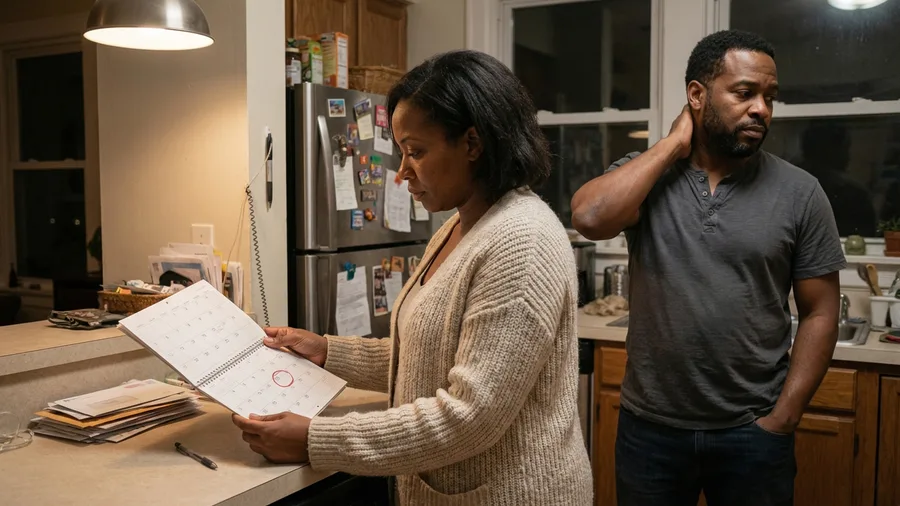
Often the second, and it points inward.
The pattern is lopsided in a way that is easy to miss because it looks like love. Your mammogram is on the calendar, your blood pressure recheck is booked, the follow-up for the thing you mentioned in passing has already been chased down by phone. Their own physical, due since the spring, has not been scheduled. Researchers who study how people manage health threats describe this move as worry displaced outward: it is easier to take charge of someone else’s risk than to sit with your own, because the appointment you book for your spouse has no result you have to read.
A manager by nature who runs the household calendar and still keeps their own checkups is not this. That person’s own name appears on the schedule, and the appointments get attended. The sign is the imbalance, held over months: every date on the calendar is yours, and the one date that would produce news about them stays blank.
It becomes concealment when the unbooked appointment is the exact thing being avoided. The offer that sidesteps the fight is practical, not a lecture: ‘I’ll book mine when you book yours, and we’ll go the same week.’ If breathlessness, a lump, bleeding or unexplained weight loss is in the picture, the conversation waits and the appointment does not.
💡 Tip: If they have not booked their own physical in over a year, offer to make the call together.
Two Years Ago vs. This Year
How the same person described a medical visit
Frequently Asked Questions
How do I bring this up without turning it into an interrogation?
Say one plain sentence about what you noticed, then stop. For example: “I found the $38 receipt in the glove box — I’m glad you got it filled.” That is the whole move. No follow-up questions, no cross-examination.
Is it normal for a spouse to keep some health details private?
Yes. Ordinary privacy withholds a detail; concealment routes around shared routines. If they mention a doctor visit once and give you the summary in a sentence, that is privacy. If the pharmacy bag lives in the car and the insurance letter never arrives, that is a pattern.
What if the sign I notice is just one thing?
One sign is thin on its own. Check it against their baseline: did they describe a colonoscopy in detail two years ago and now give you nothing? Is the behavior new and repeated? If it is only one thing and does not route around you, watch for a week before saying anything.
When should I skip the conversation and make an appointment?
If the sign points to breathlessness, a lump, bleeding or unexplained weight loss, that is a same-week appointment, not a talk. Make the call and offer to drive. The conversation can happen later.
What if they get angry when I bring it up?
Name the disproportion once, without naming the feeling: “You snapped at me when I mentioned the neighbor’s diagnosis — that was a big reaction to a small remark.” Then leave it. Anger that spikes only around health and aging is often fear wearing a bad temper.
One Plain Question, Not a Case File
Nine signs are grounds for one plain question, not a case to present. You want a door open, not a concealment proven.
So this week, say one observation about a specific thing and then stop: “I noticed the cough from March is still around and the pulmonologist appointment moved twice – are you more worried than you have been saying?” That is answerable. A dossier is only something to defend against.
You started with a cough in March still being blamed on allergies in June. You now have a checkable pattern: the dinner mention that never recurred, the specialist’s name from someone else, the receipt in the glove box, the Tuesday moved twice, the phone face down at two in the morning.
One rule sits above all of it. Breathlessness, a lump, bleeding or unexplained weight loss skips the conversation entirely and becomes a same-week appointment. Otherwise, ordinary privacy can stay private. A repeated pattern that keeps routing around shared routines gets one plain question and practical help.
Say the one sentence this week
Pick the clearest sign you noticed and name it once, without a lecture. Then let the silence do its work. If red flags are present, make the appointment instead.