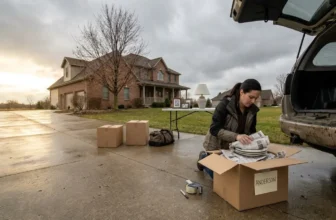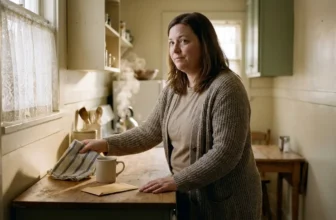
By the end of this piece you will know the ten conversations to have, in the order to have them, and the sentence that opens each one. Start here: if one of you collapsed tonight, the hospital would ask who decides, and right now nobody can answer for you.
There is a drawer in the house with wills last updated in 2009, no named health-care decision-maker on paper, and no list of the two IRAs or the joint savings. Meanwhile the stairs have already become a calculation, and a knee has started making it for you.
That paperwork is not the first sign the end is real. It is the last thing still entirely in your hands, and putting it off delays nothing except the afternoon your spouse has to guess.
Ten conversations, one a week at the kitchen table, each with something to say, a figure to bring, and a document or a quote to get. Pick the one for this week, and the other nine already have their order.
Quick Tips Before You Start
One conversation a week
Put it on the calendar. One topic, one sitting, and stop when it gets heavy.
Use the state's own form
Search your state's official website or call the state elder-affairs office and ask them to mail an advance directive. Do not download a template from a legal site.
Bring real numbers
Pull the latest statements for the IRAs, the joint account, Social Security and the pension before you sit down.
Call for two quotes
Phone one home-care agency and one assisted-living community. Ask for hourly and monthly rates and write them down.
Loop the kids in early
After each conversation, tell both adult children the name and the folder, not the balance.
The Paperwork And The Money
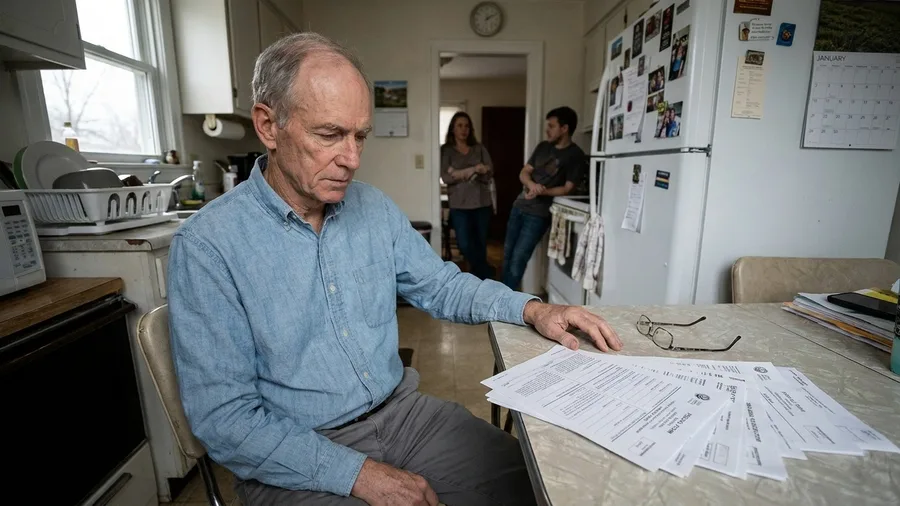
Start with the documents a stranger could demand tomorrow. These are not about death; they are about who is allowed to speak for you in a hospital corridor at 2 a.m. and whether the other spouse can even find the accounts.
The order matters here. The decision-maker form makes every later conversation easier, because someone is finally named. The account list makes the money visible. And pricing care before you need it turns a vague fear into a monthly figure you can argue about.
1. Name The One Person Who Decides For You

One question, ten seconds, and it needs an honest answer: if your spouse collapsed at the grocery store this afternoon and the ambulance took them to a hospital neither of you has been to, who would the doctors ask to make decisions? If you named a person and that person is on a signed form, you are ahead. If the real answer is that you would show up and start answering because you are the spouse, that is the gap.
Marriage puts you in the waiting room. It does not put a pen in your hand. The person a hospital will follow is the one named on a signed form, and each of you needs your own, because one piece of paper does not make one spouse the voice for the other. The form is the state’s official advance-directive version, not a template from a legal site, not a summary of what the law says. Search your state’s official website or ask the state elder-affairs office to mail one.
Then sit down together and say the specifics out loud. Would you want a breathing machine for a few weeks? A feeding tube? Dialysis? Who is allowed to sit in the room. “Whatever you think” is not a wish; it is the reason a corridor conversation turns wrong.
After the signatures, do the part that is easy to skip. Photograph the signed page and send it to the person you named. Tell both children the name in the same week, and call the one 400 miles away, because that child cannot walk into the hospital and read the chart.
💡 Tip: Keep a photo of the signed page on both phones. A form at home in a folder does not help anyone in an emergency room.
Four Mistakes Couples Make With These Conversations
2. Write The Account List Before Anyone Needs It

The cost of skipping this one lands all at once, in a week when the person who knew everything is suddenly not there to be asked. The account numbers die with the person who held them in their head, and the spouse at the kitchen table is left opening drawers.
Try the scene honestly. One of you is gone on a Tuesday. The other sits down with the bank statement and cannot say which of the two IRAs is in whose name, where the pension paperwork lives, or the phone unlock code.
The list itself is short: the two IRAs and the joint savings totaling about $210,000, Social Security of about $3,900 a month, the $600 pension, the house worth about $340,000, and the phone number and login for each. Which accounts sit in one name only is a question to put to the bank and to each IRA’s plan administrator, by phone or in person, not to assume from memory.
Keep it in a fireproof folder in the house and a shared password manager, with one copy held by the named decision-maker and one by the child 20 minutes away. Put the passwords and phone codes on the same page as the numbers, because a locked phone and an email account can hold more of the estate than the savings account does.
💡 Tip: Call the bank and each IRA administrator and ask one question: is this account in one name or both? Write the answer down.
3. Price The Care Before You Need It
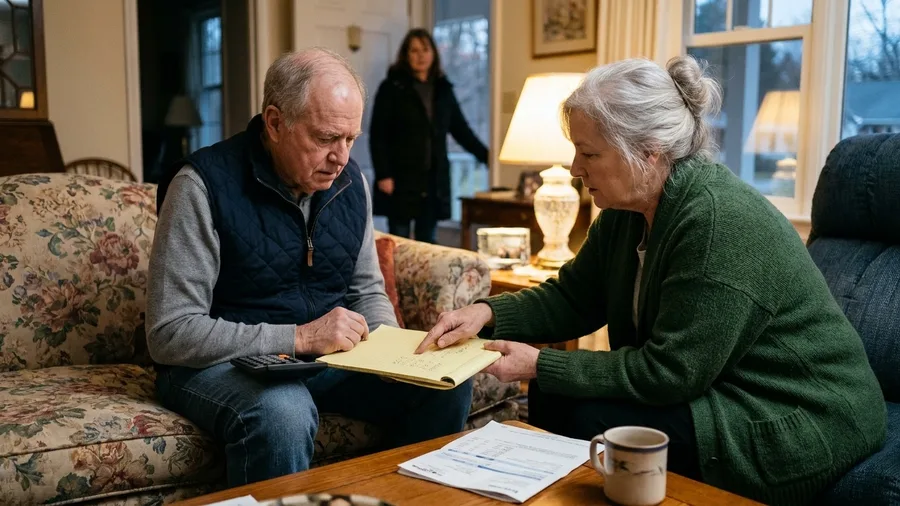
The version I got wrong first: I assumed a number was a number, so a couple could just look at their savings and know where they stood. What I missed is that the figure sitting in the account is meaningless until you divide it by the cost of care.
So the useful thing is two phone calls, written down. About $30 an hour for home care, about $5,200 a month for assisted living. Set those against the $4,500 a month of income and the $210,000 in savings. Assisted living at $5,200 a month is more than the entire monthly income, and the savings cover about 40 months of it before the house is touched. Home care at $30 an hour for four hours a day is about $3,600 a month.
Here is where the guessing gets priced. One spouse guessed a helper at about $18 an hour. The other guessed assisted living at about $3,000 a month. Both quotes came in above the guess, and the gap between the two guesses was never said out loud until the quotes were on the table.
This is the exception to skipping it: if you have already priced care and know the numbers, your conversation is different. When it is fine to leave the figures alone is when both of you can say the current monthly cost of care out loud, from memory, the same way. If you cannot, that is the difference. Medicare questions go to Medicare.gov and the state elder-affairs office, asked plainly, and no figure gets repeated as fact until those two sources give it.
The Cost Timeline If One Of You Needs Help
Health, And Who Is In Charge Of It
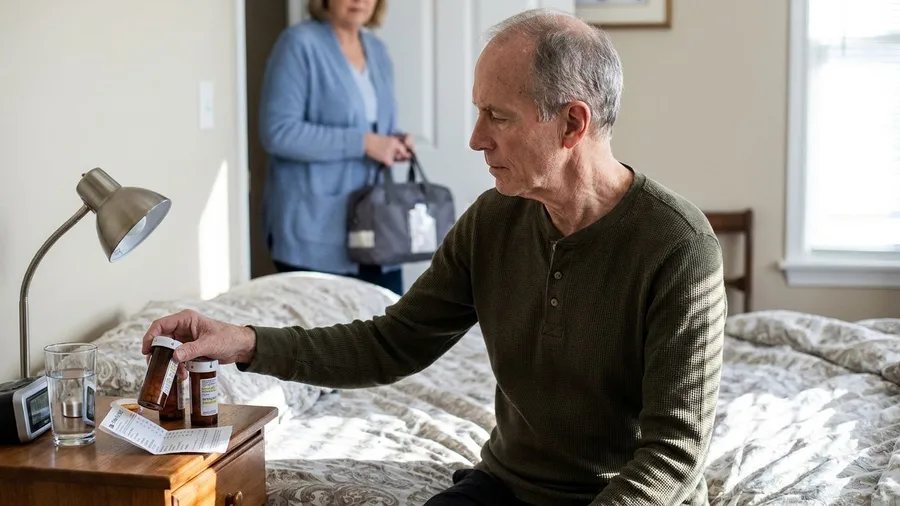
Now the body decisions. These only bite when one of you fails, and they are the ones a spouse gets wrong by guessing in a hospital corridor.
The paperwork from the first theme made this possible. Someone is named. Now that person needs to know what you actually want, and the couple needs one written rule for the day one of you should stop driving.
4. Say The Code Status Out Loud To Each Other
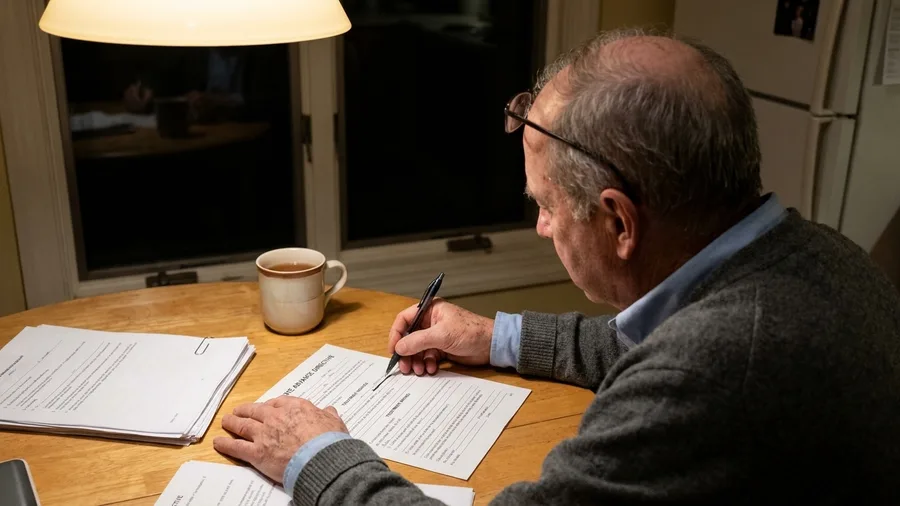
In a hospital corridor, that question gets answered by a stranger’s assumption.
No amount of care budget settles this, because treatment at the end is not a purchase. The choices are three, and each needs a real sentence: everything medicine can offer, CPR and a ventilator included; comfort only, with pain eased and nothing restarted; or a fixed trial in intensive care, with a date to reassess.
Write the answer into the treatment-wishes section of the same state advance directive that names your decision-maker, pulling the form from the state’s own page rather than a summary. Then sit the adult children down together at dinner, both at once, so no doctor ever has to tell them what their mother wanted. And it can change: after a hospital stay or a friend’s death, fill a new form, date it, shred the old one, and tell the named person and both children the same week.
💡 Tip: Changed your mind after a hospitalization? Fill out a new form, write the date on it, destroy the old one, and tell the named person and both children in the same week.
⚠️ COMMON MISTAKE
Saying "whatever you think" is not a plan
It hands the hardest decision of your life to a spouse who is already scared. Name the breathing machine, the feeding tube, dialysis, and who may sit in the room. Say it in specifics.
5. Decide Who Stops Driving, And When
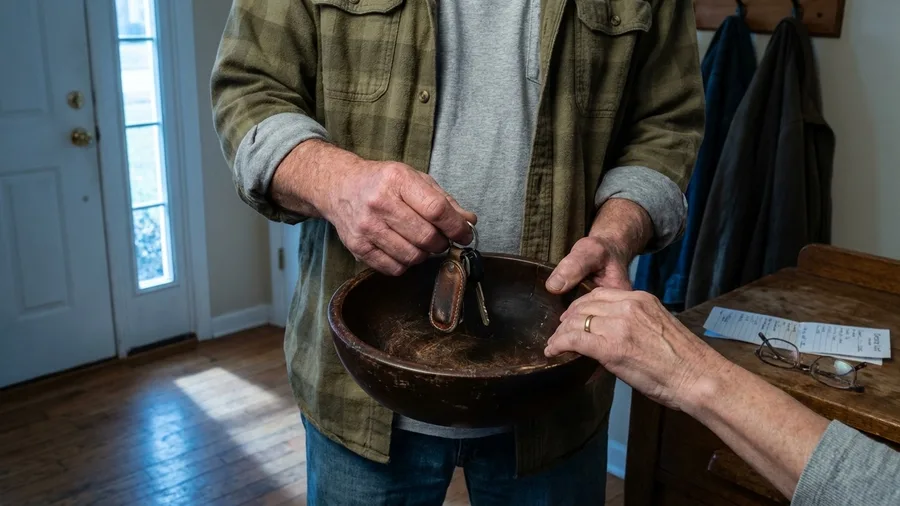
The keys are in the bowl by the door, and you are standing there deciding whether to move them. Your husband wants to drive to the pharmacy after dark. The knee has been bad for a month. You have already rehearsed the sentence twice and it still sounds like a verdict.
The obvious move, taking the keys, is the one that fails. Handled that way, one spouse becomes the guard and the other experiences it as a betrayal, and the argument that follows is about trust when it should be about the dark.
Agree the trigger now, both of you, and write it on the fridge: no driving after dark, no routes past the three roads you both know, and a stop at the next vision exam or whenever the knee makes the pedals a negotiation. The rule is written as a condition that applies to both of you, which is what lets it be said out loud: this is about the dark and the knee, not about you.
Who says it matters more than what is said. The spouse gets heard as an ultimatum. The child 20 minutes away gets heard as logistics, so the spouse states the decision and the child builds the schedule.
Price the replacements before the car goes, on the same page as the care quotes: the local senior van, one rideshare account, and the child 20 minutes away on a standing day each week, each fare written down so nobody discovers the cost in the middle of a fight.
The spouse still driving safely is not benched early to keep the peace. A rule that only applies to the one with the bad knee is a rule that will be argued with every week.
💡 Tip: Ask the child to say the logistics out loud, not the verdict. The spouse states the decision; the child builds the schedule.
6. Keep One Medication List Both Of You Can Find
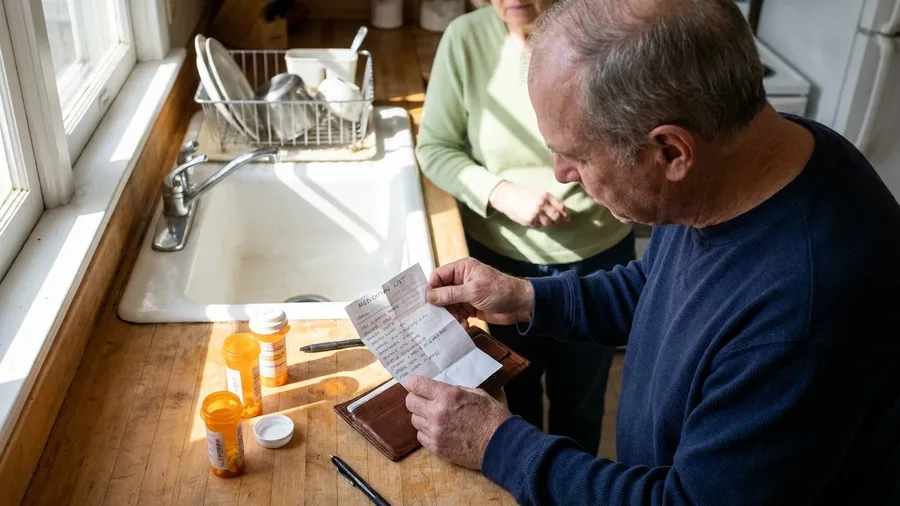
Two pharmacies, three daily blood-pressure prescriptions on one side, prediabetes on the other, and a 2 a.m. question that neither of you can answer from memory. That is the honest starting point, and the fix is one page.
Make the list once, in two places at once: a folded paper in each wallet and a photo of it in each phone, with a third copy on the refrigerator. Agree out loud who refills the pillbox and which pharmacy gets used, so a double dose has somewhere to be caught, at the counter by the person who knows the three bottles, not in an emergency room at three in the morning.
And whenever a specialist adds something, put one question to the doctor or pharmacist: does this replace one of these, or add to them, and does it interact with what is already on the list.
💡 Tip: Photograph the list, not the bottles. The paper in the wallet is for the paramedic; the photo is for the emergency room.
7. The Well Spouse Burns Out First

“I’m fine. I just need to keep moving.”
That is the sentence the spouse who is still well says in the waiting room, in the driveway, on the phone with the pharmacy. The one refilling the pillbox is also the one driving to appointments and lying awake at three in the morning listening to the other breathe. Over a year, that person quietly gives up the annual physical they keep postponing, the morning walk, whole nights of sleep, and a friend they have stopped calling back, and none of it gets discussed.
Relief has to be named out loud and given a slot. One afternoon a week with the grown child who lives twenty minutes away, a specific friend penciled in for Thursdays, or a home aide that runs about $30 an hour, which works out to $120 for four hours. Put the afternoon on the calendar; a vague promise to help out never becomes a date.
Watch the caregiver, not the patient. A temper that runs shorter than it used to, meals skipped, a doctor’s visit canceled twice, “I’m fine” arriving a beat too fast, all of it says the reserve is gone. Couples who already pay for help have a different talk: the backup when the aide is sick, and who covers her vacation week.
💡 PRO TIP
Name the relief with a person and a day
"Help more" never happens. "Our daughter comes Tuesday afternoons" does. Write the name and the day on the same page as the care quotes and the driving rules.
Family, The House And The Years Left

Now the hardest and easiest conversations at the same time. What the children need to hear, what the stairs are already deciding, and what all of this saving is actually for.
None of these have a right answer. They have a shared answer, and the shared answer is the entire point.
8. Tell The Children The Plan, Not The Balance

The usual advice is to keep the money quiet and tell the children nothing until it is all settled. That protects the parents, the thinking goes. What it actually protects is a folder nobody can find at the moment it matters most. The plan can be shared in detail while the balances stay behind closed doors.
Think about the afternoon the child who lives twenty minutes away is already driving to appointments and covering for a tired caregiver. That is a standing job, and it has a counterpart: the child four hundred miles away, who cannot drop by, will arrive after the fact and waste the first two hours of a crisis asking questions. That child needs to know who is named to make medical decisions, where the folder is kept, and whether the plan is to stay in the house or move before a ticket is even bought.
The balances can stay private. What the $210,000 and the $340,000 house come to is nobody’s dinner-table topic. But the division of labor should be said out loud with both grown children sitting at the same table: the nearby one takes the driving and the appointments, the far one takes the phone calls and the paperwork. Naming it while everyone is calm stops the two of them from sorting it out in a hospital parking lot.
💡 Tip: Give the far-away child the folder's location and the named person's phone number before the next flight, not after the emergency.
What To Tell The Kids, And What Not To
👤 Say this first
Nothing changes this year
📁 Location, exact
Fireproof box, top of hall closet
🏠 The thresholds
Stairs and driving, not a date
💵 Keep private
The $210,000 split and the $340,000
📞 Skip until asked
Passwords, until the folder is opened
The rule
One page, both children, before a knee decides for you.
9. The Stairs Decide The House Question For You
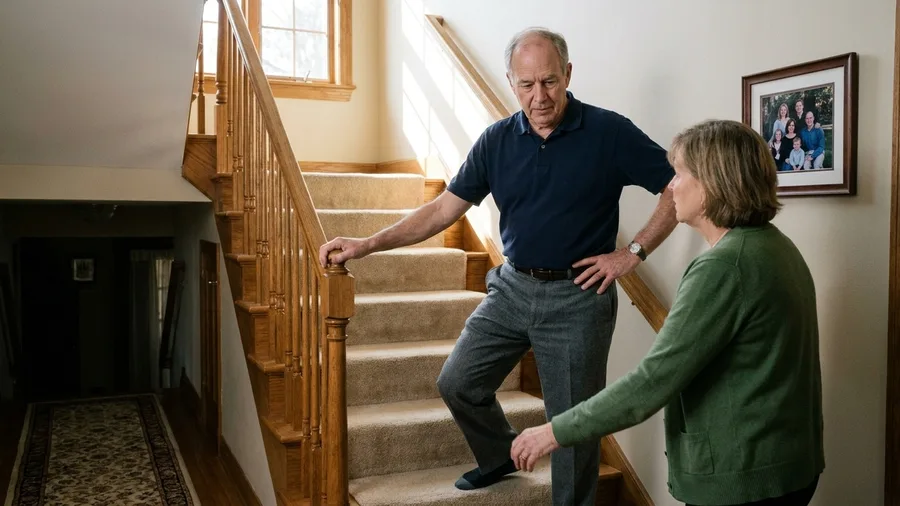
Far more couples than you would guess discover their answer after a fall, at two in the morning. Stay or go gets decided in an emergency instead of at the table, and the emergency answer is often the wrong one because nobody has had time to think it through.
The house can feel like a vote on your whole life when it is really a vote on the knee. Staying and adapting runs a few hundred dollars for grab bars and a few thousand for a stairlift or a downstairs bedroom, with quotes from two local suppliers. Moving to one level means a mover and an agent; moving to a community lands near the $5,200 a month already quoted. One of you is defending the house, the other is defending against the stairs, and the fear is the same on both sides.
A wider doorway built on a Tuesday afternoon costs less and hurts less than a hospital stay. That timing is the whole decision.
Where The Income Goes If Care Starts
Percent of the $4,500 monthly income each care option would swallow
Quotes are local examples: $30 an hour for home care, $5,200 a month for assisted living.
10. Say What The Next Ten Years Are For

Two people can run the same house for forty-one years and never once say out loud what the house is for. A place is only a place until the Tuesday routines and the trip that has been named for years get written down beside it – then it becomes the measure everything else gets checked against.
Put it on one page. The trip the two of you have said out loud for a decade and never booked, the grandchild’s graduation 400 miles away, and the ordinary Tuesday each of you wants kept exactly as it is – the morning walk, the library, the standing call with the child who lives far off. Write all of it down in the same place you keep the care quotes and the house numbers, because they are the answer those numbers are being spent on.
This is the conversation where the two of you disagree the most and it matters the least, and that is precisely why it belongs last. What to do with the time left is opinion. The $210,000 is a fact. The $340,000 house and the stairs are facts. You can argue about the trip for an hour and still sign the same advance directive, which makes this the argument the marriage can actually afford.
The script is short. One of you says: “Before we plan the money, let’s say what it’s for – write down the three things we want the next ten years to hold.” Then: “What’s the one thing you’d want to do this year, not someday, and what would we have to pay to start it?” Then the line that turns a wish into a plan: “Let’s put a date on the calendar and pay a deposit, so it doesn’t wait until the house is sorted.”
Someday is the word that quietly empties a savings account of its purpose. One thing each of you does this year rather than someday – a date written down and a deposit paid – is worth more than a careful plan that begins after every other box is ticked. The trip next spring, the graduation you book the flight for now, the Tuesday you refuse to move for anything short of a hospital.
And here is how the answer reaches back through everything else you have decided. If the trips and the Tuesday routine are the point of the ten years, then that settles how the savings get spent and how soon the house needs to change – because money spent on years you are still living in is not a leak, it is the reason the list exists. Name what the time is for, and the figures stop being a pile to protect and start being a plan to spend.
💡 Tip: Pay one deposit this month. A date on the calendar settles more than a year of talking about it.
What Keeps The Other Spouse Guessing, And What Ends It
Leaves the other guessing
- No named decision-maker on your state form
- No written list of accounts or passwords
- Care costs never quoted, only guessed
- The children hear the plan after the crisis
Ends the guessing
- Each spouse names a person on their own form
- Fireproof folder and shared password manager
- $30 an hour and $5,200 a month written down
- Both children told the name and the folder
Frequently Asked Questions
Do we need a lawyer to name a health-care decision-maker?
No. Your state’s official advance directive is free, and you can download it or ask the state elder-affairs office to mail one. Fill it out, sign it, and give the named person a photo of the signed page.
Does being married automatically make my spouse my decision-maker?
No. Being married does not put a spouse in that role automatically. Each spouse needs to name a person on their own form, and that person writes down what you would and would not want.
What if we cannot agree on whether to move?
Get two quotes for grab bars and a stairlift first. The changes that buy time are small and cheap, and they let you argue about the move while the stairs stop being an emergency.
How much do we tell the children?
Tell them the named decision-maker, where the account list is kept, and whether the plan is to stay or move. Keep the balances and the contents of the wills private.
Where do we find out what Medicare covers for care?
Ask Medicare.gov and your state elder-affairs office, as a question. Do not repeat a figure as fact until one of those two sources gives it to you.
The Form On The Table This Week
Start with the one conversation that costs nothing and needs no lawyer: download your state’s official advance directive or call the state elder-affairs office and ask them to mail two copies. Sit down, each of you names a person and writes down what you would and would not want, then sign and tell both children the name. That is the whole first step.
Behind it, put the rest in this order: the account list, then the two care quotes, then the house. And if the money questions feel hardest, the form is the one you can safely do first. It has no balance on it. It only says who speaks for you.
Pull The Form Today
Search your state's official website for the advance directive, or call the state elder-affairs office and ask them to mail two copies. This week, one conversation.