Does bickering mean we have a bad marriage? The question usually arrives after a sharp exchange about the thermostat, or the way someone loaded the dishwasher, and it is worth answering plainly.
The thermostat at 68 against 72. Directions to the pharmacy. The side door left unlocked again. Leftovers kept a day too long. Heard every day, these exchanges start to sound like evidence, and the worry underneath is that the marriage has quietly gone bad.
Frequency and volume will not tell you. A couple married 47 years can have the identical thermostat fight and still have settled money, fidelity, and how the children were raised decades ago. What separates ordinary noise from a signal is a floor of mutual trust and fast repair, set against contempt, withdrawal, or one partner being managed by the other.
By the end you should be able to sort the bickering you hear into one pile or the other, and know your first call: the doctor if something physical has changed recently, a couples therapist if it has not.
Quick Tips Before You Start
Time the episode
Most harmless bickering runs three to five minutes and ends with a joke or a subject change.
Listen for the subject
If the fight is about a setting, a direction, or a door, it is logistics, not a verdict on the marriage.
Check the repair
Can either of you call a truce within the hour? If yes, the noise is doing its job.
Notice the silence
A full day of not speaking, separate meals, or sleeping apart is a different event from a sharp exchange.
Rule out the body
Hearing loss, pain, and medication changes can make anyone snap more; get those checked before you blame the relationship.
What the Noise Is Actually Made Of
Most of what couples argue about after seventy is not the marriage. It is the shared logistics of two people in one house: the thermostat, the car, the door, the leftovers.
This first group of entries looks at what that noise is made of and why the volume of it tells you almost nothing. Read these first, because the rest of the article depends on the distinction.
1. The thermostat fight is not about the thermostat
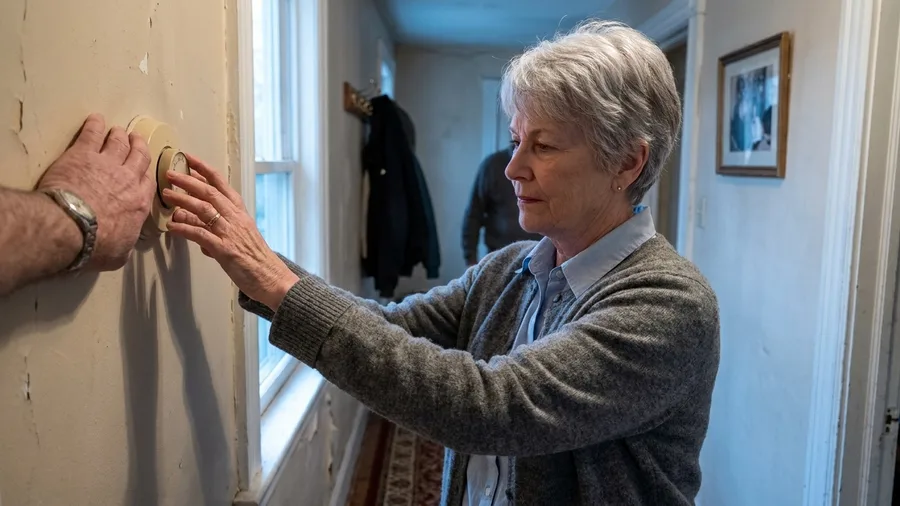
Four topics, most days, for years: the thermostat at 68 against 72, which way to turn at the intersection by the pharmacy, the side door left unlocked again, the container of soup in the back of the fridge. The couple is 76 and 74, married 47 years, both retired inside the last five, still in the two-bedroom house where the kids grew up. Nothing on that list has money in it, or fidelity, or how the children were raised. Those were decided long ago and no dial setting reopens them.
Volume alone will not sort this for anyone watching from outside. The couple themselves usually know: the fight is about the setting, or it is about being overruled in your own kitchen by someone who did not ask.
The count of squabbles is not the measure of a marriage. A house that argues about the side door every morning can sit on decades of settled trust, and a house that says nothing at all proves only that it is quiet.
💡 Tip: Ask yourself after the next squabble: was that about the setting, or about being ignored? You will know the answer in two seconds.
| What you see | Everyday bickering | Worth getting help for |
|---|---|---|
| How long it lasts | Three to five minutes, then a joke or change of subject | A full day of silence, or a grudge carried into the next argument |
| What it is about | Thermostat, driving directions, the side door, leftovers | Who the other person is, old failures, character |
| How it ends | Someone apologises, laughs, or starts dinner | Separate meals, sleeping apart, no repair at all |
| What is protected | Both people still say what they want | One partner holds all the money and medical information |
| The tone | Exasperated but fond | Eye-rolling, mockery, mimicking, contempt |
2. After forty years, neither expects to win

The cost of treating every repeated argument as unfinished business is that you go looking for a winner in a dispute that stopped having a prize years ago. Two people can argue about the thermostat for decades with neither preference moving a degree, and the exchange stays the same shape every time: the setting, the objection, a familiar huff.
Acceptance looks like no campaign to fix the other person and no tally of who gave in last. The difference gets tolerated as a fact of the house, not filed away as evidence. The line into contempt is whether the other person is an opponent to be beaten or a fact of life to be worked around.
This does not describe a couple still fighting over money, fidelity, or the children with neither side having accepted anything. There the argument still has a prize, no ritual has formed, and the repetition is something else.
💡 Tip: If the same topic has been argued about for decades and nobody has changed, it is probably a ritual, not a problem.
Three Mistakes That Make It Worse
3. Recovery is fast, so the damage is small

“Fine. Put it at 72. I’ll be cold.” That line, said with a shrug and a joke behind it, is the whole test – the exchange is already closing, not opening.
Repair is unglamorous: a joke, an apology, changing the subject, a hand on the shoulder, one of them starting dinner while the other resets the dial. For this couple a typical episode runs three to five minutes and ends with a joke or a change of subject. Nobody sleeps in the other room, and by the evening news it is gone.
So ask yourself: when did the last one actually end? Minutes, or a full day of silence, separate meals, sleeping apart, a grudge carried into the next argument? That answer tells you more than the count of arguments does.
The same thermostat fight repaired in minutes is not the same event as one that leaves a day of silence behind it. The topic stays the same; the residue is what changes.
💡 PRO TIP
The repair is the relationship
The same thermostat fight repaired in minutes is not the same event as one that leaves a day of silence. Watch the repair, not the argument.
4. They still bother to argue with each other
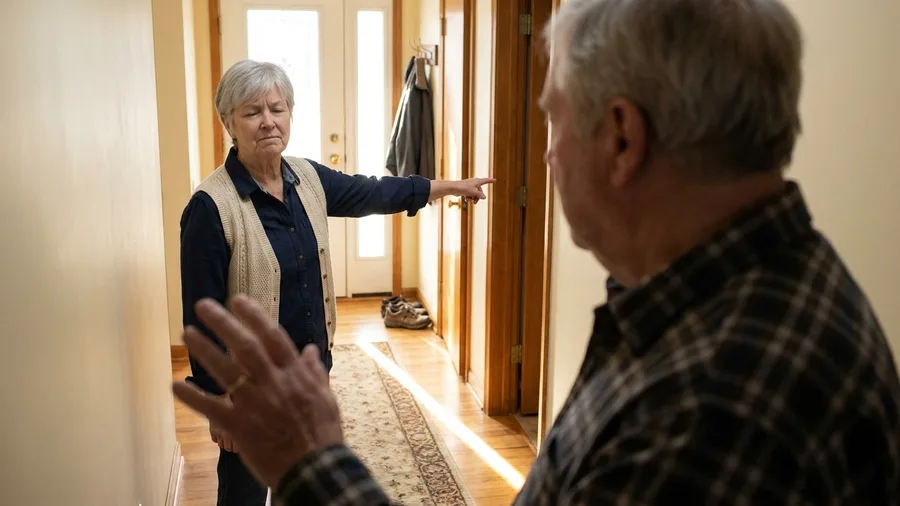
You ask him to turn down the TV and he says it is already at the volume they have always used. You point out the side door again and he says he has lived in this house longer than you have. Then he hands you the remote, changes the subject, and asks what you want for dinner, and the whole thing is over before the ads finish. That is not a marriage falling apart. That is a marriage still talking.
Bickering is a form of engagement. A request, a complaint, a small correction, all of it rests on the working assumption that the other person will hear you and answer, that the contact matters and the contact will be returned. The person who asks you to turn the TV down still expects you to turn it down.
Watch the couple where no requests are made. Separate rooms, separate schedules, meals no longer met over the same table because nobody bothered to arrange one. Nothing to argue about, because nothing is expected anymore. There is no friction in a house where nobody is trying to reach anybody.
Silence is not automatically the bad sign, though. Read it against the history: a couple who were always quiet, who said good morning and meant it, that is contentment, not withdrawal. Quiet that arrives in a couple who spent decades in daily back-and-forth is a different thing, and it deserves a look rather than a guess.
And the reassurance has a limit. If one person has always been the only one asking, the only one making requests and corrections while the other absorbed them without ever reaching back, that pattern is not healthy engagement. It is one person doing all the contact, and that was never a marriage of equals.
What Gets Louder After Seventy
If the bickering has increased lately, the cause is often arithmetic and biology, not a change of heart. Retirement piles up the hours. Aging bodies add irritability.
These next three entries explain why the noise goes up and what to do about each cause. None of them means the marriage is in trouble.
5. Retirement puts them in the same room all day
it is a season of adjustment, and patience will settle it. Patience does not add hours to a day, and the hours are what changed.
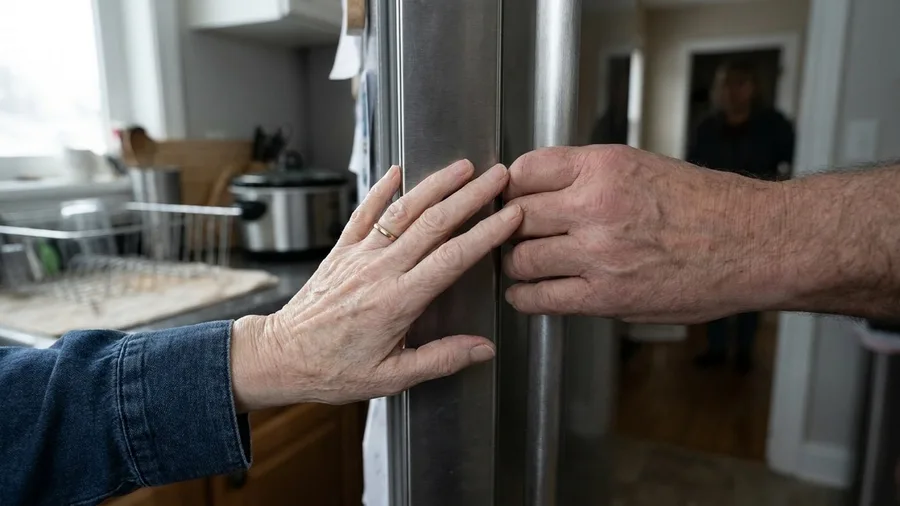
The arithmetic is blunt. While both were working, the shared waking hours ran to about four a day, and most of those were spent tired, over dinner and the last of the evening. Now that both have stopped within the last five years, the same two people spend thirteen or fourteen waking hours in each other’s company, in the same two-bedroom house where they raised their children, without a commute to cut the day in half.
So the thermostat argument has more chances to start, and so does every other small one. One kitchen means three meals negotiated rather than grabbed, one car means every errand scheduled, and the side door and the leftovers turn up in conversation because there is more conversation for them to turn up in. The friction is not new resentment surfacing; it is the same handful of topics meeting triple the opportunity.
Put the hours to work on something other than each other. Separate rooms to read in, separate mornings, a standing schedule that belongs to one person and not the pair of them, kept on purpose the way the oil change gets kept. Treated as maintenance, that time apart reads as structure, not as a verdict on the marriage.
None of which means the marriage got worse. The increase is arithmetic, not decline, and it tends to flatten once the days get shape again.
The Retirement Arithmetic
What changes when two people stop leaving the house for work
Source: illustrative couple, married 47 years, both retired within the last five years.
6. Some of it is hearing aids and sore hips
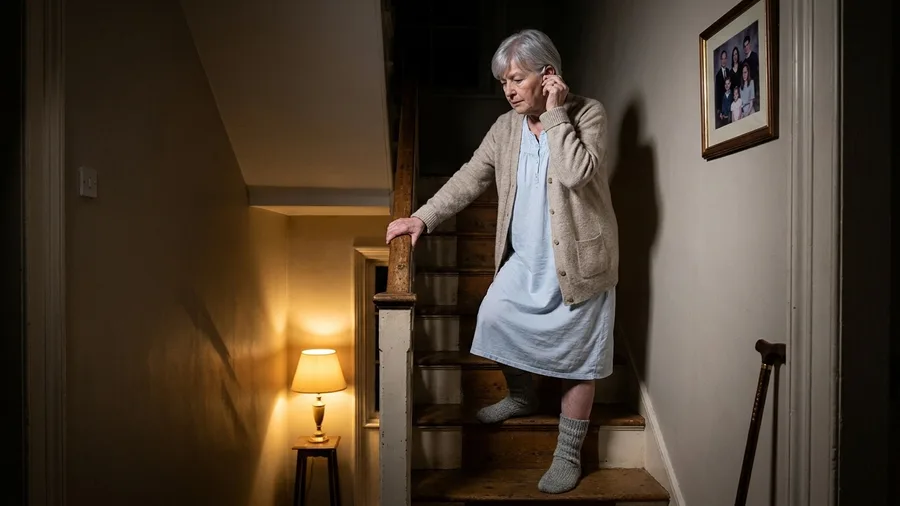
Often because the body has changed and the temper is a symptom, not a character flaw. The TV is louder than it was because the hearing has dulled. You repeat yourself three times because he genuinely did not catch it the first two. He is short with you because a bad hip makes the stairs a negotiation and by seven at night he is running on empty.
The first move is a hearing test. The second is a doctor’s review of medications and pain, taken in as a whole, rather than a conversation about attitude. A lot of sharp irritability is hearing loss, chronic pain, and exhaustion wearing a temper costume.
Treating the body quiets arguments nobody was really having on purpose. Fewer repetitions, less fatigue, easier stairs, a little less irritability as hearing aids and pain management do their work. You will hear each other better, in a literal sense as well as the other.
But do not let that explanation become a blanket. If contempt, mockery, or withdrawal is still there after the hearing test and the medication review, the body is not the whole explanation, and the rest of the problem deserves its own attention rather than a shrug about getting older.
💡 Tip: Book the hearing test this week. It is the cheapest fix on this list and the one most often skipped.
🧭 From Noise to Signal: What to Do First
Rule out the body
Book a hearing test and a medication review if the irritability is new.
Add space to the calendar
Separate mornings or separate rooms, treated as maintenance rather than distance.
Watch the repair
Note how long it takes to return to normal after a sharp exchange.
Check for contempt
Listen for eye-rolling, mimicking, or insults about who the person is.
Get outside help if needed
A licensed couples therapist or the family doctor, depending on what you see.
7. Caring for each other makes people snap

A person who needs a walker gets told twice a day where to put it, and the second telling comes out sharp.
The salt gets moved off the table, the car keys get questioned after dark, the pill box gets counted a second time before it goes back on the shelf. It sounds like scolding. Underneath it is fear: the person doing the counting is watching for the fall, the missed dose, the drive that ends badly, and the fear has nowhere to go except out at the nearest person. The one being managed hears something else entirely – that a capable adult is now a task to be checked, and dignity is going out the door with each reminder.
This is where caregiver exhaustion does its quiet work. No amount of the managed partner being more gracious fixes a load that is too heavy for one person, so the answer sits outside the two of them: a family member who takes a shift, a home aide, a doctor who reviews the medications, a support group where the fear can be said out loud to people carrying the same weight.
Reading the Friction: Ordinary vs. Warning
Ordinary bickering
- A specific topic: thermostat, directions, leftovers
- Ends in three to five minutes with a joke or subject change
- Both people still ask each other for things
- Either partner can call a truce
- No one shrinks with shame
Worth getting help for
- Eye-rolling, mimicking, insults about who the person is
- 'You always' used as a weapon
- A full day of silence or separate meals
- One partner holds all the money and medical information
- Requests have stopped because expectations are gone
When It Stops Being Fine
The reassurance that bickering is normal has a limit. Some patterns are not noise; they are signals that something needs attention.
These last three entries name those patterns and give you a first step. Read them honestly, without panic and without talking yourself out of what you see.
8. Contempt, not volume, is the warning sign

For years the thought was that fighting louder meant the marriage was worse, and the couples who never raised their voices were the ones to envy. Watching closely corrects that. What wears a marriage down over months is not the twenty-minute argument about the thermostat. It is the eye-roll when one of them starts a sentence, the mimicked voice repeated back to mock what was just said.
Ordinary bickering has a shape: a specific topic, a quick end, and nobody left smaller afterward. Contempt leaves a residue. The insult lands not on the thermostat but on who the person is, and a failure from 1998 gets hauled out as evidence. Ten of those a year, and one partner stops bringing up anything at all, because the cost of opening their mouth is now shame.
If that pattern is there, the move is a licensed couples therapist – the APA’s psychologist locator is the official place to start. What no article can do from outside is assess a particular marriage; noticing contempt is a reason to make the call, not a verdict to hand down at home.
💡 Tip: Record the next argument in your head. If you would be embarrassed for a friend to hear it, that is information.
⚠️ COMMON MISTAKE
Do not mistake silence for peace
A house with no arguments is not automatically a healthy one. If the quiet came after years of daily back-and-forth, it is worth asking what stopped.
9. One of them going quiet is the real worry
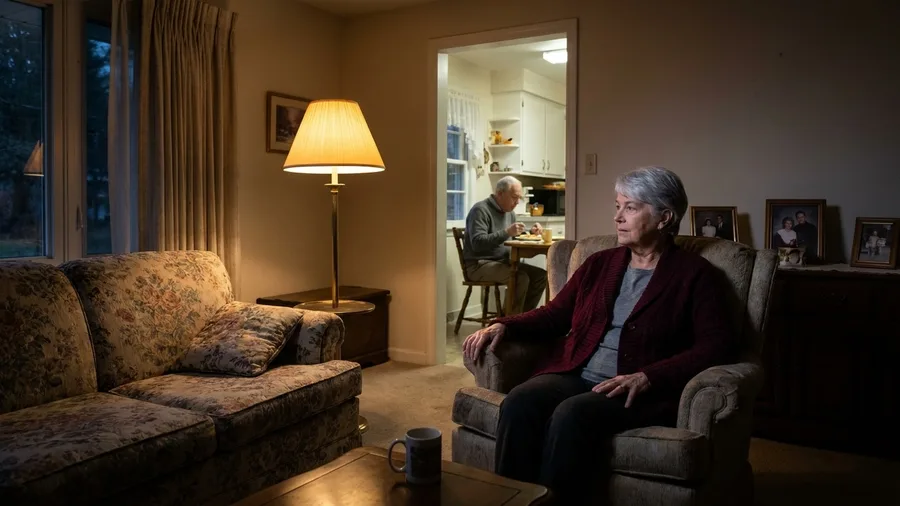
The dangerous thing to wait on is not the arguing but the stopping of it. A partner who has answered every complaint for forty years and then goes flat – meals taken separately, nights in the other room, no answer at all – is not at peace. Stonewalling is what long-term research on couples keeps landing on as one of the strongest signs a relationship is in trouble, and it tends to arrive quietly, which is why it gets mistaken for calm.
Money is another place the silence shows. One partner holds the accounts and the medical information, and the other has stopped asking for either.
Weeks, not years, is the timeframe worth holding to. If mood, memory, or sleep has changed, the doctor comes first, because a shift in a person can be a change in the body; then a therapist.
Silence after a lifetime of back-and-forth is the specific case the bickering-is-fine idea does not touch. The noise was the marriage still talking. When one of them stops answering, the thing to worry about has already started.
10. Bickering works when there’s a floor under it

Only if certain conditions hold, and they are worth naming plainly. Can you say what you actually want out loud, and does it get heard rather than overruled? Can either of you call a truce mid-argument and have the other person take it? Were the big decisions settled together? Those three are the floor. Where they exist, the thermostat at 68 against 72 can stay a squabble, and nobody needs to make it mean more.
The truce matters more than it sounds. One of you says “let’s leave it, I’m tired,” and the other lets it go, dinner gets made, the subject is not reopened as ammunition later. If a truce gets called and the other person keeps coming, keeps pressing, keeps going until one of you gives in, that is not bickering anymore. That is a contest with a loser, and one of you is always the loser.
Now the exclusions, because this is where the reassurance stops and does not travel further. Control is not noise: one person deciding the other’s money, or hiding a diagnosis, or telling the doctor what the patient’s own symptoms are without them in the room. Threats, whether thrown at the person or at the door. Any violence at all, once, ever. A couple in that situation is not fine, and no bicker-blame game should tell them they are.
If any of that is present, the first step is not a conversation about the thermostat. A licensed couples therapist is the usual starting point, the APA’s psychologist locator lists ones near you, but where control or violence is involved that is not the first call. The family doctor, an elder-care advocate, the National Domestic Violence Hotline: whichever the case fits. These exist for exactly this, and using them is not an overreaction.
The distinction runs cleanly enough if you are honest. A couple who can each say what they want, either of whom can call a stop, and whose big decisions were made side by side can let the noise be noise. A couple where one person decides for both, or where disagreement gets a threat instead of a truce, is not having a bicker. The floor is the whole thing.
The same argument at the same decibel, and one version is fine while the other is not, and the difference was never in the volume.
Frequently Asked Questions
Is bickering after 70 a sign of a bad marriage?
Not by itself. The amount of squabbling is a poor measure. What matters is whether there is a floor of trust and whether repair happens fast. A couple can argue daily about the thermostat and still have a strong marriage.
How do we know if our fighting has crossed a line?
Look for contempt (eye-rolling, mimicking, insults about who the person is) and withdrawal (a full day of silence, separate meals, secrecy about money or health). If those are present, it is worth talking to a couples therapist or the family doctor.
Why did we start fighting more after retirement?
The hours together go from about four waking hours a day to thirteen or fourteen. More shared time in the same house means more friction over logistics. It is arithmetic, not a decline in love.
What if one of us has become much more irritable?
Get a hearing test and a medication review. Pain, hearing loss, and exhaustion can make anyone snap more. If the irritability remains after those are managed, then look at the relationship.
When should we see a therapist instead of just talking it out?
If contempt or withdrawal is present, or if one partner is being managed or controlled, a licensed couples therapist is the right next step. The APA has a psychologist locator to help you find one.
Which Side of the Line You Are On
Sort yourself honestly and the verdict is not close. If there is mutual trust under the noise, if apologies come quickly and the big questions were settled years ago, you can stop auditing the thermostat fight. If you are seeing eye-rolling, a full day of silence, separate meals at separate hours, or one of you holding every password and every diagnosis, treat it as a signal rather than a mood.
Name the first step and make it this week. If mood, memory, hearing, or pain has shifted lately, start with the family doctor. If the change is not physical, call a licensed couples therapist; the APA psychologist locator is the plainest place to begin looking.
So the same squabble about 68 against 72, or the side door propped open again, is ordinary in a house with trust and fast repair, and it is not ordinary where contempt or control has moved in. Bicker about the thermostat. Worry about the eye-rolling, the day of silence, and the one person deciding everything.
Apply the Repair Test Tonight
After your next squabble, time how long it takes before one of you says something ordinary. Under an hour is fine. If it stretches into a day, you know what to do next.