Can you actually get a US beach to yourself in January and still find a bed and a hot dinner? Yes, at thirteen specific towns, with one condition attached.
The beach you are picturing is the boarded-up version: shutters on the fry shack, an empty strand, and nowhere to sleep or eat once the sun drops. That is half true and half the reason this works.
In all thirteen towns the daytime high lands somewhere between 30 and 65°F and the ocean sits at 44-62°F. Beach access stays open with lifeguards off. Each town keeps 2-6 year-round restaurants going, grocery stores are open, and the seasonal ice-cream stands, tour boats and rental shacks are shut.
So the variable that decides your trip is not emptiness. It is what is left open. Weekday rooms run $95-$185 and weekends $120-$240, against $260-$480 in summer. Town lots cost $5-$15 a day or nothing, against $25-$40, and street parking is unmetered in seven of the thirteen.
By the end you can sort them by the trip you want: mild air at Tybee or St. George, walkable weekends at Cape May or Provincetown, a ferry-only island at Block Island, storm watching at Cannon Beach or Bandon. Then check the town’s official visitor site for January closures, ferry times and rental minimums before you book anything.
Before You Book: Six Tests
Four is the dinner threshold
Six towns keep 4-6 restaurants open (Cape May, Provincetown, Bar Harbor, Cannon Beach, Bandon, Mendocino). With only 2, you eat at the same table twice or cook.
Book the weekday, not the weekend
The $95-$185 weekday rate is where the savings live. A Friday-Saturday stay lands in the $120-$240 band and often forces the 2-night minimum anyway.
Pick a town where you keep the car
Street parking is unmetered in seven of the thirteen. In the rest, budget $5-$15 a day in the town lot and check whether the lot is plowed after a blow.
Ferry towns need a timetable, not a mood
Block Island's 3-4 daily round trips and the limited Provincetown fast ferry decide your arrival and departure before your lodging does. Book the boat first.
Plan one indoor day per three
Rain or wind hits most weeks in January. The town that survives a washed-out Tuesday is the one with a grocery, a café and a roof – not the one with the best view.
Call the restaurant, not the website
A year-round listing can still mean closed Mondays-Tuesdays in January. Phone the two or three you are counting on and confirm the days you are there.
1. Tybee Island, Georgia: Wide Beach, Savannah Nearby
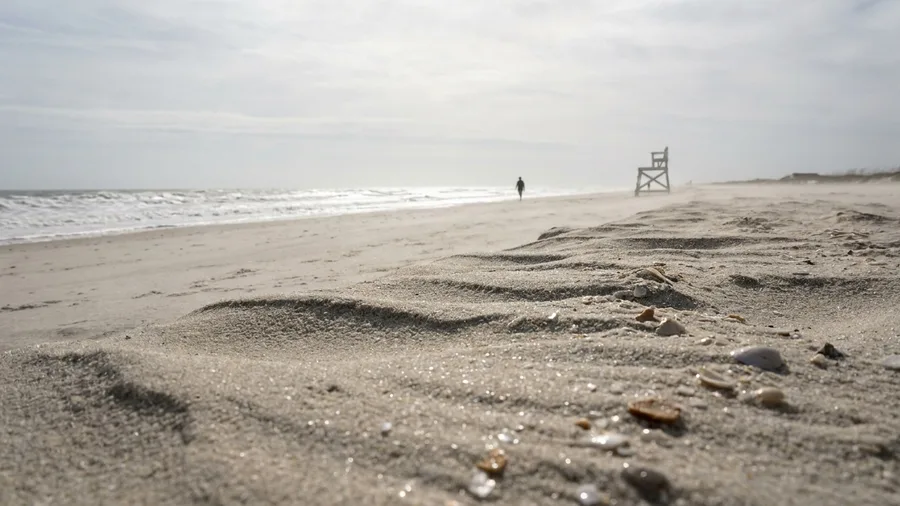
Tybee Island is the mild, low-risk January beach where the money you spend buys weather, not luxury. Daytime highs sit at 60-65°F and the ocean runs 55-58°F, cold enough that you wade to the ankle and stop, warm enough to walk the wide south-facing sand in a fleece for an hour without hurrying. Access is open, lifeguards are off, and the summer stands that sell sodas and rent umbrellas are gone, so the beach reads as sand and sky and little else.
The splurge here is the lodging, and it is a modest one: weekday rooms run roughly $95-$185, with a two-night minimum common, which is the trap. You cannot slip in for a single Tuesday night because the town is quiet; book two and you are still spending less than half what the same room costs in July. Street parking is free in January, the town lot runs about $5-$15 a day, and a grocery stays open alongside two year-round cafes, so the food is a short list rather than a dead end.
What makes the outlay safe is Savannah, 20 minutes down the road. If the wind turns the beach into a punishment, you drive in for the airport, a deeper bench of restaurants, and a city afternoon, then come back to sleep near the water. That backup is what turns a mild gamble into a near-certain trip, and it is why this is the one to book first if you want warm-ish air and a soft landing.
💡 Tip: Book the mainland airport and rent the car there. Tybee's own lodgings are the scarce January asset, not the flights.
2. Folly Beach, South Carolina: Pier Walks, Surf Shops Open
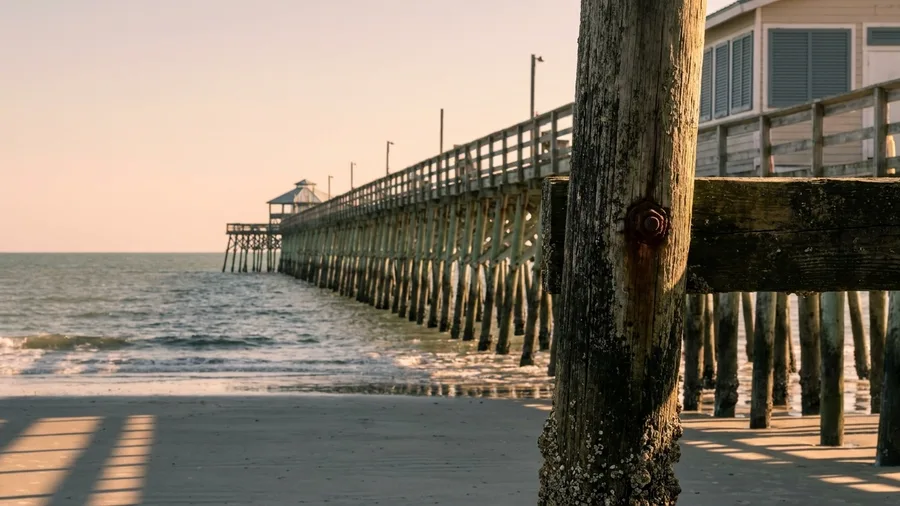
Skip the rental-stand-and-tour-boat version of Folly and take the pier and the bar stools, because that is where the town actually lives in January. The numbers are mild but not swim-ready, highs 55-65°F and ocean 52-56°F, with beach and pier access open and no lifeguards on duty. Three year-round bars and restaurants plus the surf shops keep a low-key pulse going; the seasonal beach rentals and tour stands are shuttered, so there is no full menu of activities, only the wind and rain that most weeks decide your day.
The practical center becomes the pier walk and a long lunch, with the county park and the lighthouse area nearby for off-beach walking when the sand is too raw. Town lot parking is $5-$15 a day, street parking is unmetered, and weekday rooms run $95-$185. What you trade for the smaller surf-town quiet is the big-city fallback, so come for the pulse and the empty pier, not for a rescue plan down the highway.
3. St. George Island, Florida: Barrier-Island Solitude
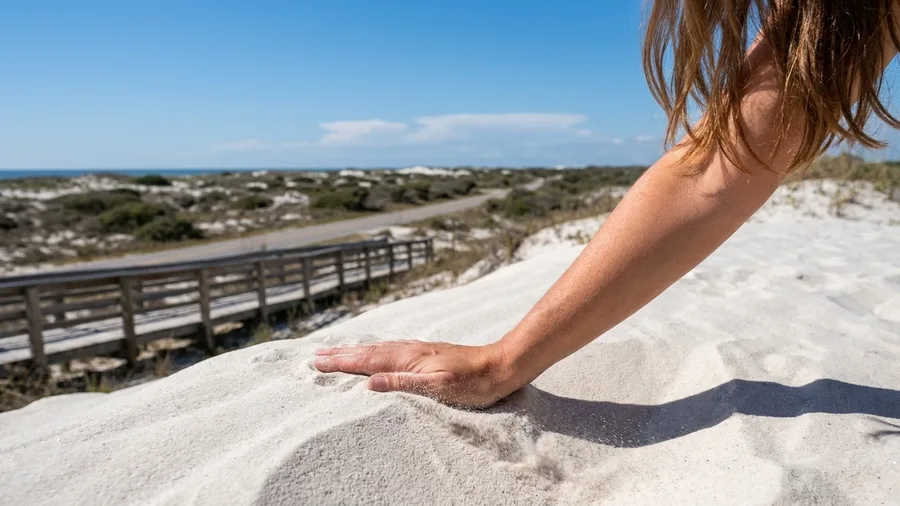
Book the bed before you plan the beach day, because St. George is the thinnest support system on this list. The island runs 28 miles along the Gulf, January highs sit at 60-65°F with the water at 58-62°F, and the beach and state park stay open with no lifeguards on duty. Two year-round restaurants and a market are what remain once the seasonal rental offices and beach bars shut their doors. Dinner is a short list, not a vanished one.
The hour that decides the trip is early morning. Walk out onto the state-park sand before nine, when the light comes in low off the Gulf and the only tracks are yours, and the island delivers the stripped-down quiet nothing else on this coast can match: a barrier island with a market for basics and no restaurant scene to speak of. State-park parking runs $5-$15 a day, street parking is free, and weekday rooms run $95-$185 with a 2-night minimum. Groceries before arrival are the practical move, so cook dinner at the rental when the two restaurants are booked out or closed.
4. Chincoteague, Virginia: Ponies, Refuge, Empty Sand
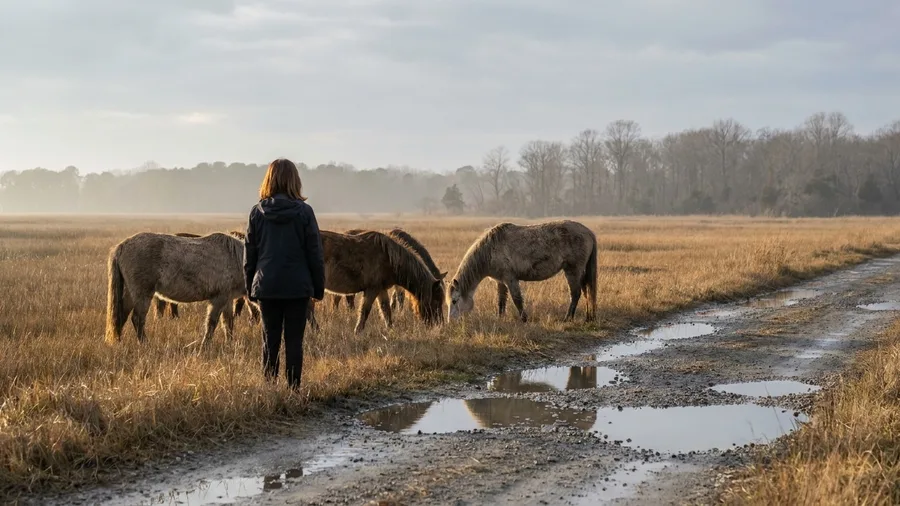
The Assateague refuge road costs you a little more cold than the last stretch of barrier island did, and it buys back something the state-park beach cannot: wild ponies standing in the marsh grass at forty feet, no tour boat, no group, no queue. January highs here run 45-52°F and the ocean sits at 44-50°F. The refuge beach access stays open and the lifeguards are gone, so the sand is yours, but the wind off the inlet has a bite that the Florida island never quite mustered.
The ponies are the anchor, and the honesty is this: in summer you would pay for a tour to see them. In January the tours are shut, along with the ice-cream stands, and that is no loss at all, because the herd grazes visible from the refuge roads themselves. Drive the loop slowly, pull into the pullouts, and watch the marsh edge rather than the beach. Two year-round diners and a grocery keep the town fed, which is a short list, not a closed one.
Parking at the refuge lot runs $5-$15 a day and street parking in town is free, with weekday rooms at $95-$185. The variable to check before you book is winter road closures inside the refuge, which the official refuge site posts and which can shut a section of loop road after a storm. You are trading a wider dinner menu for a wildlife trip with almost nobody on it, and the ponies do not care what month it is.
💡 Tip: Carry binoculars in the passenger door pocket, not the trunk. The ponies turn up on the marsh side while you are still moving.
5. Cape May, New Jersey: Victorian Streets, Quiet Sand
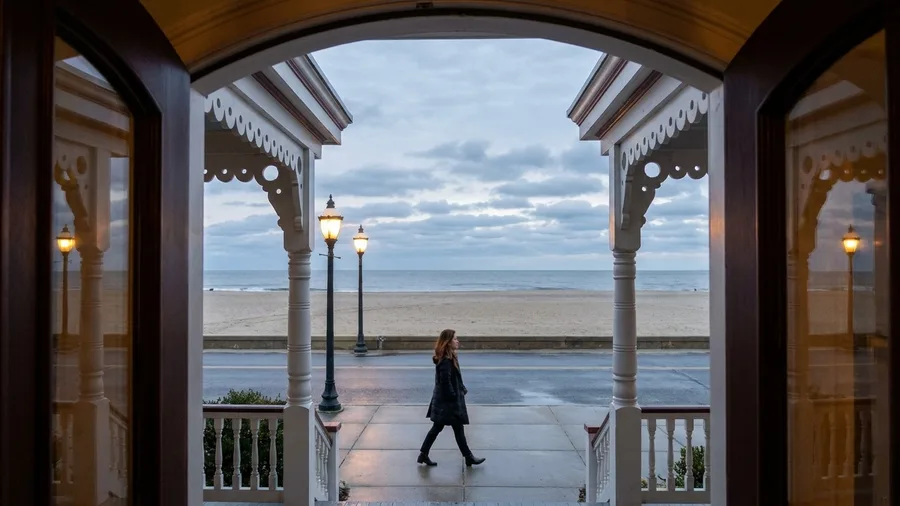
The cold comes off the wide sand in a flat sheet, and the only sound on the beach is the surf and your own boots breaking the crust where the tide pulled back. Forty – 48°F on a good afternoon, ocean 44-48°F, access open and lifeguards off. It is not swimming weather and nobody is pretending otherwise, but the sand is walkable for a mile, and the wind is the thing you dress for, not the water.
The draw shifts here from refuge roads to Victorian streets. The mall and the lighthouse stay open, four year-round restaurants stay open, and the gas lamps and painted porches carry the weekend while the summer beach tents, trams and tour stands sit shuttered. That is how this town works in January: the architecture and the walking do the job the beach does in July.
Windproof layers matter more than a swimsuit, and that is the whole packing list. A hard shell, a hat that stays on, something under it that holds heat when the ocean breeze cuts across the point.
Parking is $5-$15 a day in the town lot, street parking is unmetered, and rooms run $95-$185 on weekdays with weekends at $120-$240, still well under the summer numbers. Of the older mid-Atlantic stops this is the most weekend-ready, with enough open restaurants and an open mall to fill two days without hunting. The balance tilts toward open, and for a January walking weekend that is exactly what you want.
⚠️ COMMON MISTAKE
Do Not Judge by the Summer Photos
Seasonal fry shacks, trams and rental stands close in January, so a town that looks packed online can read as two restaurants and a closed lot. Count year-round restaurants on the town's official site before you book, not the summer listings.
6. Montauk, New York: Lighthouse Walks, Surf Breaks
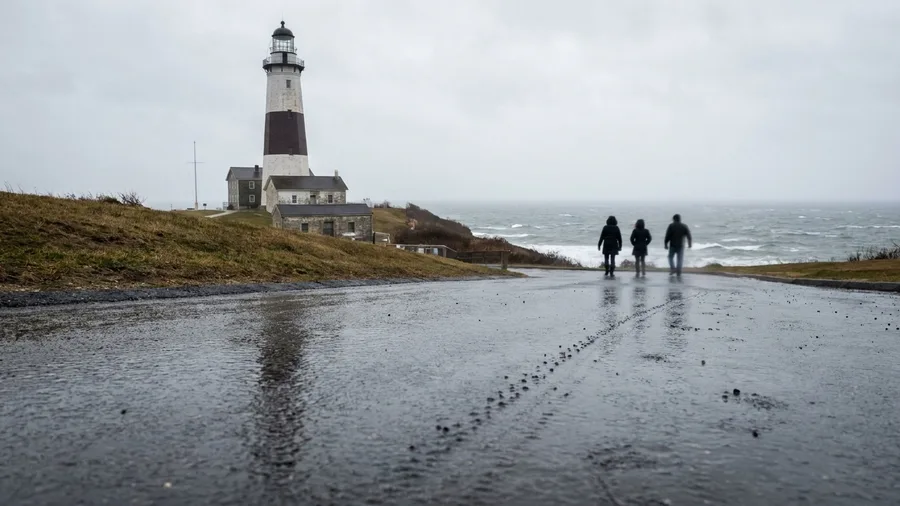
You step out of the car at the lighthouse road and the wind hits your face before anything else registers, salt and cold and the low boom of surf below the bluff. January here is 40-48°F, ocean 44-48°F, the beach and lighthouse area open, lifeguards off. The road out to the point is empty enough that you hear your own footsteps on the asphalt.
The catch is food. Two year-round restaurants stay open, and most of the seasonal seafood shacks and surf schools are shut, so you plan your day around a short dinner list or a grocery run. Some inns close midweek, which means a Tuesday booking can fall through if you are not careful. Check before you commit to a date.
Street parking is free, the lot is $5-$15 a day, and weekday rooms run $95-$185. You accept two restaurants and get cheap lodging and an empty lighthouse road, a sharper quiet-versus-open trade than the shore towns to the south. If you want the full dinner bench, go elsewhere; if you want the point to yourself, this is the one.
Which January Stops Are Worth the Drive
- ✅ Worth the detour in any weather — Cape May, Provincetown, Cannon Beach and Bar Harbor all keep four to six year-round restaurants plus a walkable anchor.
- ✅ Worth it if you accept two restaurants — Tybee, Montauk, Block Island and Ogunquit work on a grocery run and a short dinner list.
- ⚠️ Go only with a verified room — Montauk and Block Island both close inns midweek in January, so confirm your exact nights first.
- ⚠️ Go only with a car and supplies — St. George, Chincoteague and Bandon have one market or a thin food base; shop before you arrive.
- 🛑 Skip if you want to swim — Ocean temperatures run 44–62°F across all thirteen towns. Nobody is swimming without a wetsuit.
- 🛑 Skip the ferry town if you cannot flex — Block Island runs 3–4 round trips a day and a missed boat reshapes the whole trip.
7. Block Island, Rhode Island: Ferry-In Quiet
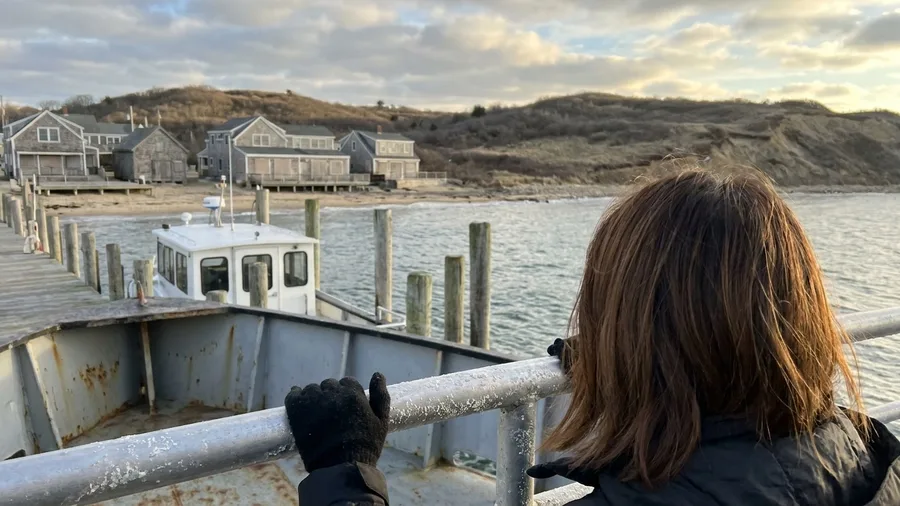
It is the second, but only if you plan around the boat. This is the deepest off-season on the list, and the whole trip hangs on a schedule you have to check before you book a room. Summer inns, bike rentals and shops are dark, and midweek service drops to almost nothing.
The numbers are honest about the cold. Daytime highs sit at 40-45 degrees, the ocean runs 44-48, and the bluffs above the beach are empty in a way the mainland towns cannot match. Beach access stays open with no lifeguards on duty. Two year-round restaurants keep the lights on. That is the entire food base, so plan your dinners around them rather than assuming you will find something else open on a Tuesday.
The ferry is the real test. It drops to three or four round trips a day in January, which means a missed sailing is not a minor delay but an overnight in the wrong place. Check the official ferry site for the winter timetable before you commit to dates, and book the room only once the boat times line up. Weekday rooms run $95-$185, and with most inns shuttered the ones that stay open fill on the few weekends people come over.
Bring groceries. The market and a cooler of basics cover the gaps the two restaurants cannot, and they matter most midweek when even those run thin hours. This is not the town for a reader who wants a full menu within walking distance. It is the town for the reader who wants the strongest have-it-alone payoff here and will take the ferry schedule as a fixed rule rather than an inconvenience.
💡 PRO TIP
The Two-Booking Rule for Ferry Towns
Book the ferry first and the room second. Block Island at 3–4 round trips daily and the limited Provincetown fast ferry both punish the reverse order, and January inns rarely refund a missed boat.
8. Provincetown, Massachusetts: Commercial Street Without Crowds
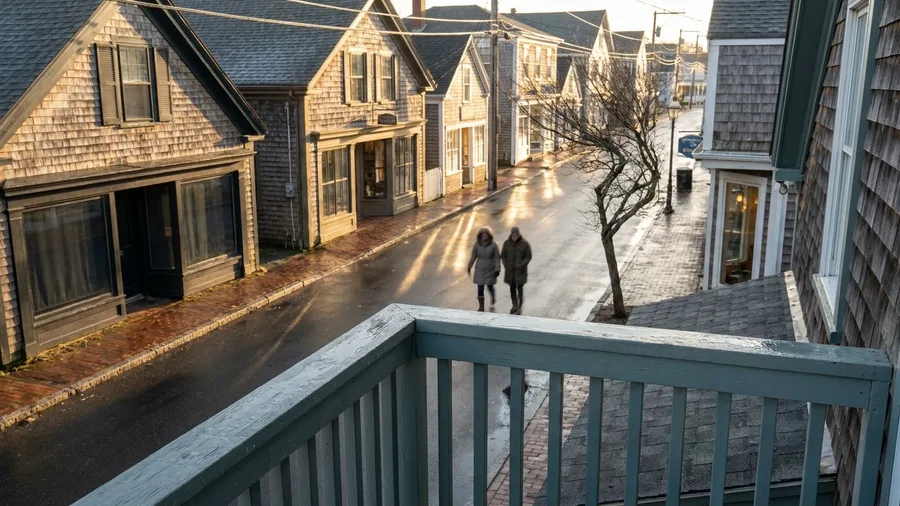
Street parking is free along Commercial Street in January, which on its own covers the cost of the day. The town lot runs $5-$15, and the beach access stays open with lifeguards off, ocean at 44-48 degrees and air at 40-45. Six year-round restaurants keep serving, more than anywhere else on this stretch of the Atlantic, so an empty street still ends in a hot meal. Whale watches, bike rentals and the seasonal galleries are shut, leaving the town walkable but not fully awake.
The catch is getting there. The fast ferry runs a reduced January schedule and the local buses thin out, so check the official times before you rely on either. Driving solves it and protects the six-restaurant base you came for. Weekday rooms run $95-$185, and the free street parking makes the cheapest version of this trip one of the best.
9. Ogunquit, Maine: Marginal Way, Closed Coves
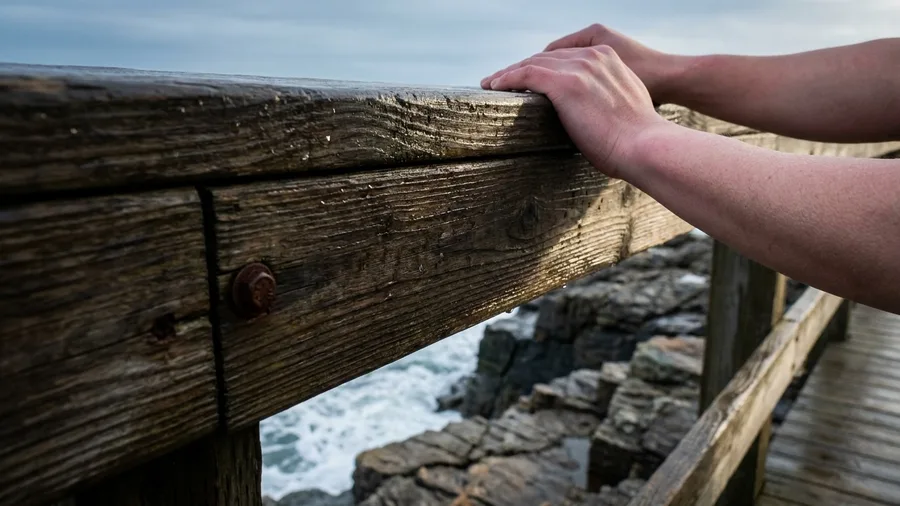
The wind hits you first on the Marginal Way, cold off the water at 44-48 degrees, and the path ahead is empty in both directions. Air sits at 40-44, the beach access is open with lifeguards off, and this cliff walk is the reason to come in January. Three year-round restaurants stay open in town. Perkins Cove, though, is a view rather than a stop, its shops and the seasonal inns gone dark for the winter.
That cove is the reason the town exists as a place people know: a working fishing harbor folded into the rocks, and the footpath built along the ledge above it so the walk between the village and the cove could be made without a car. In summer the shops fill the gap between the two ends. In January the history is what is left, the ledge walk and the empty water, and you have it nearly to yourself. Bring traction for ice and gear for wind, park in the town lot for $5-$15 or the free street spaces, and take the walk. Weekday rooms run $95-$185.
Ogunquit in January: What the Prose Leaves Out
10. Bar Harbor, Maine: Acadia’s Empty Edge
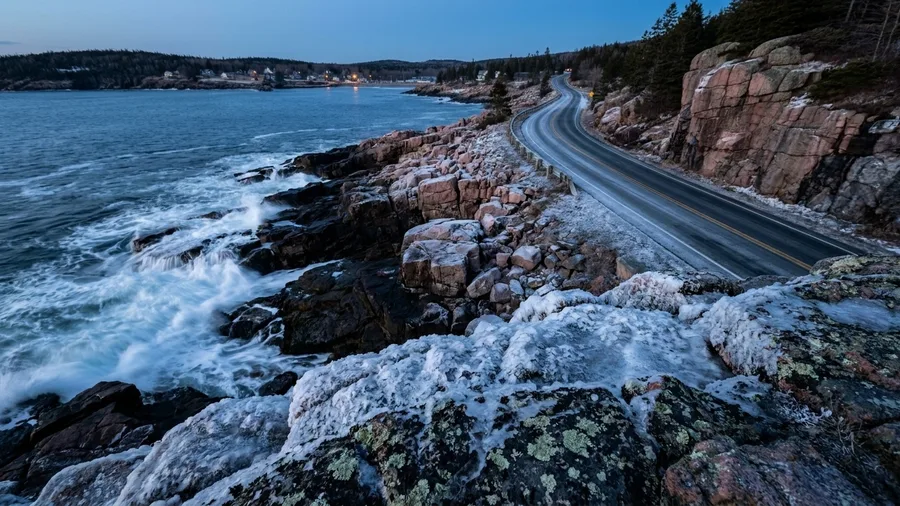
Yes, if you pack for 30 degrees and accept that the park decides your schedule, not you, unlike cold-weather storm watching. The carriage roads and the shoreline are open, the lifeguards are gone until summer, and the season’s trade is simple: the coldest air on this stretch of coast in exchange for an edge of Acadia almost nobody else is standing on.
The number that matters is five. That’s how many restaurants stay open year-round, which is a real meal base, not a hopeful one, and enough that you won’t eat the same dinner every night of a four-day stay. What’s shut is everything organized: the tour boats that run out to the islands, the seasonal shops along the village streets, the boats you’d book in July. Parking is the easy part. Street spaces are free in January and the town lot runs roughly $5 to $15 a day, and weekday rooms sit around $95 to $185, so the whole trip costs less than a summer weekend’s lodging alone.
Bring the layers and then bring one more. A 30-to-38-degree high with wind off Frenchman Bay reads colder than the number, and a walk that would be pleasant in October is a twenty-minute affair in January unless you’re dressed for it. The check before you drive anywhere is the official park site for winter road closures, because the loop road and some of the access points close on weather, and a closed gate can turn a planned morning into a different one. The ocean sits at 44 to 48, which is a thing to look at and photograph, not a thing to enter.
Where the view lands: the shoreline path south of the village, where the water breaks white against pink granite and the cold air puts a hard edge on everything. Go in the hour after a front moves through, when the clouds break and the light comes sideways. The carriage roads are the other half of the trip, gravel and bare trees and the crunch of your own boots the only sound. You’ll have them mostly to yourself, and you’ll understand why the people who live here don’t mind January.
Booking Bar Harbor: What January Costs You
Making it work
- Two nights is a common minimum, so a four-day stay clears it without asking
- Your five open restaurants are the entire dinner roster; pick lodging within walking distance of the village
- Groceries fill the gap when you want lunch without a sit-down
- Check the official park site the morning you drive, not the night before
What bites
- First week of January is the deadest; a few places reopen mid-month
- A closed park gate reroutes your whole day, so have a shoreline backup
- Fifteen minutes outside on the shore path is the realistic limit without serious layers
- The ocean is scenery in the 40s, not an entry point
11. Cannon Beach, Oregon: Haystack Rock Storm Watch
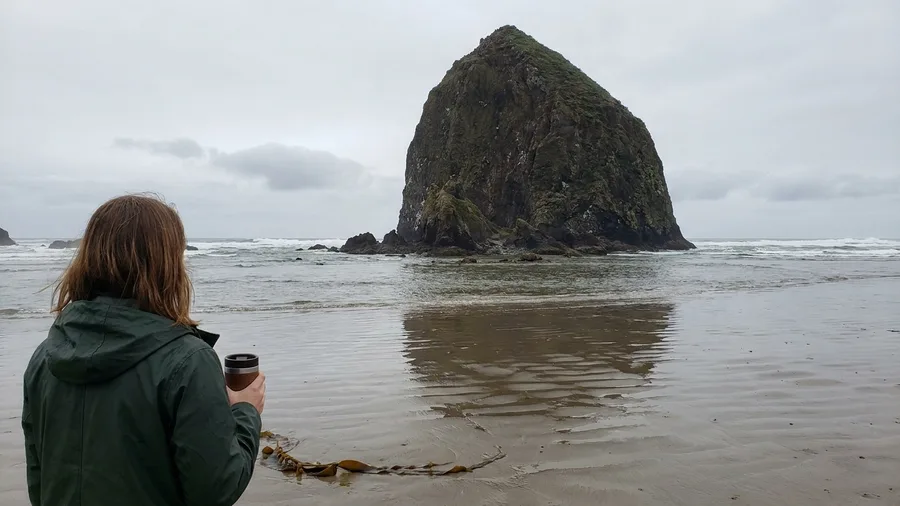
Go for the storm, not in spite of it. Cannon Beach in January is the most open town on the Pacific stretch, with six restaurants running year-round and the beach itself wide open, lifeguards off, Haystack Rock standing out in the surf like something left behind on purpose. Highs land at 48 to 55 and the ocean sits at 46 to 52, so it’s cold but not punishing, and the whole point is to sit somewhere warm and watch weather come in off the water.
The spot is a window seat or a bench on the sand at the north end, facing the rock, with a coffee going cold in your hand while the rain moves across in sheets and then stops and the light comes back. Tidepools around Haystack are the other draw, but check the official tide tables before you walk out; the water comes in fast and the rocks get cut off. What’s closed is the browsing: the ice-cream stands and kite shops that line the main street are shuttered, so pack rain gear and stop expecting to shop. Parking is free on the street or about $5 to $15 a day in the town lot, and rooms run around $95 to $185 on a weekday. Come for the weather and you’ll get the beach to yourself.
12. Bandon, Oregon: Sea Stacks and Empty Sand
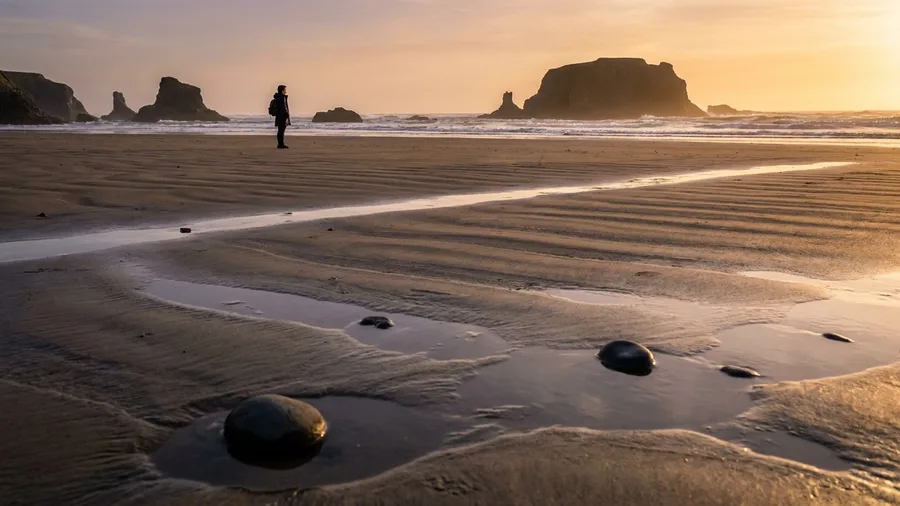
Know before you go: Bandon in January is rain and wind, and the four year-round restaurants are the whole of your dinner options, so plan your day around the weather rather than against it. That’s the trade for the quiet. Face Rock stands out of the surf south of town, sea stacks stacked along miles of sand, and you’ll walk it with no summer queue and no one between you and the water.
Start at Face Rock and walk north along the hard sand at low tide, then drive out to the Coquille River lighthouse at the mouth of the river, where the jetty and the old tower make the second half of the loop. Park on the street for free or grab a town lot for roughly $5 to $15 a day. Weekday rooms run around $95 to $185, and the seasonal galleries and tour stands are shut, which means the town is quieter than Cannon Beach but also has a shorter list of places to eat. If you want the emptiest sand and don’t mind the smaller food base, this is your stop.
💡 Tip: Walk the beach at low tide, not high. The wet sand between the stacks is firm and the walk doubles in length.
Fix These Before You Book
13. Mendocino, California: Cliff Walks, Big River Beach
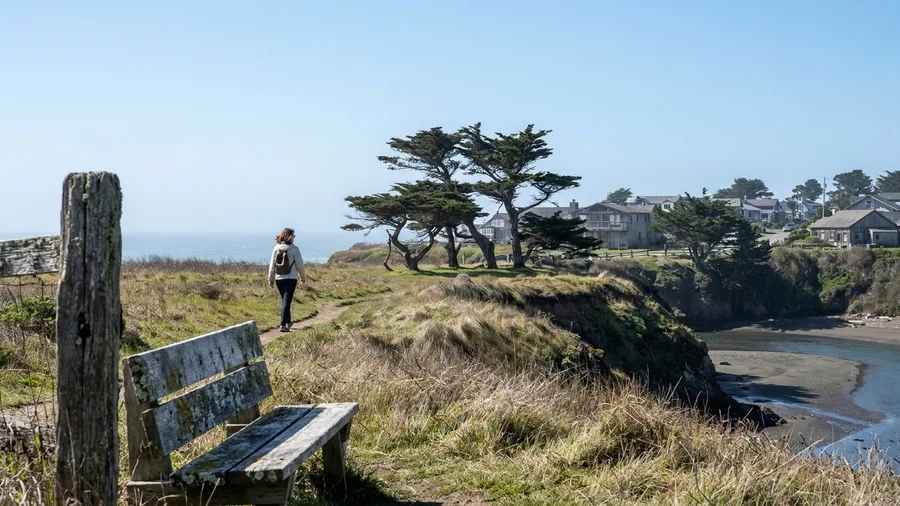
The Pacific run trades one kind of weather for another at the California line: the ocean warms a few degrees to 50-56°F and January highs sit at 52-58°F, which means you can walk the cliffs without the sideways rain that sets the pace further north. Beach access stays open, no lifeguards, and Big River Beach at the mouth of the river is the anchor, with the headland trails running out from the village edge. Layers still do the work; the difference is you get a window between squalls instead of a soaking.
Four year-round restaurants stay open, and that is the whole food base, so the village reads as private rather than fully serviced. Seasonal garden tours and rental stands are shut, which strips the browsing and leaves the walking, and that suits the trip. Street parking is free, the town lot runs $5-$15 a day in January, and weekday rooms sit at $95-$185, with a two-night minimum common enough that you should check before you commit.
The check that matters here is access, not dinner: the official state park site is where you confirm trail closures before you drive out to a headland and find the gate shut after a blow. Do that and you have the quietest California village on this list, with enough inns and four open kitchens for a bed and a hot meal. The rest is timing your walk to the weather.
Frequently Asked Questions
Is it actually warm enough to sit on a beach in January?
In the southern towns, yes. Tybee and St. George run daytime highs of 60–65°F with ocean around 55–62°F, which is walking and sitting weather in a jacket. North of Virginia, expect 30–48°F and plan beach time in short, dressed-for-it stretches.
Will restaurants and shops be open?
Expect two to six year-round restaurants per town. Seasonal ice-cream stands, fry shacks, tour boats and rental stands are closed across all thirteen in January, but groceries and the year-round kitchens stay open. Check the town’s official visitor site for the current list.
Do I need to book ahead?
Book lodging, yes, because inventory is thin and many inns require two nights. Restaurants rarely need reservations in January, though the six open in Provincetown and Cannon Beach fill on weekends.
How much does a January beach trip cost?
Weekday rooms run roughly $95–$185 and weekends $120–$240, against $260–$480 in summer. Town lots charge $5–$15 a day, and street parking is unmetered in seven of these towns.
Can I do one of these as a day trip?
Tybee works from Savannah in twenty minutes and Cape May works from Philadelphia. Block Island and Provincetown do not: the ferries are limited in January and a day trip leaves no margin for a missed boat.
Is the beach safe with no lifeguards?
Access is open but lifeguards are off everywhere on this list. Keep off the water without a wetsuit at 44–62°F, watch for sleet and wind on the northern beaches, and check tide tables before walking out at Cannon Beach and Bandon.
The One January Town Worth Booking
The verdict is blunt: January quiet is real in all thirteen towns, but the trip only works where the remaining year-round bed, hot meal, open access and schedule fit the way you actually travel.
So the boarded-up picture is half true. The access is open and the lifeguards are off and the stands are shut, yes. But the bed runs $95-$185 on a weekday against $260-$480 in summer, and the hot meal comes from the two to six places that never closed, cheaper than warm winter beach escapes.
Use the style rule first. Mild air: Tybee or St. George. Walkable with real dinners: Cape May or Provincetown. The strongest have-it-alone payoff: Block Island, on the boat’s terms. Weather as the attraction: Cannon Beach or Bandon. Then open the town’s official visitor site and check January closures, ferry times and rental minimums before you book, so the empty beach you get is the one with a bed and a hot meal behind it.
Check the Official Site, Then Book
Pull up your shortlisted town's visitor site and confirm the January ferry times, open restaurants and two-night minimums before you put a card down.