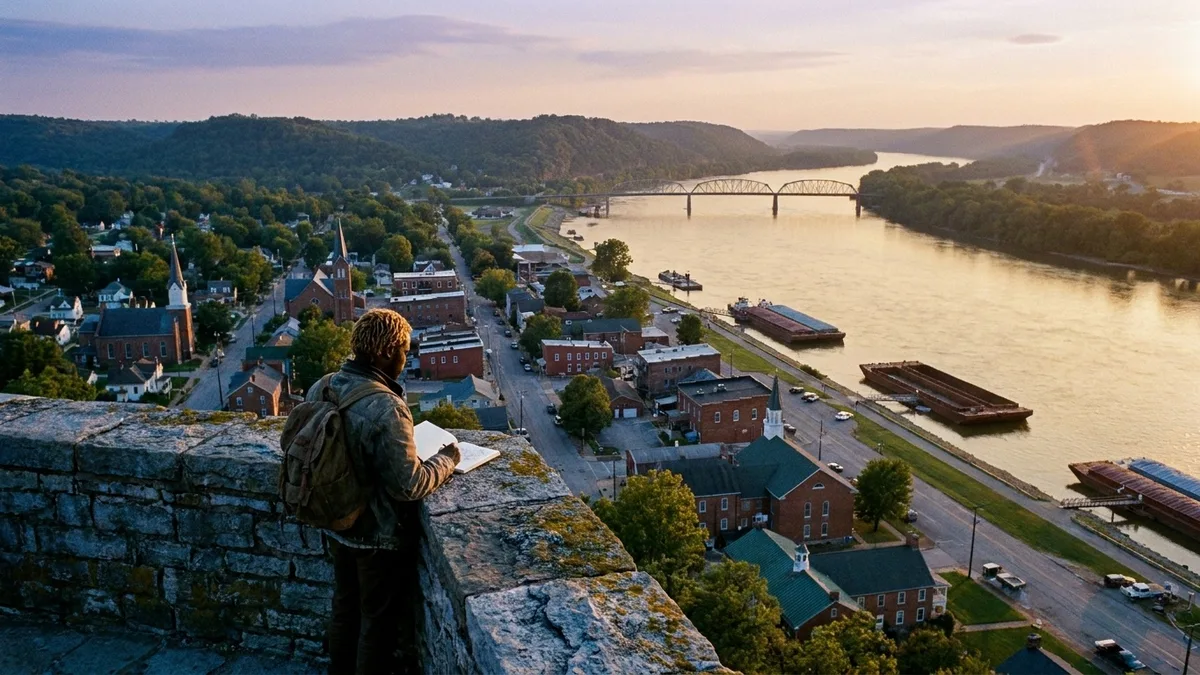
Most painters book a river town for the view, then spend three days chasing light they never planned for. The view is not the hard part. The hard part is whether the street you came for is six walkable blocks or a mile of shoulder with no shade, whether the light hits the floodwall at eight or at five, and whether the room you booked leaves anything in the budget for the extra night.
The eight towns below are not interchangeable scenery. Each has one fixed subject you can reach on foot, a stated window when the light works, and a typical room rate, so every stop answers the same two questions: what do you set up on first, and when do the light and the money make it practical.
Work through the list and you can match a town to your medium and to the days you actually have, and you will know which one to book first for a long weekend. Eight historic US river towns with specific, walkable setups, from brick streets and levees to bluffs, oaks, and working waterfronts, paired with the months and the money that make each one go.
Quick Tips Before You Start
Arrive a day before you paint
Spend the first afternoon scouting light and pedestrian traffic so you can set up the next morning without guessing.
Pack for river humidity
Watercolor paper buckles fast along the Mississippi and Ohio in summer; bring a board and clips.
Photograph your setup
Shoot the subject with the easel in frame so you can match the light angle if you return on a different day.
Park once, walk all day
Every town on this list has a core you can cross in under 15 minutes on foot; move the car only at lunch.
Book shoulder season
May–June and September–October give you the best light windows and rates between summer crowds and winter closures.
1. Galena's Brick Main Street and Bluffs
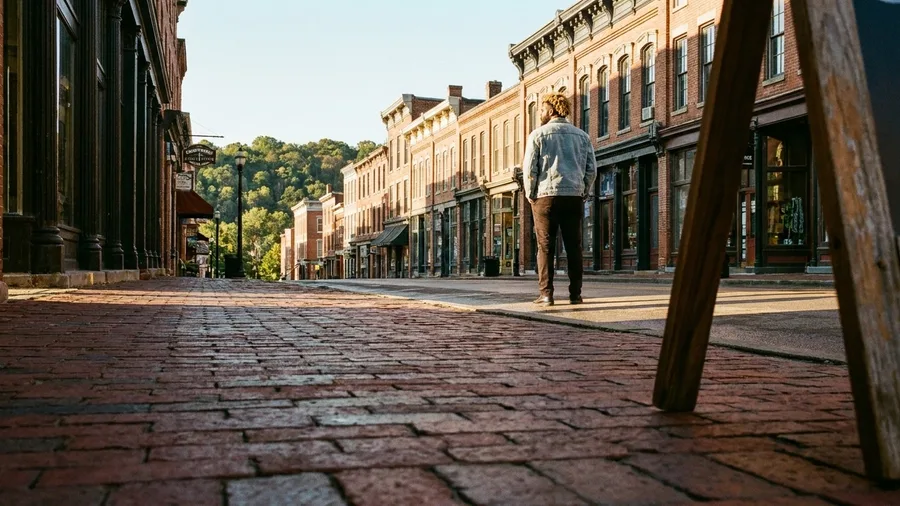
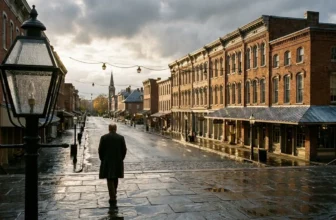
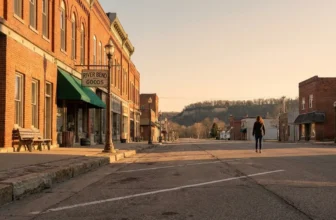
A tight brick street like this asks less of you than a working levee or a wall of murals: one corner, one cornice, one angle of light. That economy is the point. In Galena you can walk a six-block brick Main Street in about ten minutes, set up twice without moving the car, and still have an afternoon left for looking.
The town sits on the Galena River in the northwest corner of Illinois, roughly 16 miles back from the Mississippi, so the whole historic core bends around a narrow valley floor. The useful detail is how close the two subjects sit: a storefront cornice in the morning and a bluff overlook of the town in the afternoon are a short walk apart, not two separate excursions. The drawn subject is up close and architectural, the painted one is layered and far, and you can hold both in a single day's setup.
Start with the cornice, not the panorama. The cast-iron fronts and brick upper stories on Main Street are where the drawing painter earns the trip: a single entrance surround, a bracketed lintel, the shadow a sign throws across a brick face at mid-morning. Climb to a bluff overlook as the second setup, when the light softens and the town stacks below you in layers of roof and steeple. Residents head up there in the late afternoon while the sidewalks below stay crowded, so follow them.
May and June, then September and October, is when the light does what you want and the street temperature stays workable. Expect a typical inn room of $165 to $225 a night, which sets the budget before the gear list does. Three days covers street cornices and bluff views without rushing, and check current hours for the shops if you want them open while you work.
The trade-off is honest: five or six blocks is small, and once you have painted two facades and one overlook you have said most of what the town offers. If you need variety, add it with light rather than distance, working the same corner at morning and again at evening. What you gain is a compact, walkable setup where the subject is fixed and the walking is short.
💡 Tip: The bench at the top of the Main Street stairs faces the cornice run and is empty before 9 a.m.
| Town | River | Signature subject | Best light | Typical room rate |
|---|---|---|---|---|
| Galena, IL | Galena River | Brick Main Street cornices and bluff overlooks | May–June & Sept–Oct | $165–$225 |
| Hannibal, MO | Mississippi River | Levee pilings and Twain-era storefronts | April–May & Sept–Oct | $120–$180 |
| Paducah, KY | Ohio River | Floodwall mural panels and cast-iron facades | April–May & October | $110–$170 |
| Natchez, MS | Mississippi River | Bluff-top antebellum facades and oak alleys | March–April | $150–$240 |
| Astoria, OR | Columbia River | Hillside Victorian streets and cannery piers | July–September | $140–$210 |
| Beaufort, SC | Beaufort River | Live-oak canopies over antebellum houses | March–May & Oct–Nov | $160–$250 |
| New Bern, NC | Neuse River | Tryon Palace gardens and 18th-century streets | April–May & October | $130–$200 |
| Hudson, NY | Hudson River | Warren Street storefronts and Catskill silhouettes | May–June & Sept–Oct | $170–$260 |
2. Hannibal's Mississippi Levee and Twain Streets
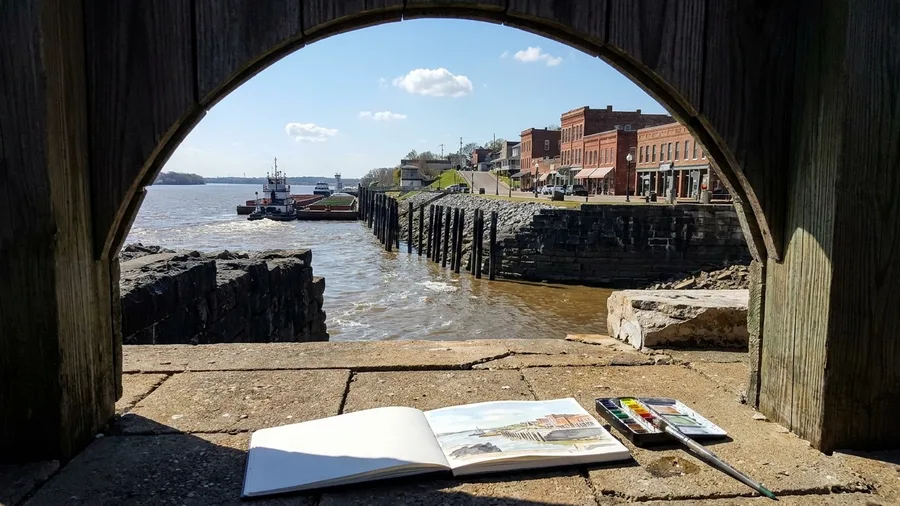
You hear the river before you see it: a low, steady push of brown water against the levee stones, boats knocking somewhere downstream. Then the brick blocks come into view behind you, and you understand how close the two subjects sit.
A working levee and 19th-century brick fronts, with the Mark Twain Boyhood Home within walking distance, means river action and street detail fall inside a few blocks. A watercolorist can set up on the levee pilings first, let the barges and riverboats move through the view, and turn in the afternoon to a whitewashed Twain house or a row of storefronts. April and May, then September and October, keep the light clean and the temperature workable. A typical room runs $120 to $180.
Score a river town before you book
A town that fails two checks is still worth a half-day; a town that fails four is a lunch stop.
3. Paducah's Floodwall Murals and Ohio Riverfront
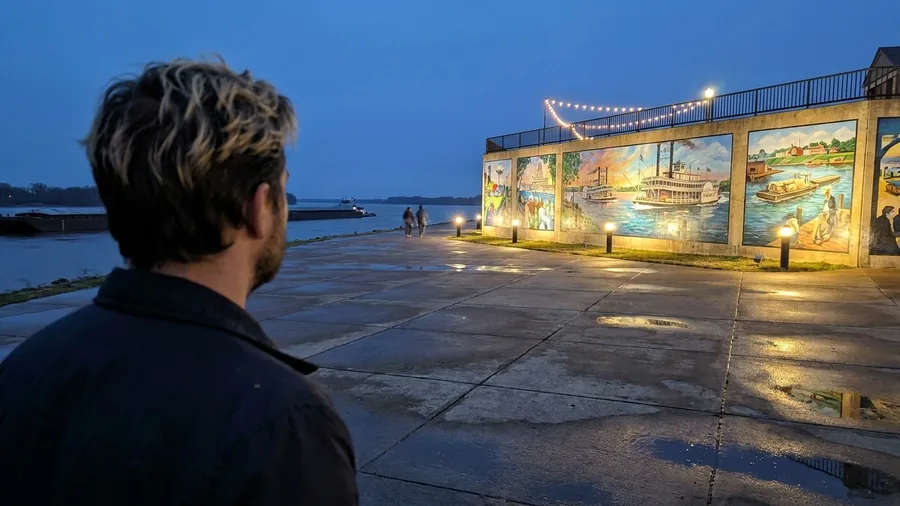
The river smell reaches you before the wall does: wet concrete, diesel from a tow boat, warm air off the slow brown Ohio. Then the floodwall rises in front of you, panel after panel of painted history going back along the water.
Paducah's flat, walkable downtown packs floodwall murals, riverfront barge traffic, and 19th-century cast-iron fronts into a single loop, so the narrative subject is painted on the wall rather than acted on the levee. Start with one mural panel, then turn to the barge traffic or a cast-iron storefront. For towns where color is the whole subject, these vibrant painted towns show how streets can feel like walking inside a painting. April, May, and October hold the best light; a typical room runs $110 to $170, one of the lower rates among these towns, which leaves money for extra days.
💡 PRO TIP
Paint the shadow side first
In every town on this list, the shaded side of the main street holds detail for two hours longer than the sunny side. Set up there in the morning, then cross when the light swings around.
4. Natchez's Bluff-Top Antebellum Houses
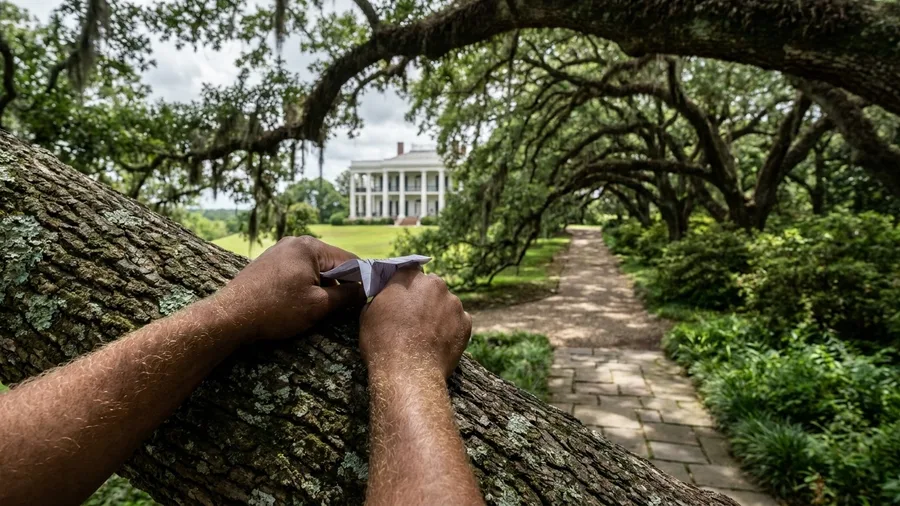
The bluff is a wall, not a ramp, so plan your day around the climb or around avoiding it. Natchez's historic district sits on top of a Mississippi River bluff in the southwest corner of the state, and the Natchez Trace ends here, which means the streets carry more traffic than a town this size suggests. Park once up on the bluff and walk. What you gain up there is the thing no other river town on this list gives you: the river seen from above, with long views instead of a levee at eye level.
Antebellum facades, live-oak alleys, and those bluff-top river views are your three subjects, and they sit inside a small, tight district, so you can set up, finish a study, and move to the next without moving the car. The light is best March and April, before the summer heat thickens the air; typical rooms run $150-$240. This is a town for the painter who wants formal architecture and planted grounds, not rough riverfront industry, and the setup is a facade or an oak alley rather than a piling.
💡 Tip: The bluff path between the two main overlooks is empty before 8 a.m. and gives you oak alleys with no people in them.
⚠️ COMMON MISTAKE
Don't paint the river at noon
Flat overhead light kills the contrast on water and brick alike. In every town on this list, the river reads best in the two hours after sunrise and the two before sunset.
5. Astoria's Victorian Hillside and Columbia Pilings
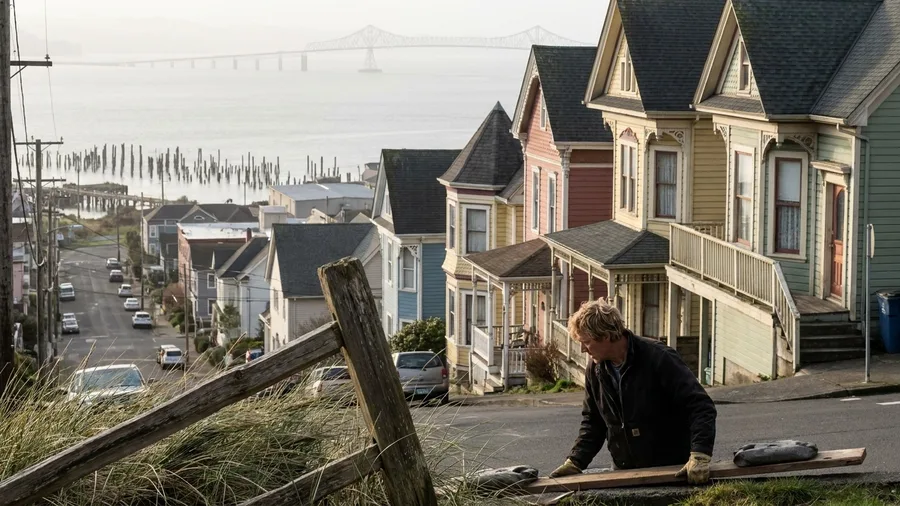
Roughly a dozen Victorian houses stack up one steep street above the Columbia, close enough that a single uphill walk gives you three separate views. The first subject is the street itself, looking down past the gables to the water and the bridge silhouette beyond, and you want to be set up before mid-morning, when the marine layer burns off and the light turns flat and white.
Below the hill, the cannery piers and waterfront pilings give you the harbor in silhouette, and the same July-September window that brings the clearest days also brings the wind, so weight your board. Rooms typically run $140-$210. Come ready for hills and weather that changes by the hour, and you will get harbor and town in one trip.
Beaufort by the numbers
What a Lowcountry painting stop actually costs and covers
The oak canopy is the subject; the rate is what it costs to stay under it for a week.
6. Beaufort's Live Oaks and Beaufort River Light
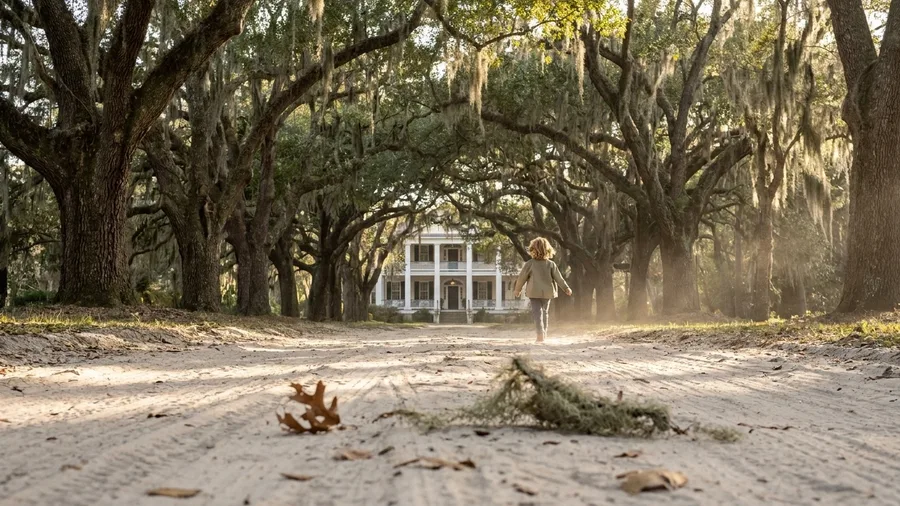
Beaufort is a flat, shaded Lowcountry grid where the signature subject is the live-oak canopy arching over antebellum houses, and the catch is that the canopy is better than the buildings under it. Come for the oak alleys, porches, and marsh-edged river views, and expect soft, low-contrast light rather than the dramatic bluffs of a hill town.
The oaks hold their gray-green drape through March to May and again in October and November, the two windows worth booking; typical rooms run $160-$250. Start on an oak alley, then walk to the marsh edge when the tide is up. If you want hard shadows and big forms, this is not your stop.
7. New Bern's Neuse River and Tryon Palace
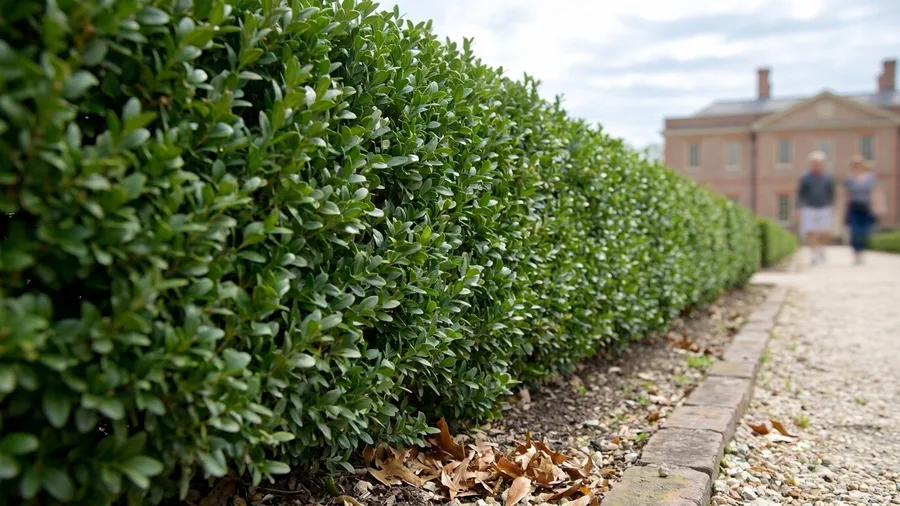
New Bern earns the splurge not on lodging but on time: the palace gardens are a paid gate, and they are the reason to come. Everything else a painter needs here sits inside a walkable grid where 18th-century facades line the blocks and the Neuse River docks sit a few minutes down the slope. Where a shaded Lowcountry street scene hands you porches and oaks, this town hands you civic architecture and a working waterfront edge in the same morning.
Start in the Tryon Palace gardens, where the formal beds and clipped geometry give you a structure you cannot sketch from a public sidewalk. Check current admission and hours before you go, and budget roughly a morning and the entrance fee; the grounds reward a second pass in different light. April-May and October are the light windows, a typical room runs $130-$200, and the riverfront docks make an easy afternoon break when the garden detail wears you down.
The two ways to work a river town
Scout first, paint second
- Arrive the afternoon before and walk the whole district with a camera
- Note where the sun hits at 9 a.m. and 4 p.m.
- Choose one subject and work it for two sessions
- Leave with one finished piece and two good studies
Set up where you park
- Paint the first thing you see from the car
- Chase light around town mid-session
- Start three pieces and finish none
- Blame the town for a bad angle
8. Hudson's Warren Street and Catskill Views

In Hudson, yes, and the two are close enough to paint in a single day. Warren Street runs long and commercial, brick storefronts stacked one after another, and when you tire of cornices you turn toward the river and the Catskill silhouettes are right there across the water. The shift from architecture to landform takes minutes, not a drive.
The cost of that flexibility is close to nothing. Warren Street is a public sidewalk, the riverfront is open ground, and the best known free subject is the rail yard with the mountains behind it. May-June and Sept-Oct give you the cleanest light, and a typical room runs $170-$260 if you want to stay the night.
What you pay for, when you do pay, is convenience: galleries and art supply shops sit on or near the strip, which matters the day you run out of a color mid-painting. Set up on a Warren Street storefront first, then walk to the river for the silhouette. A painter's base here is practical as much as scenic.
💡 Tip: The riverfront park at the foot of Warren Street gives you the Catskill view with no storefronts in the way, and it is free to set up in.
🎨 How to work a two-day stop
Arrive and scout
Walk the historic district with a camera and note where the light lands at 9 a.m. and 4 p.m.
Set up at first light
Be at your first subject by 7:30 a.m., before the shops open and the sidewalk fills.
Work the shadow side
Move to the shaded side of the street when the sun gets high and the detail flattens.
Break at noon
Eat, clean your brushes, and let the light swing around before the second session.
Second session at 4 p.m.
Return to the bluff, riverfront, or oak alley for the warm light and the long shadows.
Where to Base Yourself for a Painting Trip
Where you sleep changes the trip more than any single subject. Cluster the towns and you cut the driving, which leaves more hours at the easel. The Upper Midwest group – Galena, Hannibal, Paducah – is the cheapest and tightest of the set. Base in Galena for two nights, drive to Hannibal in about four hours, then on to Paducah in another three. Three towns in five days, without a single long haul.
For the Southern run, pick one hub and treat the other as a day trip. Natchez and Beaufort sit far enough apart that you should not try to sleep in both; choose your base and drive out. Beaufort in March gets you the oak canopy before the heat settles in, and Natchez in April catches the pilgrimage house openings, so the calendar decides which one anchors.
New Bern and Hudson work best as standalone stops rather than links in a chain. Hudson is the easiest of the eight to reach from a city, and the art supply shops and galleries downtown matter if you burn through a tube of color mid-trip.
Frequently Asked Questions
Do I need a car to visit these river towns?
Yes for the Midwest and Southern clusters. Galena, Hannibal, and Paducah are spaced hours apart with no rail connection between them. Hudson and New Bern are the two you can reach by train or a short drive from a city, but you will still want a car for the riverfront and bluff locations.
Which town is best for a first painting trip?
Galena. The six-block brick Main Street gives you a subject at eye level within a five-minute walk of most inns, the light window is wide, and the room rate sits in the middle of the range at $165–$225. You can finish a piece in a morning without moving the car.
Are these towns expensive to stay in?
Typical rooms run $110–$260 a night. Paducah is the cheapest at $110–$170, Hudson the highest at $170–$260. Booking midweek in shoulder season—May, September, October—drops the rate in every town on this list.
When is the best time to go for light?
Late spring and early fall across the board. March–April for Natchez, April–May and October for Hannibal, Paducah, and New Bern, May–June and September–October for Galena and Hudson, and July–September for Astoria, which needs the dry window more than it needs the shoulder rate.
Can I paint on the street or do I need a permit?
In all eight towns you can set up an easel on a public sidewalk without a permit, as long as you leave room for pedestrians. Tryon Palace in New Bern and some Natchez house interiors charge admission and may restrict sketching, so check current rules before you plan a session around them.
Which River Town Fits the Painter You Are
Match the town to the work you make. Galena for the architectural or street-scene painter, three to four days. Hannibal for the watercolorist sketching a levee, two to three. Paducah for flat walking between murals and river, two to three. Natchez for formal architecture and planted grounds, three to four. Astoria for landscape painters who accept hills, four to five. Beaufort for soft shade under oaks, three to four. New Bern for gardens, three to four. Hudson for streetscape into mountain, four to five.
Book Galena first for a long weekend: six blocks of brick Main Street and bluff overlooks a short walk apart, May-June or September-October light, and an inn room at $165 to $225. Three days covers street cornices and bluff views without moving the car.
Start with a fixed subject, not a river name. Galena's storefront cornice, Hannibal's levee piling, Paducah's mural panel, Natchez's oak alley, Astoria's cannery pier, Beaufort's porch, New Bern's palace garden, Hudson's mountain silhouette. Settle the shortlist by subject, light, and room rate before scenery, then pick the season, then the bed.
Pick your town by the first subject
Scan the table above for the subject you want to paint, then check the best-light window against your calendar before you book a room.