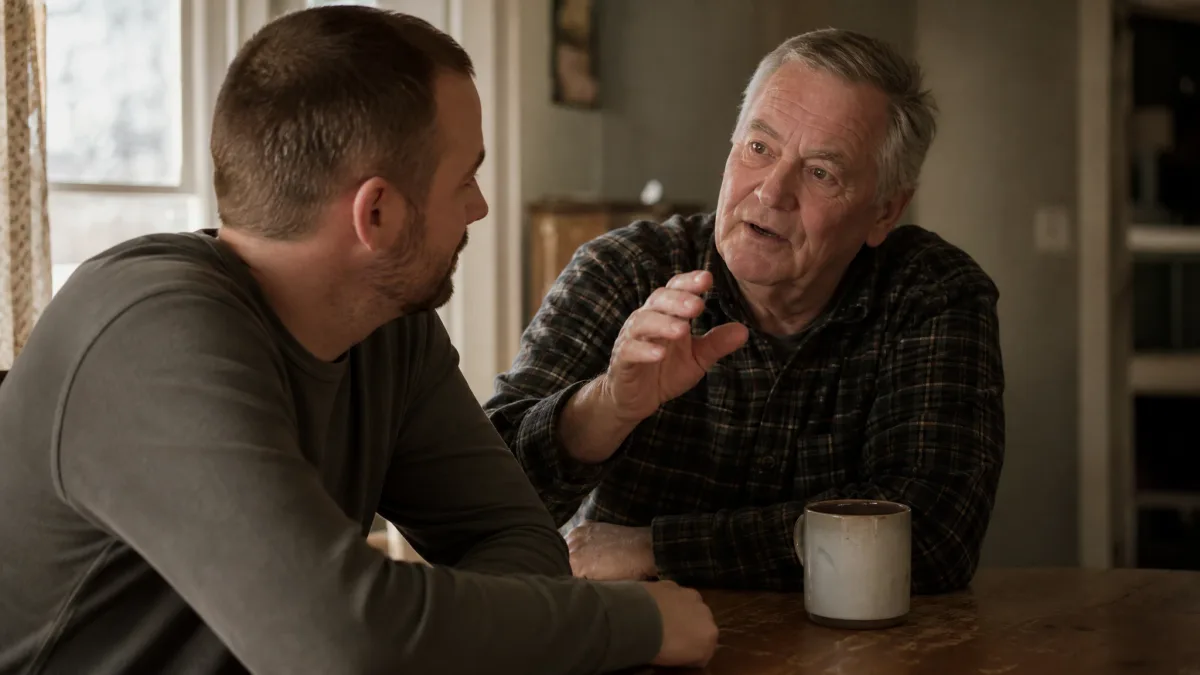
Fifteen to twenty-five – that narrow band of years is the stretch of a man’s life his memory will return to more reliably, more vividly, and more often than almost any other, for as long as he lives.
The story about the factory job in 1968, or the football match, or a particular sergeant – told again at Sunday dinner, with the same gestures, the same pause before the punchline. If you have noticed this pattern, you have probably wondered, at least once, whether something is wrong.
The instinct is to read it as decline, or self-absorption, or simply a quirk that comes with age. None of those readings are accurate. The behaviour has specific, well-understood psychological drivers, and they have nothing to do with any of those things.
Memory architecture, developmental need, and identity loss all push in exactly the same direction at the same time. What looks like a man stuck in the past is usually a man doing real psychological work – and knowing what that work actually is changes what you do with it when it arrives at the table.
Memories from Youth Are Encoded Most Vividly
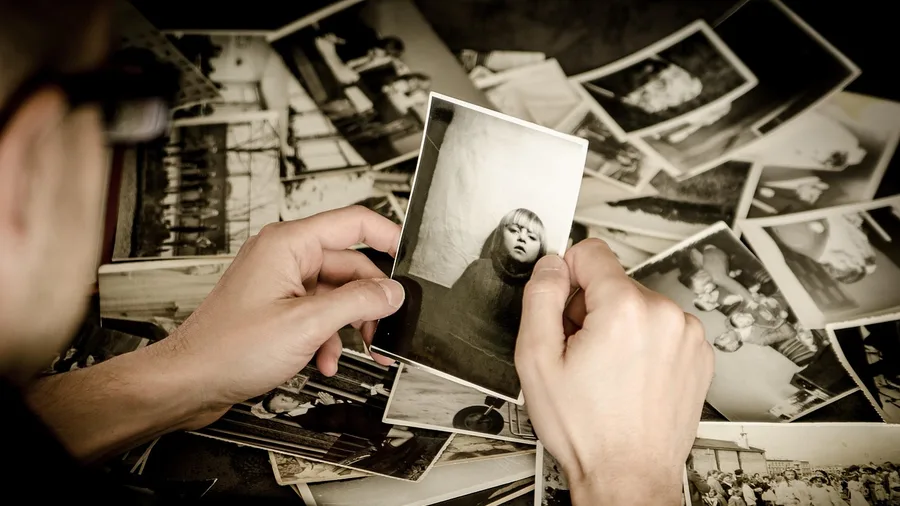
There is a specific window of early life – roughly the mid-teens to the mid-twenties – where autobiographical memory tends to produce its sharpest, most durable material. Researchers call this the reminiscence bump, and it is not a quirk or a deficiency; it is how human memory is architecturally organised.
The reason that window produces such lasting impressions is what fills it. A first real job, military service, the early months of a significant relationship, the first time something was genuinely at stake – these are experiences the brain registers as novel, and novelty combined with emotional intensity is roughly what the encoding process runs on. Routine days in a familiar setting leave faint marks. The first morning of basic training, or walking into a factory at sixteen not knowing if the foreman would keep him on – those leave deep ones.
For most of adult life, the effect stays quiet because the present keeps producing new material to compete with it. Work, children, decisions that carry real weight – all of that generates events that feel current and available. When those sources thin out, they stop generating fresh competition, and the memories that were always the most solidly encoded simply become the most ready to hand.
So when a man in his seventies circles back to the same few years with the same precision, that is not evidence that something has gone wrong. That era is where the sharpest material was ever stored. His memory is doing exactly what it was built to do – pulling from where the signal is strongest.
Recent Memory Fades While Older Memories Stay Sharp
The vividness of old memories is only part of the picture. The other part is a change that works in the opposite direction: the part of memory responsible for recent events becomes less reliable over time, and that asymmetry is what pushes conversation toward the past.
Ask a man in his late seventies what he had for dinner last Tuesday and the answer may genuinely not be there. Ask him about his first week at a job he held in 1974 and he may give you the name of the foreman, what the floor smelled like, and what the pay came to. That gap is not selective attention or stubbornness – it reflects a real difference in how aging affects the two kinds of recall. Older, well-consolidated memories sit largely undisturbed. New information is simply harder to encode in the first place, so recent events never get the same firm grip.
This distinction matters because it marks a line between normal aging and something more serious. If the distant past remains detailed and consistent – the same story told the same way, the same names, the same sequence – but appointments slip and recent conversations disappear quickly, that profile sits within what age-related change typically looks like. If the old memories are also starting to fragment, if a story that was always told the same way now comes out confused or contradictory, that is a different picture and a conversation with a GP or neuropsychologist is worth having.
That marker is a prompt, not a diagnosis. The reader is not in a position to make that call and should not try. What the marker does is tell you when to stop wondering and start asking someone qualified.
He is not choosing to live in the past. The present is genuinely harder to hold, and conversation finds its footing where memory is most stable.
⚠️ COMMON MISTAKE
Do Not Conflate Forgetting with Dwelling
Forgetting last week's dinner while recalling a 1968 job interview in vivid detail is normal aging, not a warning sign on its own. The signal that warrants attention is when the reliably consistent old stories start changing — details shift, timelines scramble, or the same story is told twice within minutes with no awareness of the repetition.
Strong Emotion Locks Old Memories In Permanently

What availability cannot explain is why certain memories arrive with such force – why a story about a particular shift in a steel mill or a single match played in 1971 carries more weight in the room than almost anything from the last decade. The answer is what emotion does to a memory at the moment it forms.
When something happens under conditions of high arousal – fear before a confrontation, pride at a genuine achievement, grief at a sudden loss, the particular kind of aliveness that comes with early danger or early love – the consolidation process runs deeper. The memory that forms under those conditions tends to be more detailed, more stable across time, and more easily retrieved years later than a memory formed in ordinary, uneventful circumstances. That is not selective nostalgia. It is how the process works.
For men now in their seventies and eighties, the experiences that typically hit that threshold are recognisable ones: military service, the economic precarity of an early working life, significant physical effort, the first deaths of people who mattered. These are not just the memories that happen to come up – they are the ones the brain assigned the highest weight to when they were being laid down. That weight does not diminish.
The feeling in the room when he tells those stories is not incidental. It is the same charge the event originally carried, preserved intact. Understanding what men lose by suppressing emotion helps explain why men holding back tears can quietly erode the very connections these stories reach for.
There is a caveat worth naming: where memories were formed under conditions of trauma – combat, accidents, devastating early loss – the same consolidation mechanism can make those memories resurface with greater intensity rather than less as time goes on. That pattern, where the memory arrives uninvited rather than being deliberately recalled, is a different picture from ordinary reminiscing. It warrants separate attention, and a GP can point toward the right kind of support.
How Memory Weight Is Distributed Across a Lifetime
Life Review Is a Developmental Task, Not Self-Indulgence

Those vivid, emotionally charged memories are the raw material – but understanding why an older man actively returns to them requires knowing what psychological work his situation actually demands of him. Developmental psychologists have long recognized a specific task that comes into focus in late adulthood: arriving at a sense that one’s life added up to something rather than fell apart without meaning. The psychologist Erik Erikson framed this as the central tension of later life – a reckoning between feeling that one’s choices and years cohered, and feeling that they did not. The outcome of that reckoning matters in ways that are measurable: people who work through it tend to carry a quieter kind of stability; those who cannot often live with persistent anxiety and a low, persistent sense of futility.
The working-through cannot happen in silence. Telling the story to another person is what shapes it – the telling tests whether it holds, whether it lands, whether someone else confirms that it was real and worth something. A man sitting alone with his memories cannot complete that process; he needs the story to be received.
What can confuse families is the assumption that the man who never talks about the past is handling things better. He usually is not. Unexpressed life review tends to accumulate rather than resolve, and it surfaces as agitation or withdrawal instead of narrative.
The generational layer matters here. Many men now in their seventies and eighties were not raised in environments where reflective emotional work had an outlet – not in male friendships, not in therapy, rarely in structured conversation. So when the developmental pressure builds, it does not produce an appointment with a counsellor. It produces a story at the dinner table, or a long detour on a drive home. The people nearby become the setting in which that work gets done, often without knowing that is what they are participating in.
Nostalgia Steadies Mood When the Future Shrinks

Within that broader life review, nostalgia works as a specific, daily emotional tool – and used in the way most older men use it, it is not bad for him at all.
Researchers who study mood and memory find that nostalgic recall consistently raises a person’s sense of social connectedness and personal continuity. It reminds them they have belonged somewhere, mattered to someone, been part of something. When late life brings real isolation – peers dying, mobility narrowing, the social world contracting – that reminder does measurable work against meaninglessness. It is a buffer, not an indulgence.
The version that functions well looks like this: he visits the memory, something in him settles, and he comes back to the present. The past was somewhere to draw from, not somewhere to stay.
Rumination looks nearly identical from the outside but operates differently. The person circles the same material repeatedly without landing anywhere – no warmth at the end of it, no sense of resolution, just the same agitation returning. If the recall seems to leave him more distressed rather than briefly restored, that distinction matters and is worth paying attention to.
The intensity of past-dwelling is partly a function of what the present contains. Men with an ongoing project, a role that requires them somewhere, or regular contact that is genuinely engaging tend to use nostalgia less heavily – not because they are psychologically different, but because the present is competing for their attention. When the future holds more anticipated loss than gain – and for many older men it genuinely does – redirecting attention toward what is still vivid and available is not irrational. It is a reasonable response to actual circumstances.
🌱 GROWING TIP
One Question That Reveals the Difference
After he finishes a story, notice how he seems. Settled — even briefly lighter — points toward adaptive nostalgia doing its job. Agitated, looping, or unable to move on points toward something that is not being resolved. That distinction matters more than how often the story comes up.
Losing a Role Pushes Identity Back to What Still Holds

When a man’s present life stops reflecting who he understands himself to be, the past becomes the only stable ground left to stand on. Retirement is the transition families point to most often – the man who mentioned the old days occasionally is now there constantly – and the reason is not that something went wrong in his mind but that something real and structural was removed from his life.
What gets lost is more specific than it usually sounds. It is not just the salary or the daily schedule. It is the title people addressed him by, the desk or workshop or vehicle he knew how to use, the colleagues who treated him as someone whose opinion carried weight in a particular room. That web of external acknowledgment is how identity is confirmed day to day, and when it goes, the confirmation goes with it.
Bereavement does the same thing. The death of a spouse often strips away a role – husband, provider, the person who made decisions alongside someone – as completely as retirement strips away the professional one.
The years he returns to are the years when the shape of his life was clearest to him. That is not sentiment; it is the most reliable source of self he currently has access to.
The pattern is less intense in men who rebuild something after the transition – a voluntary commitment taken seriously, a craft practiced with real effort, a relationship that assigns them a meaningful position again. Those new anchors do some of what the old role did. The past-dwelling does not disappear, but it is no longer the only place where identity holds.
Role Loss and Past-Dwelling — At a Glance
🪪 Anchors Lost at Retirement
Title, routine, peer group, physical place
📅 Most Common Turning Point
Within first 12–18 months post-retirement
🔁 Years Most Revisited
Peak career and early adulthood (ages 20–40)
🌱 What Reduces the Pattern
A new meaningful role, regular social contact, a project
⚠️ Second Major Trigger
Bereavement of spouse or long-term peer
The Practical Point
Past-dwelling that intensified after retirement or bereavement is responding to a real vacancy in present identity — not a fixed personality shift.
Repeated Stories Often Circle Something Still Unresolved
Some stories repeat because the teller has forgotten telling them. Others repeat because something in them has not yet landed the way the teller needs it to land. Those two things are not the same, and they are not especially hard to tell apart.
When the repetition is driven by memory failure, the story shifts. Details change, the sequence moves around, and the teller has no sense that any of this has come up before. When the repetition is driven by something unresolved, the opposite is true – the same words in the same order, the same pause in the same place, the same edge in the voice. The person knows he has told it before. He tells it again anyway.
What is usually happening in that second kind of repetition is an attempt to arrive somewhere different. To finally be understood about what it cost. To settle some guilt, or to have the pride in it confirmed, or to get the injustice acknowledged in a way that feels real. The story keeps being told because it keeps falling slightly short of whatever the teller is reaching for.
What a listener can actually do with this is specific. Acknowledging the feeling inside the story – ‘that sounds like it mattered a great deal to you’ – does more than nodding along for the tenth time, because it addresses the layer the repetition is trying to reach. The facts of the story are not what is seeking a response. The feeling underneath them is.
There is one marker worth holding onto for when repetition warrants a GP conversation: if the story is told again with no memory of telling it minutes earlier – not last week, not last month, but in the same sitting – that is a different picture, and it deserves professional attention.
🧠 How a Life Review Typically Unfolds
A Major Transition Arrives
Retirement, bereavement, or a health change removes the roles and routines that anchored daily identity.
Present Feels Thin
Without new encoding to compete with it, older vivid memory becomes the most available material in conversation.
Stories Start Surfacing
Formative events from the reminiscence bump years appear more frequently, often with consistent emotional emphasis.
Repetition Begins
Stories that carry unresolved emotional weight repeat as the teller unconsciously seeks a satisfying response.
Listener Response Shapes the Outcome
Engagement with the feeling in the story can meet the underlying need; deflection or polite tolerance prolongs the cycle.
Integration or Continuation
When the story is genuinely heard, the life review task progresses; when it is not, the pressure reasserts itself.
Past Stories Are a Bid for Legacy, Not Just Chatter

Underneath the emotional charge in those repeating stories, there is usually something larger at stake than resolution – there is a question about whether the whole life added up to something. Legacy-seeking is a normal, healthy late-life preoccupation, not a vanity project. The man describing the factory floor in 1968 or the platoon sergeant he served under is implicitly asking: did any of it matter, and will it survive me?
The listener’s response functions as an answer to that question, whether or not either person realises it. Staying with the story – asking where something happened, what the other person was like, how the situation resolved – signals that the life behind the material is worth time and attention. Glancing at a phone, offering a vague ‘mmm’, or steering toward something else reads as a verdict of the opposite kind, even when the intention is simply to move the evening along.
This is why consistent deflection tends to produce more stories, not fewer.
The need that is driving the telling goes unmet, so the attempt repeats – louder sometimes, or more insistent, in a way that can feel like the very thing the listener was trying to avoid. What actually settles it is a question that takes the story further rather than closing it down. Not the polite ‘oh really?’ that signals the story should end, but something that opens it up: ‘What happened to him after that?’ or ‘Did you stay in touch?’ That kind of question shifts the entire dynamic. The man is no longer delivering something to a waiting audience – he is in a conversation with someone who has decided the material is worth pursuing, and that is the confirmation the telling was reaching for.
What Each Listener Response Actually Costs
Men With a Strong Present Stay More in the Present

When present life genuinely offers something to engage with, the pull toward the past loosens. Past-dwelling at this intensity is not simply what getting old looks like – it is what getting old looks like when the present has gone thin.
The specific conditions that tend to reduce compulsive past-focus are not complicated, but they are particular. A meaningful activity that asks something real of him – not a pastime to fill a Tuesday, but something where effort and outcome are both visible. Regular contact with people who engage rather than just check in. Some modest sense of forward motion: a plan for next month, a project with a next step, something to anticipate that has not happened yet. When those things are present, attention distributes differently.
Families and caregivers have considerably more influence over this than they often assume. The pattern is partly a product of what a man’s days actually contain, which means the days themselves are the lever – not patience, not better listening techniques, not explaining to him that he tells the same stories.
That said, the constraints are real and deserve to be named directly. For a man whose mobility has narrowed dramatically, who has outlived most of the people he once spent time with, or whose health limits what effort is possible, the options are genuinely restricted. Framing this as a solvable problem when the circumstances are actually difficult does not help anyone. What is possible in those situations is usually smaller and slower than families hope – and starting from that honest baseline is more useful than starting from optimism that does not last past the first obstacle.
Adaptive Reminiscing vs. Stuck Rumination
Healthy Reminiscing
- Story is told with warmth or a sense of resolution
- Details stay consistent across tellings
- Teller is aware he has told the story before
- Returns to the present after revisiting the past
- Frequency eases when the story is genuinely heard
Rumination or Something More
- Story cycles with agitation rather than settling
- Details shift or contradict between tellings
- No awareness of having told the story moments ago
- Past intrudes rather than being deliberately recalled
- Frequency increases regardless of listener response
How You Listen Changes What the Conversation Becomes
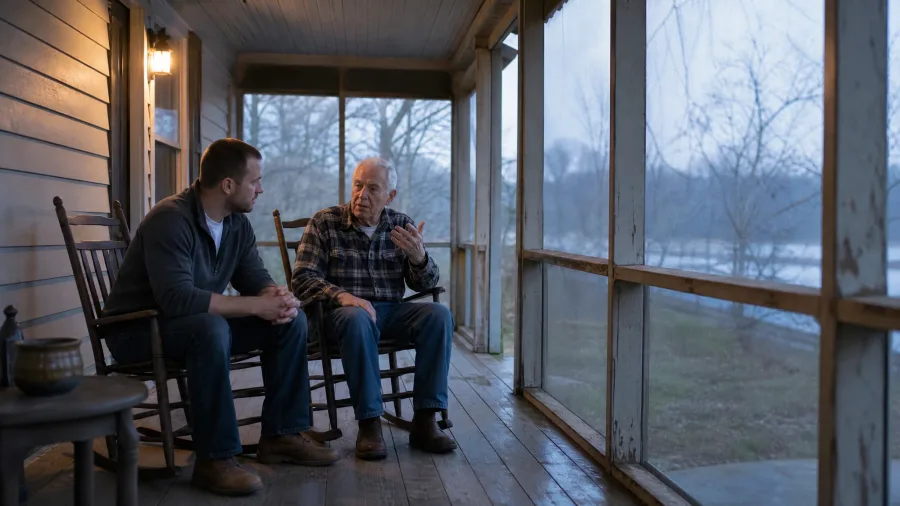
Knowing that a man’s circumstances drive the pattern is one thing; knowing what to do when he sits down and begins the story about the factory, or the regiment, or the match in 1971, is another. There are really only three ways a listener can respond, and they produce three different results.
The first is to redirect – change the subject, steer toward the present, nudge him somewhere else. This tends to increase the frequency of the story, not reduce it, because the need that drives the telling was never addressed and simply reasserts itself. The second is to wait it out: sitting there attentively, nodding, watching for the moment it ends. That costs the listener something without giving either person anything; both parties end the exchange in the same position they started.
The third response is the only one that can actually change the dynamic. When the story arrives, ask one question about how it felt rather than about what happened. Not ‘and then what did you do?’ but ‘what was that like for you?’ That question reaches the layer the whole conversation has been trying to get to.
The listener’s effort here is real and worth acknowledging privately. Absorbing stories that have been told before, especially when someone is tired or preoccupied, is not a small thing, and recognising that does not make someone a poor listener.
What shifts when the purpose behind the telling is understood rather than endured is this: the listener stops hearing repetition and starts hearing a request. That is a more sustainable place to be – and the man who finally feels met at the level of what he is actually asking often, over time, needs to ask it less.
Frequently Asked Questions
Is it normal for older men to talk about the past constantly?
Yes, within certain parameters. Revisiting vivid early memories is a structural feature of how human memory ages, and narrating the past is part of the developmental work of late adulthood. The behaviour becomes a concern when stories that were always consistent begin changing in detail, when the same story is retold with no awareness of having just told it, or when the recall generates persistent agitation rather than any sense of warmth or resolution.
Why does my dad keep telling the exact same stories over and over?
Consistent repetition of a particular story usually means it carries unresolved emotional weight — something the teller still needs acknowledged rather than just heard. The repetition is an unconscious attempt to reach a satisfying emotional conclusion. Responding to the feeling the story carries, rather than the facts, tends to settle a repeating story more effectively than patience alone.
Could living in the past be a sign of dementia?
Not on its own. Normal aging weakens recent memory while leaving older, consolidated memories largely intact, which naturally shifts conversation toward the past. The distinction to watch for is whether the long-held, consistent stories begin to fragment — changing details, confused timelines, told twice within minutes with no awareness — which warrants a conversation with a GP or neuropsychologist. Vivid, consistent recall of early life alongside poor recent memory is a normal aging profile, not an automatic dementia indicator.
Why did my husband get so much worse about this after he retired?
Retirement removes the social roles — title, routine, daily colleagues, a purpose-defined physical place — that anchored identity for decades. Without those anchors, the self reaches back to the period when identity was clearest, which is usually early adulthood. This is one of the most consistent patterns families observe. Men who build a meaningful new role or project after retirement typically show the pattern less, because the present-day vacancy is partly filled.
How do I respond when I have already heard the story twenty times?
Ask one question about how it felt at the time rather than about what happened — ‘what was that like for you?’ rather than ‘and then what?’ That question addresses the emotional layer the telling is trying to reach, which is what the repetition is actually seeking. Acknowledging your own limits privately is also legitimate: one person cannot indefinitely absorb another person’s full life review, and recognising that does not make you a bad listener.
Is there anything that can reduce how much an older man dwells on the past?
Yes, but it depends on circumstance. Past-dwelling is most intense when present life offers limited engagement, purpose, or close social connection. A meaningful activity requiring genuine effort, regular non-functional social contact, and even a modest future plan are the conditions most associated with less compulsive retrospection. For men with significant physical limitation or who have lost most of their peer group, the options are genuinely constrained, and realistic changes to daily environment matter more than abstract encouragement.
What the Consistency of His Stories Means
The signal worth holding onto is whether the distant past itself is holding together. Stories told with consistency, with some warmth, with details that stay stable across tellings – that is healthy life review doing exactly the job it exists to do. The moment to speak to a GP or neuropsychologist is when memories that were always vivid are now fragmenting, or when the same story is retold with no awareness it was told minutes before. That specific shift is worth raising. Everything short of it is the mind working correctly inside the circumstances it is actually in.
The man at Sunday dinner telling the 1968 factory story is not trapped, not declining, and not asking to be managed. He is doing the developmental work his situation demands, with the tools that are available to him, and the person across the table is part of what makes that work land or not.
The one shift that changes the dynamic: move from hearing what happened to asking how it felt. That single change in how the question is put turns an audience into a conversation – and that is what the mechanism behind all of it is actually looking for. The story about the factory, or the match, or the sergeant arrives again. This time, ask what it was like to be there. See what comes next.
Check the Pattern Before the Next Conversation
Use the comparison in this article — consistent and warm versus shifting and agitated — to read what you are actually hearing. Then try the one-question move in the next conversation and notice what changes.