
Why is he so much grumpier than he used to be – and is it something to worry about? That is exactly what this article settles.
The man who was reliably even-tempered at 55 is snapping at small things at 65, and neither he nor the people closest to him can quite pinpoint when the shift happened or what moved it along. It crept in.
That shift is almost never just personality hardening with age. It is usually the surface of something else – a biological change that has crossed a threshold, a loss that has never been processed, a structural shift in daily life that nobody has found the right words for yet.
There are ten distinct causes, each with its own mechanism, its own kind of fix, and its own signal about whether the right move is a blood test, a practical change, or a different kind of conversation. They sit in three separate categories, and the category matters – because a hormonal cause and a grief cause do not get better the same way.
By the end, the reader can sort what they are actually seeing into the right bucket, and walk into the next GP appointment already knowing the one question that opens the most doors.
Quick Tips Before You Start
Separate the categories
Ask first whether the irritability is constant or situational — that single distinction narrows the list to three or four causes immediately.
Track the onset
Think back to when the mood shift started. A specific event — retirement, a health scare, a bereavement — is almost always traceable in hindsight.
Do not diagnose out loud
Naming a cause to the man without him raising it first usually lands as an accusation. Raise it as a question, not a verdict.
Watch for the situational pattern
If the grumpiness spikes at specific settings — loud restaurants, phone calls, unfamiliar apps — that is diagnostic information, not just bad behaviour.
One GP question is enough
You do not need to bring all ten causes to a doctor. The one question at the end of this article covers the biological floor in a single appointment.
Body and Brain
The first four causes operate below the level of conscious choice. They are not personality shifts — they are biological and sensory changes that raise the irritability floor regardless of what the man values, intends, or decides. Each one has a concrete, accessible intervention, which is exactly why identifying them correctly matters.
1. Testosterone Decline Quietly Lowers the Frustration Threshold

The easy mistake is assuming the shift happened all at once – that there was a bad year, a hard event, a turning point. Usually there was not.
Testosterone does not drop in a single event. It declines gradually across decades, which means the mood change it produces arrives slowly enough to look like a permanent personality shift rather than a biological one. By the time the people around him notice the shorter fuse, the change has been accumulating for years – and nobody has connected it to anything physical.
The mechanism is a lowered frustration threshold, not a change in character. Ordinary friction – a slow queue, a plan that shifts, a small domestic mess – that would have been absorbed without comment now breaks through. His values have not changed. The buffer that processed those irritants quietly has simply thinned.
The self-test is one question: has he stayed physically active and socially engaged, or has daily structure contracted? Men who kept both tend to report far less irritability even when hormone levels are similarly reduced – which means the blood level alone does not predict the mood outcome. A GP can measure testosterone with a standard blood test. That appointment comes before any decision about treatment; it just establishes whether this mechanism is in play at all.
💡 Tip: Ask the GP to check total and free testosterone together — free testosterone is the clinically relevant figure and is sometimes omitted from a basic panel.
2. Poor Sleep Erodes Patience Before Breakfast

A few short nights can make an otherwise reasonable man difficult to be around – and after 60, short nights become the default rather than the exception.
Sleep architecture shifts with age toward lighter, less restorative stages. There is less slow-wave deep sleep, more waking through the night, and earlier morning rising – none of it caused by a single dramatic event, all of it slowly reducing the recovery the night provides. The patience that feels effortless after genuine rest depends on real cognitive resources, and those resources are among the first things that a run of lighter nights depletes.
The exception worth knowing: occasional poor sleep followed by a day of irritability that lifts by evening is ordinary. The pattern that points somewhere else is the cluster of snoring, waking unrefreshed, and persistent daytime drowsiness – that specific combination is more consistent with sleep apnea than with normal aging, and apnea is both common in this group and significantly undertreated. Men who do get it treated often notice a mood improvement within weeks.
Regular exercise and consistent sleep times are meaningful moderators here – men who keep both tend to maintain substantially better sleep quality well into their seventies. That means habit is worth trying before assuming a medical cause, and it also means the two levers are not mutually exclusive.
⚠️ COMMON MISTAKE
Do Not Treat Sleep and Pain as Separate Problems
Pain disrupts sleep, and sleep deprivation lowers pain tolerance further — so both worsen together in a cycle that neither a sleeping aid nor a pain review alone will fully break. If both are present, they need to be addressed at the same appointment, not sequentially.
3. Chronic Pain Keeps the Irritability Floor Permanently Raised
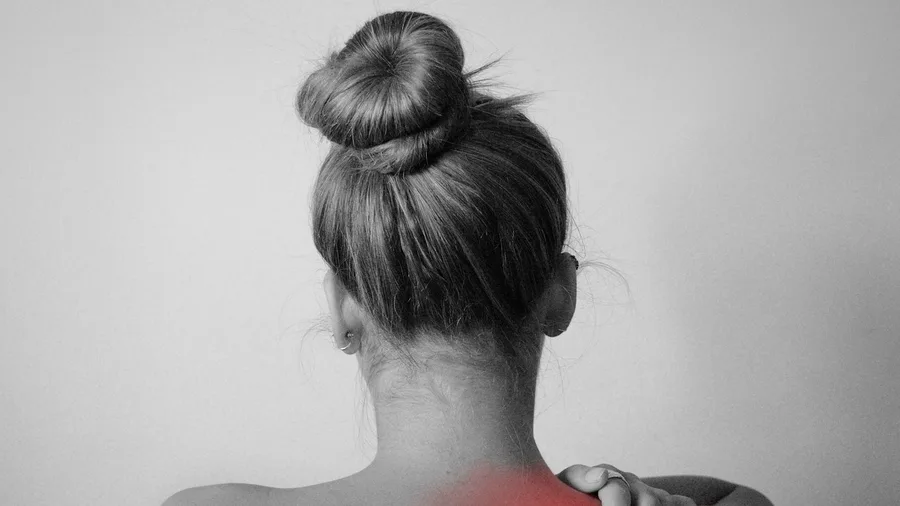
Living with a bad hip, a spine that complains every morning, or hands that ache through winter costs something beyond the physical: it draws continuously on the same reserves of patience and emotional steadiness that would otherwise absorb a snapped comment at dinner or a delayed train.
Men who grew up treating pain as something to push through rarely mention it directly, so the people around them see the short fuse and miss the cause entirely. Pain also breaks sleep, and disrupted sleep lowers the threshold at which pain registers as unbearable the next day – each problem feeding the other in a loop that a single fix will not close.
The telling pattern here is consistency rather than context. Situational irritability flares around specific triggers; pain-driven irritability is just there, a permanent floor, roughly the same level on a quiet Tuesday as at a crowded gathering. That constancy is the signal worth bringing to a GP as a physical question, not a mood one.
4. Hearing Loss Turns Every Conversation Into an Exhausting Guessing Game
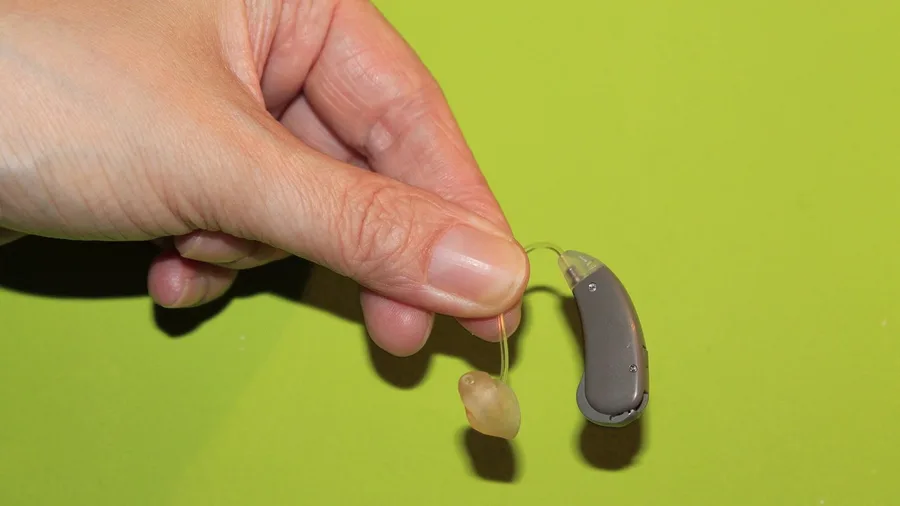
The common advice is to reduce family gatherings if they seem to stress him out. That gets it exactly backwards.
The gatherings are not the problem. Picture a Sunday lunch: six people talking across each other, a television on in the background, someone laughing at the other end of the table. He catches about half of it. The rest he reconstructs from context, lip movement, and guesswork – for two hours straight. By dessert, the cognitive load has run dry, and the first minor friction tips into sharpness. The exhaustion is real; the social effort was invisible to everyone else at the table.
The humiliation compounds it. Being corrected mid-sentence because he misheard, or watching a joke land around the table while he missed the punchline entirely – that surfaces as withdrawal or a short fuse, not as ‘I couldn’t follow the conversation.’ Men resist naming hearing loss for years, so the pattern stays unspoken while the irritability stays visible. The situational clue is the tell: if the grumpiness spikes specifically at noisy restaurants, group calls, or crowded rooms – and eases in quiet one-on-one settings – hearing loss is a strong candidate, and a hearing test is a very tractable next step.
Four Body-Level Causes — What to Actually Do
Identity and Mood
The next four causes are not failures of the body — they are the mind’s response to changes in role, self-image, and mood. They tend to be subtler and slower-moving than biological causes, which is partly why they go unrecognised longest. Identifying the right one changes the conversation entirely: these causes need different interventions than the ones in the previous group.
5. Retirement Strips Away the Role That Anchored Self-Worth

‘He has all this free time now – he should be relaxed.’ That is the assumption retirement invites, and it is often completely wrong.
For a man who spent decades building his sense of himself around a career, stopping work does not just remove a job title. Recognising the signs of work-based identity before retirement makes the transition considerably less destabilising. It removes the daily structure, the implicit status, the colleagues who knew what he was good at, and the rhythm of a day that had shape. Those things were not decoration around the work – they were the architecture of his self-image, and they are gone on the same Friday afternoon.
The irritability this produces looks nothing like obvious grief. It does not announce itself as loss. Instead, it shows up as criticism – the dishwasher is stacked wrong, the shopping was done in the wrong order, the garden has been weeded incorrectly. It shows up as an unusual need to control household decisions that he never previously cared about. And it shows up as a particular restlessness in the mid-afternoon, roughly two to four o’clock, in the hours that used to be full.
This is a low-level identity crisis wearing the costume of ordinary grumpiness, which is exactly why it goes unrecognised for months.
The counterintuitive part: encouraging him to rest more, to treat retirement as a reward, or to ‘just enjoy it’ tends to deepen the problem rather than ease it. What the pattern is pointing toward is structured engagement – a mentoring arrangement, a part-time role, a regular commitment that carries some of the purposeful weight that work used to carry. Men who enter retirement with those things already in place show noticeably less of this pattern.
It is also worth knowing that this particular cause is not permanent. The effect is typically strongest in the first two years. That is not optimism for its own sake – it is a real signal that this is a transition the man is moving through, not a personality he is settling into.
Retirement-Driven Irritability — At a Glance
📅 Peak risk window
Months 3–18: early novelty has faded, new structure not yet built
🎯 Telling detail
Complaints target domestic trivia he ignored for decades — the issue is rarely the dishwasher
🔄 What structured engagement must include
External accountability, a set time, and visible competence — leisure hobbies alone rarely substitute
⚠️ Approach most likely to backfire
Framing retirement as earned rest; it confirms the loss rather than replacing what was lost
⏳ When to look beyond this cause
If irritability persists past year two or intensifies — rule out testosterone decline, sleep apnea, or depression
The threshold question
Does the grumpiness ease on days with a clear external commitment — a meeting, a shift, a session he is expected at? If yes, identity loss is the more likely driver than biology.
6. Male Depression After 60 Shows Up as Anger, Not Sadness

In older men, that is almost exactly what depression looks like – and it is why it gets missed so consistently.
Irritable mood is a clinically recognised form the condition takes. In this group, it frequently replaces tearfulness and low mood as the primary surface symptom. The signals that distinguish this from ordinary grumpiness are duration, withdrawal, and a specific kind of language: the irritability has persisted for weeks rather than days, he has quietly stopped doing things he used to find absorbing, and he has made comments – even offhand ones – about being a burden, or having no real point anymore. Flat, generalised cynicism about plans or the future is another version of the same thing, distinct in texture from the sharpness that pain or social exhaustion produces.
Men who do get assessed and treated for late-life depression often respond well, and irritability is typically among the first things to lift. The reader’s role here is specific: notice the duration, the withdrawal, and the burden comments, and name what you are seeing to a GP or mental health professional. That is the move – not a self-diagnosis tool, and not waiting to see whether the sadness arrives. Understanding why men resist that conversation is covered in the psychology of avoiding help, which also explains how to make concrete offers he will actually accept.
💡 PRO TIP
The Three-Week Rule
Ordinary grumpiness tied to a specific event lifts within days. When the irritability and withdrawal persist for three weeks or more with no clear trigger, that duration is the clinical signal worth raising with a GP — not the severity.
7. Cognitive Slowing Makes Visible Effort Feel Humiliating
He is halfway through a sentence, reaching for a name he has said a hundred times, and it simply isn’t there. The pause stretches. His jaw tightens. By the time the name surfaces thirty seconds later, the moment has curdled into irritability that lingers for the next hour.
What researchers who study cognitive aging keep finding is that processing speed – the pace at which the brain retrieves, sorts, and responds – slows gradually and selectively with age. Recalling a name mid-conversation, working through an unfamiliar phone menu, tracking a fast-moving group discussion: these tasks recruit more effort than they once did. That is ordinary aging, not the early signal of dementia it can look like from the outside.
The anger is the tell. Men who built their sense of self around being quick, competent, and capable find visible struggle genuinely threatening – and directing that anger outward, at the phone or the situation or whoever is standing nearby, is faster than sitting with the shame of the gap. The device gets sworn at. The conversation gets abandoned. The person nearby gets snapped at.
The response of a bystander matters more than most people realise. A partner who steps in, finishes the sentence, or takes the phone over – however kindly – confirms the threat. The man who is left to work through it, in silence, by someone who simply stays present without intervening, tends to manage it with noticeably less heat. The irritability here is partly about interpretation: whether the struggle means decline, or just effort. That reframe is available, but it usually needs someone patient enough to let him reach it.
💡 Tip: Framing a tech challenge as 'let me figure this out' rather than stepping in immediately protects his sense of competence — which is what the anger is defending.
8. Fear of Dependence Turns Small Things Into Control Battles

Every few days there is a version of the same argument: the dishwasher is loaded wrong, the shopping was done in the wrong order, someone trimmed the hedge at the wrong angle. The outcome is identical either way. The friction is not.
When physical limitations start to accumulate – a diagnosis, a driving restriction, a fall that shook his confidence – some men compensate by gripping tightly to what they can still direct. Routines, household standards, the precise method of a task: these become the territory where autonomy feels solid. Criticising how something was done, or refusing help with unusual force, is not controlling behaviour so much as a defence against a fear that dependence is coming and there is nothing he can do about it. Understanding the function changes how the reader responds to it – from mirroring the friction back, to recognising what is underneath it.
The timing usually gives the cause away. Think back to when the pattern sharpened: it is almost always within months of a health scare, a first real physical limit, or a moment when needing help became suddenly concrete. Practical language that works in the room: ‘I’ll leave that one to you, I’m doing this part’ gives him a genuine domain. ‘What matters most to you about how this gets done?’ is a question that gives him voice rather than taking the task. Men who retain real agency over the things that carry meaning for them – financial decisions, their workshop, their own route for the Saturday drive – tend to soften considerably on the things that don’t.
Grumpiness that looks like a personality flaw is usually a symptom with a cause — and the cause decides whether you need a doctor, a change, or more patience.
— The thread running through all ten causes on this list
Life and Loss
The final two causes are not about what the body has changed or what the mind has concluded — they are about what life has taken. Losses of role, of people, and of social connection accumulate across the 60s quietly and without ceremony. The irritability they produce is real, and it responds to recognition more readily than most people expect.
9. Accumulated Grief Has Nowhere Culturally Acceptable to Go
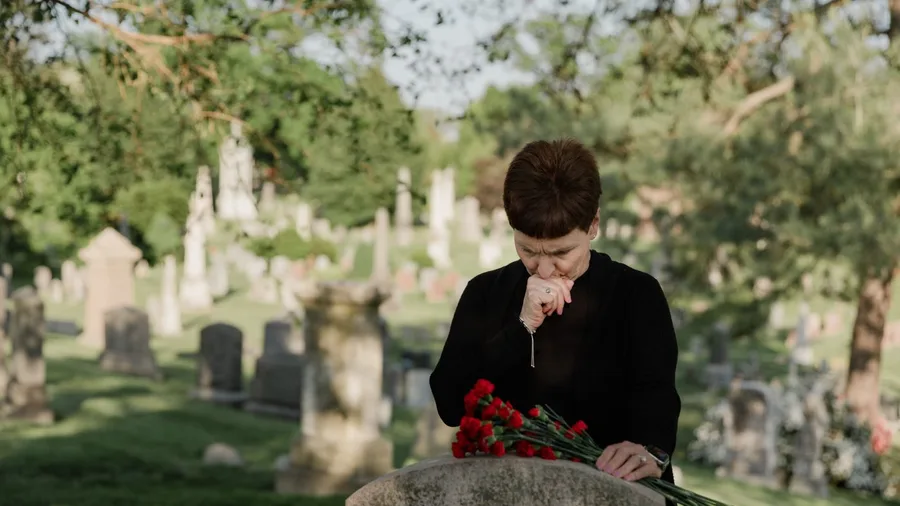
The grumpiness arrived gradually, and it has stayed.
The easy read is that it is personality – that he has simply become harder to be around. The more accurate read is that by 60 many men are carrying a weight of loss that has never been put down or named: friends who died or drifted, colleagues who disappeared with the job, a body that no longer does what it once did, plans that were shelved quietly and never mentioned again. None of these losses came with a ritual or a language that made expressing them acceptable, so they were absorbed rather than processed.
That is where the irritability comes from. Grief without a channel does not stay still – it surfaces as low tolerance, a short fuse, a generalised edge that the man himself often cannot explain. It looks like bad temper. It is closer to a pressure that has been building with no release valve.
The reader who thinks back carefully will usually find a thread. Picture the last two or three years: was there a death, a retirement, a health event, a friendship that quietly ended? In most cases the shift in mood is traceable to a specific point, even if nobody made the connection at the time. That traceable onset is what distinguishes this from a biological floor – it marks a before and an after.
This is also distinct from the raw sadness that follows a bereavement. The cumulative kind is quieter and more diffuse – each unprocessed loss added a little more tension to what was already there, until the standing level became high enough to colour every ordinary interaction.
Men who find a setting where this kind of loss is spoken about plainly – a peer group, a therapist who does not treat grief as weakness – often report that the edge eases relatively quickly once they can actually name what they are carrying. The grumpiness was the grief’s only available form. Give the grief a better one, and the grumpiness tends to follow it down.
Grief Processed vs. Grief Unprocessed
When Grief Finds a Form
- Edge eases within weeks of naming the specific loss
- Anger spikes around the loss itself, not unrelated triggers
- Can tolerate reminders — a song, a photo — without shutting down
- Appetite, sleep, and concentration stay roughly stable
- One honest conversation is usually enough to start the shift
When Grief Has No Container
- Edge is highest on ordinary days, not around anniversaries or reminders
- Each new minor loss lands harder than it should
- Sleep deteriorates without a clear physical cause
- Minimises every loss individually — 'it was a long time ago'
- Years can pass at this standing level without it lifting on its own
10. A Shrinking Social World Concentrates All Friction on One Person

What erodes slowly over months is the relationship itself – not because anything is wrong with it, but because it is now doing a job that used to be shared across ten people.
A man who once distributed his daily friction across colleagues, a regular lunch group, the neighbours he chatted to on the way to the car, and a handful of close friends, now brings all of it home. Retirement narrows the geography. Reduced mobility narrows it further. Friends die, or drift, or simply stop calling as often as they used to. What remains is one person – a partner, sometimes an adult child – who inherits the full weight of a social ecosystem that once had many load-bearing walls.
None of the redirection is deliberate. The boredom that surfaces at three in the afternoon, the low background anxiety that has no particular object, the irritability that a work colleague used to absorb with a shrug – it all arrives at the same door now. Minor friction gets amplified not because it means more, but because there is nothing else in the day to measure it against.
The diagnostic question worth sitting with: is the sharpness directed almost entirely at one person, and is that person the one he sees most? If the answer is yes, the relationship is not the problem – the social structure around it is. Men who add back even one regular group commitment tend to show measurable relief at home, because the load finally has somewhere else to go.
📉 How Social Isolation Builds Into Irritability
Retirement or reduced hours
Daily contact with colleagues ends; the social anchor that occupied most of the week is removed.
Friends drift or die
The social network that existed alongside work begins to thin without the structures that maintained it.
Reduced mobility or transport
Getting out requires more effort; spontaneous social contact stops being spontaneous.
Emotional load concentrates
All the friction, boredom, and background anxiety that used to spread across twenty relationships now lands on one person.
Irritability becomes targeted
Minor friction with the primary contact feels disproportionate — because it is carrying weight it was never meant to carry alone.
Rebuilding social contact distributes the load
A club, a regular group activity, or a volunteering role reintroduces the buffer and the targeted irritability typically reduces.
Frequently Asked Questions
Is it normal for men to become more irritable after 60, or is something wrong?
Some degree of change is common enough that it rarely signals a single dramatic problem. What matters is whether the irritability is constant or situational, whether it has a traceable onset, and whether it is accompanied by other signals like withdrawal, sleep disruption, or pain. Those details separate the causes that need a GP from the ones that need a change in circumstances.
How do I raise this with him without it turning into an argument?
Frame it as a question about how he is doing rather than a complaint about his behaviour. ‘You seem like you are carrying something’ lands very differently from ‘you have been so short-tempered lately’. If the biological causes are plausible, the GP angle gives a practical, non-blaming opening: ask if he has had a general check-up recently, and mention the specific things worth flagging — sleep, energy, pain.
Could this be early dementia rather than normal aging?
Ordinary cognitive aging produces gradual, selective slowing — names take longer to recall, unfamiliar apps take more effort. Early dementia presents differently: marked change over a short period, getting lost on familiar routes, repeating the same question in the same conversation, significant personality change rather than irritability alone. Gradual and selective is the key distinction. When in doubt, a GP assessment is the right next step — it rules out treatable causes as well.
Is there one GP question that covers the most ground in a single appointment?
Yes. Ask the GP to check testosterone, thyroid function, and do a basic sleep apnea screen in one visit, framed as ‘I have noticed a mood change and I want to rule out the physical causes’. That single request covers the three most common and most tractable biological contributors on this list without requiring separate referrals upfront.
What if he refuses to see a doctor or talk about any of this?
Start with the most practical and least emotionally loaded angle: sleep or pain, not mood. Most men will accept a conversation about whether their back is affecting their sleep far more readily than a conversation about their temper. Getting one physical cause properly assessed often opens the door to the others — and sometimes resolves more of the mood picture than anyone expected.
How long does it take for things to improve once a cause is identified?
It depends heavily on the cause. Treating sleep apnea or managing pain well can produce noticeable mood improvement within weeks. Adjusting to retirement or processing accumulated grief typically takes months, not days. The single most useful thing to know is that most of these causes are genuinely addressable — the grumpiness is not the fixed endpoint.
Where These Ten Causes Actually Land
The ten causes sort into three clear groups. The first – testosterone decline, disrupted sleep, chronic pain, hearing loss, signs of depression, and noticeable cognitive change – belongs in a GP’s office, because each has a concrete and testable intervention. The second – retirement identity, the fear of dependence, and the need for a rebuilt social world – responds to structural change, not medicine. The third – accumulated grief and cognitive shame – responds most to recognition: naming what is happening, without trying to fix it immediately.
The single question worth raising at the next appointment is this: ‘Could you check his testosterone levels, run a basic sleep apnea screen, and test his hearing in the same visit?’ Those three causes are each measurable, each treatable, and together they account for a significant share of what drives rising irritability in men at this stage. If those come back clear, the list points plainly toward what comes next.
The man snapping over the dishwasher or the hedge or the wrong route to the supermarket is not simply becoming difficult. In most cases he is absorbing something that has not been named yet – and the act of naming it is, more often than not, the thing that begins to shift it.
Not Sure Which Category Applies?
Scroll back to the cause whose description matches the pattern most closely — each entry names exactly what to do next, whether that is a specific GP question, a change in how you respond, or simply a different frame.