The most disorienting part of a shrinking social circle is not the loneliness – it is discovering that you never actually learned how to make friends. You just kept ending up around the same people until something stuck.
For most men, the social circle they have at 60 was never really built – it was inherited. Work delivered the same faces week after week. The school run created a kind of accidental community. Proximity did the rest. When those structures disappear, the connections that depended on them quietly follow, and what is left is a gap that feels oddly shameful to name out loud.
The barrier is not time, money, or even opportunity. The settings exist. The time is there. Other men in exactly the same position are everywhere – at the gym, on the hiking trail, at the same faith community or neighborhood street. The barrier is the feeling that initiating friendship past 60 is somehow strange, or needy, or one awkward moment away from rejection.
social confidence follows action. It does not precede it. The awkwardness shrinks only after the move is made – never before, never by waiting. These eleven moves are ordered from least exposing to most, so the discomfort stays manageable at every step, and the circle starts growing before it ever feels completely natural.
Quick Tips Before You Start
Pick a Recurring Format
One-off events rarely stick. A weekly or fortnightly activity is where real familiarity builds.
Keep Early Texts Short
A single low-key message between meetups is enough — long messages too early create pressure.
Name a Specific Next Step
'Same time next week?' works. 'We should hang out sometime' almost never produces a plan.
Start With Warm Acquaintances
Men you already know by face carry less social risk than strangers. Use that head start.
Show Up Consistently
Regular attendance builds familiarity before you have said anything effortful. That is the point.
Finding the Right Situations
The first barrier to friendship at this stage is not confidence — it is context. Without the built-in repetition that work once supplied, you need to find situations that manufacture it for you.
The entries in this section are about placing yourself in environments that do the early social work passively, so by the time an effortful conversation is needed, most of the awkwardness is already gone.
1. Recurring Activities Remove the Need to Cold-Approach

‘I wouldn’t even know how to start a conversation with someone I don’t know’ – most men who say this are picturing the hardest version of the problem: the cold approach, walking up to a stranger with no connection between you and nothing to talk about except the fact that you walked over.
A weekly gym class, a hiking club, a faith-community group, a neighborhood walking circuit – any of these removes that requirement entirely. The structure does the early social work. See the same face on three consecutive Tuesday mornings and something shifts: the stranger becomes familiar, and familiarity quietly lowers what it costs to say something. No effortful conversation required to get there.
One-off events – a community fair, a single-day workshop – almost never produce this. There is not enough time for recognition to form, and no natural next meeting to attach a follow-up to. The setting closes and so does the opportunity.
The exception worth knowing: one-off events are fine as a place to find out what recurring settings exist. A community fair can surface a hiking club you did not know about. That is a genuine use for them. Where they fail is as friendship environments on their own. The man who shows up every week to the same class, even quietly, even without forcing a single conversation, is accumulating something – familiarity, presence, recognition – that a dozen one-day events cannot replicate.
💡 Tip: You don't need to say much in the first few sessions. Being reliably present is enough to move from stranger to recognized face — and that gap is bigger than it looks.
2. Side-by-Side Activity Cuts Face-to-Face Pressure

You are sitting across a small table from someone you have met twice, coffee between you, and both of you are working harder than it should feel – searching for the next thing to say, aware of the pause, aware of yourselves.
Put a golf shot in front of you instead, or a woodworking project, or a dish coming together on a stove. The self-consciousness drops. Neither man is the subject anymore – the task is. Researchers who study how male friendships form keep finding the same thing: men connect more easily when attention is shared outward, not directed at each other. The pauses belong to the activity. Nobody has to fill them.
This is most valuable right at the beginning, before any real depth exists. Two men who already know each other well can sit and talk without it feeling like a performance. Trying to reach that point by starting with a face-to-face coffee is beginning on the hardest setting – when a cooking class or a round of golf gets there with less effort and less friction.
⚠️ COMMON MISTAKE
Don't Count on One-Off Events
A single community fair or one-day workshop almost never produces a lasting friendship. Without a scheduled next meeting, there is nothing to anchor a follow-up — and most men never send one. Build your social life around recurring formats, not one-time occasions.
3. Volunteering Supplies the Repetition Friendship Needs

Most advice about building friendships points men toward gyms, clubs, and classes – and that advice is not wrong, exactly, but it misses something. Volunteering delivers every structural advantage those settings offer, and then adds one they do not.
A food bank shift runs every Saturday morning with the same eight people. A community garden roster repeats weekly, same faces, same patch of ground. A literacy program session runs on a fixed schedule with the same small group. The repetition is built in – no discipline required to manufacture it. That is the condition friendship needs: the same people, reliably, over time.
a shared mission. When two men are sorting donations side by side, the conversation has a subject that has nothing to do with either of them personally. ‘What goes in the refrigerated section?’ is easier than ‘So, what do you do?’ – and easier first conversations accumulate into real ones.
There is also something volunteering solves that rarely gets named directly. Retirement removes a role. It removes a reason to be somewhere, a purpose that structures the week, a sense of being useful. That loss is one of the quieter engines behind social withdrawal at this stage – not laziness, not introversion, but a gap where identity used to be. A weekly volunteer commitment fills it. The social withdrawal that might otherwise grow in that gap has less room to take hold.
The counterintuitive point: volunteering is not a social strategy with good PR. It is genuinely one of the most efficient friendship environments available. Shared purpose, a reliable schedule, the same small group of people, and a ready-made conversation topic that requires no personal disclosure to start. Those four things together are rare. Most settings offer one or two. Volunteering offers all of them by design.
A man who shows up to a food bank for the first time is not walking into a room of strangers he has to impress. He is walking into a group that already has a reason to be there together – and so does he.
4. Warm Acquaintances Beat Strangers as a Starting Point
The fastest route to a new friendship is rarely through a stranger. It runs through the man whose name you already know – the neighbor you wave to every morning, the former colleague you see at occasional reunions, the guy who orders the same coffee at the same counter three times a week.
Something useful already exists with people like that. The first-impression hurdle is cleared. There is a shared reference point – a street, a job, a counter – and that shared ground makes the social cost of reaching out meaningfully lower than approaching someone cold. You are not introducing yourself; you are extending something that already started.
The move is small. After the usual two-minute exchange, one casual line – ‘We should grab a coffee sometime, you around this week?’ – shifts the whole category of the relationship. No setup, no explanation, no risk of seeming strange. It is a short sentence with a specific suggestion, and that is all it needs to be.
both men are usually waiting for the other one to go first. The hesitation is mutual, the position is identical, and it has been sitting there unresolved for months. The first person to speak is not the one who wanted it more – he is just the one who happened to move, and in doing so he settled a question both of them had.
Making the Move Without Overthinking It
Knowing where to meet people and knowing how to move things forward are two different problems. This section covers the second one: the specific actions that convert a pleasant recurring contact into something that is actually a friendship.
5. The Person Who Follows Up First Usually Wins

most men feel the pull to do it again after a good conversation or a good round, and then do nothing. Not because they are not interested – because neither person acts first, and the moment just passes.
Ask yourself this: after your last genuinely good interaction with someone new, did you send anything afterward? If the answer is no, that connection has probably already faded. A single specific text – ‘good game today, same time next week?’ – costs almost nothing and names a concrete next step. Waiting for the other man to go first is understandable, but as a strategy it almost never works. Sending the first message is not chasing. It is the move that un-stalls something both men wanted.
6. Suggesting a Repeat Feels Bolder Than It Actually Is

Most men stall at exactly one moment: the few seconds before they suggest doing it again.
The gap between knowing to follow up and actually saying the words out loud is where plans die. But the fear tends to be badly miscalibrated – the ask feels weighty in anticipation and lands lightly in reality, because it is low-commitment, easy for the other person to accept, and usually mirrors something they were already thinking. The specific form matters: ‘I’m going back next Saturday – want to join?’ is an invitation with a built-in yes. ‘We should hang out sometime’ is socially pleasant and functionally useless – it names no activity, no day, and quietly passes the entire burden of planning to the other person.
Naming a specific thing at a rough time converts a nice interaction into an actual plan. Without that, even warm goodwill tends to evaporate over the following week.
Fear of rejection at this level deserves honest calibration. A gentle no – when it comes at all – is almost never personal, and it is almost never as damaging as the anticipation makes it feel. What does accumulate over months of not asking is a string of connections that almost formed and quietly didn’t. The cost of the ask is low and immediate. The cost of not asking is slow and easy to miss until the circle is noticeably smaller.
The Follow-Up That Works vs. the One That Doesn't
Works
- Ties the ask to a specific recurring event already on the calendar
- Gives the other person a single yes/no decision, nothing more
- Can be said in one sentence while walking to the car
- Works even if you only spoke for ten minutes that day
- Recovers cleanly from a no — next week's invite still stands
Doesn't Work
- Requires the other person to invent the plan before replying
- Feels warm in the moment and is forgotten by Tuesday
- Gets harder to follow up on the longer you wait
- Works least well with men who also won't be the one to initiate
- Repeated enough times, it quietly signals you don't really mean it
7. A Direct Question Reaches Real Conversation Faster
The standard advice is to keep things light at first – stick to sport, weather, whatever is happening in the room. The problem is that two men can do exactly that for six months and still know almost nothing about each other.
One specific question breaks the pattern. Something like ‘What kind of work did you spend most of your life doing?’ or ‘What are you putting your time into these days?’ pulls a real answer out of the air – a career, a project, a frustration, a pivot. That answer gives both men something to actually respond to, and it is response, not small talk, that builds connection. Most men are quietly relieved when someone else cuts to something genuine first, not because they are waiting to unload, but because holding the surface steady for the whole hour is more tiring than a real exchange.
The line worth holding: one question, then listen. ‘What brought you to this group?’ opens a door. Five questions in a row closes it. The whole move is asking one thing, then letting the answer do the work.
💡 Tip: After he answers, resist the urge to immediately match his story with yours. A short pause — then a follow-up question — signals you were actually listening, which is rarer and more memorable than you might think.
8. A Text Between Meetups Costs Nothing and Keeps Momentum

The answer takes about two minutes.
A connection that only exists inside the scheduled hour is exposed – miss two sessions, and it cools fast. One short message changes that. Send him a piece you came across on the thing he mentioned last time, or drop a line like ‘still chewing on what you said about the fishing up north’ – no setup needed, no reply expected. It signals that the friendship exists outside the activity, which is exactly what most men are waiting to confirm before they reach out themselves. What it is not: the place for heavy disclosure or daily pings. Too much too soon turns something easy into something that feels like maintenance work.
💡 PRO TIP
The Two-Minute Rule for Staying in Touch
If a message takes more than two minutes to write, it is too long for early friendship. A one-line callback — 'thought of you when I saw this' with a link — does the job. Brevity signals ease, not indifference.
Turning Contact Into Real Friendship
Regular contact is necessary but not sufficient. The entries in this final section cover what moves a friendship from pleasant recurring acquaintance to something that holds real weight.
Each one requires a little more deliberate action than the steps before — and each one becomes easier once the earlier stages are already in place.
9. Simply Naming Your Goal Removes the Pretense
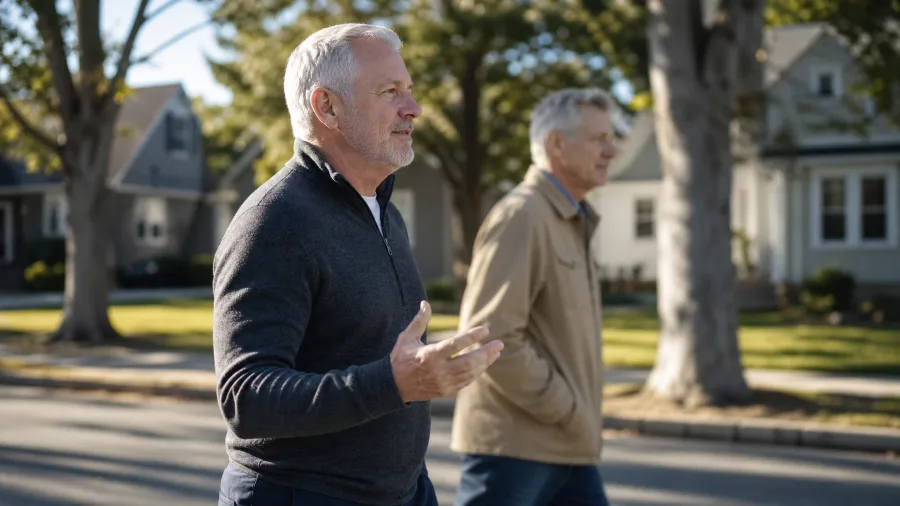
The walk back to the car after a session, things have gone well, and there is a half-second where something honest could be said. The fear is that saying it will come across as needy – that naming the fact you are trying to build a social life will change how the other man sees you.
It almost never does. Most men in this position are sitting on the same awareness: circle smaller than it was, not entirely sure what to do about it. When one of them says something low-key – ‘I’ve been making a point of getting out more since I stopped working’ – the other man’s usual response is relief, not discomfort — the same psychology of avoiding help that kept both silent. That kind of admission, offered without requiring anything back, signals something that small talk cannot: that you are someone worth trusting. Trustworthiness is what male friendships actually run on once the surface-level contact is in place. The timing matters – this lands after a few shared sessions, not in the first five minutes with a stranger.
How Much Social Exposure Each Move Requires
- Showing Up Consistently: No conversation required — presence alone builds familiarity.
- Sending a Follow-Up Text: Low stakes; easy to send, easy for the other person to receive.
- Asking a Direct Question: Slightly more exposed, but one question is all it takes.
- Suggesting a Repeat Activity: Feels bolder than it is; rejection here is rarely personal.
- Naming Your Goal Honestly: The highest-exposure move — and the one that deepens friendship fastest.
10. Shared Goals Give Friendship a Structure to Grow On
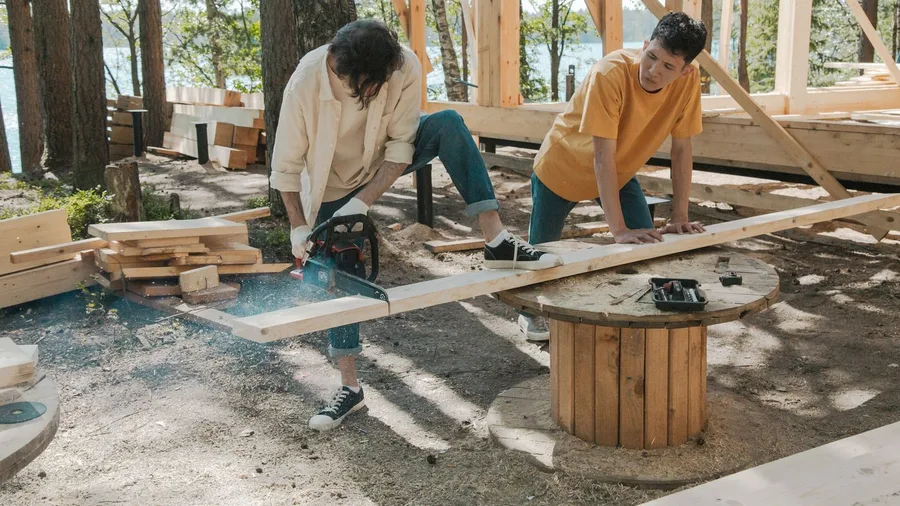
Trust that has been named still needs somewhere to go – and the friendships that stay shallow are usually the ones that never found a shared reason to keep meeting.
When two men sign up for the same 5K training group, agree to co-run a club committee, or start building something together in a garage on Saturday mornings, the next meeting is already decided. Nobody has to send the awkward text asking if the other guy is free. The project schedules it.
That is not a small thing.
Male friendships at this stage often stall not because the warmth is missing but because the logistics require one man to keep making social asks – which feels effortful, and which many men quietly stop doing after a while. A shared goal removes that friction entirely. The accountability lives in the goal, not in anyone’s willingness to reach out.
Shared stakes also produce shared history faster than conversation does. A training run that goes badly, a committee decision that falls apart, a shelf that takes three sessions to get level – these moments create the kind of reference points that conversation alone rarely generates. ‘Remember when we built that thing and it leaned six inches to the left’ is a line that carries weight precisely because both men were there, both invested, both remember the same moment.
The goal itself will eventually be finished, abandoned, or replaced. The 5K gets run; the committee project wraps up. What tends to outlast the structure is the friendship it quietly built while both men were paying attention to something else.
🤝 How a Friendship Actually Builds — Stage by Stage
Repeated Exposure
Show up to the same activity three or four times — familiarity forms before any effort is required.
First Real Exchange
One direct question breaks the surface of small talk and gives both men something real to respond to.
The Follow-Up
Send a specific, low-stakes message after the interaction — 'good game, same time next week?' — to signal genuine interest.
Repeat Contact
Keep the connection alive between meetings with a brief message so it doesn't reset after a missed week.
Named Honesty
Admit something real — 'I've been trying to get out more since I retired' — once warmth already exists.
Shared Goal
Add a shared project or target so the friendship has structure to grow on outside scheduled meetings.
11. Accepting the Awkwardness Shortens How Long It Lasts

The cost of waiting for the awkwardness to pass is that it never does – because it only dissolves once the move has already been made.
That slightly stiff feeling after suggesting coffee, the half-second of exposure before sending a follow-up text, the pause after saying something real – none of that means something is going wrong. It means both men are past the easy surface and into territory that actually matters. Social confidence follows action; it does not show up beforehand to give permission. The men who wait to feel comfortable before reaching out are waiting for a thing that only the reaching out produces.
The move is simple and available this week: one warm acquaintance – a neighbor, a former colleague, a familiar face from a class – one message, one line suggesting coffee or a repeat of something already shared. No preamble needed. The awkwardness does not have to be gone first. It just has to be smaller than the cost of doing nothing, and it almost always is.
Building Male Friendship After 60 — At a Glance
📅 Best Format
Weekly recurring activity
🎯 Highest-Yield Environment
Volunteering with a fixed group
💬 First Active Move
One direct follow-up message
⏱️ Time to Familiarity
3–4 consistent appearances
🔑 What Deepens Closeness
Shared goal or project
🚧 The Real Barrier
Social and emotional, not logistical
The one move
Identify one warm acquaintance this week and send a single message suggesting a repeat — that one sentence is where most friendships actually begin.
Frequently Asked Questions
Is it normal to feel awkward trying to make friends at this age?
Yes — and it is worth understanding why. The awkwardness is not a personality problem. It is what happens when you are doing something deliberately that used to happen automatically. Work supplied the conditions for friendship without requiring you to engineer them. Doing it consciously for the first time in decades feels strange because it is new, not because something is wrong with you or the other person.
What if the other man never follows up — does that mean he is not interested?
Not necessarily. Most men at this stage are in the same position: they feel the pull to follow up and do not act on it. The hesitation is usually mutual. If you have had two or three good interactions and neither of you has followed up, the most likely explanation is that both of you are waiting for the other to go first — which means the first person to act solves the problem for both of them.
How do I find a recurring activity if I am recently retired and have no existing groups?
Start with your immediate environment. A neighborhood walking group, a faith community, a local gym class schedule, or a volunteering roster at a food bank or community garden: all of these are free or near-free, run on fixed schedules, and draw from a local pool of people likely to be in the same life stage. Most local councils and libraries post community activity listings; a single session to see who turns up is a lower-stakes starting point than it might feel.
How long does it realistically take to go from a new contact to a real friendship?
There is no fixed number, but the research on adult friendship points consistently to repeated contact over time as the core ingredient — not the intensity of any single conversation. For most men, a genuine friendship takes several months of recurring contact to form. The timeline shortens considerably when a shared goal or project is added, because it creates contact outside the original setting and builds shared history faster.
Is it strange to admit to another man that I am trying to make friends?
Less strange than it feels. Men over 60 are, as a group, aware that their social circles have contracted. When one man names that honestly, the other most often responds with recognition rather than awkwardness. The key is timing: it lands well after a few shared interactions have established warmth, and it lands oddly with a complete stranger. Keep the phrasing light — ‘I’ve been trying to get out more since I retired’ does the job without asking anything heavy of the other person.
What if I suggest a repeat and the other man says no?
A gentle ‘no’ at this stage is almost never personal. More often it is a scheduling conflict, low energy, or the same hesitation you had before you asked. If you suggest something once and it does not happen, try once more with a slightly different activity or time. If two specific suggestions both go nowhere, take that as real information and move your energy toward someone else — without treating it as a verdict on you.
What the Awkwardness Was Telling You All Along
Awkwardness is not a warning. It is evidence. That friction you feel in the half-second before you follow up, before you suggest doing it again, before you say something honest on the walk back to the car – that is what a friendship forming feels like from the inside, before it has a name. Men who wait for it to pass first are waiting for something that only starts after they move.
Every other man you might approach is quietly hoping someone goes first. That is the fact this article opened on, and it is the one worth carrying out of it.
Before the week is out, find one warm acquaintance – a neighbor, a former colleague, a familiar face from a class – and send a single message suggesting coffee or a repeat of something you have already shared. One sentence. The awkwardness does not have to be gone before you send it. That is the whole argument.
Start With One Message This Week
You don't need all eleven steps at once. Scroll back to entry 4 and identify one warm acquaintance. One sentence is enough to begin.