Two women notice the same thing in the same decade. One decides the silence means she has done something wrong. The other decides the marriage has quietly failed. Both of them start from there – and both of them are solving for the wrong problem.
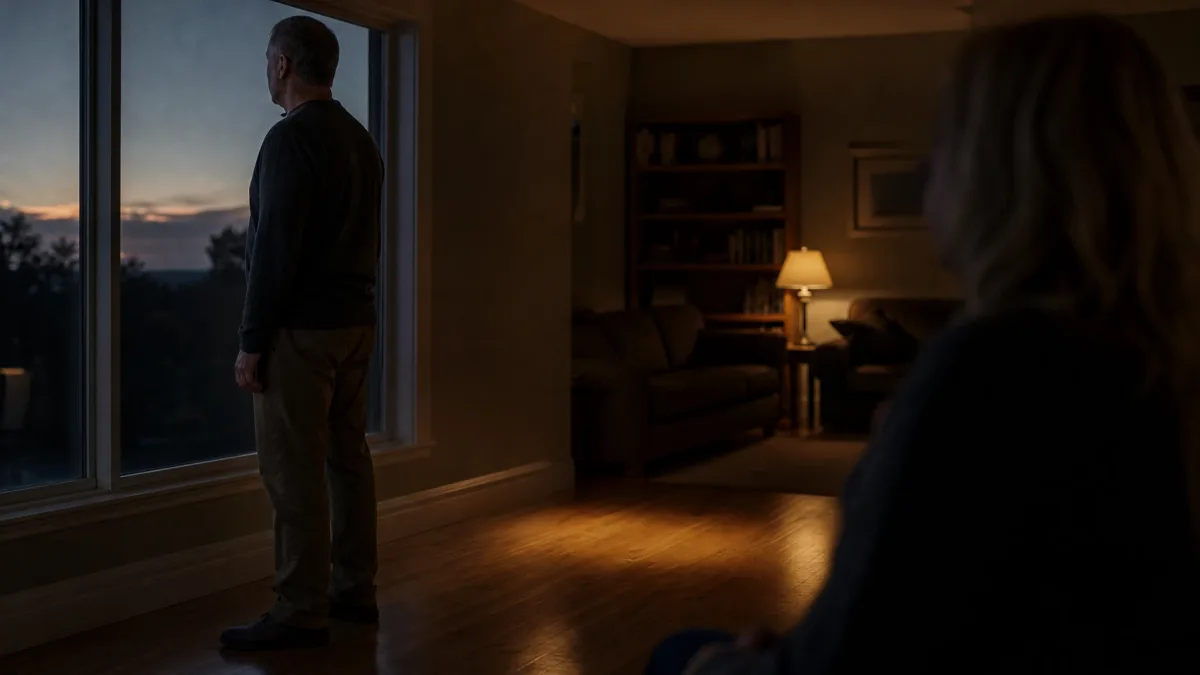
He is still at dinner. He answers when she speaks. He goes to bed at the same time, wakes up at the same time, drives the same route to work. Nothing broke. There was no fight with a clear beginning, no night she can point to. He is simply somewhere she cannot get to, and the distance has a quality she has not felt before.
The 50s are one of the most psychologically loaded decades a man moves through, and the withdrawal that surfaces in a marriage during this time is almost never a verdict on the relationship. It is the visible surface of several distinct internal processes – and they can arrive together, in ways that are hard to separate even from the inside.
If she can identify which force is actually driving the distance, she stops trying to fix the wrong thing. That identification is the difference between a conversation that opens something and one that closes it further – between a GP appointment that changes the next two years and a waiting period that changes nothing. This article names ten of those drivers, describes what each one actually looks like from where she is standing, and gives her a way to match what she is seeing to a first move that has a realistic chance of working.
Quick Tips Before You Start
Name the Pattern First
Before any conversation, note when the distance is sharpest — around work, physical closeness, or all the time. The pattern narrows the driver.
Some Drivers Need a GP, Not a Talk
If physical changes — sleep, appetite, energy — are present alongside the withdrawal, a doctor's visit is the first step, not a kitchen conversation.
Low Stakes Opens More Doors
Invitations that carry no blame and ask about him — not about the marriage — are the ones most likely to get a real answer.
Drivers Rarely Come Alone
Identity fracture and shame almost always travel together. Depression and hormonal shift can look identical without assessment. Expect overlap.
Silence Is Not Always Rejection
Some men withdraw believing that silence protects their wife from something unresolved in them. That is still damaging — but it is a different problem to solve.
What Changes Inside Him
The first four drivers live entirely inside him. They are not responses to her, to the marriage, or to anything she has done — they are forces his own psychology is generating, and she is experiencing the fallout without any of the context.
This matters because the most common first interpretation — what did I do wrong — points in exactly the wrong direction when the driver is internal. These sections answer that question directly.
1. Identity Tied to Achievement Starts to Crack

The easy answer is yes, it is about his job or his ego – and the easy answer is wrong, or at least incomplete. What looks like wounded pride is usually something more structural: most men spend decades measuring their worth almost entirely through what they earn, what rank they hold, and what their body can do. Not because they chose to build themselves that way, but because that is the frame male socialisation handed them before they were old enough to question it.
The 50s is when that frame gets stress-tested for the first time. A promotion quietly stops arriving. A back injury takes three months to clear instead of three weeks. He looks at where he expected to be by now and the gap is no longer abstract. Men who also built themselves around friendships, creativity, or family tend to weather this because the architecture has other supports. A man whose whole structure rests on professional or physical performance has nowhere to transfer the weight. Recognising the specific signs of identity built around work can help clarify how deep that structure actually runs.
So he goes quiet. Not because he is sulking – because staying engaged means acknowledging, even to himself, that something load-bearing is shifting. Distance is the only move that keeps that admission at arm’s length.
The signal she can use: if the withdrawal arrived around a workplace change, a physical setback, or a significant birthday – and he became flatter and less initiating rather than angry or volatile – something she can say is simply, ‘I’ve noticed you seem somewhere else lately. I’m not asking you to fix anything. I just want to know how you’re sitting with it.’
2. He Realises His Life Is More Than Half Over
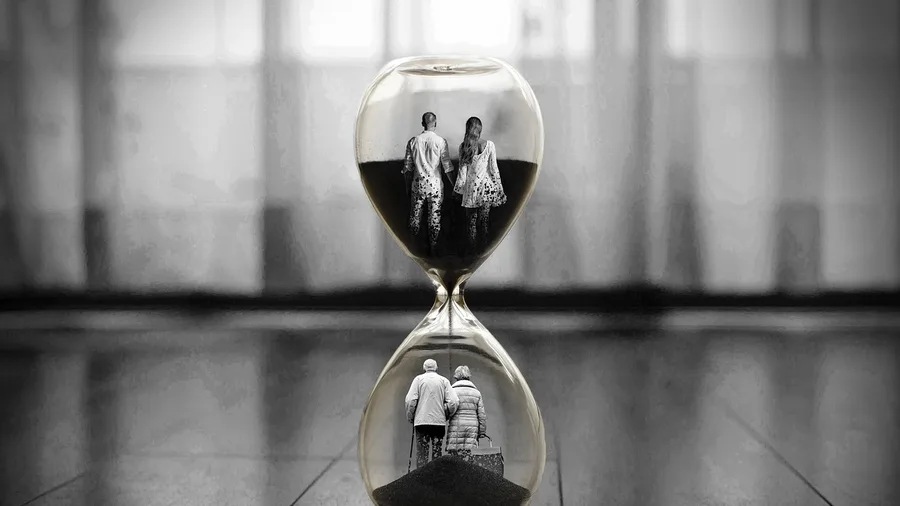
At some point in the 50s, the arithmetic becomes impossible to ignore. More years behind him than ahead. Friends his age getting sick. A body that sends small daily reminders of its limits. Researchers who study how people process mortality find this awareness tends to land hardest in midlife – not in old age, when it might feel more expected, but now, when it is still shocking.
The grief this produces is private and hard to name even to himself. It is not mourning for something already lost – it is mourning for roads not taken, for the version of himself he expected to become, for time already spent. He does not bring it to the marriage because his role, as he understands it, is to be the steady one. Raising existential fear feels like a failure of that role.
Men who have a working sense of meaning – built from faith, philosophy, or deep relationships – tend to carry this weight differently. The grief is still present; it just has somewhere to go. If he has become vague about the future, newly preoccupied with what he will leave behind, or mournful in a way he cannot explain, the right response is curiosity and patience – not reassurance, and not problem-solving.
⚠️ COMMON MISTAKE
Reassurance Usually Misses This One
When mortality grief is present, offering comfort — 'you have so much to be grateful for' — tends to shut the conversation down rather than open it. It signals that the unresolved version is not welcome. Sitting with the question instead of answering it is the harder and more useful move.
3. Male Depression Usually Looks Like Distance, Not Sadness

You mention a hobby he used to love and watch his face not move. He sleeps badly, eats without interest, answers questions without being present in the answers. This does not look like what either of you pictures when you picture depression. That gap is the problem.
Clinicians who work with men in this age group consistently find that depression here looks less like sadness and more like flatness – a grey, low-grade absence, irritability at small things, a quiet retreat from friendships and activities he previously cared about. Because neither of them recognises the presentation, neither names it, and it goes unaddressed for months or years.
Not every withdrawal is depression, and the distinction matters because the first step is different here. When the pattern has persisted for several months and is accompanied by physical changes – disrupted sleep, appetite shifts, energy that stays low without a clear medical cause – a GP visit is the appropriate first move, not a kitchen conversation. Naming the possibility directly, without blame or alarm, is not an accusation. It is the most useful thing she can do with what she is seeing.
What People Commonly Get Wrong About Male Withdrawal
4. Testosterone Decline Affects More Than Sex Drive

It is worth asking, because the biology of the 50s does not only affect libido – and that is precisely where the common framing misleads.
When testosterone levels shift, the most visible effect is the one everyone mentions. But the changes she is more likely to be living with – a husband who starts fewer things, reacts more sharply to small frustrations, seems to have lost the internal engine that used to carry him through a day – are the quieter effects, and they are the ones that read, from where she is standing, as emotional distance.
He almost certainly does not connect any of this to a physical cause. The flatness lands to him as a mood, maybe a failing. The thought ‘this might be hormonal’ does not tend to arrive on its own, which means he does not raise it with anyone. He manages it the way men are trained to manage most things they cannot name: by going quiet.
The picture is also rarely hormonal alone. Sleep, how much he is moving, how much he is drinking – all of these interact with testosterone in ways that make it genuinely impossible to separate the biological from the habitual without assessment. That is not a caveat; it is the whole reason a GP visit matters. The variation between individuals is wide enough, and the interactions complex enough, that estimating whether this is a meaningful contributor from the outside is not reliable.
For her, the signal to watch for is a withdrawal that extends well past anything sexual – loss of initiative in areas he used to own, noticeably lower energy from morning onward, a general dimming of the drive that used to be just part of who he was. If those are present and the obvious lifestyle explanations do not account for them, the most useful framing for a GP visit is energy and mood, not hormones. That framing tends to lower the barrier for a man who would otherwise dismiss the idea of going.
💡 Tip: Framing it as 'you seem tired lately, would you go get your bloods checked' removes the identity threat that 'you should get your testosterone tested' carries.
Why the Distance Lands Between You
The next four drivers are still primarily about him — but they are the ones that operate specifically through the relationship. His internal state presses outward, and the place it lands is between the two of you.
This is the section of the article where the question did I do something wrong gets its most direct answer. In each of these cases, the answer is no — but understanding the mechanism is what makes the answer useful rather than just comforting.
5. Emotional Avoidance Is a Pattern He Learned Long Before You

The common advice is to try harder to get through – more questions, more openness from her side, more invitations. It is not wrong exactly. But it misses the reason the silence is there in the first place, which has nothing to do with her and very little to do with now.
Going quiet under pressure is, for many men, a coping structure built in boyhood and never consciously chosen since. The message absorbed early was that emotional need was something to manage privately, that self-disclosure was a form of weakness, that the correct response to distress was to contain it. By the time he met her, this pattern was already decades old. In ordinary conditions it was invisible – functional enough that neither of them had reason to examine it. The 50s change the load, not the pattern. What she is seeing now is not a new version of him; it is the same architecture under conditions it was not built to hold.
The distinction that matters practically: a lifelong pattern under new pressure tends to be pervasive – he goes quiet with friends, with his grown children, with her, across contexts. A behaviour that has specifically changed in response to something between them is more contained, more traceable to a moment or a shift in the marriage. The first is not about her. The second may need to be explored together. They look similar from the outside, but the cause and the correct response are different.
If he has always handled hard things by going silent and self-contained, that is not evidence the marriage is deteriorating. It is evidence that the same pattern he relied on at 25 is running now under much heavier conditions – and what it costs, quietly, over months, is the accumulated sense that closeness is no longer available to her, even when nothing specific has broken.
Emotional Avoidance — At a Glance
📅 When It Started
Long before this marriage
🔁 Pattern Type
Lifelong, not situational
📈 Trigger in the 50s
Pressure rises, pattern becomes visible
🛋️ Best First Move
Couples therapist, not a conversation
⚠️ What Doesn't Help
Making the environment 'safer'
Key distinction
Pervasive and non-reactive to specific interactions — this is the sign you are looking at a pattern, not a rupture.
6. He Fears Letting You See Him as Failing

“I just don’t want to burden you with it.”
That sentence, when it finally comes, is usually the first honest thing he has said in months – and it points to something more specific than the general habit of keeping distress private. The habit explains why he goes quiet. This explains why he cannot bring the quiet thing to her: he is convinced that if she saw the full picture – the stalled career, the bank account that no longer feels like proof of anything, the body that takes a week to recover from what used to take a day – she would see someone diminished. The silence is, in his own framing, protective. He is wrong about what it costs her, but the intention is not punishment.
The mechanism tightens itself without outside help. The less he says, the more ashamed he feels for being unable to say it, which makes saying anything feel more dangerous, which produces more silence. No argument triggers it. No disappointment she has expressed starts it. The whole loop runs on what he believes a man is supposed to deliver – a standard she never set and may not recognise. Where this driver is most visible: he becomes noticeably shorter or deflective when the conversation lands near work, money, or physical capability, even in passing. Those are the pressure points. Any conversation that lowers the stakes around them – rather than raising the urgency – is the only kind likely to find a way in.
Two Ways to Start the Conversation
Raises the Stakes
- 'We need to talk about what's happening with us'
- 'I feel like you don't care anymore'
- 'Why won't you just tell me what's wrong?'
- Bringing it up mid-argument
- Naming what the distance is doing to her first
Lowers the Stakes
- 'You seem like you're carrying something'
- 'I'm not going anywhere — you don't have to have it figured out'
- Asking about him, not about the marriage
- Choosing a side-by-side moment, not face-to-face
- Accepting a short or incomplete answer without pressing
7. Sexual Anxiety Builds a Wall Neither of You Named

The withdrawal is physical before it is emotional – except that it never announces itself that way.
When sexual function becomes less reliable in the 50s – timing, physical response, the simple certainty that was once just there – the experience can feel to a man like a private humiliation. Not a medical reality to raise with a doctor or mention to his wife, but a personal failure to be managed and, wherever possible, avoided. The vulnerability of an encounter that might expose this is real and sharp, and he will rearrange the conditions of his life to prevent it from arising.
The strategy is preemptive. He does not withdraw from sex directly – he creates enough emotional distance, early enough, that a sexual situation never gets close enough to become the thing he is avoiding. The wall goes up in the kitchen, not the bedroom. Which is exactly why she reads it as something else entirely: loss of attraction, loss of interest in her, evidence that something has gone wrong between them. She is interpreting the distance through the frameworks available to her, and those frameworks point inward toward her own desirability rather than outward toward his fear.
The opening, when it works, is not a direct question about what is happening physically. It is a low-stakes acknowledgment that bodies change at this stage – stated as a fact between two adults, not as a prompt for him to confess something. When the physical reality is already in the room and already named as ordinary rather than shameful, the fear of being exposed loses most of its grip. If the withdrawal is most marked in the hours around closeness, and if ordinary non-sexual affection has also gone quiet, this is worth naming gently – not as an accusation, but as a possibility she is willing to sit with.
💡 PRO TIP
Name It Before the Bedroom, Not After
A conversation about physical changes lands very differently when it happens over coffee on a Tuesday than when it follows an encounter that went wrong. The lower the perceived stakes when you raise it, the more likely he is to stay in the conversation.
8. He Is Protecting You From Something He Cannot Name

The cost of silence is this: she experiences it as rejection while he experiences it as care.
Some men pull away not because they have stopped wanting connection but because they have made a quiet, unexamined decision that the thing they are carrying – the confusion, the fear, the grief they cannot fully name – would harm her if she saw it. He has not worked through it. It is unfinished and unresolved, and in his reasoning, presenting her with something half-formed and frightening is worse than simply managing it on his own.
That decision is almost never stated and almost never examined. He did not sit down one evening and conclude that silence was the kinder strategy. It happened the way most coping decisions happen: gradually, without discussion, under pressure that kept rising until withdrawal was just what he did. He is likely not even aware he made a choice.
The irony is that the protection produces the exact harm it was meant to prevent. She does not experience his silence as shelter. She experiences a marriage going cold, a husband who has stopped reaching for her, a distance that has no explanation and therefore fills itself with the worst available ones. He remains convinced he is handling it well. She is sitting with something that feels like the end of something.
The instinct – to ask him directly what is wrong, to push for the conversation, to make clear how much the distance costs – is understandable and almost always counterproductive here. Pressure confirms his fear that the unfinished thing is too much. A different kind of statement opens a different door: not ‘what is going on with you’ but something closer to ‘you don’t have to have it sorted before you say it – I can handle the unfinished version.’ That removes the condition that made silence feel necessary.
For her: if he seems heaviest when things between them are otherwise going well – not when there is conflict, but when the marriage is calm and close – that is a signal worth paying attention to. Protective withdrawal tends to intensify as intimacy increases, because the closer she gets, the more visible the thing he is hiding becomes. The entry point is not a question. It is permission.
🔄 How Protective Withdrawal Typically Escalates
Something Shifts Inside Him
An internal fear, grief, or sense of failing begins — often linked to work, mortality, or physical change.
He Decides Silence Protects Her
Without examining the decision, he concludes the unresolved version is too heavy to bring into the marriage.
She Reads the Silence as Rejection
The absence of explanation leads her to conclude the distance is about her or about the relationship.
She Pulls Back or Presses Harder
Either response signals to him that the distress is affecting her — confirming his decision to stay silent.
The Loop Tightens
Both of them are now managing the silence rather than the original feeling that started it.
What This Actually Means for You
The last two entries are about her read of all this — and her first move. They exist because understanding the drivers intellectually is not the same as knowing which one is operating in your specific situation, or what to do about it this week.
9. These Drivers Can Look Identical From the Outside

“He’s just being weird lately” – which is accurate, as far as it goes, and completely useless for knowing what to do next.
Every driver covered here produces the same visible surface. He answers when spoken to, shows up at dinner, handles the logistics of a shared life – and is somewhere else entirely. Five distinct internal forces can generate that exact picture, which means watching the behaviour tells her almost nothing about the cause.
Three things cut through it. The first is timing: a withdrawal that arrived in the weeks after a specific event – a demotion, a health scare, a milestone – points toward identity fracture or shame; one that crept in gradually over a year or more is more likely depression, a hormonal shift, or a lifelong coping pattern finally showing its weight. The second is what he still engages with: if he will talk through a broken boiler or a tax problem but shuts down the moment anything emotional surfaces, shame or avoidance is probably present; if almost nothing gets through – not even the practical stuff – that flatness points toward depression or a physical change that a GP needs to assess, not a conversation at the kitchen table. The third is his body: disrupted sleep, appetite shifts, noticeably lower energy over months are not relationship signals – they are clinical ones.
The picture is rarely clean. Identity fracture and shame tend to reinforce each other, and depression can look almost identical to a hormonal shift without a blood test to separate them. A precise diagnosis is not the goal here. A rough read accurate enough to choose the right first door – a GP visit, a direct low-stakes conversation, a couples therapist – is enough to stop defaulting to waiting, which is the one move that helps none of them.
What Shifts — and When — If the Right Move Is Made
10. Reconnection Rarely Starts Where You Think It Should

Three questions get her closer to a first move than almost anything else. Has the distance come on suddenly – after a specific setback – or has it been a slow drift over months or years? Does he still engage with practical problems but go blank when anything emotional comes up, or has he gone flat across the board? And are there physical changes: sleep, appetite, energy, weight? Sudden onset after a work or physical blow, with irritability when those areas surface, points toward identity fracture or shame – the right first move is a low-stakes, no-blame conversation about how he is experiencing that change, not about what it is doing to the marriage. Pervasive flatness with physical changes points toward depression or a hormonal shift – the right first move is a GP visit, not a conversation between them. A lifelong habit of going quiet under pressure, now intensified, points toward something older than this marriage – and a couples therapist is the appropriate container, because a pattern that predates her will not shift in a kitchen conversation.
Waiting for him to bring it on his own is the least likely route back. What tends to open the door is not his readiness but the conditions of the invitation – something low-stakes, free of blame, aimed at his inner world rather than the state of the marriage, and genuinely open to an incomplete answer. ‘You seem like you’re carrying something and I’m not going anywhere’ lands differently than ‘we need to talk about us.’ If conversations between them keep ending in shutdown, or if her own fear and hurt make it hard to hold the space without closing it down, a couples therapist is the right container – not a failure, just an honest read of what the conversation actually needs.
Frequently Asked Questions
Is it normal for men to pull away emotionally in their 50s?
It is common — but common is not the same as inevitable or untreatable. The 50s tend to concentrate multiple psychological pressures at once: career ceilings, physical change, mortality salience, and the surfacing of lifelong coping patterns under new load. Not every man withdraws, and those who do are responding to specific forces, not to an unavoidable stage.
How do I know if it is depression and not just a phase?
Duration and breadth are the clearest signals. A phase tends to be linked to a specific event and lifts as that event recedes. Depression is more pervasive — it affects sleep, energy, appetite, and interest in things previously valued — and it persists across different circumstances rather than improving when external conditions improve. If the pattern has lasted more than a few months and is accompanied by physical changes, a GP visit is the right next step.
Should I tell him I think he might be depressed?
Frame it around what you are observing, not what you are diagnosing. ‘You seem exhausted and flat in a way that has lasted a while — would you be willing to see a doctor about it?’ is an act of care. ‘I think you’re depressed’ can land as a label he then has to argue with rather than an opening. The goal is a GP appointment, not agreement on a diagnosis.
Is the distance ever about me or the marriage, even if none of these drivers apply?
Yes — and this article does not cover every possibility. If the withdrawal is specifically reactive (it increases during conflict and eases when things are calm between you) rather than pervasive, a relational driver is more likely than an internal one. Couples therapy is the appropriate space to assess that distinction, because the reactive pattern is harder to read accurately from inside the relationship.
What if he refuses to see a GP or a therapist?
His refusal is information too — and it does not mean the conversation is over. A single direct statement of what you are noticing and what you need, delivered once without ultimatum, is something you can do regardless of his readiness. What you cannot do is move through a process he will not participate in. If refusal is consistent and the pattern is entrenched, individual therapy for her — to work out what is tolerable and what is not — is a legitimate and useful next step.
How long should I wait before treating this as serious?
If the change has been present for more than two to three months, is accompanied by physical changes, or has included any mention of pointlessness or not wanting to be here, it is already serious enough to act on. Waiting longer does not make the conversation easier — it tends to make the pattern more entrenched and her own resources more depleted.
The Signal That Tells You Which First Move to Make
The distance is almost never about her. It is also almost never explained by a single clean cause – but it is almost never fixed by waiting, either. The driver determines the door, and the door determines the first move. Persistent flatness, low energy, and a face that does not move when he talks about things he used to love: that profile points toward the GP before any conversation. A sudden retreat that arrived with a specific setback – a job change, a health scare, a retirement that did not feel like relief: that is the low-stakes conversation, the one that separates his worth from the event. A lifetime of managing distress quietly, now simply past the point where quiet is enough: that is the couples therapist, because no kitchen table exchange reaches a pattern that old.
She is in the same room as someone she cannot get to, and nothing dramatic happened to explain it. That is exactly the shape these drivers produce. Naming the right one is not a diagnosis – it is a rough read accurate enough to stop defaulting to waiting and start choosing the right door.
Reconnection at this stage is rarely a return to what the marriage was twenty years ago. For many couples it is the first time the conversation that was always underneath the surface finally gets said out loud. That conversation, handled well, tends to produce something closer than what came before the distance – which means the moment she is in right now, difficult as it is, is also the opening.
Use the three signals in entry #9 to find your first move
Scroll back to the distinguishing signals — onset, what he still engages with, and whether physical changes are present. Those three answers are the shortest route to knowing whether you start with a conversation, a GP referral, or a therapist.