Skip the ritual and you lose something real – not comfort in the abstract, but a measurable psychological function that nothing else in your life currently replaces.
You have almost certainly done this within the last few years. Stood in a room or at a graveside, watched people place objects near a body, said words whose origins you could not trace, and assumed the whole structure came from your religion, your culture, your family’s particular way of doing things. That assumption is understandable. It is also about forty thousand years too recent.
The behavior predates every religion on earth. It predates language sophisticated enough to name what was being felt. It was already an established practice when the last Neanderthal died – and the two species had been sharing it long before that extinction happened.
What follows is the full account of how communal mourning ritual crossed a species boundary and why, across every upheaval that has erased other practices, this one never left. By the end, the question of whether to treat the ritual as an obligation to endure or a performance to skip will have a different shape – because what is actually on offer is not tradition. It is the oldest continuously operating piece of psychological technology your lineage possesses, and it has a longer proof of concept than anything else you own.
Neanderthals Tended Their Dead Long Before We Did
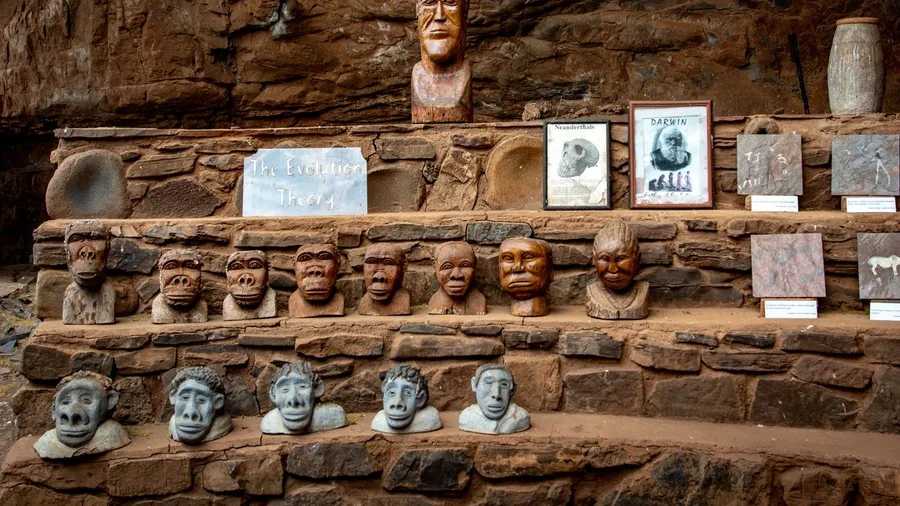
The habit started well before modern humans existed – and the evidence for that claim is specific enough to be worth sitting with.
Deliberate burial is not the same thing as leaving a body somewhere. What the archaeological record captures at sites like Shanidar Cave in Iraq and La Chapelle-aux-Saints in France is body positioning that could not have happened by accident – limbs arranged, orientation consistent with intention, locations selected for characteristics that required someone to evaluate options before choosing. That sequence of decisions had to happen before anyone lifted a digging tool. The planning came first.
No hominin before Neanderthals left anything comparable. Earlier species disposed of the dead, or did not, but no site from earlier in the record shows the combination of chosen location, deliberate positioning, and consistent orientation that marks these Neanderthal burials as intentional. The chronological credit for originating this behavior belongs to them.
What makes this psychological from the start is what it is not. It is not a hygiene solution – the body is not simply moved away from the living space. It is not territorial. The group paused, selected a site, arranged the body, and stopped their other activities to do it. That pause is the signal: death was being responded to as loss, not managed as a practical problem. The location chosen and the body positioned together make an act that produces meaning, and meaning-making is psychological work whether it happens in a cave or a church.
Grave Goods Prove This Was About Feeling, Not Disposal
The objects change everything.
Tools, pigment, animal remains – items found with Neanderthal bodies that had no use for the people who left them there. Carrying any of these to a burial site costs time and physical effort. For a group where every calorie and every hour had a competing claim, spending either on objects that would never be retrieved and never feed anyone is a significant act. The cost is the evidence: the group decided the act was worth the expense, which means they were not simply disposing of a body.
Earlier hominin sites show nothing like this. Object placement with the dead does not appear gradually in the record, accumulating slowly across generations – it appears as a departure, a new behavior with no clear precedent in what came before.
It is worth noting that some specific details from Shanidar Cave, including the long-repeated claim about flower pollen deposited with a body, remain genuinely contested among archaeologists. The current literature should be consulted rather than treating those particulars as settled fact. The broader pattern of deliberate object placement, however, holds.
The objects themselves are the clearest signal of what was happening internally. Something placed with a body rather than discarded is doing a different kind of work – it is in relation to the dead person, not just removed from the living. The group was managing something that had no external solution. That is the same machinery running when a person today slides a photograph into a casket or lays a hand tool on a grave: attaching meaning to the person who is gone, wanting to give something when giving is no longer possible.
Key Terms in the Archaeology of Grief
The Whole Group Stopped to Mourn, Not Just the Family
The emotional motivation behind the burial tells us what the group was doing internally – but a private act and a communal one are entirely different things, and what happened at these sites was not private.
The logistics make that clear. Excavating a deliberate burial site, positioning a body, carrying objects to it – these are not tasks one person completes alone under ordinary circumstances. The scale of effort implied by the better-documented Neanderthal sites points to collective participation: multiple people, a shared activity, something the group did together rather than something an individual undertook while others waited.
That distinction carries more weight than it might seem. Private grief is interior – it leaves nothing visible for anyone else to observe, absorb, or eventually replicate. Communal ritual is a public event. It has a form. Observers can watch the sequence unfold, register its emotional register, and retain a memory of its structure. The behavior becomes visible in a way that private mourning never could be.
Visible, structured, emotionally charged behavior is exactly what spreads across group boundaries. You cannot copy what you never see. Public ritual places the practice in front of people who are not participants – including, eventually, people from different groups entirely.
The earliest confirmed modern human burial sites carry the same structural fingerprint: gathering, deliberate positioning, marking. What crossed the species boundary appears to have been not just the act in isolation but its social form – the gathered group, the shared event. That form is still the one recognized at every funeral held anywhere today.
💡 PRO TIP
The Feature That Actually Crossed the Boundary
The communal form — not just the burial act — is what made the habit transmissible. A behavior performed in front of a group is one that observers can copy. A habit practiced in private dies with the individual.
Coexistence Lasted Long Enough for Slow Habits to Transfer
That public, collective act could only spread if the two groups ever stood close enough to witness each other – and in Europe and the Middle East, they did, for long enough that slow things had time to move.
These were not two populations catching distant glimpses across a valley. Modern humans and Neanderthals shared territory – the same river systems, the same hunting grounds, the same seasonal corridors through the same mountain passes. The contact was lateral, repeated, and extended across generations.
What that contact required for ritual transfer was almost nothing.
No alliance, no trade agreement, no common language, no deliberate instruction – only proximity to the event itself. A modern human group camped within range of a Neanderthal burial did not need a translator to read what was happening: the gathering, the deliberate placement, the collective pause around the body. Observation was the entire mechanism.
Slow habits move differently than fast ones across group lines. A tool technique can transfer in a single afternoon – watch the grip, copy the stroke, done. A death ritual transfers later, when the observer’s own group loses someone and the mind reaches for any template it has ever seen applied to that specific, structureless moment. The memory of what was witnessed becomes a usable form at exactly the point when having a form matters most.
For the precise duration and regional variation of this coexistence, current paleoanthropology research should be consulted – the timeline is an active area of study. But the geographic overlap is not in question. The opportunity existed. And it existed long enough for the slowest, most emotionally weighted habits to find their footing.
Watching a Neighbor Grieve Teaches More Than Any Instruction
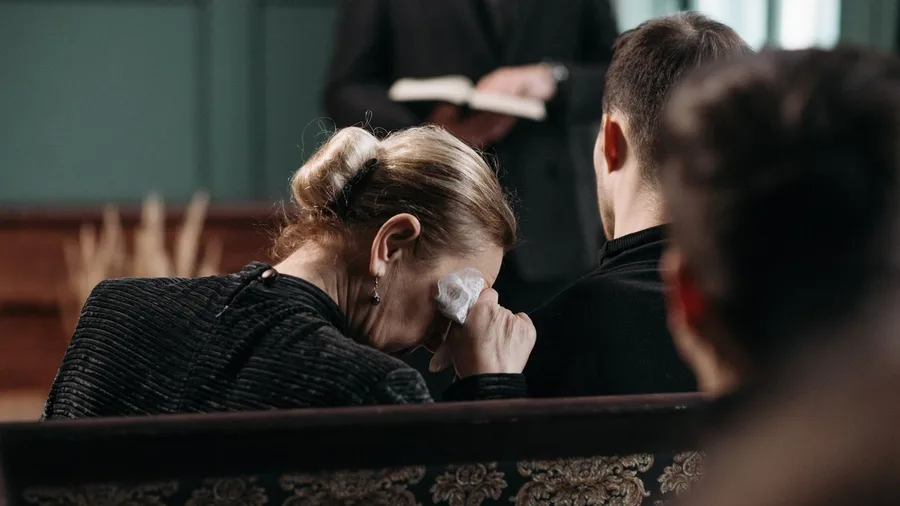
Ritual crosses a language barrier because it does not need one – the mechanism that moves it from one group to another operates below the level of explanation.
Observational learning is how most complex behavior actually spreads within and between human groups. Watching a behavior performed is enough, provided attention is held long enough to register the sequence. And emotionally intense events are precisely what hold attention most reliably. A burial draws the eye and keeps it there – not because an observer decides to study it, but because grief displays are difficult to look away from.
The contrast with other kinds of knowledge is sharp. Knowing which plant treats a fever requires language to transfer: the plant’s name, the preparation method, the dosage, the timing. None of that is visible in the act itself. A burial is different. The sequence – gathering, positioning, placing objects, marking – is entirely visible. The emotional register is readable without a single shared word. The form can be reproduced by anyone who saw it done.
Grief also activates something in observers that is partly involuntary.
Watching another group mourn does not leave the observer neutral. Something in the display mirrors back – attention sharpens, the body responds, the scene is encoded with an emotional weight that makes it retrievable. The threshold between watching and replicating drops without any conscious decision to lower it.
No deliberate cultural transmission was required here. A modern human group that witnessed a Neanderthal burial and later applied a similar structure to their own dead was not following instructions – they were running the same social learning mechanism that spreads every emotionally charged behavior across group lines. The habit did not need to be taught. It needed only to be seen.
The Habit in Numbers
Children of Both Groups Locked the Habit Into the Next Generation
Observation-based habits are vulnerable to the disappearance of the model – unless something anchors them into the next generation before that happens. What anchored this one was childhood.
Interbreeding between modern humans and Neanderthals is confirmed. Some of the children produced by that contact grew up in communities where both lineages shaped the texture of daily life – not as an unusual arrangement, but as the only life those children had ever known. What those children watched happen when someone died became the template for what death required. Not a choice. Not a tradition they were told to honor. Simply the thing the group did.
Early childhood is where habits bypass later scrutiny.
A child who grows up watching every death met with the same collective response – the gathering, the marking, the placement of objects – never encounters that practice as optional. It is not filed away as one approach among several. It is filed as what death looks like when a community handles it together. By the time that child is old enough to evaluate the behavior, the evaluation comes from inside the practice, not outside it.
There is also a social cost to questioning it. Performing the ritual is part of membership. The child who absorbed it as normal has no genuinely neutral ground from which to ask whether it is necessary – stepping away from the ritual means stepping away from the group at its most cohesive moment.
For the current figures on the Neanderthal genetic fraction present in living non-African humans, recent genomics research should be consulted directly; the numbers are refined as sequencing methods improve. But the cultural lock happened the same way regardless of the precise genetic proportion – through children for whom there was no version of death that did not come with a gathered group.
⚠️ COMMON MISTAKE
The Mistake: Treating This as Cultural Pressure
Framing communal grief ritual as social obligation — something you attend out of politeness — misses what it actually is. The pressure to show up is not etiquette. It is the transmission mechanism for a tool with a longer track record than any human institution.
Communal Mourning Lowers the Psychological Cost of Loss
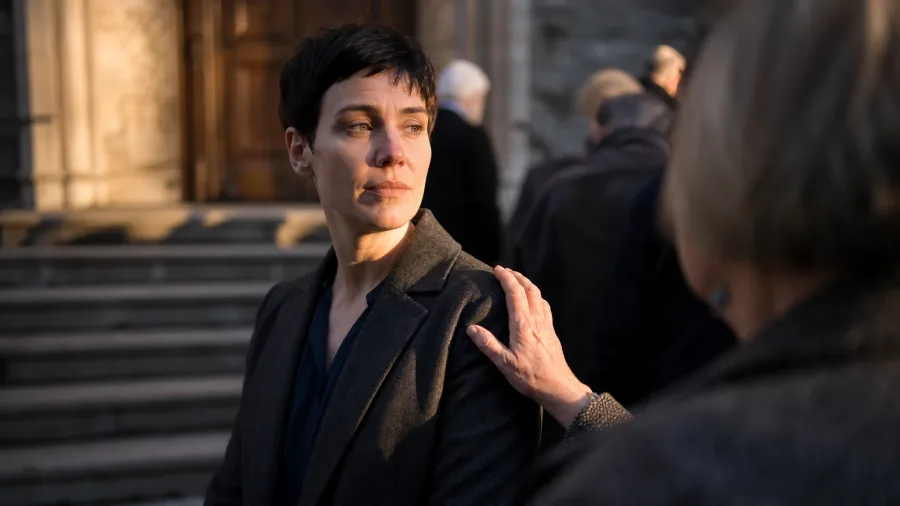
Survival explains how the habit reached the next generation – it does not explain why nothing ever replaced it. Religion came and rewrote death in a dozen different frameworks. Language arrived and gave grief a vocabulary. Migration scattered groups across continents and reset almost every cultural practice they carried. Communal mourning survived all of it, and the reason is not sentiment: it works in a way that nothing competing with it has managed to replicate.
The core mechanism is social witnessing. When a loss happens and a group gathers to confirm it – standing together, marking the moment, acknowledging that the person was real and is now gone – the mind registers that loss differently than it does in isolation. The death is real; the group makes it undeniably real; and something about that shared confirmation is part of how acute shock begins, over days and weeks, to become something the mind can carry without being stopped by it.
That mechanism operates whether or not anyone in the group could articulate it.
No Neanderthal group needed a theory of grief processing to notice that the group felt more intact after gathering than it did before. The behavior was self-reinforcing at the level of felt experience – perform it, feel the difference, perform it again – which is exactly how habits persist without anyone deciding they should. Practices that reduce psychological pain maintain themselves; practices that do not get quietly abandoned during the next crisis when there is no surplus attention to spare.
This is why migration, climate change, language shift, and successive waves of religious transformation each erased enormous numbers of cultural practices while leaving this one untouched. Those disruptions reset the surface – the objects, the words, the specific site – but the structure underneath kept solving the same problem it had always solved. Function, not tradition, is what the evidence shows surviving. Grief psychology research has continued to map the difference between communal and solo processing; consulting that work directly is worthwhile, but the persistence of the behavior across tens of thousands of years is itself the most durable evidence of what the research keeps finding.
Communal Grief Ritual — At a Glance
📍 Origin
Neanderthal, pre-modern human
🏛️ Key documented sites
Shanidar Cave, La Chapelle-aux-Saints, Kebara Cave
🧩 Core structure
Gather, mark, witness together
🔬 Transmission route
Observation + interbreeding + childhood encoding
🌐 Cultural universality
Every documented human culture
The distinguishing feature
No other documented practice appears this early, this consistently, and at this structural level across every isolated human population on earth.
The Ritual Hands the Living a Task When Death Removes Their Control
Being surrounded by others explains part of the relief – but the structure of the ritual itself is doing something additional, something the presence of people alone does not supply.
When someone dies, the immediate psychological experience is the removal of control. The death was not scheduled, the future is suddenly undefined, and there is nothing obvious to do with the hands or the hours. What a structured ritual provides at exactly that moment is a sequence: gather here, bring this, stand there, place that. The sequence is the resource. It does not matter whether what gets placed is a stone tool, a handful of flowers, or a photograph – what matters is that there is a defined action to perform, in an order, alongside other people doing the same thing.
This mirrors what researchers who study anxiety-reducing routines find consistently: the benefit comes from restored agency, not from the intrinsic meaning of the specific action. The ritual is a scaffold. It holds the group upright while the ground is still unstable.
That function was as necessary to a Neanderthal group at Shanidar Cave as it is to anyone standing at a graveside today. The psychology of helplessness has not changed. The relief of having something deliberate to do in the face of it has not changed. Whatever else the centuries altered – the language spoken, the objects placed, the beliefs attached to what happened after death – the underlying problem the ritual addresses remained constant, and so the ritual remained with it.
Ritual as Tool vs. Ritual as Obligation
Understood as Technology
- You attend because the gathering itself does something
- The awkwardness is the cost of the tool, not a reason to skip it
- Presence is the active ingredient, not the words you find
- The structure holds you while you process — that is its job
- Knowing its age makes the discomfort worth absorbing
Treated as Social Pressure
- You attend to avoid judgment, or skip to avoid awkwardness
- The form feels empty because you are watching it, not using it
- Distance or logistics become reasons to opt out
- You endure the ritual instead of drawing anything from it
- The oldest proof-of-concept in human behavior goes unused
Every Known Culture Has Its Own Version of the Same Ritual
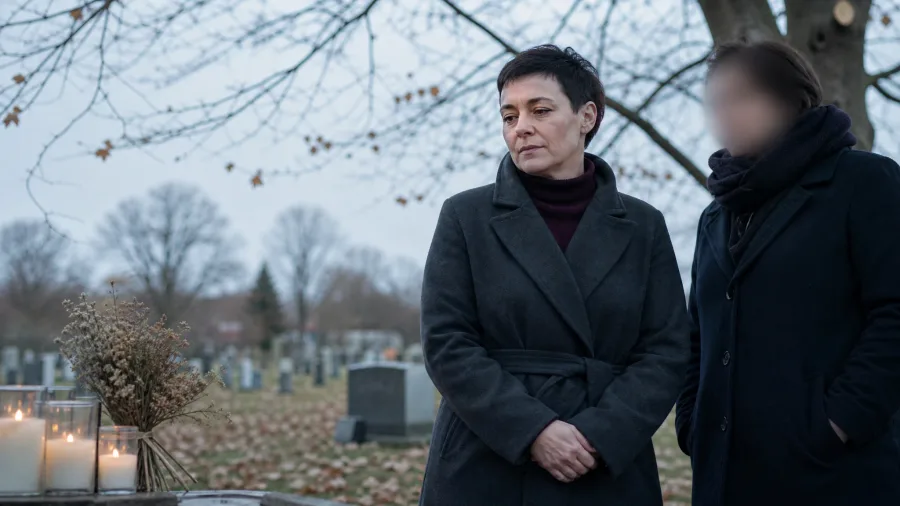
A practice that solves a universal problem this reliably should appear everywhere – and it does, which is precisely what demands an explanation.
Look at what actually varies across cultures when someone dies: the specific objects placed with or near the body, the dress worn by mourners, the timeline between death and burial or cremation, the words spoken and by whom, the location considered appropriate. All of that shifts enormously from one population to the next. What does not shift is the skeleton underneath: the group gathers, the death is marked, the loss is witnessed together. Every documented human culture, without exception, has its own version of that structure.
Independent invention is one possible explanation. Every isolated population on every continent, working without contact, arrived at an identical psychological architecture. The other explanation is that they did not invent it independently – that they inherited the structure from a common ancestor practice old enough to predate the migrations that separated them.
The second explanation is simpler, and the Neanderthal burial record gives it a foundation. Cultural practices with no deep functional anchor – specific greeting rituals, food taboos, the precise form of marriage ceremonies – vary enormously across populations because nothing holds them consistent when groups separate. This practice holds consistent at the structural level, which points to something stronger than cultural drift maintaining it.
If the habit is as old as Shanidar and La Chapelle-aux-Saints suggest, and as functionally effective as its persistence argues, then finding the same structure on every continent is not a coincidence to explain away. It is the expected outcome.
🦴 How the Habit Crossed the Species Boundary
Neanderthals establish the practice
Intentional burial with grave goods appears at Shanidar Cave, La Chapelle-aux-Saints, and Kebara Cave — no equivalent evidence exists for any earlier hominin.
Modern humans enter the same landscape
Overlapping territory in Europe and the Middle East places both groups in proximity — close enough to observe each other's behavior during significant events.
Observation at the moment of loss
A modern human group witnesses a Neanderthal burial; the emotionally charged, visible sequence is encoded in memory and becomes a template when their own loss arrives.
Interbreeding embeds it in shared families
Children born into mixed communities absorb the practice as normal — not as a choice inherited from one species but as what the group simply does.
Childhood encoding removes the exit
The practice bypasses adult critical scrutiny: performing the ritual becomes part of group membership, and questioning it carries social cost.
Functional advantage keeps it alive
Every subsequent upheaval — migration, climate change, language shift, religious transformation — strips practices with no functional anchor; this one survives all of them.
Knowing Its Age Turns Grief Ritual From Obligation Into Evidence
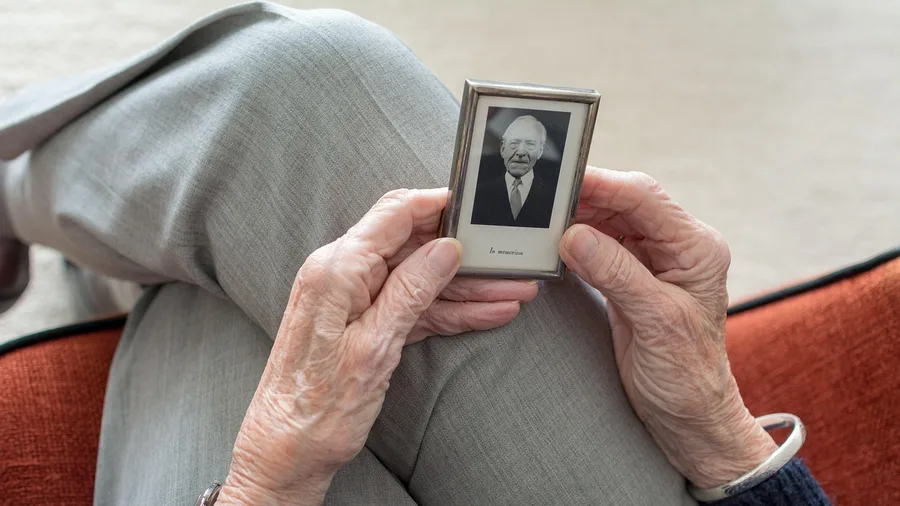
That inheritance – shared without exception across every isolated population that has ever been documented – reframes what the ritual actually is. Once the frame shifts, so does the reader’s relationship to it.
Enduring a ritual and using one are the same physical act performed in entirely different postures. The person who drives four hours to stand at a graveside because absence would look wrong is enduring it. The person who drives four hours because they understand what that gathering does – what it has always done, for longer than any other practice our lineage has kept – is using a tool. The knowledge is the only thing that changes.
The moments people skip it are worth looking at clearly. Distance is too far. The gathering will feel performative. Not knowing what to say is uncomfortable enough to stay home over. Those are real frictions. But what gets declined alongside the discomfort is a behavior with a longer proof of concept than agriculture, than writing, than any institution currently functioning on earth. That is the actual trade.
This habit predates every religion that has ever claimed it, predates language in any form we would recognize, predates every human structure that has since collapsed or been replaced. Other practices from those early millennia are gone – erased by migration, climate, population collapse, the simple pressure of time. This one is still here. Not because anyone decided to preserve it. Because it kept solving the problem every generation brought to it, and nothing else solved it better.
Frequently Asked Questions
What is the psychological benefit of communal mourning rituals?
Social witnessing changes how the mind registers a loss. Having others confirm that the loss is real is part of how the mind moves from acute shock toward something livable — a mechanism that operates regardless of religious belief, cultural form, or whether anyone finds the right words to say.
Did Neanderthals have emotions similar to humans?
The archaeological evidence for deliberate burial and grave goods implies that Neanderthals responded to death as a meaningful event rather than a logistical one. What that tells us about the interior experience of Neanderthal grief is debated; what the physical record shows is behavior that requires an internal representation of loss — the placing of objects with no practical value for the living is hard to explain any other way.
How did cultural practices transfer between Neanderthals and modern humans?
Observational learning does not require shared language — emotionally charged, publicly performed behaviors are highly copyable through proximity and attention alone. Confirmed interbreeding added a second channel: children raised in communities where both lineages were present absorbed practices as normal before they had the cognitive apparatus to evaluate them as choices.
Why do grief rituals look different across cultures if they share the same origin?
Surface form — objects, words, timeline, dress — is the layer that cultural drift, geography, and belief systems act on freely. The underlying structure (gathering the group, marking the death, witnessing together) is the functional layer, and it does not vary across cultures. Think of it as the same tool with a different handle in every workshop.
Is skipping a funeral or memorial service psychologically harmful?
Grief psychology research consistently shows that communal processing differs from solo processing in ways that matter for how the loss integrates over time. Whether skipping a specific event causes measurable harm depends on many individual factors — but understanding that the gathering itself is the mechanism, not just the setting, changes the calculus around attendance.
Were Neanderthals the first species to bury their dead intentionally?
Current archaeological evidence places the earliest deliberate burials at Neanderthal sites; no hominin predating Neanderthals has left evidence meeting the standard for intentional burial. Some claims for earlier instances are disputed on grounds of intentionality, and the field continues to refine the criteria. As of current consensus, the origination of this behavior belongs to Neanderthals, not to earlier hominins or to anatomically modern humans.
What Neanderthals Already Knew About Grief
Communal mourning ritual is not cultural obligation, and it is not superstition dressed up by time. It is psychological technology – originated by Neanderthals, transmitted across a species boundary through direct contact and interbreeding, and validated by continuous use across a span that makes every other human institution look recent. That is the verdict, and it is not a soft one.
The person who performed this ritual and assumed it was prescribed by their religion or their culture was not wrong about what they were doing. They were only off about the age of it, and about why it persisted. It persisted because it kept solving the problem – not because anyone decided to preserve it.
Knowing that changes one question into another. ‘Do I have to do this?’ is a question about social obligation. ‘Do I want to use something with this much evidence behind it?’ is a different calculation entirely. No competing behavior has lasted this long, spread to this many isolated populations, or held this structure intact across that distance. Show up. Place something. Stay long enough to mark what happened. The tool is older than any reason you might give for skipping it.
The Science of Grief Is in the Article You Just Read
Go back to the section on social witnessing — it names the exact mechanism that makes showing up matter, and it takes two minutes to read.