
This shift does not arrive on a birthday. It moves in over a decade, and by the time most people notice it, it has already been underway for years.
You have been turning down more invitations than you accept. A group chat you once monitored has been muted for months. A Saturday with nothing on it arrived last week and felt, against all expectation, completely fine – and underneath that quiet satisfaction, a question that does not quite go away: is something wrong with me?
There is not. What you are noticing has a name, a mechanism, and decades of documentation behind it. Researchers who study how people allocate social energy across a lifetime keep finding the same pattern: after 60, the brain does not withdraw from social life at random – it begins filtering for meaning, pruning what feels thin and protecting what feels genuinely worth the investment. That is not decline. It is the system running correctly.
A quieter life after 60 is not a life contracting. It is a life being edited, and the editing is mostly good work. By the end of this article you will be able to name what is driving the change, explain it plainly to anyone who worries on your behalf, understand what the quiet is actually giving you in return – and run a quick, honest check to know whether your particular quiet is the kind that is doing you good or the kind that deserves a closer look.
The Brain Starts Filtering Social Life for Meaning

The reduced pull toward new acquaintances or lapsed friendships is not a bad week compounding into a habit – it is the brain running a calculation it was always going to run.
When time feels finite rather than open-ended, the mind quietly reorders its priorities. Peripheral connections – the colleague you liked well enough, the neighbour you meant to know better – start to feel like a cost the return no longer justifies. Emotionally significant ones, by contrast, feel more worth protecting than ever. This is not a conscious decision; it happens the way appetite changes, below the level of deliberate choice.
Researchers who study this pattern call it socioemotional selectivity theory. The core finding: a shorter time horizon redirects social energy away from breadth and toward depth. The Stanford Center on Longevity holds the research base for anyone who wants to read the underlying data rather than a summary.
Most people notice the shift arriving gradually through their 50s, then picking up speed in the early 60s. If that matches what you have been tracking – a slow decline in interest in expanding the circle, a growing preference for the known and the meaningful – you are not misreading yourself.
The desire for connection is still there. What changes is the threshold for which connections feel worth arranging, travelling for, or maintaining through effort. Turning down an acquaintance’s invitation, letting a peripheral friendship quietly dissolve – those are not failures of sociability. They are the brain allocating its social resources exactly as designed.
Emotional Regulation Quietly Improves With Age
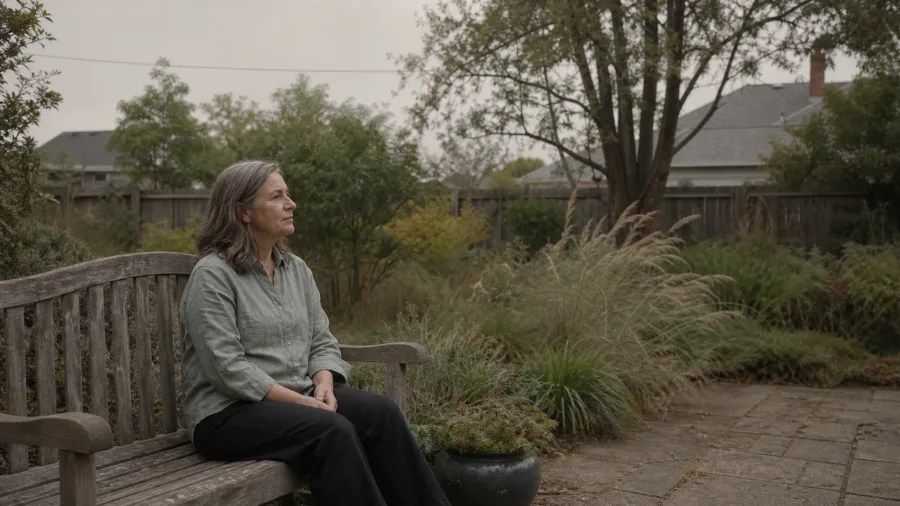
The same inner shift that narrows social attention also changes the texture of emotional life – and the change tends to run opposite to what most people expect.
The assumption is that ageing brings more difficulty: more anxiety, more grief, more emotional weight. What researchers who study emotional patterns in the 60-to-75 range actually find moves the other way. Positive cues land more readily. Negative ones still arrive and still register – but the grip they get is shorter. A difficult conversation on a Tuesday no longer replays through Wednesday and Thursday. The return to baseline is faster than it was at 40.
This is not numbness. The person is not suppressing anything or going flat.
The mechanism is more like efficiency: less time spent in sustained rumination, less energy burned on status-monitoring, less background hum of social anxiety about who thinks what. What looks like emotional flatness from the outside – the person who seems less rattled, less reactive, less caught up in drama – often reflects genuinely calmer inner weather rather than diminished feeling. The emotions are all still there; they simply have less grip on the days that follow.
For data on how emotional patterns shift with age, the National Institute on Aging is the right source. The point here is just to name what is happening clearly: a quieter life is not the same as a duller one, and less visible emotional turbulence is not a warning sign. It is, for most people in this range, an improvement.
💡 PRO TIP
Breadth vs. Depth — A Useful Frame
Socioemotional selectivity theory distinguishes between two social goals: expanding your network (breadth) and deepening existing ties (depth). After 60, the brain naturally shifts its priority from the first to the second. If your social life feels smaller but richer, that shift is working as designed.
Social Goals Shift From Expanding a Network to Keeping What Matters
The social circle was never just company – it was infrastructure, built to serve particular goals.
Think about what drove the density of a midlife social life: a career that rewarded visibility and professional relationships, a partnership to find or sustain, children whose school and activity schedules generated their own social obligations, a community standing that required active maintenance. Those were not idle connections. They were working parts of a functioning life, and building a wide network was the sensible response to needing all of them.
The engine stops when the work is done.
Once those goals have been met, passed, or simply made redundant by changed circumstances, the mechanism that built the network loses its purpose. The circle does not contract because anything has gone wrong – it contracts because the project that required it is finished. A Tuesday evening call to someone you have little in common with beyond an old shared context starts to feel like time spent poorly, not because you have become less generous but because the original reason for the investment has expired.
This happens even for people who are, by every measure, living well – healthy, engaged, fully capable of maintaining a wide social life if they wanted one. The shift is not a symptom of decline or disconnection. It is the outcome of the original goals having been served.
People who were always more selective tend to notice less disruption here. The transition is sharpest for those whose midlife schedules were structurally dense – packed with contact that arrived automatically rather than by choice. For them, the quieting can feel sudden, even though its logic has been building for years.
How the Shift Unfolds Over Time
Smaller Circles Look Like Decline From the Outside

The people asking whether you are seeing enough people are not wrong to care – they are working from a framework that fits most of the lifespan but stops fitting cleanly after 60.
For younger adults, more social contact genuinely correlates with better outcomes – it tracks career traction, partnership, parenting logistics, community standing. Doctors and family absorbed that finding and have been applying it ever since. When they see a smaller calendar, they read it the same way they would read a smaller calendar at 35: as a warning.
That reading misses what the previous sections have established. The brain is not losing its appetite for people. It is pricing relationships differently – redirecting time and attention toward the connections that return something real, and quietly withdrawing it from the ones that do not. That is not withdrawal. It is selection.
Language worth keeping: when someone asks ‘are you getting out enough?’, the answer is not defensive. It is precise. The question assumes volume is the point. The answer is that volume was never the point – it was just the easiest thing to count.
That said, the concern of a family member or a GP is not just noise to push past. It is worth taking seriously, and the final section of this article gives the specific signals that would actually make the concern warranted. Concern on its own – without those signals – is not a diagnosis. It is an assumption.
The real cost of the mismatch is anxiety imported from outside. The inner experience is: this is fine, actually more than fine. The outer reading is: this looks like decline. Carrying both at once, without a frame to sort them, is where unnecessary worry takes root.
Leaving Work or Parenting Roles Removes Social Density Overnight
Retirement can feel like the floor dropping out – not because the inner shift described so far has gone wrong, but because the social structure that quietly kept the calendar full has been removed almost overnight.
Most of the contact that filled a working week was not chosen. It arrived automatically – the morning check-in with a colleague, the standing team meeting, the school-gate conversation, the committee that met on the first Thursday of every month. None of those required active investment in the relationship itself. They were supplied by the structure, and the structure held them in place without effort.
When the job ends or the last child leaves, that scaffolding comes down at once. What remains is only the contact that was deliberately maintained – and that is almost always less, because almost nobody maintains as many deliberate relationships as structural ones.
The difficulty is compounded because both losses land together. ‘What I do’ and ‘who I see’ disappear in the same short window. Losing either on its own is disorienting; losing both simultaneously makes the felt impact larger than either loss alone would produce.
The disorientation tends to ease once the person replaces structural contact with chosen contact – a regular Tuesday with a friend, a class, a group that meets because the people in it want to. The volume does not need to match what the job supplied. Even a modest number of self-selected interactions rebuilds the rhythm.
The mechanism is the thing worth holding onto. The emptiness after retirement is an architectural gap – a design feature of the previous life has been removed, and the new one has not yet been built. That is a different problem from something being wrong with the person, and it points toward a different response.
Structural Contact vs. Chosen Contact
Structural Contact
- Supplied automatically by work, school run, committees
- High volume, low depth
- Requires no active investment to maintain
- Disappears quickly at retirement or empty nest
- Often felt as obligation rather than nourishment
Chosen Contact
- Actively selected for meaning and mutual investment
- Lower volume, higher depth
- Takes deliberate effort to build and sustain
- Survives role changes because it is not role-dependent
- Restorative rather than performative
Not Every Fading Friendship Deserves Grief
The structural gap left by a job or a school run is not the only thing that empties the calendar – individual friendships have been thinning too, and many people are carrying quiet guilt about the ones they have not fought to keep.
That guilt deserves examination. A large share of the connections people maintained through their 40s and 50s were never chosen in any deliberate sense – they were held together by a shared office, a shared street, a shared stage of parenting, and not much else. When those conditions dissolved, the friendship had nowhere left to stand.
What the brain is doing when it lets those connections go is sorting, not abandoning. It is distinguishing between the relationship that required active effort to maintain and offered little back – the twice-yearly call that felt more like a chore than a conversation, the group thread that needed monitoring just to stay in it – and the relationships that actually cost something to lose. The sorting is quiet and mostly accurate.
Not all drift is triage, though. A friendship that carried real weight, ended by a misunderstanding or a move that neither person recovered from – that is a different kind of loss, and pretending it ran its natural course because the timing is convenient is not honesty, it is avoidance.
That distinction is also the honest counterweight to everything above. For most people the quiet brings relief, and the relief is information worth trusting. But if letting things fade leaves a sense of something missing that sits there week after week without lifting, that nagging is worth taking seriously rather than explaining away.
⚠️ COMMON MISTAKE
Using 'Natural Quieting' as a Shield
Socioemotional selectivity is a real phenomenon — but it can also become a comfortable story for avoiding connection that you actually need. If the quiet feels oppressive rather than restful, and the feeling persists across weeks rather than days, that is worth taking seriously rather than explaining away.
Attention Freed From Shallow Contact Has Real Uses

What the quieting actually frees up is not vague – it is bandwidth, and bandwidth is concrete. Fewer relationships to track means less mental overhead spent remembering who is upset with whom, less emotional labour managing connections that never quite repaid the effort, less performance of a version of yourself that fit a role you have outgrown. Those are real cognitive resources. They go somewhere.
The patterns are consistent enough to name, without being prescriptions. Creative work that got parked – the writing, the making, the learning that got squeezed out by a full calendar – tends to resurface. The relationships that remain get more of what was previously spread across twenty. Genuine curiosity, about a subject rather than a social obligation, gets room.
This is also where the distinction between solitude and loneliness earns its keep. Solitude is chosen and controlled – time alone that the person moves into and out of on their own terms, returning from it with something restored. Loneliness is the other thing entirely: unchosen, sustained, and corrosive in ways that do not resolve just because company becomes available. They are not points on the same scale.
Rest and reflection belong in this list too. Using freed attention to think more slowly, sleep better, or simply sit with something without needing to report back to anyone – these are not failures to be productive with the space. They count.
Solitude vs. Loneliness — At a Glance
🎯 Origin
Chosen vs. unchosen
⏱️ Duration
Temporary vs. sustained
🔋 After-effect
Replenished vs. depleted
🚪 Control
Can end it vs. feels trapped
🌡️ Mood link
Neutral or positive vs. persistent low mood
The test
Ask yourself: if a good friend called right now, would you feel relieved or annoyed? Relief points toward loneliness; mild annoyance at the interruption points toward healthy solitude.
Close Relationships in This Phase Run Deeper, Not Shallower

Some of that freed attention does not flow toward solitary activity at all – it flows directly into the relationships that remain, and what happens there tends to surprise people.
When there are fewer relationships to maintain, each one gets more. More time, more honest attention, more of the person’s actual self rather than the managed version. And with that comes sharper knowledge of what each relationship actually requires and offers – what a particular friend needs when they are struggling, where the limits are, what the relationship can hold and what it cannot.
The mechanism shifts too. When time feels more valuable, the tolerance for leaving things unresolved drops. A conversation that would have been avoided at forty – too awkward, too much at stake in a crowded social world – becomes easier to have when the relationship itself feels more worth protecting than the comfort of not having it. Less performance, more directness. Those are the conditions for depth.
Long-term partnerships often feel this most. The same phase that empties the calendar – children gone, work quieted – returns two people’s attention to each other after years of managing the partnership alongside everything else. That can be an adjustment. It can also be the thing.
The Stanford Center on Longevity and the National Institute on Aging carry the research on relationship satisfaction in this range for anyone who wants the data behind this pattern. The caveat matters: a smaller circle does not automatically mean a deeper one. If the remaining relationships are conflicted, low-investment, or held together mainly by geography, shrinking the circle does not improve what is in it. Quality of who remains is the variable, not the number.
Self-Knowledge Increases When the Noise Drops

What happens internally is less discussed than what happens socially – but it is just as real. When the constant input of midlife slows down, the opinions, preferences, and convictions that were always present but never quite audible start to come through.
The roles carried a lot of definition with them. Colleague, school-community parent, member of a professional tribe – each one supplied a ready answer to the question of who you were, and each one required a version of you calibrated to its demands. When those roles fall away, so does the pressure to fit their shape. What emerges is not a new self but an older, quieter one that was always there, crowded out.
This can feel disorienting before it feels like anything good.
Especially for someone whose identity was built heavily around those roles – whose sense of purpose came primarily from the job or the family structure – the space that opens up can feel groundless rather than freeing. That groundlessness is not a warning sign. It tends to precede the clarity, not replace it.
The self-knowledge does not require deliberate excavation. It arrives as a consequence of everything else described in this article – the quieter calendar, the deeper relationships, the drop in background noise. One sign that it is already underway: preferences and opinions start registering more distinctly, and when someone pushes back on them, the response is calmer. Less need to justify, less anxiety about disagreement. The view simply holds.
The Same Life, Two Different Readings
Healthy Quiet and Harmful Isolation Feel Different — Here Is How to Tell

All of that clarity about what the quiet delivers still leaves one practical question open: how does a person know whether their particular quiet is the good kind or the kind that has gone wrong?
The healthy version has three recognisable features. Time alone feels like something the person chose and returns from in decent shape – not a room they cannot leave. They still reach out when they want to, still say yes when an invitation lands right, still exercise the option even if they use it less often. And at least one or two of the relationships they kept involve real exchange – someone who calls as well as receives a call, someone with whom the conversation goes both ways.
The other kind has a different texture. The low mood is not a rough week; it sits there specifically because contact has dried up and does not lift when a good day comes around. People the person genuinely liked start to feel like too much effort – not boring, not outgrown, just actively avoided. There is a background sense of having become invisible that no amount of a quiet Saturday actually resolves.
Those two sets of signals are genuinely distinguishable, and the second set is not a catastrophe – it is a specific, addressable condition with practical tools attached to it. Raising it early with a GP or psychologist, before it has settled in, is what keeps it tractable.
Run both lists honestly. The first set describing your life is the answer most readers here will find. The second set is rarer, but finding it is not a failure – it is the whole point of knowing what to look for.
🔄 From Structural Busyness to Chosen Depth
Notice the pull
Recognise that declining invitations or letting peripheral contact lapse is a signal, not a failure — and ask whether it feels restorative or oppressive.
Name what was structural
Identify which of your previous social contacts were supplied by work, obligation, or proximity rather than genuine choice.
Rebuild selectively
Replace structural contact with a modest number of regular, self-selected interactions — quality over the old volume.
Redirect freed attention
Point the bandwidth freed from low-return maintenance toward deferred creative work, deep curiosity, or the relationships that remain.
Run the two-signal check
Periodically test your solitude against the two signal sets in section 10 — restorative or oppressive, chosen or unchosen — and act on the result.
Frequently Asked Questions
Is it normal to prefer being alone more as you get older?
Yes, and it is documented. Socioemotional selectivity theory shows that as people’s time horizon shifts, they naturally prioritise emotionally meaningful contact over novel or peripheral connection. The preference for quality time alone — rather than social contact for its own sake — increases for most people in the 60-to-75 range and is not a sign of depression or social dysfunction.
How do I know if my quieter life is healthy or if I am becoming isolated?
The clearest test is whether the solitude feels restorative or oppressive. Healthy solitude: you choose it, you can end it, and you return from it feeling replenished. Harmful isolation: low mood linked specifically to lack of contact, avoidance of people you previously valued, a persistent sense of being invisible that does not lift over time. If the second set describes your experience across several weeks, speak to a GP or psychologist.
Why do I feel so disoriented after retiring even though I expected to enjoy the quiet?
Retirement removes two things at once: structural social contact and professional identity. Most people anticipate losing the busyness but underestimate how much of their social life was supplied automatically by work. The disorientation is architectural, not psychological — it signals a design gap between structural contact and chosen contact, not evidence that something is wrong with you. Building even a modest number of self-selected, regular interactions typically resolves it within months.
Should I feel guilty about losing touch with people I was close to earlier in life?
Not automatically. Many connections maintained through midlife were held together by proximity, shared roles, or obligation rather than genuine mutual investment. When they dissolve naturally, the honest dominant feeling for many people is relief, not loss. The connections worth grief are those that mattered and ended through misunderstanding or circumstance — those feel different, and you will know the difference.
Does emotional wellbeing actually improve after 60, or does it just feel that way?
The research direction is consistent: emotional regulation improves for most people in this age range. The positivity effect — greater attention to positive emotional cues and faster recovery from negative ones — is well-documented in the psychological literature. It is not suppression or denial. The National Institute on Aging holds accessible summaries of the underlying data for anyone who wants to read further.
What if my close relationships are not actually that satisfying — does a smaller circle still help?
Not automatically. The depth that a smaller circle can produce depends on the quality of the relationships within it. If your remaining relationships are conflicted, low-investment, or maintained mainly by geography and habit, reducing volume does not produce depth on its own. In that case, the question worth asking is not ‘how do I see fewer people?’ but ‘how do I invest differently in who I do see?’
The One Quiet Change Worth Making
A quieter life after 60 is not a life diminishing. It is a life being edited by a brain that has learned, correctly, that depth outperforms breadth – and for most people in this range, the editing is good work. The Saturday with nothing scheduled that felt surprisingly fine was not a warning sign. It was the system doing exactly what it was designed to do.
The practical test is short. Does time alone feel restorative – something you chose, that you return from replenished, that you could end if you wanted to? Does your life contain at least one relationship where attention and care move in both directions with some regularity? If those two things are true, the quieting is working. If the answers pull the other way – if the stillness feels like something closing in rather than opening up, if low mood has been tied specifically to lack of contact for weeks rather than days, if you are avoiding people you once valued – one conversation with a GP is the whole first step. Not a crisis. A specific, addressable thing with practical responses available, and raising it early is what keeps it that way.
The question ‘is something wrong with me?’ was exactly the right question to ask. For most people reading this, the answer is that what felt like a problem is closer to arriving.
Want to understand the research behind this?
The Stanford Center on Longevity and the National Institute on Aging both publish accessible, data-backed resources on social ageing and emotional wellbeing — use the two-signal check from this article as your guide for what to look for.