
Is the expensive option actually the smarter buy, or does it just feel that way? This article settles it: real numbers, a named psychological mechanism, and a practical test to run before the next purchase.
The third identical cheap item breaking inside three years is the moment the pattern becomes impossible to ignore. The third $30 boot, the third budget blender, the third pair of headphones. The instinct is to blame bad luck, or a bad batch, or the brand. But the trap was set at the first purchase.
Cheap goods are not cheaper. They are deferred costs wearing the disguise of savings – and the disguise holds until the replacement pile gets tall enough to count.
In 1993, Terry Pratchett put a name to the mechanism. A decade of arithmetic confirms it. The Boots Theory is the principle that spending less upfront forces people to spend more over time – and that the habit of thinking like someone cash-constrained, even when you are not, is enough to keep the cycle running.
By the end, there is a practical test for any purchase: three questions that tell you whether the premium option will genuinely come out ahead, or whether the cheap option is the honest, rational call.
🎯 THE SHORT ANSWER
The Boots Theory in One Sentence
Buying cheap goods repeatedly costs more over a lifetime than buying quality once — and the psychological bias that keeps people in the cycle is predictable, not personal.
Pratchett Named What Economists Hadn’t

The Boots Theory is a piece of economic observation dressed as fiction – and the numbers behind it are real.
Terry Pratchett put the argument into the mouth of Sam Vimes, a police officer who clawed his way up from genuine poverty, in the 1993 novel Men at Arms. Vimes notices something structural about how money works: the man who cannot stretch to $180 boots buys a $30 pair instead, watches them fall apart after one winter, and buys another the following autumn. Ten years later he has spent roughly $300 on footwear. The man who could afford the $180 pair at the outset – with perhaps $40 in resoling along the way – has spent $220 for the same decade of dry feet. That $80 gap is not symbolic. It is the arithmetic penalty for being unable to pay more upfront.
Economists recognize the mechanism.
It goes by names like the poverty premium or the quality-price trap: the condition in which having less money forces higher total spending on identical needs, because only the expensive version survives long enough to pay for itself. The principle predates Pratchett’s novel; what Pratchett did was make it visible and give it a human face that the academic framing tends to strip away.
His point was not that low-income buyers make poor choices. It was the reverse: the system is constructed so that those with the least purchasing power pay the most over time, not through any error in judgment but simply because the upfront cost of the durable option is out of reach. The theory is a critique of that structure, and understanding it that way changes what the arithmetic is actually measuring.
💡 PRO TIP
The Three Questions That Replace the Full Calculation
Before any significant purchase, ask: Will I use this at least three times a week? Can it be repaired, and do I know what that costs? Will I still need this in five years? Three 'yes' answers mean the Boots Theory applies and the premium is worth running the numbers on. One 'no' answer is usually enough to default to cheap.
The Arithmetic That Makes Cheap Things Expensive

The numbers hold up – but only if they are run honestly, including the costs that tend to get left out of the quality-boot argument.
Start with the budget option. A $30 pair gets through roughly one winter: three, maybe four months of daily wear before the sole separates or the upper gives out. Replace it every year for a decade and the total spend is around $300. That figure assumes no price increases and no mid-season replacements – conditions generous to the cheap boot.
The quality case has to survive the same scrutiny.
A $180 pair, resoled once at around $40, lasts 8 to 10 years with basic care – conditioning the leather, drying them properly, not wearing them into weather they were not made for. The honest ten-year cost is $220. The resoling is included deliberately: an argument for durability that erases maintenance costs is not an honest argument, it is a sales pitch.
The break-even arrives earlier than most people expect. By the end of year three, the budget buyer has spent $90 and is wearing a pair that is already visibly tired. The quality buyer has spent $180 and owns boots with roughly seven years of use still ahead. The upfront gap – that $150 that felt so significant at the till – has already been erased.
What the $80 final gap does not capture is time. Every replacement means a shopping trip, a disposal decision, a week or two adjusting to unfamiliar footwear. Those costs are invisible on a receipt and easy to discount, but they are real friction the quality buyer never pays.
The Boot Math — What the Numbers Actually Say
We Feel Future Savings Less Than Present Pain

The math is not complicated, which is exactly what makes the psychology worth examining.
Researchers who study how people weigh time and money have documented a consistent pattern: the brain applies a steep discount to anything that happens later, treating future costs and future savings as smaller and less real than events happening right now – even when the long-run numbers clearly favor the patient choice. This is called hyperbolic discounting, and it is not a character flaw. It is a predictable feature of cognition that shows up in retirement planning, health decisions, and home maintenance across all income levels.
Applied to the boots decision, it works like this.
Standing at the register, keeping $150 in your pocket feels immediate and concrete – that money exists right now, it has weight. The $80 you will not spend across years two through ten is distributed across a decade of hypothetical shopping trips that have not happened yet. The brain does not process those two amounts as equivalent, even though the arithmetic demands they be. The present saving wins the comparison before the future saving gets a fair hearing.
When money is genuinely tight, the bias compounds into something harder to separate from rationality. The $180 option is not just psychologically heavy – it may represent rent money, a bill, a gap that cannot be covered. At that point the cognitive pattern and the real liquidity constraint reinforce each other, pushing in the same direction. This is the bind Pratchett was describing: the poverty trap is partly structural and partly psychological, and when both forces line up, the cheap option is not a bias. It is the only available move.
⚠️ COMMON MISTAKE
The Bias Is Not the Problem — Missing It Is
Hyperbolic discounting is automatic and universal. The mistake is not feeling it; it is making the purchase before you notice you are under its influence. Running the ten-year cost takes ninety seconds and sidesteps the bias entirely.
Replacing Feels Cheaper Than Buying Once
Hyperbolic discounting explains why a future saving feels smaller than a present cost – but there is a second, separate mechanism keeping the cheap cycle invisible even in the moment it is happening.
When costs are spread across time, the brain treats each transaction as its own event. Ten separate $30 boot purchases over a decade do not automatically register as $300; they register as ten small, forgettable moments at a checkout. A single $300 outlay would feel heavy and concrete – it would be weighed, questioned, maybe deferred. The same money leaving in annual $30 instalments barely registers at all.
The cash leaving the account is identical either way.
The pattern shows up in every category where durability varies. A cheap blender that gets replaced three times, a pair of budget headphones bought again and again, fast-fashion basics refreshed every season – each individual purchase feels reasonable at the time. None of them feels like a pattern. The cumulative cost only becomes visible if someone sits down and deliberately adds it up, which almost no one does at the point of purchase.
That timing is the problem. The comparison between cheap and quality only gets made at the moment of buying, and at that moment the cheap item always appears to win – the $30 is right there, the $300 lifetime cost is nowhere in the frame. The replacement cycle sustains itself precisely because the evidence that would interrupt it never arrives all at once. Without a running total, the budget option looks like the smart choice every single time.
Status and Newness Reset Our Sense of Quality
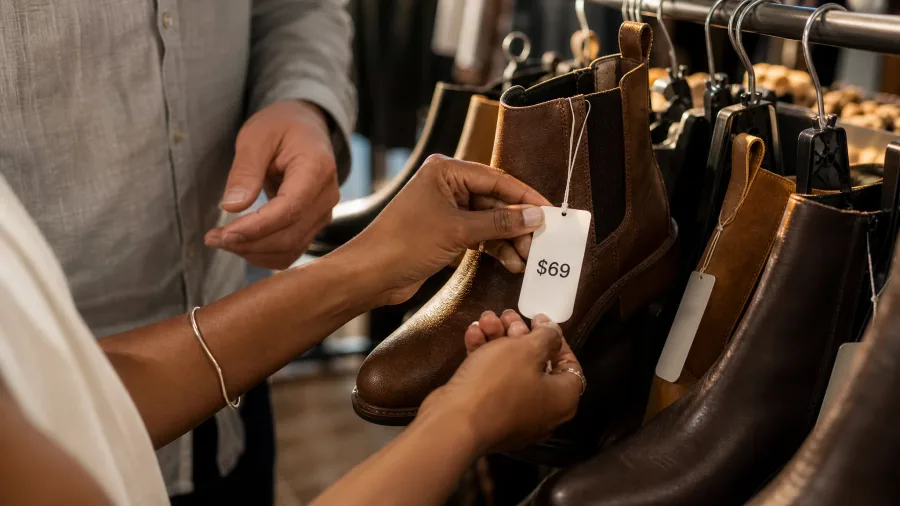
Part of what locks the replacement cycle in place is that it does not always feel like a loss. When a new pair of boots arrives – clean, stiff-soled, unscuffed – they outperform the battered pair they replaced in every immediate, visible way. The brain logs this as a win. The fact that the previous pair cost $30, and this one also cost $30, and another $30 will follow in about ten months, does not register at the moment of that win.
Fast fashion built a business model on this effect. The word ‘replacement’ gets swapped for ‘refresh’ or ‘update’ – language that converts what is functionally a maintenance cost into something that feels discretionary and pleasurable. The $30 spent on new boots reads as a treat, not as the latest installment in a $300 decade-long bill.
There is a real version of this preference that deserves acknowledgment. Someone who genuinely wants different styles across seasons is buying something the $180 boot cannot provide – novelty, variety, the option to change. When the desired product is variety itself, durability is beside the point, and the lifetime cost argument does not apply.
The commercial version of this preference, though, is something different. Products are routinely designed with lifespans matched to the replacement cycle rather than to maximum durability – not because shorter-lasting items are cheaper to produce, but because a customer who feels good about buying again is more reliably profitable than one who buys once and disappears for a decade.
The Boots Theory Applies When…
Poverty Makes the Trap Inescapable, Not Irrational

All three mechanisms described so far – underweighting future savings, losing track of cumulative costs, finding genuine pleasure in something new – assume the person making the purchase had a choice to make. When the account holds $30 and rent is due Friday, none of that psychology is the operative force.
Pratchett’s point in Men at Arms was never that Vimes made a poor decision. It was that the system charges him more for making the only decision available. When the $180 boot does not exist as a real option, the question of cognitive bias is simply beside the point – there is no premium to discount, no future saving to underweight. The constraint is a liquidity problem, not a reasoning failure.
This matters for how the advice in this article lands.
Telling someone to buy quality requires that they have budget slack to act on it. Without that slack, the recommendation is not financial guidance – it is a description of a position they cannot reach. The $80 extra paid over ten years for identical footwear functions as a structural tax on low income, extracted not by any single seller but by the gap between what a person can afford now and what the system rewards spending. No individual purchase decision created that gap, and no individual decision resolves it.
The Boots Theory is a tool for people with room to maneuver. For everyone else, it is a description of what the system costs them – which was exactly what Pratchett intended it to be.
Daily Use Is Where the Math Pays Off

The theory is precise about where it works. Durability only translates into savings when the item gets enough use for wear to accumulate – meaning the cheap version fails fast enough that the replacement cycle actually kicks in.
A boot worn five days a week through a winter is destroyed by spring. A kitchen knife used every evening hits the same degradation curve. A work bag shouldered Monday through Friday logs more stress in a year than a weekend bag logs in five. These are the categories where the $30-versus-$180 gap closes and then reverses – use them hard enough and the cheaper option stops being cheap.
The beach umbrella that comes out four times in June does not follow the same logic. Neither does the Halloween costume, the kayak paddle for a hobby that may not survive the next move, the fondue set. Low frequency means the budget version simply does not accumulate enough replacements to exceed the premium’s upfront cost – the math never tips.
The most useful shift is moving away from sticker price entirely. A $180 boot used 1,350 times over nine years costs roughly thirteen cents per use. A $30 boot used 150 times in a single year costs twenty cents per use – more, despite the price tag being one-sixth as large. That reframe turns a vague argument about quality into a direct comparison, and it makes the question answerable before the purchase rather than only visible in hindsight.
Daily-Use Items — Cost Per Use at the Quality Tier
🥾 Work boots
~$0.13/use over 9 yrs
🔪 Kitchen knife
Breaks even vs. budget in ~18 months
👜 Work bag
~250 uses/yr — replacement cycle hits by yr 2
👟 Running shoes
~150 uses/yr — but fit degrades before material does
☂️ Beach umbrella
~4–8 uses/yr — budget version may never need replacing
🎭 Costume / occasion wear
1–2 uses total — premium adds no lifetime value
The Exception Inside the Rule
Running shoes and sports kit fail on fit and support before the material wears out — durability alone does not justify the premium the way it does for boots or a knife. Use frequency is necessary but not sufficient.
Repairability Matters as Much as Initial Quality

An expensive item that cannot be fixed when it fails does not behave like a durable good – it behaves like a disposable one with a higher entry price.
The $40 resoling figure in the boot calculation is not an afterthought. It exists because the boot was built to accept it – a leather upper, a stitched sole, a construction designed with a cobbler in mind. A fashion boot at the same original price with a glued synthetic sole cannot be handed to a repair shop when the sole starts separating; the only option is replacement. The $40 becomes unavailable not because repair is expensive but because no repair exists.
Repairability belongs in the purchasing decision alongside build quality.
Before buying the premium version of anything, three practical questions matter: can this item be serviced when it degrades, who does that work, and what does it cost? For boots, the answer is usually findable within a short search. For many consumer electronics, the answer is essentially no – batteries are sealed, components are glued, and the manufacturer’s own repair estimates often approach the original purchase price. Some premium mattresses sit in the same position: expensively made, but not economically serviceable when the support layer fails.
When a premium item has no functioning repair path, the lifetime cost argument stops working. The item should be evaluated as a disposable good – meaning the cost-per-use calculation runs only to first failure, not to a theoretical decade of maintained performance. A high price tag and genuine durability are not the same thing, and repairability is the clearest test of whether an expensive item is actually the second one.
The Premium Must Survive the Full Time Horizon
A well-made, repairable item still only saves money if it is actually in use long enough to reach the break-even point – which means the buyer’s circumstances over the next several years are part of the calculation, not background noise.
The $180 boot earns its $80 advantage over the $30 alternative across roughly eight to ten years of wear. If those years do not happen – if the boots become irrelevant at year two because of a move, a lifestyle change, or a shift in what the job requires – the cheap option was the correct call, not a failure of planning.
Children’s shoes make this plain. A child outgrows a pair in months; the limiting factor is never durability. The cheap shoe fails the Boots Theory not because it is a bad product but because the short useful lifespan is not a defect – it is an accurate match to how long the shoe was ever going to be needed. The same logic applies to a work bag bought during a career transition that resolves within eighteen months, or cold-weather gear purchased before a planned move somewhere warm.
Buying premium is a commitment.
It means betting that the need will remain stable, that the context around the item will not shift, and that no circumstance will strand the investment before break-even arrives. Where that continuity genuinely exists, the bet pays off. Where real uncertainty exists – a new hobby that might not last, a job that might change, a living situation still in flux – the rational move is to buy cheap, confirm that the need is stable, and upgrade only once continuity is established. The budget version is not always the trap; sometimes it is the honest test.
Brand Premium and Quality Premium Are Not the Same

Price and durability are not the same variable. A resoleable work boot and a designer sneaker can sit at identical price points on the same shelf – one of them delivers the lifetime cost advantage the Boots Theory describes, and the other delivers a logo and a story about heritage.
The distinction matters because premium pricing is doing at least two different jobs at once: sometimes it reflects materials and construction that genuinely extend lifespan, and sometimes it reflects brand investment, marketing spend, and the social signal the item carries. Those are real things people pay for, but they are not the things that make the $80 saving materialise.
Three questions cut through the noise before any premium purchase. Does the item carry a warranty that covers structural failure – not cosmetic wear, but the thing that actually makes it stop working? Can it be repaired, and by whom, at what cost? What specific materials or construction details support the claimed lifespan? Brand history and a well-designed website answer none of these.
The Boots Theory is also frequently used to justify a purchase that was already decided on other grounds. Someone wants the expensive item, reaches for the lifetime cost argument as the rational explanation, and skips the calculation entirely. The math only holds when the cost per use genuinely falls – and running those numbers before the decision, not after, is the only protection against using a solid theory as cover for a status purchase.
Some premium brands do deliver real durability. Many do not. Price alone is loose enough as a proxy that it cannot do the work of research.
Calculate Cost Per Use Before You Buy

The number that converts the abstract argument into something usable at the point of purchase is cost per use – a single figure that makes the sticker price irrelevant and the lifespan the whole story.
Take the boot calculation through slowly once and it becomes a reflex. The $180 pair, worn roughly 150 days a year across nine years of actual use, accumulates around 1,350 wearings. Divide $180 by 1,350 and each wear costs about thirteen cents. The $30 boot, lasting one season of the same 150 days, yields 150 uses total – divide $30 by 150 and each wear costs twenty cents. The cheaper boot is not cheaper at all; it just looks that way because the comparison never gets made in those terms.
The same logic applies across any category where durability varies. A chef’s knife used every day, a carry-on bag pulled through airports every few weeks, a work tool used on every job – divide the total expected cost, repairs included, by the realistic number of uses, and compare. The unit does the work that sticker price cannot.
Lifespan estimates are guesses, so build in a discount. If a quality item is sold on a ten-year promise, calculate on seven. If a budget item is rated for a year, run the numbers on nine months. The comparison should hold under pessimistic assumptions, not just favorable ones – an argument that only works if everything goes right is not an argument.
A faster shortcut: if the cheap version would need replacing within eighteen months, run the numbers. That replacement threshold is the point at which the premium option almost always pulls ahead on lifetime cost – and it takes about ninety seconds to confirm.
Budget for Quality the Way You Would Budget for a Bill

The calculation only helps if the $180 option is actually on the table.
When it is not – when rent is due Friday and $180 is not a real number in that week’s budget – the $30 boot is the right call. Not a failure of planning, not a gap in financial discipline. A response to a real constraint. Any advice that treats it otherwise is advice from someone who has never had to choose between footwear and a bill.
When there is some flexibility, even a small amount, a different frame is available. The $30 replacement is not actually free money saved – it is a predictable outgoing that arrives every year. Treated as a savings line instead, that same thirty dollars set aside monthly reaches $180 in six months. At that point the quality boot becomes accessible without any net increase in what was being spent. The money was always leaving; the question is whether it leaves in one useful payment or in a slow drain of identical replacements.
The cognitive shift required is treating the cheap version as a bridge rather than a solution. The $30 purchase is a placeholder – the right move for now, with a known exit.
That framing only holds, though, if the bridge is long enough. If the $30 boot falls apart in three months and the savings pot has only reached $90, the plan breaks before it pays off. The calculation has to be honest about the cheap item’s actual lifespan, not its advertised one – because the whole strategy depends on the bridge lasting until there is enough on the other side to cross to.
Frequently Asked Questions
Does the Boots Theory apply to clothing generally, or just boots?
It applies to any item used frequently enough for durability to accumulate real cost differences. Daily-wear work trousers, for example, behave like boots. Fast fashion bought for variety does not — when novelty is the product, replacing is the point, and the theory describes a different kind of purchase.
What if the expensive version still breaks within a few years?
Then the lifetime cost argument collapses, and the cheap option may have been the rational choice. The quality premium only pays when the item actually outlasts the budget version by a significant margin. Always check reviews for real-world durability data — not just marketing claims — before running the cost-per-use calculation.
Is the Boots Theory just a way to justify expensive purchases?
It can be used that way, and frequently is. The check against rationalization is simple: run the cost-per-use calculation before deciding, not after. If the math confirms the premium, the theory applies. If the premium is driven by brand rather than durability, the theory is being misapplied to justify a status purchase.
What is hyperbolic discounting and why does it matter here?
Hyperbolic discounting is the tendency to weight an immediate benefit or cost far more heavily than an equivalent future one. Applied to the Boots Theory: the $150 saved today on the cheap option feels concrete, while the $80 saved over the next decade feels abstract. The brain does not weight them equally, even though the math demands it.
Can you apply the Boots Theory to services — like a cheap mechanic versus a good one?
Yes, and it often applies more forcefully to services than goods. A cheap repair that fails and creates a larger problem has a direct equivalent in the boot that wears out and requires a replacement that includes both the cost and the time. The cost-per-use metric translates directly: cost divided by expected problem-free duration.
What should I do if I genuinely cannot afford the quality option right now?
Buy the cheap version — that is the correct answer for a liquidity constraint. If small budget flexibility exists, treat the cheap item’s monthly replacement cost as a savings target rather than a recurring expense. Set that amount aside each month; the premium option becomes reachable without any net increase in total spending.
The Three Questions the Theory Reduces To
Before any significant purchase, three questions determine whether the Boots Theory applies to it. Will this item be used at least three times a week for the foreseeable future? Can it be repaired, and is the repair ecosystem affordable? Will your circumstances stay stable long enough to reach the break-even point? If all three answers are yes, run the cost-per-use calculation – the math almost always favors the premium option. If any answer is no, the cheap version may be exactly the right call.
The third boot, the third blender, the third pair of headphones – each one was the moment the replacement total became visible, and each one was also evidence that it had never been totalled before. That is the only adjustment the theory asks for: keep a running count.
Pratchett was not writing a tip for savvy shoppers. He was making an observation about how the system works – that the people with the least money pay the most over a lifetime, not because of poor decisions but because the cost of having less is charged at every small purchase. The cost-per-use calculation is a useful tool for anyone with enough slack in their budget to choose the $180 boot. For everyone who cannot, it is a description of what the gap costs them. That was always the point of the passage.