You would not survive twenty-four hours in the Stone Age because your entire physiological conditioning depends on climate control, hyper-processed caloric density, and zero immediate exposure to apex predators.
That realization is the baseline for understanding how completely modern psychology and physical resilience have diverged from ancestral capability.
Survival Reality Check
The Caloric Cliff
I used to think survival was mostly about having a sharp spear and a good hiding spot.
That is a complete misunderstanding of what actually breaks a person down first.
Your body burns through a staggering amount of energy just keeping you warm and upright, long before you ever lift a heavy stone or chase down game.
Anthropologists who study ancestral foraging patterns point to a relentless daily mathematical reality.
In a Pleistocene environment, sustaining basic metabolic function requires foraging or hunting for hours every single day, turning physical exhaustion into an immediate psychological hazard.
Without a nearby grocery store or a pantry stocked with shelf-stable grains, panic sets in the moment your blood sugar drops and you lack the tracking skills to locate a high-density food source.
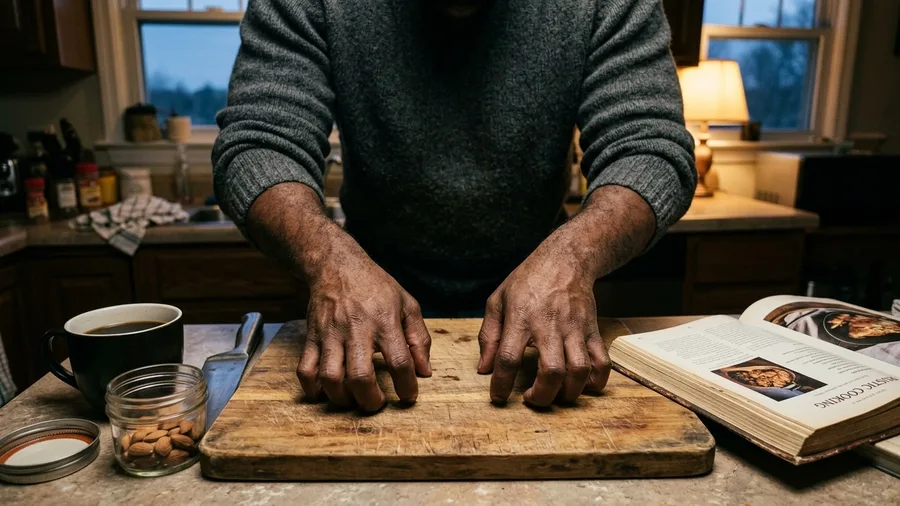
You find yourself staring at a patch of scrub brush, hands shaking from the sudden drop in glucose, realizing the nuts you spent an hour cracking contain a fraction of the calories you burned finding them.
That realization sparks a very specific kind of cognitive fog where complex problem-solving shuts down entirely.
When someone asks you what the plan is, your brain simply cannot map the next step.
Instead of spiraling into helplessness, the move is to stop expending energy immediately and anchor yourself to a low-movement shelter until your focus returns.
⚠️ COMMON MISTAKE
Assuming Foraging is Easy
Most people assume they can identify edible plants by instinct alone, ignoring the thousands of toxic lookalikes that would cause fatal poisoning within hours.
The Thermal Deficit
Forty-five minutes after sunset, the air stops feeling merely cold and starts feeling like it is actively stealing the heat out of your chest. Nighttime temperatures drop sharply when you lack synthetic insulation, central heating, and wind-blocking architecture.
Hypothermia does not wait for freezing weather; mild dampness combined with a thirty-degree drop after sunset is enough to induce uncontrollable shivering and cognitive decline. Your fingers stop bending around tinder before you even realize your reasoning has gone sideways.
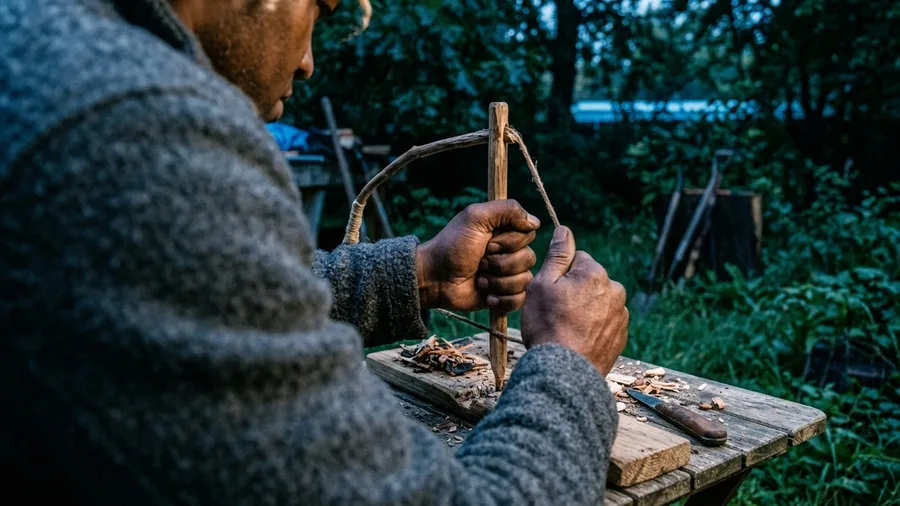
If you cannot start a friction fire using wet wood within the first hour of dusk, your core temperature plummets and your decision-making degrades past the point of rescue. Practice gathering resin-heavy pine knots and building a three-stick hearth in your own backyard before you ever test it in a real downpour.
The First-Day Vulnerability Metrics
Where modern bodies fail first
Sensory Overload and Panic
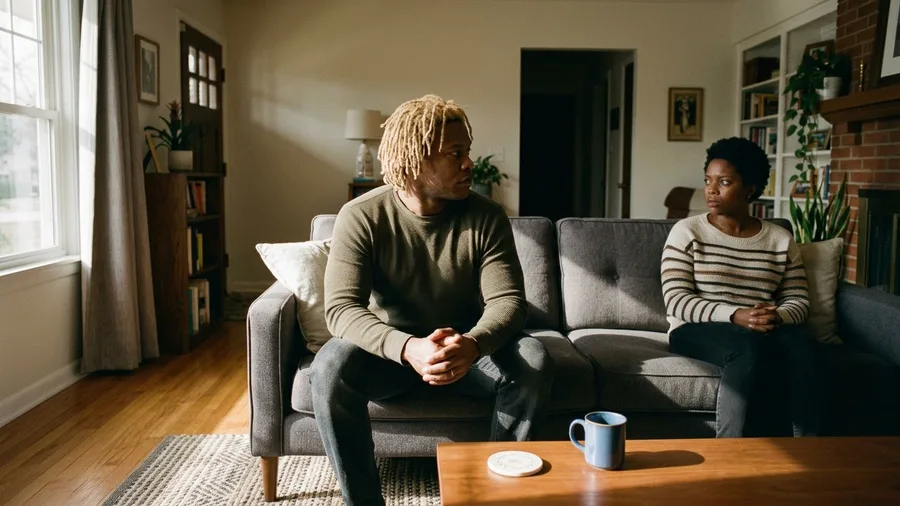
Silence in a modern context feels like relaxation, but in a wilderness environment, it signals the presence of unseen predators.
Ask yourself how you respond when a sudden floorboard creak breaks the quiet of your apartment at midnight. Do you brush it off instantly, or does your chest tighten while your mind races to identify the noise?
If you froze and scanned the dark room, your nervous system is already tuned to treat ambiguous signals as threats. When total darkness and unfamiliar forest rustling replace white noise and locked doors, that hypervigilance consumes your cognitive reserves before the sun even rises.
Primary Survival Deficits
Waterborne Pathogens
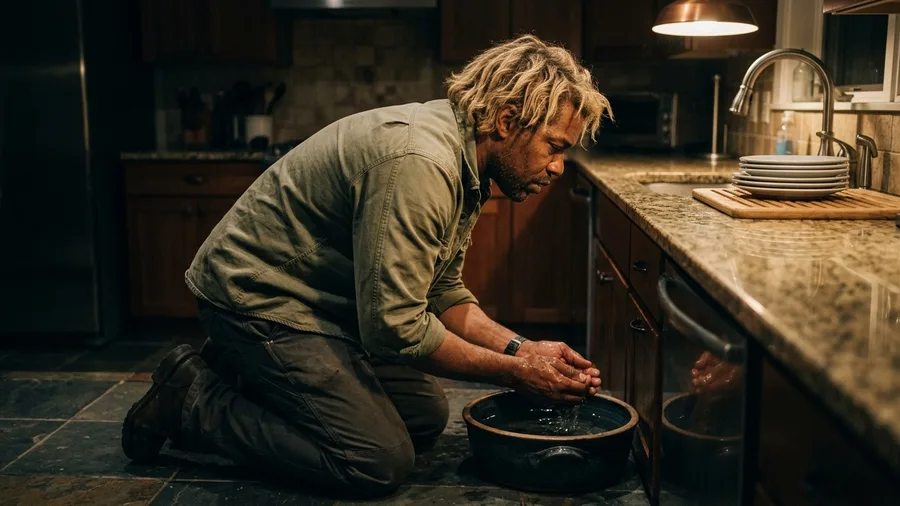
You drop to your knees on the riverbank, cupping your hands to scoop up the coldest, clearest water you have ever seen after hours of heavy walking under a punishing sun.
The instinct to drink immediately is overwhelming, and conventional survival wisdom tells you that clear water flowing fast over stones is safe to consume without question.
That assumption is entirely wrong in a prehistoric setting, because microscopic parasites like Giardia and Cryptosporidium ride invisibly in runoff from animal herds miles upstream.
A single refreshing gulp bypasses your modern immune defenses completely, incapacitating your digestive tract within twelve hours and leaving you too weak to travel while dehydration sets in.
The only viable replacement for instinct here is strict patience, forcing yourself to build a fire and boil every drop for at least three full minutes before it touches your lips.
⏳ The 24-Hour Collapse Timeline
Hours 0 to 4
Disorientation sets in as comfort disappears and panic over missing shelter begins.
Hours 4 to 12
Energy depletion peaks while attempting inefficient foraging and unsuccessful fire-building.
Hours 12 to 24
Drop in core temperature and waterborne illness compromise basic mobility and cognitive function.
The Social Isolation Shock
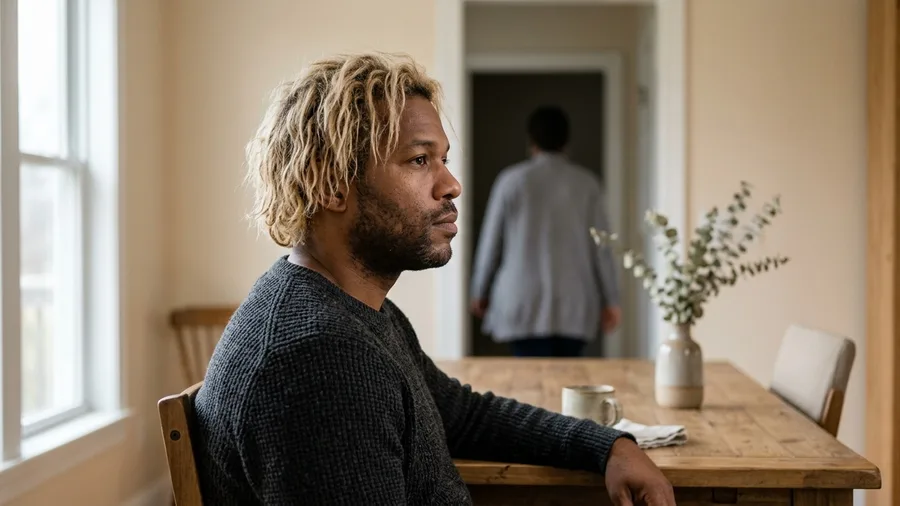
“I just need some time completely by myself to recharge.” That line gets spoken in quiet apartments and busy offices every single day without raising a single alarm.
Being cooperative primates across evolutionary history means humans rely on group interdependence as our core survival strategy, making complete solitude fundamentally unnatural to our wiring.
When you isolate yourself in a hostile ecosystem, you strip away the psychological buffering of shared problem-solving and leave yourself to process every minor injury or failure in absolute solitude, which accelerates despair far faster than physical fatigue alone ever could.
Yet taking an intentional afternoon alone to read a book or walk a trail without your phone is entirely fine, provided that quiet retreat serves to restore your energy rather than isolate you from the people who keep you grounded.
Modern Comfort vs. Ancestral Reality
Modern Survival
- Climate-controlled indoor spaces
- Instant access to caloric density
- Sanitized municipal water supplies
- Advanced communication networks
Stone Age Reality
- Unforgiving environmental exposure
- High-effort foraging and hunting
- Untreated pathogen-rich water sources
- Absolute isolation without backup
Assessing Your Actual Preparedness
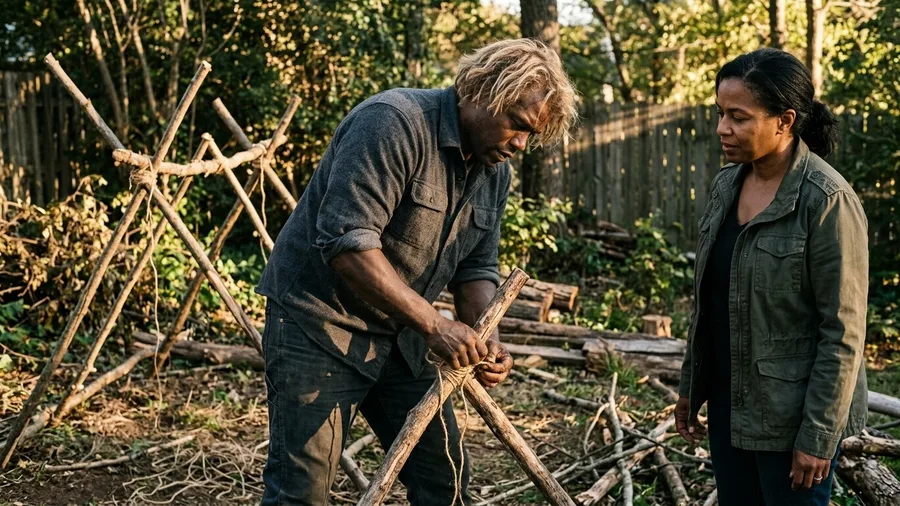
Can you actually build a shelter from fallen branches that holds up against wind and rain without modern fasteners or tarps?
Take an honest inventory of your practical skills before assuming historical humans lived in a state of simple hardship.
Most contemporary minds rely entirely on grid infrastructure for survival needs, making twenty-four hours in the wild an insurmountable barrier.
Test your actual preparedness this weekend by turning off your mains water and electricity for just twelve hours to see where your habits break down.
Core Vulnerability Factors
Frequently Asked Questions
Could a trained survivalist survive longer than 24 hours?
Yes, individuals with specialized primitive living skills possess the toolmaking, fire-craft, and foraging knowledge required to bridge the initial deficit. However, modern untrained individuals face immediate physiological collapse.
What is the single most dangerous factor in the first day?
Hypothermia combined with panic poses the greatest immediate risk. Inability to regulate core body temperature after sunset quickly impairs judgment and leads to fatal errors.
Why is finding water so difficult without infrastructure?
Natural water sources frequently contain harmful parasites and bacteria that modern digestive systems cannot handle. Without boiling methods or filters, drinking leads rapidly to debilitating illness.
Did Stone Age humans face these same survival struggles?
Ancestral humans grew up embedded in an intergenerational knowledge transfer system, learning tracking, tool creation, and local botany from early childhood onward.
The Infrastructure Reality
Recognizing how deeply infrastructure supports your daily existence changes how you view modern comfort.
Start by learning basic wilderness navigation or fire-craft this weekend to test your actual baseline capabilities against ancestral realities.
Test Your Survival Baseline
Review the survival reality checklist above and pick one basic outdoor skill to practice during your next weekend excursion.