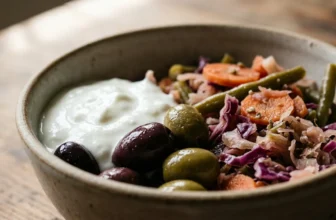
You wake up at 3 a.m. for no reason, stare at the ceiling, and wonder why your digestion feels sluggish even though you ate clean all day.
When you hit 61, your gut microbiome shifts in ways that change how you process food, absorb nutrients, and handle daily inflammation.
I decided to stop reading about gut health and test it directly by adding two daily servings of fermented food to my meals for thirty straight days.
This is the honest breakdown of what happened to my digestion, morning stiffness, and daily energy, along with the exact brands and portions that made it work.
Quick Tips Before You Start
Keep It Cold
Buy fermented foods from the refrigerated aisle so the bacteria are alive.
Start Small
Begin with one tablespoon daily to let your microbiome adapt without bloating.
Check Labels
Look for salt, cabbage, and water only—avoid vinegars and pasteurization.
Drink Water
Pair your fermented servings with adequate water to help fiber move smoothly.
1. Morning Kefir Instead of Standard Yogurt

You reach for the standard dairy yogurt because it is familiar, but plain kefir delivers a much broader spectrum of probiotic strains.
Traditional milk kefir contains dozens of yeasts and bacteria that survive stomach acid far better than standard commercial yogurt cultures.
After 50, digestive enzyme production declines, making fermented dairy an easier vehicle for calcium absorption.
I poured a half-cup of plain whole-milk kefir every morning at 7 a.m. over a small bowl of steel-cut oats.
The first four days brought mild gurgling as my gut adjusted to the microbial shift, but by day ten, my morning bloating vanished entirely.
⚠️ COMMON MISTAKE
Do Not Buy Shelf-Stable Kombucha or Sauerkraut
Products found on normal pantry shelves have been heat-treated or pasteurized, which kills the live bacteria you are paying for. Always check that the jar lives in the refrigerated section.
2. Raw Sauerkraut with Lunch Proteins

You open a jar of store-bought sauerkraut and realize most of it tastes like sharp vinegar instead of crisp, fermented cabbage.
Real raw sauerkraut relies entirely on lacto-fermentation, using only cabbage and sea salt left to ferment at room temperature.
Gastroenterologists frequently point out that raw cabbage fiber acts as a premier prebiotic while supplying live Lactobacillus strains.
I added two forkfuls of Bavarian-style raw sauerkraut directly to my midday turkey sandwich or grain bowl.
The crunch added texture, and the natural lactic acid completely cut through the heavy fats of midday meals without causing any acid reflux.
💡 Tip: Rinse lightly only if sodium is a strict medical concern for you, but keep it raw.
At a Glance
3. Kimchi as a Dinner Side Dish
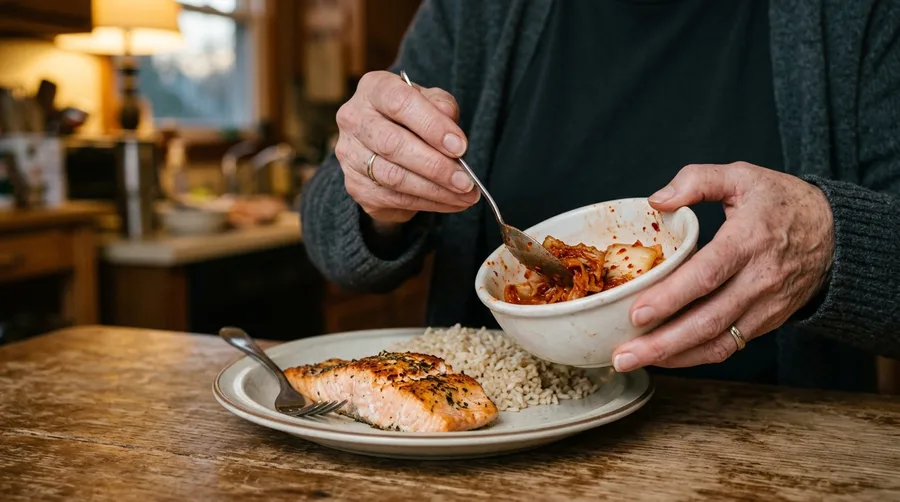
You might assume kimchi is just too spicy for an aging stomach, but small portions deliver serious digestive firepower.
Fermented napa cabbage combined with garlic, ginger, and Korean radish creates a potent mix of capsaicin and live microbes that actively supports gut motility.
Research on adults over 60 shows that spicy fermented foods can stimulate gastric juices and improve post-meal transit times.
I scooped a small two-tablespoon portion of aged napa kimchi alongside my evening baked salmon and roasted broccoli.
The heat was manageable, and waking up without that heavy, sluggish feeling after dinner was an immediate quality-of-life upgrade.
Fermented Food Safety Lanes
- 🟢 Refrigerated raw sauerkraut with live cultures listed on label — Optimal choice for daily gut diversity.
- 🟡 Commercially pasteurized pickles in vinegar brine — Tasty, but completely devoid of active probiotics.
- 🔴 Shelf-stable canned kimchi from the international aisle — Heat-killed bacteria offer zero live gut benefits.
4. Apple Cider Vinegar with the Mother

You hear people talk about apple cider vinegar like it is a cure-all, but the real benefit lies in the unfiltered sediment.
The cloudy strand at the bottom-known as the mother-contains acetic acid and beneficial yeast strands that support stomach acidity.
As we age, natural stomach acid production often drops, making it harder to break down proteins and absorb minerals.
I stirred one teaspoon of raw apple cider vinegar into a glass of warm water twenty minutes before my heaviest meal.
It took discipline to get past the tart bite, but my afternoon energy crashes leveled out remarkably well within two weeks.
Best For
5. Miso Paste in Warm Broth

You probably think of miso as just a quick starter soup at a sushi restaurant, but it is actually a fermented soybean paste packed with living enzymes.
Long fermentation of soybeans and barley breaks down complex proteins into easily digestible amino acids and active cultures that your gut handles far better as you age.
Dietitians who specialize in mature nutrition note that warm miso broth is one of the gentlest ways to introduce live probiotics without heavy digestion.
I whisked one tablespoon of white miso paste into a mug of hot water with a handful of chopped green onions every afternoon.
It provided a soothing, savory ritual that replaced my third cup of afternoon coffee without disrupting my sleep.
💡 PRO TIP
Never Boil Your Miso
High heat kills the live beneficial bacteria and delicate enzymes in miso paste. Stir it into water that has cooled slightly off a boil so you preserve its probiotic value.
6. Water Kefir as a Soda Alternative

You might miss carbonated drinks if you gave up commercial sodas, but water kefir offers the same fizz with actual gut benefits.
Water kefir grains ferment sugar water into a lightly sparkling, probiotic-rich beverage loaded with B-vitamins that support cellular energy production as metabolism shifts in our 50s and 60s.
Clinical observations suggest that replacing sugary drinks with fermented alternatives significantly reduces systemic low-grade inflammation, which directly eases the joint stiffness many of us wake up with.
I swapped my evening sparkling water for a half-cup of ginger-lemon water kefir poured over ice.
It satisfied my craving for something crisp and flavorful while keeping my evening digestion completely calm, taking about two weeks of daily sipping before my afternoon bloating vanished for good.
7. Traditional Lacto-Fermented Pickles

You look at supermarket pickles on ambient shelves and assume they help your gut, but vinegar preserves them without bacteria.
Real half-sour or full-sour pickles sit in a crock of salt water where wild bacteria ferment the cucumbers naturally.
Nutritionists highlight that authentic brine-fermented pickles supply electrolytes alongside active microbial strains.
I purchased refrigerated half-sour pickles from the deli section and ate two small spears with my lunch wrap.
The snap and garlic flavor made hitting my daily fermented food quota feel like a treat rather than a chore.
8. Tempeh as a Plant-Based Protein
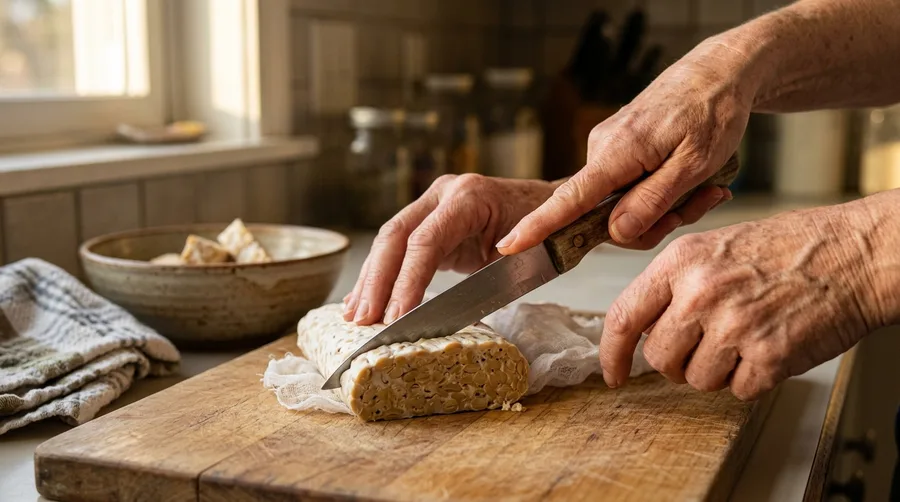
You may think tempeh is just a meat substitute for vegetarians, but it is a powerhouse of fermented whole soybeans.
The fungal fermentation process binds whole soybeans into a firm cake while breaking down anti-nutrients for better absorption.
Aging bodies process plant proteins more efficiently when they are pre-fermented because the breakdown is already started.
I sliced tempeh into strips, pan-fried them in olive oil with tamari, and added them to my grain bowls twice a week.
It provided a nutty, earthy flavor and kept me full for hours without the bloating I sometimes get from plain beans.
9. Sourdough Bread with Real Fermentation

You pick up a supermarket loaf stamped sourdough, assuming it will treat your stomach better than white sandwich bread, only to find the same old heaviness afterward.
Commercial yeast and added vinegar flavorings mimic the sour tang without doing any of the actual microbial work.
Authentic sourdough relies on a wild yeast and lactic acid bacteria starter that ferments for twenty-four hours before it ever touches an oven.
This extended fermentation breaks down gluten proteins and phytic acid, making the bread significantly easier on mature digestion that tends to protest heavy starches.
I toasted one slice of genuine bakery sourdough topped with mashed avocado and olive oil for breakfast twice a week.
Enjoying bread again without feeling bloated or sluggish afterward proved that real fermentation changes how food behaves in the gut.
10. Beet Kvass for Circulatory Support

You might find the deep ruby color of beet kvass intimidating, but this traditional Slavic tonic is pure fermented nourishment.
Fermented beets release nitrates and active lactic acid bacteria that support nitric oxide production in blood vessels.
Cardiologists note that natural nitric oxide aids in maintaining healthy blood pressure levels as we age.
I drank a small two-ounce shot of chilled beet kvass before my morning walk.
The earthy, salty flavor took three days to enjoy, but the feeling of steady morning stamina made it a permanent fixture.
11. Natto for Bone and Heart Health
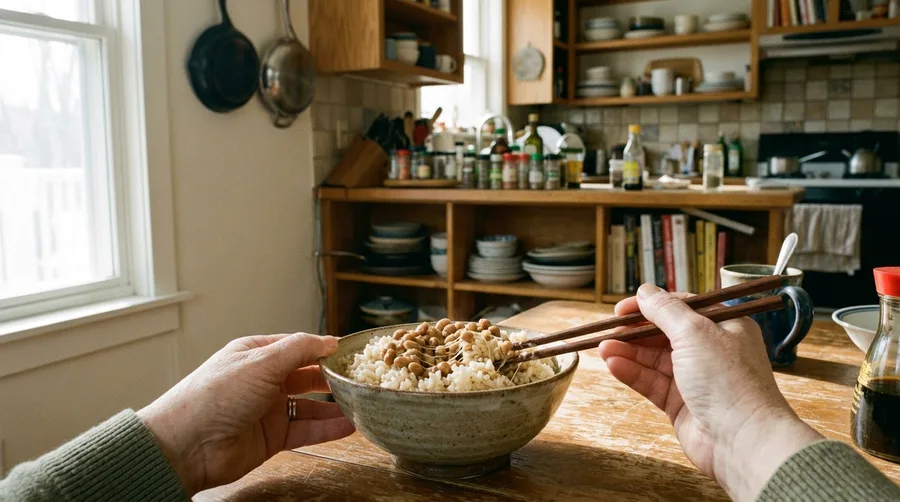
You have probably heard about natto’s sticky texture and strong smell, making it the most challenging food on this list.
Fermented soybeans produced with Bacillus subtilis deliver an astronomical amount of vitamin K2 and nattokinase enzymes.
Orthopedic specialists emphasize that K2 directs calcium into your bones rather than arterial walls, which is vital after 60.
I mixed one tablespoon of natto with a dash of soy sauce and mustard over hot brown rice, stirring until foamy.
The texture is slimy and the smell is pungent, but knowing it protects bone density made conquering the learning curve worthwhile.
12. Coconut Milk Kefir for Dairy-Free Days

You might love the idea of kefir but find that dairy milk does not agree with your stomach anymore.
Coconut milk kefir uses the same beneficial grain cultures to ferment plant-based fats into a creamy, probiotic drink.
Gastroenterologists confirm that dairy sensitivities often increase with age, making coconut-based ferments a smart alternative.
I blended a half-cup of plain coconut kefir with frozen berries and a scoop of collagen powder for a mid-morning smoothie.
It provided all the microbial diversity of dairy kefir without any of the post-meal heaviness or joint stiffness.
13. Greek Yogurt with Live Strains

You see endless yogurt options at the store, but only specific tubs contain active strains that survive digestion.
Strained authentic Greek yogurt concentrates the protein while providing Lactobacillus acidophilus and Streptococcus thermophilus.
Nutrition experts note that higher protein content combined with live cultures helps preserve muscle mass as we age.
I stirred plain full-fat Greek yogurt with a tablespoon of ground flaxseed and raw walnuts every evening as a late snack.
It stabilized my blood sugar overnight and ended the late-night kitchen raids that used to disrupt my sleep.
14. Fermented Garlic Honey

You might not think of honey as something you can ferment, but raw garlic submerged in raw honey creates a gentle powerhouse.
Over weeks, the natural yeasts in raw honey ferment the garlic cloves, mellowing their bite and infusing the honey with enzymes.
Immunologists and herbalists note that aged garlic compounds support immune resilience and upper respiratory comfort.
I took one small clove of fermented garlic and a half teaspoon of the infused honey whenever I felt a scratchy throat coming on.
The sharp burn of raw garlic turned sweet and mellow, making it an easy daily tonic during change-of-season weather.
15. Rotating Your Probiotic Sources

Monoculture is great for lawns, but terrible for your intestines.
You could easily stick to one favorite fermented food every single day, but your gut microbiome actually thrives on microbial diversity.
Different fermented items introduce distinct bacterial strains, preventing any single species from dominating your intestinal tract.
Microbiome researchers consistently emphasize that species richness is the single best marker of a resilient gut as we age.
I paired kefir in the morning with rotating options like sauerkraut at lunch and kimchi at dinner throughout the week.
Mixing up the sources kept my palate interested and ensured my gut received a wide spectrum of live support.
Frequently Asked Questions
Will eating fermented foods every day cause stomach upset?
You might experience mild gas or gurgling during the first week as your microbiome adjusts to new bacteria. Start with just one tablespoon daily and drink plenty of water to let your digestive system adapt comfortably.
Do I need to make fermented foods at home or can I buy them?
Buying high-quality brands from the refrigerated grocery aisle works wonderfully. Just check the ingredient label to ensure the product contains live cultures and has not been pasteurized for shelf stability.
Can fermented foods replace my daily probiotic supplement?
Whole fermented foods provide active live bacteria along with natural food enzymes, prebiotics, and organic acids that isolated supplements cannot match. Many people find food sources are entirely sufficient on their own.
What is the best fermented food to start with if I am a beginner?
Plain milk kefir or raw sauerkraut are the easiest entry points. Kefir can be stirred into morning oatmeal, and a forkful of sauerkraut fits easily alongside any lunch protein without an aggressive flavor.
Start With This One
If adding fifteen different foods feels overwhelming, do not try to change your entire diet tomorrow morning.
Buy one refrigerated jar of raw sauerkraut or one bottle of plain milk kefir, and eat two tablespoons with lunch for the next seven days.
Your gut will tell you very quickly how it responds, and you can build from there at your own pace.