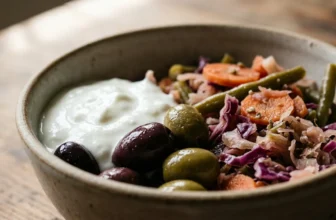
You stand in the grocery aisle staring at forty different bottles of oil, wondering which one actually supports long-term health.
After reading clinical studies and talking with internal medicine practitioners about everyday fat metabolism, I cleaned out my pantry to see which fats survive actual kitchen use.
Here are the exact five cooking oils professionals rely on for daily meals, plus two popular options they intentionally skip.
Quick Tips Before You Start
Watch the Heat
Match your oil's smoke point to your cooking method to prevent harmful oxidation.
Dark Glass Only
Buy oils in opaque or dark green bottles to protect delicate fats from light degradation.
Check Harvest Dates
High-end finishing oils degrade quickly; look for a recent crush date on the label.
Cool Storage
Keep polyunsaturated oils away from the stove heat to extend their shelf life.
1. Extra Virgin Olive Oil

You reach for the bottle to drizzle over your lunch salad, but you hesitate the second you turn on the skillet.
Cardiologists point out that high-quality extra virgin olive oil contains powerful polyphenols that withstand moderate heat much better than popular internet myths suggest.
That stability matters because as we age, managing daily oxidative stress in the kitchen protects both metabolic pathways and cellular health.
Its monounsaturated fat profile helps maintain healthy lipid levels as our vascular elasticity naturally shifts.
Look for cold-pressed bottles from single regions with an explicit harvest date stamped on the back rather than just a vague expiration year.
💡 Tip: Look for harvest dates within the last 12 months for maximum antioxidant potency.
2. Avocado Oil

Your cast-iron skillet gets screaming hot when you sear salmon or chicken breasts.
Refined avocado oil offers a smoke point north of five hundred degrees Fahrenheit, letting you cook at high temperatures without creating smoke or releasing acrolein, a volatile compound formed when fats burn.
It shares a similar heart-healthy monounsaturated fatty acid profile with olive oil, protecting vascular function as we age, but handles intense stove heat without breaking down its molecular structure.
Buy brands that publish third-party purity testing to ensure you are getting pure avocado fruit oil rather than cut blends watered down with cheaper oils.
Buying & Storage Essentials
3. Virgin Coconut Oil

The internet promised you that a spoonful of tropical fat would rewrite your morning metabolism overnight.
Clinical dietitians skipped the miracle hype and kept virgin coconut oil in the pantry for entirely different reasons.
Its medium-chain triglycerides bypass standard fat storage and route directly to the liver for rapid energy.
That metabolic shortcut matters when afternoon energy slumps test your discipline.
Look for unrefined organic jars and reserve them for medium-heat sautéing or savory grain dishes where a hint of aroma actually improves the plate.
⚠️ COMMON MISTAKE
The Saturated Fat Trap
Do not treat coconut oil as a free-for-all health food just because wellness blogs love it. It remains high in saturated fat, so moderation keeps your LDL cholesterol levels happy.
4. Toasted Sesame Oil
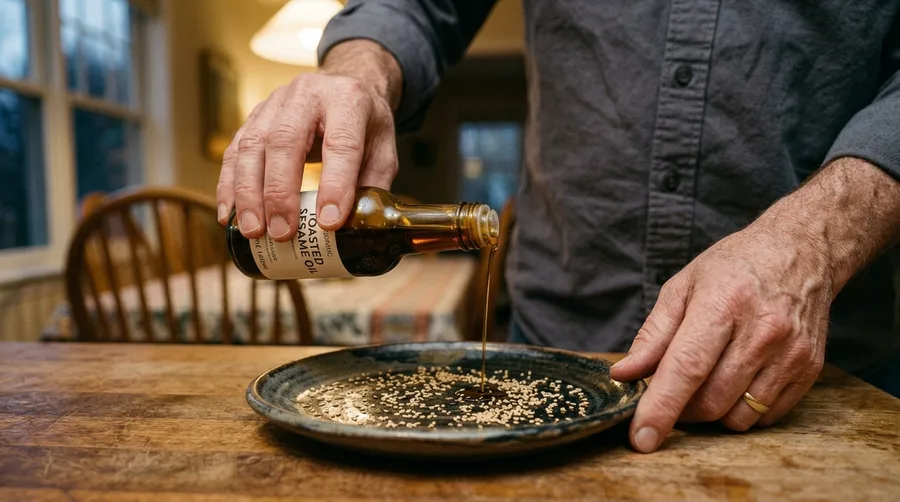
You want deep, aromatic flavor in your stir-fries without dumping sodium into the pan.
Culinary medicine experts recommend keeping a small bottle of toasted sesame oil on hand strictly for finishing dishes just before serving.
It packs powerful lignans and sesamol, compounds studied for their ability to support healthy inflammatory responses in aging joints.
Because of its delicate aromatic compounds, never use it for frying; add a single teaspoon at the very end of cooking.
5. Grass-Fed Ghee

Your morning eggs need rich flavor, but dairy sensitivity often leaves butter off the table.
Ghee is simply clarified butter with the milk solids simmered out, making it virtually lactose-free while retaining fat-soluble vitamins like A and E.
The high concentration of butyrate supports gut lining integrity, which gastroenterologists note becomes increasingly important as we cross age fifty.
Spoon a small dollop into your pan for sautéing vegetables or searing steak, letting the high smoke point prevent unwanted burning.
Grass-Fed Ghee — At a Glance
🥛 Dairy Status
Lactose and casein free
🔥 Smoke Point
485°F high heat safe
🌾 Key Nutrient
Butyric acid for gut health
🥄 Best Use
Sautéing and high-heat roasting
Why It Works
Removing milk solids creates a stable cooking fat that sensitive stomachs tolerate easily.
6. Walnut Oil

Swallowing giant omega-3 capsules starts feeling like a chore by the time you hit your fifties.
Nutrition researchers highlight walnut oil as a stellar finishing oil for cold dishes like grain salads and roasted root vegetables, delivering a rich dose of alpha-linolenic acid that supports cognitive function and cardiovascular health.
Your brain and arteries thrive on these plant-based fats, which help manage inflammation pathways that tend to creep up as we age.
Keep your bottle stored tightly sealed in the refrigerator because polyunsaturated plant oils turn rancid quickly at room temperature.
Drizzle it over your food just before serving rather than using it in a hot pan.
At a Glance
7. Macadamia Nut Oil

You want a gourmet cooking oil that behaves like olive oil but brings a buttery profile to light fish dishes.
Internal medicine specialists appreciate macadamia nut oil for its exceptionally high monounsaturated fat content, often topping eighty percent.
That stable fat structure resists heat breakdown while delivering a mild, pleasant flavor that never overpowers delicate seafood or roasted asparagus.
Drizzle it over steamed greens or use it for gentle pan-searing on medium heat.
The best kitchen fat is the one you match correctly to the temperature of your pan.
— What clinical nutritionists emphasize to patients over fifty
8. Flaxseed Oil

You want an effortless way to boost your daily intake of protective plant omega fatty acids.
Cardiovascular researchers point to flaxseed oil as a potent source of alpha-linolenic acid, which helps maintain vascular elasticity as blood vessels naturally stiffen with age.
Because heat destroys its fragile molecular structure, never cook with it.
Stir a single tablespoon directly into your morning oatmeal or a smoothie after blending.
Purchase small bottles and store them in the fridge door to preserve freshness and prevent oxidation.
9. High-Oleic Safflower Oil

You need a completely neutral cooking oil for high-temperature baking or roasting where olive oil flavor clashes.
Physicians who review dietary fats recommend high-oleic safflower oil because selective breeding yields a high monounsaturated profile that mimics olive oil’s stability.
It lacks the inflammatory omega-6 overload found in cheap generic vegetable blends.
Use it when your recipe calls for a completely flavorless fat that can take the heat.
10. MCT Oil

You want steady morning mental clarity without relying entirely on afternoon caffeine crashes.
Metabolic health specialists note that medium-chain triglyceride oil converts quickly into ketones, providing clean cellular fuel for the brain.
Stir a teaspoon into your morning coffee or protein shake rather than using it for cooking, as its smoke point is far too low for pans.
Start with small doses to let your digestive system adjust comfortably.
11. Extra Virgin Pumpkin Seed Oil

You look for targeted nutritional support for prostate and urinary tract health as you age.
Urology specialists frequently highlight pumpkin seed oil for its rich phytosterol and zinc-related nutrient profile.
It delivers a nutty, intense flavor that elevates simple soups, roasted squash, or vanilla ice cream drizzles.
Treat it strictly as a cold finishing oil to protect its delicate phytonutrients.
12. Almond Oil

You want a skin-supportive oil that doubles as a light, high-temperature cooking medium.
Dermatologists and nutritionists note that almond oil provides a high dose of vitamin E, a fat-soluble antioxidant that protects cell membranes from oxidative stress.
Its neutral profile and good heat tolerance make it a versatile backup when you run out of avocado oil.
Store your bottle in a cool pantry away from direct sunlight.
13. Black Seed Oil

Your immune system does not need a hyperactive boost after 50; it needs sensible calibration.
Holistic internal medicine practitioners point to thymoquinone, the active compound in black seed oil, for supporting balanced immune responses.
The pungent, spicy flavor means you only need a tiny half-teaspoon dose drizzled over raw honey or stirred directly into warm tea.
Look specifically for cold-pressed organic bottles sourced from reputable herbal suppliers to protect those fragile active compounds.
14. Refined Soybean Oil

You reach for the giant plastic jug of generic vegetable oil because it is cheap and completely neutral.
Preventive cardiologists advise leaving standard soybean oil on the grocery shelf due to its heavily refined processing and massive imbalance of omega-6 fatty acids.
Regular high consumption of industrial seed oils correlates with low-grade systemic inflammation, which aggravates joint stiffness as we age.
Swap it out for avocado or high-oleic safflower oil immediately.
15. Generic Corn Oil
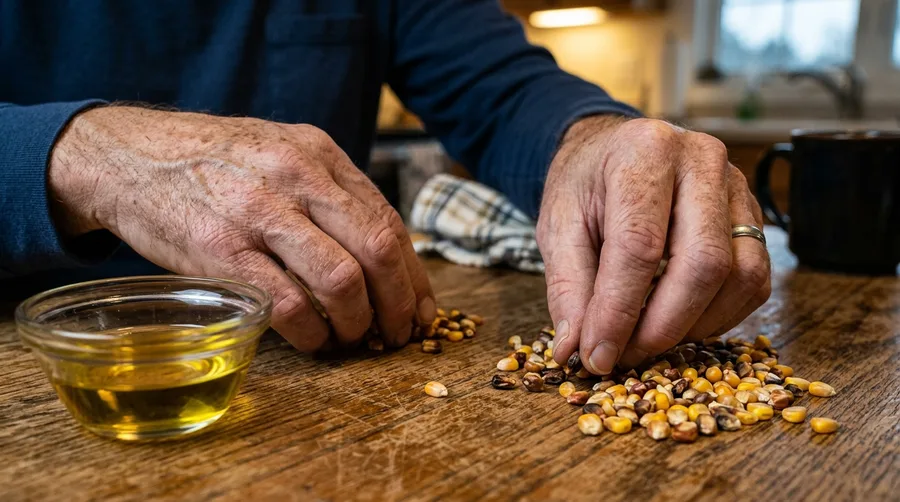
You see corn oil listed in almost every processed snack and restaurant fryer.
Gastroenterologists and lipid specialists flag corn oil as one of the primary culprits driving high dietary omega-6 ratios in the modern diet.
This imbalance crowds out protective omega-3 pathways, making it harder for your body to manage daily recovery and joint comfort.
Clear your pantry of generic corn oil and replace it with olive or avocado oil for everyday cooking.
Frequently Asked Questions
How can I tell if my cooking oil has gone rancid?
Rancid oil develops a sharp paint-like or stale nutty smell. If your bottle smells off or tastes bitter, discard it immediately.
Is it safe to reuse cooking oil for frying?
Reusing oil creates harmful polar compounds and free radicals. For long-term health, use fresh oil for every cooking session.
Should I keep olive oil in the refrigerator?
Keep olive oil in a cool, dark cupboard away from the stove. Refrigeration makes it cloudy and thick, though it does not harm the oil.
Why do doctors care so much about omega ratios?
A high ratio of omega-6 to omega-3 fatty acids promotes systemic inflammation, which impacts joint health and cardiovascular function as we age.
Your First Step Toward a Healthier Pantry
Toss the generic corn and soybean jugs from your cabinet today and replace them with a quality extra virgin olive oil and a bottle of avocado oil.
Making this one simple swap transforms your daily cooking fats into an active investment in your long-term vitality.