If you only book one trip to Germany based on a travel poster, you will end up shoulder-to-shoulder with thousands of tourists in Rothenburg ob der Tauber. I suggest going somewhere else entirely.
You can fly straight into Frankfurt, rent a compact car, and spend your entire week inside resort-adjacent tourist hubs. You would skip the quiet river loops and medieval stone walls that make regional travel actually rewarding.
The routes cover roughly 800 miles across four distinct German states: Franconia, Hesse, the Eifel, and the Black Forest. Plan for at least seven days if you want to see all ten without rushing.
Snorkel under ancient castle ramparts, hike deep river gorges, taste traditional local yeast cakes, wander through 16th-century timber-framed alleys, and photograph misty morning valleys without a single tour bus in sight.
You do not need to visit every single stop on this list to have a complete vacation. Pick three or four that align with your route and spend your time lingering there.
Quick Tips Before You Start
Vehicle Rental
Book a manual-transmission compact car to easily navigate narrow medieval alley gates.
Cash Reserves
Keep at least €50 in cash for small bakery purchases and municipal parking meters.
Timing
Arrive before 9:00 AM to experience the historic marketplaces completely empty.
Footwear
Pack sturdy walking shoes with thick tread to handle slick, uneven cobblestones.
Trip Overview At a Glance
The Fairytale Town Route
Save this driving route map to navigate between all ten regional destinations.
1. Explore Monschau in the Eifel Escarpment
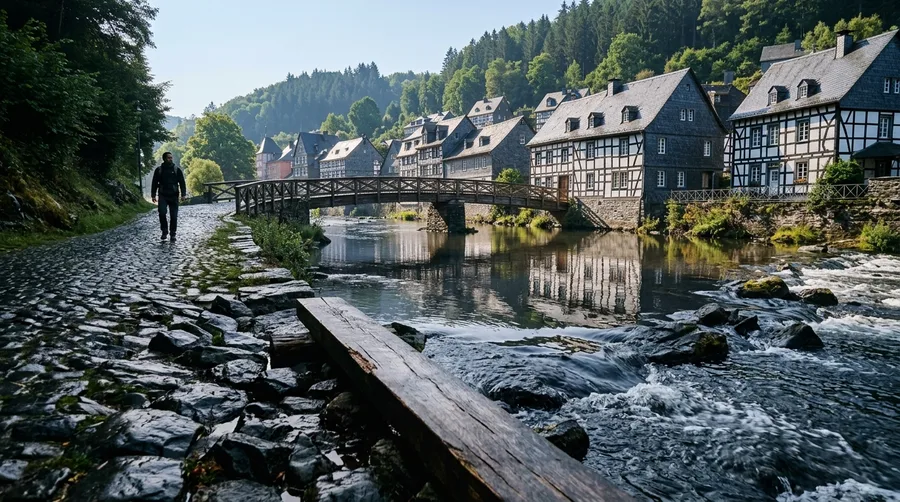
You will hear the Rur river rushing past slate-roofed houses while crossing the wooden footbridge at dawn before anyone else is awake.
Midday bus tours crowd the central market square, but the upper hillside trails remain entirely empty and offer a quiet view of the slate facades.
The town earned its wealth from 17th-century cloth makers who channeled the mountain streams directly through their multi-story processing workshops.
💡 Tip: Park in the designated lots outside the historic pedestrian core to avoid tight €35 parking fines.
💡 PRO TIP
Beat the Parking Restrictions
The municipal lots on Lammersdorfer Straße offer free shuttle access to the historic center during peak summer weekends.
2. Wander Through Schiltach in the Black Forest
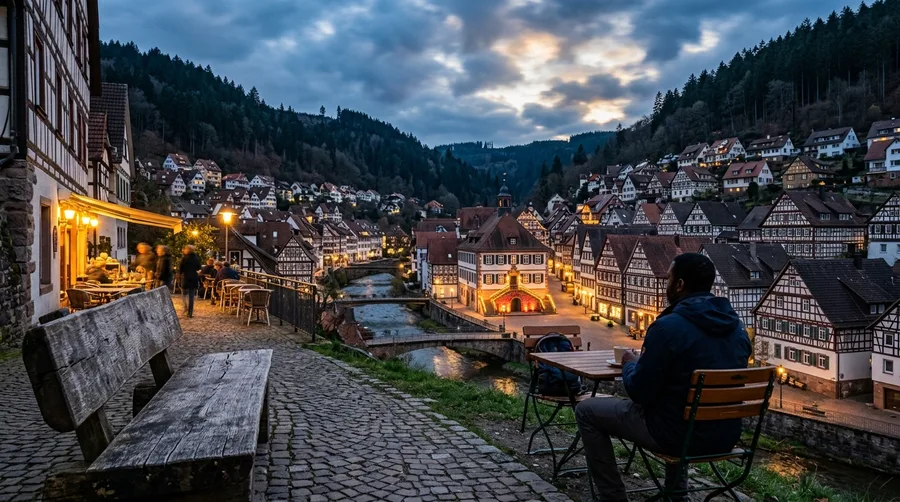
Sharp scents of pine resin and damp river silt rise off the Kinzig riverbanks during a prolonged afternoon stop.
Sit outside at a bakery terrace near the historic Rathaus steps for an uninterrupted hour of people-watching while locals collect fresh bread.
The steep valley walls naturally trap afternoon quiet, preserving a slow-paced atmosphere that feels untouched by modern tourism.
Regional Scale At a Glance
Key metrics for planning your German road trip
3. Detour to Miltenberg on the Main River
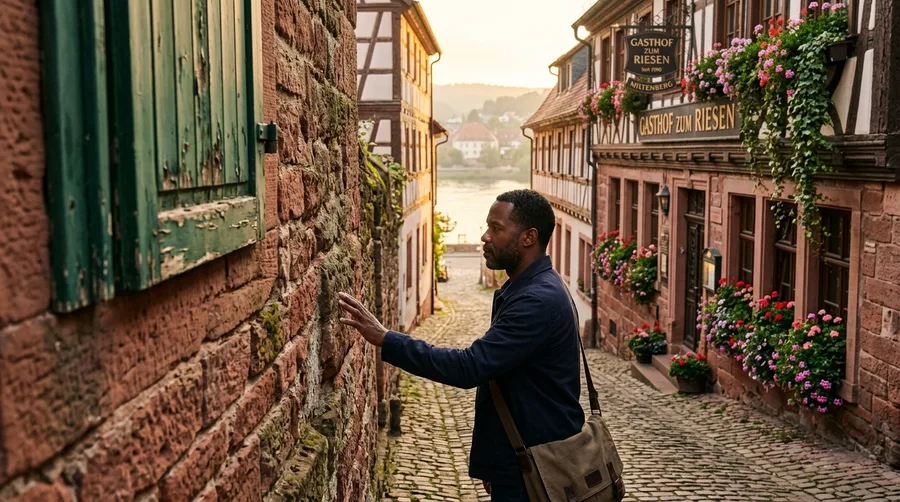
Miltenberg features striking red-sandstone facades and Europe’s oldest operational inn, Zum Riesen.
The main market street fills up between 11:00 AM and 3:00 PM with river-cruise passengers, requiring visitors to slip into the back alleyways for genuine quiet.
Notice the architectural shift from traditional half-timbering to heavy Franconian stone masonry as you walk toward the riverbank.
Main Street vs. Back Alley Strategy
Main Market Square
- Crowded tour groups between 11 AM and 3 PM
- Inflated café menu pricing
- Limited street parking availability
Back Alleyways
- Completely empty cobblestone paths
- Authentic local artisan workshops
- Quiet courtyards with original stone wells
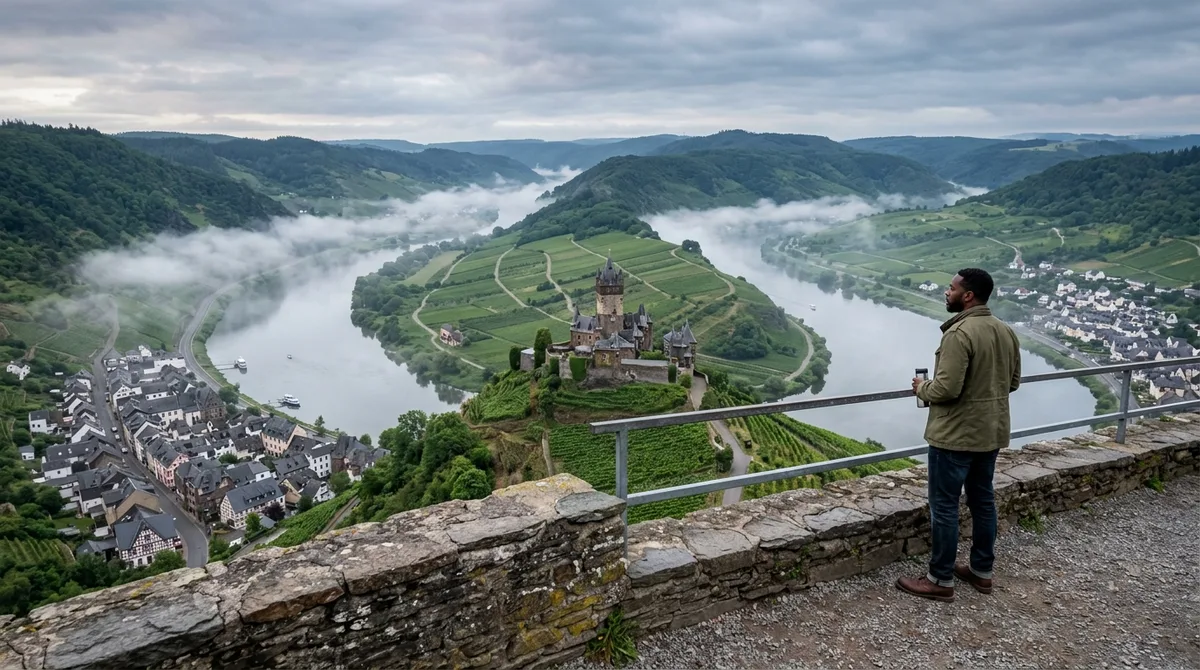
4. Climb Cochem Above the Moselle River
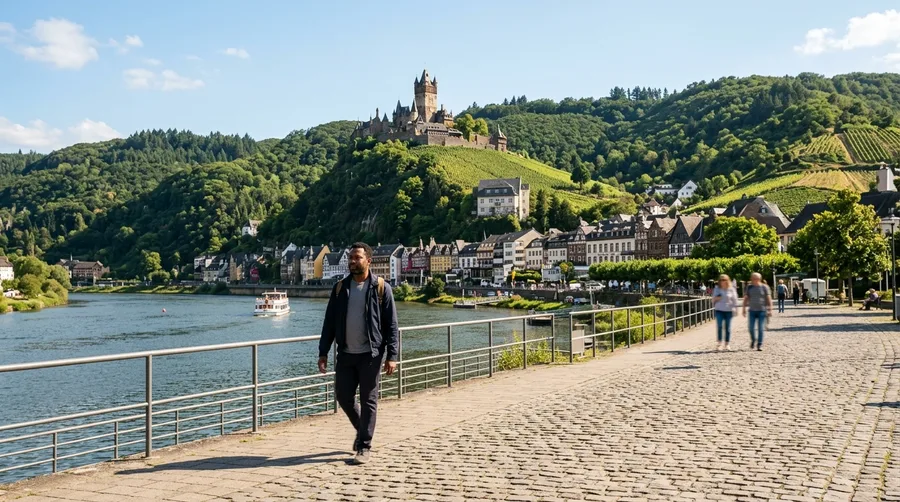
Steep cobblestone inclines and stair-heavy ascents up to the Reichsburg Castle are completely unfriendly for heavy strollers or severe mobility constraints.
Families with school-aged children thrive here due to the open-air chairlift and the flat river promenade.
Paved Moselle riverside walking paths offer an easy stroll compared to the medieval upper fortifications.
Local steep-slope viticulture defines the surrounding hillsides where Riesling grapes grow on precarious slate terraces.
Accessibility & Crowd Verdicts
- Moselle Riverside Walkways — Paved, flat, and fully accessible for all visitors.
- Midday Market Squares — Manageable but heavily congested with tour buses.
- Castle Hill Upper Trails — Steep stone stairs; avoid if pushing strollers.
5. Try Salzkuchen in Alsfeld Town Square
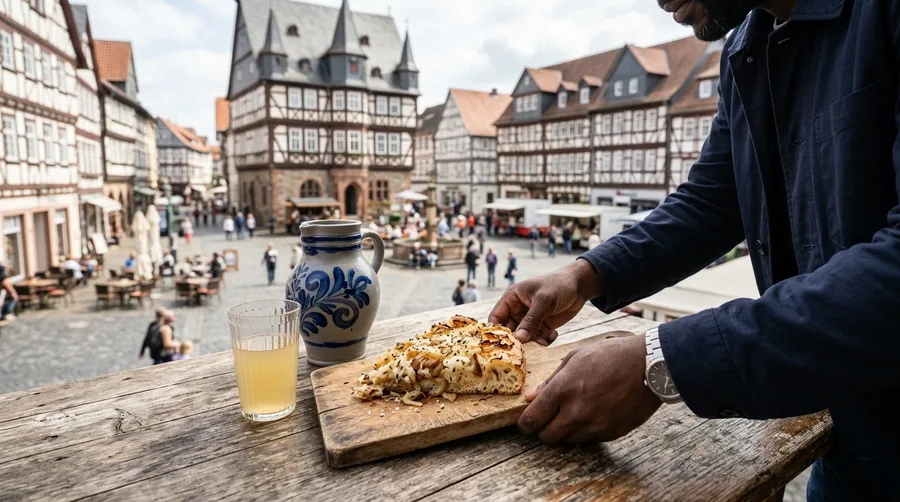
Can a medieval fairytale town deliver a distinct regional plate without falling into tourist-trap pricing?
Order a slice of Hessischer Salzkuchen, a savory yeast cake topped with caraway, onions, and cream, paired with local apple wine.
🌱 GROWING TIP
Savor Local Bakery Hours
Traditional village bakeries close by 1:00 PM on Saturdays and remain completely closed on Sundays. Buy your pastries early.
6. Discover Steinau an der Straße Grimm Roots
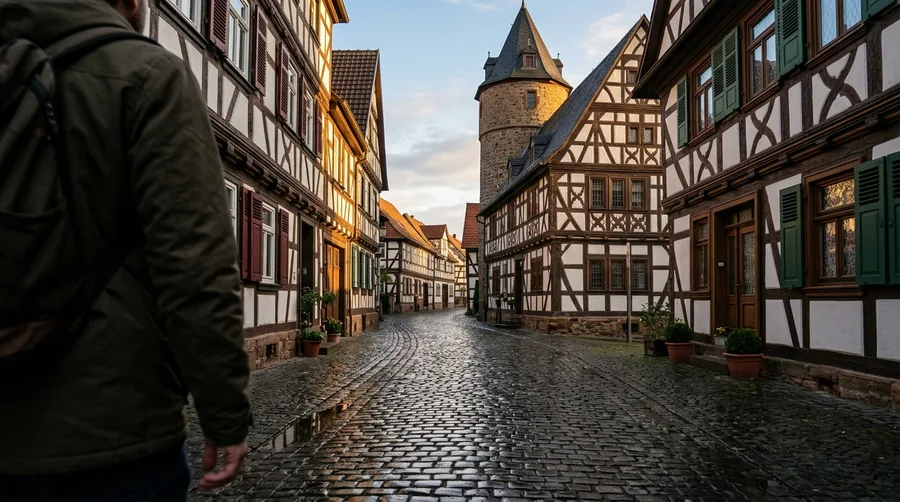
While neighboring Hanau claims the Grimm birthplace, Steinau preserved the actual childhood home and judicial magistrate tower where the brothers grew up.
Direct travelers away from the main tourist office parking lot toward the quieter upper residential streets lined with Renaissance-era timber framing.
The historic Via Regia trading road cuts right through the center of town, shaping its double-market layout.
Local residents utilize the municipal puppet theater and castle museum grounds for seasonal community gatherings rather than commercial spectacles.
Grimm Brothers History Check
7. Photograph Quedlinburg Red Tile Roofs
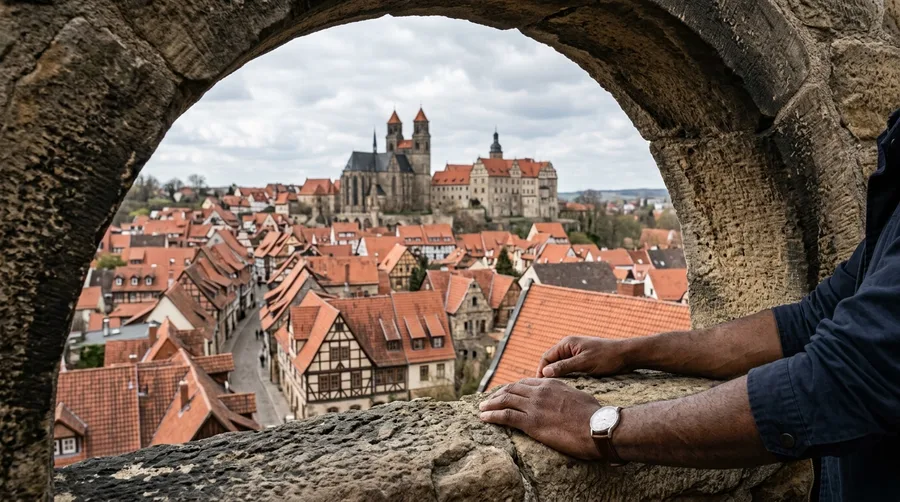
Over 2,000 preserved half-timbered houses span six centuries, concentrated across a single UNESCO-protected townscape.
Stand on the terrace of the St. Servatius Collegiate Church at precisely 7:00 AM to capture the sea of red tile roofs catching the first morning light.
The structural evolution of timber framing is visible across the transition from medieval Gothic posts to Renaissance ornamental carvings.
Best Photography Spots
8. Hike Triberg Waterfall Forest Trails
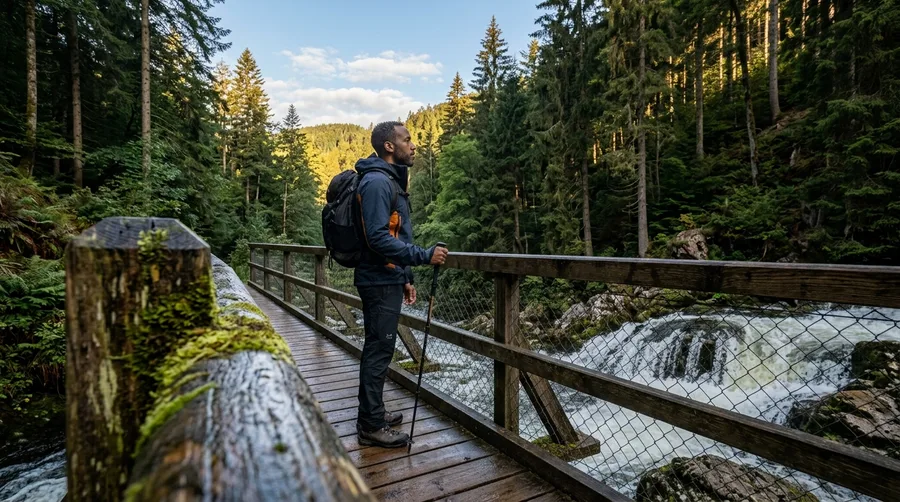
Hike the lower forestry switchback trail directly alongside Germany’s highest waterfall drops rather than viewing them from the ticket plaza.
Graded gravel paths and wooden footbridges cross the Gutach river along a moderately steep 500-meter elevation gain.
9. Book Dinkelsbühl Historic Inn Splurges
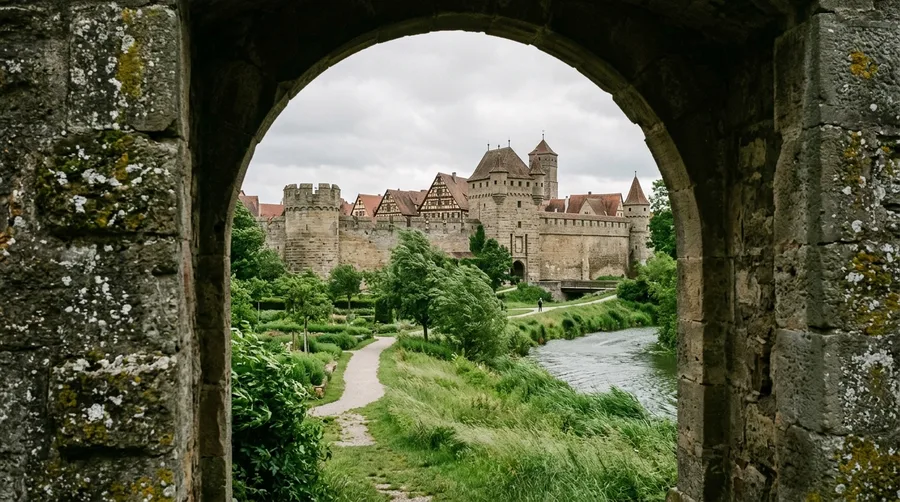
Walk along the completely intact, turreted 14th-century stone ramparts while church bells echo across the moat gardens.
Book a night at a historic patrician estate hotel inside the old town walls, averaging €160 to €220 per night for authentic period architecture.
⚠️ COMMON MISTAKE
Skipping Historic Hotel Reservations
Waiting until arrival to book inside the medieval walls will leave you stranded in modern industrial highway motels.
10. Time Your Visit to Meersburg Lake Terraces
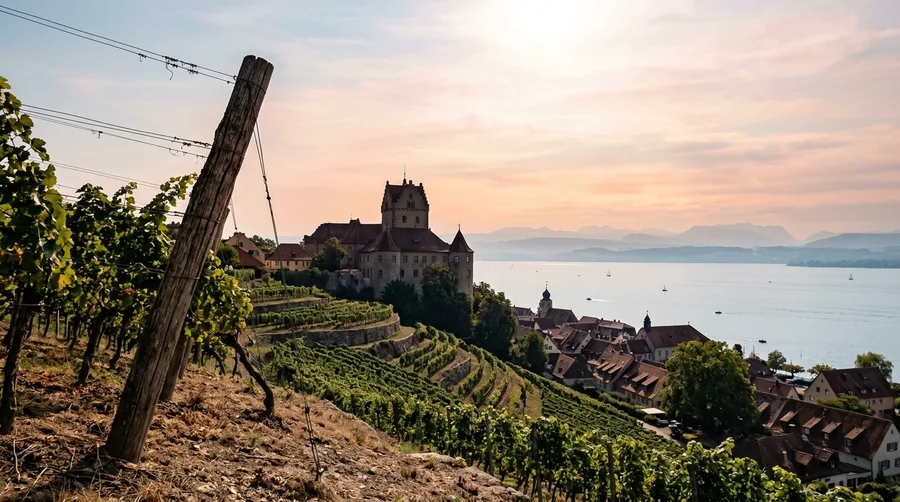
Meersburg’s lower ferry port and lakeside esplanade are overwhelmed by day-trippers between 10:00 AM and 5:00 PM.
Visit the upper town’s vine terraces and castle courtyards either before 9:00 AM or after 7:30 PM when the ferry crowds completely clear out.
Germany’s oldest inhabited castle anchors the upper town, offering dramatic drop-off views down to the open waters of Lake Constance.
Meersburg Timing Breakdown
Essential statistics for visiting Lake Constance
Frequently Asked Questions
When is the best time of year to visit Germany’s lesser-known fairytale towns without crowds?
Target shoulder seasons in May, June, September, and early October when regional weather remains mild and major domestic school holidays are inactive.
Are rental cars necessary to reach these towns, or is public transit sufficient?
While regional trains and buses connect most hubs, renting a car is strongly recommended for rural stops like Monschau, Schiltach, and the smaller Franconian villages.
Do English speakers face language barriers in these off-the-beaten-path locations?
Major tourist infrastructure features English signage, but smaller family-run guesthouses and bakeries appreciate basic German greetings and polite digital translation apps.
How many towns can realistically be combined into a single 7-day road trip?
Grouping geographically adjacent towns—such as pairing Miltenberg, Steinau, and Alsfeld—allows visitors to comfortably cover 3 to 4 locations in one week without constant transit fatigue.
What is the typical price range for dining and lodging in these regional towns compared to major German cities?
Traditional inns and local taverns generally offer dining options 20% to 30% lower than Munich, Frankfurt, or Berlin, with standard double rooms averaging €90 to €150 per night.
Beyond the Postcard: Planning Your Quiet German Escape
True historic charm requires stepping away from the tour bus corridors and embracing local transit rhythms or early-morning starts across Franconia and Hesse.
Take your rental car down the valley loops, skip the commercialized bottlenecks, and enjoy Germany’s finest storybook architecture on your own terms.