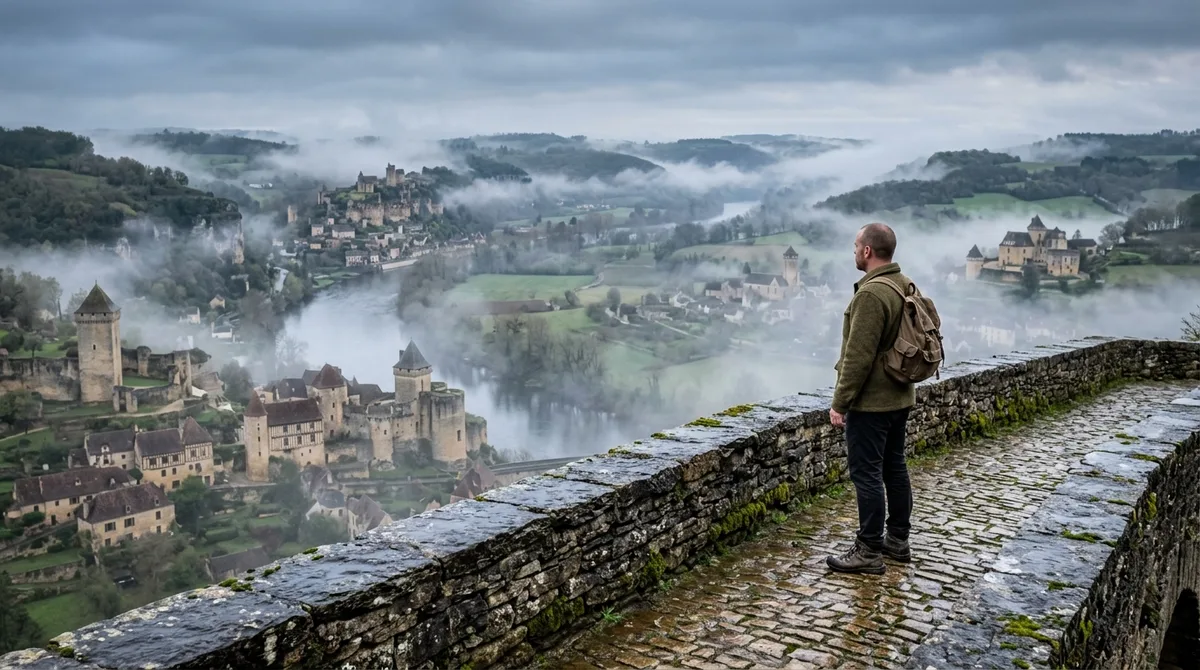
If you want to experience rural France without wading through souvenir shops, you have to look beyond the lavender fields of Provence.
Most visitors book a hotel near the coast and never venture into the regional limestone valleys, volcanic plateaus, or Basque foothills where daily life moves at a genuinely different speed. Regional architecture here relies on local geology rather than curated tourism boards, using lauze stone roofs, half-timbering, and pink sandstone carved directly from the surrounding earth.
On this route, you will walk narrow stone lanes, cross mossy footbridges, taste local cheeses, and watch village baker ovens fire up at dawn.
Plan your road trip for May through June or September through October to avoid motorway congestion and seasonal business closures.
Quick Tips Before You Start
Rent a Small Car
Narrow 13th-century stone gates require compact vehicles to avoid scratching your rental doors.
Carry Cash
Small bakeries and coin-operated parking meters frequently reject foreign credit cards.
Lunch Windows
Restaurants shut down tightly between 2 PM and 7 PM across rural regions.
Wear Grip Shoes
Polished medieval flagstones become slick hazards after a morning rain.
How Far Is the Route and When Should You Go?
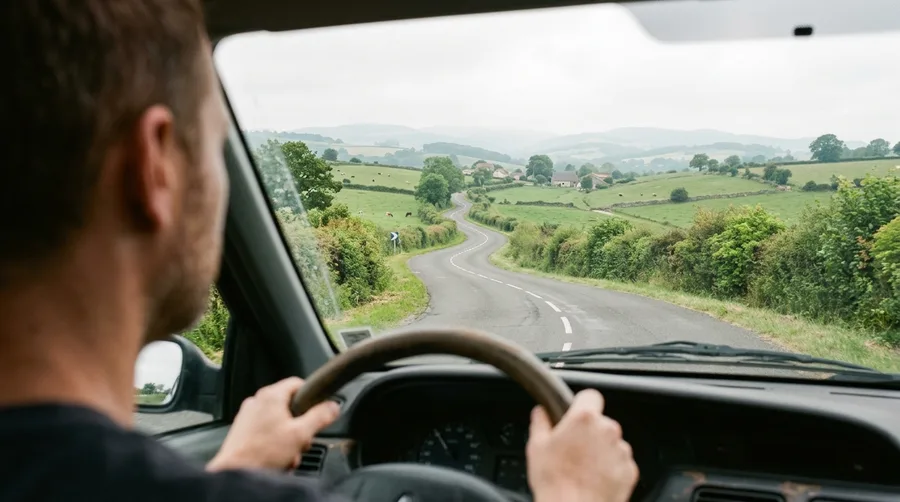
The complete loop spans roughly 1,200 miles across multiple distinct regions, meaning you should pick two or three adjacent areas rather than trying to drive the whole span in one week.
Allocate at least ten days if you plan to explore four or five of these villages properly without spending your entire vacation behind the steering wheel.
Spring and early autumn offer the ideal balance of mild daytime temperatures and open local markets.
Rural France Exploration Route
Save this route to your phone before heading out onto rural country roads.
Trip At a Glance
1. Wander the Rose-Draped Lanes of Gerberoy
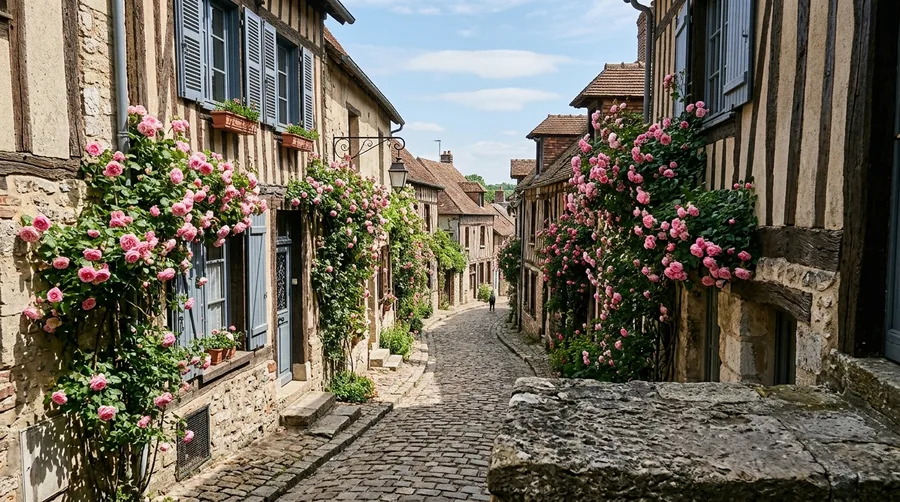
Gerberoy is an exceptionally quiet village located just an hour north of Paris.
Post-Impressionist painter Henri Le Sidaner spent decades planting thousands of climbing rose bushes along every timber-framed facade and stone wall here.
Vehicular traffic is strictly banned within the historic core, leaving you free to walk the uneven stone paths in total silence.
Sit on a bench in the public square for an hour without looking at your watch.
💡 Tip: Visit in early June when the climbing roses peak across every historic facade.
💡 PRO TIP
Beat the Parking Crush
Park your car in the designated dirt lots outside the village walls to keep narrow alleyways clear for local pedestrians.
2. Photograph Saint-Cirq-Lapopie From the River Path
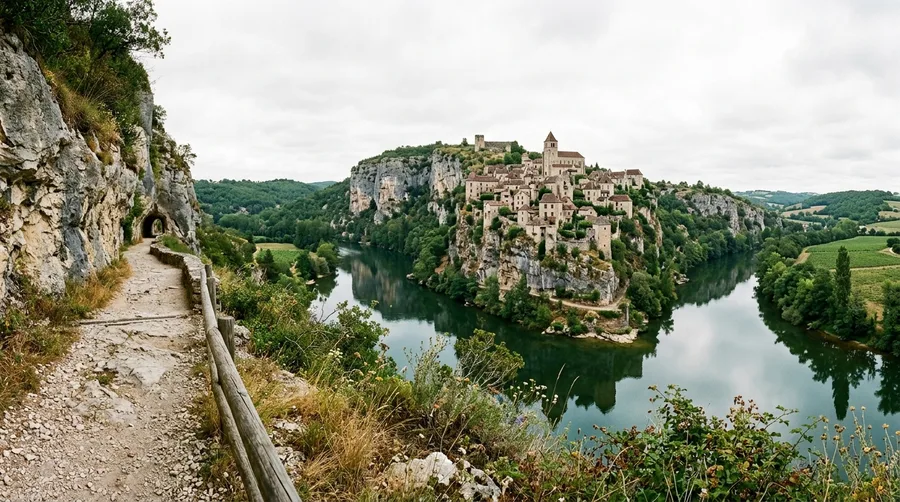
Wear proper walking shoes before attempting this stop.
The village clings vertically to a sheer limestone cliff one hundred meters above the Lot River.
The absolute best view requires walking the flat towpath trail carved directly into the rock face across the water.
Arrive before 9 AM to catch the morning light hitting the stone houses before tour buses arrive from Cahors.
💡 Tip: Skip the main souvenir shops and walk down to the river edge for an unobstructed view.
Saint-Cirq-Lapopie — At a Glance
🧗 Terrain
Vertical Cliffside
🚗 Parking
Lower Lot Only
📸 Best Shot
Towpath Trail
Footwear Warning
Slick flagstones demand sturdy hiking shoes or trainers with deep rubber treads.
3. Explore the Ancient Pilgrim Paths of Conques
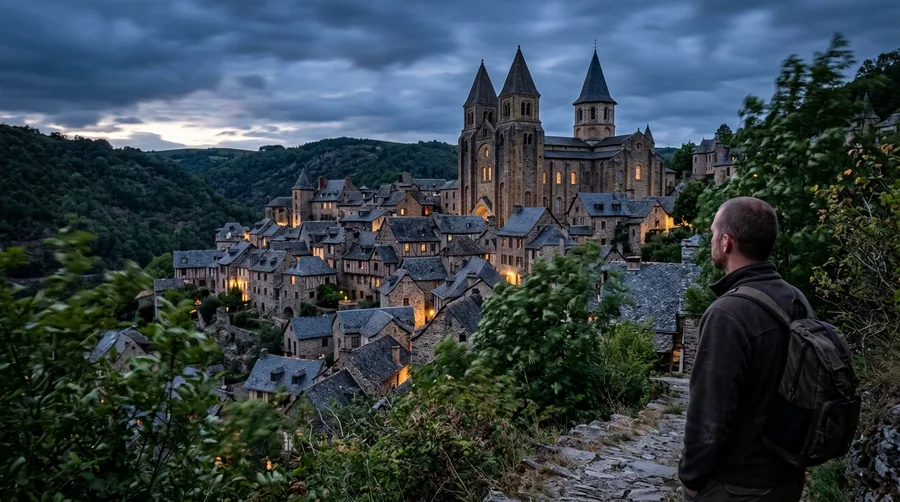
Conques traces its stone foundations back to the 8th century along the historic Way of St. James pilgrimage route.
Step away from the main abbey square and climb the quiet upper ridge paths where locals forage for wild mushrooms.
Inside the Romanesque basilica, minimalist stained glass windows designed by Pierre Soulages cast sharp geometric light across ancient stone columns.
💡 Tip: Stay until evening when day-trippers leave and the medieval stone streets echo in silence.
Conques by the Numbers
Key metrics for this medieval pilgrimage stop
4. Navigate the Volcanic Basalt Architecture of Salers
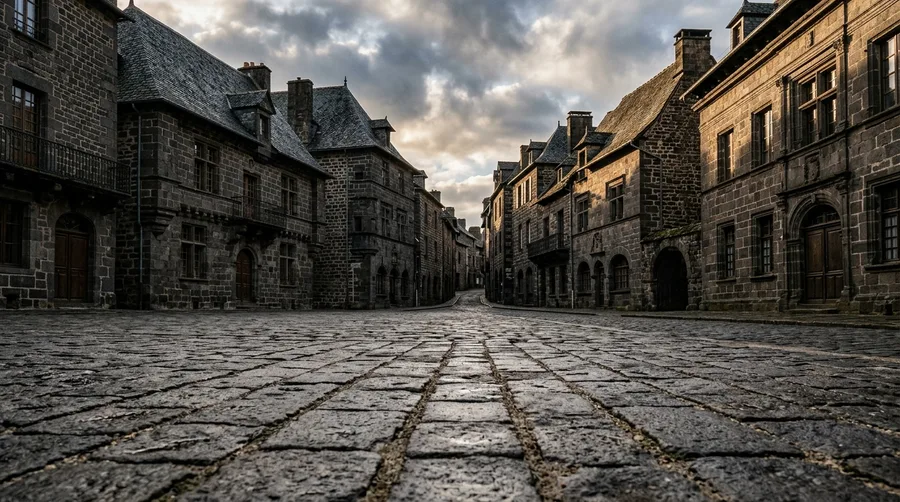
Unlike the soft pastel tones of southern France, Salers is built entirely from dark volcanic lava stone.
This mountain village is geographically isolated and experiences fierce winds rolling off the Cantal volcanic massif.
The austere Renaissance mansions and heavy slate roofs give the settlement a dramatic, serious atmosphere.
Outside the peak summer lunch window, the streets empty out completely as farmers tend to red Salers cattle in the high pastures.
💡 Tip: Pack a windbreaker even in mid-summer because mountain gusts drop temperatures quickly.
⚠️ COMMON MISTAKE
Ignoring Lunch Timings
Restaurants in Salers shut their kitchens promptly at 2 PM. Arrive early or pack backup provisions.
5. Admire the Timber-Framed Market Hall in Beuvron-en-Auge
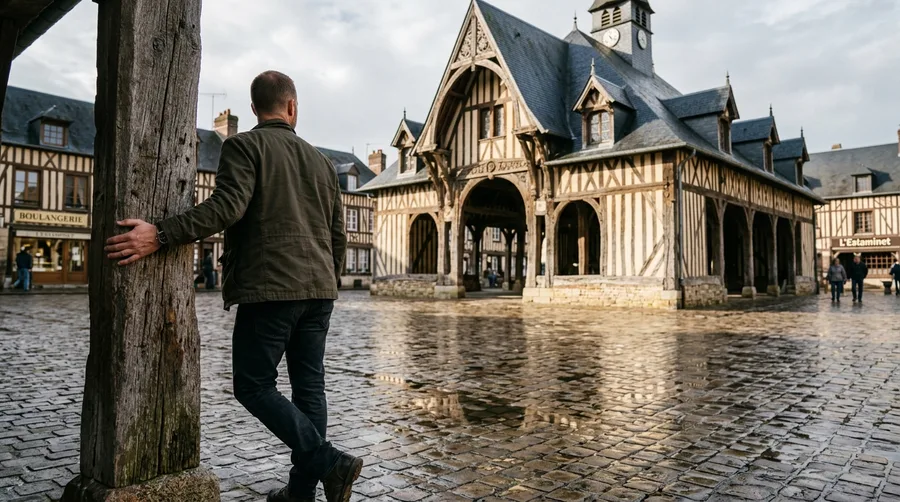
The heavy scent of fermenting cider apples and damp pasture grass hangs thick in the Norman air here.
You can explore the perfectly preserved 17th-century half-timbered market hall completely free of charge.
Master carpenters built this structure as a showcase for traditional Pays d’Auge decorative timber framing.
💡 Tip: Stop at a local farm cider press nearby to taste unpasteurized regional apple calvados.
6. Step Back in Time Among Granite Walls in Locronan
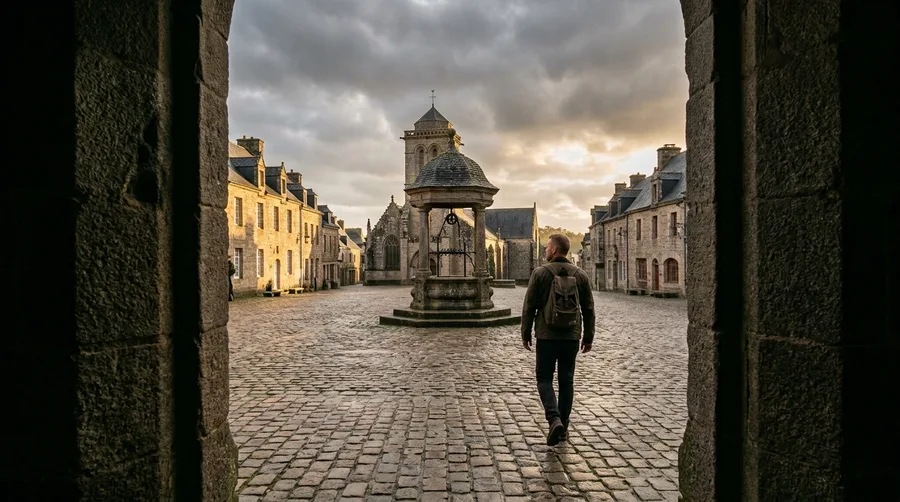
Pull off the D784 route between Quimper and the coast to explore this historic Breton stone enclave.
Production crews frequently use Locronan for period films because local ordinances ban modern overhead utility poles entirely.
Explore the weathered granite square and browse artisanal weaving shops selling heavy woolen sailcloth garments.
Stop at a local bakery to buy warm butter-heavy Kouign-Amann pastries.
💡 Tip: Wear a waterproof jacket because Atlantic mist rolls over the granite ridge without warning.
🏛️ Evolution of Locronan
Medieval Roots
Built on wealth generated by producing high-grade woven sailcloth for ships.
Granite Expansion
Stone merchants constructed elaborate Renaissance mansions around the central square.
Film Preservation
Modern infrastructure bans kept the village streetscape frozen in time.
7. Pair Warm Gougères With Chablis in Noyers-sur-Serein
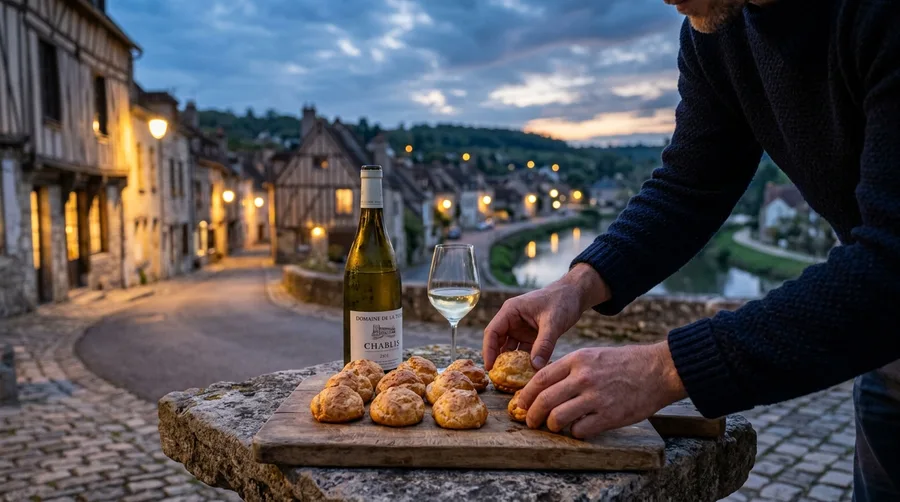
Can a medieval village satisfy serious wine lovers without sliding into commercial tourist traps?
The definitive local answer is found by pairing warm, savory gougères with a crisp local Chablis wine.
Expect to pay around 4 to 6 euros for a half-dozen fresh-baked cheese puffs from the village boulangerie.
Independent wine cellars along the winding Serein River loop charge roughly 12 to 18 euros per bottle for regional pinot noir.
💡 Tip: Buy your gougères straight out of the morning oven while they are still steaming inside.
8. Cross the Fortress Gates Into La Couvertoirade
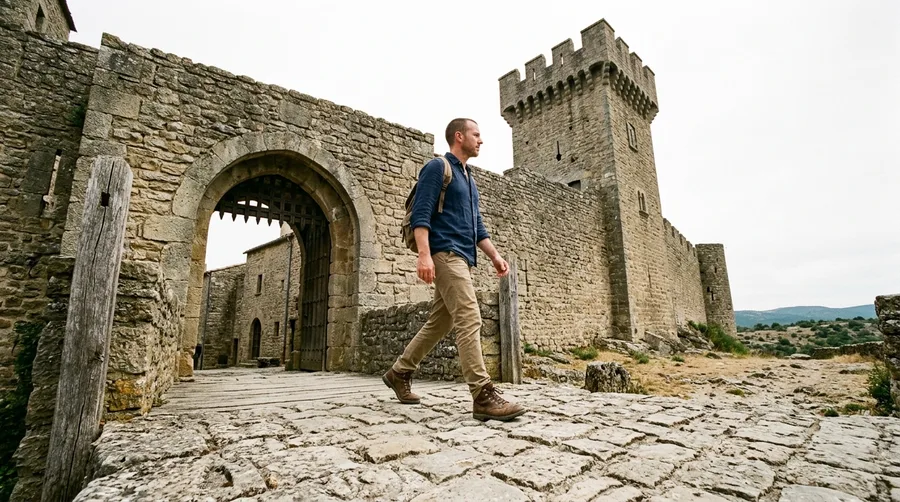
Step through the massive stone gateway into a perfectly intact 12th-century Templar fortress village.
This stop suits families with older children who appreciate medieval history and stone rampart walks.
The entire interior is strictly pedestrian-only with uneven stone paving, steep stairs, and zero wheelchair access.
💡 Tip: Leave strollers in the car trunk and use a soft baby carrier for toddlers on uneven stones.
La Couvertoirade Visitor Fit
9. Hike the Vibrant Ochre Quarries in Roussillon
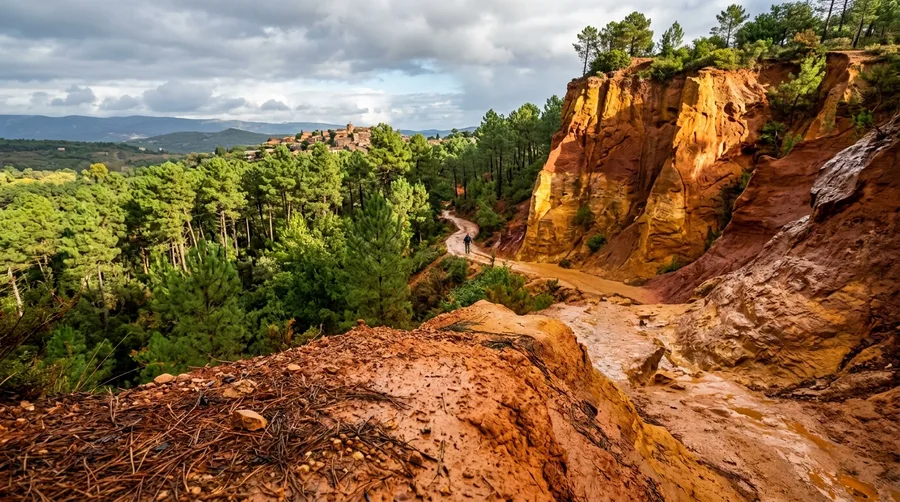
Pay for the official guided geological tour of the private ochre quarries rather than just walking the perimeter.
Adult trail entry costs roughly 4 euros, and you should invest in natural pigment art supplies or pottery in local village shops.
The striking visual contrast of intense red and yellow cliff faces framed against deep green pine trees makes this unforgettable.
💡 Tip: Wear old shoes because red ochre dust permanently stains white sneakers and pant cuffs.
10. Catch Early Morning Light on the Stone Terraces of Gordes
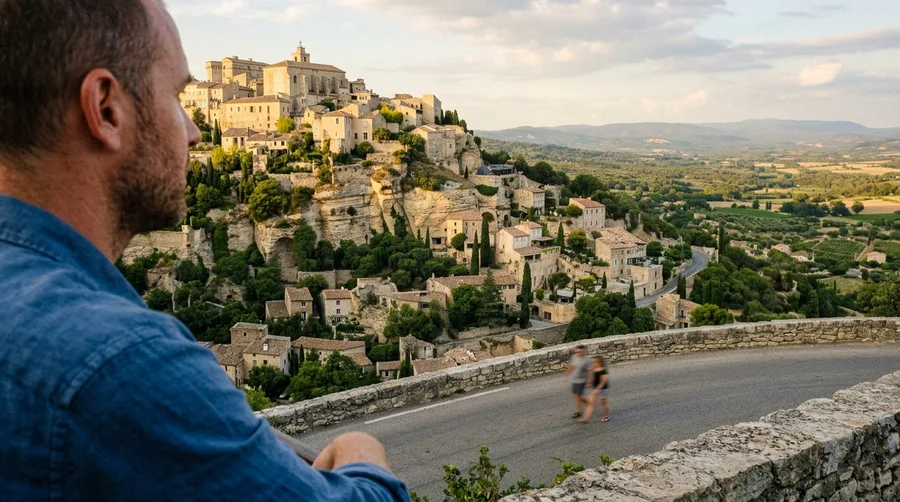
Pull your car over at the classic roadside viewpoint just as the morning light hits the terraced dry-stone houses.
Yes, the central village streets get heavily commercialized and crowded during July and August.
The architectural majesty still justifies the visit if you time your arrival for early morning or late evening.
Drive down to the nearby Sénanque Abbey surrounded by lavender fields to complete the experience.
💡 Tip: Arrive before 8 AM to secure parking in the main lot right outside the village gate.
Choosing Your Stops
High-Impact Iconic Stops
- Gordes and Saint-Cirq-Lapopie deliver stunning architectural drama.
- Well-maintained tourist infrastructure and dining options.
- Perfect for photography enthusiasts.
Quiet Regional Pockets
- Gerberoy and Locronan offer complete silence away from crowds.
- Fewer commercial shops, requiring advance meal planning.
- Real rural daily life without tourist formatting.
Frequently Asked Questions
Do I need a manual transmission car for driving through French villages?
Manual rental cars are cheaper and standard in France, but automatics are increasingly available. Opt for a compact car regardless of transmission to navigate tight 13th-century stone gates without clipping your mirrors.
Are credit cards widely accepted in remote French country villages, or do I need cash?
While most restaurants accept cards, small bakeries, farm stands, and coin-operated parking meters frequently require cash. Always carry at least 50 euros in small bills and coins for minor rural purchases.
What is the best way to handle parking in medieval villages with pedestrian-only centers?
Always look for designated parking lots situated just outside the perimeter walls. Walking five minutes into the core is much safer than attempting to drive down narrow pedestrian lanes.
Are these villages accessible by public transportation, or is a car mandatory?
A rental car is strictly mandatory for this route. Regional rail lines and infrequent local buses do not connect these remote rural pockets efficiently.
Your First Week of Better Travel
True exploration of the French countryside relies on embracing regional geology, local foodways, and slower pacing rather than speed-running a packed checklist.
Leave room in your daily schedule for the unmarked bakeries, random roadside viewpoints, and quiet village squares you discover between these ten anchor stops.