Memory that slips a little more each year – not dementia yet, but not quite right either – is one of the most unsettling places a person or a family can sit.
A clinical trial published in the Journal of Alzheimer’s Disease tested whether a specific probiotic powder could slow that slide. The trial was small – 87 people, six months, no brain scans. But it was carefully designed, and what it found points somewhere worth watching.
The word “may” in the headline is doing real work. A probiotic powder lowered a blood-based Alzheimer’s marker in the people who took it. Two other markers held steady in that group while rising in the placebo group. Visuospatial scores nudged upward. Those are real signals. They are also narrow, early, and built on a blood test rather than a brain scan.
A well-designed 24-week Korean trial found that a three-strain probiotic produced specific, measurable changes in people who were not yet diagnosed with dementia. By the end, you will be able to judge what those changes actually mean – and what kind of trial would need to happen before anyone could act on them.
The Trial Targeted People Before Dementia Set In

None of the 87 participants had been diagnosed with Alzheimer’s disease – they were at an earlier stage, where cognitive decline is detectable on testing but falls short of a dementia diagnosis.
That gap matters scientifically. Once Alzheimer’s is established, the brain has already sustained significant damage. Before that point – a window researchers call the prodromal stage – the destructive processes are running, but the brain may still be changeable. Tau protein is beginning to accumulate. Inflammation is rising. Neural stress is building. An intervention aimed at that window has a realistic chance of slowing things down rather than fighting damage already done.
Earlier probiotic trials tended to enroll people already living with an Alzheimer’s diagnosis. Those trials asked a different question: can a supplement ease an existing disease? This one asked whether a supplement can slow the slide toward one.
The participants came from a defined research population – the GARD cohort, based in South Korea. That detail is worth holding onto. Defined cohorts have consistent health data and careful follow-up, which strengthens a trial’s internal rigor. But people in South Korea tend to eat different foods and carry different gut bacteria than people in Europe or North America. How far these results travel to other populations is a question the trial was not built to answer.
The aim was narrow: slow early decline, not undo damage already present.
How 87 People Were Split Into Two Groups
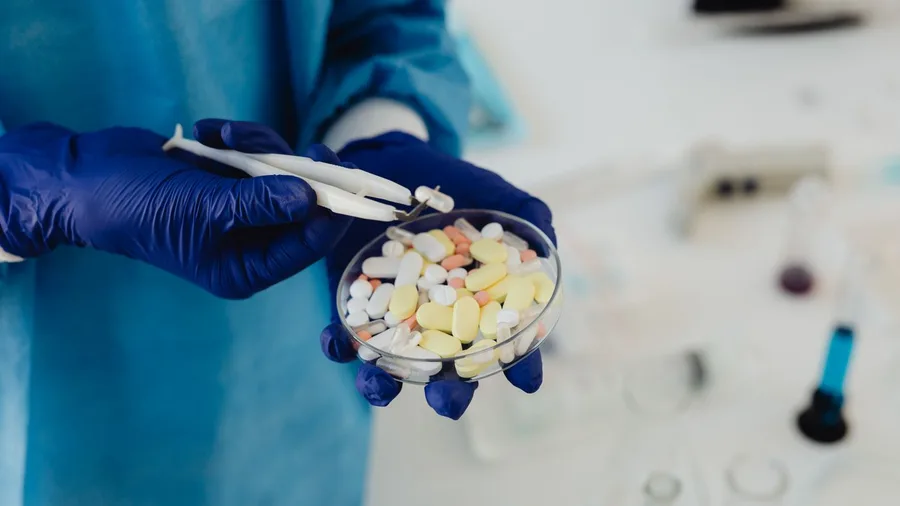
The trial used the three strongest design features a supplement study can have: random assignment, a placebo control, and blinding on both sides.
Random assignment means participants were sorted into groups by chance, not by health status or personal choice. That removes the risk that healthier people end up in the treatment group and skew the results. A placebo control means one group took a dummy powder that looked and tasted the same as the real thing – separating any genuine biological effect from the expectation of benefit. Double-blinding means neither the participants nor the researchers handling the data knew who was taking what until the analysis was complete. Together, those three features are as close as a clinical trial gets to a controlled test.
Of the 87 enrolled, 40 finished the probiotic arm and 47 finished the placebo arm across 24 weeks – six months of daily use.
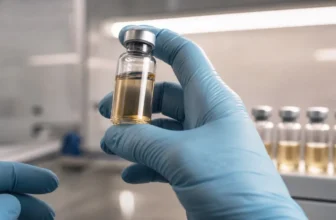
The supplement, KL-P301, came in dry powder form and contained three distinct bacterial strains: a Bifidobacterium animalis subspecies, Limosilactobacillus fermentum, and Levilactobacillus brevis. Those enrolled in the trial had the option of taking the powder on its own or dissolving it in water. The findings were published in the Journal of Alzheimer’s Disease, with Eun Hyun Seo serving as the lead researcher.
The design is solid. Eighty-seven people is not.
Where the Probiotic Group Moved Ahead
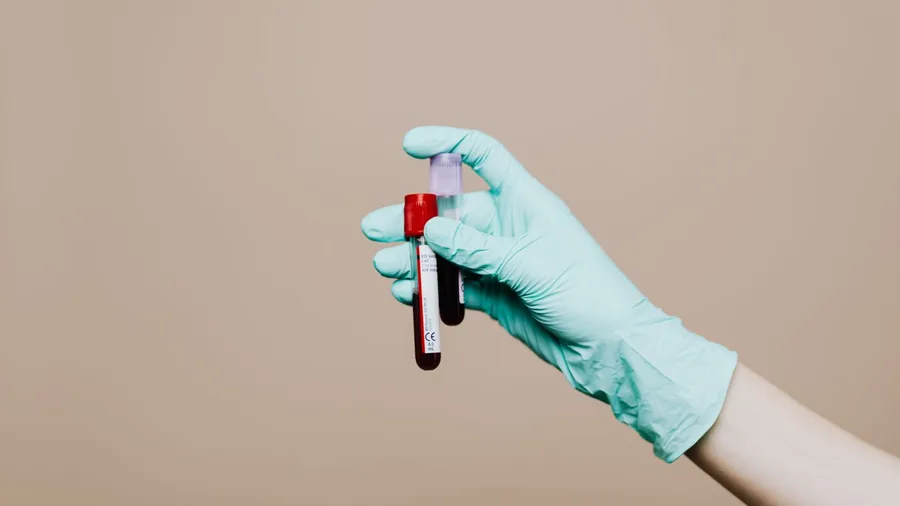
The clearest finding was a significant drop in plasma pTau181 in the probiotic group compared with the placebo group. That is a fragment of tau protein measured from a blood draw. Tau tangles are one of the defining features of Alzheimer’s disease in brain tissue, and pTau181 in the blood is used as a proxy signal for that process.
The probiotic group also did better on two functional measures. One involved visuospatial tasks – the kind that ask a person to judge spatial relationships or copy a shape – and the other was the CDR-SB, a structured assessment of how cognitive impairment affects everyday life.
Two other markers moved differently across the groups. GFAP tracks damage to a type of brain-support cell, and NfL tracks the breakdown of nerve fibres. Both rose in the placebo group over the 24 weeks. In the probiotic group, both held steady. They did not fall – the probiotic group did not improve on those measures. But holding a line while the comparison group declines is still a signal worth noting.
One inflammatory marker, IL-1β, also fell further in the probiotic group. The authors describe this as a targeted effect on specific immune pathways, not a general dampening of the whole inflammatory system.
Taken together, the authors argue these shifts – in tau, in inflammation, in spatial performance – point toward a connection between gut bacteria, immune signalling, and brain health. Converging signals from different measurements are more persuasive than a single one. But converging signals are still not the same as a proven mechanism.
The Trial in Numbers
Memory and Executive Function Scores Did Not Budge
The probiotic did not lift all thinking skills – only some.
Three standard tests came back the same in both groups. Scores on the Mini-Mental State Examination, verbal memory, and executive function showed no significant difference between the people who took KL-P301 and those who took the placebo. Sit with that for a moment: the measures most people associate with memory loss – can you recall a word list, can you plan a sequence of steps – did not move.
Even the visuospatial gains were partial. The probiotic group did better overall on spatial tasks, but not every individual comparison within that category crossed the line of statistical significance. The win was real within limits, not a clean sweep.
What does the selective pattern mean? Spatial ability shifted; spoken memory did not. One possible reading is that tau changes in early Alzheimer’s tend to reach certain brain regions before others, and spatial processing may sit in an earlier path. But another reading is simpler and less satisfying: 87 people may just be too few to pick up smaller effects in verbal memory, so those effects could exist and simply went undetected.
Both explanations are on the table. That is the tension running through these results – the selective pattern is the most biologically interesting thing the trial produced, and the hardest to trust at this sample size.
⚠️ COMMON MISTAKE
The selective results cut both ways
Seeing improvement in visuospatial tasks but not verbal memory could reflect real biology — or it could mean the trial was simply too small to detect differences in other areas. Neither reading is proven, and treating one as settled is a mistake the data do not support.
A Blood Marker Is Not a Window Into the Brain
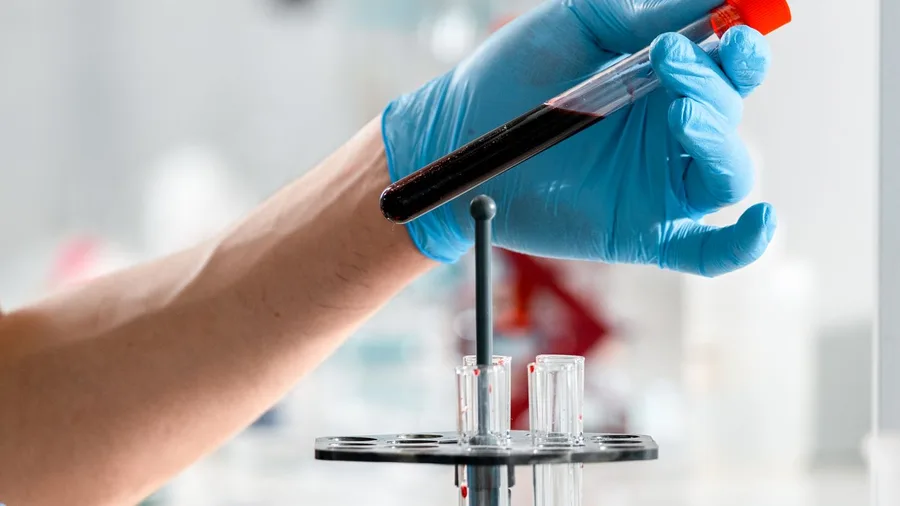
The trial’s headline finding – a drop in plasma pTau181 – rests on a blood test, and that matters enormously.
pTau181 is a fragment of the tau protein that spills into the bloodstream. A lower reading suggests less tau activity somewhere in the body, but blood is not brain. No scan was done in this trial to check whether tau tangles in brain tissue actually changed. The blood number fell; what happened inside the participants’ skulls is genuinely unknown.
The sample is small, too. Eighty-seven people across both arms is a modest number for a condition that varies as much as early cognitive impairment does – genetics, lifestyle, and the specific pattern of decline all differ person to person. The authors themselves call for larger, longer trials, which is researchers’ standard way of saying: treat this as a first signal, not a settled answer.
Six months adds another limit. Twenty-four weeks is enough time to spot a change in a blood marker, but not nearly enough to know whether that change holds when the supplement stops, fades quietly after a year, or depends on continuous use to sustain it.
All 87 participants came from one defined research population in South Korea. Gut microbiome composition shifts with diet, geography, and genetics. Understanding just how individually distinct each person’s gut bacteria are helps explain why gut bacteria uniqueness could limit how broadly any probiotic trial applies. Whether the same three bacterial strains would behave the same way in people with different diets and different microbial starting points has not been tested. The mechanism – the actual chain of events connecting a daily probiotic powder to lower blood tau and better spatial scores – was not identified by this trial at all.
What This Trial Shows vs. What It Does Not
What the evidence supports
- Significant drop in plasma pTau181 vs. placebo
- Better visuospatial and CDR-SB scores in the probiotic group
- GFAP and NfL held stable while rising in placebo group
- Greater decline in the inflammatory marker IL-1β
- A well-designed RCT with double-blinding and placebo control
What the evidence cannot show
- Whether blood tau changes reflect any change inside the brain
- Whether effects last beyond 24 weeks
- Whether results replicate outside the GARD cohort in South Korea
- No improvement in verbal memory or executive function
- KL-P301 is a research formulation — not a shelf product
Why the Gut Became a Suspect in Brain Decline
There is real scientific reasoning behind testing gut bacteria in connection with brain decline – this was not a shot in the dark.
The gut and the brain stay in constant contact through immune signals, nerve pathways, and chemical messengers produced by gut bacteria. Researchers call this the gut-brain axis. Over the past decade, disrupted gut microbiome composition has been linked to inflammation in the brain, and that connection pulled Alzheimer’s researchers toward probiotics as a candidate worth studying.
Earlier trials gave a more direct precedent. Studies in people already carrying an Alzheimer’s diagnosis tested multistrain probiotics with Bifidobacterium and Lactobacillus strains – two of the three groups in KL-P301. Those trials found improvements in brain-related blood markers and reductions in inflammation and oxidative stress. The evidence came from a more impaired population, but it showed the gut-brain signal could be detected in a clinical setting.
One strain in KL-P301 adds a specific thread. Levilactobacillus brevis has been associated with producing GABA – the chemical the brain uses to quiet overactive signals. That is a concrete link from a gut bacterium to brain chemistry, even if the path from GABA production to tau or spatial performance has not been traced.
Animal studies added two further pieces. Sustained high levels of IL-1β – the inflammatory marker that fell more in the probiotic group – worsened tau buildup in animal models. And separately, animals with elevated tau phosphorylation showed specific deficits in spatial learning. That makes the visuospatial finding in this trial look less like a coincidence and more like a testable prediction that partly came true.
None of this confirms the probiotic works. It explains why the researchers had good reason to run the experiment.
The Question Only Brain Imaging Can Answer
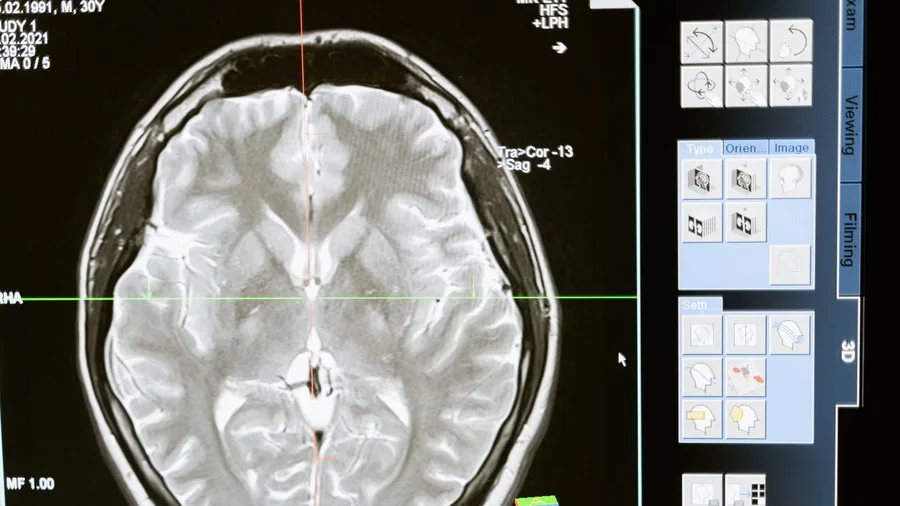
What the trial cannot answer is whether that drop in blood tau meant anything was actually changing inside the brain.
A blood draw measures a fragment of tau protein that has leaked into the bloodstream – it is a proxy, not a reading of the tangles themselves. No brain scan was used in this trial. A lower plasma pTau181 number is genuinely informative, but it cannot confirm that tau burden in brain tissue fell even slightly. The authors identify tau and amyloid-β PET imaging – the kind that maps what is physically present in brain tissue – as what a follow-up trial needs.
The selective pattern in the cognitive results carries the same uncertainty. Visuospatial tasks improved; verbal memory did not move at all. That gap could reflect real biology – tau changes in prodromal Alzheimer’s may reach the brain regions that handle spatial processing before those that handle verbal recall. Or it could simply be what happens when 87 participants are not quite enough to detect small effects across every domain tested. A larger trial is the only way to tell those two explanations apart.
There is also a practical gap. KL-P301 is a research formulation. It is not confirmed to be available as a commercial supplement, which means the result offers no straightforward product recommendation.
What the evidence does support: a carefully run trial produced specific signals – in blood tau, in inflammation, in visuospatial performance – that are worth pursuing in a larger, longer, imaging-equipped study. That is a meaningful scientific step. It is not a reason to act yet.
Frequently Asked Questions
What probiotic was used in the cognitive decline trial?
The trial used KL-P301, a powder containing three bacterial strains: a Bifidobacterium animalis subspecies, Limosilactobacillus fermentum, and Levilactobacillus brevis. Participants took it either dry or dissolved in water for 24 weeks. It was developed for this research and is not confirmed to be available as a commercial supplement.
Did the probiotic actually improve memory in the trial?
Not on the most common memory tests. There was no statistically significant difference between the probiotic and placebo groups on the Mini-Mental State Examination or verbal memory scores. The probiotic group did perform better on visuospatial tasks and on the CDR-SB clinical measure, but not every visuospatial comparison reached statistical significance either.
What is plasma pTau181 and why does it matter for Alzheimer’s?
Plasma pTau181 is a fragment of the tau protein measured in a blood sample. Elevated levels are associated with the tau tangles that accumulate in the brains of people with Alzheimer’s disease. It is a biomarker — a proxy signal — not a direct reading of brain tissue, so a drop in blood levels does not confirm a change in tau burden inside the brain.
How many people were in the probiotics and cognitive decline trial?
87 participants from the GARD cohort in South Korea completed the trial: 40 in the probiotic arm and 47 in the placebo arm. The trial’s own authors describe this as a small sample and call for larger, longer follow-up trials to confirm the findings.
Should I start taking probiotics to protect against dementia?
This trial does not support that recommendation. The sample was small, the intervention ran for only six months, no brain imaging confirmed any brain-level change, and the probiotic used was a research formulation rather than a standard shelf product. The findings are early-stage signals that warrant further investigation, not clinical guidance to act on now.
What would a follow-up trial need to include to be convincing?
The authors of the trial call for larger studies with more participants, a longer duration to test whether effects persist, and tau and amyloid-beta PET brain imaging to check whether blood marker changes correspond to actual changes inside the brain. Enrolling participants from multiple populations outside South Korea would also help establish whether the results generalise.
If pTau181 Dropped in the Blood, What Is Happening in the Brain?
The signals this trial produced are genuine: a drop in a blood-based Alzheimer’s marker, two others held steady while they rose in the placebo group, a modest visuospatial gain – all in people at exactly the stage where slowing decline would matter most. That is worth taking seriously. It is not worth acting on yet.
The question the trial raised but could not answer is the one at the centre of the whole finding: if plasma pTau181 fell in the blood, did tau actually pull back anywhere inside the brain – or did a blood proxy shift while the brain continued on its own course? Only a larger trial, running longer than 24 weeks, with PET imaging looking directly at tau and amyloid-beta in neural tissue, can say.
If you are watching your own memory or your parent’s, the honest position is this: the researchers who ran this trial were careful enough to call their own results preliminary and name exactly what is missing. Follow their lead. Watch what the next trial finds, because this one earned that attention. Do not reach for a supplement on the strength of 87 people, six months, and a blood test with no brain scan behind it.
Sources
- Probiotics May Protect From Signs of Early Cognitive Decline, Clinical Trial Finds – ScienceAlert (news report) · 2026-10-19