Twenty-eight adults had been unable to taste properly for more than a year – and only three of them scored below normal on an objective taste test.
Think about what that gap means. Salt still registered. Vinegar still stung. But sweetness and the deep savoury quality of a good broth had simply gone quiet – and a standard test of overall taste ability mostly missed it.
The common idea about long-COVID taste loss is that the whole taste system breaks down. A January 2026 study in Chemical Senses, led by Thomas Finger, PhD, who holds a faculty position in cell and developmental biology at the University of Colorado Anschutz, found something narrower than that – and harder to explain.
The disruption seems to target one specific signalling protein, leaving parts of the taste system working while silencing others. Taste bud cells replace themselves roughly every two to four weeks, yet the disruption outlasted more than a year of that renewal. Why it picks certain people and not others, and whether it is permanent, the science does not yet know.
This article covers what the study actually found, which flavours are hit and why, what the tissue samples showed, and where both the research and some early coverage of it run out of solid ground – including one number that circulated widely but does not appear in the paper’s own abstract.
Reporting Taste Loss Does Not Mean All Taste Is Gone
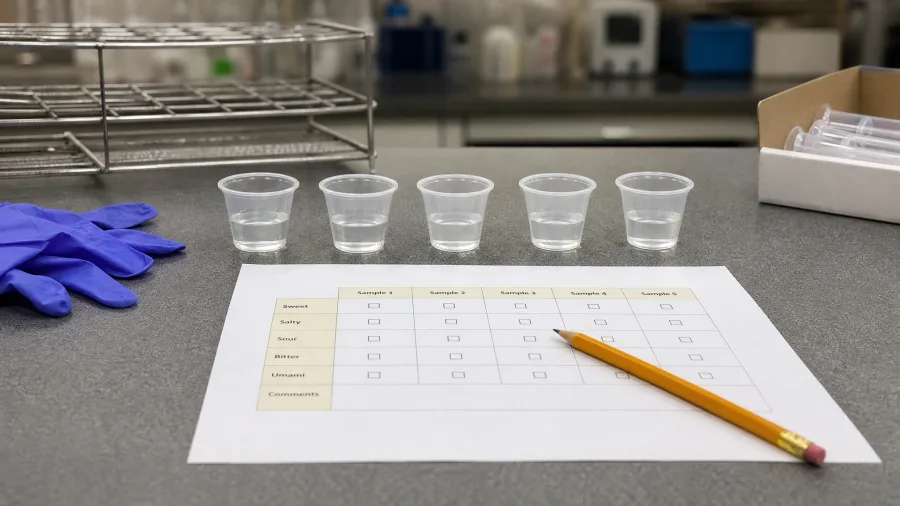
All 28 adults in the Chemical Senses study came in with the same complaint: their taste had been off for more than a year after testing positive for SARS-CoV-2, and every one of them was sure something was wrong.
The objective test told a more complicated story. Researchers used a tool called the WETT, which checks each of the five basic taste qualities one at a time – sweet, salty, sour, bitter, and umami. Only 3 of the 28 participants scored below the 10th percentile for their age and sex. That means the large majority landed inside the range that counts as normal when all five qualities are added together.
That number sounds like a contradiction. It isn’t.
Eleven of the 28 had lost one or more individual taste qualities entirely – a finding that only shows up because the WETT scores each quality on its own. A single combined score would have buried it. Someone who has lost all bitter detection but kept salty and sour intact can still finish in the normal range overall, even though one piece is completely missing.
So the gap between ‘my taste is wrong’ and ‘only three people scored below normal’ is not a case of patients imagining things. It is a clue. The problem is not a broad, even failure across the whole taste system. It is something narrower – targeted at certain flavours and invisible to a test that only looks at the whole picture.
Sweet, Bitter, and Umami Go Quiet — Salt and Sour Often Survive
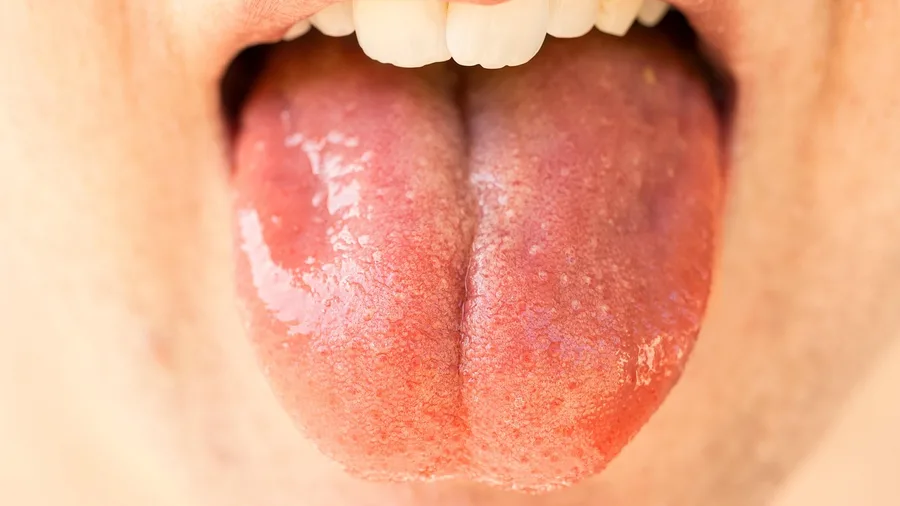
The pattern of which qualities disappear turns out to be far from random. Across the 28 subjects, loss of sweet, umami, and bitter detection was significantly more common than loss of salty or sour detection.
That three-way grouping has a clear molecular explanation. Sweet, bitter, and umami signals all pass through the same intracellular protein, PLCβ2, which acts as an amplifier inside taste cells, strengthening the signal before it travels toward the brain. Salty and sour perception work through entirely different cellular routes that do not involve PLCβ2 at all.
The real-world translation is direct. Salt still registers because its pathway is untouched. Vinegar still bites. But the sweetness of a ripe piece of fruit and the deep savoury quality of a slow-cooked broth both depend on PLCβ2-linked signalling – and those are the experiences that go quiet.
What makes this pattern significant is its specificity. The damage is not scattered across the taste system at random, and it is not simply destroying taste cells wholesale. Something is interfering with one molecular pathway while leaving others intact – a disruption defined by biochemistry rather than by anatomy. That specificity is what shifts the question from ‘how much of the taste system is gone’ to ‘what is happening inside a single signalling chain.’
⚠️ COMMON MISTAKE
The 'eight patients' figure is not in the paper
Some early coverage reported that eight of the 28 participants had clearly abnormal taste scores. The study abstract states only 3 of the 28 scored below the 10th percentile for a normal population. The figure of eight does not appear in the abstract and conflicts with the number the researchers themselves report.
The Signal Is Dimmed, Not the Taste Buds Destroyed
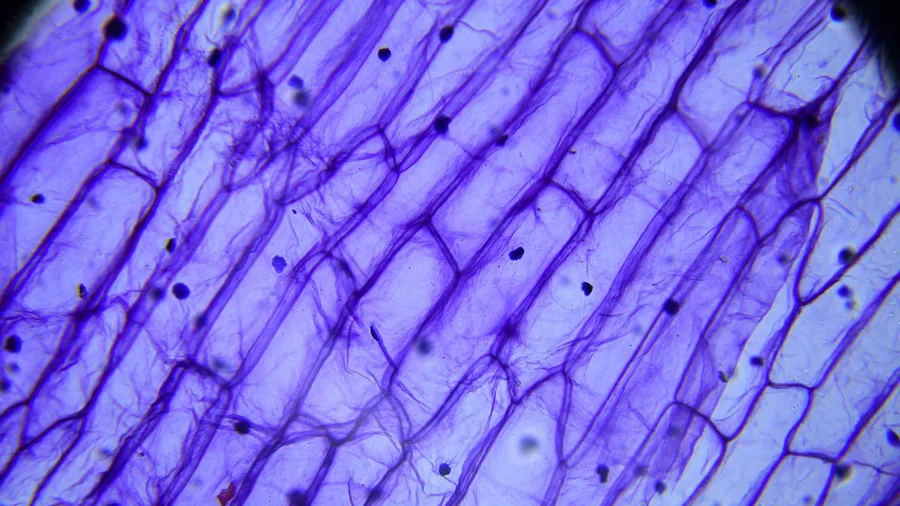
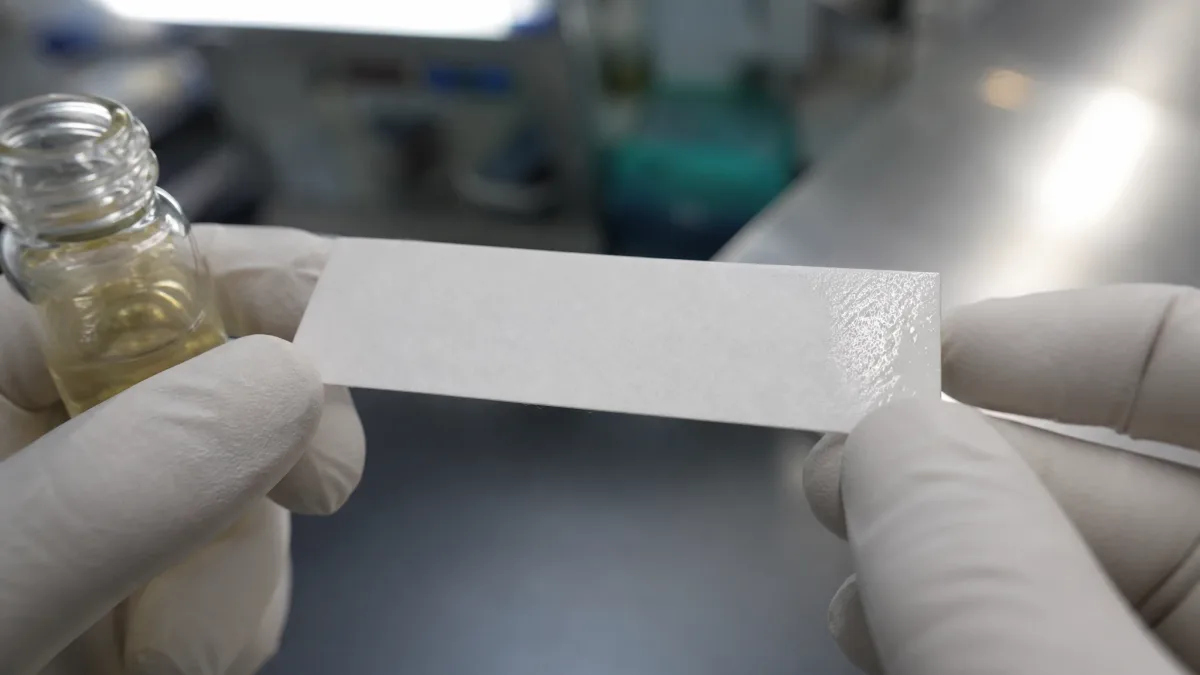
To find out whether PLCβ2 levels actually looked different inside taste tissue, the researchers took small biopsies from 20 of the 28 subjects – between 5 and 8 of the tiny bumps on the tongue called fungiform papillae, from each person. They examined the tissue under a microscope and also ran a test that counts how many copies of a specific stretch of genetic code a cell is producing.
The taste buds themselves looked mostly intact. Cell structure was there. The nerve supply was there. Nothing pointed to the kind of broad physical damage the phrase ‘destroyed taste buds’ might suggest.
What was missing was quieter than that.
The biopsied tissue showed reduced levels of PLCβ2 and Tas1R3 messenger RNA – the code cells read to build the proteins that boost sweet, bitter, and umami signals. Think of those proteins as an amplifier sitting between the tongue and the brain. With fewer of them, the same taste input produces a weaker signal. Flavours are there, but they arrive muted, or sometimes not at all.
A subset of subjects also had occasional taste buds that looked disorganised under the microscope, with some PLCβ2-positive cells showing up in tissue where they do not normally belong. For those people, the architecture of the tissue was off as well – an added problem on top of the reduced output.
The paper’s own conclusion puts a careful frame around this: the dysfunction is not caused by widespread disruption of the taste periphery. The damage is more specific than early descriptions implied – and more subtle.
What the Study Actually Measured
Cell Renewal Happens Every Few Weeks — So Why Has Taste Not Come Back?
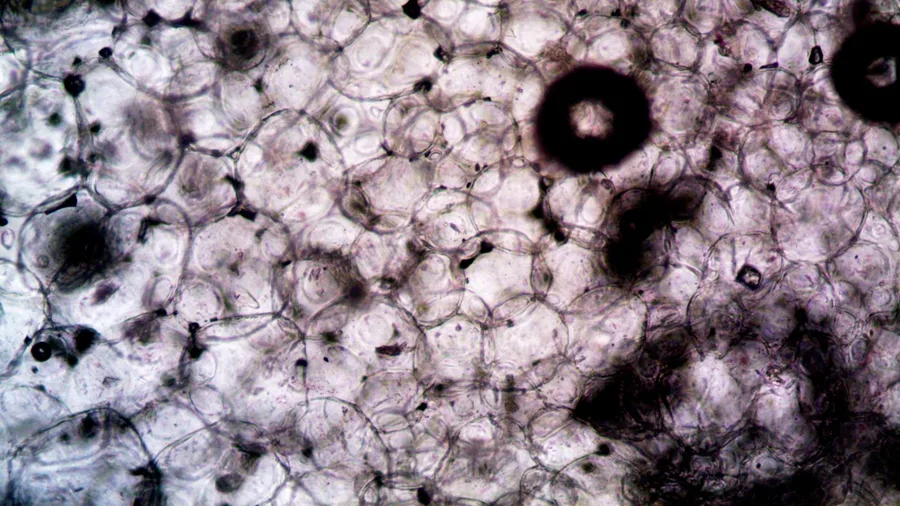
Taste bud cells do not stick around – the body swaps them out roughly every two to four weeks, which is fast enough that most damage from a short-lived infection should disappear within a month or two.
Yet the subjects whose tissue was biopsied still showed reduced PLCβ2 and Tas1R3 messenger RNA more than 12 months after testing positive. That is at least six complete rounds of cell renewal with nothing to show for it.
The physical tissue tells part of the story. Microscopy showed the taste buds and their nerve supply were largely intact – so new cells are arriving. But those new cells are not making enough PLCβ2 and Tas1R3 messenger RNA, the genetic instructions that drive the amplification step for sweet, bitter, and umami signals.
Something is blocking that process in the new cells. The study identifies the fact of the deficit but does not establish what is causing it. None of the underlying mechanisms has been confirmed.
That is the core puzzle the paper leaves open. Cell renewal is happening, the structures look mostly normal, and yet the molecular deficit persists. The study describes that fact clearly – it does not explain it.
What This Study Shows vs. What It Does Not
What the evidence supports
- Reduced PLCβ2 and Tas1R3 mRNA in biopsied taste tissue
- Selective loss of sweet, bitter, and umami more than salty or sour
- Taste bud structure and nerve supply largely preserved
- Molecular disruption persisting more than 12 months after infection
- Published peer-reviewed data from Chemical Senses, January 2026
What the evidence does not establish
- Why reduced mRNA levels cause taste loss — correlation, not proven cause
- Whether molecular levels can return to normal over time
- Any treatment that restores taste
- Whether findings apply to people hospitalised with severe COVID-19
- Why some people develop this disruption while others recover fully
What a Sample of 28 Can and Cannot Tell Us
A finding that survives repeated cell renewal is striking, but it comes from a study with real boundaries – and some of what circulated in early coverage did not match what the data actually show.
Start with size. Only 28 people were enrolled, and tissue biopsies were taken from just 20 of them. That is enough to spot a molecular pattern, but far too few to say how common it is among everyone with long-COVID taste problems. All 28 were non-hospitalised; people who were hospitalised were not included, so the findings say nothing about severe COVID-19.
The study also cannot claim causation. Reduced PLCβ2 and Tas1R3 messenger RNA levels appear alongside taste loss – but the authors stated from the outset that the underlying mechanisms were unknown. Two things turning up together is not proof that one produces the other.
One specific number in early coverage was wrong. Some reports said eight of the 28 subjects had clearly abnormal taste scores. The study abstract puts that figure at 3 – only 3 of the 28 scored below the 10th percentile for their age and sex on the objective taste test. Eight does not appear in the abstract and does not match what the researchers reported.
The study tests no treatment and tracks no one over time, so it cannot say whether PLCβ2 levels can recover. What it is: a peer-reviewed description of taste tissue, published in Chemical Senses in January 2026, by Thomas Finger and colleagues at the University of Colorado Anschutz. A careful first look at a specific question – not a complete picture of long-COVID taste loss.
The Question the Science Still Cannot Answer
What the research cannot say is whether taste will come back – and that is the question most people reading this actually want answered.
The study shows that some people still carry molecular disruption in their taste cells more than a year after a non-hospitalised COVID-19 infection. It does not explain why those 28 people kept the disruption while others, infected with the same virus, had their taste return within weeks.
Recovery is an open question too. Whether the reduced PLCβ2 and Tas1R3 messenger RNA levels seen in some subjects can climb back to normal – and what would need to happen inside the tissue to make that possible – the paper does not address.
The study enrolled only non-hospitalised people. So what happens in the taste tissue of someone who had severe COVID-19 is entirely unknown. The same PLCβ2-pathway deficit might be present, or the damage could look different, or be more extensive. There is simply no data.
What the study does give is a clear description of the molecular pattern – which cells are affected, which proteins are low, which taste qualities go quiet. That description is a starting point. The next step any follow-up research would need to take is asking why the disruption picks certain people and not others, and whether anything can shift the signal back.
Frequently Asked Questions
How long does long COVID taste loss typically last?
The subjects in the Chemical Senses study had all reported taste disturbances for more than 12 months after their positive SARS-CoV-2 test. How long disruption typically lasts in the broader population of people with long-COVID symptoms is not something this small study can determine, and no timeline for recovery was established by the research.
Why can I still taste salt and vinegar but not sweetness or savoury food?
Sweet, bitter, and umami detection all depend on a signalling protein called PLCβ2 inside taste cells. Salty and sour perception use entirely different cellular mechanisms that do not involve PLCβ2. The study found that loss of the three PLCβ2-dependent qualities was significantly more common than loss of salty or sour detection, which matches what many people with long-COVID taste loss report in everyday eating.
Does this research mean a treatment for long COVID taste loss is close?
No. The study identifies a molecular pattern — reduced PLCβ2 and Tas1R3 messenger RNA in biopsied taste tissue — but it tests no intervention and reports no treatment finding. The authors state that the mechanisms behind the dysfunction are not established. A description of a biological pattern is the starting point for treatment research, not the end of it.
Will my taste buds eventually renew themselves and fix the problem?
Taste bud cells normally renew every two to four weeks, yet every subject in the study showed measurable molecular abnormalities more than 12 months after infection — well past the point where cell renewal should have cleared the problem. New cells appear to be produced, but something is preventing those new cells from expressing normal protein levels. What that something is remains unknown.
How was the taste loss measured in the study, and is it reliable?
The researchers used the WETT, a standardised test that scores each of the five recognised taste qualities separately. Biopsy samples from 20 of the 28 subjects were also analysed by microscopy and quantitative PCR to measure molecular activity directly in the tissue. Using both a behavioural test and a molecular analysis on the same subjects makes the findings more specific, though the small sample size limits how widely the results can be applied.
Does this study apply to people who were hospitalised with severe COVID-19?
No. All 28 subjects in the study were non-hospitalised, meaning they had relatively mild acute illness. The study explicitly does not cover people who had severe COVID-19 or required hospital care. Whether people with a more severe disease course show the same PLCβ2-pathway disruption, different kinds of damage, or more extensive structural change in their taste tissue is entirely unknown from this research.
Why Some Taste Cells Stay Disrupted While Others Recover
In some people, more than a year after a mild COVID-19 infection, taste tissue shows lower levels of two key proteins – PLCβ2 and Tas1R3 messenger RNA – and that drop lines up with lost ability to detect sweet, bitter, and umami. The taste buds look mostly intact. The nerve supply is mostly intact. The molecular signal is simply quieter.
That finding comes from 28 people, so it is a first look, not a final answer. But the person who sits down to a meal and finds sweetness gone is not imagining anything. The biology now offers a partial account of what may be happening in the taste tissue of people like those in this small study.
What the study cannot explain is why those 28 people – and not the many others who had the same infection and recovered fully – still carry this molecular disruption through cycle after cycle of cell renewal. What stops newly made taste cells from restoring normal protein levels is unknown. Whether the deficit can reverse, and what would drive that reversal, is unknown too. Those are the questions that need a follow-up study – and right now, nobody has the answers.
Sources
- Scientists discover why some people still can’t taste food after COVID-19 – ScienceDaily (news report) · 2026-10-19
- Taste dysfunction in long COVID – Chemical Senses (peer-reviewed paper) · 2026-01-01