For someone who carries APOE4, or whose parent does, the question is not just statistical – it is personal: does this gene decide what happens to the brain, or does it only shift the odds?
About one in five people carry at least one copy of APOE4, a gene variant widely regarded as the most potent common hereditary risk factor for Alzheimer’s disease. Yet many carriers remain cognitively healthy well into old age with their memory intact. That is not what a verdict looks like.
A Columbia University team published a study in Nature Aging on September 11, 2026 tracing the most detailed molecular account yet of how APOE4 raises risk – and the first real clue to why some carriers appear to slip past the damage.
The answer centers not on the gene itself but on a structural protein called fibronectin. In APOE4 carriers, fibronectin piles up around brain blood vessels and sets off a chain of damage. The rare carriers who stay protected seem to block that chain at its source.
The mechanism is specific and testable. It is also new – the paper had been cited by only one other study at the time of this coverage, and the causal experiments were done in animals and cell cultures, not in living people. A carrier reading this can judge what the gene actually does, how solid the evidence is, and how far the road to a treatment really runs.
APOE4 Raises Your Odds, It Does Not Decide Them

APOE4 raises the odds of Alzheimer’s – it does not seal the outcome. About one in five people carry at least one copy of the variant, making it the most powerful common genetic risk factor for the disease. Yet a real share of those carriers remain cognitively healthy well into old age with no diagnosis.
That gap is the puzzle. Genetics predicted one thing; biology delivered another.
The same Columbia University team began closing that gap about two years ago, when they identified a rare mutation in a gene called FN1. Some APOE4 carriers happen to carry that mutation too, and it seemed to blunt the gene’s danger considerably. That discovery raised an obvious follow-up question: if the mutation protects by limiting something, what is that something doing to the brain in carriers who lack the protection?
The new study is the answer to that question. It was published in Nature Aging on September 11, 2026, by researchers at Columbia’s Taub Institute led by Caghan Kizil. The work maps a specific chain of molecular damage that connects APOE4 to Alzheimer’s risk.
One caution before going further. At the time of writing, only one later paper had cited this study. It has not yet been tested widely by outside researchers. The findings are serious and detailed – but they represent a strong early proposal, not a settled verdict the whole field has weighed in on.
Excess Fibronectin Is the Damage Agent Around Brain Vessels
The FN1 mutation pointed at a single protein – fibronectin – as the key variable. So the researchers looked directly at how much of it was present in APOE4 brains, and what it was doing there.
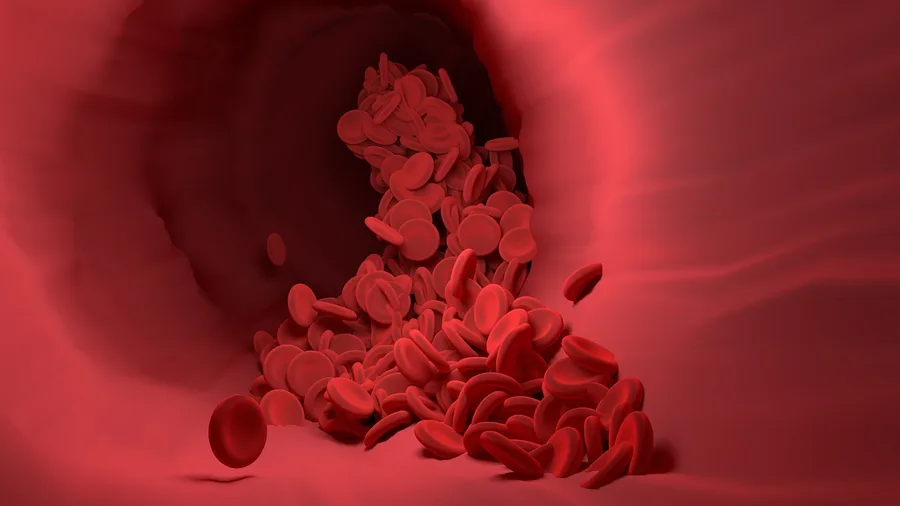
The answer was stark. Mice carrying the human APOE4 variant had nearly twice as much fibronectin in their brains as mice carrying the lower-risk APOE3 variant. That extra protein was not sitting harmlessly in place. The blood-brain barrier – the tightly regulated wall that separates the brain’s blood supply from its tissue – was measurably leaky in those same mice.
Fibronectin itself is not a villain. The body uses it all the time to hold tissues together and seal wounds. The trouble is specific: too much of it piling up around brain blood vessels, in APOE4 animal and cell models, may be what starts the damage.
The rare FN1 mutation appears to limit that buildup. People who carry it seem to be protected partly because their fibronectin never accumulates to the harmful level in the first place. That is what made the accumulation mechanism worth mapping carefully – if you understand how the excess builds, you have a target for stopping it artificially.
Kizil put the stakes plainly: prior research had shown that fibronectin alterations could offer some protection against Alzheimer’s, yet scientists lacked a clear explanation for why elevated fibronectin levels cause harm in the first place. This new work fills that gap by laying out the precise underlying mechanism — and in doing so, opens up potential avenues for artificially recreating the kind of protection that some people naturally possess.
The Study's Key Numbers
How Fibronectin Breaks the Brain’s Supply-and-Waste Network

The accumulation is just the start. What turns a protein buildup into barrier damage is a chain of misfiring signals – and the study traced that chain step by step.
When fibronectin builds up around brain blood vessels, it triggers proteins on cell surfaces called integrins. Those integrins then switch on an enzyme that normally sits quiet. The activated enzyme sends abnormal signals that disrupt three growth factors – VEGF, HBEGF, and IGF1 – which healthy brains rely on to keep astrocytes and blood vessel cells working together.
That coordination matters more than it might sound. The blood-brain barrier does not just block things out. It also clears waste that builds up in brain tissue. When it breaks down, both jobs fail at once – filtering and cleanup. Understanding how the brain’s structure shapes these functions becomes clearer with research on dual nervous system origins.
The team tested the cause-and-effect direction directly. They raised fibronectin levels in astrocytes alone – the specialized support cells around brain vessels – and the barrier turned leaky. Then they lowered fibronectin in those same cells and barrier function improved. The direction of the effect was demonstrated in animal and cell models, not simply inferred from patterns.
The human data tells a consistent story with a key difference. Brain tissue and fluid samples from Alzheimer’s patients showed higher fibronectin linked to inflammation in those same support cells. That matches the animal findings – but in humans, this is a correlation. No controlled experiment has yet established that fibronectin causes those outcomes in a living person.
⚠️ COMMON MISTAKE
Association Is Not the Same as Cause
The human brain tissue and cerebrospinal fluid data show that elevated fibronectin is associated with barrier damage and astrocyte inflammation in Alzheimer's patients. That is not the same as showing fibronectin causes those outcomes in living people. The causal experiments were done in animals and cell models — an important distinction that applies every time you see the word 'linked' in Alzheimer's coverage.
The Causal Proof Is in Animals; Human Data Shows Association
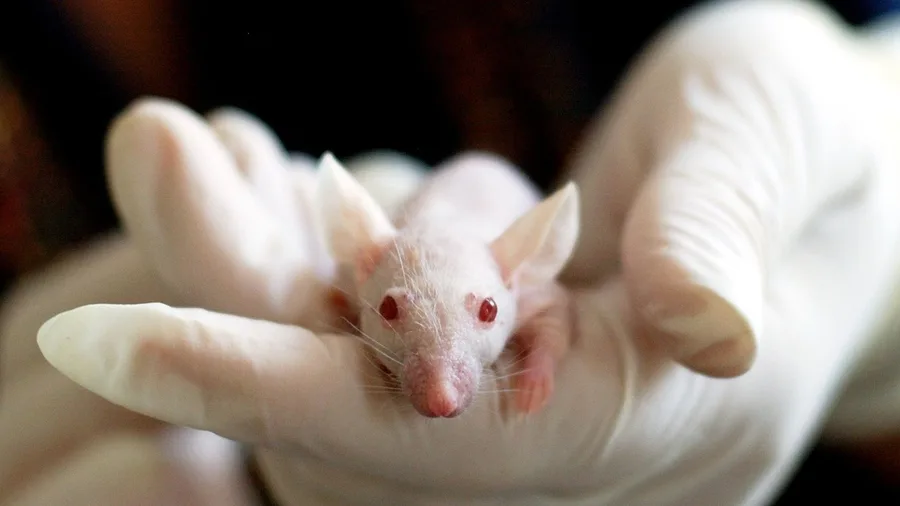
The strongest part of this evidence is breadth, not depth: the fibronectin-barrier damage pattern turned up across multiple laboratory systems — including APOE4 mice, zebrafish, human stem-cell cultures, and 3D blood vessel models — and then again in actual human Alzheimer’s tissue.
That kind of agreement across very different experimental setups is meaningful. When a signal survives a change in species, a change in tissue type, and a change to a human cell model, the odds that it is a fluke shrink considerably.
The human side of that picture carries a different kind of weight, though. Brain tissue and cerebrospinal fluid from Alzheimer’s patients showed higher fibronectin alongside signs of barrier damage and astrocyte inflammation – but those are observations, not controlled experiments. Researchers cannot randomly assign fibronectin levels to people and watch what happens, so in living humans the relationship stays a correlation.
That gap between association and cause is not a minor technicality.
There is also a practical limit on how precisely anyone can judge the findings right now. Available coverage of the study reported no sample sizes – not for the mouse groups, not for the tissue cohorts, not for the cell cultures. Without those numbers, the statistical weight behind each individual result is impossible to assess from the outside.
The paper was published in September 2026 and had been cited once by a later study at the time of writing. Independent research teams have not yet had the chance to test the mechanism in their own labs – which is the step that usually separates a promising result from a settled one.
What This Study Shows vs. What It Does Not
What the evidence shows
- APOE4 mice had nearly twice the fibronectin of APOE3 mice — a specific, measured difference
- Astrocytes alone can drive barrier leakage when fibronectin is artificially raised
- The disrupted growth factors are named: VEGF, HBEGF, and IGF1
- Fibronectin damage runs through integrins and an enzyme called focal adhesion kinase
- A rare FN1 protective mutation was identified in some APOE4 carriers in earlier Columbia work
What it does not yet show
- Whether the FN1 protective mutation is common enough to matter at a population scale
- Whether lowering fibronectin in a living human brain would slow or prevent Alzheimer's
- Whether the same fibronectin-barrier chain drives Alzheimer's in people without APOE4
- No sample sizes reported for any arm — mice, tissue cohorts, or cell cultures
- No independent lab has yet replicated the mechanism; the paper had one citing study at publication
Three Treatment Directions, Each With a Real Obstacle

A mechanism this specific opens three places where a drug or therapy could try to intervene. The first is the buildup itself – stopping excess fibronectin from accumulating around brain blood vessels before it triggers any damage downstream. The second is the abnormal activity it sets off in integrins and focal adhesion kinase, the proteins that relay its damaging signal into the surrounding cells. The third is further along the chain: restoring normal communication among the growth factors VEGF, HBEGF, and IGF1, which coordinate the astrocytes and vessel cells that keep the barrier intact.
Each direction runs into the same central problem.
Fibronectin is not a brain-specific protein. It helps repair tissue and close wounds across the whole body, and a treatment that dials it down broadly – rather than precisely at brain blood vessels – could disrupt those functions. The researchers say so themselves, and it is a real constraint, not a formality. Designing something selective enough to act at brain vessels without touching the fibronectin elsewhere is a hard engineering problem.
One nearer-term possibility doesn’t require solving that problem at all. Cerebrospinal fluid is already drawn and tested in routine Alzheimer’s workups; measuring fibronectin levels in that fluid could flag early vascular damage before symptoms appear, giving clinicians a new signal to watch even while drug development continues.
The three intervention points are research directions, not programs. No development stage or timeline was reported for any of them. The team describes the path to a human therapy as requiring considerable care – which is accurate, given how far the work still has to travel.
The Question This Finding Makes Necessary

All three of those potential therapies share a built-in boundary: they target the fibronectin mechanism, which this study traced specifically through APOE4 biology. What the study does not address is whether the same damage chain runs in Alzheimer’s patients who carry no copy of APOE4.
That question is not a loose end. It determines how far this line of work can reach.
If researchers look at non-APOE4 Alzheimer’s brains and find the same fibronectin buildup, the same disrupted growth-factor signals, the same leaky barriers – then the mechanism is probably a shared feature of the disease rather than one tied to a single gene variant. A therapy built on it could then apply to the broader Alzheimer’s population, not only to APOE4 carriers.
If those patients show a clean absence of the pattern, the picture changes. The mechanism would be specific to the roughly one-in-five carriers of APOE4, and the majority of Alzheimer’s patients would have a different vascular story – one this research cannot yet speak to.
The study was not designed to answer that question, and the fact that it cannot is not a flaw. Establishing the mechanism in APOE4 biology first was the right order of operations. But the answer now shapes everything that follows: which patients get tested for fibronectin in their cerebrospinal fluid, which drug targets are worth pursuing, and how many people this particular chain of discovery can ultimately help.
Frequently Asked Questions
Does having the APOE4 gene mean I will definitely develop Alzheimer’s?
No. APOE4 is the strongest common genetic risk factor for Alzheimer’s, but carrying it does not guarantee the disease. Some people who carry the variant remain cognitively healthy well into old age. The gene raises your probability; it does not fix your outcome.
What is fibronectin and why does it matter for Alzheimer’s risk?
Fibronectin is a structural protein that helps hold tissues together and supports wound healing throughout the body. In people with APOE4, it appears to accumulate around brain blood vessels at roughly double the normal level, triggering signals that make the blood-brain barrier leaky. That leakiness disrupts the brain’s ability to filter and clear potentially harmful waste.
How was the Columbia study conducted, and what kind of evidence is it?
The team tested the fibronectin mechanism across multiple model systems: APOE4 mice, zebrafish, human stem-cell models, 3D blood vessel cultures, and human brain tissue and cerebrospinal fluid from Alzheimer’s patients. The causal experiments — directly raising or reducing fibronectin and observing barrier changes — were done in animals and cell models. The human data shows association, not controlled causation in living people.
Could fibronectin become a target for an Alzheimer’s treatment or a diagnostic test?
The study points to three potential intervention points along the fibronectin signaling chain. The researchers describe these as active research directions, but no development stage or timeline was reported. A more near-term possibility is using fibronectin levels in cerebrospinal fluid as a biomarker — a way to flag high-risk carriers or track whether a future therapy is having an effect.
What is the blood-brain barrier and why does its breakdown matter?
The blood-brain barrier is a tightly controlled lining of cells along brain blood vessels that regulates what enters and leaves the brain. It blocks pathogens and many toxins, and it actively clears metabolic waste from brain tissue. When it becomes permeable — as the Columbia study found in APOE4 mice with excess fibronectin — both filtering and waste clearance break down simultaneously.
Does this research apply to Alzheimer’s patients who do not carry APOE4?
The 2026 study focused specifically on APOE4 carriers and did not examine whether the same fibronectin-driven vascular damage pattern appears in Alzheimer’s patients who do not carry the variant. That question is unresolved, and its answer would determine whether a fibronectin-targeted therapy could help the broader Alzheimer’s population or only the roughly one-in-five people who carry APOE4.
Whether This Mechanism Belongs to APOE4 Alone
APOE4 is a serious risk factor, not a sentence. This study maps the molecular chain it works through – excess fibronectin, disrupted signaling, a blood-brain barrier that starts to leak – and shows that some carriers appear to interrupt that chain naturally. In principle, a drug could do the same thing.
The carriers who stay sharp into their eighties are not simply lucky. There is biology behind it, and that biology now has a mechanism specific enough to work with. The same FN1 mutation that seemed to offer natural protection two years ago now has a plausible explanation for how that protection actually functions.
The honest limit is this: the mechanism is demonstrated most firmly in mice, zebrafish, and cell cultures; the human evidence is associational; and the paper is days old in scientific terms. The question it leaves open is whether the same fibronectin-driven vascular damage shows up in Alzheimer’s patients who carry no APOE4 at all. If it does, this line of research reaches far beyond one genetic subgroup. If it does not, it is still worth pursuing – but for a defined set of patients. Watching for that answer in the next round of studies is the most concrete thing a carrier, or a carrier’s child, can do right now.
Sources
- Why some people escape Alzheimer’s despite carrying a high-risk gene – ScienceDaily (news report) · 2026-10-19
- Fibronectin mediates APOE4-driven blood–brain barrier dysfunction in Alzheimer’s disease – Nature Aging (peer-reviewed paper) · 2026-09-11