
Ancient doctors got a surprising number of things right – but not evenly, and not in the way the reputation suggests. The mechanisms were almost always wrong. The observations were often correct enough to matter.
The standard picture is familiar: animal sacrifice, demonic possession, epilepsy sent by the gods, four mystical fluids determining every disease. That picture is accurate as far as it goes, and for most conditions it describes a medicine that was useless at best and occasionally fatal.
The actual record is more interesting. Hippocrates mocked faith-healers in writing and insisted mental illness had natural causes. Soranus of Ephesus, practicing around 100 CE, banned chains from the treatment of mental illness and prescribed exercise, music, and purposeful occupation instead. The Stoics, roughly three centuries before Soranus, had already articulated the premise on which cognitive behavioral therapy is built – that distress comes not from events but from beliefs about events – and CBT’s founders acknowledged the debt directly.
What held up from ancient medicine was not the theory. It was the observation underneath it. A physician could be entirely wrong about black bile and still correctly identify a pattern of low mood, disrupted sleep, and withdrawal that recurs across patients. The observation survives when the theory is discarded. That gap – between a wrong mechanism and a right clinical finding – is the most instructive thing in the history of psychology, and it runs through everything that follows.
Quick Tips Before You Start
Separate Observation from Theory
Ancient physicians often saw correctly and explained incorrectly — keep those two things distinct as you read.
Dates Matter Here
Some of these insights appeared around 400 BCE; some took until the 1790s to be rediscovered. The gap tells you something.
Credit Without Romanticizing
Ancient medicine excluded women, slaves, and the poor. Correct observations were made inside deeply unjust systems — hold both.
The CBT Connection Is Documented
Aaron Beck and Albert Ellis both acknowledged Stoic sources in writing — this is lineage, not loose analogy.
Progress Is Not Linear
Soranus described humane psychiatric care around 100 CE. It took 1,700 years for that standard to be rediscovered.
Understanding Mental Illness
Before any treatment could work, ancient physicians had to decide what mental illness actually was — a divine punishment, a character flaw, or a natural phenomenon subject to the same scrutiny as a broken bone.
The answer they reached, and then largely lost, and then found again, turns out to be the precondition for everything that follows.
1. Mental Illness Is Medical, Not Divine Punishment

You read a diagnosis and feel something settle – a name for it, a cause, something that can be studied and addressed. That feeling has a starting point, and it is older than most people assume.
Around 400 BCE, Hippocrates wrote a short, angry treatise on epilepsy. Its argument was simple: calling a disease sacred was not piety, it was ignorance dressed as reverence. He located epilepsy in the brain and said so plainly. Melancholia and other disturbances of mind followed the same logic – they arose from the body, which meant they could be observed, described, and treated, the same way fever could be treated. Prayer and exorcism were replaced, at least in Hippocratic practice, by dietary change, physical examination, and direct intervention.
His view lost, for most of the next thousand years. Supernatural accounts of mental illness held the field long after he wrote. But the move itself – naming mental states as natural phenomena rather than divine verdicts – was the single precondition for every clinical advance that followed. A condition that is punishment cannot be improved. A condition that is medical can.
2. The Brain, Not the Heart, Governs Thought and Feeling

The easy assumption is that ancient medicine had no idea where thought and feeling lived – that the brain’s role was simply unknown. The record is more complicated, and more interesting.
Hippocratic physicians named the brain specifically as the organ responsible for pleasure, grief, anxiety, joy, and delusion – a direct break from Egyptian tradition and from most of the ancient world’s instinct, which placed the self somewhere in the chest. Galen, working several centuries later, made the case through dissection: he traced nerves from the brain outward, then cut specific ones and recorded exactly which movements or sensations disappeared. The method was observational and the conclusion was correct.
The influential dissenter was Aristotle, who placed the mind in the heart and described the brain as a cooling mechanism. Because Aristotle’s authority sat at the center of medieval European scholarship for centuries, that single mistake pushed neuroscience backward – brain trauma as a cause of personality change or cognitive loss, a category Greek physicians had already begun to document, was largely abandoned. Observation had produced the right answer. Prestige buried it.
Ancient Terms Worth Knowing
3. Personality Has Stable, Inborn Dimensions
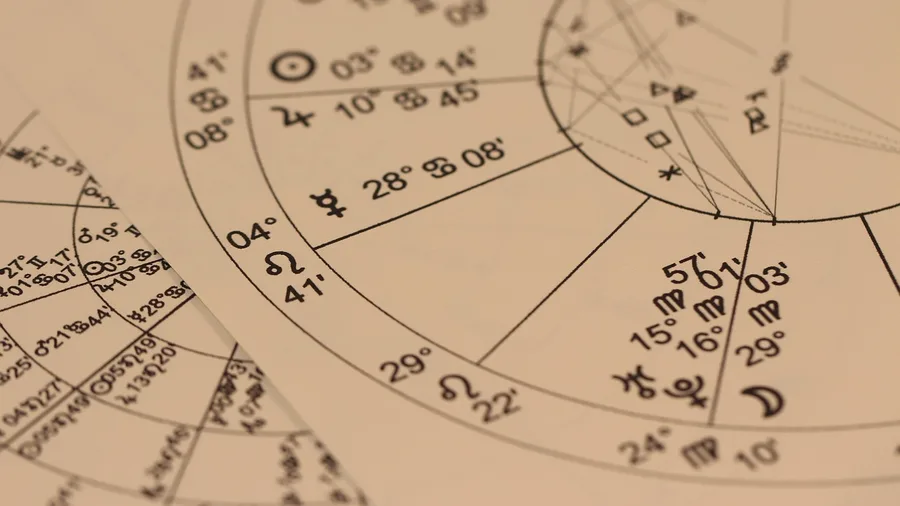
The risk in knowing that Galen described four temperaments is using the fact as a punchline – ancient physicians and their mystical body fluids, quaint but harmless. That reading misses what is worth keeping and what actually collapsed.
Galen identified four recognizable types: the sanguine person, sociable and optimistic; the choleric, driven and quick to irritate; the melancholic, ruminative and prone to anxiety; the phlegmatic, steady and slow to react. He used these categories the way a clinician uses a baseline – to anticipate how a given patient would respond to illness, stress, and treatment. The mechanism he assigned, each type produced by the dominance of a specific body fluid, was wrong. Black bile does not exist. Yellow bile does not govern irritability.
What does hold up is the underlying pattern. Researchers who study personality consistently find that trait differences between people are real, partially heritable, and relatively stable across time. Models like the Big Five identify dimensional clusters that echo Galen’s groupings without requiring any fluid theory to explain them. The structure of the observation survived the demolition of everything Galen thought caused it.
One detail from the original deserves attention. Galen did not treat temperament as fixed fate. He used it as a starting point – information about where a patient was likely to struggle, not a ceiling on what they could become. That distinction, between a stable tendency and an unchangeable identity, is exactly where modern trait research lands too.
Galen's Four Temperaments — What Each One Predicted
😄 Sanguine
Expected to tolerate illness well and recover quickly; low distress threshold under stress
🔥 Choleric
Predicted to resist rest, push through pain, and respond poorly to slow treatment
😔 Melancholic
Flagged in advance for anxiety spirals and prolonged recovery; required careful pacing
🧘 Phlegmatic
Expected to endure treatment without complaint but also to miss early warning signs in themselves
🔬 Modern Echo
Big Five maps closest: Extraversion ~ sanguine; Neuroticism ~ melancholic; Conscientiousness ~ choleric; Agreeableness ~ phlegmatic
What Galen actually used this for
Not labelling patients — anticipating where each type would struggle during illness and adjusting treatment before that struggle arrived.
Treatments That Held Up
Getting the nature of mental illness right was only half the work. Ancient physicians also had to figure out what to do about it — and some of what they devised is still, in recognizable form, in clinical use today.
The thread connecting these treatments is less about technique and more about attitude: they took the suffering person seriously enough to observe what actually helped.
4. Talking Through Distress Reliably Relieves It

Knowing what kind of person you were treating mattered only if the treatment could actually reach that person – and Greek medicine had a form of reaching that looked remarkably like therapy.
Stoic philosophers positioned themselves explicitly as physicians of the soul, conducting structured conversations aimed not at comforting the sufferer but at examining the psychology of beliefs generating the suffering. The session had a method: take the distressing event, set it aside, and look instead at the judgment the person had attached to it. Is this belief accurate? Is it necessary? Those two questions are the skeleton of what CBT practitioners now call a thought-record.
Aristotle added a different mechanism in the Poetics. Watching tragedy performed – real grief, real loss, staged formally – allowed strong feelings to be named and moved through rather than held down. He called this catharsis, and he considered it restorative rather than merely pleasant.
Neither insight is a loose analogy that historians drew later. Aaron Beck and Albert Ellis, developing cognitive behavioral therapy and rational emotive behavior therapy through the second half of the twentieth century, both documented their debt to Stoic sources directly. The lineage is acknowledged, not inferred.
The honest limit sits alongside the achievement. Philosophical counseling in the ancient world reached educated, free men with time and money – a narrow slice of any population. It was never scaled, never made accessible, and no ancient thinker appears to have noticed the gap as a problem worth solving. The observation was correct; the delivery system was built for the few.
💡 PRO TIP
The CBT Lineage Is Documented
Aaron Beck cited Epictetus directly in his early CBT writing. Albert Ellis named Stoicism as a founding influence on Rational Emotive Behavior Therapy. When a therapist hands you a thought-record worksheet, you are holding a 2,300-year-old method in updated packaging.
5. Rest and Safe Surroundings Accelerate Mental Recovery

The conventional picture of ancient healing temples is incense and superstition – patients praying to a god and waiting for a miracle. The Asclepeion at Epidaurus, operating from roughly 400 BCE, was doing something more deliberate than that.
Patients who arrived there were required to fast, undergo ritual bathing, and sleep in a large communal hall. In the morning they reported their dreams to a priest-physician. The sequence – structured rest, cleansing, sleep, communal presence, expectation of recovery – was not random ritual. Suggestion and expectation produce measurable physiological effects; the temple was activating that mechanism systematically, just without a name for it. The word ‘asylum’ originally meant a refuge in precisely this sense, before two centuries of institutional abuse attached different connotations to it.
Where the temples fell short matters as much as where they worked. A patient experiencing acute psychosis or severe mania, or one whose distress had an organic cause in the brain, received rest and ritual and nothing that could reach the underlying condition. Environment as therapy is real – its mechanisms are now well understood – but it works for a bounded range of presentations. The Asclepeion deserves neither dismissal nor romanticizing; it was a genuinely effective intervention for some of what it treated and no intervention at all for the rest.
6. Music Shifts Mood and Can Be Clinically Prescribed

Two modes, two targets. When a Greek physician encountered a patient whose anxiety had curdled into agitation, the prescription might include hours of Dorian-mode music – its intervals considered steadying, its character slow and grounded. A patient presenting with flat, withdrawn affect might be directed toward the Phrygian, brighter and more rousing. These were not aesthetic preferences; they were clinical assignments, matched to emotional states the way a dosage is matched to a symptom.
Soranus, who banned chains from mental wards and prescribed light rooms and gentle exercise, placed music alongside theatrical attendance and reading aloud in his formal treatment protocols – not as background comfort but as active intervention. Modern music therapy research has confirmed what he observed: tempo, mode, and rhythmic structure measurably shift physiological arousal and reported mood. The mechanism the Greeks offered was wrong – numerology, humoral ratios, cosmic vibration – but the effect they were tracking was real. That split is the pattern running through this entire record: accurate observation, dressed in the wrong explanation, outlasting both.
The observation survived. The theory did not.
⚠️ COMMON MISTAKE
Don't Conflate Observation With Explanation
Ancient physicians were right that music does something clinically useful and wrong about why. This split — correct observation, incorrect mechanism — appears across almost every item on this list. Dismissing the observation because the explanation was wrong is the same error as accepting the explanation because the observation was right.
7. Humane Treatment Outperforms Restraint and Punishment

“He just needs to be controlled” – that was the operating logic of European mental illness treatment for most of recorded history, and it produced locked rooms, iron chains, and deliberate terror administered as cure.
Soranus of Ephesus, working around 100 CE, wrote against all of it by name. His prescriptions read like a list assembled by someone who had actually watched patients recover: bright rooms, moderate exercise, reading aloud, calm conversation, a slow reintroduction to ordinary social life. The chains, the darkness, the starvation meant to shock a disordered mind back to reason – he rejected each one explicitly, on clinical grounds.
What followed him in European practice was the opposite. For roughly 1,700 years – from Soranus to Philippe Pinel unchaining patients at the Salpetriere in the 1790s, and William Tuke opening the York Retreat on similar principles – the humane approach did not develop or get refined. It disappeared. Pinel and Tuke were largely rediscovering what Soranus had already worked out, without knowing his name.
That gap is the number worth holding: seventeen centuries during which a correct, verifiable clinical insight was available in the written record and simply not followed. The Soranus case makes it hard to read the history of mental health care as a story of steady progress. A finding can be right, documented, and suppressed for longer than most civilizations last – which is a reason to be cautious about assuming the present has finally caught up.
Soranus vs. What Came After
Soranus (~100 CE)
- Light rooms and calm surroundings
- Gentle exercise and purposeful occupation
- Music and reading as active treatment
- Gradual return to social life
- Explicit rejection of chains and darkness
Medieval European Practice
- Physical restraint and confinement
- Darkness used as punishment
- Starvation and induced fear
- Isolation from social contact
- No concept of recovery as a goal
Lifestyle as Medicine
The most durable category of ancient insight is also the least dramatic: daily habits — exercise, food, sleep, social contact — as active ingredients in mental health.
Ancient physicians did not have the mechanisms. They had the pattern, repeated across enough patients that dismissing it as coincidence was not possible.
8. Exercise Protects the Mind as Well as the Body

The Hippocratic texts are specific enough to settle the question.
Physicians directed patients with melancholia and cognitive dullness to the gymnasium not as general wellness advice but as a targeted treatment – the same way a modern clinician might prescribe a specific intervention for a specific condition. They understood movement as something that acted on the mind through the body. What they could not do is name the mechanisms: the effects on neurotransmitter activity, inflammation, and neuroplasticity that current research has since confirmed. The surface expression – improved mood, sharper thinking – they saw clearly.
The prescription was real. The access was not. Greek gymnasium culture excluded women, enslaved people, and the poor by design, and there is no recorded moment in which a Hippocratic physician noted this as a problem worth solving. The observation was correct; the question of who it was actually for is a different one, and ancient medicine never asked it.
🧬 How the Gut-Brain Connection Evolved
Hippocrates (~400 BCE)
Prescribed light foods and moderation for melancholia — a dietary intervention tied to the wrong theory of black bile but a real clinical observation.
Galen (~150 CE)
Expanded dietary prescription based on temperament type, noting that digestion visibly affected mood and energy.
Medieval Decline
Dietary advice became increasingly driven by astrology and seasonal humoral theory with no observable basis, obscuring the genuine signal.
19th Century
Researchers began identifying the enteric nervous system — a second neural network lining the gut — raising questions about its relationship to mood.
Modern Gut-Brain Research
Bidirectional signaling between gut microbiome, enteric nervous system, and brain function is now an active research field confirming the basic connection Hippocratic physicians observed.
9. Diet and Digestion Shape Mood and Cognition

Hippocratic physicians believed food directly shaped the mind – and the instinct to dismiss this as pre-scientific superstition is worth resisting.
The texts on melancholia are precise about it: light foods, wine in moderate amounts, no heavy meats. The stated reason was humoral – dense food was thought to thicken black bile, which black bile does not exist to do. But alongside that wrong mechanism sits a clinical observation made repeatedly across patients: what a person ate changed how they felt and how clearly they thought. The wrong theory and the real finding share the same page.
Modern gut-brain research has since confirmed that bidirectional signaling between the gut microbiome, the enteric nervous system, and the brain genuinely affects mood, anxiety, and cognition. The field is young and many specifics remain unsettled, but the basic connection Hippocratic physicians documented is not imaginary. The biochemical pathway they intuited is real; they just had no means of tracing it.
The caution here matters. Ancient dietary advice was not all careful observation – much of it was driven by astrology, seasonal humoral calendars, and speculation with no clinical grounding at all. Hippocratic food recommendations sit inside a larger system that produced plenty of nonsense alongside the genuine findings. The connection between diet and mental state survived; the system that surrounded it mostly did not, and the two are worth keeping separate.
10. Reframing Beliefs, Not Events, Reduces Suffering

The honest answer is: partly, and the founders said so themselves.
Epictetus, writing around the turn of the first century CE and drawing on Stoic foundations that stretch back to roughly 300 BCE, set the premise down in a single sentence: it is not things that disturb us but our judgments about things. That sentence is not a loose philosophical precursor to cognitive behavioral therapy – it is structurally identical to the first move a CBT therapist makes when they ask a patient to separate what actually happened from what they concluded about it. Aaron Beck, developing CBT through the 1960s, and Albert Ellis, building Rational Emotive Behavior Therapy alongside him, both documented this debt in their own writing. It is an acknowledged intellectual lineage, not a connection historians drew after the fact.
What CBT added was everything that turns a philosophical idea into a clinical tool. Structured session formats. Measurable symptom outcomes. Randomized controlled trials. Disorder-specific protocols for six hidden types of depression, panic, obsessive thinking. A professional training and accountability system. Stoicism was a way of living a whole life; CBT is a treatment for a specific condition, delivered in bounded sessions, with outcome data attached. The same core observation – belief shapes suffering more than events do – runs through both, but only one of them is a medical intervention.
The Stoic method reaches a real limit, and it is worth naming precisely. A trauma survivor whose beliefs accurately reflect what was done to them is not suffering from a distorted judgment. Someone whose distress is a rational response to ongoing injustice does not need to revise their conclusions. Ancient Stoic teachers had no framework for either category, and that gap mattered. CBT researchers have spent decades mapping where cognitive reframing helps and where it does not – that work has no ancient equivalent.
Of every observation in this record, the Stoic one transfers most cleanly. The mechanism is understood, the lineage is documented, and the qualification is specific rather than fatal to the core claim. The body’s contribution to mental states – food, movement, rest – is real but indirect. This one goes straight to the mind’s role in its own suffering, and two thousand years of intervening thought did not improve on the original sentence.
Ancient Medicine's Most Durable Contributions to Psychology
Frequently Asked Questions
Did all ancient cultures agree that the brain controlled the mind?
No. Egyptian anatomical tradition and most ancient intuition placed the seat of emotion and thought in the heart. Aristotle — the most influential ancient philosopher in medieval Europe — explicitly argued for the heart and assigned the brain only a cooling function. The brain-centered view came from Hippocratic and Galenic medicine and was a minority position for much of the ancient and medieval world.
Is the Stoic-to-CBT connection actually documented, or is it just a historical analogy?
It is documented. Aaron Beck cited Stoic philosophers in his early writing on cognitive therapy. Albert Ellis named Epictetus and Marcus Aurelius as direct influences on Rational Emotive Behavior Therapy. This is not a loose historical comparison made after the fact — it is an acknowledged intellectual lineage with written evidence from the founders of both modern therapies.
What did ancient doctors get badly wrong about psychology?
The humoral mechanism — black bile causing melancholia, yellow bile causing irritability — was entirely wrong and had no biological basis. Aristotle’s placement of the mind in the heart delayed neuroscience for centuries. Astrological and seasonal explanations for mood disorders had no observable basis. And the entire system of ancient medicine served only a narrow demographic of educated, free men, with no framework for addressing that exclusion.
How long was Soranus’s humane treatment approach ignored before it was rediscovered?
Soranus of Ephesus practiced around 98–138 CE. The moral treatment movement — Philippe Pinel in France, William Tuke in England — dates to the 1790s. That is roughly 1,700 years between a correct, clearly articulated clinical insight and its rediscovery. Medieval and early modern psychiatric practice during that interval routinely used confinement, restraint, and conditions that would now constitute abuse.
Does ancient dietary advice for mood have any modern support?
The specific mechanisms ancient physicians proposed — black bile thickened by heavy foods — were wrong. But the basic observation that diet affects mood and cognition is supported by modern gut-brain research, which has identified bidirectional signaling between gut microbiome, enteric nervous system, and brain function. The field is young and specifics remain unsettled, but the observed connection is real. The challenge is separating Hippocratic clinical observation from the astrology and humoral speculation that surrounded it in the same texts.
Were ancient healing temples like Epidaurus effective, or just placebo?
Expectation and suggestion produce measurable physiological and psychological effects — so ‘just placebo’ is an undersell of what was happening. The Asclepeion at Epidaurus used structured rest, fasting, bathing, communal sleep, and dream-reporting as deliberate therapeutic ingredients. The modern parallel is the therapeutic milieu in inpatient psychiatry. The temples were not effective for acute psychosis, severe mania, or conditions requiring biological treatment — but within a range of conditions where environment and expectation matter, the mechanism was real.
What Three Ancient Physicians Still Owe Modern Psychology
Three ancient contributions to modern psychology have earned their place in the record. First, Hippocrates’ naturalism: removing divine punishment from the explanation of mental illness made careful observation possible, and careful observation made treatment possible. Nothing else on the list works without that move. Second, Soranus’s humane treatment principles – exercise, occupation, calm surroundings, no chains – which were correct, documented, and then suppressed for roughly 1,700 years before being independently rediscovered. They are still not universally practiced. Third, the Stoic insight that distress originates in beliefs about events rather than the events themselves: the most precisely correct psychological claim in the ancient record, confirmed by a documented lineage straight into CBT.
The reader who arrived suspecting ancient medicine was mostly superstition is owed an honest verdict rather than a reassuring one. The mechanisms were wrong, almost without exception. The observations were right far more often than there is any obvious reason to expect. That gap is not a curiosity – it is the whole lesson. A physician working without biochemistry, without controlled trials, without any of the tools that make modern confidence possible, could still watch enough patients closely enough to find something true. The greatest achievement was not a cure. It was the insistence on natural causes, on looking at the suffering person rather than the offended god, and on treating that person as a patient. Every durable gain in mental health care since has been built on that foundation – which makes it worth knowing exactly when and where the foundation was first laid.
The Stoic Insight Is in Item 10
The most directly usable finding in this article — the one with the clearest path from ancient physician to modern therapist's office — is in the final entry. Go back to item 10 and read the exception before you apply it.