
The most powerful person in the room speaks last – and the reason is mechanical, not theatrical: silence is a collecting device, and by the time everyone else has finished, you already hold their real positions, their actual concerns, and the precise argument that will move the one person whose resistance matters.
The manager who talks most in a meeting is rarely the one whose opinion settles it. That tends to be the person who spoke last, briefly – the name in the follow-up email.
Speaking early feels like confidence. It signals preparation. What it actually does is hand away the three things that make a final contribution decisive: full information, an unanchored position, and the last word. All three are gone the moment you open.
Strategic silence is not about saying less. It is about spending your words at the moment they carry the most structural weight in the room – when the picture is complete, the positions are exposed, and a single clear statement can close rather than extend the conversation.
By the end of this, you will have a specific rule for your next meeting: one signal to hold while you are still silent, one trigger for when to speak, and one move that makes the final statement land as a verdict rather than just another opinion.
💡 PRO TIP
Own the Follow-Up Email
If your framing shaped the conclusion, write or request the follow-up summary yourself. The version that lands in inboxes is the official record — and the person whose language it uses is the person the organization treats as having decided.
Others Reveal What You Cannot Ask

Waiting gives you a map the room would never hand you if you asked for it directly.
When someone believes they are shaping a discussion, they reveal what they actually think – not the position they prepared on the way in. The early speakers in any meeting believe they are steering. That belief loosens things: real priorities surface, hedged alliances become visible, and the places where someone will quietly fold become readable. None of that comes out when a direct question is on the table, because direct questions trigger prepared answers.
Watch a room for ten minutes before speaking and a different kind of information arrives. Who qualifies every statement when a particular colleague is present. Who floats an idea as a question rather than a proposal, and whom they look at when they do it. Which objection keeps reappearing under different wording – because the person raising it cannot yet say what they actually mean. A targeted question asked afterward produces a polished non-answer; the same information, offered freely in the course of people thinking aloud, is honest.
Speaking early forecloses all of this.
The moment you stake a position, others calibrate against it. They stop revealing and start responding – which means the information that would have told you where to aim is gone before it arrives. The patient listener gets to walk into their one contribution already knowing which alliance is shaky, which objection is the real one, and which single person in the room needs to be persuaded. That precision is not available to anyone who spoke before the picture was complete.
What Silence Collects Before You Speak
You Never Anchor the Group to a Weak Position
That information advantage protects you from one kind of error – but there is a second one, and it costs more publicly: committing to a position before the room has had a chance to show you a better one.
The first number or framing stated in any group discussion pulls subsequent contributions toward it. This is well-documented in negotiation research and holds even among people who know it is happening. The opening figure in a budget conversation becomes the reference point everything else is measured against. The first proposed solution shapes which alternatives feel radical and which feel reasonable. The person who states it does not set an anchor intentionally – they simply speak, and the room adjusts around what they said.
The cost is not just strategic. It is reputational.
Once you have spoken publicly, revising your position signals that the first one was wrong – and the more senior the room, the more visible that signal is. Three speakers could hand you better information in the next five minutes, but walking it back carries a price that staying quiet would have avoided entirely. So the early speaker often holds a position past the point where they privately believe in it, because the alternative is an implicit admission.
Speaking last means the position you commit to is the strongest one the full conversation produced – not the one you carried in from the corridor. The silent listener updates continuously, at no cost, while every speaker before them has already spent something. By the time the final contribution arrives, it can incorporate everything the room learned and still land as a single, considered view. That is not luck. It is the structural advantage of waiting.
⚠️ COMMON MISTAKE
The Anchor You Set Before You Know Enough
The first figure or framing named in a room pulls every estimate that follows toward it. Speak before you have heard the full field and your opening position sets the ceiling — sometimes too low to raise without cost.
Synthesis Reads as Wisdom, Not Recycling

Not repeating what others said is the easier half – the harder half is doing something with what they said that they could not do themselves. Every meeting produces a version of the same problem: three or four people talk past a single unresolved tension, each addressing the edges of it without naming the thing at the center. They may sense something is stuck, but they keep speaking from their own positions rather than from the full picture, because they are inside it. The final speaker, having watched the whole pattern form, can name the actual disagreement – not the surface preferences, but the underlying conflict those preferences were circling.
That naming alone changes the room. When people hear their own reasoning reflected back in a resolved form, they recognize it as theirs and find it harder to reject. This is not a trick; it is the difference between a conclusion that arrives as an external verdict and one that feels grown from the group’s own thinking.
What makes it land as wisdom rather than recycling is that the resolution genuinely was not available at the start. No one could have said it at minute two, because the tension had not yet been demonstrated by the conversation itself. The final speaker is not restating the opening position they carried in – they are doing the cognitive assembly work that only becomes possible once all the pieces are on the table. The room did not see that work happen in real time, which is exactly why it reads as clarity rather than repetition.
Three Positions, Three Costs
Silence Under Pressure Reads as Self-Assurance
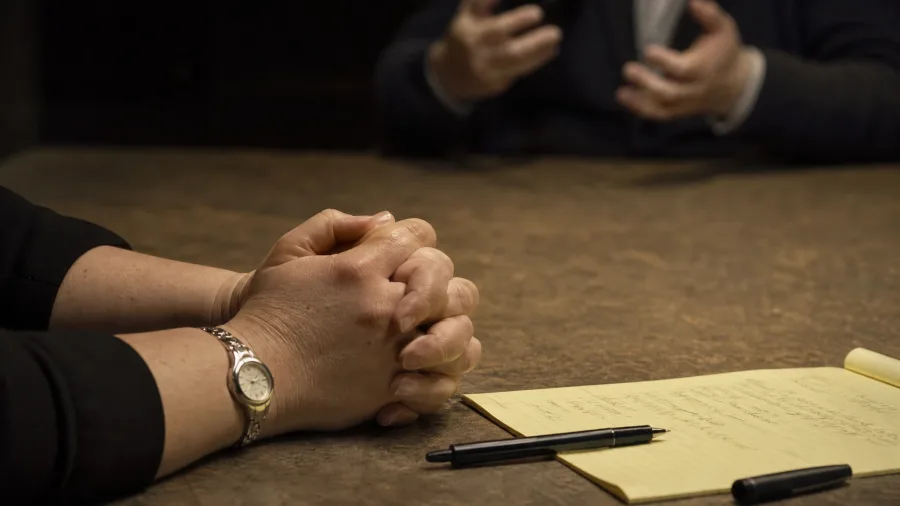
That impression forms before the silent person says a word. What the room reads socially – the status signal the quiet carries – operates entirely independently of what the silence is producing intellectually.
Most people cannot sit with uncertainty in a group. The nervous participant fills it: qualifications before the thought is finished, an interruption disguised as agreement, a hedge attached to every claim. The room registers that behavior accurately as anxiety about standing, not as engagement. Volume is not evidence of authority; it is usually evidence of needing to establish some.
High-status people receive more weight per word, not more words. That is a consistent finding across studies of group dynamics – the person whose judgment the room waits for tends to speak less, not more. The practical consequence is that silence, held with visible attention, reads as someone who does not require the room’s validation before feeling settled.
This reading is automatic. It precedes the moment of speaking and shapes how the eventual contribution lands. A person who has sat quietly through fifteen minutes of competing voices arrives at their one contribution having already been read as self-assured – which means the room is leaning forward before the first sentence is out.
The counterweight is precise, though. Quiet disengagement and quiet attention look identical from across a table. Crossed arms, a blank face, a phone face-up on the table – each of those fills the gap with the least flattering interpretation available. The silence earns authority only when the body signals that something is being processed. Without that, the room does not read composure. It reads absence.
Silence That Commands vs. Silence That Disappears
Reads as Authority
- Upright posture, attention fully forward
- Eye contact with whoever is speaking
- Brief note-taking at key moments
- One deliberate clarifying question
- Visible nod when a strong point lands
Reads as Absence
- Crossed arms or visibly leaning back
- Eyes on phone or laptop screen
- No visible reaction to what is said
- Blank expression throughout the meeting
- Body turned away from the current speaker
Whoever Speaks into the Void Inherits the Risk
That pressure the room feels when a senior person stays quiet – it lands somewhere. It does not simply dissipate.
Unresolved silence in a group creates genuine discomfort, and the intensity of that discomfort tracks directly with the perceived standing of the person who is not speaking. A quiet pause from someone low in the room’s hierarchy is easy to ignore. A quiet pause from someone whose opinion the group has learned to wait for is a different thing entirely – it sits on the table like an object until someone picks it up.
Someone always picks it up.
The person who speaks to relieve that tension immediately commits to a position before the room has found its shape. Every speaker who follows can revise, correct, or simply talk past what they said. They have absorbed the full exposure of going first: the wrong number, the premature framing, the direction the group will later decide it did not want to go.
The strategic listener transfers that exposure without doing anything. The redistribution is entirely a product of staying still. No move is made; no word is spoken. The risk flows toward whoever is least comfortable holding silence, and away from whoever can inhabit it longest.
What the room registers, at a level below conscious analysis, is whether a person feels the pressure or does not. The one who speaks to end the discomfort has answered that question. The one who does not has answered it differently – and the room adjusts its reading of both people accordingly.
What the Last Speaker Inherits Instead
The Last Word Shapes What People Remember

What happens in the room is only part of the outcome. What gets carried out of it – compressed into a summary, written into an action list, repeated in the corridor afterward – is where the lasting effect lives.
Memory of a meeting does not preserve a faithful sequence of contributions. Within a few hours, the details collapse into a single dominant impression: the clearest, most final-sounding conclusion. The last strong statement in a meeting punches above its weight in recall, simply because it arrived last and nothing came after it to dilute it.
This is why an idea delivered early does not automatically belong to the person who offered it.
A good point made thirty minutes before the meeting ended is available to anyone who was paying attention. It can be absorbed, restated with minor adjustment, or simply summarized by whoever speaks closest to the close. The person whose language ends up in the follow-up email – the exact framing of what was decided, who owns the next step, what the group agreed – is the person the organization treats as having directed the outcome. The meeting’s official record reflects not who thought of what, but who named it last and most clearly.
Speaking last, then, is not only about the authority felt in the room while it is happening. It is about which version of events becomes the one everyone refers back to at the next meeting, and the one after that. The room disperses; the framing persists.
How Meeting Memory Distributes by Speaking Position
Directional approximation of serial-position effects in group decision recall. Recency outweighs primacy in emotionally engaged, goal-directed settings.
It Amplifies Status You Already Have
The strategy is a multiplier, which means it needs something to multiply. Walk into a room where nobody knows your track record and stay quiet for forty minutes, and the room does not read authority into that silence – it reads absence, or worse, nothing at all.
What the strategy actually depends on is a prior reason for the room to wait. That reason is built before the meeting: through a decision that held up, a prediction that proved right, a question at the last session that nobody else had thought to ask. The silence only carries weight when the room has already learned that this person’s words are worth waiting for. That learning is not assumed – it is earned.
A cross-functional group, a client meeting, a session full of people who have never worked together – in those rooms, prolonged quiet is simply invisible. The room cannot wait for a verdict from someone whose judgment it has no reason to trust yet.
There is a modified version for anyone still building that track record. Speak once, early – one specific, substantive point, not a greeting, not a restatement of the agenda – then go quiet until the synthesis moment arrives at the end. That single early contribution establishes presence without surrendering the structural advantage of speaking last. The room registers engagement; the silence that follows reads as considered, not empty.
The goal was never silence. The goal is being the person whose verdict the room has learned to anticipate – and that learning only happens after the room has been given a reason.
The Conditions That Make It Work
Foundation at the base — all layers must be present before the top delivers
Active Listening Must Be Visible, Not Internal

From across a conference table, stillness looks the same whether a person is processing every word or has mentally left the building. That is the point where status alone stops protecting you – because no one can see inside your head, and the room will not assume the charitable interpretation.
Readable signals close the gap. A nod when someone lands a solid point tells the speaker their thinking has registered. A line written in a notebook at a pivotal moment signals that something was worth capturing. Eye contact with whoever is currently speaking – not scanning the room, not tracking a phone – communicates that the words are being received and weighed rather than endured. None of these require speech; all of them broadcast presence.
One clarifying question, asked once during the discussion, is not a concession to impatience. It does the opposite: it marks the asker as someone tracking the substance closely enough to notice a gap, which is a different signal from the person who only speaks when the room reaches the synthesis moment.
Without these cues, the silence accumulates the wrong reading. The person who sits motionless and unresponsive gets read as checked out – and a room that has decided you are checked out will not wait for your verdict when it finally comes. The visible signal is not decoration added on top of the strategy; it is the mechanism that makes the strategy work. Remove it and the silence that was meant to project self-assurance becomes, in the room’s interpretation, simple absence.
It Backfires in Leaderless or Fast-Moving Rooms

There are rooms where holding back does not accumulate authority – it simply cedes the meeting to whoever is willing to speak first, regardless of whether that person should be leading it.
A brainstorm that has run dry, a crisis where the next step is genuinely unclear, a room full of equally senior people each waiting for someone else to move – in each of those situations, prolonged silence stalls the meeting and generates frustration rather than gravity. The structural conditions the strategy relies on are missing: someone needs to speak first for the final speaker to have anything to synthesize, and if everyone is waiting, that first speaker never arrives.
The strategy requires a room that will talk. If it will not, the calculation reverses.
The practical test is whether the silence is doing anything. Productive silence builds pressure – the room is moving, positions are forming, a tension is developing that will need resolving. Accumulated silence just sits there, and the longer it sits, the more the meeting belongs to whoever ends it. A leader who watches the room drift into confusion in order to protect a tactic has gotten the relationship between the tool and the goal backwards.
If confusion is spreading and no direction is forming, speaking is the authoritative move. The question to ask in real time is a simple one: is this silence building toward something, or is it just filling the clock? When the answer is the latter, the moment to speak arrived a few minutes ago.
Frequently Asked Questions
Does speaking last work in job interviews or one-on-one conversations?
The group dynamics that make this strategy work — multiple speakers filling a void, an information-gathering phase before commitment — are absent in a one-on-one. Extended silence in an interview reads as evasion or uncertainty, not authority. The related principle that does transfer: answer completely and stop. Do not fill the space after your answer with qualifications. Let the other person decide when to speak next.
Can I use this strategy when I am leading the meeting?
Yes, selectively. Open with the agenda or a framing question, then step back and invite others to speak before you commit to a position. You have set the structure, which is its own form of authority, while still collecting information. Reenter with synthesis once the room has had its say. The facilitator role and the synthesis role are entirely compatible.
What is the anchoring effect and why does it matter here?
The anchoring effect is the well-established tendency for the first figure, idea, or position named in a discussion to pull every subsequent estimate toward it — even when people know the anchor was arbitrary. In meeting terms, the person who names the first budget figure, deadline, or direction creates a gravitational center for the rest of the conversation. That is either an advantage or a trap, depending on whether the anchor was your strongest position.
How do I make my final contribution land as a verdict rather than just another opinion?
Name the tension first. Say plainly what the room has been circling — ‘What I am hearing is…’ — before stating your own resolution. That structure signals you have actually listened, which is rarer than it sounds. Naming their reasoning before giving yours is what makes the contribution feel conclusive rather than additive.
Is this approach manipulative?
Waiting, listening, and synthesizing are the actual mechanics of good judgment, not manipulation. The strategy becomes problematic if silence withholds information the group genuinely needs to decide well, or steers a conclusion that serves only the silent person at others’ expense. Used straightforwardly, it is skilled participation: you have heard more before you speak, and the room benefits from that.
What does synthesis actually look like when I finally speak?
Start by naming what the room has been circling — the underlying tension, not the loudest point made. A phrase like ‘What I am hearing is X pulling against Y’ does this in one sentence. Then give the resolution: the frame or decision that addresses the tension rather than just picking a side. Keep it short. The synthesis position loses its authority the moment it becomes another speech.
When the Silence Has Done Its Work
Take one visible signal into your next meeting and hold it consistently: eye contact with whoever is speaking – not your notes, not your screen, not the door. That single discipline does both jobs at once. It keeps you genuinely informed, and it tells the room the silence is inhabited rather than empty.
The moment to speak has arrived when the room’s contributions have produced a tension nobody has named and resolved. Not the strongest point made so far, not a reply to the last thing said – the underlying friction that everyone has been talking around. That unresolved gap is what the final contribution fills.
The move that makes it land as a verdict is this: name the tension in one sentence, state the resolution in the next, and stop. No qualification, no hedge, no invitation to reopen. The room has nowhere to go but forward. The manager who walked in certain that speaking first would signal preparation leaves understanding something more useful – the most prepared person in the room is the one who waited until they knew exactly where to aim.