Most people assume that having total freedom makes life simpler and easier to manage, believing that an open field naturally invites calm.
When every door is suddenly unlocked and no external authority steps in to tell you what to do next, a cold, unexpected paralysis takes over instead of relief.
You stand frozen before minor daily choices while feeling an overwhelming weight that completely defies logical proportion.
This terrifying sensation is not a malfunction of the mind, but the exact mechanism of human freedom at work, functioning as the dizziness of freedom itself.
By recognizing this dread as proof of your own agency rather than a pathology to cure, you begin to see that Kierkegaard frames the paralyzing weight of choice as the raw potential for authentic selfhood.
At a Glance
What Does Kierkegaard Actually Say About Anxiety?

Søren Kierkegaard published The Concept of Anxiety back in 1844, drawing a sharp boundary between ordinary fear and the weight of vague dread. Fear always fastens itself to something concrete, such as an approaching deadline or a looming medical test, giving the mind a clear target to fight or flee.
By contrast, Angst confronts the absolute nothingness of pure possibility, leaving a person staring into an open expanse where no external rules dictate the next step. Human consciousness possesses an infinite capacity for projection, opening up a bottomless void of choices that feels entirely unregulated.
The reader experiences this exact void when sitting before a blank future, feeling profoundly threatened by the total absence of constraints rather than any visible danger. Standing before an unwritten career path or an open-ended weekend without obligations brings this abstract terror into sharp focus.
The sheer weight of having no guardrails turns what should feel like liberation into a quiet panic. Instead of celebrating an open field, the mind registers the terrifying reality that every single outcome depends entirely on self-directed action.
Common Misconceptions About Existential Dread
Why Does Having Choices Make Me Feel So Awful?

Unveiling the open void of pure possibility naturally exposes why the simple act of selecting a path triggers sheer physiological vertigo. Kierkegaard calls this the dizziness of freedom, comparing the experience of weighing life choices to standing right at the edge of a sheer cliff.
The eyes look down into a yawning abyss, and freedom gazes down into its own boundless potential, creating a bizarre and sickening impulse to jump. Every ordinary decision carries this absolute weight because self-responsibility rests entirely on the individual without a safety net underneath.
The stomach drops during seemingly minor choices because the mind registers the terrifying reality that no one else is writing the future. Selecting an apartment or deciding whether to end a stagnant relationship brings a sudden wave of nausea as the permanence of the action settles in.
The physical reaction proves that autonomy is not just a comforting abstract concept. It feels heavy because the consequences belong strictly to the person who makes the call.
💡 PRO TIP
Recognizing the Edge
When a simple decision causes physical panic, recognize that your mind is reacting to pure possibility, not actual danger.
Is This Different From a Medical Anxiety Disorder?
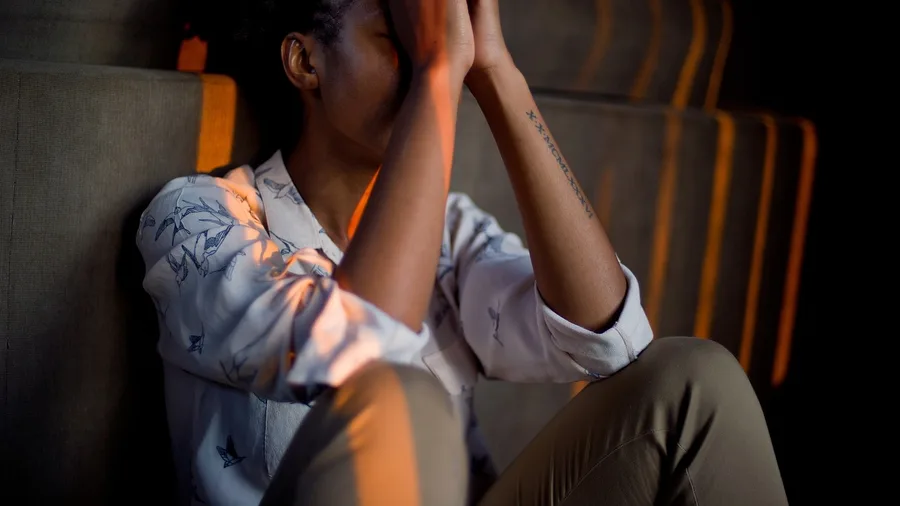
Recognizing this cliff-edge vertigo within ordinary decisions raises the urgent question of whether such paralyzing dread signals a clinical mental illness. Philosophical dread arises from deep ontological self-awareness, remaining fundamentally distinct from generalized anxiety disorders that require medical intervention.
Even so, the physical symptoms manifest identically, bringing racing heartbeats and sudden chest tightness that validate the intensity of the bodily distress. Sitting at a kitchen table trying to choose a direction can trigger the exact same physical alarm bells as a genuine external emergency.
Treating this kind of existential dread strictly as a chemical imbalance misses the deeper message, because no prescription medication can resolve the inherent burden of human freedom. The racing pulse is responding to the sheer weight of self-determination rather than a biological malfunction.
A person can acknowledge legitimate medical needs while still understanding that some portion of modern overwhelm is simply the price of having a fully conscious mind.
What Happens If I Just Avoid Making Choices?

Stepping back from the edge of self-determination and letting standard social scripts dictate every major milestone creates a quiet form of spiritual decay.
When someone else defines the career trajectory, the timeline for partnership, and the acceptable markers of success, the immediate physical relief is undeniable. The heavy lifting of inventing a life gets outsourced to a collective consensus that demands no original thought.
The hidden price of that shelter is the gradual erasure of an authentic voice, replaced by a dull compliance that eventually feels heavier than the original anxiety.
Refusing to actively steer the direction of days does not eliminate the burden of freedom; it merely converts sharp existential terror into a lingering, chronic numbness. Letting the crowd choose the path is still an active decision, one that quietly trades the raw potential of genuine self-creation for the safety of a locked room.
⚠️ COMMON MISTAKE
The Trap of Conformity
Handing your decisions over to social consensus eliminates short-term anxiety while killing long-term vitality.
How Am I Supposed to Live With This Dread?
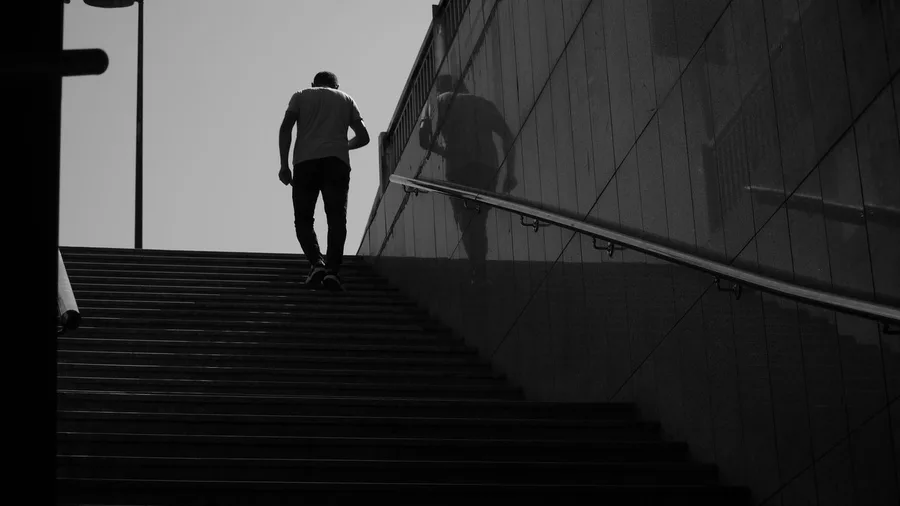
Mastering the internal storm means learning to walk forward with trembling hands rather than waiting for the terror to subside completely.
The goal is never to engineer a state of permanent calm where choices no longer carry weight, but rather to use the pulsing panic as proof of active agency. When the heart races before a major pivot, that physical response signals the exact moment a person is stepping out of the crowd and into real ownership.
Embracing the dizziness of freedom transforms an overwhelming obstacle into an awakening force, turning hesitation into fuel for genuine selfhood. Living with the dread requires treating uncertainty not as a temporary glitch to fix, but as a permanent, reliable companion on the path toward an examined life.
🧭 Moving Through the Dizziness
Acknowledge the Void
Stop fighting the baseline discomfort of having open choices.
Identify the Escape Routes
Notice where you rely on crowd consensus to avoid deciding.
Take the Leap
Commit to a concrete action despite the pounding heart.
Claim Your Agency
Accept that the resulting reality belongs entirely to you.
Frequently Asked Questions
Why does freedom feel uncomfortable according to Kierkegaard?
Freedom opens an infinite expanse of possibilities with zero external guarantees. This lack of constraints triggers existential dizziness because you realize you alone are responsible for your outcomes.
Is existential anxiety considered a mental illness?
No, philosophical dread is a normal byproduct of human consciousness and self-awareness. While it shares physical symptoms with clinical anxiety, its root cause is the psychological weight of personal choice.
How can I tell the difference between fear and anxiety?
Fear always attaches to a specific, identifiable threat in your environment. Anxiety or angst is a diffuse, objectless dread that arises when you confront the total openness of your future.
What happens if I refuse to make choices in my life?
Avoiding choices by hiding within social norms or crowd behavior leads to quiet despair. You sacrifice your authentic self to gain temporary safety from the vertigo of freedom.
How do I use anxiety constructively in daily decisions?
Instead of treating the racing pulse as a sign to stop, reframe the physical tension as confirmation of your agency. Step forward into the unknown and let action resolve the paralysis.
Accepting the Vertigo as Proof of Life
Accepting the Vertigo as Proof of Life
Anxiety is never a symptom to be cured, but rather the unmistakable proof of personal agency and selfhood.
You return to that familiar, paralyzing overwhelm, now seeing it not as a descent into panic, but as the true altitude of freedom.
Take a breath, leave the door wide open, and step straight into the dread.
Reclaim Your Agency Today
Take one pending choice you have avoided and make your decision before the day ends.