
Most people believe they make purchasing and compliance decisions based on cold logic, careful budgeting, and an objective comparison of facts.
The reality is that human behavior runs on a set of automated psychological scripts that marketers and negotiators trigger on demand to bypass critical thinking.
Six specific laws of influence govern human compliance, operating beneath conscious awareness whether you approve of them or not.
Mastering these six triggers transforms them from invisible traps into visible mechanics, allowing you to deflect manipulation and persuade others ethically.
Quick Tips Before You Start
Pause the clock
Put time between the request and your answer.
Separate the person
Treat the charm differently from the deal itself.
Write it down
Reviewing specs on paper breaks the emotional spell.
1. Uninvited Favors Create an Urge to Repay

People assume that opening a padded envelope from a charity and finding a set of adhesive name tags means someone wanted to send a helpful token of appreciation.
The common advice suggests treating every piece of mail as a simple choice: use them, throw them away, or send a small check back if conscience demands it.
That perspective misses the underlying evolutionary wiring that treats any unasked-for item as an immediate social debt requiring settlement.
Long before postal systems existed, sharing food within a tribe meant everyone owed a reciprocal favor to keep the group alive during lean weeks.
When a charitable foundation drops return address stickers into your mailbox, that ancient survival instinct fires off inside your chest as a low-grade biological discomfort of owing something to someone else.
A similar mechanism plays out under fluorescent grocery lights when an employee in a paper hat hands out a free three-dollar cube of aged cheese on a toothpick.
Accepting that small bite creates an immediate psychological imbalance that routinely pushes shoppers toward dropping a forty-dollar wheel of cheese into their carts just to relieve the sudden social pressure.
Redefining the unsolicited item as a calculated sales tactic rather than a genuine gift absorbs the freebie without absorbing the unspoken obligation to repay it.
2. Public Stances Trap You Into Future Compliance

You stand on your front porch on a Tuesday evening while a clipboard holder asks if you care about children crossing the street safely, and you murmur a casual yes before signing your name.
When past personal actions provide no reliable guide for a completely new situation, the mind looks inward to maintain a stable and predictable identity.
That minor signature on a neighborhood traffic petition locks in a quiet self-image of civic engagement that feels entirely harmless at the moment of the ink hitting paper.
Six weeks later, an email arrives asking you to spend an entire Saturday hauling timber and mixing concrete for a new neighborhood playground, and you agree because refusing feels like an internal betrayal of your own stated values.
The evolutionary need for a coherent identity turns minor agreements into a profound vulnerability for massive future escalations driven by the internal terror of appearing hypocritical.
Breaking this consistency loop requires paying attention to the physical stomach drop that occurs when a past small yes is leveraged into a costly new demand, signaling the trap has sprung.
Spotting the Consistency Trap
Don't fall for this
- Agreeing to a small hypothetical question
- Signing something just to be polite
- Defending a stance you barely care about
Do this instead
- Acknowledge when new information changes your mind
- Refuse minor requests that feel like setups
- Listen to that sudden drop in your stomach
3. Uncertainty Makes the Crowd Look Like Truth
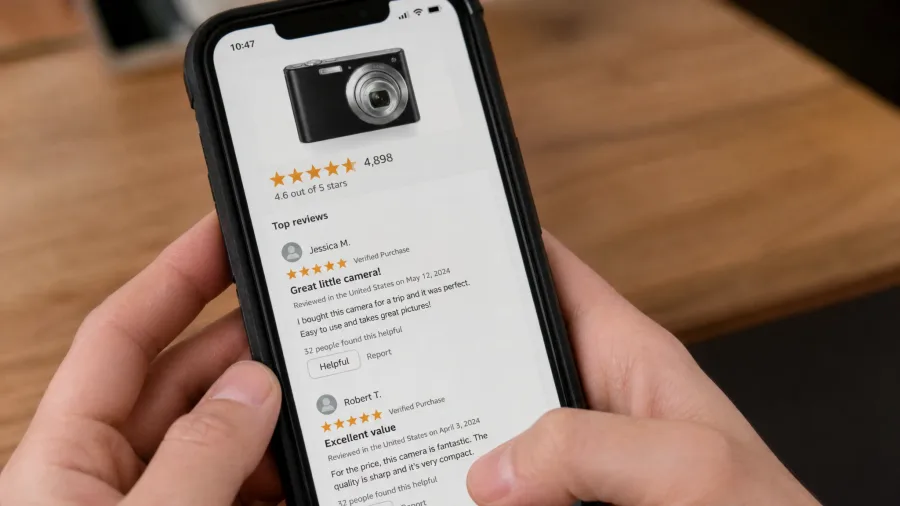
Ten thousand five-star reviews sit glowing on a digital retail page next to a mid-tier digital camera, while a competing model with superior optical specifications sits quietly nearby with only twelve reviews.
Faced with unfamiliar technical jargon and total ambiguity, shoppers routinely abandon the superior device to buy the mediocre model because the brain prefers to outsource decision-making directly to the herd.
Social proof evolved to keep humans alive during sudden panics by mirroring the group’s escape route, but modern commerce hijacks that exact mechanism to drive impulse buys during moments of consumer uncertainty.
Engineered consensus replaces authentic popularity through paid bot ratings and artificial television laugh tracks designed to simulate a bustling crowd where none actually exists.
Defeating artificial momentum requires pausing to evaluate the product’s raw specifications and utility against personal requirements, actively severing the crowd’s choice from the objectively correct choice.
4. Flattery Lowers Your Critical Defenses

Trusting someone entirely because they mention growing up in your home state carries a heavy financial price tag, dissolving standard consumer skepticism the moment an artificial bond is established across a dealership desk.
Researchers who study human behavior find that people automatically attribute positive traits like honesty and warmth to anyone who delivers unexpected compliments or possesses high physical attractiveness, weaponizing an ancient preference for the familiar tribe to speed up transactions into fabricated friendships.
Defending against this vulnerability requires drawing a hard mental line between the charming person making the request and the actual mechanics of the purchase itself.
The Compliance Escalation — At a Glance
📝 The Hook
A tiny agreement
🔗 The Trap
Internal consistency
⛰️ The Ask
A costly favor
The Mechanism
Your brain would rather give up a Saturday than admit to being a hypocrite.
5. Symbols of Status Override Independent Judgment

A sharp suit, a white lab coat, or an expensive luxury car causes an otherwise rational adult to blindly execute questionable commands and accept dubious financial advice without verifying a single fact.
The biological shortcut of deferring to elders is easily faked with superficial props and impenetrable industry jargon that simulate competence, blurring the line between positional power and verifiable expertise.
Interrupting automatic obedience requires checking an individual’s actual historical track record and specific credentials before complying with their directives.
6. The Threat of Losing Out Triggers Panic

Only two rooms left at this price.
A flashing red countdown timer on a booking website forces the purchase of an unneeded hotel room because anticipated regret fully short-circuits pre-planned budgeting logic. The human brain values a dwindling resource significantly higher than an abundant one, triggering a starvation-avoidance reflex that goes haywire in modern digital commerce.
Platforms manufacture artificial scarcity with banners warning of fleeting time windows to induce irrational panic and force immediate checkout. Neutralizing this pressure involves rating the item’s actual daily utility on a scale of one to ten, completely ignoring its current availability.
Frequently Asked Questions
Why do these influence triggers work on everyone?
They bypass the logical prefrontal cortex and appeal directly to ancient survival instincts. Your brain equates social rejection or missed resources with physical danger, forcing compliance before you can think.
Can I use these laws of influence ethically?
Yes, by pointing out genuine truths rather than fabricating them. Highlighting a real, limited-time opportunity or establishing authentic common ground builds trust without relying on manipulation.
How do I say no to an uninvited favor politely?
Acknowledge the gesture briefly, but do not accept the item if possible. If it arrives in the mail, mentally categorize it as junk mail rather than a personal gift to break the obligation loop.
What is the fastest way to break a high-pressure sales tactic?
Physically walk away for twenty-four hours. Removing yourself from the environment severs the immediate emotional pressure and allows your rational brain to evaluate the actual numbers.
Why does social proof feel so convincing?
During ambiguous situations, humans are wired to assume the crowd knows something they do not. This herd mentality saved our ancestors from predators, but today it just leads to impulsive consumer purchases.
Your Next 24 Hours in the Persuasion Crosshairs
Your challenge for the next twenty-four hours is to treat your inbox and daily commute as an active behavioral laboratory, reading every incoming promotional email and digital advertisement purely to identify which of these six laws is being deployed without making a single buying decision.
The comforting belief in purely logical, budget-driven decision-making shatters once these underlying mechanical triggers in daily commerce become fully visible to you.
Recognizing these invisible levers of influence ensures that your future compliance remains a deliberate choice rather than a hijacked biological reflex.
Audit Your Inbox Right Now
Open your email and find the last promotional message you received. Can you spot the scarcity timer or the social proof trap hiding in the text?