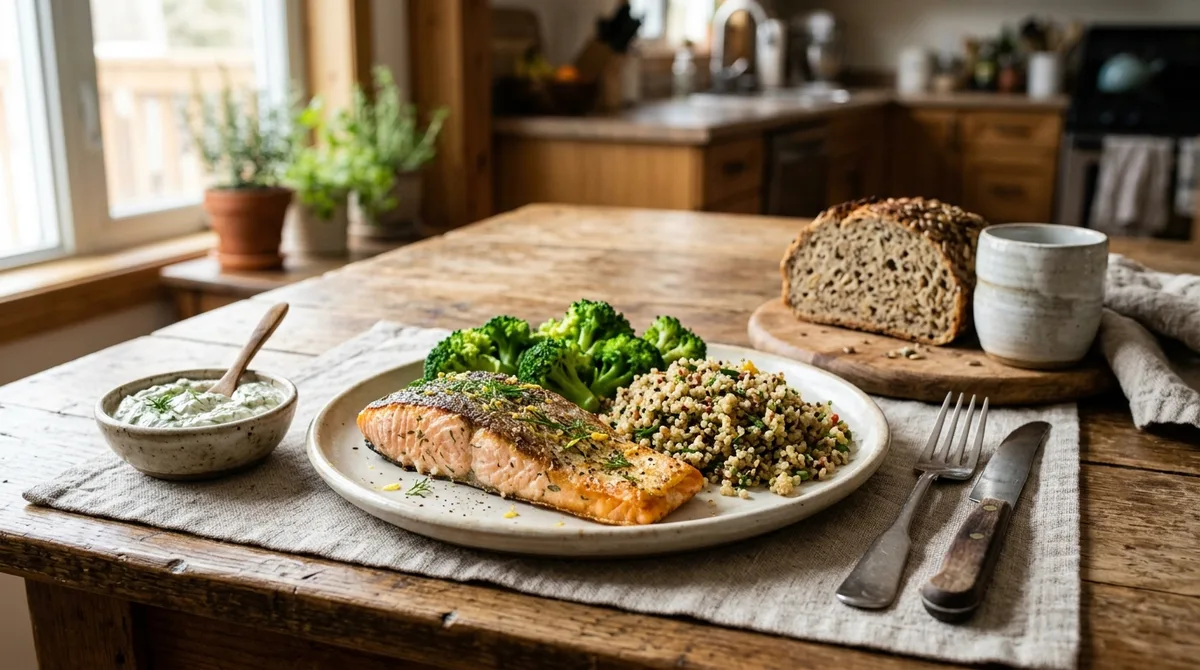
You reach for the quick box of crackers because dinner is an hour away, realizing your afternoon slump has become an everyday appointment.
At 55, I decided to stop guessing how industrial ingredients affected my joints, sleep, and digestion by cutting ultra-processed foods entirely for six weeks.
What happened next went far beyond weight on a scale, touching on unexpected shifts in mobility and mental clarity.
Quick Tips Before You Start
Shop the Perimeter
Spend your first week buying only single-ingredient foods from the outer aisles.
Read the Back
If a label contains more than five ingredients or unpronounceable chemicals, leave it.
Batch Prep Staples
Roast two trays of root vegetables on Sunday to eliminate weekday decision fatigue.
Embrace Real Salt
Your palate will miss industrial sodium boosters; use good sea salt and herbs instead.
1. The Morning Stiffness Shift

You swing your legs out of bed and wait for the familiar creak in your ankles and lower back.
By week three, that morning startup friction noticeably softened, turning a sluggish rollout into a smooth movement.
Researchers point to systemic low-grade inflammation driven by emulsifiers and industrial seed oils as a primary culprit in joint discomfort after 50.
When you remove those additives, your body finally gets a break from constant immune flare-ups.
The protocol requires strict label reading, scanning for hidden maltodextrin and modified corn starches in seemingly innocent salad dressings.
💡 Tip: Check your salad dressing labels first; soybean oil and high fructose corn syrup hide in almost every commercial brand.
At a Glance
2. Reclaiming Steady Afternoon Energy

That heavy three o’clock fog used to demand a trip to the pantry for a sugary oat bar.
Stripping out foods engineered in laboratories stabilized my blood sugar swings almost entirely by the end of the second week.
Ultra-processed meals trigger rapid insulin spikes followed by sharp drops, mimicking a metabolic rollercoaster that exhausts your pancreas as you age.
Real protein and fiber create a slow-burn fuel source that keeps your brain clear right through dinner prep.
⚠️ COMMON MISTAKE
Falling Into the Diet Product Trap
Many people swap regular cookies for 'diet' or 'protein' bars packed with artificial sweeteners and isolated soy protein. These engineered snacks keep your palate hooked on hyper-sweet flavors and still disrupt gut bacteria.
3. Quiet Digestion After Fifty

You finish dinner and spend the next two hours feeling like you swallowed a brick.
Your digestive tract becomes less forgiving with each passing decade, meaning industrial additives cause much more irritation now than they did at 30.
Emulsifiers like carboxymethylcellulose and polysorbate-80, commonly added to processed foods to improve texture, disrupt the protective mucus layer of your gut.
Removing them brought a quiet flat stomach that I had not experienced since my forties.
Your gut at 55 does not need help processing food; it needs you to stop feeding it chemistry experiments.
— What gastroenterology researchers repeatedly emphasize
4. The Unexpected Grocery Savings

You assume buying fresh produce and quality cuts of meat will send your weekly food budget through the roof.
My receipt totals actually dropped by roughly fifteen percent because I stopped paying for cardboard boxes, marketing hype, and pre-packaged convenience.
Whole carrots, dried lentils, block cheese, and whole oats cost significantly less per serving than ready-to-heat frozen dinners.
You pay heavily for the factory labor required to assemble boxed foods.
Grocery Budget Shift — At a Glance
📉 Weekly Spend
Down 15 percent
🛒 Aisle Focus
Perimeter only
📦 Boxes Bought
Near zero
💵 Cost Per Serving
Lower on whole foods
The Financial Reality
Factory labor and flashy packaging make up most of the cost in processed convenience foods.
5. Awakening a Dull Palate

Processed foods are engineered with exact ratios of salt, sugar, and fat designed to hijack your dopamine receptors.
For the first week, real food tasted remarkably bland, almost disappointing.
Commercial flavor enhancers numb your sensitivity, hiding the natural depth found in simple, whole ingredients.
By day fourteen, my taste buds reset entirely, and a simple roasted carrot tasted intensely sweet and complex.
Best Flavor Enhancers
6. Deepening Sleep Architecture

Waking up at 2 a.m. with a racing mind and a warm chest had become a frustrating nightly routine.
Eliminating hidden preservatives and late-evening processed snacks allowed my heart rate to settle consistently through the night.
Clinical observations of older adults show that chemical additives and excess sodium significantly impact autonomic nervous system recovery during sleep.
Giving your liver and kidneys a clean processing window before bed changes your morning rest quality.
💡 PRO TIP
The Two-Hour Evening Rule
Finish your last meal at least two hours before lying down. Without ultra-processed fats slowing gastric emptying, your body digests efficiently and lets your heart rate drop into deep sleep states.
7. Simplifying Kitchen Prep Routines

Staring at a counter without pre-made jarred sauces can feel remarkably intimidating when you are used to convenience.
Cooking from scratch actually became faster once I stopped reading complex multi-step recipes and leaned on repeatable templates.
Roast a protein, roast a tray of vegetables, and cook a simple pot of grains to mix and match all week long.
Removing industrial shortcuts forces you to build simple habits that require zero mental bandwidth on a tired Tuesday night.
Kitchen Efficiency Shortcuts
8. Shedding Stubborn Midlife Weight

Weight distribution changes around your fifties, clinging stubbornly to the midsection despite endless cardio.
Dropping ultra-processed foods removed hundreds of invisible empty calories and chemical obesogens that interfere with natural satiety hormones.
Leptin and ghrelin finally started communicating properly again, signaling true fullness without a desperate craving for dessert.
You stop fighting your metabolism and start working with it.
9. Managing Social Gatherings

You worry that eating clean will make dining out or visiting friends an awkward logistical nightmare.
Restaurants and hosts are remarkably accommodating when you simply ask for grilled fish or steak with double vegetables instead of fries.
The secret is keeping your focus on the company rather than making a dramatic announcement about your dietary rules.
Most people respect a calm choice when you do not turn it into a lecture.
10. Clearing Brain Fog at Work

Midday mental fatigue used to feel like an unchangeable fixture of a busy work schedule.
Clearing out industrial seed oils and artificial preservatives lifted a subtle mental haze that I had mistakenly blamed on normal aging.
Stable blood sugar and reduced systemic inflammation directly benefit cognitive clarity and focus.
You stop reaching for caffeine every two hours to stay sharp through afternoon meetings.
11. Rebuilding Skin Resilience

You look in the mirror and notice a dullness that expensive moisturizers fail to correct.
Inflammatory industrial oils and processed sugars contribute heavily to glycation, a process that stiffens collagen fibers in your skin.
Cutting ultra-processed foods brought a noticeable clarity and natural hydration back to my complexion within four weeks.
True skin health at 55 starts from what you leave out of your shopping cart.
12. Handling Travel and Road Trips

Gas station aisles are entirely engineered to tempt you with salted, packaged convenience items when you travel.
Packing a small cooler with hard-boiled eggs, sliced cheddar, raw almonds, and fresh berries completely eliminates the roadside food trap.
Digestive slowdowns on long car rides happen because sitting for hours alters gut motility, and heavy processed snacks only compound the inflammation.
Planning ahead saves you from emergency vending machine stops that ruin your digestion on travel days.
A little preparation keeps your six-week commitment intact on the highway.
13. Managing Cravings During Stress

A stressful afternoon at work used to trigger an automatic urge for chocolate or crunchy crackers.
Recognizing that industrial food products are chemically formulated to exploit stress responses helps break the emotional loop.
Stepping away for a five-minute walk calms cortisol levels far more effectively than any snack bar ever could.
Your brain learns to separate genuine hunger from emotional habit when you remove hyper-palatable triggers.
14. Reclaiming Kitchen Confidence

Real cooking can suddenly feel like an intimidating test when your schedule and energy look different than they did twenty years ago.
You might feel like preparing healthy meals requires formal culinary school training and hours of frustrating cleanup afterward.
Mastering just three basic techniques-roasting vegetables, searing protein, and whisking a simple pan dressing-actually covers ninety percent of weeknight meals.
Simplicity beats complexity every single time when you are building sustainable habits at 55.
That focus transforms your kitchen from an overwhelming chore room into a comfortable workspace you actually want to use.
15. The Long-Term Longevity Outlook

Cutting ultra-processed food is not a temporary six-week cleanse to squeeze into an old outfit.
It is a permanent shift in how you fuel a 55-year-old body that demands clean building blocks for the decades ahead, especially when cell turnover slows down and your system becomes less forgiving of inflammatory chemical additives.
The dividends show up in steady energy, agile joints, and peaceful digestion day after day, keeping your metabolism responsive and your immune system properly supported as you age.
Start with your next meal and let the results speak for themselves.
Frequently Asked Questions
How long does it take to stop craving processed snacks?
Most people notice intense cravings subside significantly between days ten and fourteen. Your palate and dopamine receptors require about two weeks to adjust away from hyper-palatable industrial foods.
Is eating this way significantly more expensive?
Grocery bills typically drop rather than rise. Eliminating pre-packaged convenience items, branded snack bars, and prepared meals saves enough money to easily cover quality produce and fresh proteins.
Do I need to eliminate processed foods one hundred percent?
Perfection is unnecessary for success. Aiming for an eighty-twenty approach allows you to maintain the physical benefits of clean eating while staying relaxed during social events and family dinners.
What is the best way to start if I hate cooking?
Begin with assembly-style meals that require zero cooking skill. Stock canned wild salmon, pre-washed greens, avocados, hard-boiled eggs, and good olive oil for effortless, zero-prep lunches.
Your First Week of Better Energy
If you do only one thing from this list, clear the ultra-processed snacks from your pantry this afternoon and replace them with raw nuts and fresh fruit.
Bring this shift to your next checkup and notice how your energy and joint comfort tell the real story.