You know that moment. You’re in the gym, maybe pushing through that last set of heavy squats or grinding out a few more sit-ups, and your brain is telling you, “Come on, you used to do this in your sleep.”
But your body? It’s whispering something else. Maybe it’s a pinch in the shoulder or a dull ache in the lower back that wasn’t there yesterday.
We are currently watching the first generation of adults who exercised religiously in their 20s and 30s cross the threshold of 50, 60, and beyond. We refuse to slow down. We’re hitting the pickleball courts, the CrossFit boxes, and the pavement in record numbers. That drive is incredible.
But there’s a catch.
Orthopedic surgeons are seeing a massive spike in what they call “Boomeritis”—sports injuries in older adults who are trying to train with the intensity of a 25-year-old using the biology of a 55-year-old. In fact, research presented at the American Academy of Orthopaedic Surgeons projects a 123% increase in sports-related injuries for adults over 65 by the year 2040.
Here’s the truth no one likes to admit: The goal of exercise changes after 50. It’s no longer about how much you can bench press or how high you can jump. The goal is availability. The best ability you can have is simply being available—injury-free, mobile, and ready to enjoy your life.
Let’s look at the “Forbidden Seven”—exercises that might be doing more harm than good, and exactly how to swap them out so you keep getting stronger without the surgery.
The “Forbidden Seven” and Their Upgrades
We aren’t just deleting exercises; we’re upgrading them. We want the strength benefits without the orthopedic bill.
1. The Knee-Wrecker: Leg Extension Machine
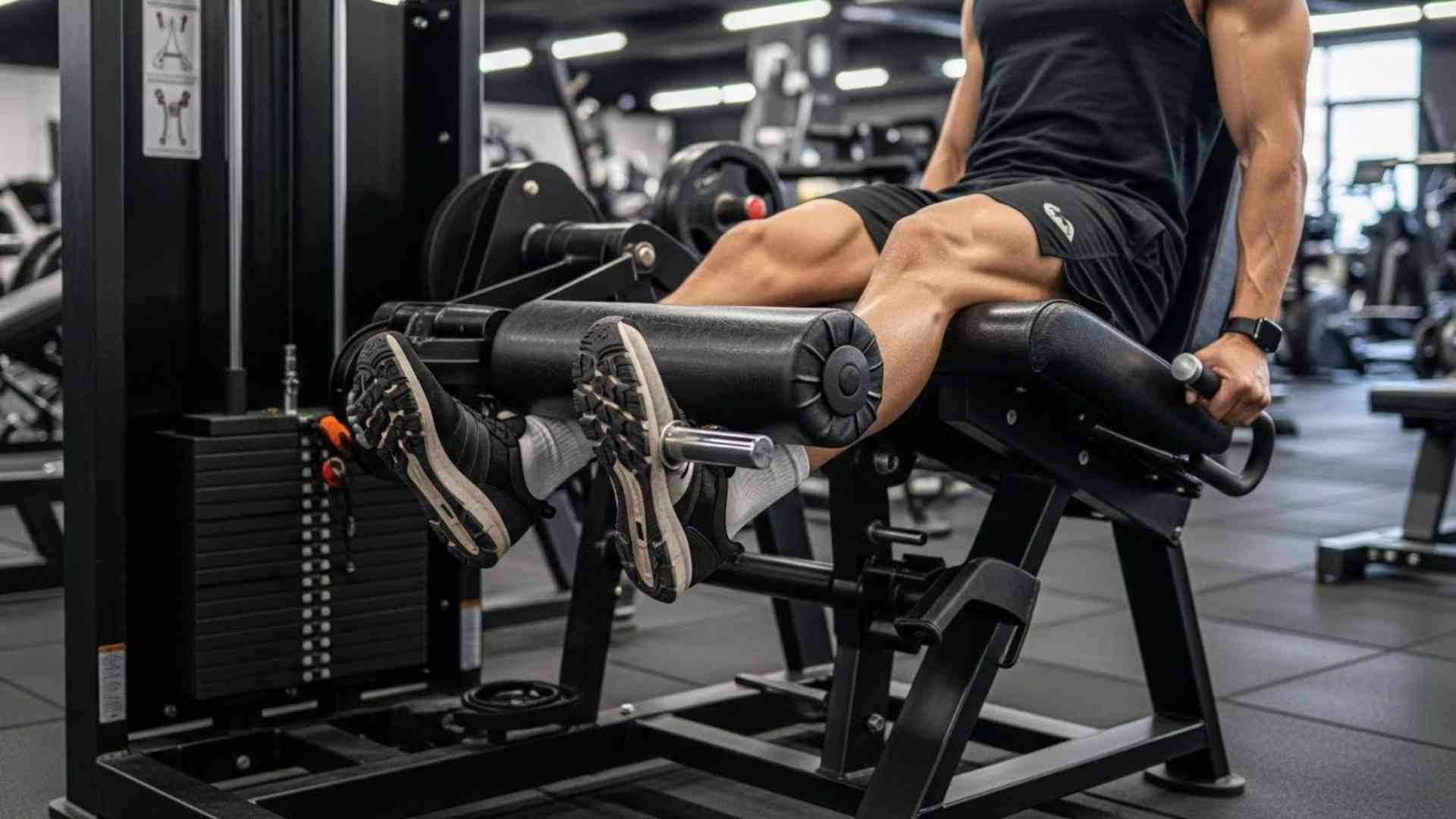
You know this one. You sit in the chair, tuck your ankles behind the pad, and kick your legs up. It isolates the quads, sure, but it hates your knees.
The Problem: It creates something called Shear Force. Because your foot isn’t planted on the ground, your shin bone is being pulled forward away from your thigh bone. It places massive stress on your ACL and grinds your kneecap against your femur with pressure that can equal 5 to 7 times your body weight.
The Upgrade: The Box Squat (or Chair Squat) Instead of isolating the knee, we want to use the hips and hamstrings to help out.
How to do it: Place a sturdy chair behind you. Squat down until your glutes barely tap the seat, then drive back up.
Why it wins: Your foot is planted (Closed Kinetic Chain), which stabilizes the knee. Plus, it mimics the most important life skill: getting out of a chair.
2. The Shoulder Grinder: Behind-the-Neck Press
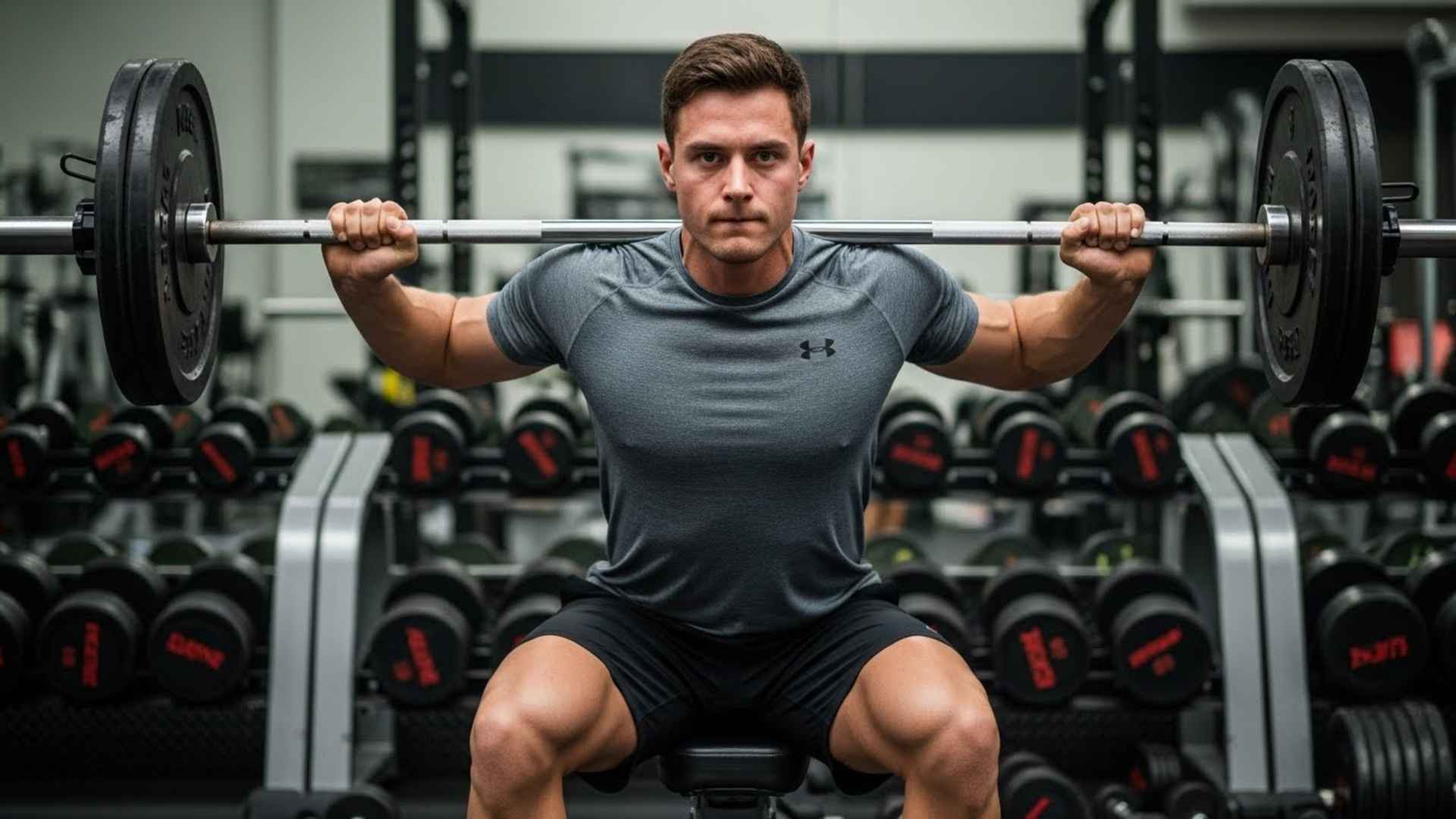
Lifting a barbell from behind your head used to be a bodybuilding staple. Today? It’s a fast track to rotator cuff surgery.
The Problem: To get the bar behind your head, you have to put your shoulders in a position of “maximum external rotation and abduction.” Essentially, you are grinding the rotator cuff tendons against the bony roof of your shoulder (the acromion). If you have even a tiny bone spur (which most people over 50 do), this acts like a saw on a rope.
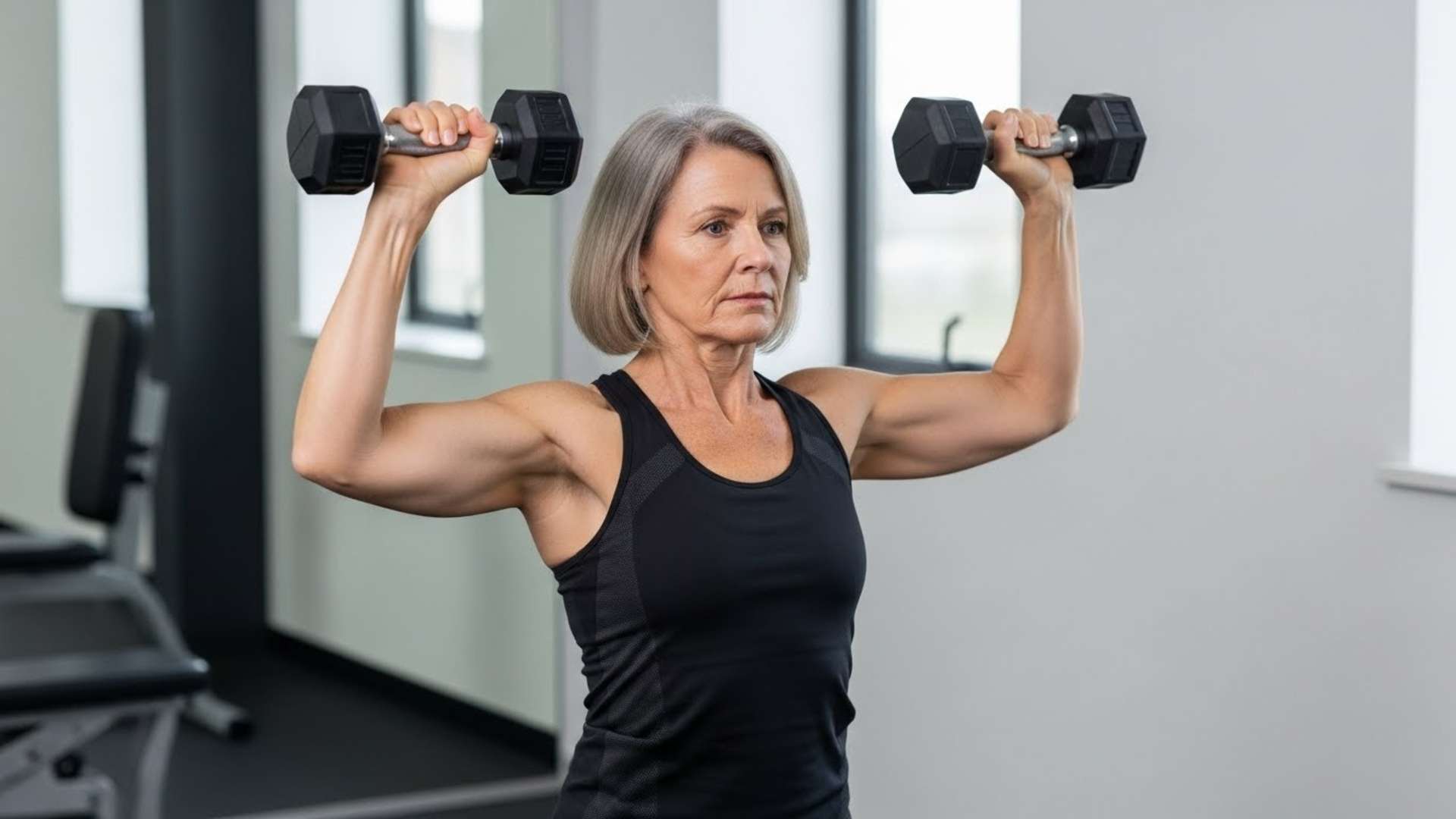
The Upgrade: Dumbbell Scaption Press
How to do it: Use dumbbells. Instead of pressing straight out to the sides (like a “T”), bring your elbows forward about 30 degrees (a “V” shape).
Why it wins: This aligns the weight with the natural plane of your shoulder blade, opening up space in the joint so your tendons don’t get pinched.
💥 The Disc Crusher 💥
❌ The Problem: Sit-Ups
Don’t be a Jelly Donut! Sit-ups are repetitive loaded flexion that can crush your discs.
Most people pull with hip flexors, not abs, creating shear force and lower back spasms.
✅ The Upgrade: The Plank
Build a Bulletproof Corset! Your core’s real job is to resist movement, not crunch.
Hold straight like a board and squeeze those glutes to protect the spine without moving discs.
We have to let go of the idea that sit-ups give you a six-pack. For seniors, they mostly give you back pain.
The Problem: Remember the Jelly Donut? Sit-ups are repetitive loaded flexion. They crush the discs. Furthermore, most people pull with their hip flexors (the psoas muscles) rather than their abs. This pulls on the lower spine, creating shear force that can cause lower back spasms.
The Upgrade: The Plank
How to do it: Hold a push-up position (or rest on your forearms). Keep your body straight as a board. Squeeze your glutes.
Why it wins: Your core’s real job isn’t to crunch; it’s to resist movement and protect your spine. The plank builds a bulletproof corset around your back without moving the discs.
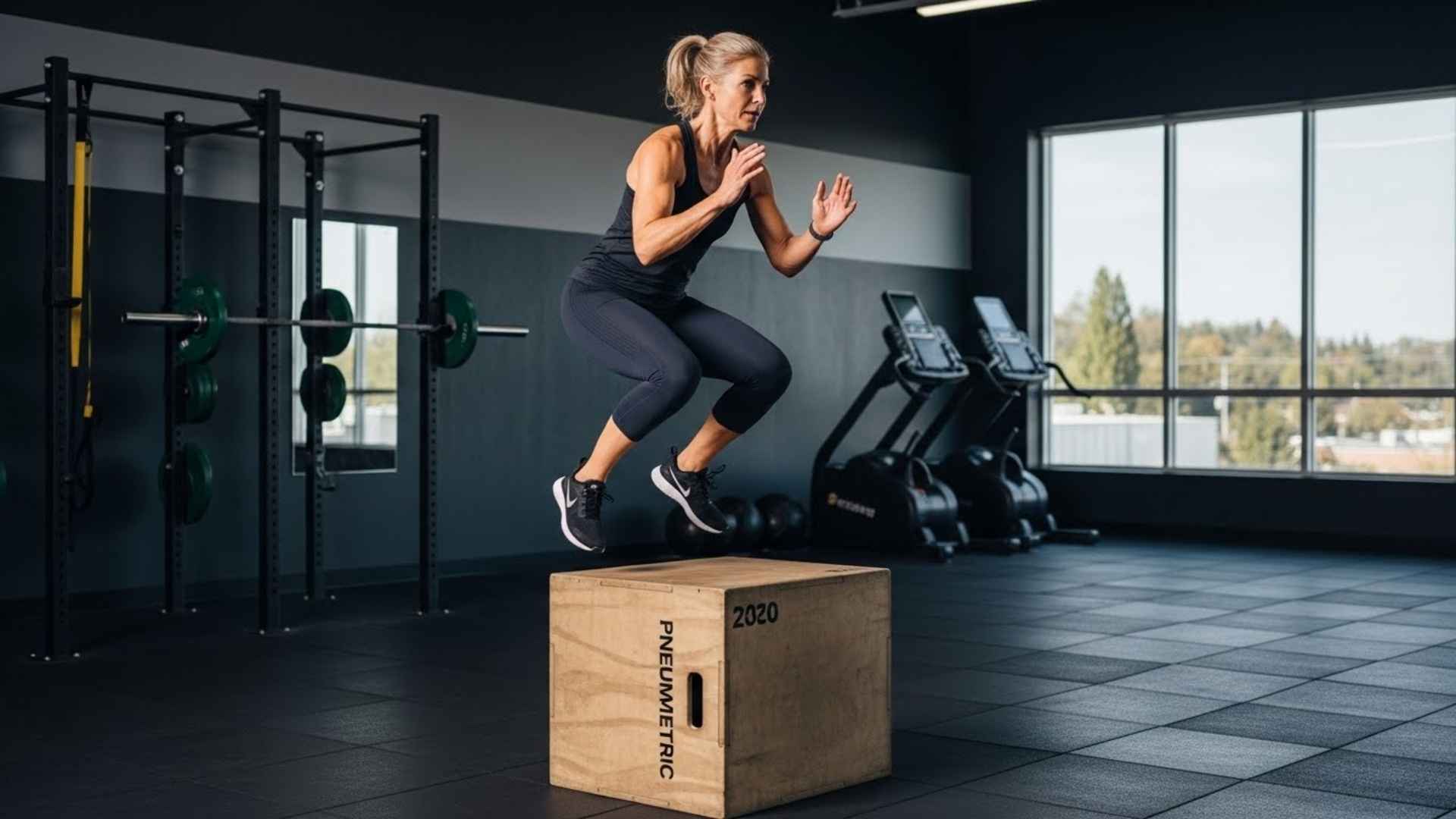
4. The Impact Trap: High-Intensity Plyometrics (Box Jumps/Burpees)
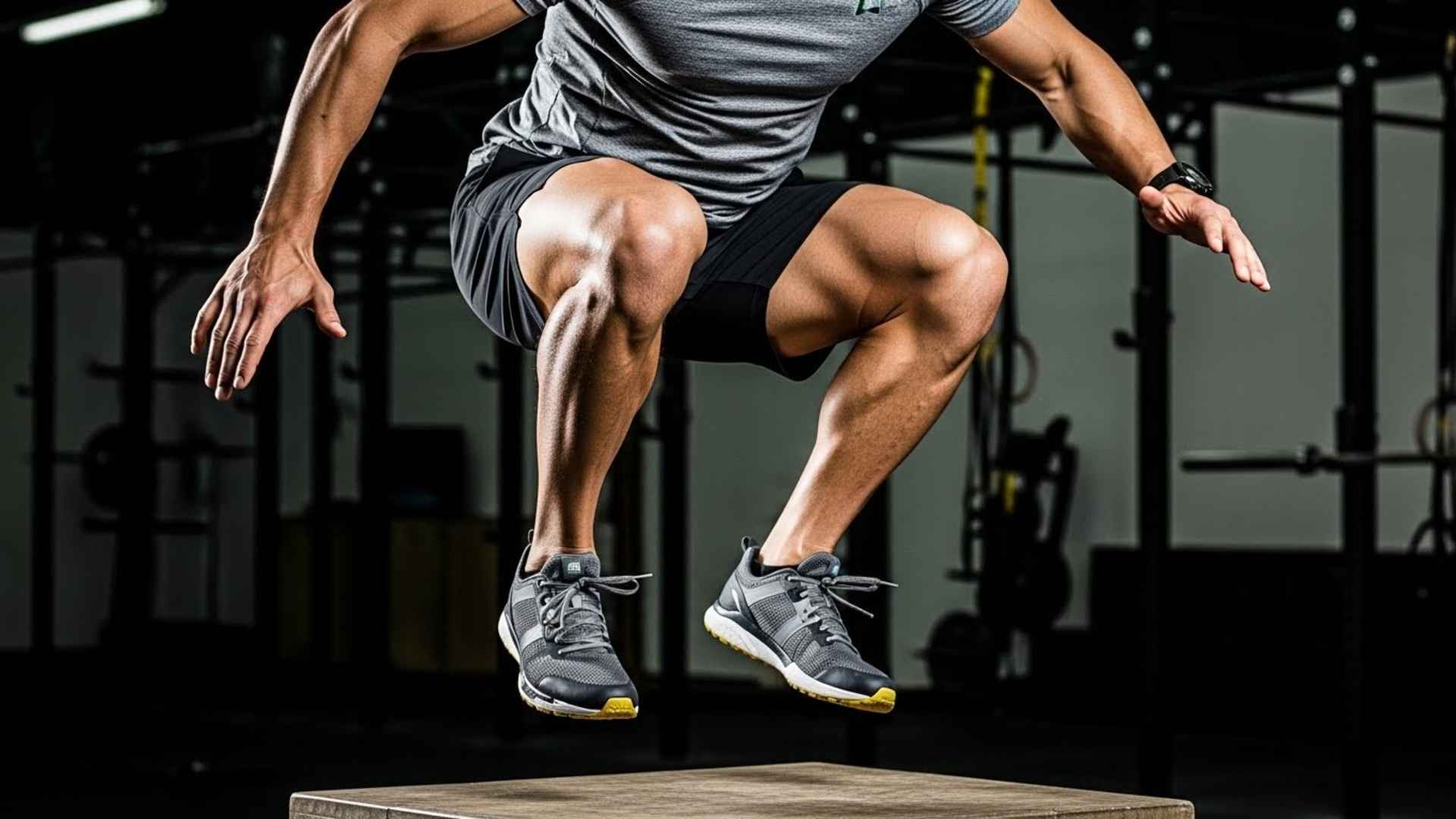
Jumping on boxes looks cool on Instagram. But for the aging athlete, the risk/reward ratio is way off.
The Problem: Landing a jump sends impact forces of 3-4x your body weight through your ankles, knees, and hips. With thinning meniscus cartilage (“shock absorbers”), this is asking for trouble. Also, a missed box jump is a catastrophic fall risk.
The Upgrade: Medicine Ball Slams
How to do it: Lift a non-bouncy medicine ball overhead and slam it into the floor as hard as you can.
Why it wins: You get all the explosive power and heart rate benefits of jumping, but your feet never leave the floor. Zero impact, high intensity.
5. The Spinal Squeeze: Deep Loaded Squats & Leg Press
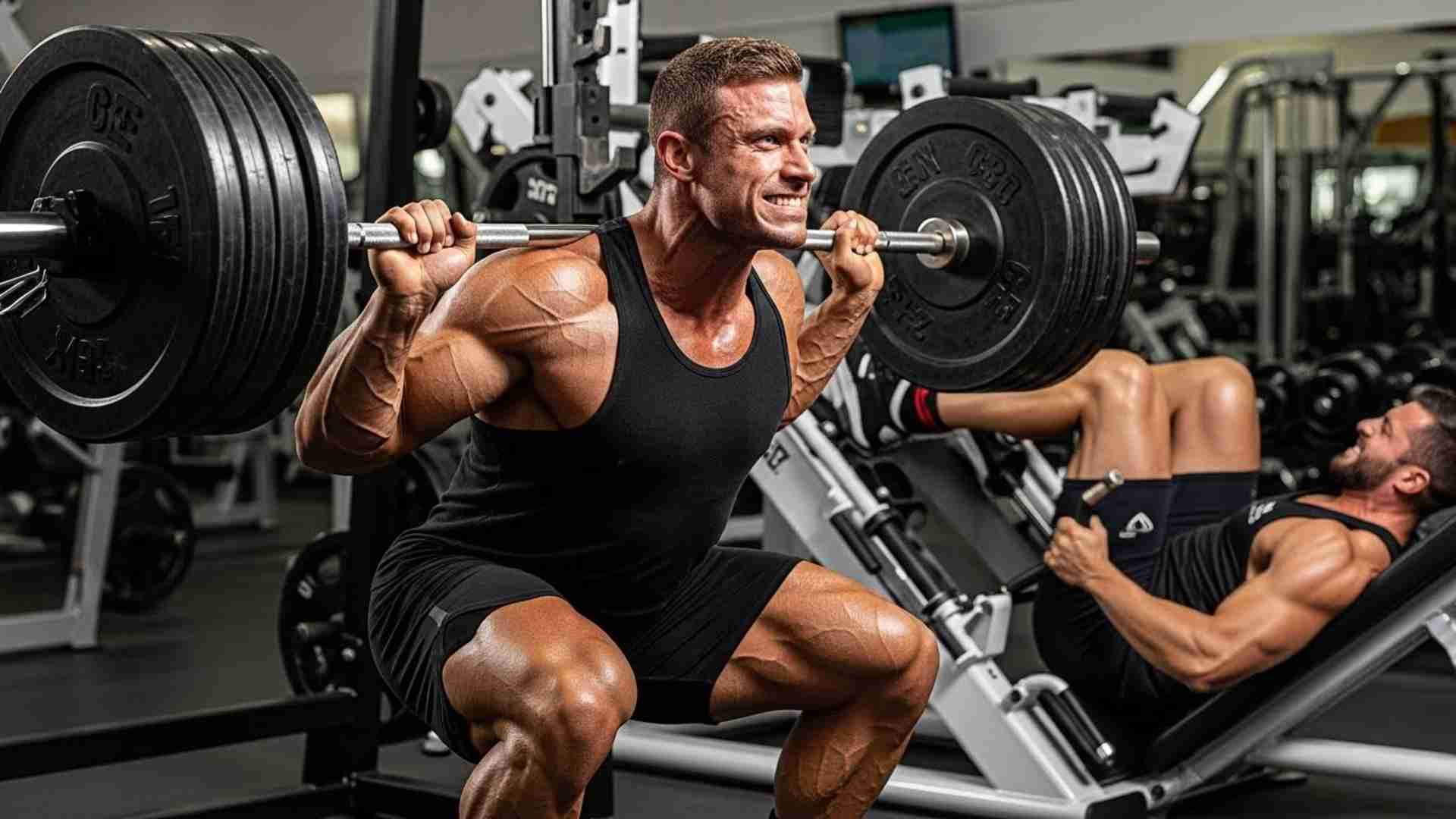
Squatting “ass to grass” with a heavy barbell is a young person’s game.
The Problem: Most of us lose hip mobility as we age. When you squat too deep, your pelvis tucks under at the bottom (the “butt wink”). This rounds your lower back while it’s under a heavy load—a perfect recipe for a disc injury. On the leg press, bringing your knees to your chest does the exact same thing.
The Upgrade: Goblet Squat
How to do it: Hold one dumbbell vertically against your chest. Squat down only until your thighs are parallel to the floor.
Why it wins: Holding the weight in front acts as a counterbalance, helping you keep your torso upright and taking the pressure off your lower back.
6. The Impingement King: Upright Rows
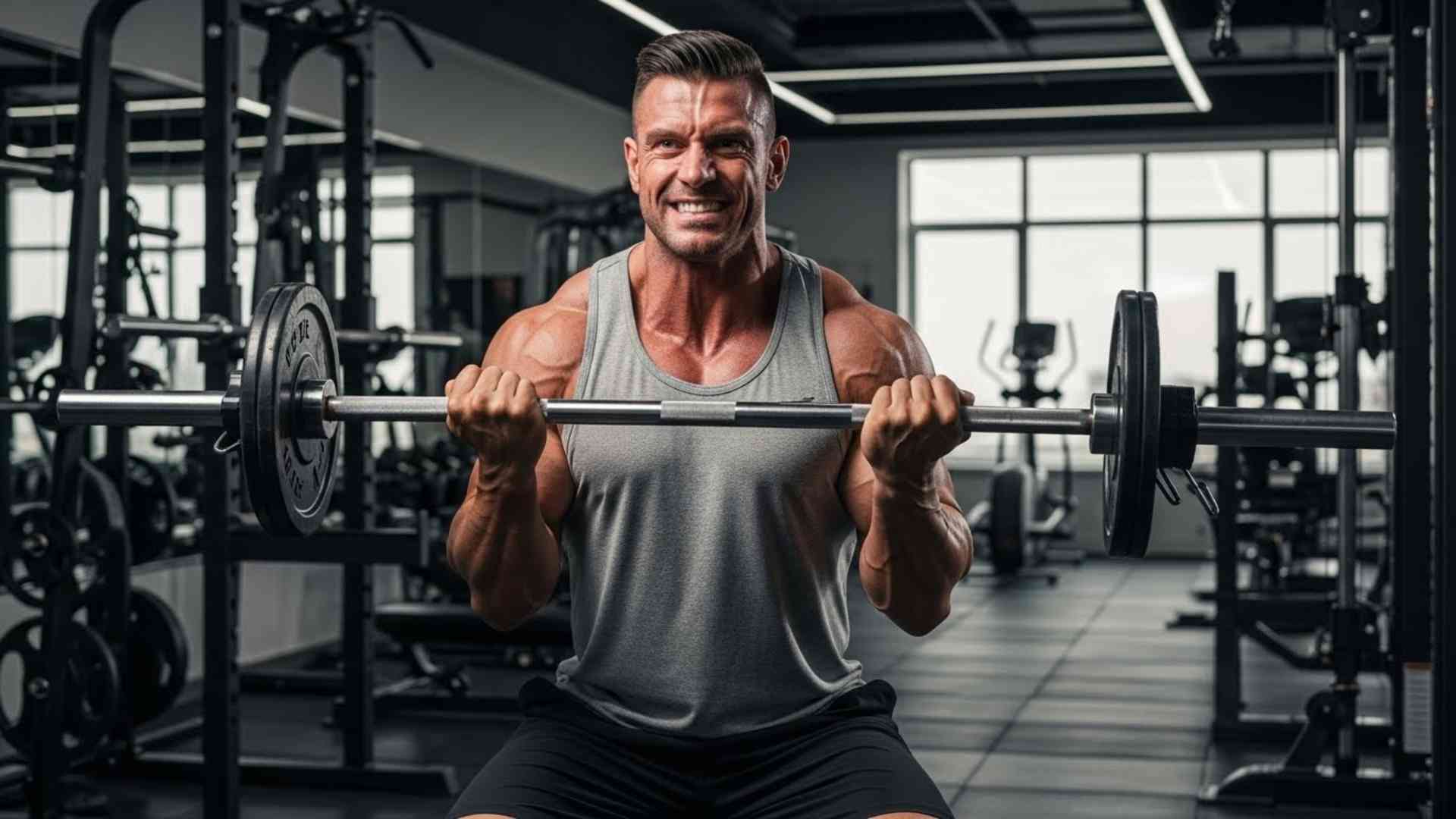
Pulling a weight vertically up your body to your chin.
The Problem: This forces your shoulders into “internal rotation with elevation.” It is mechanically one of the worst positions for the shoulder joint. It intentionally jams the head of your arm bone into the acromion process. It’s basically an impingement machine.
The Upgrade: Lateral Raises
How to do it: Lift dumbbells out to the side, but keep your thumbs pointing slightly up (like you’re pouring a pitcher of water).
Why it wins: It hits the same muscles (medial delts) but keeps the shoulder joint open and happy.
🏋️ The Ego Lift
The Trap: 1-Rep Max
Testing your limit is pure ego after 50.
It creates a dangerous spike in blood pressure. Your muscles might lift it, but your “dried rubber band” tendons might snap!
The Fix: 10-15 Reps
Stimulate, don’t annihilate! Moderate weight with more reps builds just as much muscle.
Save your joints. Focus on feeling the muscle work, not just moving the number on the bar.
Testing “how much can I lift for one rep” is purely for ego after 50.
The Problem: Heavy lifting requires the Valsalva maneuver (holding your breath and bearing down). This creates a massive spike in blood pressure, which can be dangerous for older cardiovascular systems. Plus, your muscles might be strong enough to lift it, but your “dried rubber band” tendons might not be strong enough to hold it.
The Upgrade: 10-15 Repetition Range
Why it wins: Using a moderate weight for more reps stimulates just as much muscle growth (hypertrophy) but with significantly less strain on your joints and tendons. Focus on feeling the muscle work, not moving the number on the bar.
Tools to “Future-Proof” Your Body
You don’t need a garage full of expensive machinery to build a body that lasts. In fact, most of the “Forbidden 7” exercises we discussed can be swapped out using just a few simple, inexpensive tools that fit in a closet. The goal here isn’t to buy gadgets that gather dust; it’s to invest in items that mechanically offload your joints while loading your muscles. Think of these as your “orthopedic safety net”—they allow you to perform the movements you need (like squatting, pressing, and stabilizing) without the shearing and compressive forces that cause wear and tear.
Here are 5 pieces of equipment that perfectly align with the “Golden Years” protocol:
1. Non-Bouncing Slam Ball (10-15 lbs)

This is the ultimate tool for power training without the impact. As discussed, we want to replace high-impact box jumps with medicine ball slams. You want a “dead” slam ball (sand-filled) that doesn’t bounce back and hit you in the face. You can lift it overhead and slam it into the ground with maximum effort to spike your heart rate and build explosive power, all while your feet stay safely planted on the floor.
2. Tube Resistance Bands with Handles

We mentioned that resistance bands are “arguably the best tool for senior fitness” because they match your body’s natural strength curve—easier at the start of the rep (where joints are vulnerable) and harder at the end. Look for a set with handles (easier on the grip than flat bands) and a door anchor. This effectively replaces the need for the dangerous “Behind-the-Neck” presses and allows you to do safe, effective rows and chest presses.
3. Extra-Thick High-Density Foam Mat (1/2 Inch to 1 Inch)

If you are going to swap sit-ups for planks and dead bugs, you need to be comfortable on the floor. Standard yoga mats are often too thin for older elbows and knees/spines. A high-density foam mat (look for 1/2 inch or thicker) provides a cushion that eliminates the distraction of “bone-on-floor” pain, allowing you to focus entirely on engaging your core.
4. Nordic Walking / Trekking Poles

Walking was the #1 recommended exercise, but we can make it better. Using trekking poles turns a simple walk into a full-body workout by engaging your arms, shoulders, and lats. More importantly for safety, they provide two extra points of stability, significantly reducing the load on your knees and hips (some studies say by up to 25%) and preventing falls on uneven terrain.
5. Foam Balance Pad

Stability training is non-negotiable, but standing on one leg on a hard floor can be intimidating. A foam balance pad creates a slightly unstable surface that forces your stabilizing muscles (in the ankles and hips) to fire rapidly, but it’s only 2 inches off the ground, making it a safe entry point. It’s perfect for practicing the “Stork Stand” or doing squats with added neuromuscular challenge.