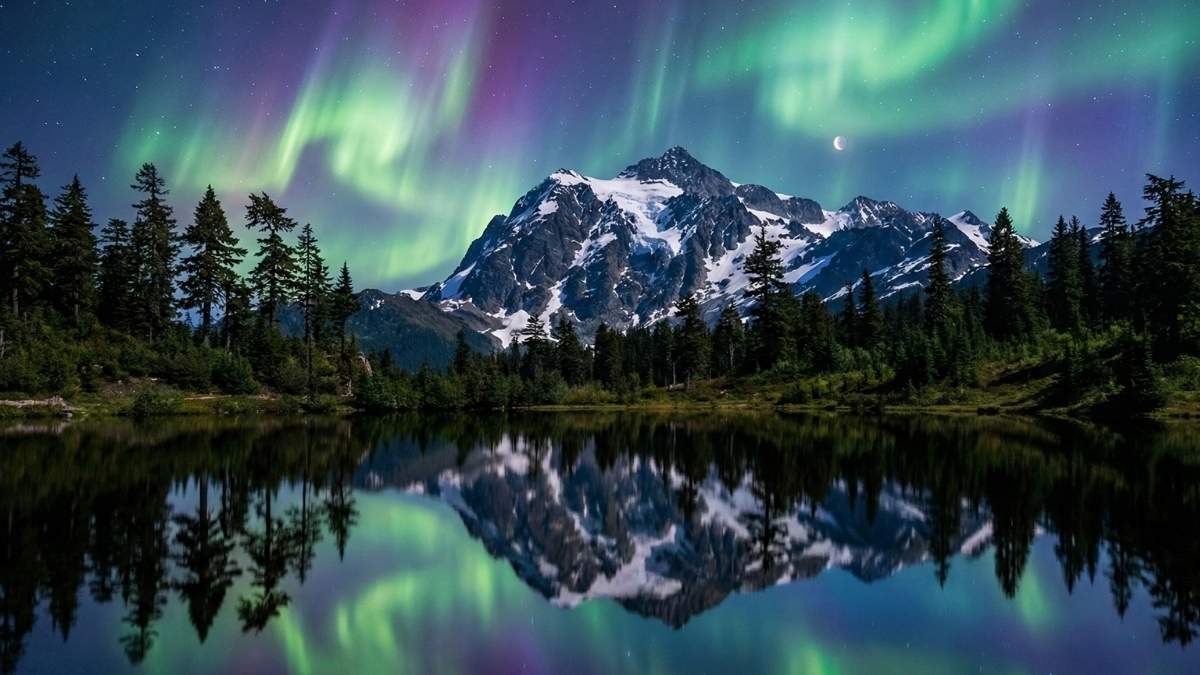
Night skies have a way of pulling you in before you even realize it. One minute you’re glancing up out of curiosity, and the next you’re standing perfectly still, waiting to see if the faint glow on the horizon grows into something unforgettable.
The Northern Lights feel like that—sudden, unpredictable, and strangely personal. And the best part? You don’t need a passport or a pricey flight to witness them.
Hidden pockets across the Lower 48 offer skies just as breathtaking, often with more quiet, more space, and far less cost. If you’re craving a little wonder without the international chaos, these places deliver.
1. Boundary Waters Canoe Area Wilderness, Minnesota
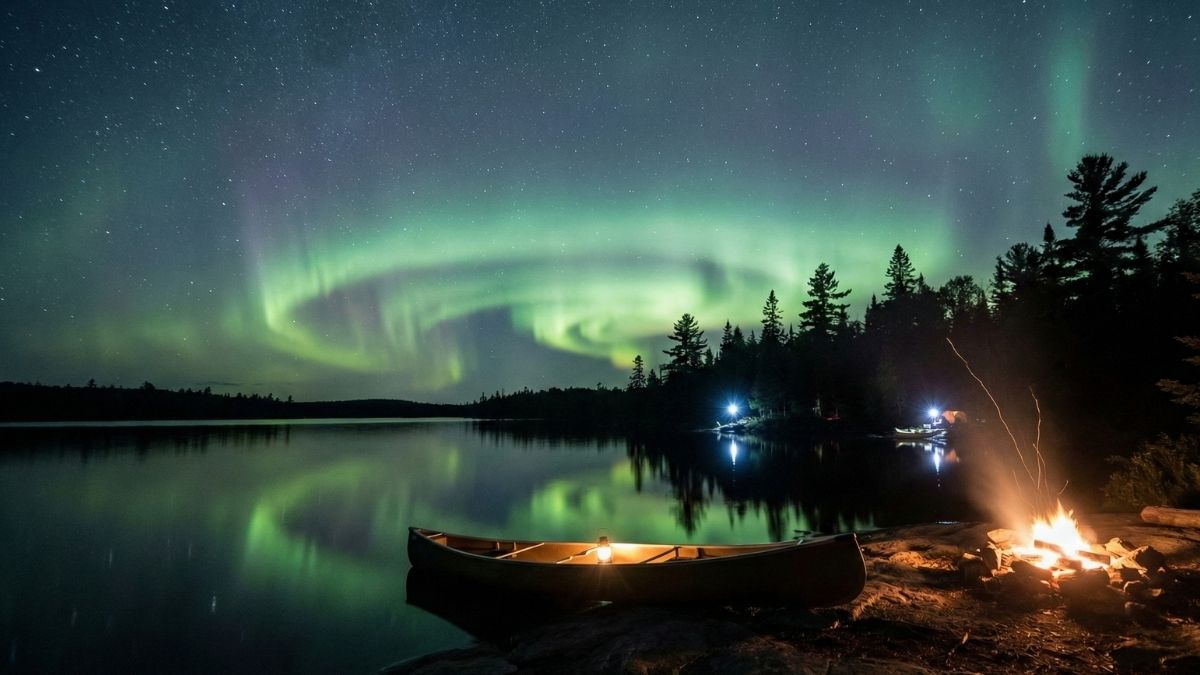
The Boundary Waters is one of those places where the skies feel bigger than anywhere else in the Lower 48. On a clear winter night, the stillness settles in so deeply that even small sounds feel amplified, and the aurora often sweeps across the horizon like it has the whole landscape to itself. Because it sits far from major light pollution, the Northern Lights can appear far more vivid here than travelers expect from a U.S. destination.
What surprises many visitors is the range of vantage points. Frozen lakes turn into natural viewing platforms, and on nights with stronger activity, the lights often reflect across the ice like a second sky. Even in summer and fall—when canoe trips are the norm—the darker pockets of the wilderness occasionally reward late-night paddlers with an unexpected glow. You don’t need to paddle deep into the wild either; many of the accessible entry points offer excellent views.
The sense of solitude here makes the experience feel special even when the aurora is faint. Something is grounding about sitting near the shoreline, wrapped up in winter layers, waiting for the first subtle green band to stretch overhead. Of all the places in the Lower 48, this region offers the best mix of reliability, darkness, and raw natural atmosphere.
Quick Facts & Tips
- Best months: September–April
- Peak viewing: December–March
- Nearest towns: Ely, Grand Marais
- Ideal conditions: Clear, moonless nights
- Good for beginners? Yes — easy-access lakefront spots
- Bring: Hot layers, headlamp with red mode, tripod
2. Mt. Baker–Snoqualmie National Forest, Washington
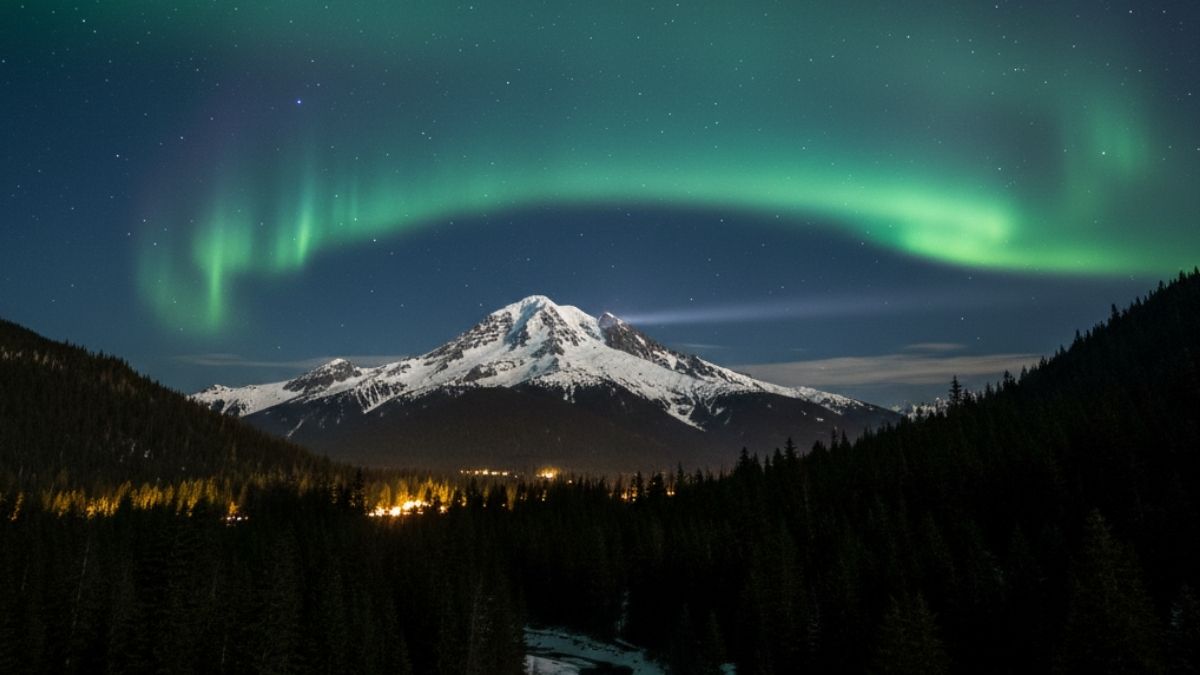
This region sits in a sweet spot where high elevations and low light pollution come together, making it one of the strongest aurora zones in the continental U.S. On nights when solar activity spikes, the glow often appears above the jagged outlines of the Cascades, creating a backdrop that feels far more dramatic than typical flat-horizon viewing spots. Even locals say the most memorable displays are the ones that stretch over the snowy dome of Mount Baker.
Visitors often talk about driving up toward Artist Point or the higher trailheads and catching a sudden surge of color when they pull off to check the sky. The vantage points here are elevated enough that the aurora can sweep above the neighboring ridgelines, giving you a wide, sweeping view. When the colors intensify, you may see pinks or purples — rare hues that sometimes reach the northern U.S. during stronger geomagnetic storms.
The forest also feels incredibly accessible for those who prefer quick outings instead of multi-day trips. You can watch the lights from parking areas or short trails rather than committing to deep wilderness travel. When conditions align, the region becomes one of the most photogenic aurora destinations anywhere in the Lower 48, pairing the glow with alpine snowfields and big, cinematic mountain silhouettes.
Quick Facts & Tips
- Best months: September–March
- Peak viewing: Late fall through early spring
- Lookouts: Artist Point, Heather Meadows
- Closest town: Glacier, WA
- Weather warning: Clouds form fast — always check forecasts
- Great for photographers: Yes — clear mountain ridgelines
3. Glacier National Park, Montana
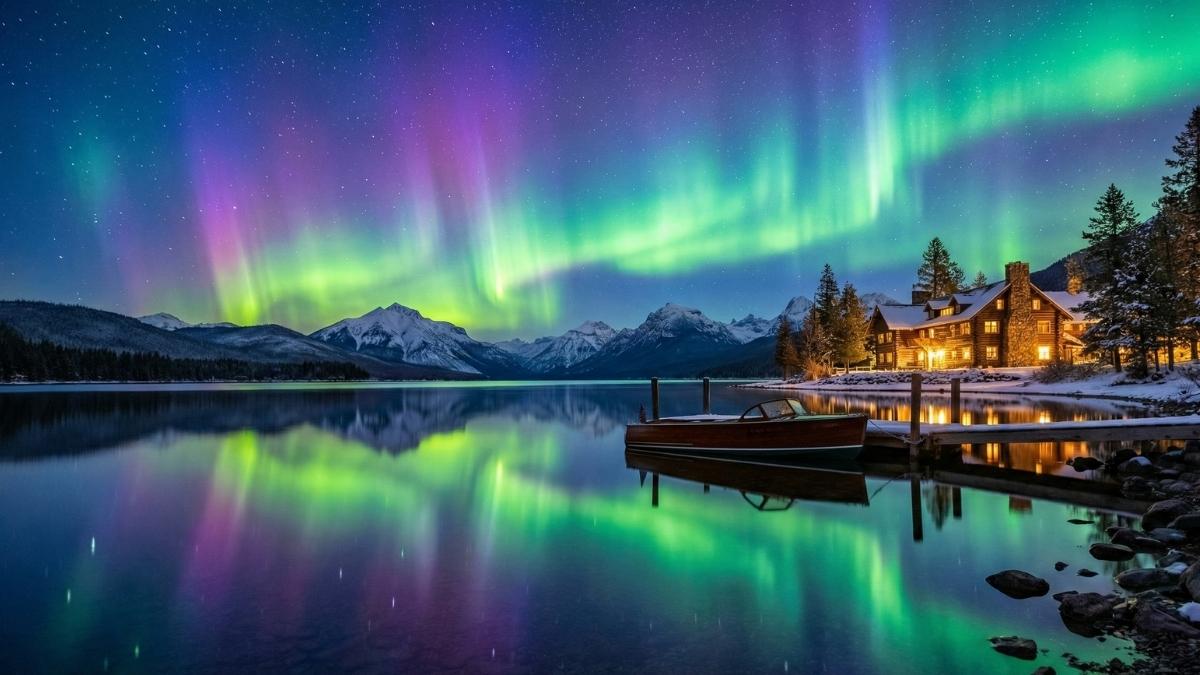
Glacier National Park has long nights, clear air, and a near-legendary reputation among aurora chasers. The combination of altitude, open valleys, and huge skies gives the lights plenty of room to stretch and intensify. Travelers often find that even a moderate aurora forecast can lead to vibrant colors here, especially along the park’s northern lakes.
One of the unforgettable parts of Glacier is how the aurora interacts with its landscapes. On calm nights, Lake McDonald or Bowman Lake acts like a mirror, doubling the display and giving it a surreal quality. The glow often contrasts beautifully with the dark, sharp peaks of the park, creating scenes that feel cinematic without needing any filters or editing tricks. You can see why many repeat visitors say they came for the mountains but returned for the night sky.
Though it’s a massive national park, the best viewing spots are surprisingly easy to reach. Lakeshore pull-offs, quiet beaches, and open valley viewpoints don’t require long hikes or technical skill. And while Glacier can get busy in summer, nighttime brings a peaceful quiet — the kind that makes the first burst of green light feel almost private. When the aurora hits here, it often hits spectacularly.
Quick Facts & Tips
- Best months: September–April
- Peak viewing: Fall and early spring
- Best spots: Lake McDonald, Bowman Lake, Many Glacier area
- Weather: Winters are frigid — dress aggressively warm
- Avoid: Bright moon phases for better contrast
- Park hours: Night access varies by season — check ahead
4. Upper Peninsula, Michigan (Keweenaw Peninsula)
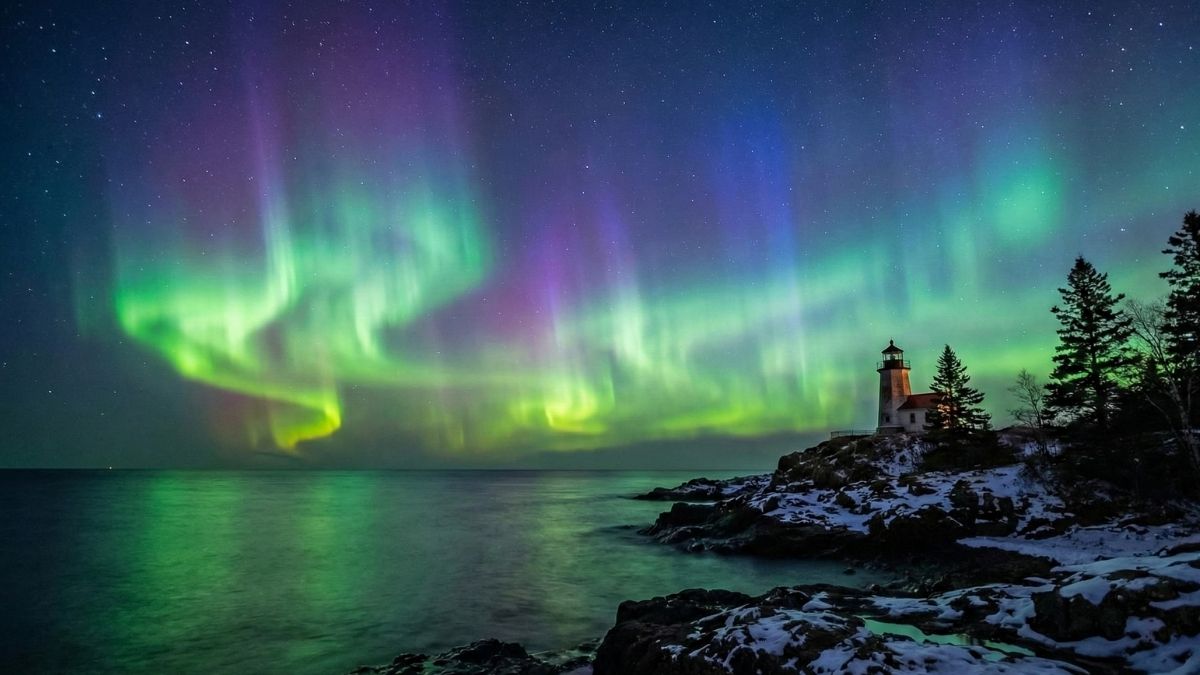
Michigan’s Keweenaw Peninsula regularly surprises people with how strong its aurora visibility can be. The peninsula juts into Lake Superior, giving viewers long, unobstructed horizons — a huge advantage for watching northern lights in the Lower 48. Even mild aurora activity often becomes visible thanks to those clear lakefront sightlines.
Locals often talk about nights when the aurora starts as a faint glow over the water and then suddenly strengthens, stretching into tall, curtain-like structures. The lake amplifies the atmosphere, reflecting color across the waves when conditions are calm. There’s a rugged charm to the experience here: rocky shorelines, crisp air blowing off Superior, and skies that feel truly dark once you step away from town lights.
Another perk is how accessible the viewing is. You can drive right up to dozens of shoreline pull-offs, walk a few steps, and settle in for the show. No long hikes, no technical terrain — just straightforward access to dark skies. Affordability is also a major bonus, making it one of the easiest and most budget-friendly aurora destinations in the country.
Quick Facts & Tips
- Best months: September–March
- Peak viewing: October–February
- Best spots: Eagle Harbor, Copper Harbor, Great Sand Bay
- Conditions: Cold winds off Lake Superior — dress warm
- Best for: Travelers wanting affordable lodging and easy access
- Local tip: West-facing beaches are great for time-lapse photography
5. North Cascades National Park, Washington
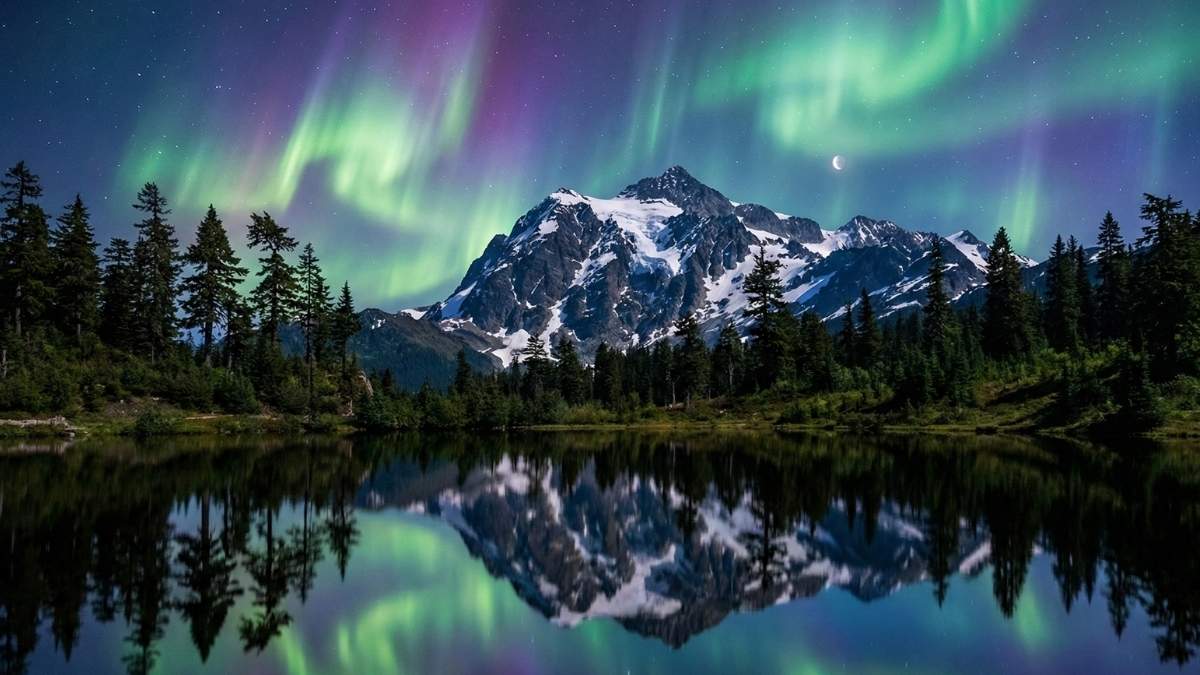
North Cascades National Park offers one of the darkest night skies in the entire Lower 48, which instantly boosts aurora visibility when solar storms roll in. Minimal development and dramatic elevation changes make it a striking place to watch the northern lights, especially when they stretch above the steep alpine peaks. The sense of wildness here adds a layer of excitement you don’t always get in more accessible parks.
Many visitors describe catching the aurora from high passes or roadside viewpoints on nights when the solar forecast looks promising. The colors often appear above silhouetted summits, and sometimes even funnel down into valleys if the storm is particularly strong. Because the region doesn’t have major cities nearby, the skies stay deeply dark — the kind that makes even faint auroras stand out clearly.
While the park is rugged, you don’t need to trek far to find excellent vantage points. Several overlooks, trailheads, and lakefront pull-offs give you enough open sky to catch the glow. The experience feels raw and energizing — a kind of “deep wilderness aurora hunting” without needing to cross into Canada or board a flight to Iceland.
Quick Facts & Tips
- Best months: September–March
- Peak viewing: October–February
- Best spots: Diablo Lake Overlook, Washington Pass, Rainy Pass
- Weather: Clouds can be unpredictable — monitor satellite maps
- Accessibility: Some roads close in winter; check ahead
- Best for: Dark-sky purists and mountain lovers
6. Priest Lake, Idaho
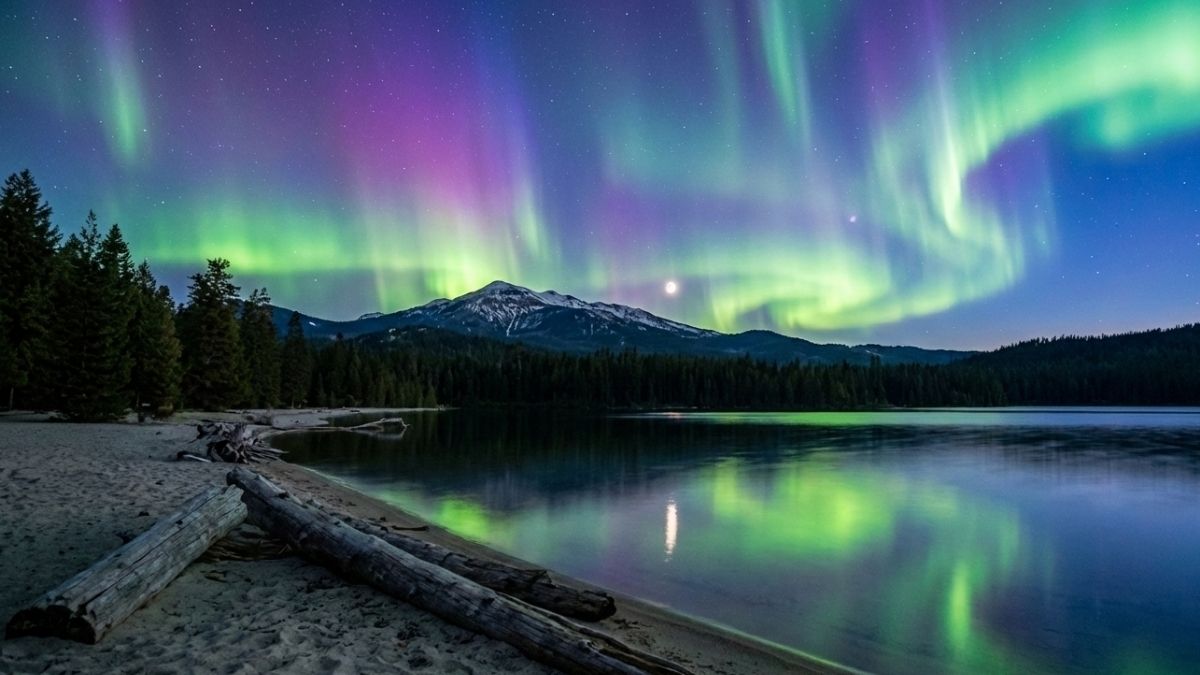
Priest Lake sits far enough up in northern Idaho to get excellent aurora activity, yet it still feels calm, quiet, and pleasantly under-the-radar compared to more famous dark-sky zones. On strong geomagnetic nights, the lights often rise above the water like a soft, wide arc before climbing into vibrant streaks. The lake’s stillness gives the whole thing a slow, cinematic feel — perfect for people who prefer peaceful viewing instead of the rush of crowded lookouts.
What makes Priest Lake especially appealing is how accessible the shoreline is. You don’t have to set off into deep wilderness to get a great vantage point; many of the beaches and pull-offs offer wide-open northern views. For travelers wanting dark skies without the “long expedition” vibe, this spot is a gem.
Quick Facts
- Best months: September–March
- Best spots: North Shore, Reeder Bay
- Ideal conditions: Calm, clear nights
- Good for: First-time aurora chasers
- Bring: Thermos + sturdy boots (snow piles up early)
7. Aroostook County, Maine
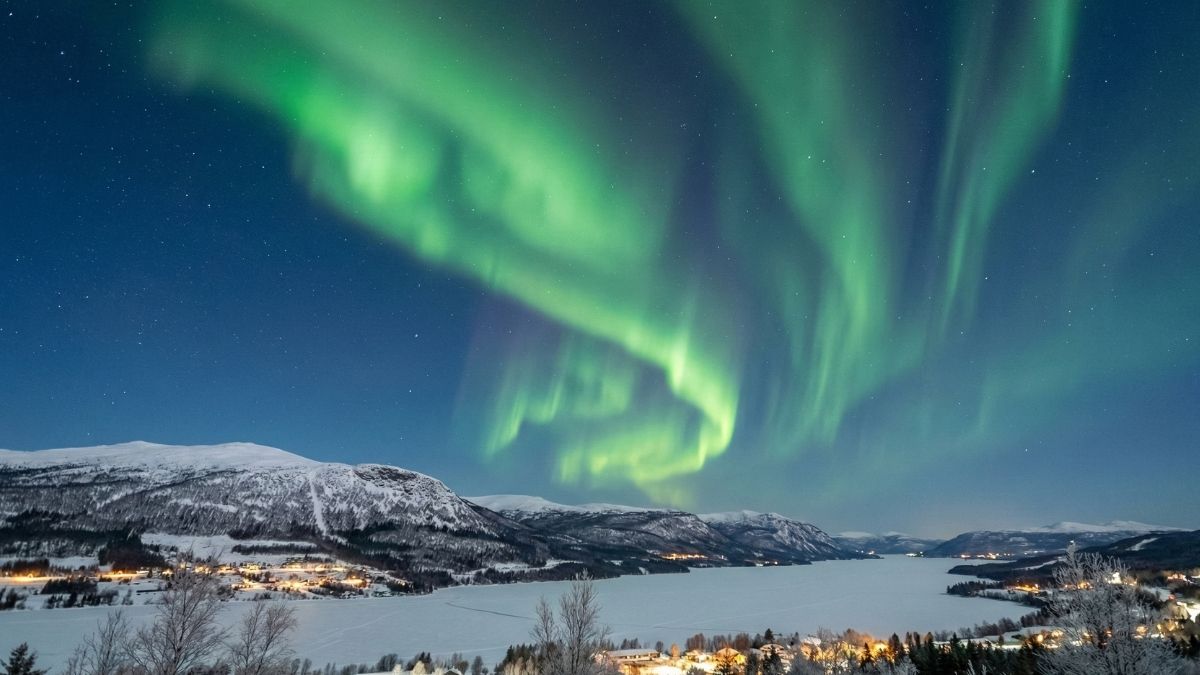
Aroostook County sits at a high latitude for the Lower 48 and benefits from sprawling farmland and vast open skies. When the aurora flares up, the colors often appear surprisingly bold here — far stronger than many travelers expect from the East Coast. You get huge sky exposure without the heavy crowds that are common in national parks.
There’s also a charming, rural calm to the experience. Roads are quiet, horizons are wide, and the nights stretch long. Locals often mention catching the lights unexpectedly while heading home late — a testament to how frequently the aurora appears here during active seasons. It’s one of the most reliable “northern-feeling” aurora zones east of the Great Lakes.
Quick Facts
- Best months: September–April
- Best spots: Caribou, Presque Isle, Fort Kent
- Conditions: Very cold winters — layer aggressively
- Great for: Roadside viewing
- Avoid: Cloud-heavy coastal weather patterns
8. Voyageurs National Park, Minnesota
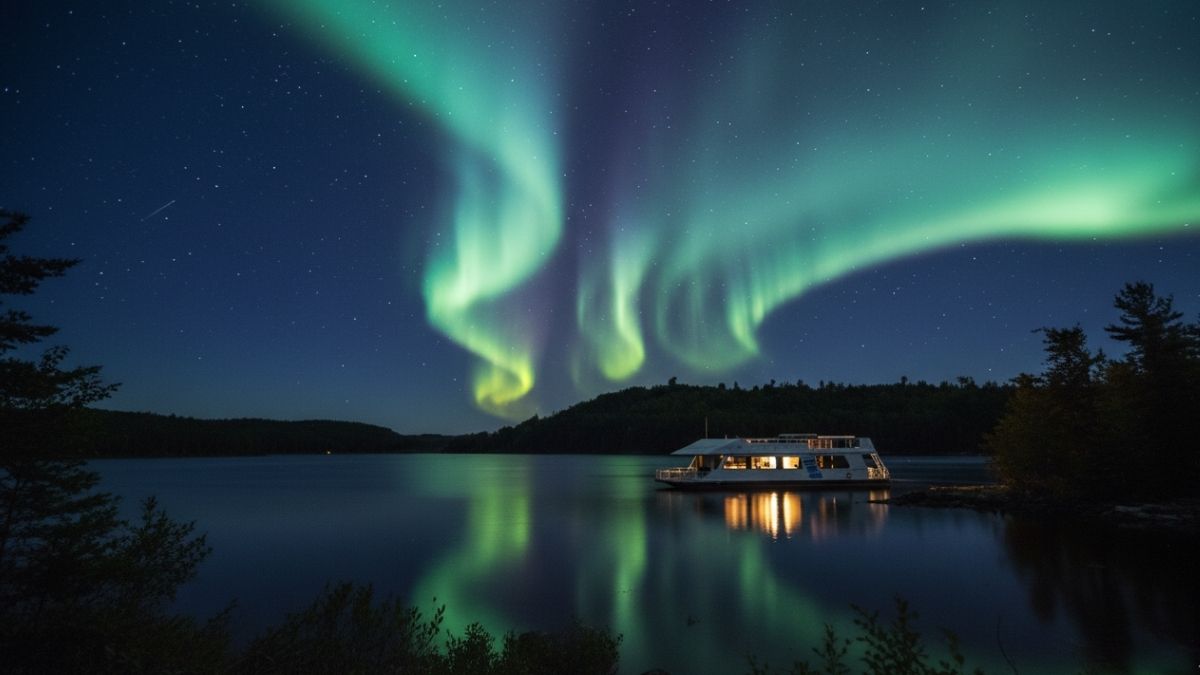
Voyageurs is already known for its spectacular dark skies, but the aurora here adds a whole different layer of magic. The park’s many lakes create incredible reflections; even faint bands of green can spread across the water like a second display. Boaters and kayakers often talk about late-night paddles that unexpectedly turned into light shows overhead.
Another advantage is the park’s remoteness. Even on peak tourism days, nighttime stays are blissfully quiet, giving aurora hunters plenty of space to set up cameras or just lean back and watch. If you’re someone who appreciates a calm, watery foreground with the aurora above it, this park delivers some of the most photogenic sightings in the Midwest.
Quick Facts
- Best months: September–March
- Best spots: Rainy Lake Visitor Center, Ash River area
- Conditions: Cold + windy
- Great for: Reflection photos
- Tip: Check real-time solar activity before driving far into the park
9. Grand Marais, Minnesota
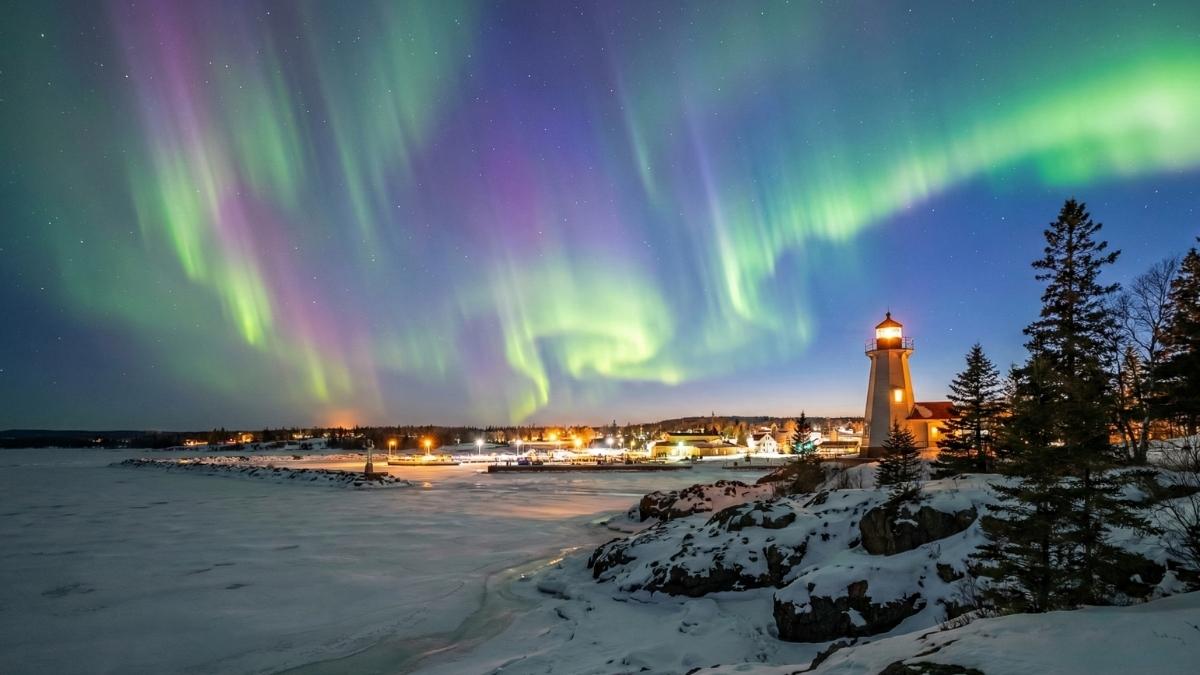
Grand Marais has earned a quiet reputation as a lakeside town where aurora chasers can actually score frequent sightings without driving into total wilderness. Lake Superior acts almost like an open stage for the lights — especially from the small beaches and harbor areas where you get clear northern views.
The town itself adds to the charm. You can grab dinner, check the forecast, and head out minutes later to find the sky shifting into shades of green or purple. Many travelers say it’s their favorite “comfortable but wild-feeling” aurora destination in the Lower 48. The blend of accessibility and natural beauty makes this spot unusually friendly for beginners and veterans alike.
Quick Facts
- Best months: September–March
- Best viewing spots: Artists’ Point, harbor shoreline
- Best for: Easy access without long drives
- Local perk: Warm cafés for thawing out between sky checks
- Tip: Aim for moonless nights
10. Sand Point / Lake Superior Shoreline, Michigan
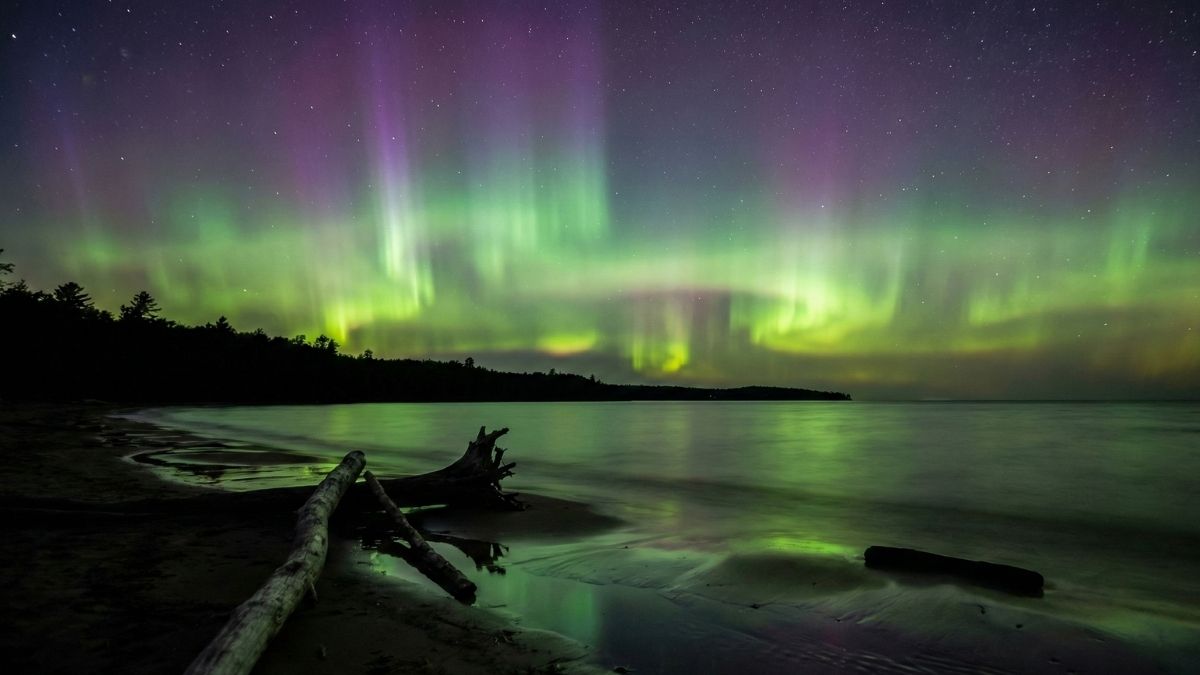
The stretch of shoreline around Sand Point offers some of the darkest skies along Lake Superior — and that darkness makes the Northern Lights pop spectacularly. When geomagnetic storms hit, the aurora often arcs above the water in tall, wide pillars, creating those “stacked” shapes that photographers love.
Another perk is the open, unobstructed northern horizon. You don’t need elevation here; the lake gives you a clean view into the night sky. The beaches are easy to access, and many spots stay quiet enough that you can hear nothing but the wind and waves. A fantastic option if you want big-sky views without climbing mountains or heading into deep forest.
Quick Facts
- Best months: September–March
- Best spots: Sand Point Beach, Munising area
- Ideal conditions: Still water + clear air
- Bring: Waterproof layers — lake spray can be chilly
- Best for: Wide-angle photography
11. Boreal Forest Region, North Dakota
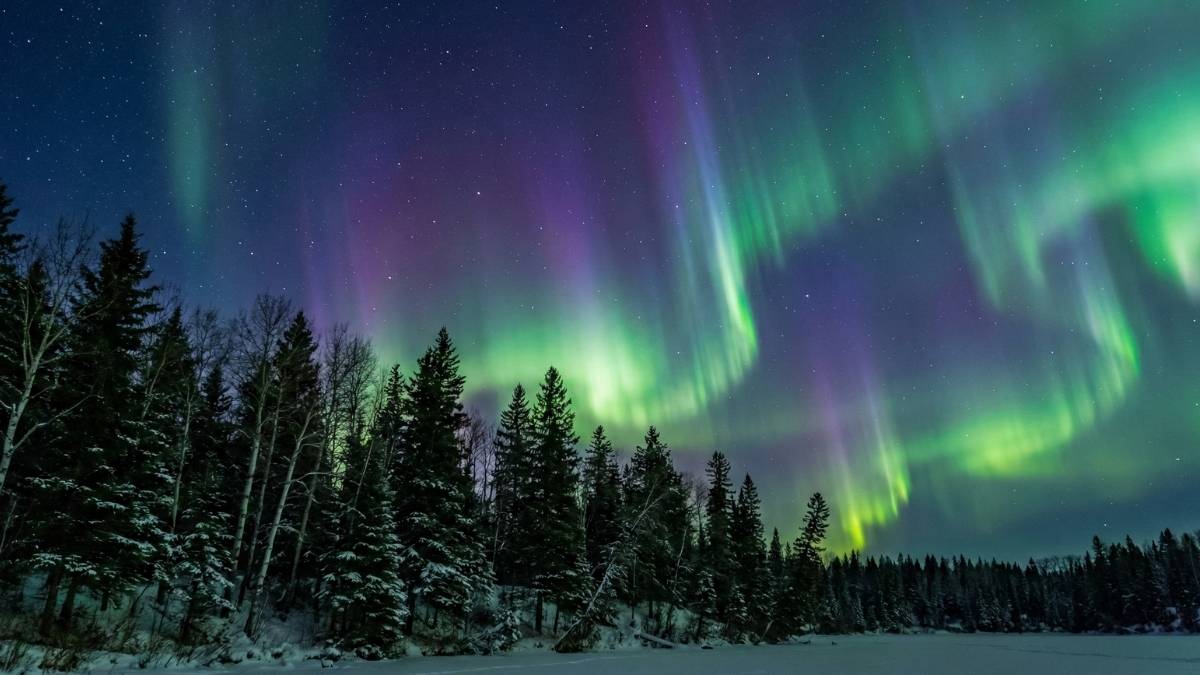
North Dakota isn’t usually the first place people think of for aurora viewing, but its northern boreal forest edges offer surprisingly strong sightings when solar activity spikes. The biggest advantage? Huge, flat horizons that let you see the lights long before they intensify. Even mild auroras often appear clearly here because there’s almost zero obstruction.
The area’s quietness adds something special to the experience. You’re often surrounded by stillness, with only the sound of wind moving through forest edges. Many visitors note that it feels like an oddly underrated location — one where you can pull off a rural road and end up with a sky full of color. A great pick for solitude-seekers.
Quick Facts
- Best months: October–March
- Best areas: Turtle Mountains, northern rural zones
- Conditions: Bitter winter cold — gloves are non-negotiable
- Great for: Horizon-wide aurora views
- Bring: Full tank of gas — long stretches have no services
12. Champlain Islands, Vermont
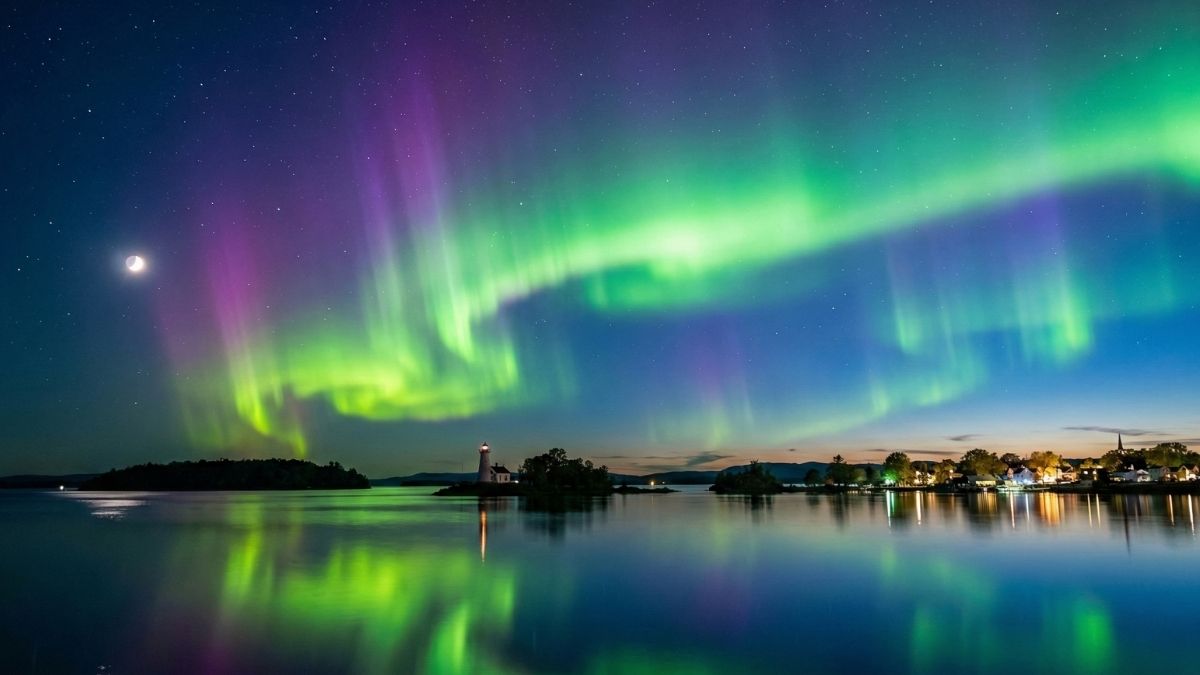
The Champlain Islands offer a unique pairing of quiet lake communities and wide, dark views toward the Canadian border, where the aurora often first appears. Travelers love how easy it is to hop between small beaches, docks, and open fields to check the sky from different angles. When the lights surge, the colors often reflect off Lake Champlain in beautifully soft tones.
Another perk is the gentle, relaxed vibe of the islands. The absence of major cities nearby means you get impressive darkness without feeling isolated. Locals often head out after dinner for “sky checks,” and visitors get to share in that easy-going rhythm. An excellent option for East Coast readers who want a near-home aurora experience.
Quick Facts
- Best months: September–April
- Best spots: North Hero, Isle La Motte
- Best for: Accessible lakefront viewing
- Weather note: Cloud cover is common — timing matters
- Tip: Stay up late; peaks often hit after midnight