Forget the Caribbean: 12 “Expedition Cruises” (to Alaska, Antarctica, & More) for True Adventurers.

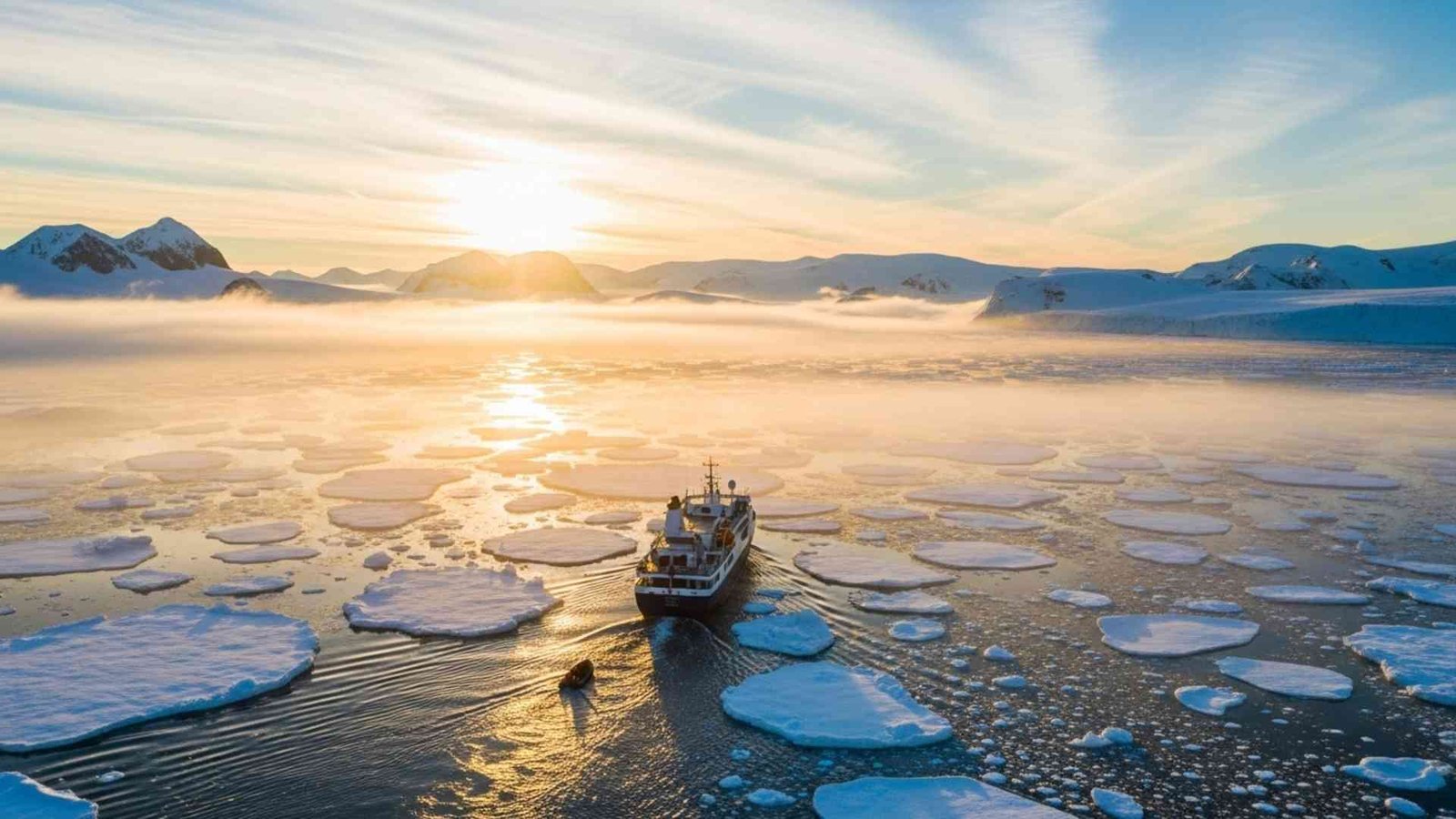
First comes the sound: ice breathing, forests dripping, oceans ticking like a clock. Travel is shifting; crowds swell, reefs bleach, familiar shores feel scripted. Here, the script dissolves. Dawn arrives in colors without names, silence grows loud with wings, whiskers, spray. Wonder returns as practice, not postcard. You learn to move with weather, read tides, share space with patient giants.
Choosing these routes now means meeting Earth while it stays wild, while access exists. Expect small ships, nimble shore drops, science-led guides, rituals shaped by wind. Twelve journeys follow, each a portal to awe, with timing, routes, gear, budget tips.
1. Falklands, South Georgia & Antarctic Peninsula — Quark Expeditions
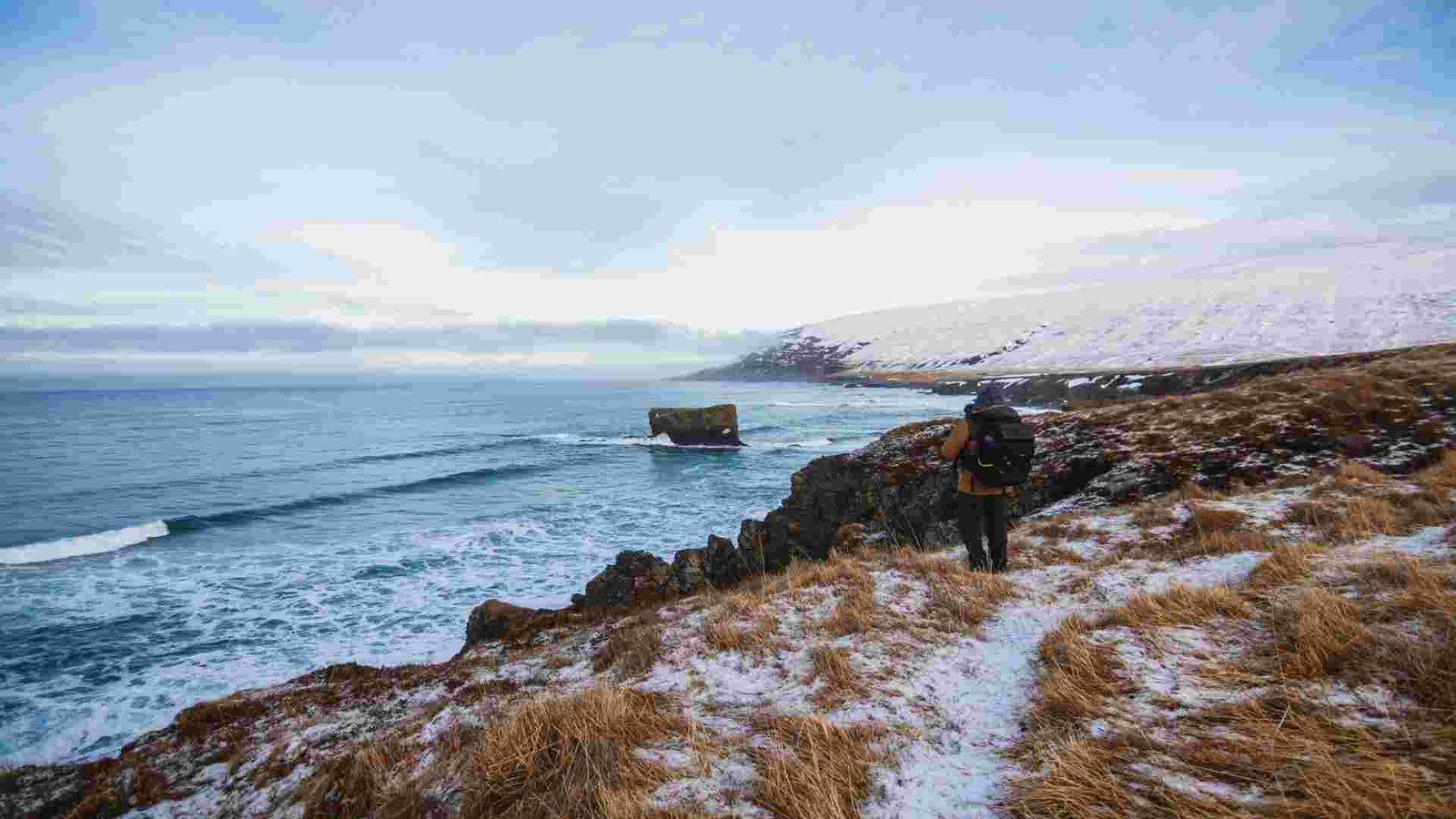
Sailing through this route feels like entering a world that still belongs to nature alone. The air is sharp, the light crystalline, and the landscapes unfold like ancient poetry written in ice. Colonies of king penguins stretch as far as the eye can see, seals lounge on rocky outcrops, and massive icebergs drift silently, glowing from within. Each day brings a new horizon—towering glaciers one morning, windswept plains dotted with albatross the next. There’s an unshakable sense of being on the edge of the world, and it humbles every traveler who arrives here.
One of the most striking memories for many adventurers is setting foot on South Georgia Island. Walking among half a million penguins, their chorus echoing against snow-covered peaks, creates a surreal and emotional experience. The site of Shackleton’s grave adds a profound sense of connection to human endurance and exploration. On calm days, zodiac rides glide close to breaching whales or through narrow fjords, and you realize that this journey isn’t about luxury—it’s about witnessing raw creation.
Key Practical Information:
- Peak/Off-peak: November to March offers milder weather and wildlife nesting; off-peak can bring rougher seas but fewer tourists.
- Access: Fly to Ushuaia, Argentina, then embark by expedition ship.
- Ideal Duration: 16–21 days.
- Must-Try: Zodiac landings at Salisbury Plain and Grytviken.
- Budget: Around $12,000–$25,000, depending on cabin class.
- Etiquette: Keep a respectful 15-foot distance from wildlife.
- Photography: Best at dawn or dusk when ice catches the soft pink light.
2. Galápagos Islands — Lindblad Expeditions–National Geographic
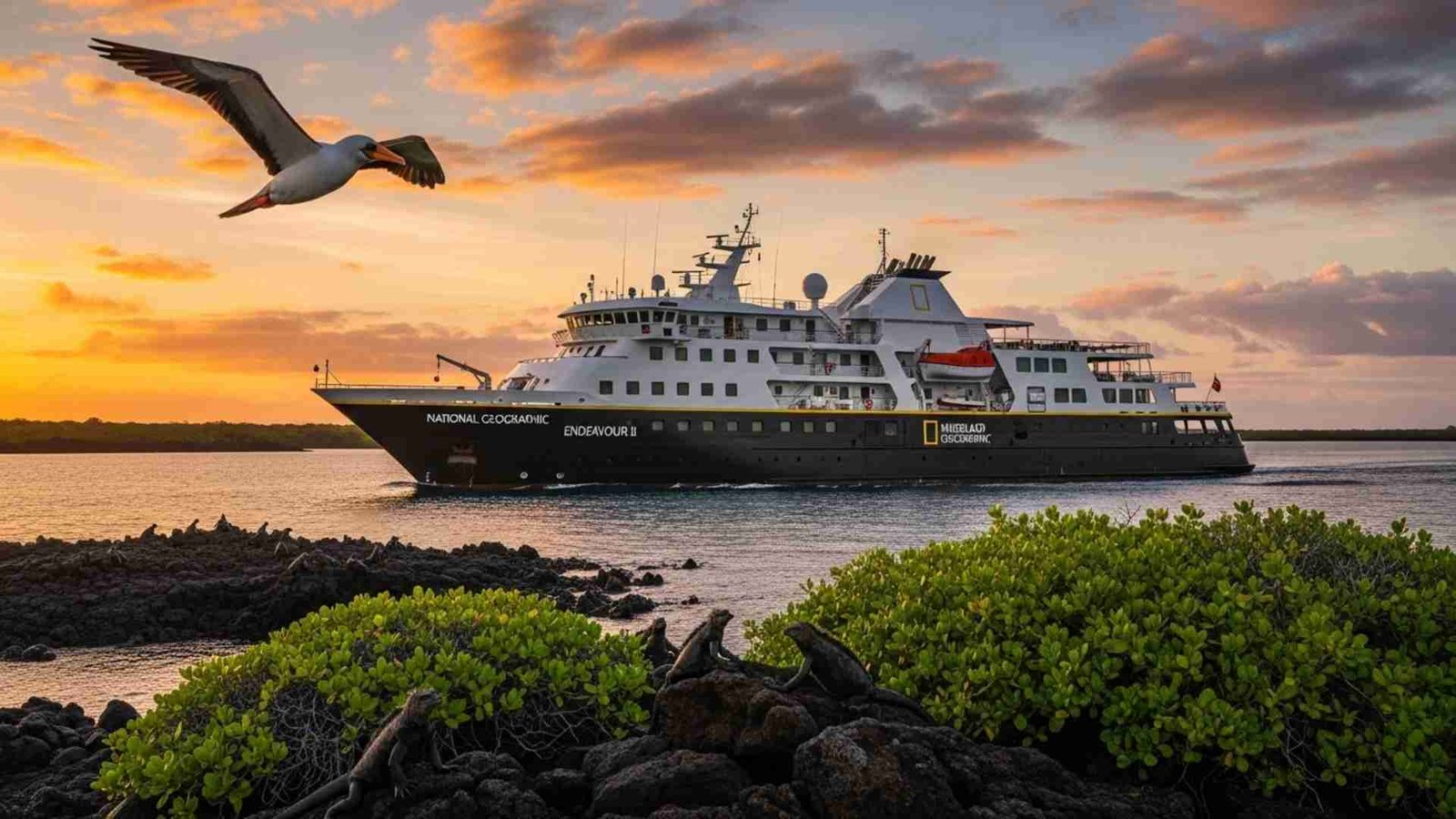
Few destinations match the Galápagos for pure evolutionary wonder. Imagine snorkeling beside sea lions, watching blue-footed boobies perform their courtship dance, and spotting giant tortoises lumbering across volcanic terrain. Every island feels like a separate world, each one home to species found nowhere else. The archipelago’s remoteness preserves an ancient rhythm that still pulses beneath modern conservation efforts.
A standout moment for many is the silence underwater as a marine iguana swims by—prehistoric and unbothered. Lindblad’s guides, often local naturalists, weave stories that turn these encounters into living lessons on adaptation. Dining under starlit skies while anchored off Española or hiking to the lava fields of Santiago makes travelers feel they’re part of a grander, ongoing experiment of life itself.
Key Practical Information:
- Peak/Off-peak: December–May (warm, calmer seas); June–November (cooler, nutrient-rich waters for marine life).
- Access: Fly via Quito or Guayaquil to Baltra or San Cristóbal.
- Ideal Duration: 7–10 days.
- Must-Try: Snorkeling at Devil’s Crown, birdwatching on Genovesa Island.
- Budget: $7,000–$12,000 all-inclusive.
- Etiquette: Avoid touching animals or stepping off marked trails.
- Photography: Use underwater housings; early mornings yield golden light on volcanic cliffs.
3. The Northwest Passage — Adventure Canada
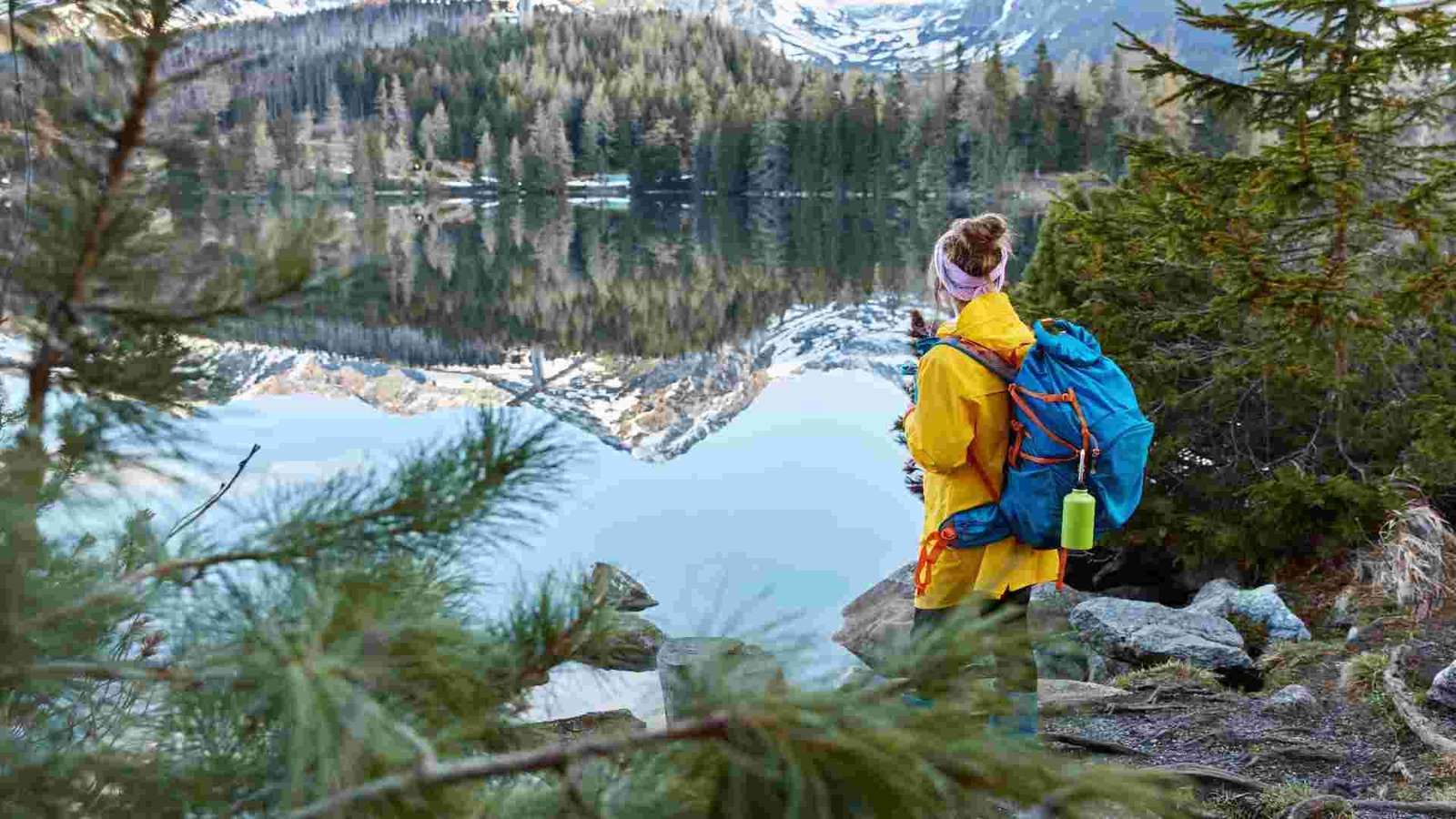
Crossing the Northwest Passage feels like unlocking one of history’s greatest maritime mysteries. Ice floes drift like ancient sculptures, and polar bears patrol the shoreline under endless daylight. Inuit communities open their doors to share stories that have survived generations, revealing how people thrive in one of Earth’s harshest environments. Every horizon whispers tales of explorers lost and found, of endurance, and of the power of adaptation.
Travelers often recall moments of quiet awe—watching the midnight sun reflect off sea ice, or the distant crack of an iceberg calving. Visiting Beechey Island, where Franklin’s men once wintered, transforms history from textbook to tangible experience. The ship’s naturalists and local guides bring cultural authenticity to each landing, making every step across tundra or glacier feel like an act of discovery.
Key Practical Information:
- Peak/Off-peak: Late July–September (navigable season).
- Access: Flights via Ottawa to Kugluktuk or Resolute, depending on route.
- Ideal Duration: 13–17 days.
- Must-Try: Visit Inuit art cooperatives in Pangnirtung and Nunavut.
- Budget: $10,000–$20,000.
- Etiquette: Always ask before photographing locals; support community-led experiences.
- Photography: Overhead shots from ship decks capture stunning ice mosaics.
4. Svalbard/Spitsbergen Circumnavigation — HX (Hurtigruten Expeditions)
Svalbard is the Arctic distilled into its purest form—mountains, ice, and wildlife coexisting in an otherworldly calm. The thrill begins when you glimpse your first polar bear through binoculars, a white silhouette against a glacier’s blue heart. Days stretch into endless light, and the silence feels alive. Cruising past massive glaciers and icebergs under the midnight sun is a reminder of how untouched the world can still be.
Many travelers remember the quiet awe of stepping ashore at Magdalenefjord, surrounded by ghostly whaling-era graves and mirrored waters. The combination of history and isolation deepens the sense of presence. Evenings aboard often end with hot chocolate on deck, cameras poised for the improbable—an Arctic fox darting across snow or a whale surfacing nearby.
Key Practical Information:
- Peak/Off-peak: June–August (ice-free navigation, wildlife viewing); May/September are colder and less accessible.
- Access: Fly to Longyearbyen, Svalbard, via Oslo or Tromsø.
- Ideal Duration: 9–12 days.
- Must-Try: Zodiac cruising among glaciers and bird cliffs of Alkefjellet.
- Budget: $8,000–$14,000.
- Etiquette: Avoid loud noises near nesting birds.
- Photography: Polar light after midnight gives surreal hues for landscape shots.
5. Disko Bay & West Greenland — HX (Hurtigruten Expeditions)
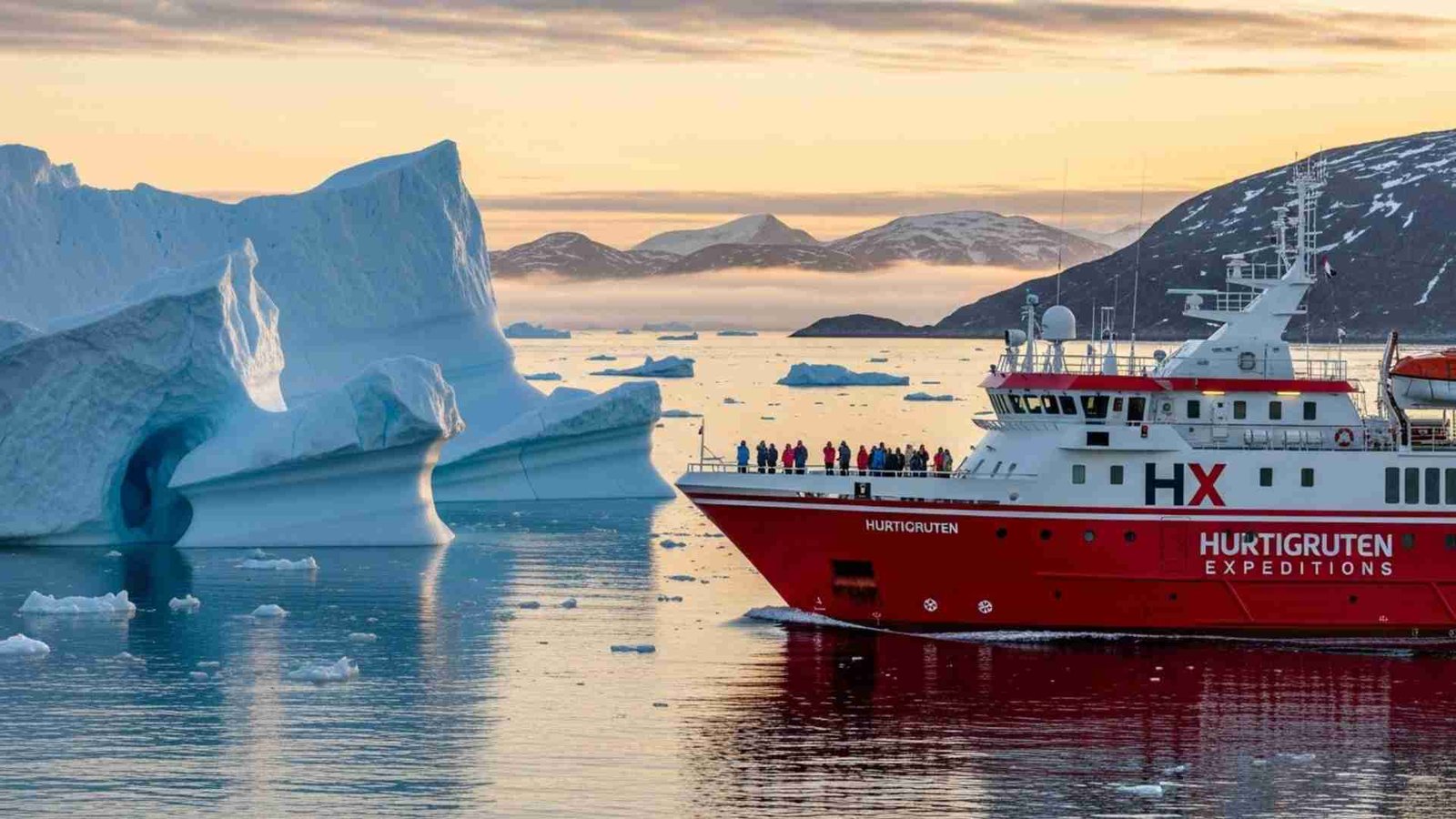
Greenland’s Disko Bay feels like a frontier of ice and fire—massive icebergs drift past black basalt cliffs, and colorful villages cling to the edge of Arctic fjords. Ilulissat’s Icefjord, a UNESCO site, becomes the stage for one of nature’s grandest performances as glaciers calve with thunderous applause. Sailing through the bay at sunset, with the sky ablaze in pinks and golds, is nothing short of transcendent.
A personal highlight for many is visiting a local Greenlandic home and tasting mattak (whale skin) while listening to stories of dog sled traditions. The balance of ancient culture and modern sustainability practices gives every visit depth. Hikes near Ilulissat or kayaking among icebergs allow travelers to feel both humbled and exhilarated by nature’s scale.
Key Practical Information:
- Peak/Off-peak: June–August for warmer weather and accessible fjords.
- Access: Flights to Kangerlussuaq or Ilulissat via Reykjavik or Copenhagen.
- Ideal Duration: 8–11 days.
- Must-Try: Visit Sermermiut Valley, kayak at Eqip Sermia Glacier.
- Budget: $6,000–$10,000.
- Etiquette: Greet locals respectfully; Greenlanders value quiet friendliness.
- Photography: Golden-hour iceberg reflections near Ilulissat offer breathtaking compositions.
6. Alaska Inside Passage Small-Ship — UnCruise Adventures
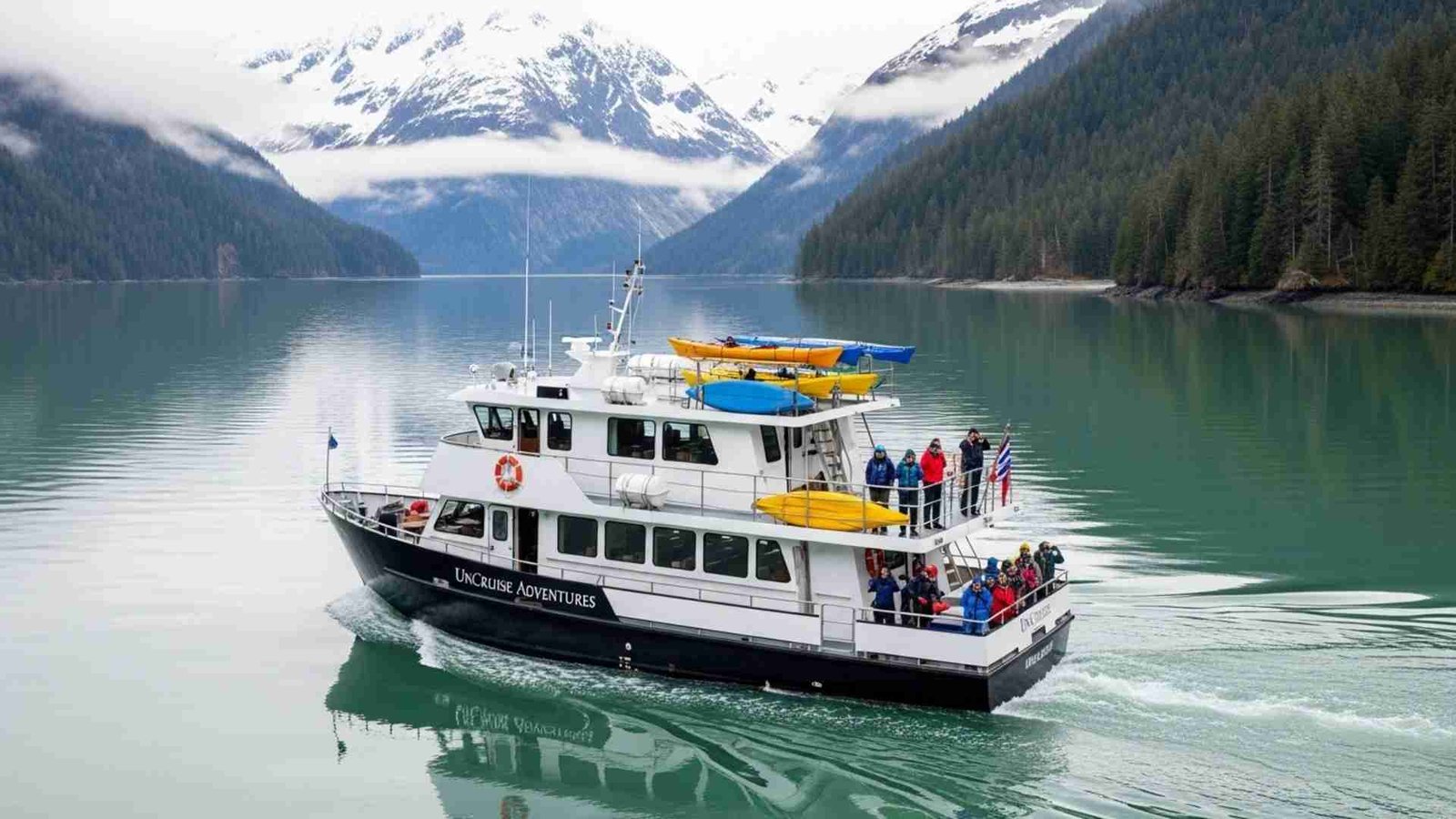
The Inside Passage feels different at “whisper speed.” On a 60–90-guest boat, the captain can pivot for bubble-net feeding or slip into a misty cove where dripping spruce and raven calls set the soundtrack. Think rainforest first, glaciers second: paddle a glassy inlet while salmon flash beneath your kayak and a brown bear turns over kelp onshore.
A fog bank lifts at blue hour. Humpbacks exhale in sync and a bald eagle drops to the water like a thrown spear. The ship idles, lights low, and the only engine is the tide. You realize wildlife sets the schedule, not the other way around.
Field Notes:
- Windows to target: May for spring whales, July–August for salmon runs, September for aurora flickers on clear nights.
- Move & explore: Kayaks and skiffs launch directly from the stern. No port formalities in wilderness anchorages.
- Time budget: 7–10 days delivers forests, fjords, and ice.
- Experiences to chase: Tlingit cultural talks, Tracy Arm ice faces, low-tide intertidal walks.
- Money math: Smaller ships cost more per night but include gear, guides, and daily outings.
- Etiquette: Ask before photographing people in villages; no food for wildlife, ever.
- Photo cue: Bring a rain sleeve. The moody, wet greens of Tongass shine in drizzle.
7. Patagonia Fjords & Cape Horn — Australis
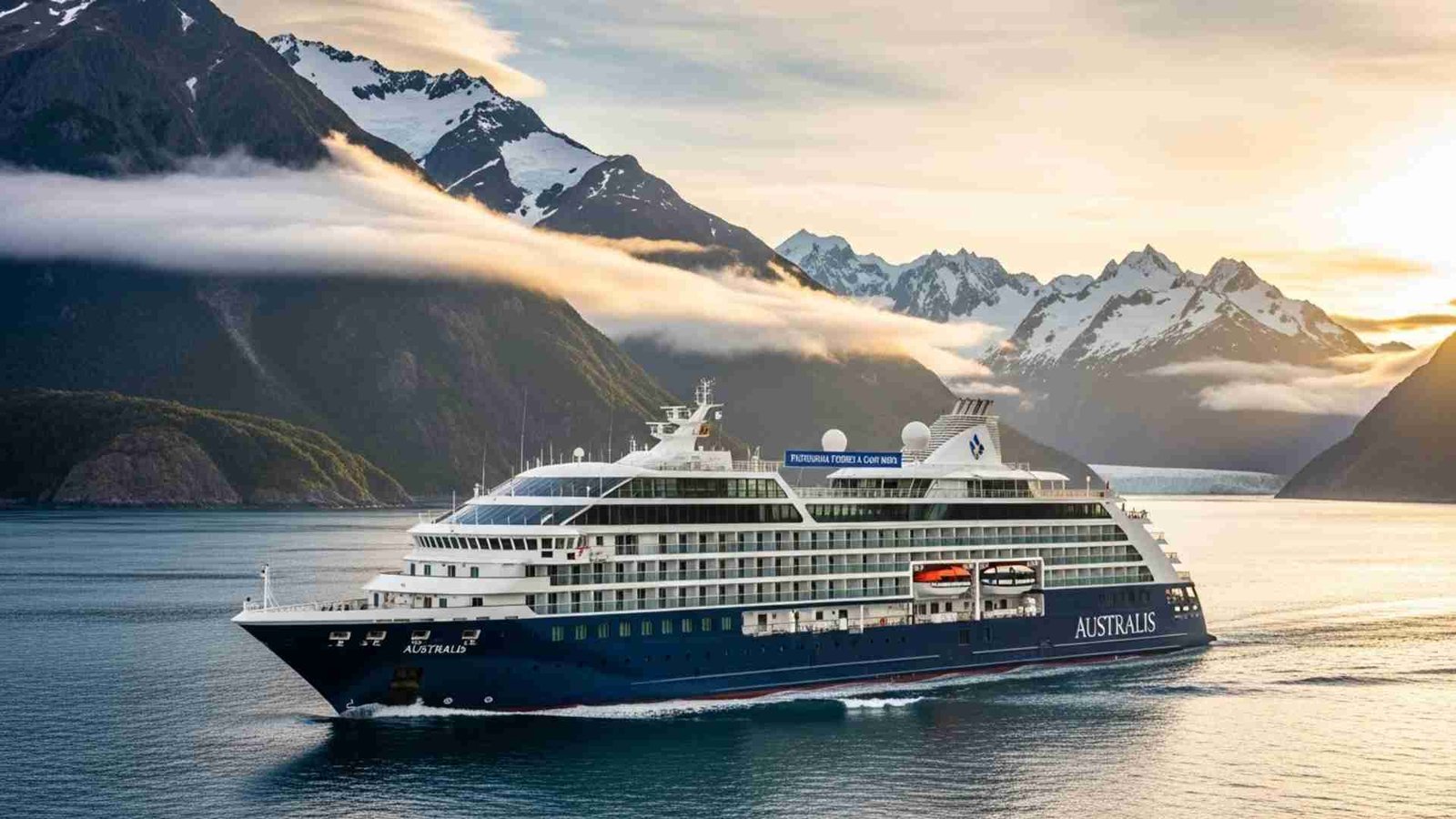
Treat the fjords as a wind classroom. Patagonian weather sculpts the story, from slate-blue squalls to sudden cathedral light. Glaciers in Alberto de Agostini National Park calve with a cannon’s crack, while lenga forests glow copper by late summer. Seek the human thread too: Yaghan canoe routes and lighthouse keepers at the end of the world.
The ship clears the Beagle Channel; a wandering albatross arcs past as Cape Horn’s black tooth rises from the foam. The bridge opens and you step out. In a five-minute weather window, the ocean looks infinite and personal at once.
Route Card (quick, practical):
- When: October–April. Shoulder months mean wilder skies and fewer crowds.
- Getting there: Start or end in Punta Arenas or Ushuaia; both have easy air links to Santiago or Buenos Aires.
- Ideal length: 4 nights gives you Cape Horn, Pia or Águila Glacier, and Magdalena Island penguins.
- Musts: Pisco sour with glacial ice; zodiac hike to a wind-bent viewpoint; sea lion rookeries.
- Spend-smart: Cabins with portholes are fine; the show is on deck.
- Respect: Walk softly at nesting areas; guides set distances.
- Shoot this: Backlit spray at the bow. Fast shutter for birds, wide glass for ice walls.
8. Kimberley Coast, Western Australia — Ponant
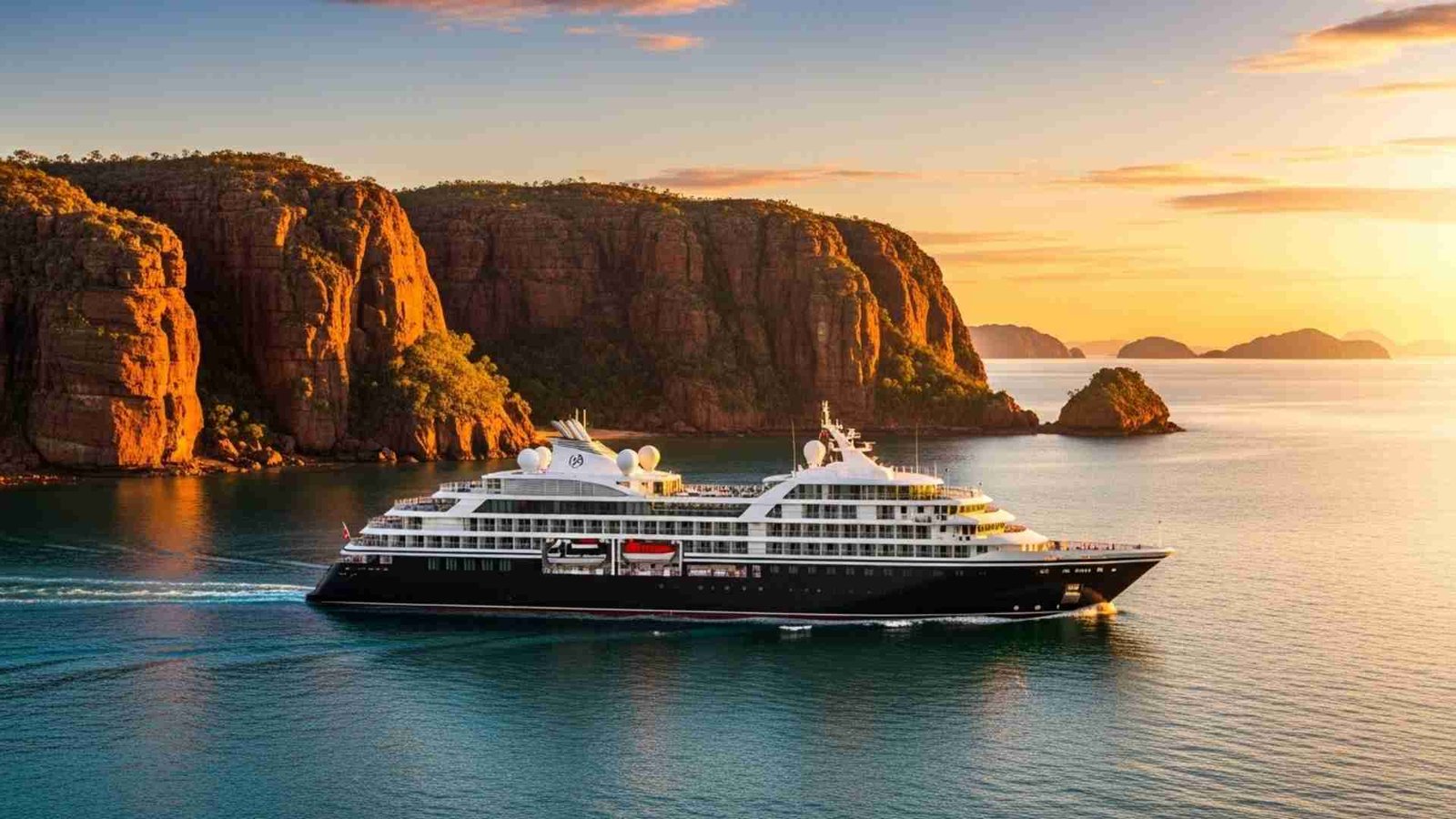
The Kimberley isn’t only red rock and crocs; it is tide choreography. Twice a day, the sea pulls back the curtain and reveals Montgomery Reef “rising” out of the ocean, water racing off its edges like a living map. Ancient Gwion Gwion rock art sits a short hike from saltwater creeks where mudskippers flick across the shallows.
A helicopter lifts from the helideck. Below, the Horizontal Falls squeeze millions of liters through a narrow gap, turning the ocean into a river in reverse. You return at sunset to a cliff glowing burnt umber while ospreys drift on thermals.
Practical Grid:
- Season window: April–September. For the biggest tidal drama, aim for spring tides around the full or new moon.
- Access path: Fly to Broome or Darwin; embark in one, disembark in the other.
- Time needed: 9–11 nights to string the icons together.
- Don’t miss: Reef walks at ultra-low tide, King George Falls by zodiac, optional heli to Mitchell Plateau.
- Budget view: Small-ship Kimberley is a splurge; tides and distance mean paying for logistics and permits.
- Culture: Rock art sites are sacred; follow guide instructions and do not touch surfaces.
- Photography: Polarizer for glare, neutral density for waterfalls, and a dry bag for the spray.
9. Raja Ampat & the Spice Islands — Ponant
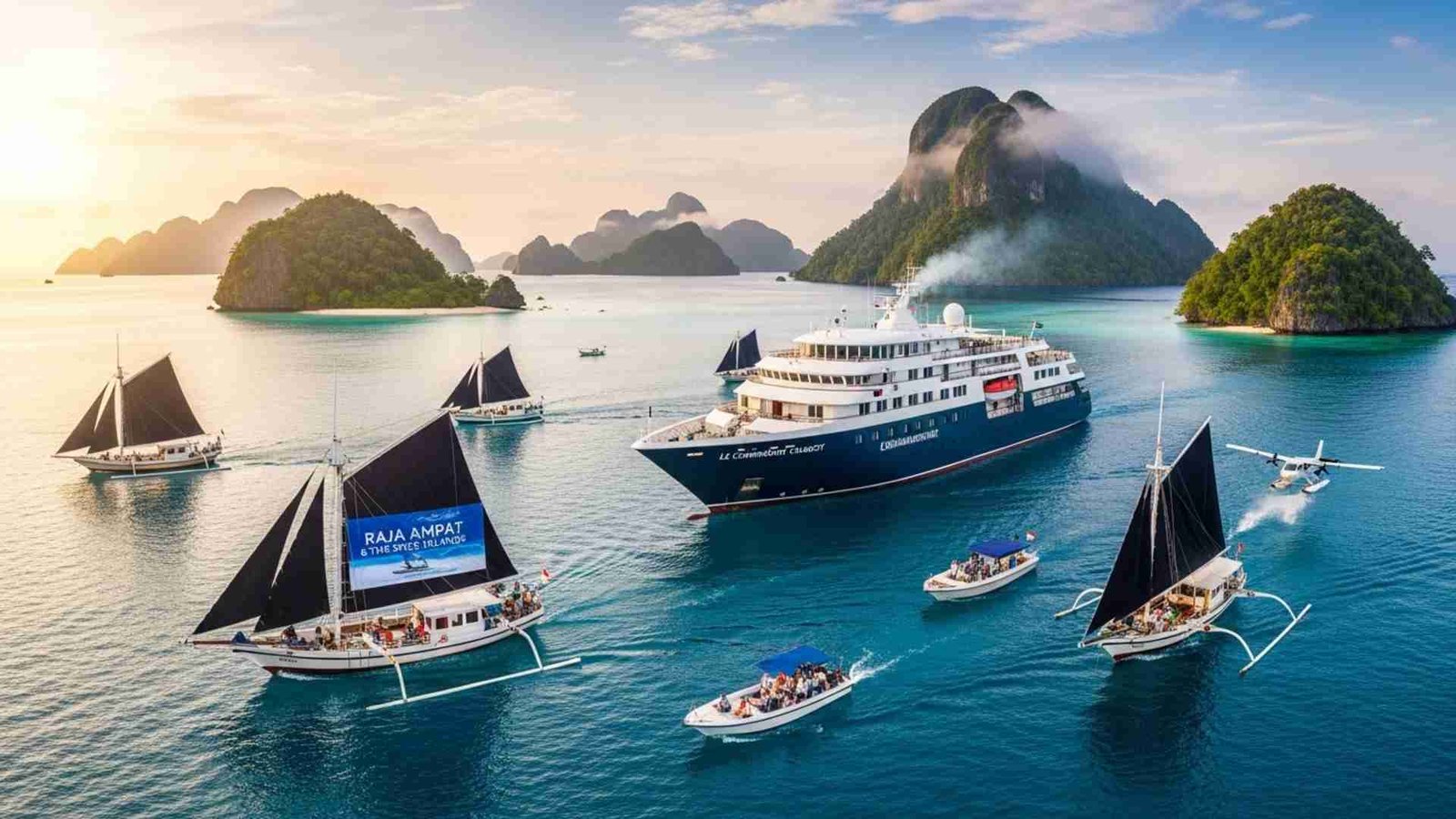
Think of Raja Ampat as the library of life. Under each karst island lies a new chapter: sea fans big as rooms, pygmy seahorses masquerading as coral, mantas circling cleaning stations like moon-shadows. Between dives, villages offer sago pancakes and nutmeg stories that once powered empires.
Night falls near Misool. You slip into water warm as tea. A wave of bioluminescence ignites with each kick and your bubbles sparkle like shaken stars. Back on deck, cinnamon from the galley curls into the air and you realize the Spice Islands are not just history. They’re present-tense fragrance.
On-the-Water Playbook:
- Best months: October–April for calmer seas in Raja Ampat; April–November is better around Banda and the Spices.
- Entry: Fly via Jakarta or Makassar to Sorong or Ambon. Marine Park tag required.
- Sweet spot: 10–12 nights to mix karst lagoons, WWII snorkel sites, and manta stations.
- Essentials: Reef-safe sunscreen, a snug mask, and respect for no-touch reef rules.
- Costs: Liveaboard-style expedition pricing; snorkeling is excellent even if you skip dives.
- Etiquette: Sarongs or modest clothing in villages; learn a simple terima kasih.
- Photo plan: Drones only where permitted; water is your lens—shoot split-level scenes at sunrise.
10. Ross Sea & East Antarctica — Aurora Expeditions

This is not the Antarctic of postcards; it is the continent’s ledger, where history and science sit side by side. The huts of Scott and Shackleton feel like time capsules sealed by cold. Volcanic Mount Erebus sends a thin column skyward, and tabular ice stretches until the horizon forgets itself.
A long, blue day ends with the ship anchored in fast ice. An emperor penguin regards the landing party with bemused dignity. A distant boom rolls across the plain as an iceberg calves. In the deep quiet, you understand why polar explorers wrote about silence as sound.
Expedition Brief (practical in mission format):
- Weather window: January–February for the highest chance of access; ice dictates everything.
- Getting there: Long sail from Hobart or Invercargill/Bluff; occasionally from Ushuaia on very extended itineraries.
- Duration: 20–30 days. Fewer days usually means you are not reaching the Ross.
- Aims: Historic huts at Cape Evans and Cape Royds, McMurdo Sound, possible emperor rookeries.
- Budget reality: Top-tier pricing due to distance and ice-class ships. Insurance and medical checks are non-negotiable.
- Conduct: Biosecurity is strict. Every landing begins with boot and gear decontamination.
- Imaging: Extra batteries hate the cold. Protect lenses from condensation when moving inside to out.
11. Iceland Circumnavigation — HX (Hurtigruten Expeditions)
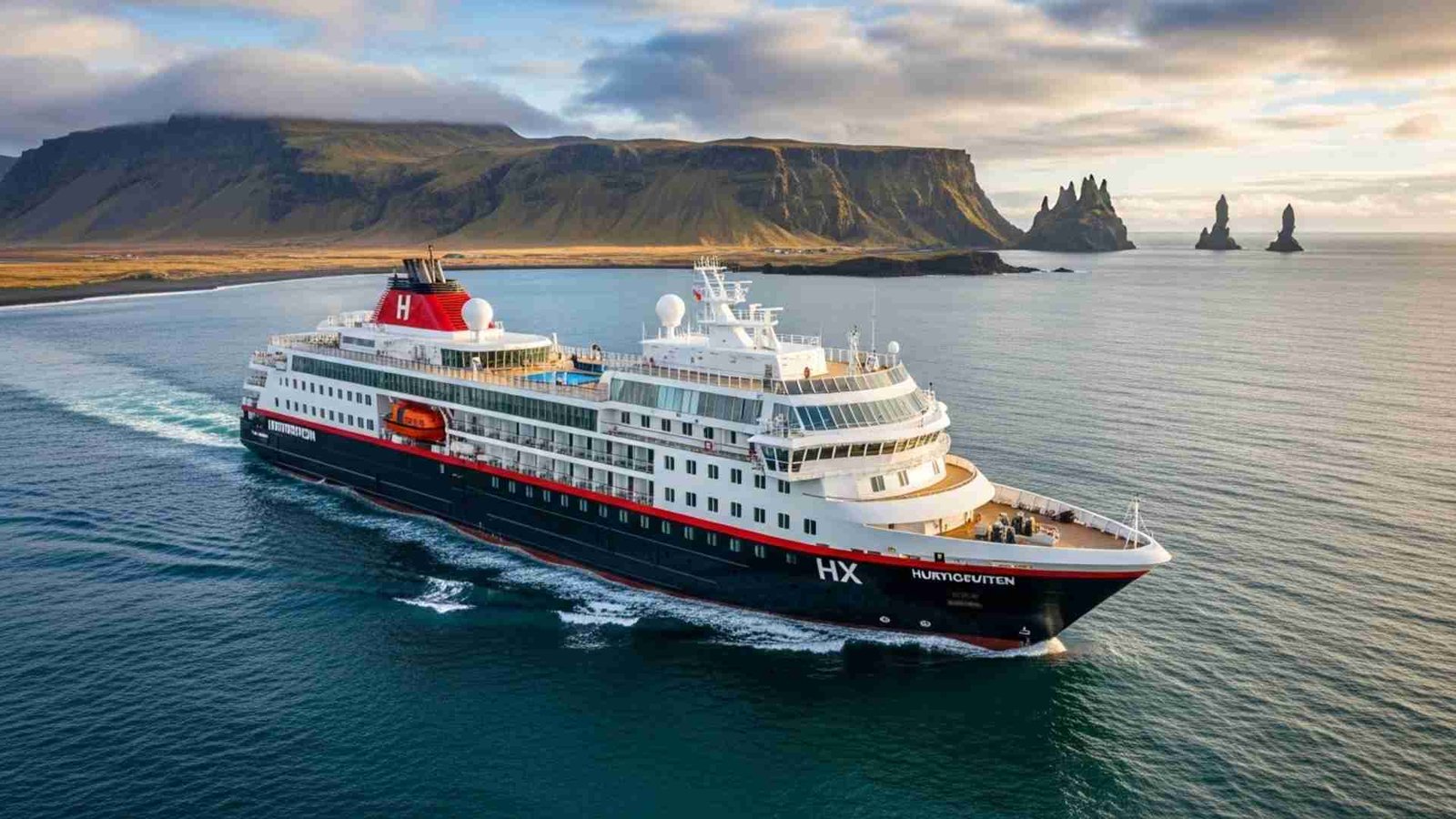
Sail the nation’s “ring road” by water, treating the coast as a moving geology lab. You’re tracing fire and ice in real time: sea cliffs stacked like books of basalt, volcanic cones steaming beyond black-sand harbors, seabird cities pulsing over cold currents. The ship becomes a floating trailhead to hot pots, troll-shaped lava fields, and fishing towns where the day’s catch is still a handshake.
Late evening light refuses to end. A whale surfaces beside the bow with a slow exhale, gulls wheel, and a warm pool waits ashore where locals swap weather lore. You step into mineral heat while midnight paints the sky like a bruise turning gold. It feels both prehistoric and brand-new.
Navigator’s Log (practical, time-stamped):
- 0600 Swell check then zodiac to puffin cliffs: best June through July.
- 1100 Hot-spring stop: shower first, no exceptions in community pools.
- 1500 Waterfall circuit: bring a neutral-density filter for silky flows.
- 1900 Arctic Circle hop at Grímsey on select routes.
- Season window: May to September; late August hints at aurora on clear nights.
- Access: Fly to Reykjavík then embark in the capital or Akureyri depending on itinerary.
- Sweet spot: 8 to 12 days for a near-complete lap.
- Spend-smart: Cabins with windows beat balconies in windy seas; meals ashore are pricier, plan a few special stops.
- Etiquette: Tread lightly on moss, follow marked paths, leave stones where they are.
- Photo cue: Weather turns fast; pack a rain sleeve and microfiber cloths.
12. Scottish Hebrides & Highlands — HX (Hurtigruten Expeditions)
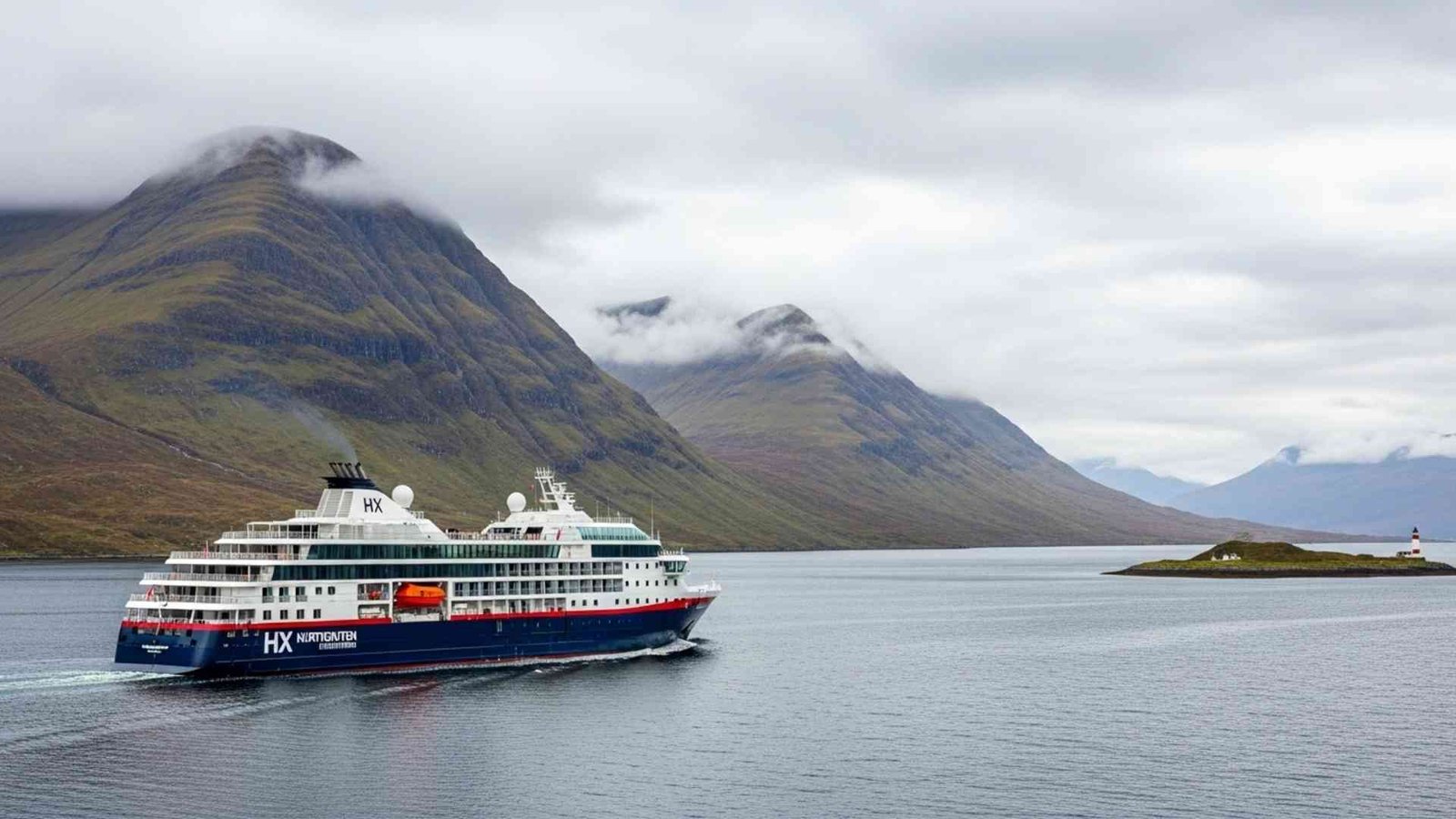
Think culture first, cliffs second. Gaelic language on ferry radios, peat smoke on the wind, machair wildflowers bright as flags along shell-sand beaches. The sea routes knit monasteries, distilleries, and crofting communities into one living story, where white-tailed eagles write calligraphy across the cloud base.
A community hall on a small isle hums to life. Fiddles rise, boots find the beat, a tray of home baking circles the room. Outside, the tide hisses over kelp and a lighthouse pulses beyond the harbor. You walk back to the tender under drizzle that makes everything glow instead of shine.
Field Guide Grid (practical, by theme):
- When to go: May to July for puffins and wildflowers; August to September for calmer seas and whisky-focused calls.
- Getting there: Glasgow or Inverness by air, transfer to embarkation ports like Oban or Greenock.
- Duration: 7 to 9 days links Inner and Outer Hebrides; St Kilda requires the right weather window.
- Don’t miss: Iona’s abbey at quiet hour, Fingal’s Cave by swell-friendly zodiac, a peat-fired dram on Skye, boat trips for sea eagles.
- Budget lens: Shore tastings and small-isle crafts add up; prioritize one distillery tour and one guided heritage walk.
- Etiquette: Ask before photographing people or crofts, respect burial grounds, keep gates as you find them.
- Photo plan: Moody light rewards patience; carry a fast prime for halls and pubs, a longer lens for birds in shifting squalls.
Conclusion:
In a world of cocktails and crowded beaches, expedition cruises trade umbrellas for ice, rainforest mist, and stories told by wind and tide. Whether you’re tracing penguin highways in the Ross Sea or drifting past cedar-fringed coves in Alaska, the journey reshapes how you see wild places—and your place among them. Pack curiosity, leave expectations, and let the map’s edges become your itinerary.