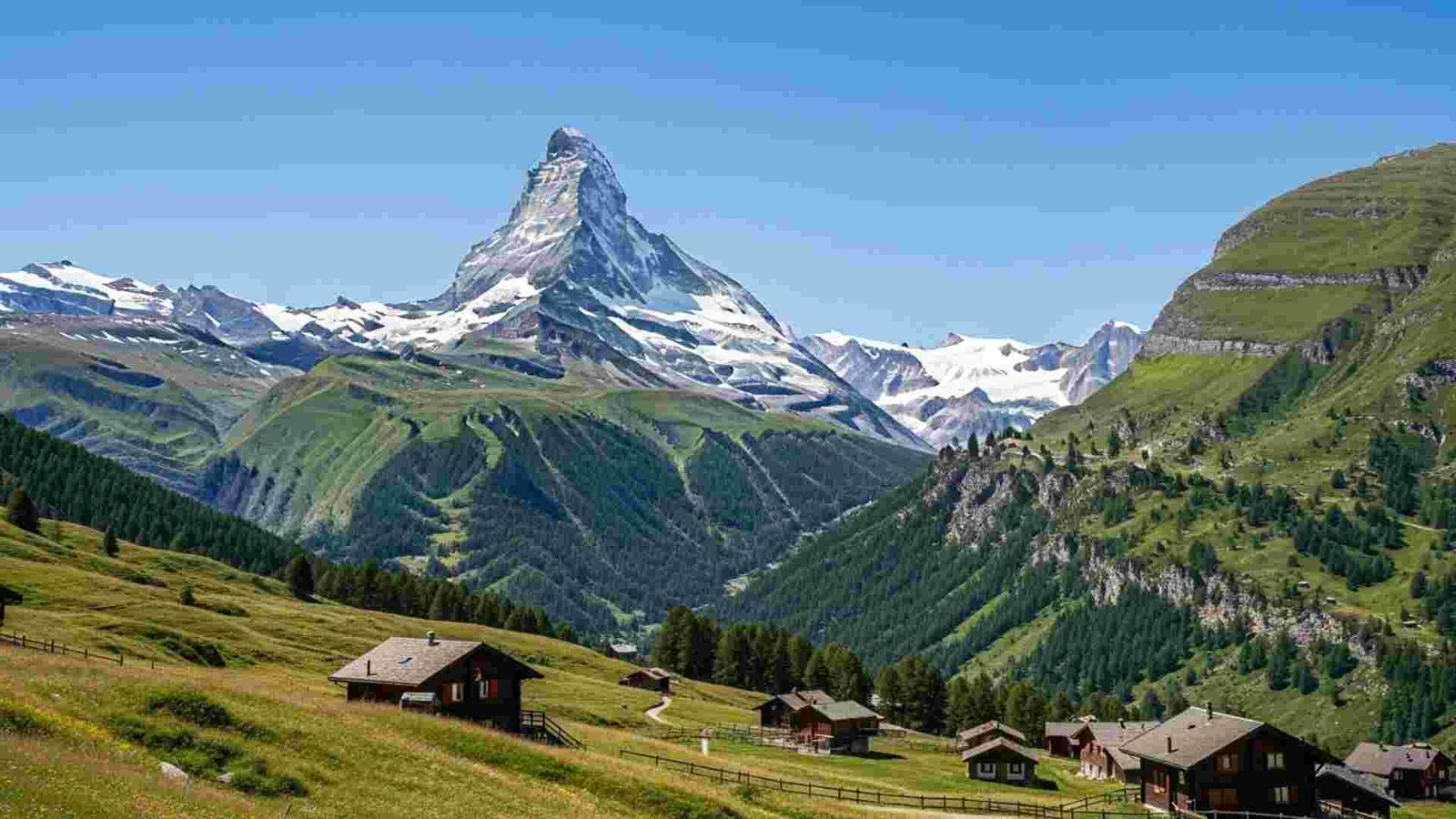
Cold air bites your cheeks and smells faintly of pine and stone; somewhere above, a ridge catches first light like a blade. You want that rush—wide-open wonder without the crowds, fresh trails that still feel like discovery. Flights cost more, headlines shout overtourism, and your time is short; choosing smart matters now.
Trade the usual postcard for places that surprise: valleys where bells echo, glassy lakes under jagged silhouettes, roads that climb into sky. We’ll lead you to mountain dupes with soul—easier access, better value, fewer elbows. Pack curiosity. The next eighteen stops might change how you chase altitude forever.
1. Zermatt, Switzerland
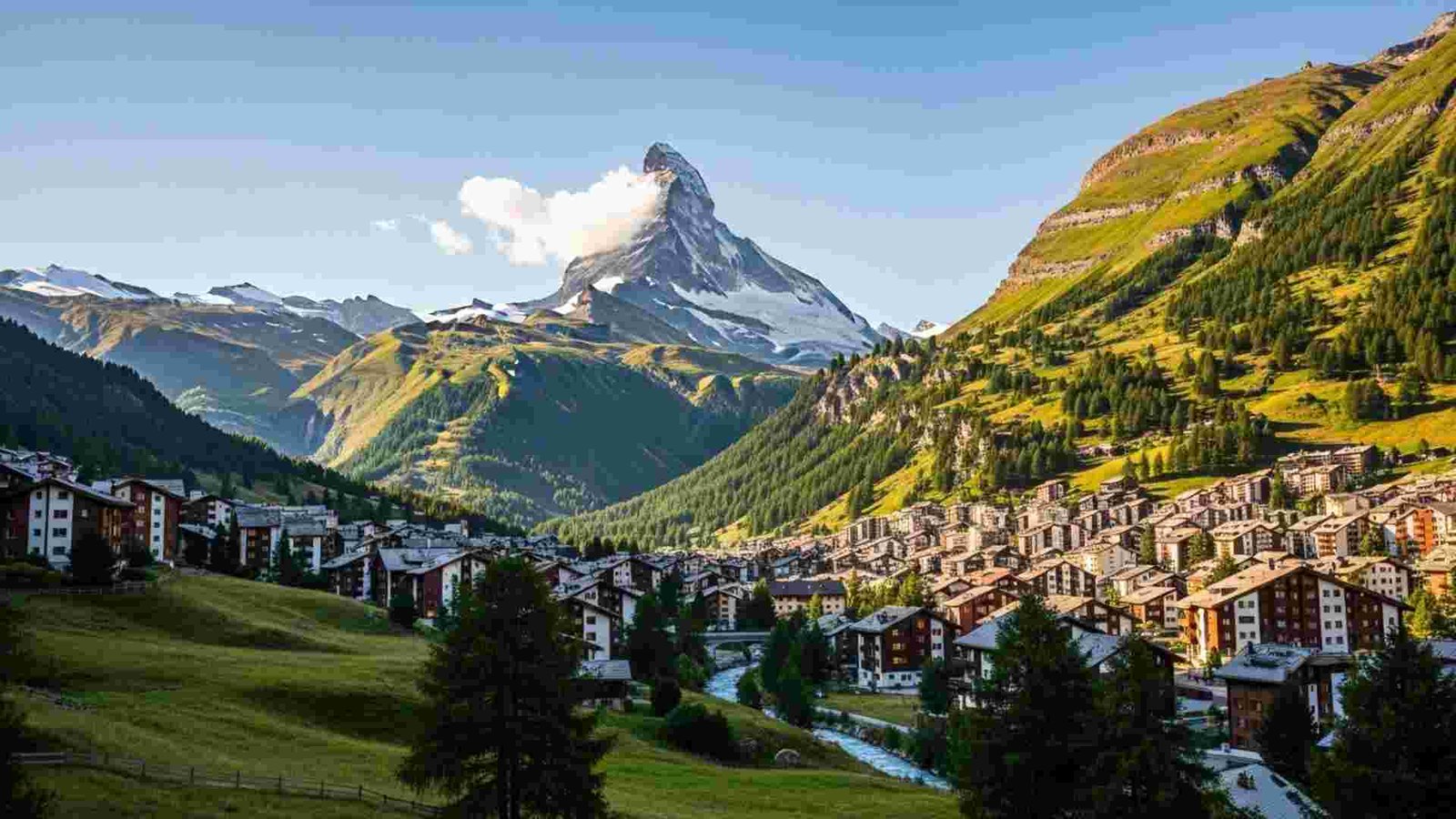
And Zermatt simply hits you with presence. Nestled in the Swiss Alps, this village sits under the iconic Matterhorn — the instantly recognisable pyramid-shaped peak. According to tourism sources, Zermatt offers hiking, skiing, and trails of all levels: “a natural paradise in every season” is how the official site puts it. The resort recently reached a milestone: its ski-&-lift operator recorded CHF 100 million in sales for the first time, hinting at both infrastructure investment and popularity.
But beyond the impressively photogenic mountain, let’s talk numbers and know-how. Getting there: you travel to Täsch by car (since Zermatt is mostly car-free) and then take a shuttle train or taxi into the village. The winter 2025/26 season has been flagged with updated opening dates and safety planning.
Practical Information:
- Peak season: Dec–Mar (ski) | Jun–Sep (hike). Shoulder months are cheaper.
- Weather: Summer 20 °C daytime | Winter –5 °C to –10 °C.
- Getting there: Fly to Zurich → train to Visp → shuttle to Täsch → Zermatt electric train.
- Ideal stay: 3–4 days to cover Gornergrat + Matterhorn views.
- Budget: CHF 250–400/day (mid-range hotel + meals + passes).
- Local tip: Stay in Täsch for lower rates and easy train access.
- Photography: Sunrise at Riffelsee — Matterhorn reflection is unbeatable.
2. Telluride, Colorado, USA
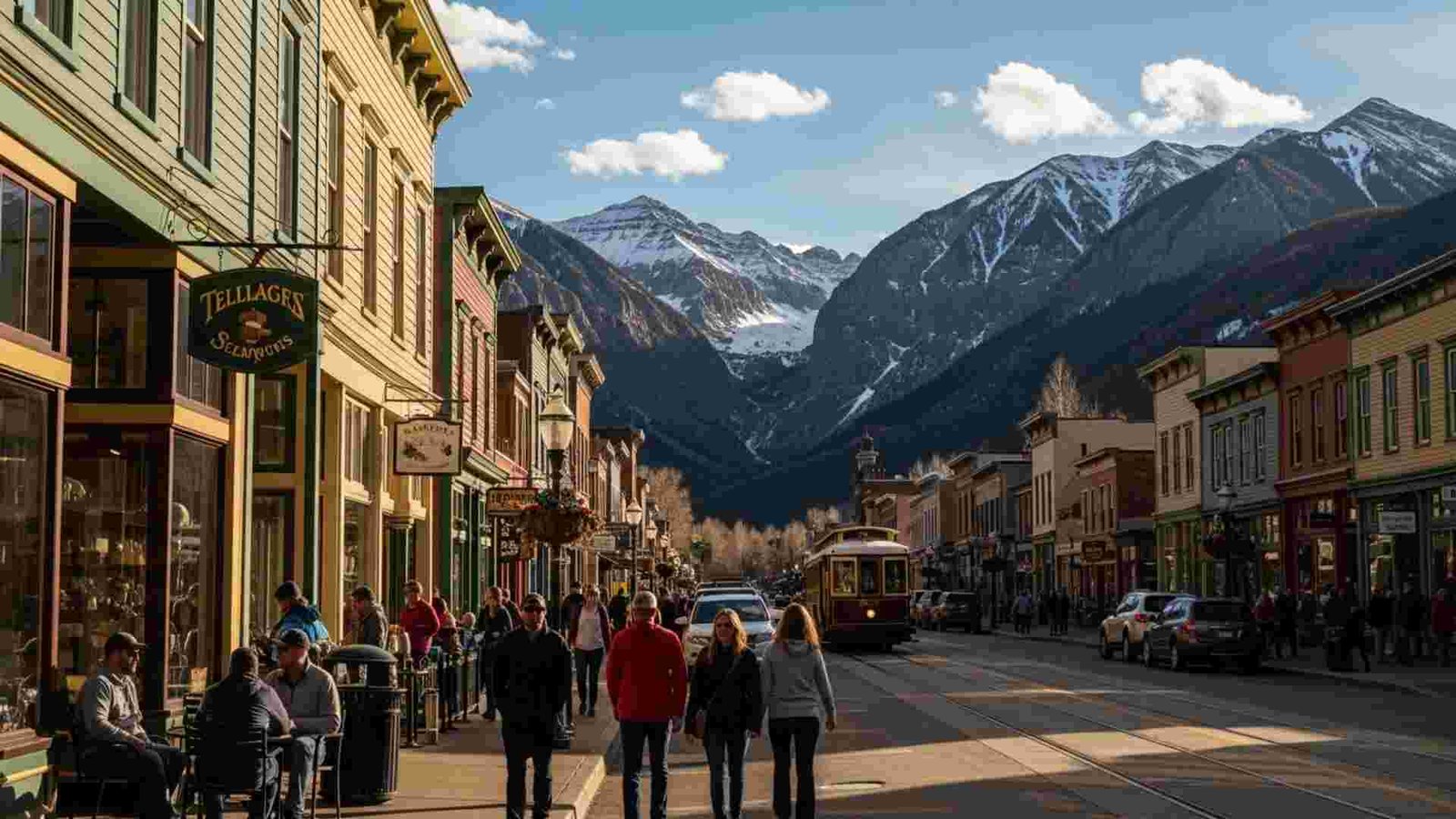
Hidden in a box canyon at 8,750 ft, surrounded by the San Juan Mountains, this small town of 2,400 people packs the atmosphere of a place that knows its worth. Once a mining hub, now a skier’s and festival-goer’s paradise, it’s kept its soul intact. Historic brick buildings line Colorado Avenue while jagged peaks frame every angle — no billboard can match that.
In 2025, Telluride Tourism Board reported nearly 800,000 annual visitors, yet it never feels overrun thanks to its limited hotel capacity. The free gondola — the only one of its kind in North America — links Telluride and Mountain Village in just 13 minutes, saving you car time and offering views that border on cinematic. Summers bring Bluegrass and Film Festivals while winters see some of Colorado’s lightest powder.
Practical Information:
- Best time: Jul–Aug (festivals) | Dec–Mar (ski).
- Weather: Summer high ≈ 25 °C | Winter ≈ –7 °C night.
- Getting there: Fly to Montrose (MTJ, 65 mi) or Telluride Regional (TEX). Shuttles connect both.
- Ideal stay: 3–5 days for town, hikes, and mountain village.
- Budget: $250–350/day mid-range; festivals inflate rates fast.
- Top experiences: Hike Blue Lake Trail, ride the gondola at sunset, grab a drink at the New Sheridan Saloon.
- Local etiquette: Altitude is real — hydrate and take it slow the first day.
3. Chamonix-Mont-Blanc, France
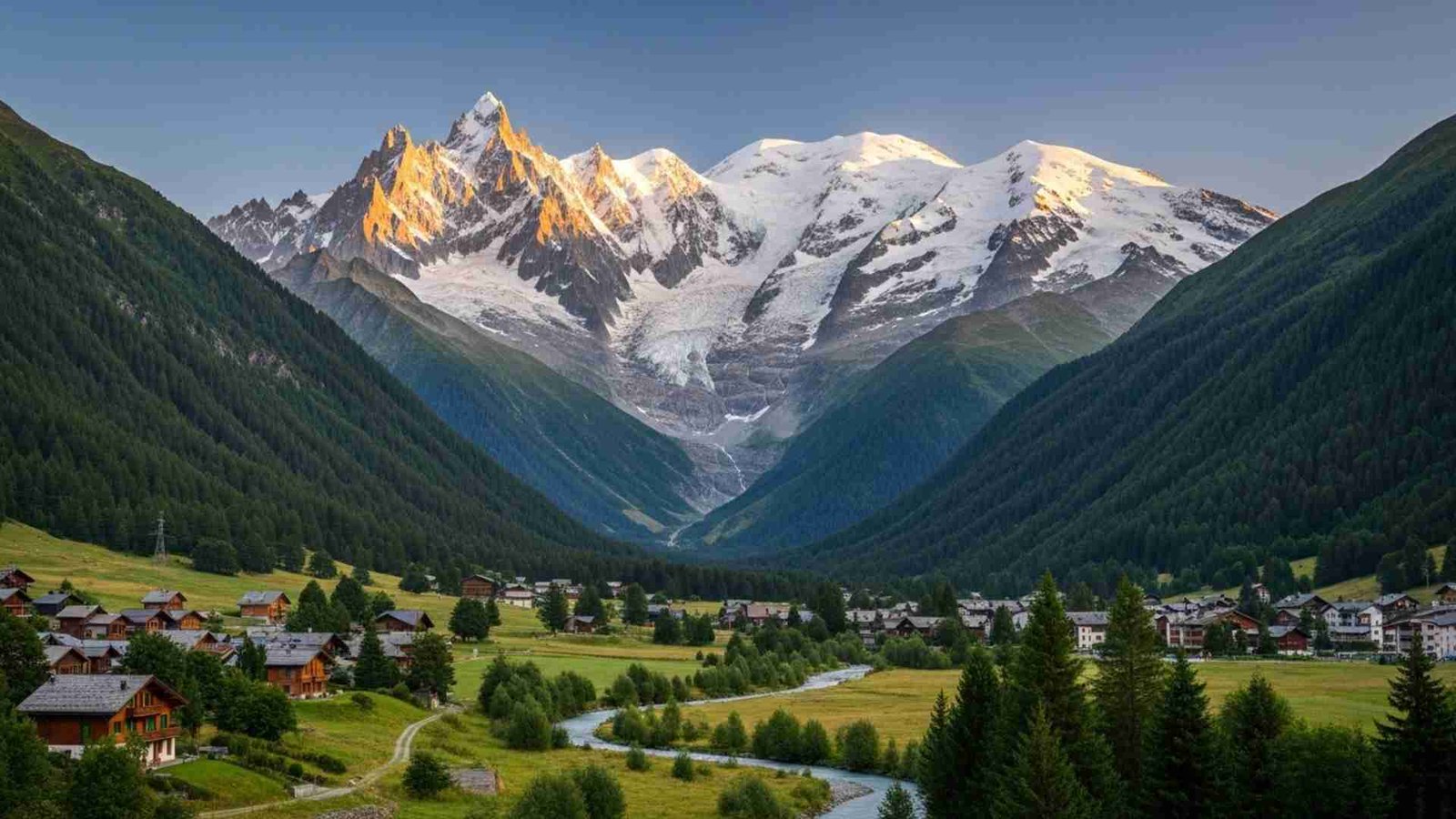
At the foot of Europe’s highest peak, Chamonix breathes pure adventure. It’s where mountaineering was practically born — the first ascent of Mont Blanc in 1786 still echoes through its streets. Today it’s a bustling hub with boutique gear shops, cozy cafés, and guides who speak half a dozen languages. Every direction you look, a glacier glows blue against sharp rock.
The 2024 French Tourism Board listed Chamonix among the top three Alpine destinations for international visitors, and for good reason. The Aiguille du Midi cable car soars to 3,842 m, offering a close-up view of Mont Blanc’s summit. In summer, the Grand Balcon Nord and Mer de Glace glacier trails draw hikers of all levels. In winter, the Vallée Blanche ski route stretches for 20 km — one of the longest in Europe.
Practical Information:
- Peak seasons: Dec–Apr (ski) | Jun–Sep (hike).
- Weather: Summer high ≈ 22 °C | Winter ≈ –6 °C night.
- Access: Fly to Geneva (1 hr drive) or train from Paris (≈ 6 hrs).
- Ideal stay: 3–4 days.
- Budget: €200–300/day mid-range.
- Top experiences: Aiguille du Midi lift, Montenvers train to Mer de Glace, dinner at La Caleche.
- Etiquette: Greet locals with “Bonjour” before asking questions — it’s a courtesy they appreciate.
4. Dolomites, Italy
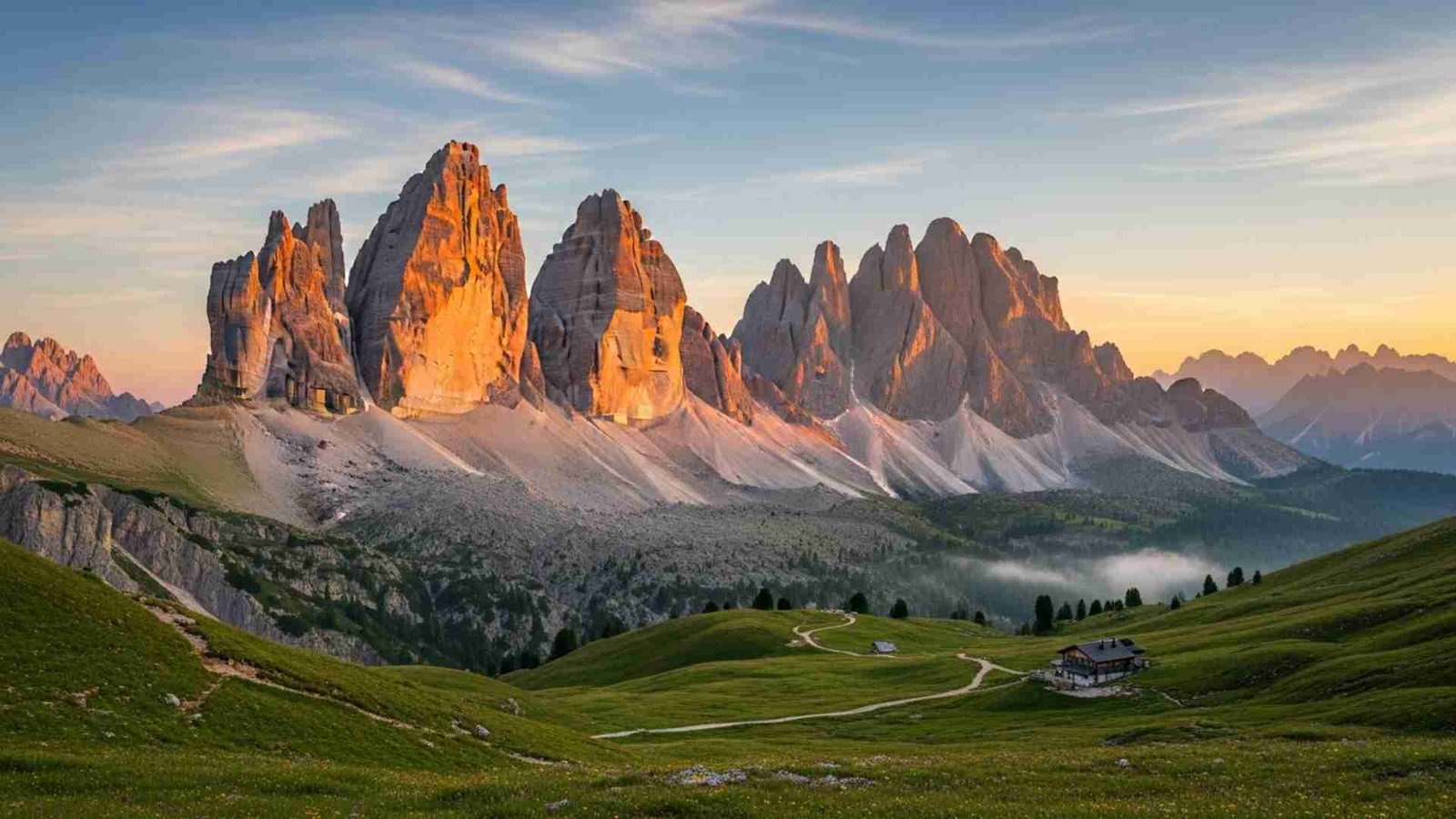
If Banff is Canada’s drama, the Dolomites are Italy’s poetry in stone. Rising from Veneto to South Tyrol, these “Pale Mountains” glow peach at sunset — locals call it Enrosadira. UNESCO recognised the region in 2009 for its geology, covering nearly 16,000 km². You feel that vastness when standing beneath Tre Cime di Lavaredo or watching clouds move like slow tides over Seceda.
Italy’s 2024 data shows over 31 million overnight stays in South Tyrol, with the Dolomites as the crown jewel. The region caters to both hard-core climbers and casual explorers — via-ferrata routes, hiking loops, bike trails, and in winter, the Dolomiti Superski pass covering 12 ski areas and 1,200 km of slopes. In short: endless playground.
Practical Information:
- Best seasons: Jun–Sep (hike) | Dec–Mar (ski).
- Weather: Summer 20–25 °C | Winter –8 °C to 0 °C.
- Access: Fly to Venice, Verona, or Innsbruck → drive 2–3 hrs to Cortina or Val Gardena.
- Ideal stay: 4–5 days.
- Budget: €180–250/day mid-range.
- Must-do: Hike Tre Cime, ride Seceda cable car, visit Lago di Braies early morning.
- Photo tip: Sunrise at Alpe di Siusi for soft light and fog layers.
- Local note: Parking is limited; arrive early for trailheads.
5. Glacier National Park, Montana, USA

Glacier is raw, vast, and quietly changing. Covering over 1,000,000 acres, it holds more than 700 miles of trails and 130 named lakes. The “Crown of the Continent” nickname fits — this is where the Rockies feel truly untamed. In 2024, the National Park Service logged 2.9 million visitors, down slightly from pandemic spikes but still busy in summer.
50 miles of twists, tunnels, and sheer drops. You’ll pass wildflowers, glacial valleys, and maybe a bear if you’re lucky (and respectful). Hiking Hidden Lake Overlook or Grinnell Glacier shows why scientists say the park loses about 1 % of glacial mass per year — it’s a landscape in transition.
Practical Information:
- Peak season: Jul–Sep (full road open).
- Weather: Summer high ≈ 27 °C | Spring/Fall cool and variable.
- Access: Fly into Kalispell (FCA) or drive from Missoula/Whitefish.
- Ideal stay: 3–4 days.
- Budget: $150–250/day mid-range; entry $35/car (valid 7 days).
- Top trails: Hidden Lake, Avalanche Lake, Highline Trail.
- Photography: Sunrise at Saint Mary Lake; sunset from Logan Pass.
- Safety: Carry bear spray and check trail closures before hiking.
6. Hallstatt, Austria
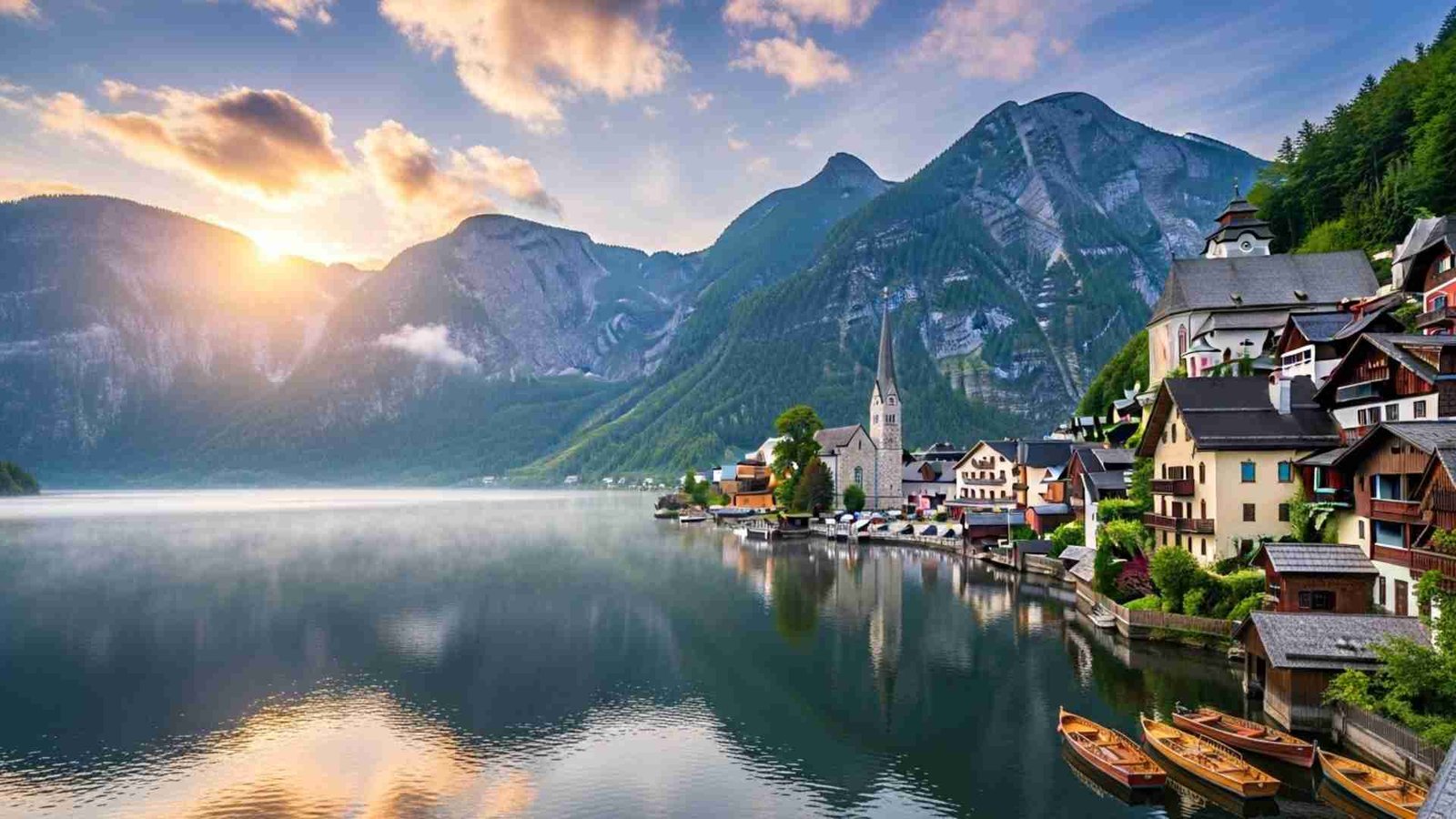
Think of Hallstatt as a mountain-lake postcard that lives in reality — but also comes with a back-story few pause to consider. Nestled against the Dachstein mountains and gliding along the shore of Lake Hallstatt, this village has been inhabited for about 7,000 years, thanks to ancient salt mines nearby.
with a resident population of under 800, Hallstatt welcomes roughly 1 million visitors per year, and on peak days over 10,000 people can flood into the village, which is more than 1,300 visitors per resident annually.That means there’s the classic beauty — wooden houses, lake reflections, pastelfront facades — but also the pressure-of-tourism dynamic that you don’t always see at first glance.
early morning, when waters are mirror-still, you get that quiet-magic few see. Late morning, busloads arrive, selfie sticks out. If your readers want the magic and authenticity, suggest staying overnight, wandering the less-trodden eastern shore, or visiting in shoulder-season.
Practical Information
- Best time: May–Oct yields the classic lake-mountain view; early spring or late autumn means fewer crowds.
- Access: Fly into Salzburg (≈1.5 hrs) or Vienna then train/car.
- Ideal stay: 1–2 nights. One day to explore village + lake, another to hike or use the salt mine.
- Budget tip: Booking the lake-front stays means premium rates — staying a little uphill or using the nearby Obertraun can help.
- Unique angle: Explore the Hallstatt salt mine and its “World’s oldest industrial site” claim for a less-touristy angle.
7. Lauterbrunnen Valley, Switzerland
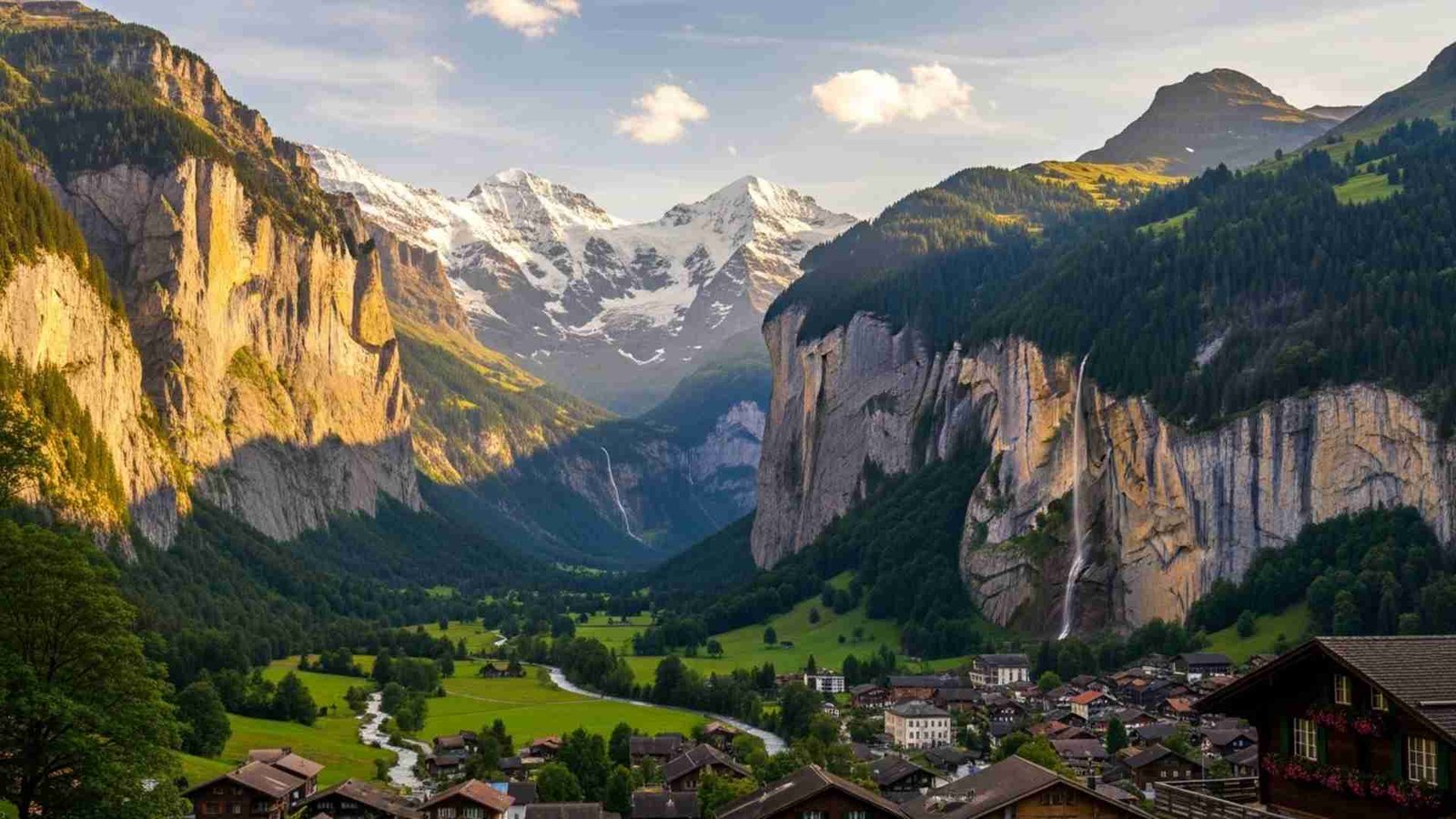
What if you skipped the grand peak and instead experienced a valley of waterfalls?think 72 waterfalls (yes, seventy-two) dropping around you.It’s steep, lush, dramatic — and the kind of place where you feel the mountain world closing in.
you take the train from Interlaken (~30 minutes) into the valley, drop your bags, and let everything else wait. You walk or bike among meadows, hear the roar of Staubbach Falls, take a cable car up to Mürren for a high-ridge lunch with views of Eiger/Mönch/Jungfrau.Then down again for an evening in the valley floor — quiet, with only the sound of waterfalls and cowbells.
Practical Information:
- Travel access: Interlaken → Lauterbrunnen by train (≈20–30 min).
- Stay length: 2–3 nights gives you time for valley base + mountain ridges.
- Peak vs shoulder: Summer (Jun–Sep) for meadows & lifts; winter for snow-valley ambiance, but limited hikes.
- Budget: Mid-range Swiss valley village prices; staying in Wengen/Mürren is a step up.
- Pro tip: Hike or ride up early morning to avoid the lift crowds, and bring waterproof shoes for the base-valley trails near falls.
- Unique angle: Instead of chasing summit views, stay low in the valley and let the waterfalls be the stars.
8. Mount Rainier National Park, Washington, USA
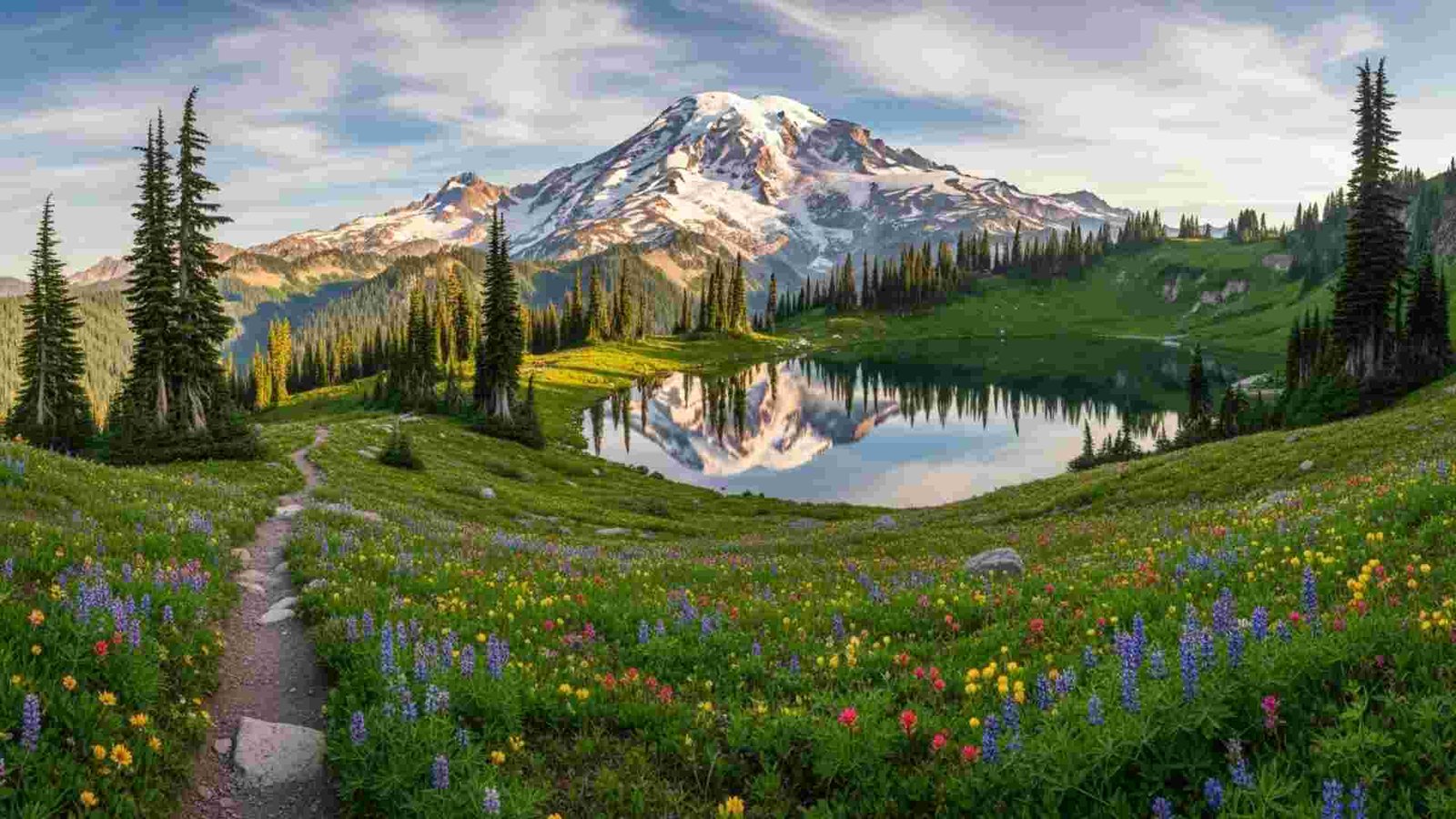
Let’s shift to a U.S. gem that often flies under the radar compared to Yosemite or Yellowstone, but packs serious mountain drama. Mount Rainier towers at 14,410 ft and is an active volcano with glaciers covering it.In 2023 the park logged about 2.52 million visits.
you arrive at “Paradise” (the main visitor zone) and walk among wildflowers that stretch toward massive snowfields. You take the Sunrise Road up for panoramic views. You leave early, the glacier-fed creek whistling. And yes — you look up and realize the mountain you’re under is both ancient and ever-changing (glaciers retreating, status shifting).
Practical Information:
- Access: Fly into Seattle, drive ~2 hrs to park.
- Stay length: 2–3 days; one full day to explore main zones + one for trail or summit-view drive.
- Best season: Jul–Sep (wildflowers + open roads); May/Oct have less traffic but more snow/closures.
- Fees/reservations: Standard entry; some corridors (Sunrise/White River) now require timed entry summer 2024.
- Budget tip: Lodging inside park is limited & books fast; staying in nearby Ashford or Eatonville gives more options.
- Unique angle: Focus not just on peaks but on glaciers and geology — the mountain could erupt (last did ~150 years ago) and shapes its own world down below.
9. Lake Tahoe (California/Nevada)
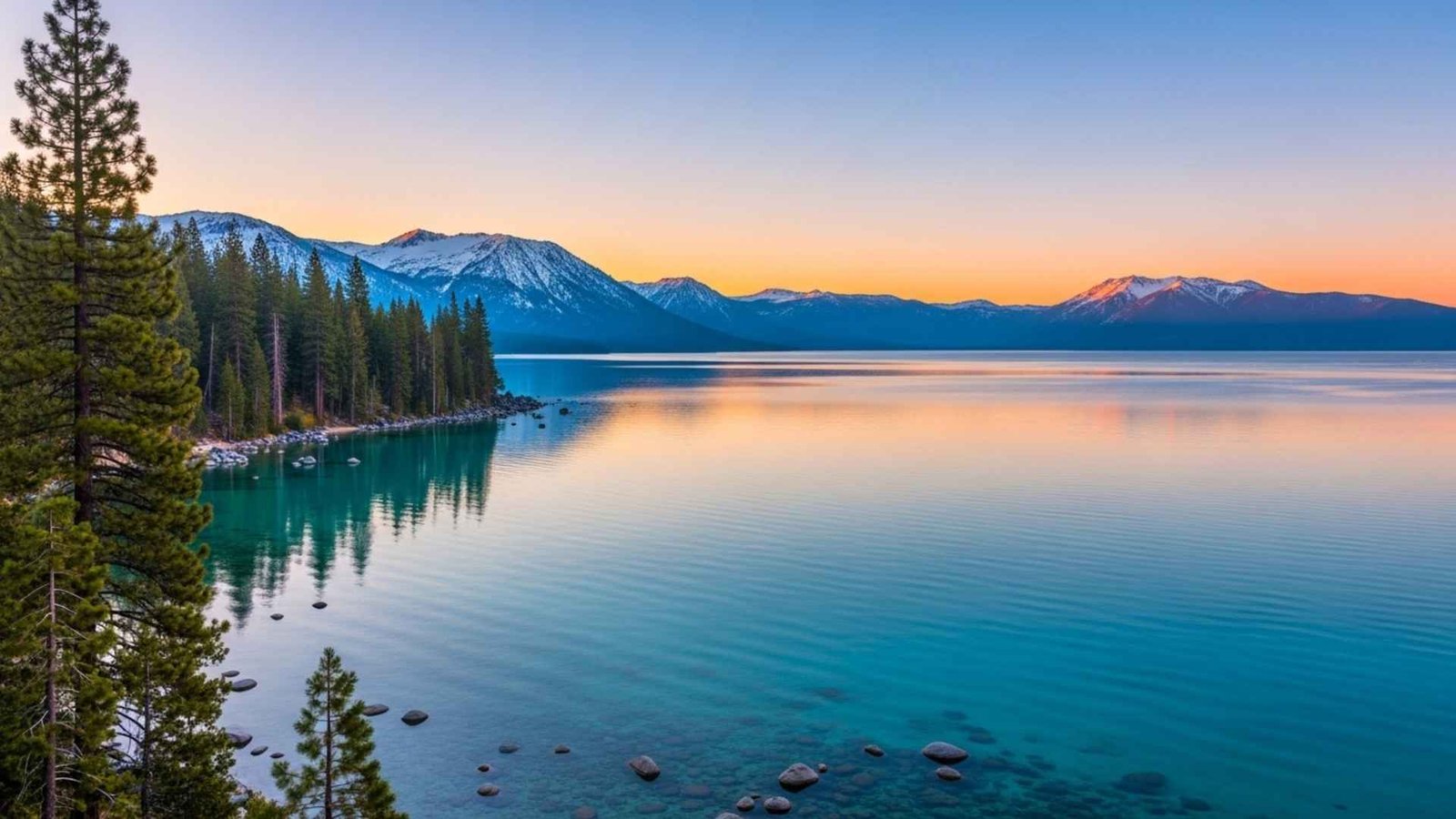
This one’s not just mountain — it’s mountain + lake in a big way. Lake Tahoe is one of North America’s largest alpine lakes and one of its deepest (~1,645 ft at deepest point) with a gorgeous mix of turquoise water and high peaks around.The lake’s clarity has been dropping — in summer 2023 visibility averaged ~53 ft, compared to ~92 ft in winter.
ou stay at the lake’s north shore, wake at sunrise, paddleboard over near-glass water, then hike a mountain ridge for sweeping lake-view peaks. Evening brings a lakeside fire or scenic dinner. Traffic and recreation bustle, but the water & air make you feel lifted.
Practical Information:
- Stay length: 3–4 days minimum to balance lake, peaks, and relaxation.
- Best season: Summer for water + hiking; winter for skiing; spring/early autumn for fewer crowds.
- Travel access: Fly into Reno-Tahoe (NV) or Sacramento (CA) then drive; majority visitors arrive by car (~67 % according to recent survey).
- Budget tip: Accommodation ranges wildly — lake-front premium; staying 5–10 mins inland cuts cost.
- Unique angle: Emphasise the interplay of lake health + mountain experience — you’re not just in the mountains, you’re on the edge of a giant alpine waterbody. And mention sustainability issues (clarity, trash) because they matter for long-term visits.
- Must-do: Hike Eagle Falls for one of the classic “water-to-sky” views.
10. Bavarian Alps, Germany
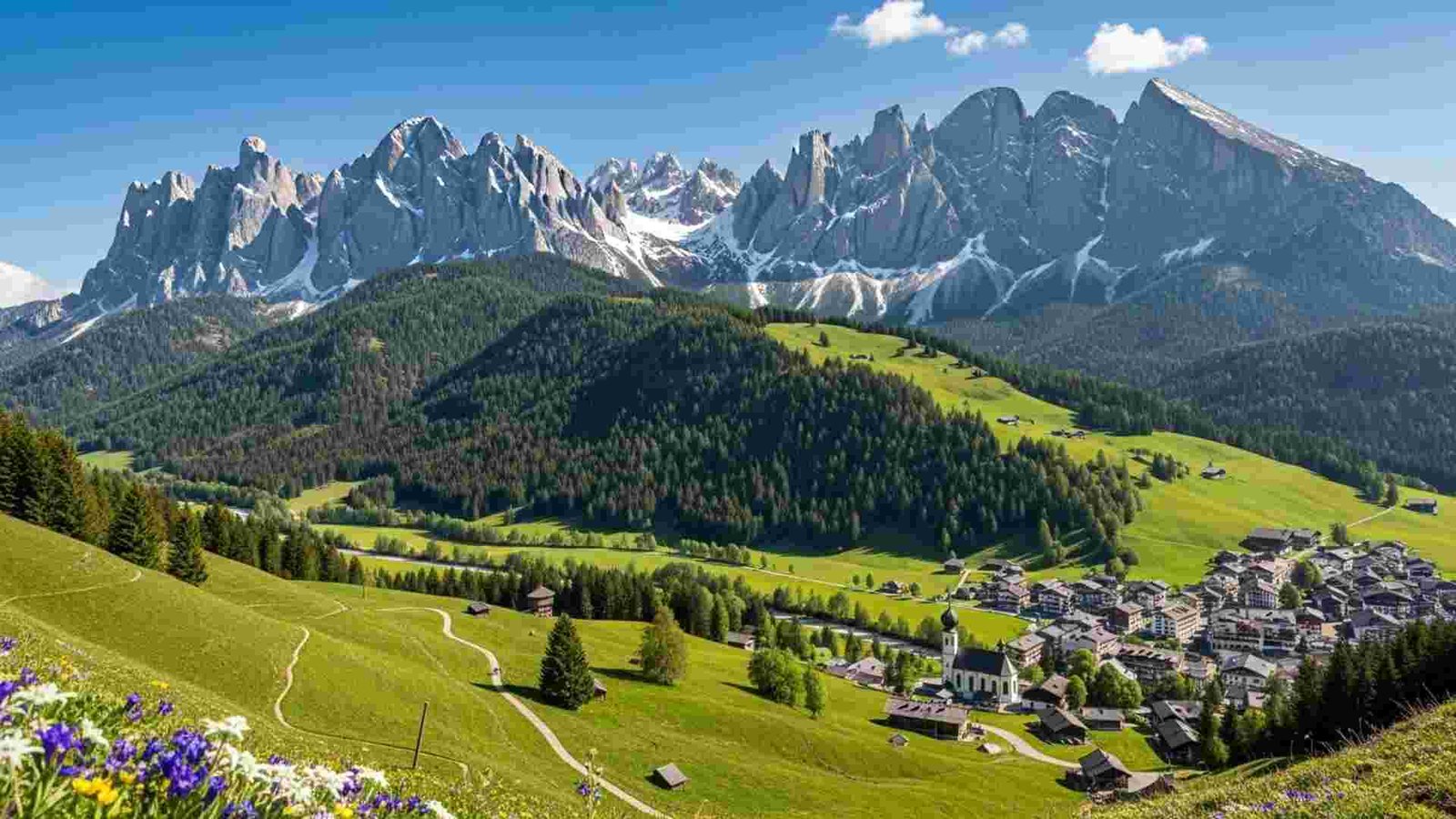
When you hear “Alps”, you think Switzerland, Austria — but Bavaria serves up its own alpine magic with a cultural dose. Let’s go beyond the typical photo of Zugspitze (Germany’s highest peak) and look at how the Bavarian Alps combine history, folk traditions and mountain nature.
You base yourself in a timber-roofed village near Garmisch-Partenkirchen, ride the cogwheel train to the Zugspitze summit for sweeping views, spend an afternoon in a beer garden in the valley, hike through larch forests, and end with a traditional Bavarian dinner complete with live accordion and lederhosen.
Practical Information:
- Stay length: 2–5 days depending on how much valley vs summit you include.
- Best season: Mid-June to September for hiking; December to March for skiing + festive atmosphere.
- Access: Fly into Munich; drive or train ~1.5–2 hrs to the mountains.
- Budget tip: Villages outside the “big names” often give better value; look for “Tourismus Region Zugspitz” deals.
- Unique angle: Emphasise culture + mountain — not just peaks. Bavarian architecture, Alpine beer gardens, cable-cars, plus the climb/lift up Zugspitze make this feel like two trips in one.
- Accessibility: Many peak venues have cable cars or trains — e.g., the Zugspitze summit platform is accessible.
11. Jasper National Park, Canada — “Big skies, quiet wonder”

Jasper reads softer than Banff. Fewer crowds. More room for silence. Lakes like Pyramid and Edith sparkle under long golden evenings, and wildlife sightings feel unforced — elk on the golf course at dusk, bighorns on the road to Medicine Lake. Summer brings wildflower meadows and warm, dry days; winter turns Maligne Canyon into a blue-ice cathedral. Parks Canada calls June–August the peak season; shoulder months give you the same drama with calmer trails.
take the evening cruise on Maligne Lake and linger at Spirit Island as the light softens, or bike the quiet Pyramid Lake Road at sunrise. I’d also keep an eye on current conditions — the region experienced significant wildfires in July 2024 and is in a rebuild/renewal phase, which can affect services and access.
Practical Information:
- Best windows: Late June–September for hiking; December–March for snow.
- Weather vibe: Warm days ~20 °C mid-summer; crisp mountain nights.
- Basecamp: Jasper townsite — easy access in all directions.
- Do-not-miss: Maligne Lake + Spirit Island; Pyramid Lake paddle; ice walk in Maligne Canyon (winter).
12. Grindelwald, Switzerland — “Adventure at your doorstep”
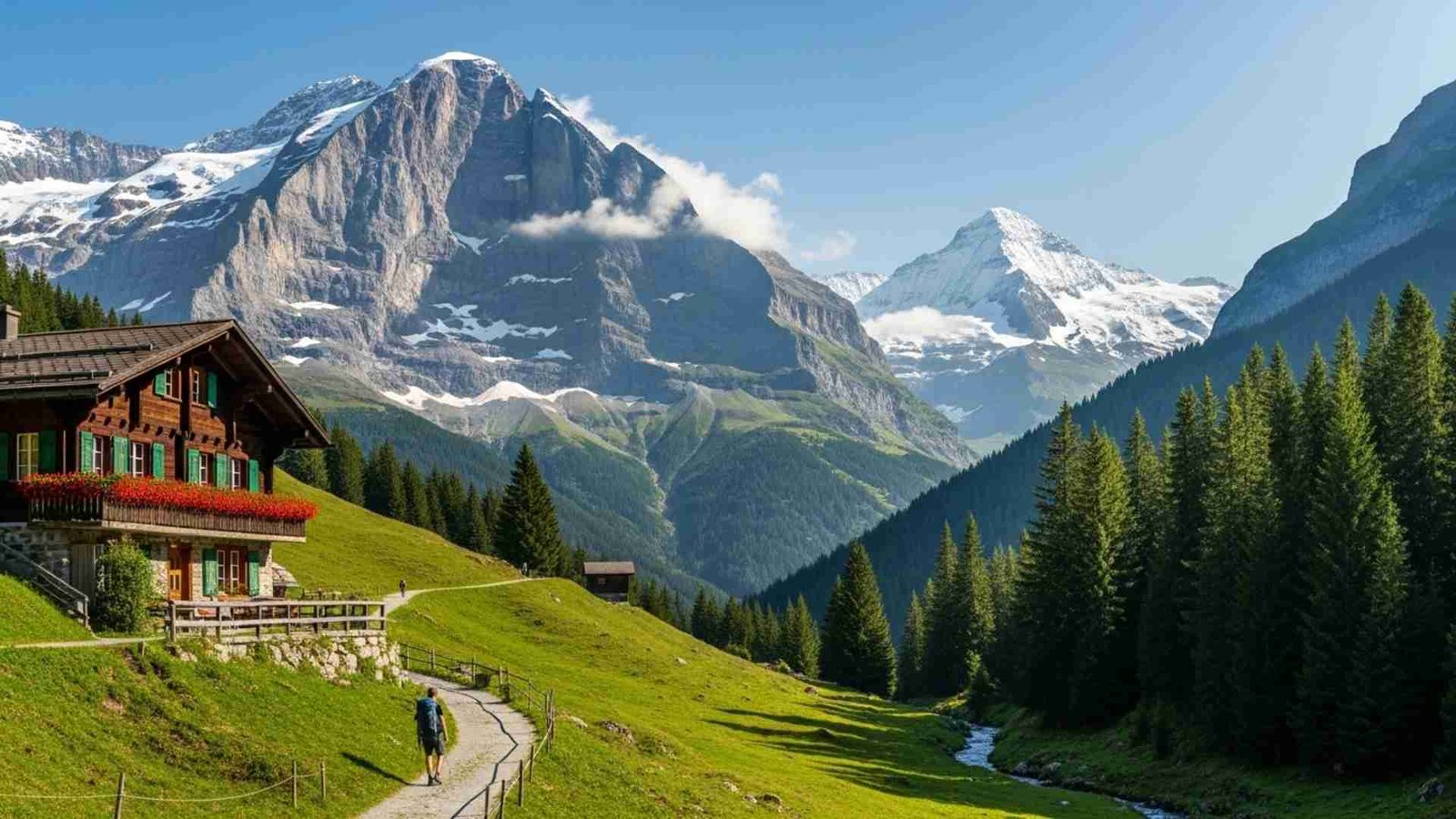
Grindelwald puts you nose-to-nose with the north face of the Eiger. The village itself is lively, but the real play starts when you ride up to First for cliff-edge catwalks and razor views or jump on the ultra-fast Eiger Express — the tricable gondola that vaults you to Eiger Glacier in 15 minutes and shaves close to an hour off older transfers to Jungfraujoch. It’s the express lane to high-alpine terrain.
wander the First Cliff Walk, then hike to Bachalpsee for mirror-still Eiger reflections when the wind drops. Operational dates shift seasonally; check the First lift status when you plan.
Practical Information:
- Morning: Eiger Express up, short walk to the glacier lookout.
- Midday: Train to Kleine Scheidegg for a valley-view lunch.
- Afternoon: First Cliff Walk + Bachalpsee loop (watch lift hours).
- Evening: Back in the village for rösti and sunset on the Eiger.
- Bold highlight: The Eiger Express is the game-changer for tight itineraries — more time on the mountain, less time in transit.
13. Rocky Mountain National Park, USA — “Granite, tundra, and time”
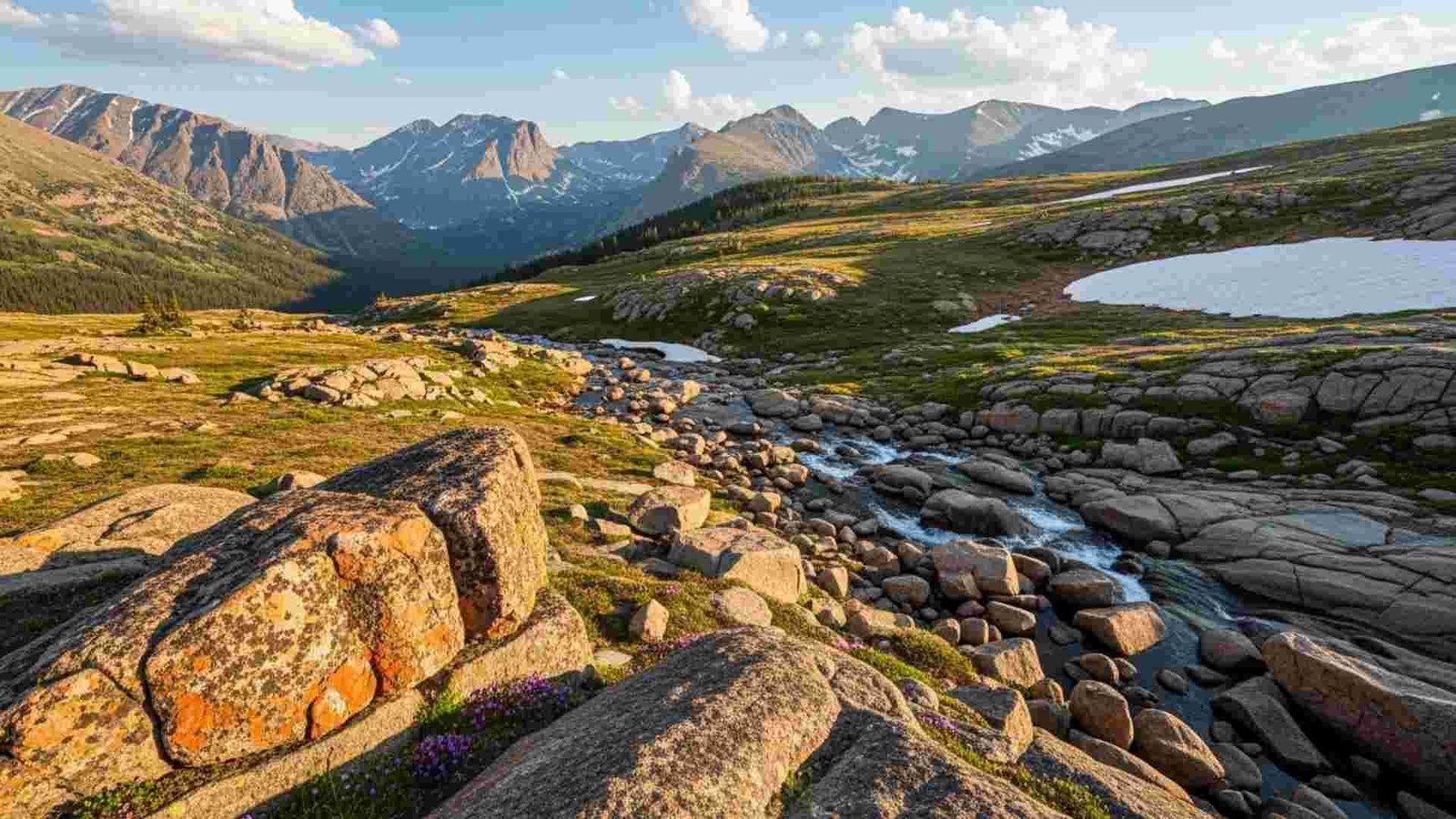
high meadows, elk bugling at dawn, and Trail Ridge Road pinwheeling you above treeline. The park now uses a two-tier timed-entry system in peak season (one tier includes Bear Lake Road), so smart planning equals smooth days. Reservations are required from late May through mid-October during certain hours — build that into your game plan.
drive Trail Ridge early, then drop into the quieter Upper Colorado River section on the park’s west side. The meadows feel more intimate, and moose sightings spike near dusk.
Practical Information:
- Family-friendly: Bear Lake loop → Sprague Lake picnic → Moraine Park elk watch.
- Photographer: Sunrise at Dream Lake → alpine light on Trail Ridge pullouts → alpenglow at Many Parks Curve.
- Leg-stretcher: Ute Trail above treeline if winds are calm; always check the forecast.
- Bold highlight: Timed entry isn’t a hurdle — it’s a gift. Fewer cars during your slot means better trailhead access and a calmer park experience.
14.Åndalsnes, Norway — “Ridges, ramps, and fjord light”

Åndalsnes brands itself the “capital of the mountains,” and it earns that title with jagged skylines and fjords that catch silver light on overcast days.The Romsdalseggen Ridge hike (a slender, panoramic traverse) and the Rampestreken viewpoint — a steel ramp that projects out over the valley for a vertigo-tinged photo you’ll actually remember. The Rampestreken platform is 20 m long, with the last 8 m hanging free.
use the summer Romsdalseggen bus to position for a one-way ridge hike back toward town, then soak tired legs in the fjord that evening. On marginal-weather days, swap to the lower Romsdalstrappa path to Rampestreken; the view still stuns.
Practical Information:
- Base: Åndalsnes town.
- Must-dos: Romsdalseggen (fair-weather) or Rampestreken (most days).
- Timing: July–September for buses, snow-free ridges; spring/fall for moody fjord photography.
- Bold highlight: Rampestreken is the sure-thing viewpoint if the ridge looks too windy — same fjord theater, less commitment.
15. The Pyrenees (France/Spain) — “Cirques, canyons, and border culture”
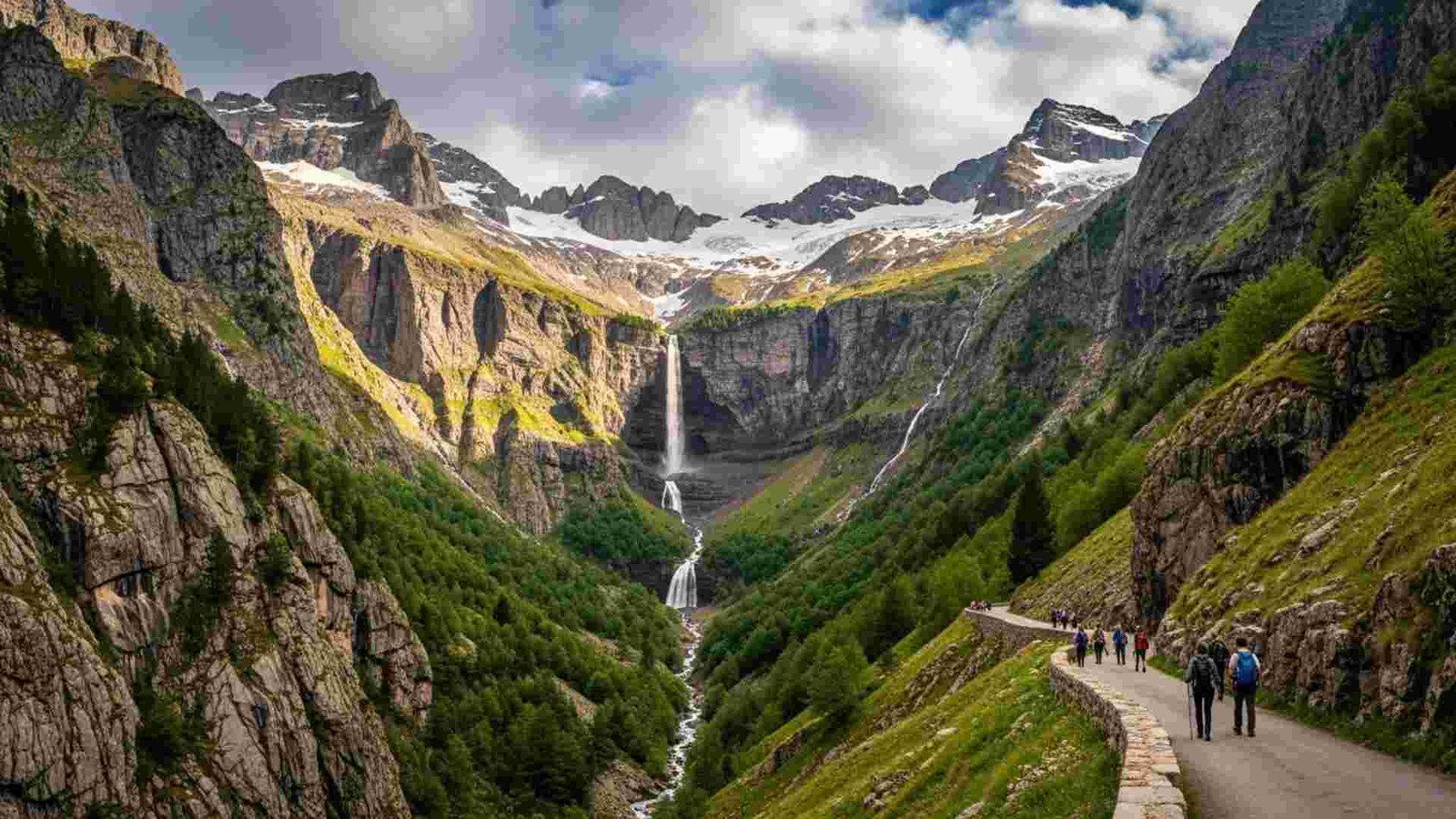
Look past the Alps for a minute.low villages, stone romanesque churches, and trails that wander into high, lonely passes. The UNESCO-listed Pyrénées–Mont Perdu area centers on a 3,352 m limestone giant and includes two of Europe’s largest and deepest canyons on the Spanish side and grand glacial cirques on the French side — that contrast is the story.
base in Torla-Ordesa and walk the Ordesa Valley floor first; it’s cathedral-quiet under beech and fir. Then step up to the fajas (ledge paths) for balcony views over the canyon, or switch countries and chase lakes in Aigüestortes on the Catalan side — “lakes and granite” is a perfect pairing.
practical Information:
- Day 1: Ordesa Valley (Spain) → waterfall circuit.
- Day 2: Gavarnie (France) → amphitheater-size cirque.
- Day 3: Aigüestortes (Spain) → lake-chain hike.
- Bold highlight: It’s the variety. In three days you can walk a canyon floor, a glacier-carved cirque, and a lake district — all within one mountain chain.
16. Grossglockner High Alpine Road, Austria — “A road that feels like a viewpoint”
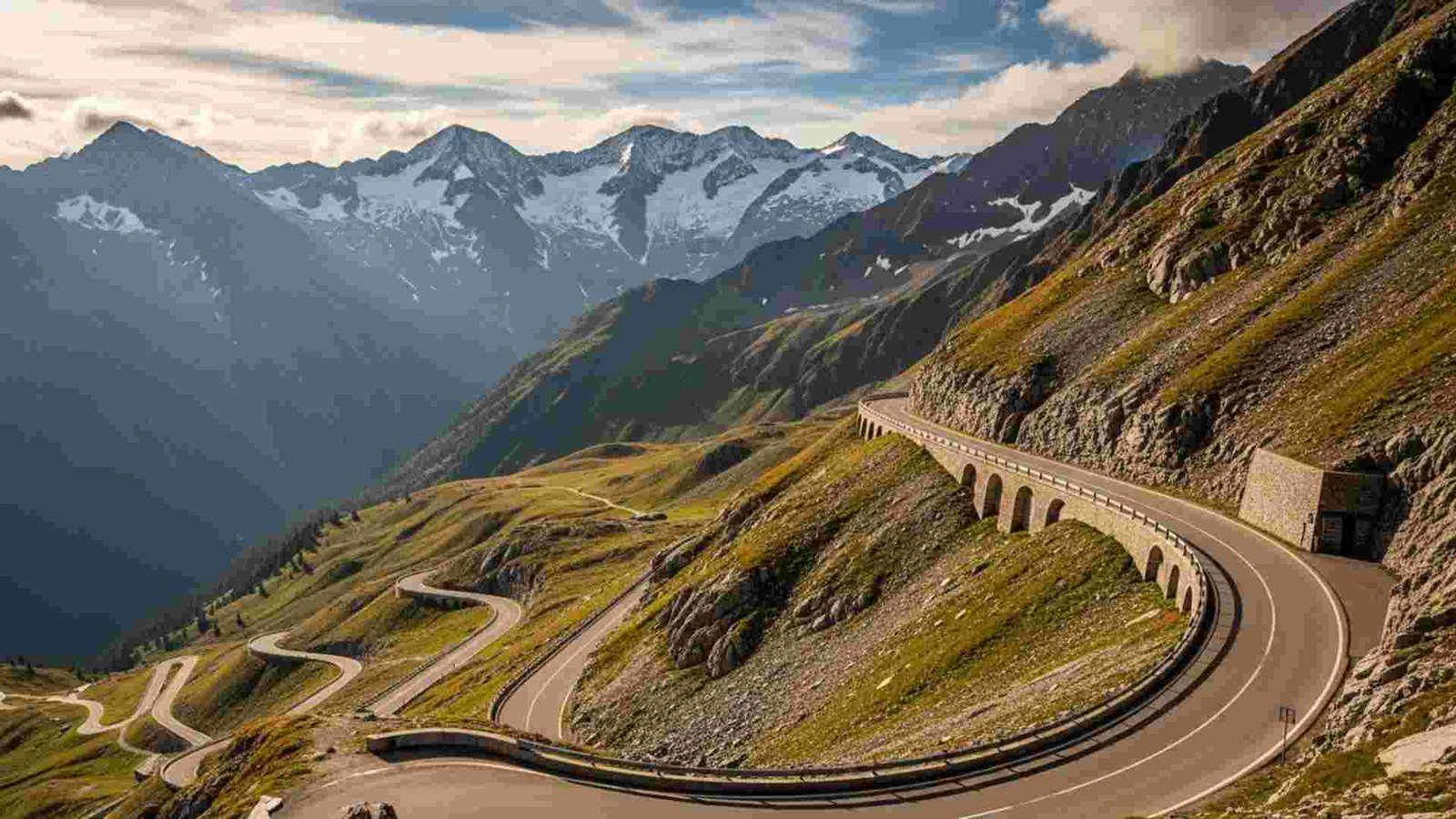
it’s a curated sequence of alpine scenes stitched over high passes toward Austria’s highest peak. The road is seasonal (typically early May to early November) and toll-based — 2025 day tickets show €45 for cars, with a reduced €35 rate after 18:00 e-cars pay less. That late-day deal is a real, practical hack for golden hour.
stop at Kaiser-Franz-Josefs-Höhe for glacier views, but also linger at the smaller pullouts where marmots call and the light rakes across larch. If visibility drops, don’t bail — breaks in the clouds here can be cinematic.
8:00 gate → high pullouts in warm light → glacier terrace at blue hour → slow roll back under starry skies. One evening, maximum drama, minimum traffic.
Practical Information:
- May to early November: Road open (weather-dependent).
- July–September: Full services, clear skies, wildflowers.
- Late May or October: Quieter, but some facilities closed.
- Closest hubs: Salzburg (100 km), Zell am See (30 km).
- Car rental or motorcycle is ideal.
- Public buses operate in summer but limit flexibility.
17. Écrins National Park, France — “France’s wild heart”

4102 m Barre des Écrins, hanging glaciers, and valleys that smell of pine and sun-warmed rock. The official park resources lean into biodiversity first — golden eagles, chamois, and stark contrasts between Mediterranean-facing slopes and high glacial basins. That “two worlds in one park” feel is real on a single day’s hike.
base in La Bérarde or Vallouise for immediate access to balcony paths; go early and you’ll meet more ibex than people. Refuge culture is strong — book a demi-pension night and let the mountain hut rhythm slow you down.
Practical Information:
- Best windows: Late June–September for high trails.
- Signature day: White Glacier overlooks above La Bérarde.
- Mindset: Stay on marked paths — this isn’t a manicured resort; it’s protected backcountry.
- Bold highlight: Écrins is where the Alps go quiet. You hike for hours with only wind, water, and rock for company.
18. Tatra Mountains, Poland/Slovakia — “Peaks with city-break convenience”

The Tatras spike straight up from rolling foothills — rugged granite peaks, sapphire lakes, and trails that thread between Poland’s Tatra National Park (TPN) and Slovakia’s TANAP. Together they form a UNESCO biosphere reserve and one of Europe’s most compact, accessible high-mountain playgrounds.
base in Zakopane for lively evenings and ride a morning cableway toward Kasprowy Wierch, or cross to the Slovak side for quieter valleys like Roháče. Morskie Oko at dawn is all mirror and mist; by mid-morning the path hums with hikers — timing is everything.
Practical Information:
- UNESCO biosphere + twin parks: TPN (PL) + TANAP (SK).
- When to go: June–September for most routes; October for larch color if weather holds.
- Good manners: Stay on waymarked trails; both parks are strict about protection.
- Signature shot: Dawn at Morskie Oko or sunrise from Kasprowy ridges.
- Bold highlight: Two countries, one massif — it’s effortless to sample different cultures and trail styles in a single long weekend.
Conclusion :
When the usual icons feel crowded and costly, there’s freedom in choosing the almost-familiar with a twist. These eighteen dupes deliver the same spine-tingling drama—lakes like mirrors, ridgelines like knife-edges—without the elbow-to-elbow shuffle. Pick the place that fits your season, budget, and pace, then lean into early starts and slow evenings. Do that, and you won’t just skip the crowds—you’ll come home with a better story.