Scent of saltwater mingles with the warmth of ancient stone, while cobblestone streets echo with the whispers of centuries-old stories. The crowd is gone, replaced by the soft hum of a place that feels like a secret you’ve just discovered.
Travel isn’t just about the destinations—it’s about the feeling of uncovering something new, of stepping into a world where history and adventure intertwine. As overrun tourist hotspots grow increasingly saturated, there’s a quieter, more enriching path waiting. Get ready to explore Europe’s best-kept secrets, where the spirit of Italy lives on—minus the crowds, but full of wonder.
1. Tarragona, Spain
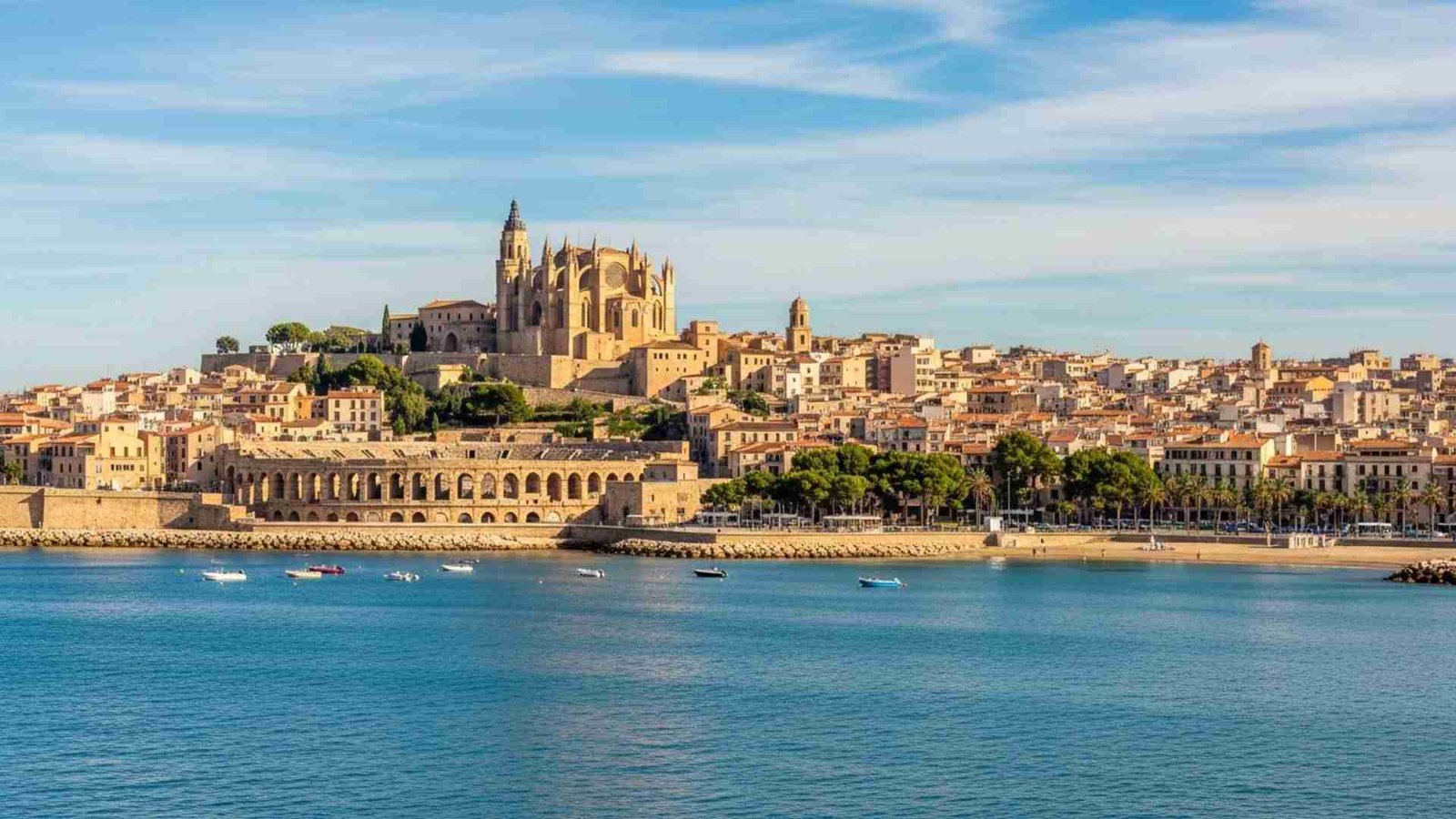
And let’s start with Tarragona. Located on Spain’s Costa Daurada in Catalonia, it’s a city with serious layers — Roman, medieval, maritime. That iconic Roman amphitheatre by the sea? That’s a thing. You’ll stroll historic stone streets, catch Mediterranean light on the ramparts, and linger at cafés where locals are still locals, not just selfie‑tourists.
Tarragona’s tourism keeps growing. According to its tourist board, the city “has experienced constant tourism growth in the last two years, with a notable increase in travellers and overnight stays.” Also, its cruise port recorded 63 port calls and 136,850 passengers in 2024, and is expected to increase to 71 calls in 2025. For weather and seasonality: summer highs are around 28 °C (82 °F), lows about 20 °C (68 °F) in the warmest months. So it ticks the “Italy vibe” box — sea, history, rhythm — but without Italy’s often overwhelming crowds (though some cruise traffic is rising, so off‑peak still gives you an edge).
Practical Information:
- Peak season: June to August; warmest, busiest. But spring (April‑May) and autumn (September) give you more breathing room and still great weather.
- Off‑peak advantage: Late autumn/early spring; fewer tourists, mild weather.
- How to get there & explore: Tarragona is about 1 h 15 m by high‑speed train from Barcelona (which has the major airport). Once you’re there much is walkable in the historic centre; local buses cover surrounding beaches.
- Ideal duration: 2–3 nights gives you time to soak in the old town, Roman sites, seaside walks and perhaps a day on the coast.
- Must‑try experiences: Visit the Roman Forum, wander the medieval walls, sit by the sea at “Miracle Beach”, enjoy a seafood dinner in the old port.
- Budget/etiquette tips: While less pricey than big Italian hotspots, expect Catalonia’s coast to cost more in high season. Respect local rhythm — mealtime starts later, siesta vibes linger. Photography: sunrise by the amphitheatre is magic; also try the Rambla Nova vantage points.
- Photography note: The contrast of Roman ruins against blue sea is a strong visual; visit early morning for light and fewer people.
2. Kotor, Montenegro
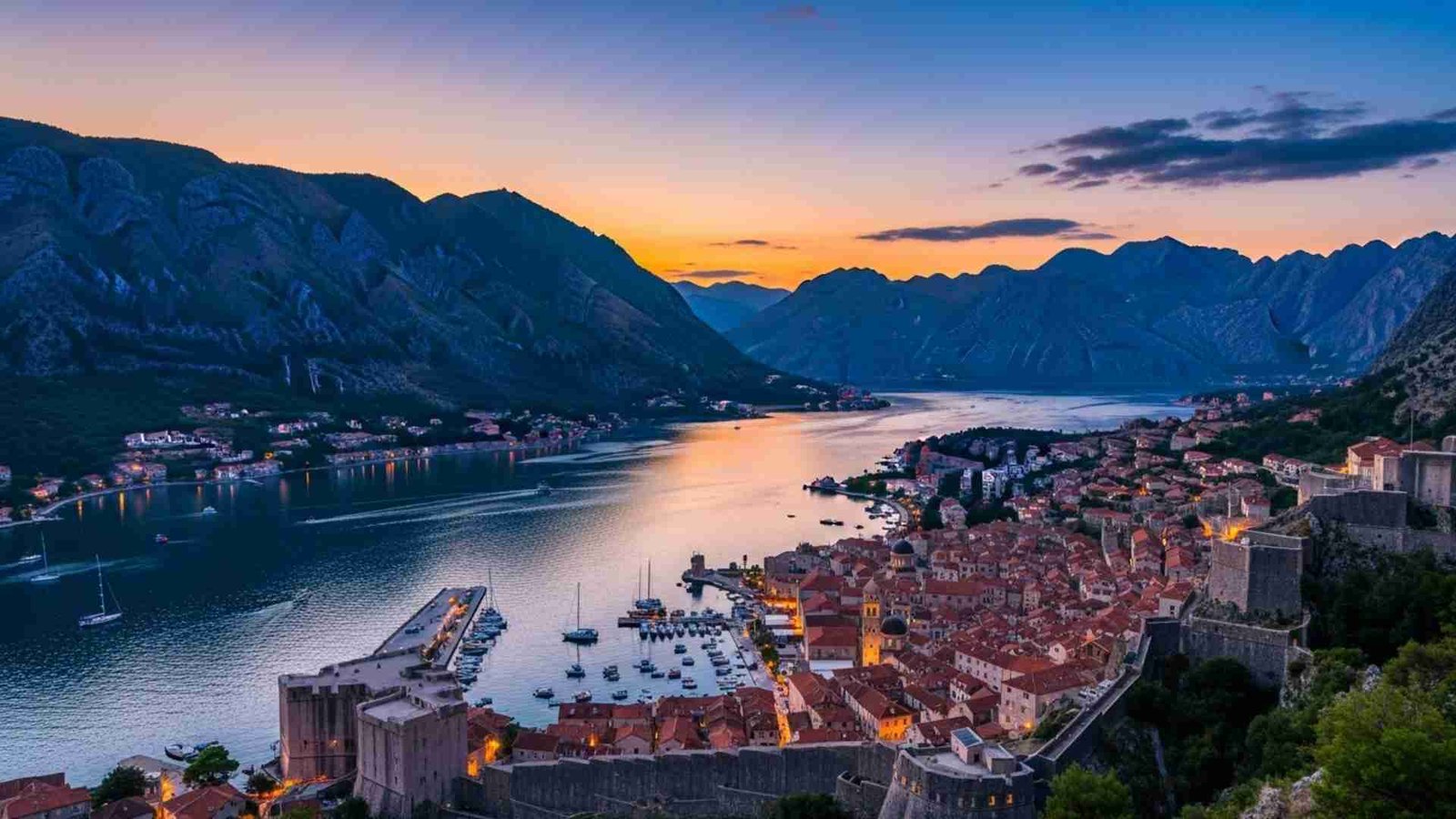
Kotor. If you’re picturing Italy’s Amalfi or coastal Liguria but dread the crowds, Kotor offers that old‑world charm, dramatic mountains, and a waterfront that feels more “undiscovered” (for now). This medieval town snuggles in a fjord‑like bay, steep mountains rising behind. The UNESCO‑listed old town is full of narrow stone alleys, old churches, and the climb up the city walls for sweeping views.
In 2024 the whole country of Montenegro saw 2,606,854 tourist arrivals and 15,594,299 overnight stays, with foreign tourists accounting for 96.1% of those nights. More locally, in June 2025 the municipality of Kotor was hosting 6,970 tourists at one point, of which 5,230 were in private accommodation. But beware: while the numbers are still modest compared to major Italian destinations, Kotor is feeling the pressure. Cruise‑ship loads and peak‑day bursts are making things busy.
Practical Information:
- Peak season: July–August is high. That’s when cruise ships call and the old town gets full. For a calmer experience aim for May or September.
- How to reach & move around: The nearest big airport is Tivat (about 10–15 min drive). You can also arrive via bus from Podgorica or Dubrovnik (Croatia) if crossing borders. Once in town the old town is compact and walkable; for that wall hike bring good shoes.
- Ideal duration: 1‑2 nights if you just want the town; 3 nights if you want boat trips, bay cruises, sleepy villages around the bay.
- Must‑try experiences: Hike the San Giovanni fortress trail (the old town walls) for sunset views over the bay; wander the alleys of the old town; take a boat around the bay to see small villages tucked in.
- Budget/etiquette tips: While cheaper than many Italian hotspots, some cruise‑town prices can creep up. Dress modestly when entering churches. On busy days, consider leaving the old town before 10 am or after 4 pm to avoid the cruise‑ship crowd surge.
- Photography note: The bay’s curves with mountains behind make for unforgettable shots. Try early morning or dusk for best light and fewer people.
3. Guimarães, Portugal
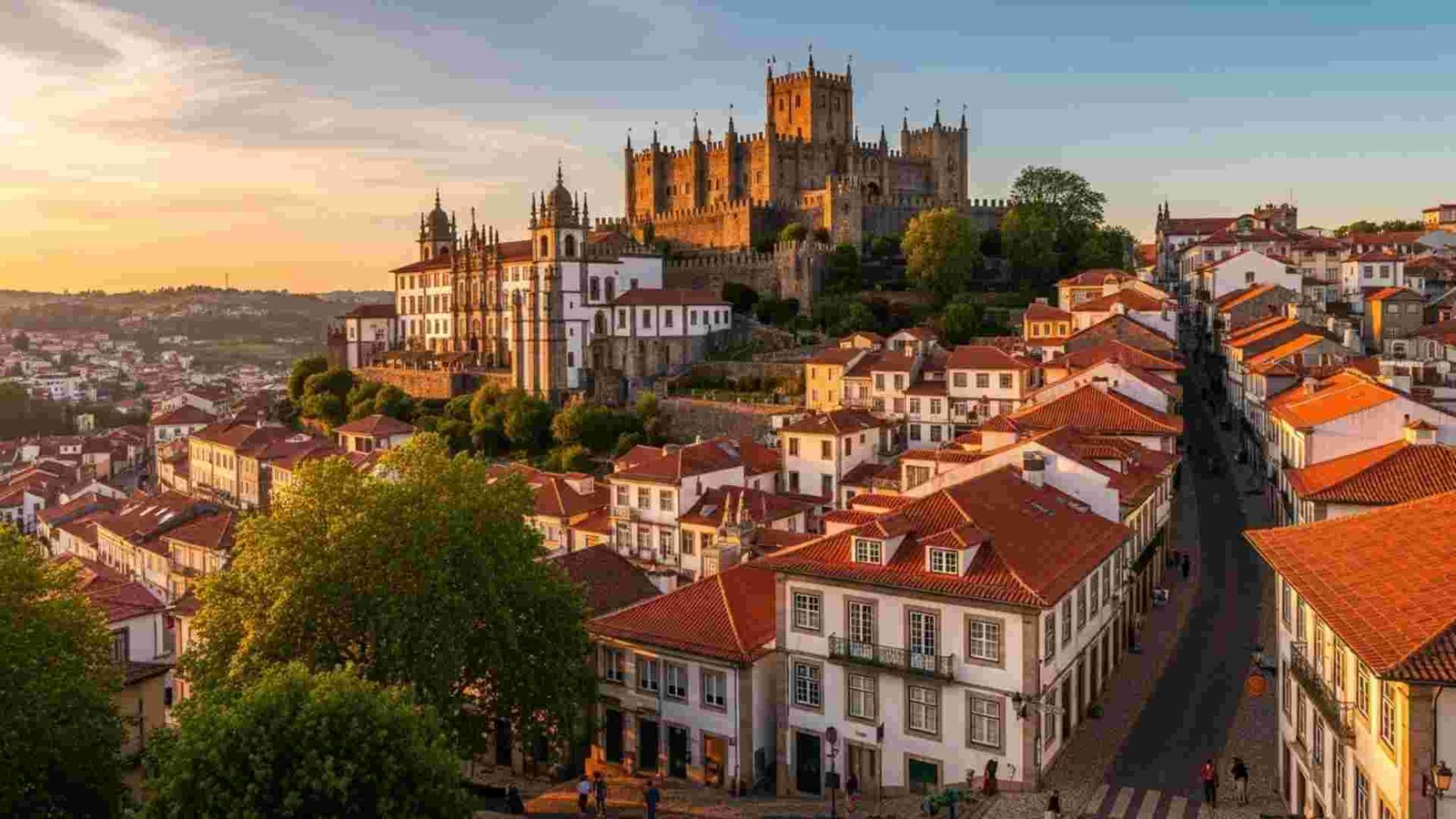
This one’s a bit of a sleeper and that makes it even better. It’s often called the “birthplace of Portugal” since it was a centre of the early Portuguese kingdom. The old town has beautifully preserved medieval architecture, cobbled lanes, and a calm energy. If you like Italian hill towns, historic stone lanes and peaceful piazza charm, Guimarães hits hard.
Portugal as a whole noted ≈ 31.6 million tourists in 2024 and around 80.4 million overnight stays, with ~56.4 million by international visitors. Specifically about Guimarães: in 2025 it was spotlighted as worth visiting; one review site gives it a “worth it” infrastructure score ~77/100 among 3,028 cities. So the infrastructure is solid, but it retains that quieter‑town feel that many Italian destinations have lost.
Practical Information:
- Peak season: Summer (June‑August) sees the most visitors; spring and early autumn are ideal for fewer crowds and workable weather.
- How to reach & explore: Guimarães is easily reached by train from Porto (about 40‑50 minutes) — great if you fly into Porto. Once there you’re in the heart of a compact town.
- Ideal duration: 1 full day is enough to cover the old town and castle; 2 nights gives you breathing space and drip‑down into the local scene.
- Must‑try experiences: Visit the castle of Guimarães, climb up to Penha mountain for views, wander Largo da Oliveira in the old town. Try local gastronomy in a tavern off the tourist drag.
- Budget/etiquette tips: More affordable than Lisbon or Porto. In cafés and restaurants the “two‑course + drink” tend to be better value. As with many Portuguese towns, mealtimes start later (around 8 pm) and a little Portuguese “obrigado” goes far.
- Photography note: The castle’s elevated position gives a wonderful view of red‑tile roofs and green hills beyond. Early morning or blue‑hour shots in Largo da Oliveira are peaceful.
4. Évora, Portugal
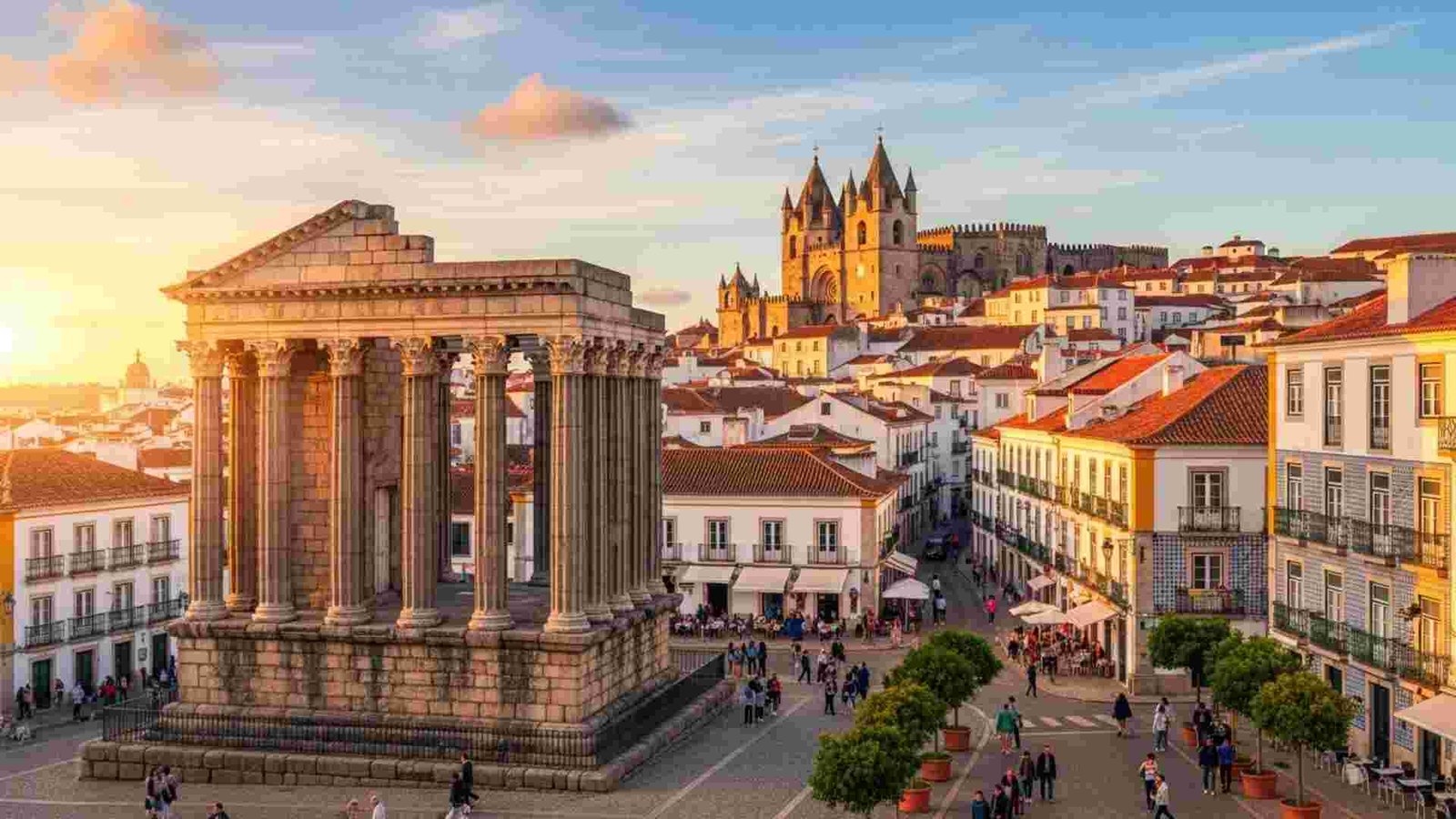
Nestled in Portugal’s Alentejo region, this is a city that blends Roman ruins, whitewashed houses, ochre accents, a slow‑paced rhythm. If southern Italy or Sicily’s hill towns appeal to you for their historic cores, grime‑free charm, and culture‑rich lanes, Évora gives that vibe with far fewer tourists. The historic centre is a full UNESCO World Heritage site.
Évora was designated a UNESCO World Heritage site in 1986. Further, the city is considered very safe (violent crime “almost unheard of”), which enhances the visitor‑experience feel of being relaxed and uncrowded. It’s the kind of place where you can wander without feeling pressed, sip wine without needing to book weeks ahead, and feel part of a living town, not just a tourist stop.
Practical Information:
- Peak season: Summer (June–August) is warm to hot; spring (May) or autumn (September) offer milder weather and fewer people.
- How to reach & explore: Évora is about 1 hour 30 minutes by train or bus from Lisbon. Once there its historic centre is compact and best explored on foot.
- Ideal duration: 1–2 nights give you time to soak in the town and perhaps a vineyard drive in the Alentejo countryside.
- Must‑try experiences: Visit the Roman Temple of Évora, wander the cathedral complex, stroll the narrow cobbles with whitewashed buildings. Outside town try a wine‑tasting in Alentejo or explore cork forests and megalithic sites.
- Budget/etiquette tips: Being outside Portugal’s most touristy zones means better value. Dinner often later (8–9 pm). The pace is slower — that’s part of its charm.
- Photography note: The uniform white‑washed facades and ochre trim bathed in late afternoon light are very photogenic; do find vantage points in the old walls or around Praça do Giraldo.
5. Pula, Croatia
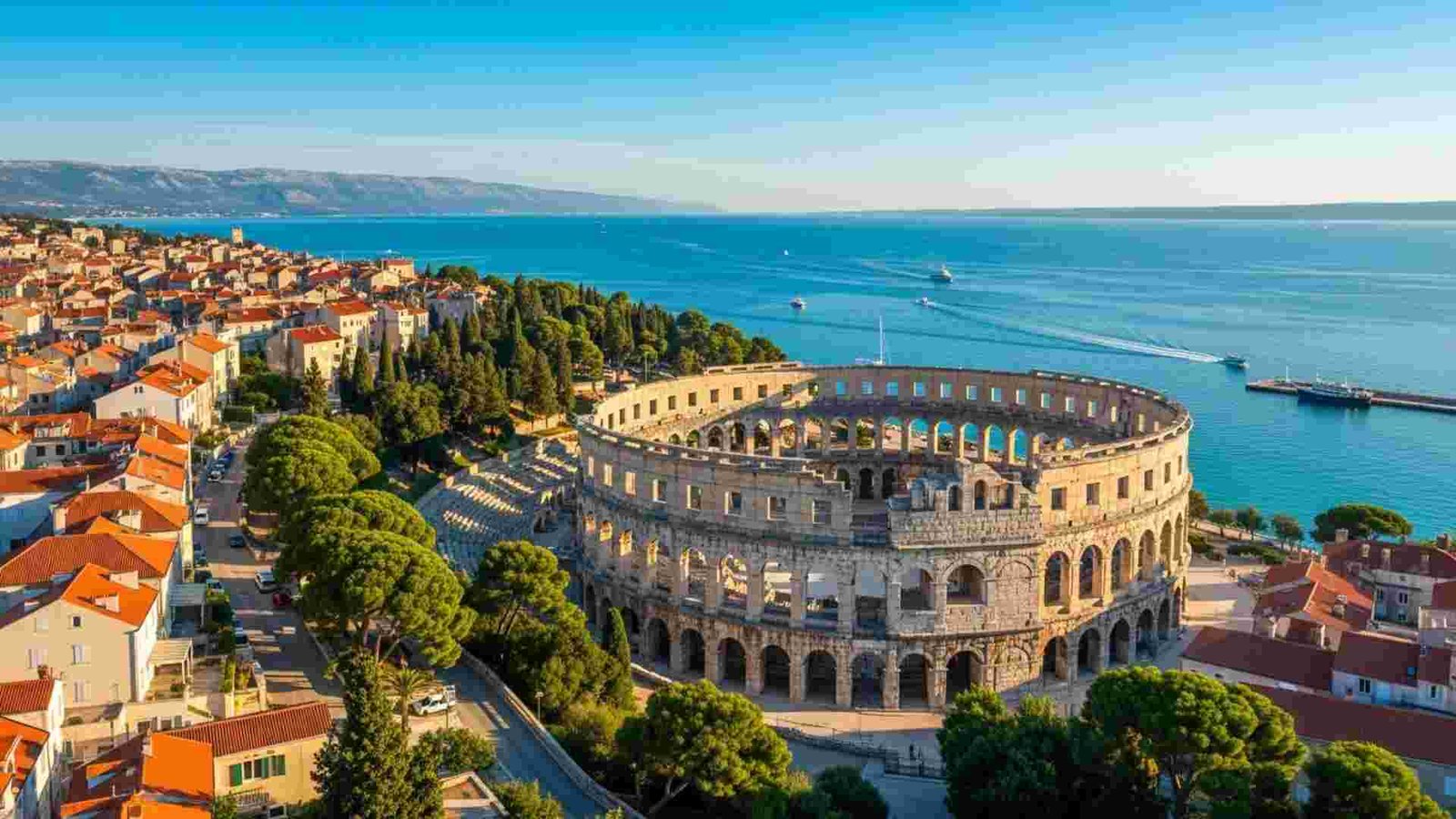
Think of a coastal Italian town (in feel), but with more space, fewer crowds, and that Adriatic sparkle. The highlight is the Roman amphitheatre (the Pula Arena) — one of the best‑preserved ancient arenas in Europe. The ancient meets seaside, the lanes meet truffle‑rich Istrian cuisine, the coast meets history. It’s a strong “Italy‑but‑not‑Italy” alternative.
The data: Croatia hit over 21.3 million tourist arrivals and 108.7 million overnight stays in 2024. For Pula specifically the advice is: May–June & September–early October are ideal for warm weather, swimmable sea and fewer crowds. So you get the vibe of a historic coastal European town with Mediterranean energy, and you’ll likely find it more relaxed than many places in Italy.
Practical Information:
- Peak season: July–August is busiest; shoulder seasons (May‑June or Sept) give you sea‑swimming plus less bustle.
- How to reach & explore: Pula has its own airport and is accessible by ferry and road from other Istrian towns. The old town is walkable; car or scooter might help you explore nearby beaches and villages.
- Ideal duration: 2–3 nights lets you explore the amphitheatre and old town, enjoy the sea, maybe do a day trip to nearby islands or countryside.
- Must‑try experiences: Visit the Pula Arena; wander the Forum and Temple of Augustus; take a coastal sunset walk; taste Istrian truffles and local wines; try a boat trip to Brijuni Islands if you have more time.
- Budget/etiquette tips: Croatia is still seen as more affordable than many Western European hotspots; in Pula you’ll find good value outside peak. Be polite and patient in lesser‑tourist areas; many people speak English but always start with “Dobro dan” or “Hvala”.
- Photography note: The arena exterior illuminated at dusk is spectacular. Also the harbour at golden hour, with ships and water reflections, gives that “coastal Italian town” look minus the crowds.
6. Budva, Montenegro
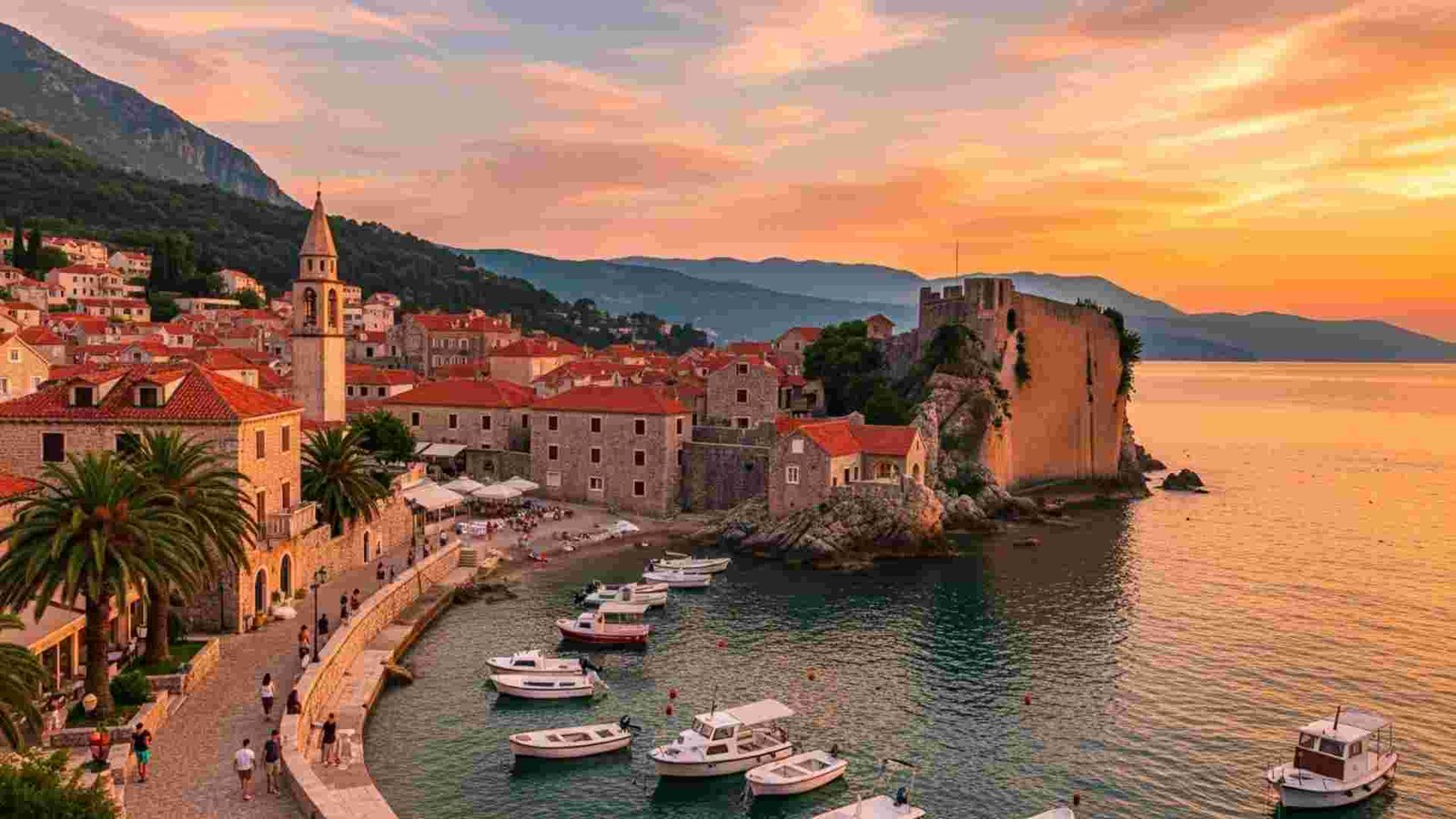
Let’s look at Budva through a less‑expected lens: while many know it for beaches and nightlife, there’s a quieter, historical side sneaking in between the clubs. The Old Town walls date back about ~2,500 years, layering Illyrian, Roman, Venetian and Austro‑Hungarian touches. Wander its narrow lanes early morning and the sunlight catches the stone in a mellow, golden‑hour glow before the beach crowds roll in.
But here’s the thing: for all the sun and surf, Budva plays an outsized role in Montenegro’s tourism economy.
Budva blends ancient heritage with a modern seaside vibe, and even during the peak tourist season, it retains a surprisingly relaxed atmosphere. For those wanting to escape the crowds, the nearby beaches and less-trodden paths above the town, like the hike to Mogren Fortress, offer an ideal retreat.
Practical Information:
- Peak season: July–August (crowded with cruise tourists and beach lovers); off‑peak is best in May, June, or September when the crowds thin out and the weather is still beach‑ready.
- How to get there: Budva is easily accessible from Tivat Airport (30 minutes by car). Alternatively, Podgorica is about 1.5 hours by car. You can also travel by bus from other Montenegro towns like Kotor.
- Duration: A 2‑3 day trip is ideal if you want to explore the old town, beaches, and perhaps venture out to nearby towns.
- Must‑try experiences:
- Hike to Mogren Fortress for breathtaking views of the coastline.
- Explore the Old Town (Stari Grad) and visit the Citadel.
- Visit Jaz Beach or Sveti Nikola Island for quieter beach time.
- Budget tip: Budva can be pricier during the peak season. Visit in the off‑season for cheaper accommodations and dining options. A typical meal in a local restaurant costs around €10-15.
- Etiquette tip: Dress modestly when visiting churches and monasteries. Locals take their time, especially at mealtimes, so be patient.
7. Corfu Town (on the island of Corfu), Greece
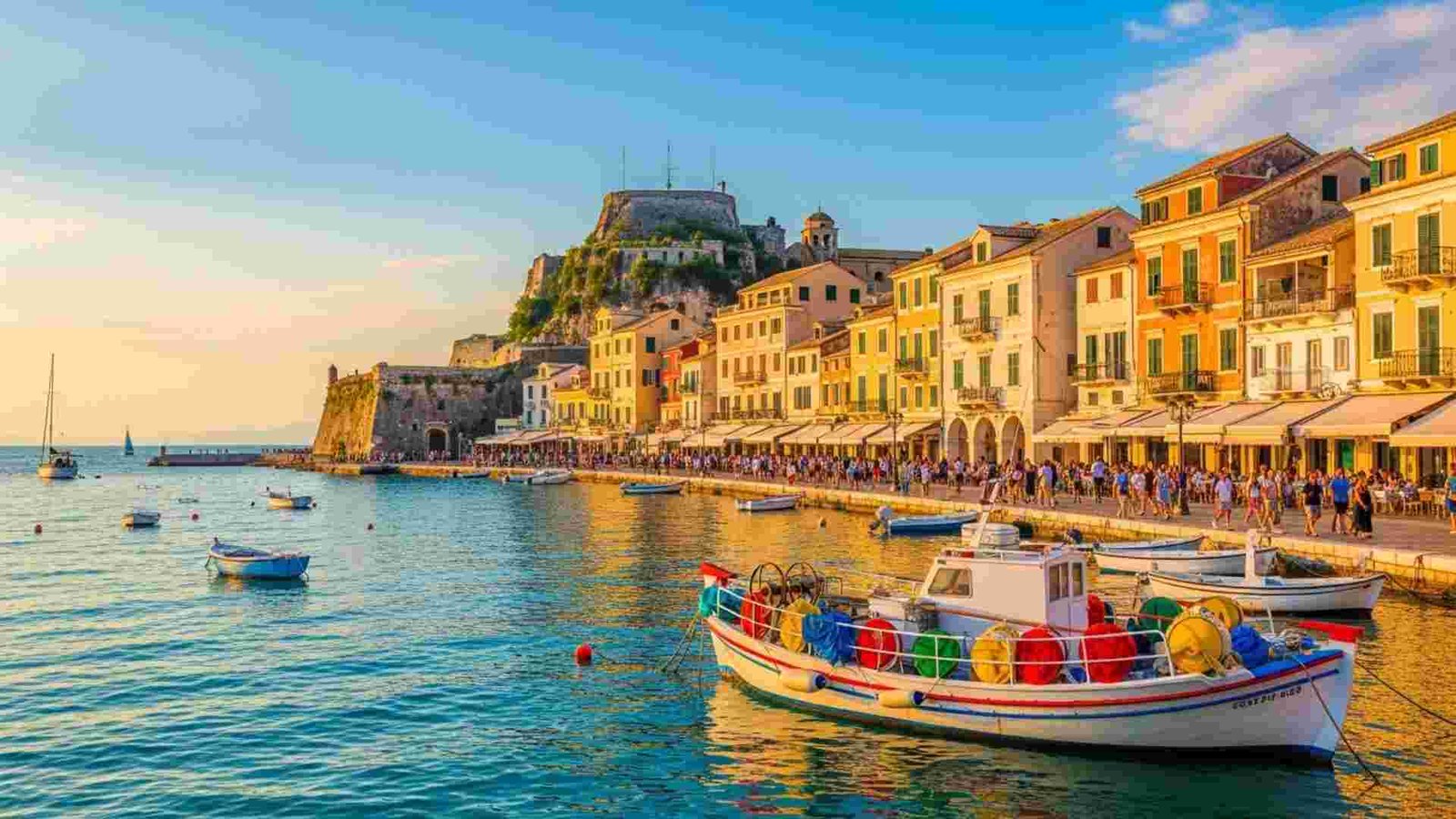
instead of thinking “just another Greek island,” consider Corfu Town as a gateway between Venetian elegance, British inheritance, and Greek island ease. Its Venetian‑style architecture, pastel‑hued houses, and old town layout offer a historic city feel combined with seaside chill. The shift in 2024/25 is telling: visitor arrivals increased by ~7% in 2024 to nearly 2 million, and cruise‑ship traffic jumped heavily in early 2025.
So you’re still finding some quiet corners, but you’ll probably bump into more tour groups than you would in some hidden Greek islands.take the old town piazza after sunset when day‑trippers have left; stop in a small café off the main drag and listen to the echoes of Venetian balconies overhead. Then slide to the seaside promenade for a late stroll, where olive trees and sea salt mix.
Practical Information:
- Peak season: High season is July and August. For fewer crowds, try visiting April–June or late September.
- How to get there: Fly into Corfu International Airport. From the airport, the Old Town is just 10-15 minutes by taxi. Alternatively, ferries from the mainland or other islands are a scenic way to arrive.
- Duration: A 2‑3 day trip allows you to explore the town’s history, architecture, and nearby beaches.
- Must‑try experiences:
- Wander around the Liston Promenade, modeled after Paris’s Rue de Rivoli.
- Visit Spianada Square, one of Europe’s largest squares.
- Explore the Old Fortress for panoramic views of Corfu Town and the sea.
- Budget tip: Corfu has a mix of high-end resorts and budget options. You can enjoy the island’s charm without splurging. Typical local meals cost €12-20.
- Etiquette tip: Greek mealtimes can run late, especially dinner, so don’t expect a table before 8 pm. The local custom of a warm greeting—Kalimera (Good morning)—is appreciated.
8. Naxos, Greece
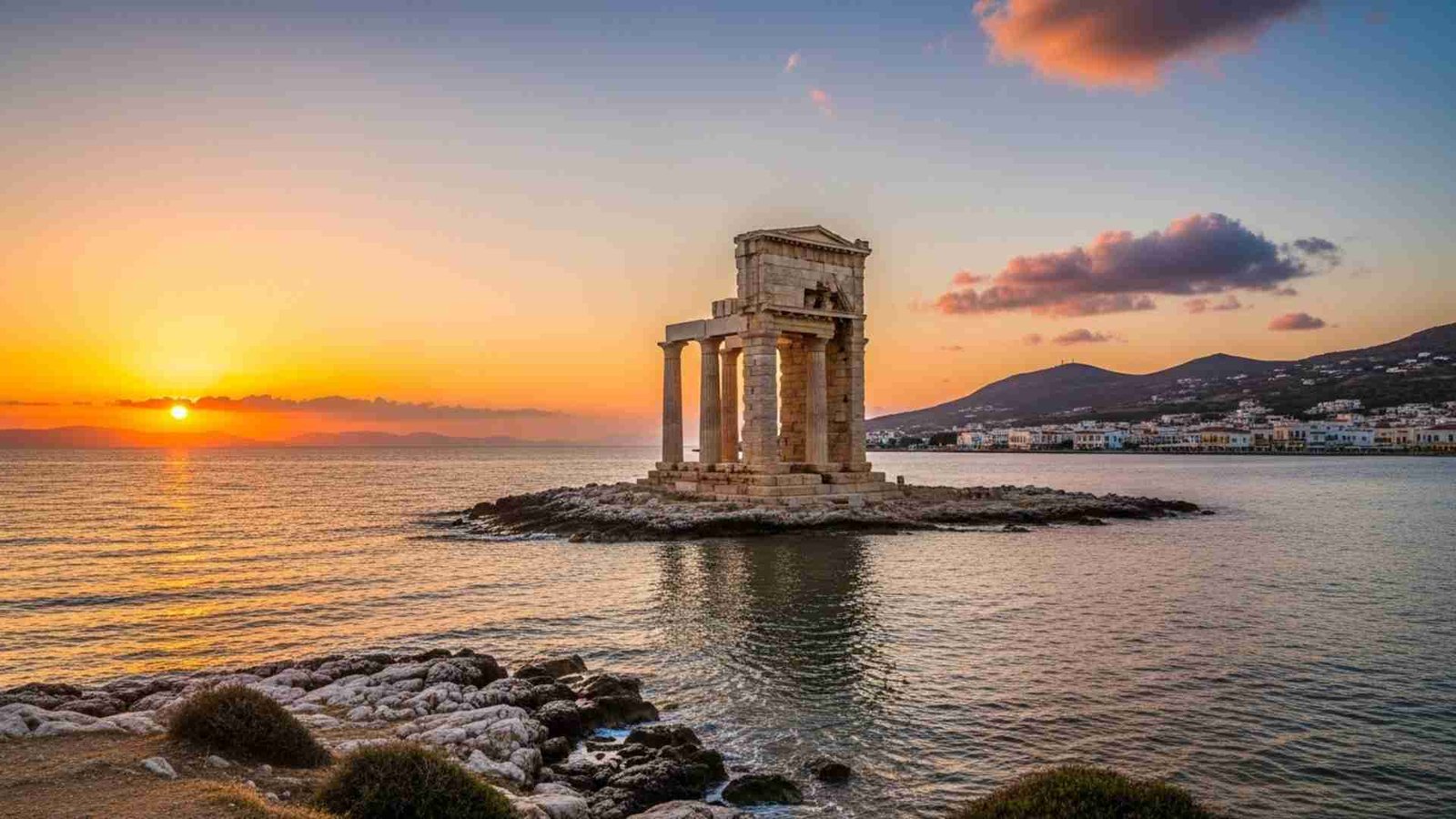
Let’s spotlight Naxos from the “island beyond the postcard” angle. It’s not just white‑washed houses and sunsets; this is the largest of the Cyclades, with lush inland valleys, ancient ruins (hello, the great marble “Portara” gate), and a real local feel. The site VisitGreece calls it “the biggest and most fertile island in the group” with green gorges and high mountains.
The island’s rich history is immediately evident as you step into Chora, the island’s main town. Here, you’ll find Venetian architecture, Byzantine churches, and the imposing Portara, the remains of a temple dedicated to Apollo, which dominates the harbor. Beyond the history, Naxos’s interior is a wonderland of green valleys, ancient olive groves, and mountain villages that seem to have been untouched by time.
Practical Information:
- Peak season: July and August are very popular, especially with families. For a quieter visit, aim for late May, June, or September.
- How to get there: Naxos is accessible by ferry from Piraeus (Athens) (about 5-6 hours) or Santorini (2-3 hours). You can also take a flight directly from Athens to Naxos (30 minutes).
- Duration: 3-4 days give you ample time to explore the island’s beaches, villages, and archaeological sites.
- Must‑try experiences:
- Visit the Portara (Temple of Apollo Gate), one of Naxos’s most iconic landmarks.
- Explore the charming streets of Chora (the main town) and discover hidden cafes.
- Take a trip to the Valley of Tranquility or hike up Mount Zas for incredible views.
- Budget tip: Naxos is less touristy than Santorini, making it more affordable. Accommodation costs are lower, with a typical meal ranging from €10-18.
- Etiquette tip: Naxos locals are incredibly warm and welcoming; a polite “Kalimera” is a good start. Keep your expectations relaxed—the island’s laid-back pace might take you by surprise.
9. Alentejo region, Portugal
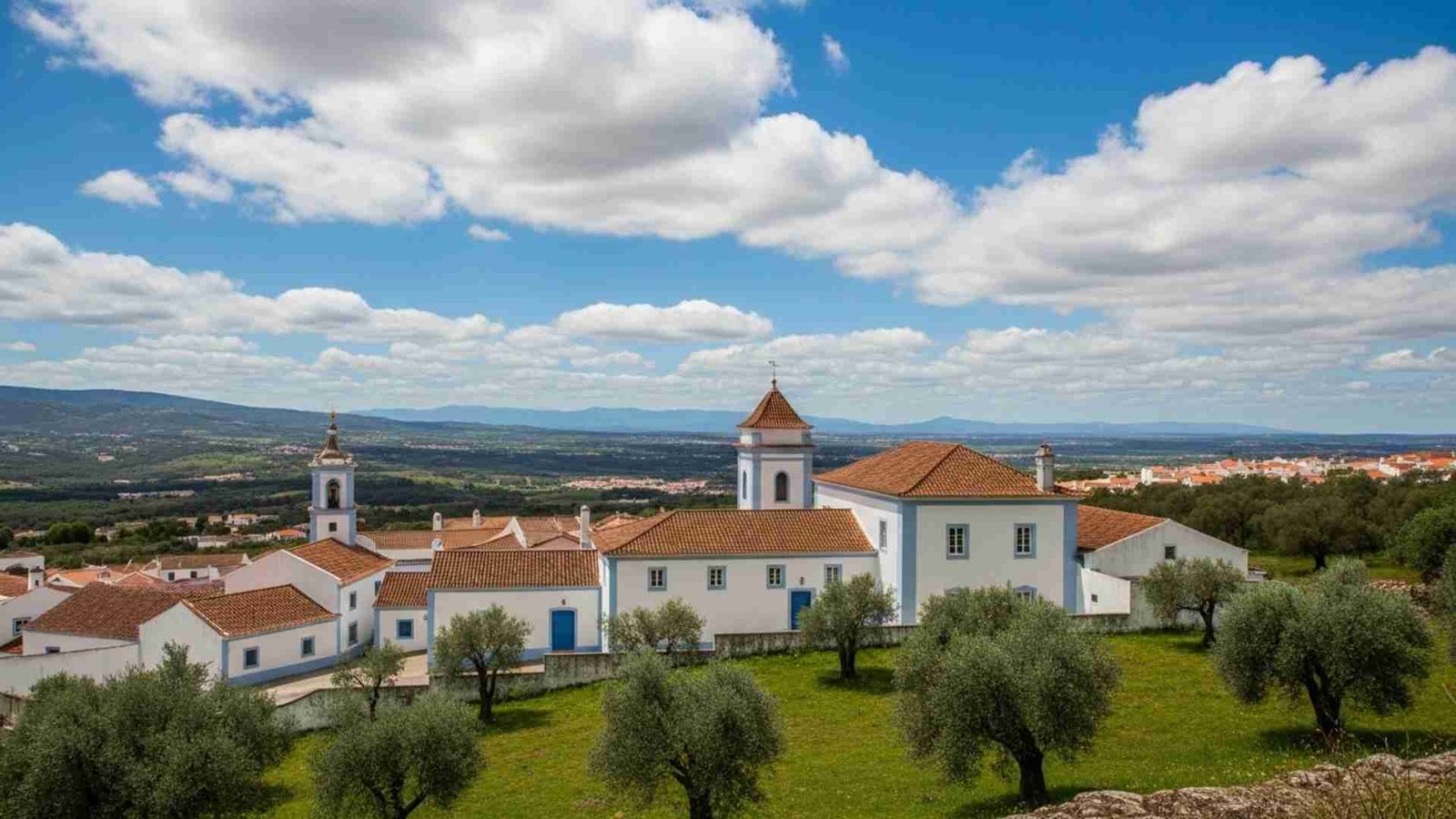
rather than a town, we’re exploring a large region—so expect space, variety, and a slower tempo. Alentejo covers about one‑third of Portugal’s land but it’s thinly populated (≈22 people/km²) and that means less hustle, more room to breathe. The region recorded its best tourism year ever in 2024, surpassing 3.2 million overnight stays—~130,000 more than 2023.
Think less about beach club and more about cork oak forests, vineyards, quiet coastline, and old towns where a spire is more likely than a high‑rise. Wake in a converted farmhouse, wander olive groves, stop mid‑morning for a cold vinho verde and freshly grilled sardines by a coastal village, then watch the sunset from an ochre‑coloured hilltop town.
Practical Information:
- Peak season: July and August can be hot and crowded. For cooler, more comfortable weather, try April–June or September–October.
- How to get there: The region is best accessed by car. Fly into Lisbon and drive 1.5-2 hours south. Alternatively, buses are available from Lisbon to towns like Évora.
- Duration: 4-5 days to explore the coast, vineyards, and quaint towns.
- Must‑try experiences:
- Visit the Roman Temple of Évora and Capela dos Ossos (Chapel of Bones).
- Take a wine tour through Alentejo’s famous vineyards.
- Explore Monsaraz—a medieval hilltop town offering breathtaking views of the surrounding plains.
- Budget tip: Alentejo is more affordable than Lisbon or Algarve, offering great value in both accommodation and meals. Expect meals to cost around €10-15 in local eateries.
- Etiquette tip: Portuguese people appreciate politeness. A simple “Obrigado” (Thank you) goes a long way. In rural areas, dining starts later in the evening, so be ready for a leisurely dinner.
10. Sibiu, Romania
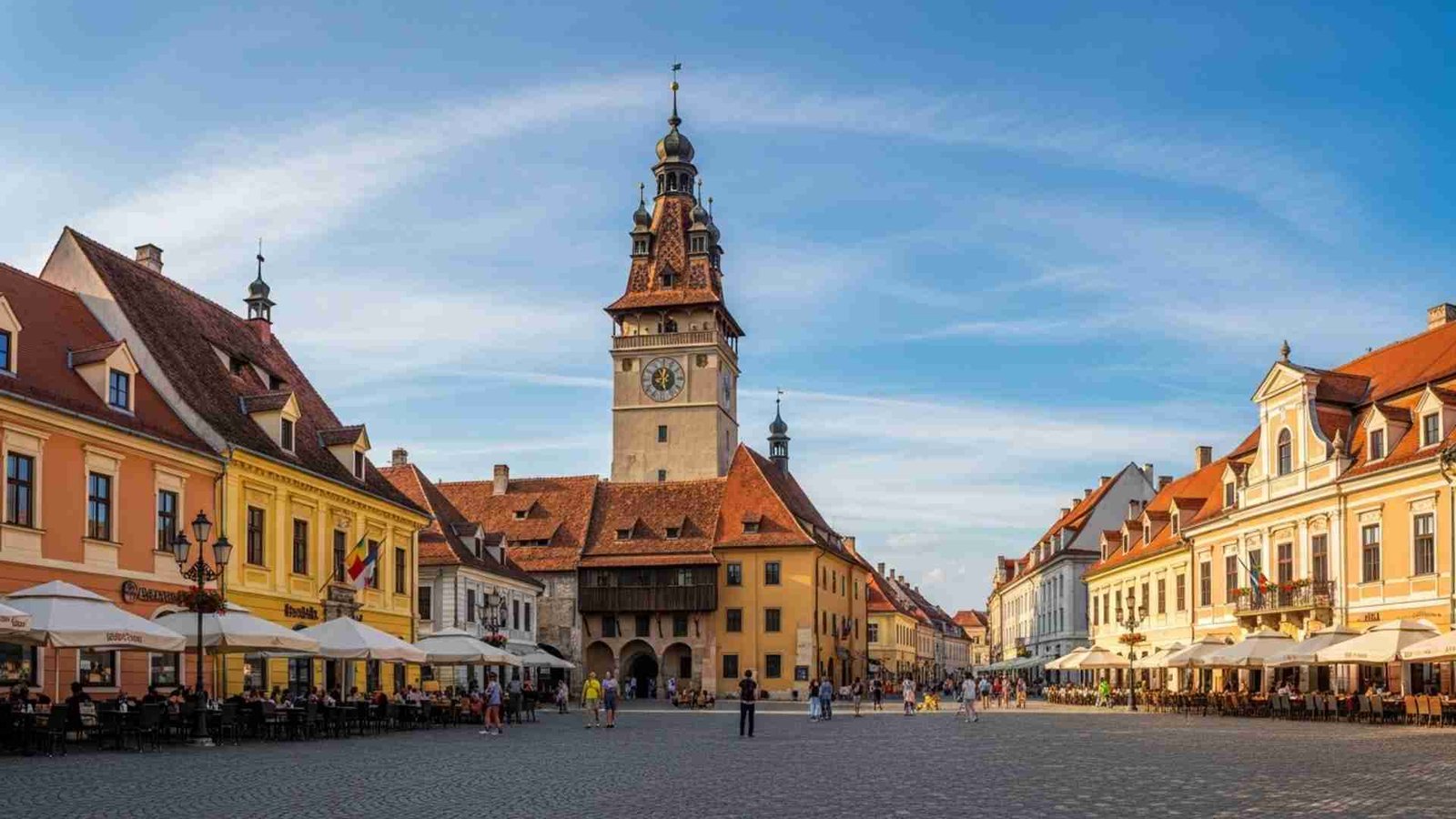
Sibiu is inland, in Transylvania, not seaside. That’s what makes it feel refreshingly different from the Italian‑coast vibe we’re seeking alternatives to. Picture medieval fortified churches, pastel‑coloured houses, and a culture‑rich small city—this region isn’t oversaturated. It even won “Destination of the Year 2024” in Romania. Nationally, Romania recorded 14.26 million tourist arrivals in 2024 (+4.5% y/y) with 30.2 million overnight stays.
You arrive by train or bus from Bucharest, check into a guest‑house inside the old city walls of Sibiu, stroll to the Grand Square with its iconic “eyes” on rooftops, attend a folk performance or local craft fair in the evening, wake early for a day trip into the surrounding foothills.
Practical Information:
- Peak season: June to August sees the highest number of tourists. For fewer crowds and mild weather, try May or September.
- How to get there: Sibiu is a 5-hour train ride or 3-hour drive from Bucharest. Alternatively, fly directly into Sibiu International Airport.
- Duration: 2-3 days allows for a good mix of exploring the Old Town and nearby attractions.
- Must‑try experiences:
- Stroll around Piata Mare (Big Square) and marvel at the historic architecture.
- Explore the ASTRA Museum of Traditional Folk Civilization.
- Climb the Council Tower for a stunning view of the city and the surrounding Transylvanian countryside.
- Budget tip: Romania is one of the more budget-friendly destinations in Europe. Meals cost around €8-12, and accommodation is very affordable.
- Etiquette tip: While English is widely spoken in Sibiu, it’s always polite to learn a few words in Romanian. Keep in mind that Romanians appreciate personal space and punctuality.
11. La Rioja, Spain
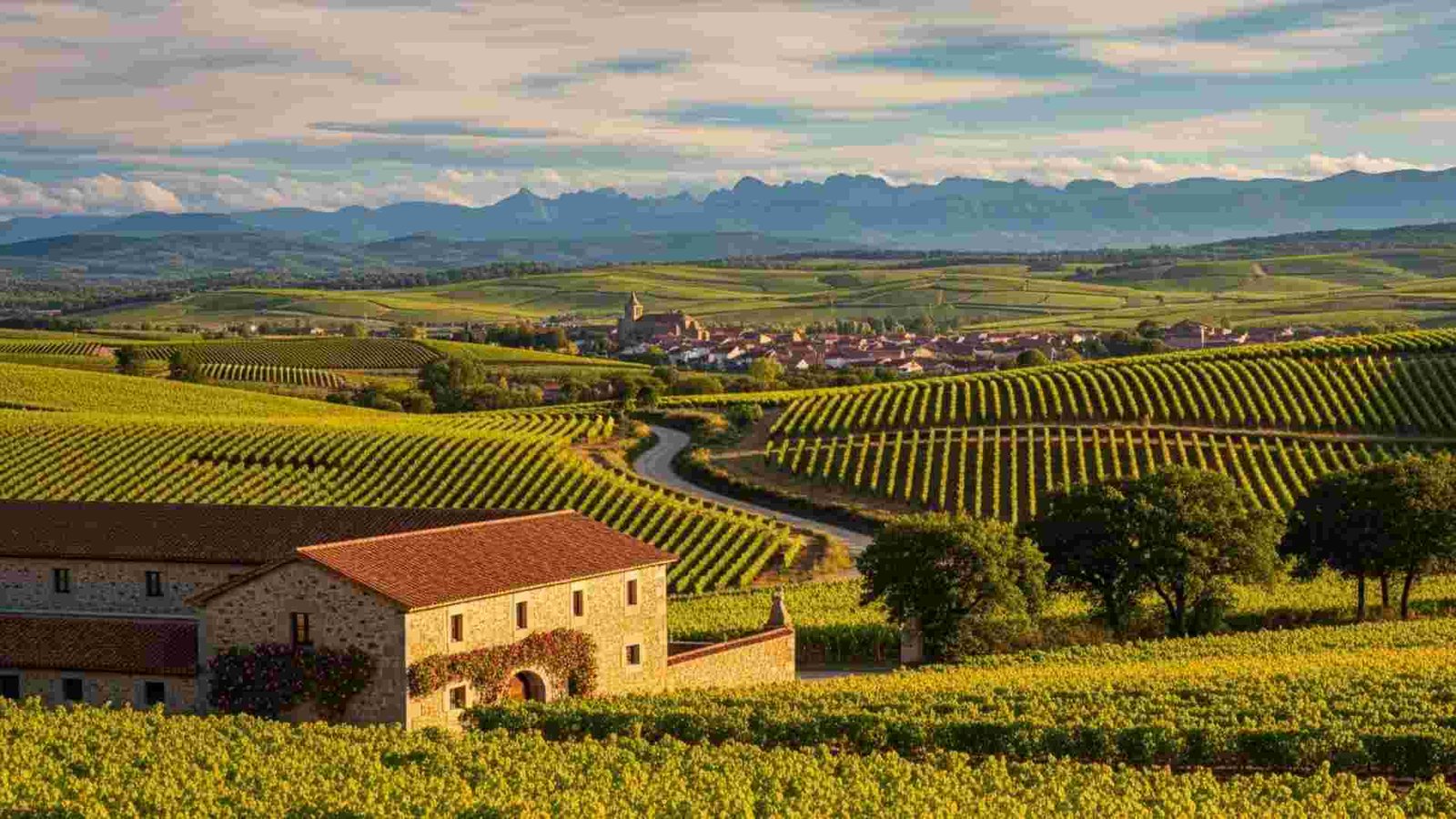
you’ll find world‑renowned wineries—but slide past the tasting rooms and you’ll encounter ancient dinosaur footprint beds, quiet valley villages, and a rhythm of life that feels unhurried. The region’s DOCa Rioja wine zone covers about 65,000 ha of vine in 144 municipalities, and in recent reporting La Rioja “set new records in visitor numbers and was recognised as Spain’s leading region for wine tourism.”
Rent a small car and drive the lesser‑known “Ruta de los Dinosaurios” near La Riba de Calderón, where you’ll walk fossil trackways under open sky and share the view with just a handful of people. Then stop at a micro‑bodega for a lunch of Rioja‑style lamb and a local white—not the standard tourist line.
Practical Information:
- Best time to go: Late spring (May) or early autumn (Sept) to catch mild weather and fewer crowds.
- Getting there & around: Fly into Bilbao or Zaragoza; drive ~1–2 hrs. A rental car is key to accessing small villages.
- Duration suggestion: 3–4 nights lets you hit a major winery, a tiny village stay, and a nature walk.
- Budget note: Slightly cheaper than Spain’s coastal hotspots. Mid‑tier wineries may offer tastings under €20; local inns in villages often offer good value.
- Travel theme connection: La Rioja reminds us that the “vineyard civilisation” of Europe isn’t just about sweeping panoramas and luxury—it’s about traditions, landscapes and places where you slow down and absorb the terroir of a region.
12. Pelion Peninsula, Greece
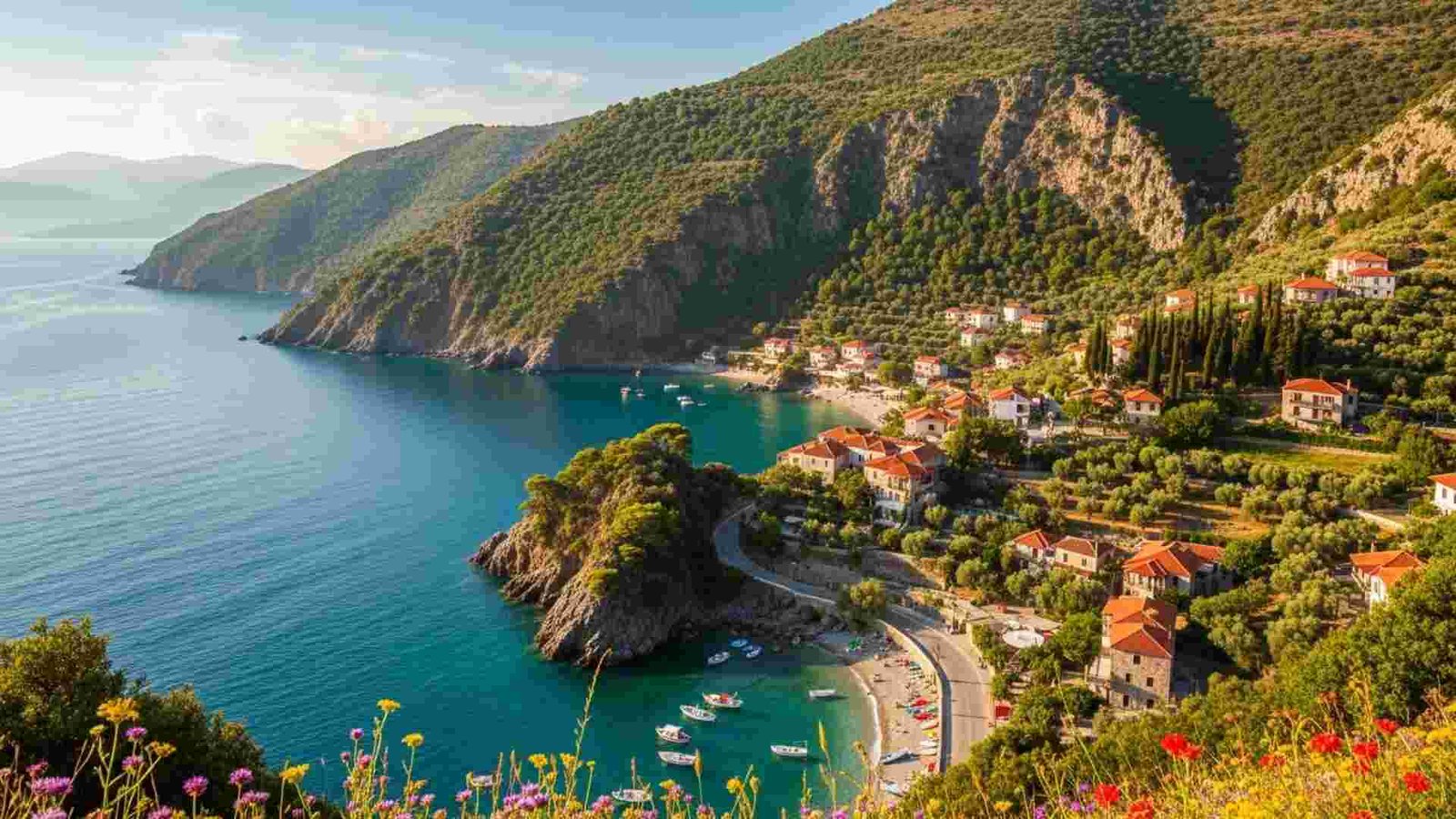
the Pelion Peninsula straddles sea and mountain in a way that most visitors don’t expect. You’ll find lush green forests meeting sparkling Aegean coves—and minus the full‑throttle tourism of the islands. In recent travel writing, Pelion is described as “a natural paradise between mountains and sea” where you might go off‑grid.
Stay in a centuries‑old stone village like Makrinitsa around dusk. After the day‑trippers leave, the scent of wild herbs drifts on the air, and you sip a local tsipouro on a tavern terrace with a view over the sea‑inlet. Then next morning, rent a scooter and wobble down a hidden path to a tiny beach where the sand is silver‑grey and the only footprints are your own.
Practical Information:
- When to go: May–June or September for warm weather, fewer crowds.
- How to reach & explore: Fly into Athens, then drive ~3 hours to Volos and up into the peninsula. A car or scooter is almost essential for the smaller roads.
- Ideal duration: 4 nights is a good stretch if you want mountain‑village mornings + beach afternoons.
- Offbeat note: Some beaches have fewer amenities—pack water/supplies. The roads up the hills are narrow and winding—go slow and enjoy the view.
- Travel theme connection: Pelion shows how Europe’s “undiscovered coastline” options don’t have to sacrifice heritage or scenery—and how mountains + sea combinations can feel as rich as Italy’s Amalfi style, but calmer.
13. Umbria (Italy)
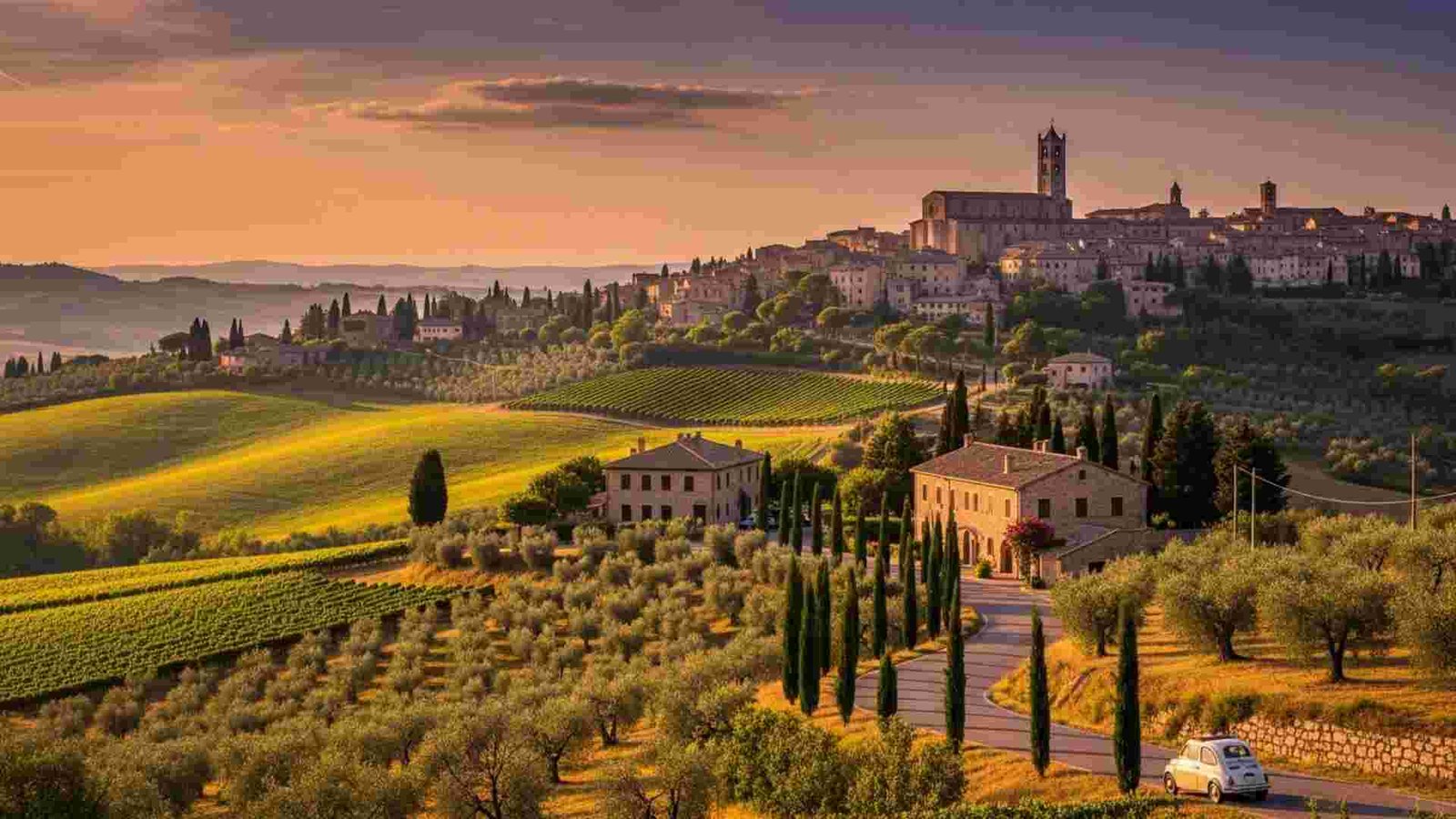
Umbria, often referred to as the “green heart of Italy,” is a land of rolling hills, charming medieval towns, and rich cultural heritage. While it doesn’t have the coastal allure of Tuscany, it’s equally as captivating, offering picturesque landscapes, delicious local cuisine, and artful traditions. The region is dotted with historical towns like Perugia, Assisi, and Orvieto, each offering a glimpse into Italy’s past, from medieval fortresses to ancient Roman ruins.
What makes Umbria stand out is its slow-paced, authentic atmosphere—perfect for those looking to escape the hustle of Italy’s more famous destinations. The hillsides are lined with vineyards, olive groves, and fields of sunflowers, creating an idyllic setting for hiking, wine tasting, and relaxing in rural retreats. The region is also home to some of Italy’s most famous culinary delights, including truffles, cured meats, and sangiovese wines, with countless family-run trattorias offering dishes prepared with locally sourced ingredients.
Practical Information:
- Peak season: July–August is the height of tourism, with warmer weather and festivals. However, the region is much quieter than the coast or major cities. For a more peaceful visit, try April–June or September–October, when the weather is mild and the crowds thin out.
- Getting there: Perugia San Francesco d’Assisi International Airport is the main airport in the region, with connections to several European cities. Alternatively, you can fly into Rome (2-2.5 hours by train or car) or Florence (2.5 hours by car) and take a train to smaller towns like Assisi or Spoleto.
- Duration of stay: A 4-5 day stay is ideal for exploring Umbria’s main towns, enjoying the countryside, and indulging in local food and wine. A longer visit will allow you to discover more off-the-beaten-path villages.
- Must-try experiences:
- Visit the Basilica of Saint Francis in Assisi, a UNESCO World Heritage site with stunning frescoes by Giotto.
- Explore Perugia’s medieval streets, its historic center, and the National Gallery of Umbria.
- Cultural tip: The Umbrians have a rich tradition of festivals, like the Perugia Jazz Festival in July and the Corsa dei Ceri in Gubbio. These events celebrate local culture, music, and history, and are a great way to experience the region’s lively spirit.
- Photography tip: Umbria is a photographer’s dream—capture the golden light over its rolling hills, the medieval towns perched on hilltops, and the ancient olive groves that dot the countryside.
14. Ljubljana, Slovenia
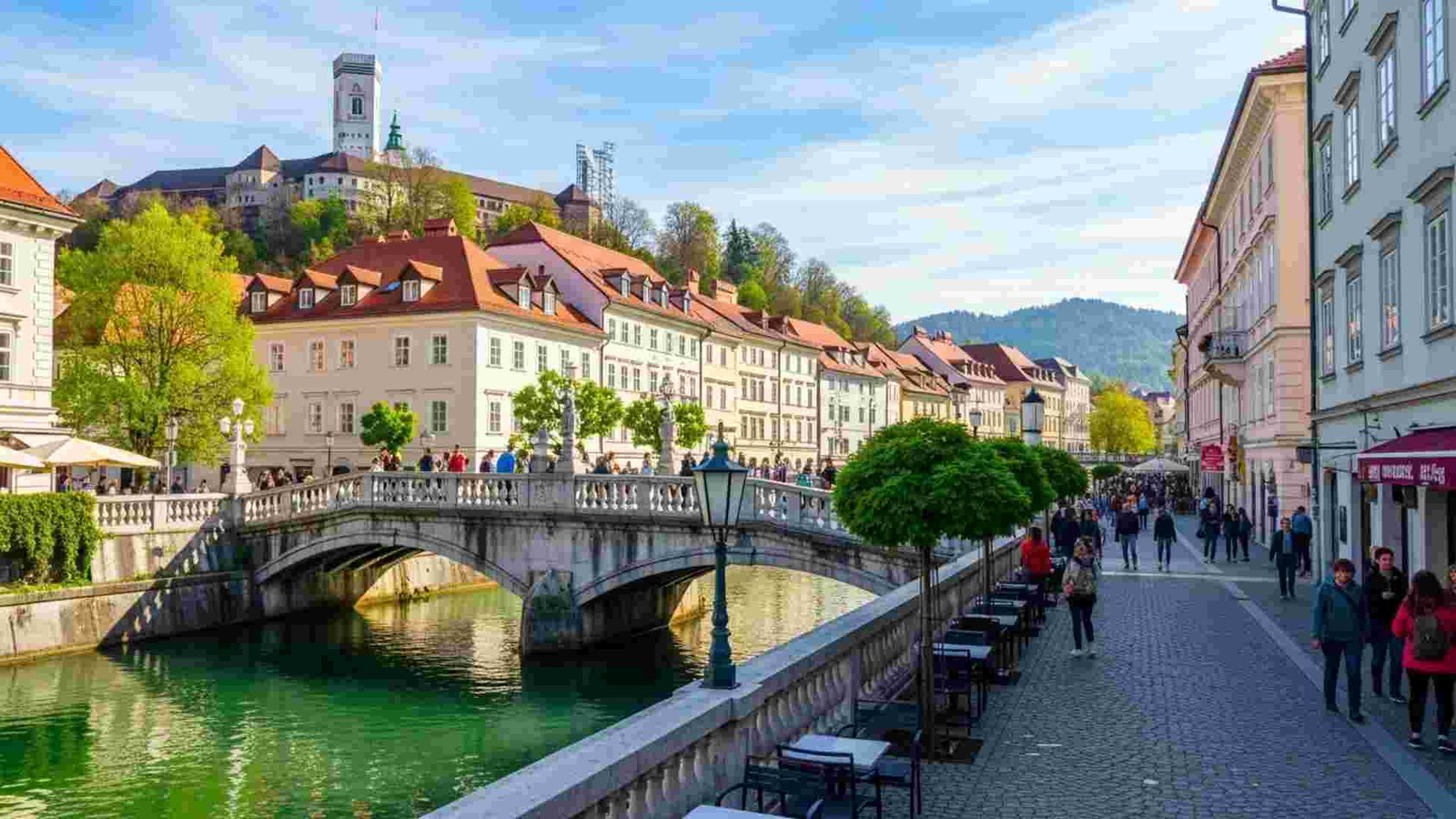
Here’s a city that’s compact, charming, and far less crowded than Euro‑famous capitals—yet full of character. In 2024 the city logged 2,590,898 overnight stays—up 12.7% year‑on‑year—and accounted for 20% of all the country’s overnight stays.
Instead of taking the obvious castle photo from the Old Town, head early morning to the river‑banks while the city is just waking up. Grab a coffee in Metelkova district (alternative arts scene) when only locals are around. Then rent an e‑bike and pedal through Tivoli Park to the hills above for panoramic views.
Practical Information:
- Best time to go: May or early autumn avoid peak and get pleasant weather.
- Getting there & around: Fly into Ljubljana Jože Pučnik Airport; city centre is compact and walkable; public buses are good.
- Length of stay: 2–3 nights gives a city break with room for day‑trip (e.g., Lake Bled).
- Travel tip: Accommodation fills up when big events are on—the city hosted 99 international events in 2024 (up 23.8% y/y) so check event calendars.
- Travel theme connection: Ljubljana offers the “urban vibe without overtourism” angle. It’s city‑travel done well when you want culture, cafés and strolls—not crowds, not chaos.
15. Vilnius, Lithuania
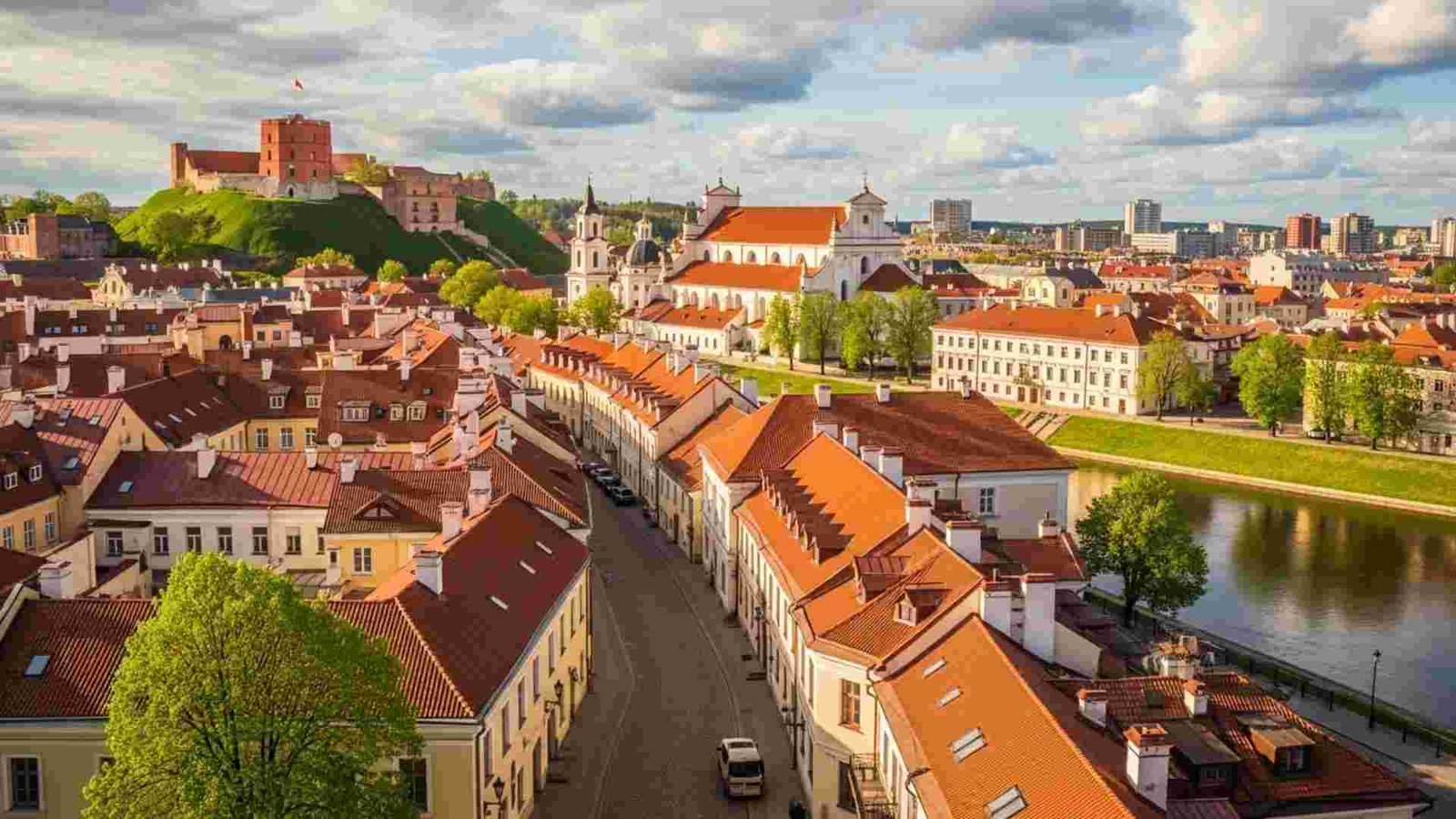
the capital of Lithuania is increasingly on the travel radar and brings a blend of history, green spaces and sustainability. It has been named the European Green Capital 2025.
Wander the old town’s cobbled alleys to find cafés tucked into Gothic‑baroque facades, then head to Užupis—the artsy independent republic district—with its quirky vibe. Take a late afternoon to paddle on the Neris River as the golden light hits the hilltop Gediminas Tower.
Practical Information:
- When to visit: Late April to June gives mild weather and leafy city.
- Transport: Fly into Vilnius Airport (which saw >3.3 million passengers first half 2025, +9% y/y) city tram, bus and walk‑friendly centre.
- Stay duration: 3 nights lets you explore town, bounce to Trakai (30 min away) and maybe museum‑hop.
- Money & value: Compared with Western capitals you’ll find better value; gourmet dining and craft beer scenes are growing.
- Travel theme connection: Vilnius gives the “capital with soul and space” angle—less frantic than Rome or Paris yet full of color, layer and authenticity. It fits the “vibe of Italy minus crowds” in a new context.
16. Brisighella, Italy
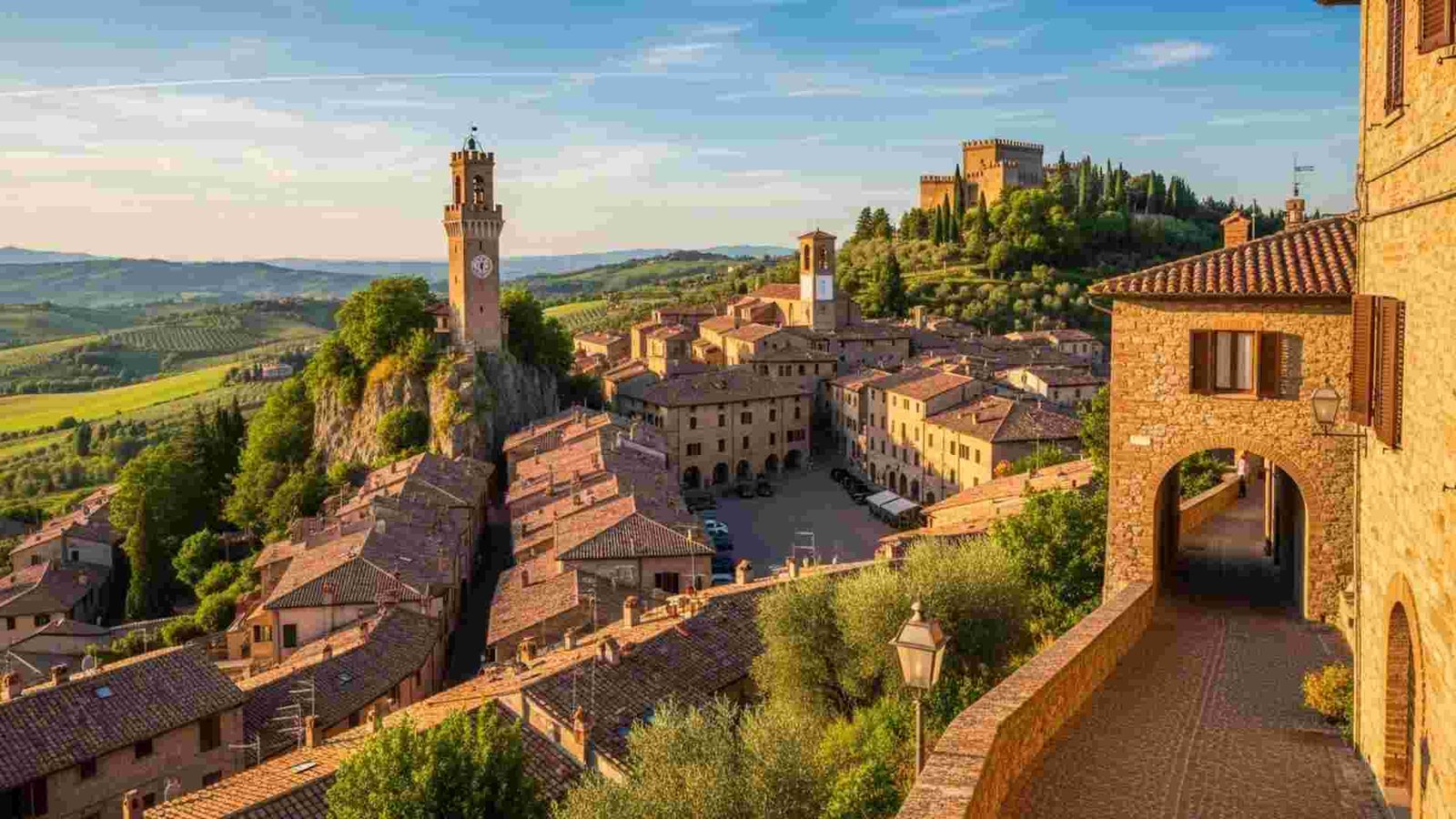
And yes—I’m including one Italian gem that still slips under most travellers’ radar: Brisighella in Emilia‑Romagna. It’s got that Italian hill‑town feel—castle ruins, pastel houses, olive‑oil traditions—but without the full‑tilt tour‑bus stamp over the place.
Stay in a B&B inside the old town. At dawn climb up via the historic Via degli Asini (a covered elevated donkey path) to the Clock Tower—sunrise lights up the terracotta roofs and the valley beyond. Mid‑day: wander vineyards and sample olive oil DOP Brisighella. Evening: candle‑lit dinner in a lantern‑lit street during the “Romantic Brisighella” summer evenings.
Practical Information:
- Best window: Late May or early July before peak summer—warm but fewer visitors.
- Access & exploring: Drive or train to Faenza then bus/taxi to Brisighella; town centre is compact and walkable though cobblestones and hills exist.
- Stay length: 1–2 nights work if limited on time; 3 nights if you want to unwind.
- Budget & etiquette: Local inns and trattorias will feel more genuine if you avoid the tourist‑first streets. Bring sturdy shoes for cobbles and some uphill.
- Travel theme connection: Brisighella underscores that “Italian vibe” doesn’t always mean Venice or Florence—it may mean a small village with traditions, olive oil, stone towers and calm. A perfect “quiet Italy” dupe.
Conclusion:
Europe offers a wealth of hidden gems that capture the essence of Italy’s charm without the overwhelming crowds. From the rugged coastlines of Montenegro to the lush vineyards of Spain, each destination offers unique experiences that transport you to a quieter, more authentic side of Europe. By exploring these “dupes,” you not only escape the tourist traps but also immerse yourself in rich history, vibrant culture, and stunning landscapes, proving that the best travel experiences often lie off the beaten path.