
By the end of this list you will have nine approaches to building new friendships after 50 – each one chosen for the same reason: it puts you in front of the same people more than once without anyone having to engineer a special occasion.
Think about the last time you had a genuinely good conversation with a stranger – at a neighbor’s gathering, a one-off event, someone’s birthday dinner. The conversation landed. Nothing followed. Six months later, you were exactly where you started. That is not a personality problem. A single encounter is structurally insufficient to produce a friendship at any age; one good exchange is just a good exchange.
What actually builds friendship is repeated exposure to the same person over time. Not charm. Not an outgoing nature. Not finding someone who has somehow cleared their calendar. Just the same face, in the same place, often enough that the relationship develops its own momentum – and that kind of repetition can be arranged without depending on anyone else’s initiative.
These nine ideas are not about meeting more people. They are nine different ways to manufacture the repetition that does the real work, each one solving a slightly different constraint – schedule, temperament, budget, or all three. Pick the one that fits your life right now, take the first step this week, and do it consistently before adding anything else.
Quick Tips Before You Start
Pick One Idea First
Start with one approach and commit to it for four weeks before adding a second.
Repetition Is the Mechanism
One visit tells you almost nothing. The friendship starts forming around the third or fourth encounter.
Skip the Introduction
You do not need to formally introduce yourself. Ask a follow-up question about something specific the other person said.
Leave the House
Digital tools can surface someone worth meeting, but the friendship is built in person, not in a chat thread.
Same Place, Same Time
Fixed schedules do the social organizing for you — irregular attendance breaks the repetition that is the whole mechanism.
1. A Weekly Class That Locks In Repeat Contact
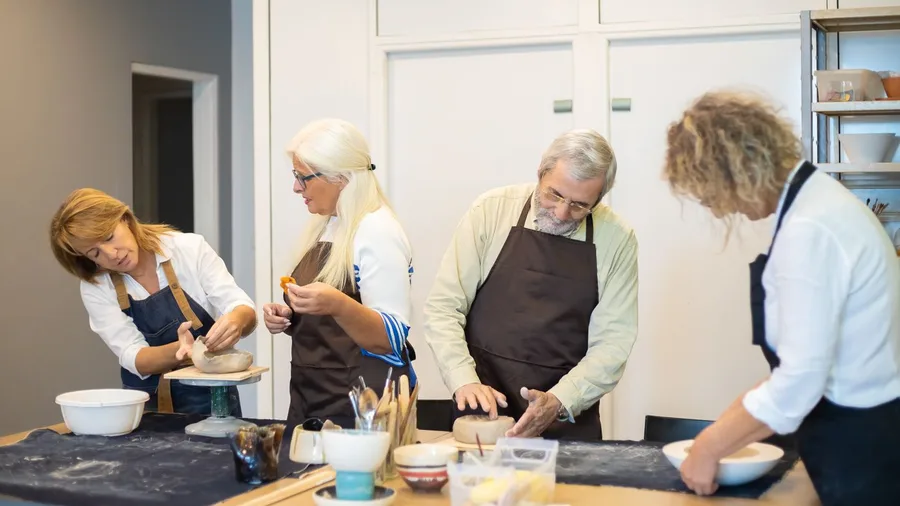
Most people frame this as a discovery problem – find the right person, in the right place, and friendship follows. That framing is wrong. The harder obstacle is structural: how do you end up in the same room as the same person six Tuesdays in a row without someone having to organize it every single time?
A multi-session class solves that automatically. Sign up for a six-week pottery or cooking course – typically $80 to $200 for the run, or $15 to $40 per session – and the calendar does the organizing. You and the same eight or ten people show up at the same hour, week after week. Researchers who study familiarity and liking have documented this effect consistently: repeated exposure to the same face, on its own, shifts how warmly that person is perceived. The subject of the class contributes almost nothing to that outcome. Pottery, a beginner language course, a knife-skills class – the activity is just the reason everyone returns. Pick whichever sounds least like homework.
The only action required after session one: find one thing a specific person said or made that week and ask a single follow-up question about it. Not an introduction, not a plan to meet again – one question. That is the whole first move.
One caveat worth naming: this mechanism only works if attendance is consistent. Miss three of six sessions and the repetition that does the actual relationship-building never accumulates. If the schedule is unpredictable right now, a different approach will serve better.
2. A Regular Volunteer Shift Each Week

The standard advice is to find a hobby and build a social life around it. Useful guidance, unless you don’t have a hobby you care enough about to attend every week – in which case it produces guilt rather than friends. A standing volunteer shift sidesteps the problem entirely. The work is the reason to show up, not the social outcome.
Two to four hours a week at a food bank, a library, or an animal shelter puts you alongside the same small group of people on a fixed schedule. Nobody is expected to be charming; the task in front of everyone handles that. Conversation comes from what’s happening – the crate that needs carrying, the patron who needs help – rather than from searching for something to say. People who volunteer have already self-selected for showing up for something outside themselves, which tends to make initial contact warmer than any mixer where the only shared purpose is meeting strangers.
Consistent attendance matters here more than almost anywhere else. Turning up every week tells the people around you something specific about your reliability – and that signal is exactly what makes someone worth investing in.
💡 Tip: Search VolunteerMatch.org by zip code and filter by 'weekly' under schedule — most listings name the day and shift time so you can find one that fits before committing.
⚠️ COMMON MISTAKE
One Visit Is Not a Fair Test
Most people attend a new group once, feel awkward, and conclude it is not for them. That awkwardness is not a signal about the group — it is the normal experience of a first encounter with strangers. Commit to at least three visits before deciding anything.
3. A Meetup Group Built Around One Specific Hobby

You scroll through your phone on a Tuesday evening and search ‘hiking groups near me.’ A dozen results come back. You click one, read the description, close the tab, and do nothing. That moment – the low-grade uncertainty about whether it is worth the effort – is where this idea either starts or doesn’t.
Meetup.com runs thousands of hobby-based groups in most U.S. cities, and the format’s central advantage is that the activity does the social work. No one is there to network or impress anyone; they came to hike, play board games, or talk about photography. The expectation of sociability is low, which makes showing up easier. Joining the platform is free, and most local events cost nothing or somewhere between a few dollars and $20, with no ongoing commitment attached.
Ask yourself one question before choosing a group: am I looking for a specific activity, or am I searching by age bracket? Searching by activity – hiking, board games, film, photography – tends to surface groups that are more active and better attended than those organized around a demographic. That is where the over-50 crowd tends to show up anyway, mixed in with everyone else who shares the interest.
Now the honest part. One visit is not a fair test of anything. The first time at any group is slightly awkward by design – you are new, the regulars have their rhythms, and nothing deep is going to happen. Plan to go at least three times before drawing any conclusion about whether this group is worth continuing. Three visits gives you enough data. One visit gives you almost none.
The goal at a Meetup event is not to leave with a friend. It is to leave having identified one or two people worth following up with separately. Anyone who arrives expecting a real conversation on a first group outing is setting a standard the format was never designed to meet. Meetup is the beginning of the funnel, not the end of it.
If you showed up three times and genuinely felt nothing, move on. If you noticed one person you would talk to again given the chance, that is the entire result the event needed to produce.
From First Visit to Real Friendship — The Sequence
4. A Standing Third Place on a Fixed Schedule

Four or five sightings is usually all it takes for a stranger to stop being a stranger in any meaningful sense.
The same corner table at a café, the same Tuesday afternoon in the library reading room, the same machines at the community center – repeated across several weeks, this kind of passive presence lets other regulars register a face long before any conversation is required. That is actually closer to how most adult friendships begin than the deliberate introduction people imagine they are supposed to make. The approach, when it eventually happens, lands differently: a hello or a comment about something in the room doesn’t read as a cold open, it reads as a natural next beat in something that has already been quietly accumulating.
A YMCA membership, which typically runs $40-$70 a month, compresses this into a single commitment. It gives a reason to be there, a physical third place to become recognizable in, and access to group fitness classes where the same people show up at the same hour every week – all without requiring anyone to perform sociability on arrival.
This is the slowest approach in the list and works poorly on its own. Someone who finds structured social events draining will find this format genuinely comfortable, but pairing it with one faster idea keeps the timeline from stretching into months of waiting. The familiarity does the social work in advance; the threshold move stays proportionate because the groundwork is already laid.
5. A Single Reconnection Message to a Dormant Tie

‘I don’t want to make it weird’ is the sentence that keeps a lot of good candidates sitting untouched in someone’s phone for years.
Researchers who study dormant ties – old colleagues, former neighbors, friends who simply drifted – find consistently that people badly underestimate how warmly an out-of-the-blue message lands on the other end. The fear of seeming strange or needy is almost always larger than the reality. Shared history is already present; the connection doesn’t need to be constructed, only reopened.
The message needs only three things: one specific memory that explains why this person came to mind, a plain acknowledgment that time has passed without any elaborate justification, and a single low-pressure suggestion – a call or one coffee, not a standing arrangement. One message a week for a month, four total, is a pace that feels like a reasonable idea rather than a campaign. Not every thread will restart, and that is worth expecting from the start.
Reconnection Message: What Lands vs. What Doesn't
What Works
- A memory specific enough that only this person shares it — not 'the old days' but a named place or moment
- Keeping the whole message to three or four sentences — brevity signals confidence, not indifference
- Suggesting something with a natural end time: one call, one coffee, not a recurring plan
- Sending to dormant ties you actually enjoyed — obligation restarts rarely survive the second meeting
What Doesn't
- Opening with an apology for the silence — it shifts their job from replying to reassuring you
- Ending without any invitation — curiosity without a door to walk through usually goes unanswered
- Waiting for four replies before sending a second message — one a week means four different people over a month, not four messages to one
- Interpreting no reply as rejection — a missed notification, a busy week, and a lost thread look identical from the outside
6. A Small Monthly Hosting Habit

Waiting to be invited is a passive strategy, and for many people it means waiting indefinitely. Hosting reverses that entirely – you set the date, you name the time, and the cadence of contact belongs to you instead of to someone else’s unpredictable schedule.
The bar for this is lower than it feels. A weeknight dinner for five or six people runs $30-$60 in groceries – pasta, a salad, something from the bakery. Nobody remembers what they ate three months later. What they remember is that they sat at the same table with the same people again, and by the third time that starts to feel like a standing thing, which is what a friendship group actually is.
The host’s one real job is placement: put two people next to each other who share something, and say it out loud when you sit down. ‘You two both grew up in the same city’ or ‘you were both teachers’ is the entire script. That one sentence does the conversational work so neither of them has to perform and you are not running four separate exchanges all evening.
Start with people already close to hand – a neighbor, someone from a weekly class, a colleague’s partner – rather than near-strangers you are hoping to impress. The mix of familiar and semi-familiar faces keeps the room comfortable, fills seats without stress, and means the evening actually happens instead of staying a plan. Repeating it is what builds the thing. Waiting to be asked does not.
💡 Tip: Keep the guest list at four to six people. Larger groups fracture into separate conversations and undermine the closeness that makes hosting work as a friendship-building tool.
💡 PRO TIP
The Three-Month Rule for Hosting
Hosting once is a dinner party. Hosting the same mix of people three months in a row is the beginning of a social group. The repetition is what changes it — the first gathering plants a seed, the second one waters it, and the third one is when people start suggesting a fourth.
7. A Weekly Walking or Workout Partner Arrangement

Most friendship advice points toward the coffee meeting – two people across a table, full eye contact, an hour of deliberate conversation. That format exhausts a lot of people, and the exhaustion gets misread as not wanting connection.
Researchers who study how physical movement shapes social interaction have found that walking side by side measurably lowers the pressure people feel during conversation – the shared forward motion and the absence of sustained eye contact do actual work that a café table does not. One person, one fixed morning each week, four weeks running builds more genuine closeness than a month of scattered first-time coffees with different people. Volume of encounters is not the point. Returning to the same person is.
This works best as a deepening move: take someone already met through a class, a group activity, or a volunteer shift and suggest the same slot every week – Saturday at eight, say, or Wednesday after work. The activity is almost beside the point. The recurring appointment is the mechanism, and it pulls double duty for anyone with a fitness goal that has been quietly competing for the same hour.
🚶 How a Walking Partnership Becomes a Friendship
Identify someone from an existing activity
One person only — not two or three maybes. A single candidate makes the next step easy to take; a shortlist makes it easy to postpone.
Suggest a specific walk
Give them the out: 'I do Saturday at 8 most weeks — join me once and see if it works for you.' A trial ask lands better than a commitment ask.
Keep the first walk to 30–45 minutes
Short enough that neither person is trapped if it goes awkwardly. Long enough to have one real exchange. End it while it still feels good.
Make it recurring at the end of walk two
Not walk one — people need a second data point before they commit. Ask at the end, not the beginning, when the mood is still up.
Treat a cancellation as information, not rejection
One reschedule is life. Two in a row with no counter-offer is a no. Know the difference before week four so you spend energy in the right place.
8. A Book Club or Structured Discussion Group

That question stops more potential friendships than distance or schedule ever does. A structured discussion group answers it before anyone opens their mouth.
When a shared book, film, or current-events topic sets the evening’s agenda, no one has to manufacture conversation from nothing. Everyone walked in having read the same pages or watched the same documentary. The first thing out of your mouth is a response to a shared experience, not a performance of likability.
Most public library book clubs run monthly at no cost. Community center and bookstore groups are typically free or close to it – a small materials fee at most. The access barrier is genuinely low, which matters less than what the format does once you are inside it.
they assume that being agreeable and enthusiastic is what makes them memorable to a room of new people. It rarely does. Someone who says ‘I actually disagreed with the author on that – here is why’ is the person the group is still thinking about on the drive home. Not combative. Just honest. Being remembered is the prerequisite for being sought out afterward, and agreeable small talk does not produce it.
Six months with the same monthly group – six sessions, no ongoing cost – allows enough topics to surface that people start to know what you actually think, not just what you are willing to say in the first hour. That accumulation is what converts a recurring stranger into someone worth texting between meetings. A six-week class can rarely do that; the timeline is too compressed for real opinions to emerge.
Nonfiction, film discussion, and current-events formats produce the same result as fiction book clubs. The subject barely matters. What the format supplies is a standing reason to say something true, with the same people, month after month – and that repetition, carried across a longer arc, is exactly what does the work.
Book Club and Discussion Groups — At a Glance
💰 Cost
Free – small materials fee
📆 Frequency
Monthly (most groups)
🕐 Time per session
1.5 – 2 hours
👥 Typical group size
6 – 14 people
📍 Where to find
Library events calendar, bookstore notice board
Depth advantage
A six-month run produces more relationship depth than a weekly class attended for six weeks, because real opinions accumulate across multiple topics.
9. A Profile on a Dedicated Friendship App

Ten messages to produce two or three coffee meetings. That is the realistic conversion rate on a dedicated friendship app, and knowing it in advance makes the process workable instead of demoralizing.
Apps built specifically for adult friendship – not dating – now have enough users in most U.S. cities to function as a genuine starting point. Bumble BFF and Friender are the most widely used. Bumble BFF’s basic tier costs nothing; premium runs roughly $10 to $30 a month, and there is no reason to pay a cent before a first in-person meeting has happened. The lower conversion rate compared to dating apps is not a sign that something is wrong – it reflects that deliberately seeking friendship is a newer social practice with less established script. The awkwardness is structural, not personal.
What the app actually buys is a sourcing tool. It surfaces one person worth meeting; everything that converts that meeting into a friendship depends on repeated in-person contact afterward. A profile that names a specific habit – ‘Saturday farmer’s market,’ ‘weekly parkrun,’ ‘pottery class’ – attracts someone with a matching routine rather than a vague willingness to ‘grab coffee sometime.’ That specificity is what the app quietly spends or saves over the following months: the right detail in a profile can hand you a standing weekly structure before you have left the house.
What Changes When You Use an App With Realistic Expectations
Frequently Asked Questions
How long does it actually take to make a real friend after 50?
Research on friendship formation suggests it takes somewhere in the range of 50 hours of contact before an acquaintance begins to feel like a friend — but those hours do not need to be intentional or deep conversation. Shared activity time counts. What matters most is that the contact is repeated with the same person, not that each encounter is especially meaningful. Expect months, not weeks, if you are starting from scratch.
What do I do if I feel awkward or like I have nothing to say?
Ask a follow-up question about something specific from the last time you were in the same room: ‘how did that thing you mentioned work out?’ That is it. You are not trying to be interesting — you are signaling that you were paying attention last time, which is more valuable than any conversation starter. Most of the work of early friendship is attention, not wit.
Is it worth joining a group specifically aimed at people over 50?
Sometimes, but searching by age group often produces smaller, less active listings than searching by activity. An active hiking group with members ranging from 35 to 70 is usually a better bet than a small, quiet ‘social group for seniors’ that meets irregularly. The shared activity is the bond; the age similarity is a bonus, not a prerequisite.
What if I try an idea and it just does not click?
Give it three visits before you decide. One uncomfortable first outing is data about first outings, not about the group. If after three visits the fit is genuinely wrong — the format, the activity, the mix of people — move to the next idea on this list that solves a different constraint. The goal is not to find the perfect group; it is to find one that produces enough repetition to let a friendship form.
What if I do not live near a city with many options?
Rural and small-town contexts actually favor a few of these ideas over others: the dormant-tie reconnection (idea 5), the standing third place (idea 4), and small-scale hosting (idea 6) all work better with fewer people because the pool of candidates for repetition is smaller and therefore stickier. In a small town, running into the same person three times is not an accident — it is an opportunity.
The One Decision That Changes the Rest of the List
The thing that converts a stranger into a friend is not a great first impression or the right occasion. It is seeing the same person again, and then again, until the relationship has enough weight to hold itself up. Every idea on this list works by engineering exactly that – not by hoping it happens.
Pick one idea from this list that requires leaving the house. Show up for it every week for four consecutive weeks – not whenever it is convenient, but four weeks in a row. Only then consider adding a second. Spreading effort across three or four ideas at once produces a string of first encounters and no repetition, which is precisely the situation you started in.
The problem was never that everyone else is too busy. It was the absence of a repeated structure – and that is the one thing entirely within your reach to fix. You came in with nine approaches to building new friendship. Now you have a first step. That is the whole distance between where you were and where this starts.
Your Four-Week Starting Point Is Already in This List
Scroll back to idea 1, 2, or 3 and pick the one that requires leaving the house this week. That single choice is the whole first step.