
Two men get the same call from a grown daughter with a problem. One asks a question and hears the rest of the story over the next month. The other starts solving in the first ten seconds, and the calls get shorter every year. Both love their families. Only one of them sounds like it.
You may have a script for the polite calls and the shorter visits: they’re just busy, or that’s how Dad is. But distance in a family is rarely one blow-up. It is a set of ordinary habits, each small enough to seem harmless, repeated enough to teach your family what is safe to bring to you.
The ten habits below are not a character verdict. They are a map. Each one names what your family hears and the one replacement that makes the care behind it audible again. By the end, you will know which habit fits you, see its cost in a specific relationship, and choose one behavior to change this week.
Quick Tips Before You Start
Read for the habit, not the verdict
You are looking for one or two items you actually do, not keeping score on all ten.
Ask before you fix
Four words do most of the work: 'Advice or just to vent?'
Name your return time
If you need to cool off, say when you are coming back, and then come back.
Drop the ledger
Say the wish plainly instead of tallying what you have done for them.
One appreciation a week
Specific and without a 'but' attached. That is the whole assignment.
Words That Shut Them Down
Every family has a version of this. Someone starts to say something and stops, because the last three times they started, the conversation ended in a plan, a correction, or a grade on their feelings. The words are not harsh. That is why nobody notices the door closing.
These first four habits all happen inside the first thirty seconds of a conversation. Change them and the rest of the list gets easier, because your family starts telling you things again.
1. The Answer Arrives Before They Finish

Most men who do it would say no, because fixing feels like the helpful thing, the responsible thing, the thing a father does. The question is worth sitting with a moment longer than that first answer takes.
The habit has a shape, and it usually shows up about ten seconds into a conversation. A daughter starts a sentence about her week, gets three words out, and he is already there with the plan: call the bank, get it in writing, don’t sign anything. She had not finished telling him what happened. The fix landed before the facts did.
What she hears is not help. She hears that her worry was not worth hearing out, and that her own read on it does not count for much. The first worry she brings is usually the smallest one, a trial balloon sent up to see how the room feels. If it comes back as a lecture, it tends to be the last one she shares for a while.
That is the cost, and it accumulates quietly. Adult children and spouses learn the same lesson from the same ten seconds: bringing a problem here earns a plan, not a listener. So they stop bringing problems. They handle the hard things alone and mention them later, after they are solved, if they mention them at all.
The replacement is one question, asked before any advice forms: ‘Do you want advice, or do you just want to vent?’ It takes four seconds. Sometimes the answer is advice, and then the advice actually lands, because it was invited. Often the answer is the other thing, and what she needed was someone to hear the whole sentence before it got fixed.
The ones hit hardest are the ones who test the water first, a wife or a daughter with a small worry she is not sure is worth a fuss. Give her a fix-it plan and she learns to keep the next worry to herself. Let her finish, and the small worry stays small, and she keeps bringing things while they are still small.
💡 Tip: If you cannot resist a solution, ask one diagnostic question first: "What have you tried?" It keeps you listening instead of lecturing.
The Replacement Moves At A Glance
👂 Before advice
Ask: advice or vent?
🫶 Before correcting
Only if safety is at stake
💬 Before dismissing
"That sounds hard. Tell me more."
📅 Before the guilt line
"I'd love to see you Sunday."
⏱️ Before going quiet
Name the return time
🏅 Before saying nothing
One specific appreciation
How to use this
Pick the row that matches what you actually do, not the one you think sounds best.
2. Correcting How They Live Reads As Rejection
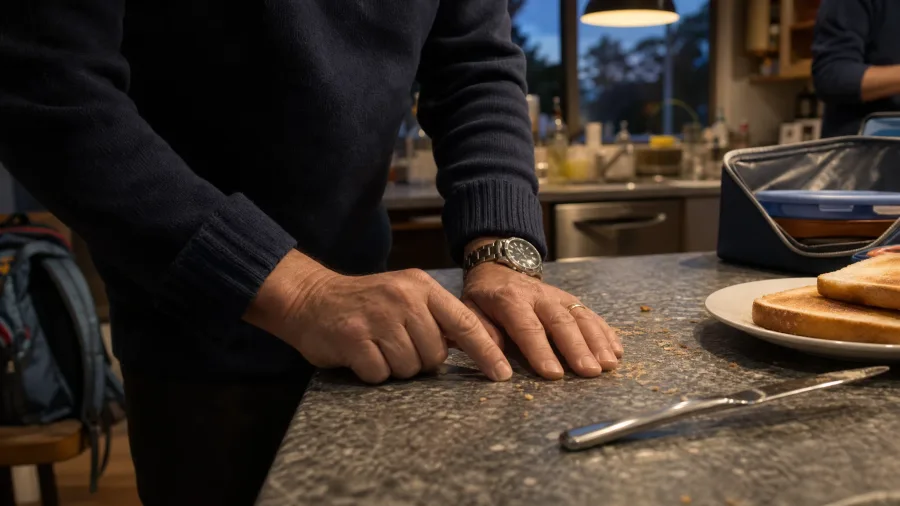
The cost lands first: a family that starts editing what they tell you, leaving out the job change, the money worry, the way the kids are being raised, because they already know what the comment will be. That editing is the distance, and it does not announce itself.
It happens in small moments. A son mentions they are thinking of moving the family across town for work, and before he finishes there is a question about the school district, then a remark about how far that puts them from everyone. Nothing said was cruel. It was correction, delivered as concern, and it landed as a verdict: you are doing it wrong.
A man does not usually mean it that way. He has lived longer, he has watched choices play out, and the instinct to steer is real. But a correction on how an adult runs his own house is heard as a ruling on his competence, and no one keeps handing their life over to be graded.
⚠️ COMMON MISTAKE
The Softened Criticism Still Lands
Opening with 'I'm not criticizing, but' or a compliment sandwich does not change what the family hears. The correction is the message. If the words are not safe enough to say plainly and kindly, they are not safe enough to say.
3. Dismissing Feelings Teaches Them To Hide

Dismissing a feeling is what happens when a man answers the emotion instead of the person. ‘Don’t be silly.’ ‘It’s not that bad.’ ‘You’re overreacting.’ Each one grades the feeling, decides whether it is the correct size, and corrects it in a single breath.
Here is the ten-second test. Think of the last time someone in your family told you they were upset. Did your first sentence ask what it was like for them, or did it tell them how they ought to feel? If it was the second, that is the pattern, and it is easy to miss because it feels like reassurance.
The trouble is that a graded feeling comes back graded. A grandchild who is told the thing he is afraid of is nothing much learns that being afraid is not welcome here. An adult child gets the same message, and stops bringing the things that matter, because bringing them means defending the size of them first. Understanding habits that look lazy can show how a brain protects itself from this kind of grading.
The replacement costs nothing. ‘That sounds hard. Tell me more.’ It does not agree with anything or promise to fix anything. It treats the feeling as real, which is the one thing the person in front of you is actually asking for.
💡 Tip: Replace "it's not that bad" with "what's the worst part of it?" You will get the real answer.
💬 The Conversation That Shows You Which Habit To Work On
Pick one person
Choose the family member whose distance you most notice, and do not warn them you are asking.
Ask the question plainly
Say, "What's one thing I do that makes it hard to tell me things?" and stop talking.
Take the answer without defending
Say thank you, and if you feel the explanation coming, ask them to hold on and take a day.
Match it to the list
Find the number that matches what they said, and read that entry twice.
Practice only that replacement
Run it for two weeks before touching any other habit on this list.
Ask again in a month
Same question, same person, and keep the answer instead of arguing with it.
4. Comparisons Shrink Them Quietly

A son gets a promotion and the first thing out of a father’s mouth is that his brother made manager two years earlier. I have never once watched that land well.
The comparison can be a sibling, the neighbor’s kid, or the man himself at that age, and it all says the same thing: approval here has a condition attached. Over months, a son or daughter stops sharing the wins altogether, because praise only arrives with a measuring stick beside it. They pull back to keep their own self-respect intact.
The fix is smaller than it sounds. Name one specific thing they did well this week, and let it end there. No ‘but your sister,’ no ‘about time.’ For a child who already compares himself to everyone, that single sentence without a follow-up does more than a whole speech.
Conflict And Distance
The first four habits stop people from talking. The next three make them dread the times they do. That is a different problem, and it is the one that changes how often your house gets visited.
None of this is about blowing up. It is about the low-grade tension that makes a Sunday lunch feel like a chore, and how it accumulates.
5. The Silence Leaves Them Guessing

The common advice is to walk away and cool off. That is exactly the move that does the damage.
Leaving the room, clamming up, answering in one word: the family has to fill that silence, and they always fill it with something worse than what is actually there. A wife reads a closed door as punishment, then spends the evening writing the story of what she must have done. The children do the same.
What works is not staying and fighting. It is naming the pause. ‘I need twenty minutes, then we’ll talk’ tells the room the silence has an end, and a time on it. Then come back at that time, even if the anger has not fully cooled. One person in that house is guessing whether the quiet is anger or exit. The return date answers it before the guess can form.
💡 PRO TIP
Give the Silence a Release Date
Every silence you take needs an end time spoken out loud. "Twenty minutes" is fine. Coming back without a word is what teaches a family to brace for the next one.
6. Guilt Turns Visits Into Debt Payments

One sentence, sometimes less: ‘after all I’ve done for you.’ It can take a single holiday dinner to plant the ledger, and then years to work it out of the family’s accounting.
There is a version of this that is not a guilt trip, and the difference is easy to hear once it is named. ‘I’d love to see you Sunday’ states a wish. ‘I guess I’m not important anymore’ hands the family a bill. One invites; the other invoices. The wish leaves them free to say yes. The bill leaves them no good answer, only a debt to pay or a debt to dodge.
The trouble with the bill is that it works briefly and costs steadily. Visits happen out of duty, then get shortened, then get skipped, and the man reads the skipped visits as further proof of neglect. What he is watching is a family finding reasons. His adult children are already stretched thin by work and their own kids. The ledger adds one more weight, and it is the one they can put down without anyone getting hurt.
State the wish and stop. No tally, no reminder of what it cost to raise them. The invite lands clean, and a clean invite is the one they can accept without first paying something off.
The Words That Ask And The Words That Charge
Asks Without A Receipt
- "No pressure either way."
- "I'll ring you Thursday to sort a day."
- "Bring the kids, or come alone – either is good."
- Rule: one ask, one answer allowed to be no, zero follow-up this month
Charges Without A Price
- "I suppose I'll just sit here then."
- "Your sister manages to visit."
- "Don't worry about me, I'm used to it."
- Warning sign: they start answering before you finish the sentence
7. Old Fights Get Reopened At The Table

Thanksgiving, halfway through the mashed potatoes, and someone mentions the year he lent his brother money. A visit that already felt like a bill comes due now carries a second charge: dread. The old argument comes back out, or a political remark gets dropped, and everyone at the table does the arithmetic on how long until they can leave.
Family starts declining the invitation or slipping out before dessert. One rehashed fight is enough to teach them what the next gathering will cost.
Before the next one, name two or three topics as off-limits, out loud, to whoever hosts it. When one comes up anyway, change the subject once and let it stay changed. The host is the one who feels every silence at that table as a failure of their own.
💡 Tip: Have a subject ready before you need it: the grandkids' team, the garden, a photo someone sent. Reaching for a replacement beats lecturing about the old fight.
Seven Days Of Speaking So They Can Hear You
Run this week once. Notice which day was the most uncomfortable. That one is the habit worth keeping.
Old Roles And Unspoken Love
The last three are different. Nothing here is said in anger, and nothing here is said at all, which is what makes them hard to spot.
These are the habits that keep a grown man and his family at arm’s length while both sides insist everything is fine.
8. “I’m Fine, Don’t Worry About Me”

“I’m fine, don’t worry about me” is what he says into the phone, and then he hangs up and sits in the chair by the window with the lights off, because the knee is bad and the appointment is Thursday and he has told no one about either.
The same day, or the day before, he calls his daughter to ask why she has not fixed the gutters, and she is forty-three and has owned that house for eleven years.
These are the same gesture wearing two faces. The man who says don’t worry about me has just decided he will not be a burden, and the worry he deflects is the worry he is actually carrying. The man who calls about the gutters has decided she still needs a supervisor, and the supervision is a way of staying necessary. Both send the same message, and the message is that she is not quite running her own life yet.
The unscheduled call on a Tuesday afternoon, the question about whether they have really thought through the school district, the decision quietly overruled because he knows better and has the years to prove it – each one is small, and each one puts an adult back in the chair where she was fifteen.
The consequences tend to be quiet rather than loud. Adult children in their thirties and forties, with mortgages and their own children and their own opinions, generally do not confront. They simply begin to answer fewer questions, offer fewer details, and make the bigger decisions before mentioning them. What looks like a firmer boundary is often a shorter call list.
The replacement is one question, and it goes first: “Would you like my input?” It costs nothing and it changes the whole exchange. If she says yes, the advice lands as help. If she says no, he has kept his dignity and hers, and he has learned something about the household he no longer runs.
9. They Are Not Kids Anymore

It says, plainly: I am still the one who manages this. That is the same posture that kept adult children in their childhood chairs, just carried into a body that now needs the hand it waves off. A son offers to drive to the appointment and hears “I’ll take the bus.” A daughter brings over a casserole and watches it sit in the fridge.
“I’m fine” goes out when it is not true, a doctor’s visit gets hidden. The spouse and the grown children worry anyway, in the dark, and they start to feel useless, then shut out of the man’s actual life.
The script is plain: “Could you drive me Thursday? I’d rather not go alone.” “Actually, that casserole would help.” “Thank you, I needed that.” One small yes this week, said without a payback clause. A wife who wants to feel needed, adult children who want to be useful, all of them get the same thing back: a place in his day.
10. “They Know I Love Them”

“I shouldn’t have to say it. They know.” Men say some version of that about affection the way they say it about needing help, and both assumptions leave a family guessing at something they would rather hear. Researchers who study how families communicate keep finding the same thing: the intention behind a feeling and the signal that carries it are two different acts, and only the second one travels. A son can work alongside his father for years, take the truck when it breaks, show up on moving day, and still be unable to tell you whether the old man is proud of him or merely satisfied with the labor.
The pattern shows up most often around sons, who tend to get the least verbal warmth and are expected to read approval from a nod, a hand on a shoulder, a job well done and left alone. What fills that silence is rarely generous. He decides he has not measured up, and after enough years of not measuring up, he stops trying to guess, and the calls thin out for reasons his father never connects to anything he did or did not say. The wife is usually in the same silence, running the household on inference.
One specific sentence closes more of that gap than a decade of showing up does: “I’m proud of how you handled that.” Not the general shape of him, not his whole life, but the thing he did this month that you noticed and never mentioned. The son who has never heard it is the one who needs it said plainly, once, out loud, while he is still there to hear it.
Frequently Asked Questions
How do I know which of these I actually do?
Ask one person in your family, directly: “What’s one thing I do that makes it hard to tell me things?” Then listen without explaining, and check your first reaction against items 1 through 4. The one that stung is usually the one.
What if my family has already pulled back?
Change your side of the pattern first, before you ask them for anything. Replace the fixing and the correcting for a month, and let them notice the difference before you suggest a longer conversation. If the distance has been years deep, a family therapist can do more in three sessions than a year of good intentions at the dinner table.
Is there a point where silence during conflict is the right call?
Yes, and it is when you are too angry to stay fair. Walking away is fine; walking away without a return time is not. Say “I need twenty minutes, then we’ll talk,” give a time, and go back to it. If the conversation never resumes, you have not taken a break, you have ended it.
How do I stop giving advice when they keep bringing me problems?
Ask the question first, every time: “Do you want advice, or just to hear yourself say it?” If they want a listener, listen. Ask one more question. If you feel yourself loading up a solution, try “what have you tried?” That usually gets the answer you were about to give anyway, and it gets it from them.
What if I am the adult child reading this about my father?
Do not hand him this article as a diagnosis. Ask the one question that opens the door: “What’s something you wish I did differently?” Then answer honestly when he asks you back, which he might. If he asks nothing, name one thing you appreciate about him and leave it there. The door does not have to open today.
Is it too late to say the appreciation I never said?
No, and it does not have to be a speech. One specific sentence is enough: “I’m proud of how you handled that.” Say it once this week, with no joke attached, and do not expect anything back. The point is not the reply. It is that the sentence has now been said once, out loud, where the family could hear it.
The One Habit To Ask About This Week
None of these ten habits makes you a monster. They are ordinary, human, and almost always born from love. The distance they create is reversible once you name the exact behavior and replace it. The polite calls and shortened visits that brought you here are the accumulated sound of these small scripts, not proof that love is gone.
This week, ask one family member what they wish you did differently. Listen without defending, thank them, and then pick the single behavior from this list that matches what they tell you. Practice it until it stops being effort, then ask again.
One changed habit, one question before advice, one appreciation without a ‘but,’ one accepted offer of help, is the first sentence in a different family conversation. The daughter on the other end of the line is still there, waiting to hear what you do next.
Start With The Question, Not The List
Pick the person whose distance you most notice, ask them what they wish you did differently, and find the matching number above. One habit, two weeks, one honest conversation.