
Most of these habits take under thirty minutes. The guilt about them can run for years.
There is a good chance the reader already does several of them – stares out the window while a problem sits unsolved, lets an idea rest overnight instead of forcing it, declines a meeting and then wonders whether that was avoidance. The word most people reach for is laziness. Sometimes they apologize out loud for it.
Psychology has a different name for almost every item on that list. The mechanisms have been studied, replicated, and described precisely enough that the guilt starts to look like the actual problem – not the behavior it is attached to.
Each habit on this list is doing a job that focused, visibly busy effort cannot do. Knowing the job title changes everything about how the habit gets used – not as something to sneak in and apologize for, but as a specific tool applied at the moment it does its work.
By the end, there is a match between each behavior and the performance leak it fixes. A maintenance schedule replaces a guilt cycle.
Quick Tips Before You Start
Name the mechanism first
Before you use any habit here, say out loud what cognitive job it is doing — that single step turns an accident into a strategy.
Set a return time
Every deliberate pause needs a specific re-entry point. 'I'll come back at 2:15' is what separates incubation from drift.
Screens block the mechanism
Passive scrolling occupies just enough attention to prevent the associative thinking these habits depend on. Put the phone down.
Track which habit fits which problem
Attention leak calls for a nap. Stuck on a decision calls for incubation. Matching the tool to the problem is the whole game.
1. Mind-Wandering Activates the Creative Network
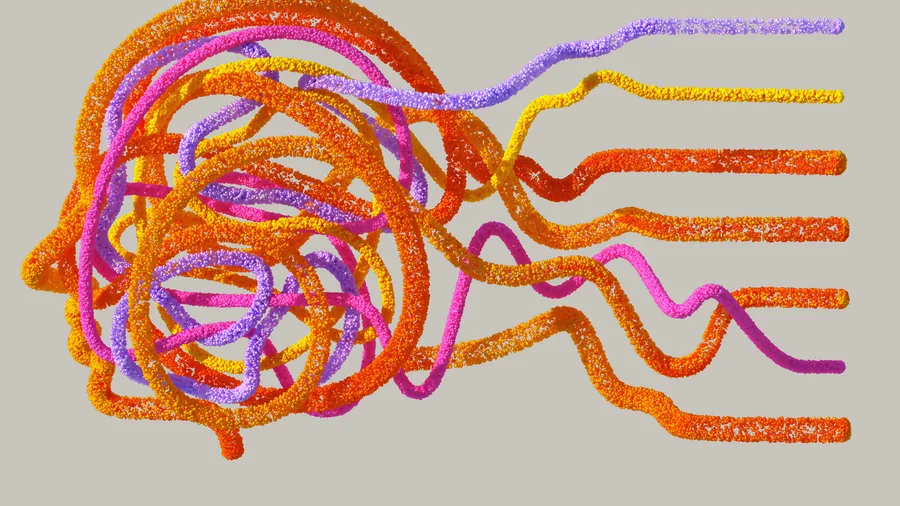
“I wasn’t even trying – the answer just came to me in the shower.” That is not luck. It is a specific part of the brain doing exactly the work it was built for.
Neuroscientists call it the default mode network, and its job is connection-making at a scale focused thinking cannot manage. When attention is locked onto a task, that network goes quiet – the brain suppresses it to hold concentration. Release the demand, and it comes back online, pulling threads from memory and possibility that a focused mind never reaches. The shower, the folding of laundry, the half-attentive walk to the kitchen – these are not empty moments. They are the conditions the brain needs to do its most original work.
The trap is confusing this with rumination, which looks identical from the outside. Both happen when the mind is nominally unoccupied. But productive drifting moves forward – across ideas, possibilities, half-formed plans. Rumination circles. One leaves the person with something new; the other just extends distress. Scrolling a phone sits in neither camp usefully: it occupies just enough attention to shut the creative network down without replacing it with focused work. And for anyone already carrying a high load of acute stress, unstructured mental space tends to fill with worry before it fills with insight – a real cost worth knowing before treating every idle moment as an opportunity.
💡 Tip: Rumination is the lookalike. If the mind is replaying the same negative loop rather than moving freely across ideas, the DMN is occupied — not generative. The difference is direction: insight moves forward, rumination circles back.
2. A Short Nap Restores Focus Better Than Pushing Through

Push through the afternoon slump – that is the standard advice. Get up, drink water, have another coffee, force it.
The problem is that the slump is not motivational. It is chemical. Neural activity produces a waste compound that accumulates across the day and progressively degrades thinking; by early afternoon, the buildup has reached a level where cognition genuinely slows, and no amount of effort changes that. Caffeine masks the signal by blocking the receptors that detect the compound, but the backlog sits there intact. When the caffeine clears, the drag returns – usually harder.
Sleep actually clears the backlog. That is the mechanism caffeine skips. Understanding how sleep clears waste from the brain also sheds light on long-term brain health and why consistent rest matters far beyond one afternoon. A nap under 30 minutes stays in the lighter sleep stages, the compound gets processed, and the person wakes without the heavy, disoriented feeling that makes napping seem counterproductive. Cross the 30-minute mark and the brain begins descending into slow-wave sleep; waking from that produces grogginess that can last longer than the nap itself.
Twenty minutes at 1 p.m. is not stolen time. It is the difference between restored cognition and a slow, degraded afternoon where decisions get worse in sequence and new information encodes shallowly. The person who naps looks like they gave up; the person who pushes through on caffeine looks like they are trying. The output quality typically runs the other way.
One honest caveat: this tool is off the table for people managing insomnia. Daytime sleep reduces the pressure that drives overnight sleep, and for someone whose night cycle is already fragile, a nap can tighten the loop rather than break it. For everyone else, the guilt attached to closing the eyes at 1 p.m. is protecting a habit that is actually costing them the rest of the day.
The Terms Behind the Habits
3. Saying No Preserves the Cognitive Budget

The distinction is real, and it is testable.
Every commitment made in a day draws from the same cognitive pool. Researchers who study decision fatigue keep finding the same pattern: the quality of choices, self-regulation, and focused work degrades as the pool empties – not because the person stops caring, but because the resource is genuinely depleted. Protecting that pool by declining low-return commitments is not a character trait or a sign of disengagement. It is a spending decision, made in advance, about what the available attention is actually worth.
Here is the ten-second test. Picture the commitment landing on the most demanding week of the month – the one with the deadline, the difficult meeting, the thing that already requires everything. Would it still be worth saying yes to? If the honest answer is no, it was only tolerable before because quieter days made the cost invisible. The drain was always there.
Avoidance fails that test differently. Avoidance targets things that provoke anxiety regardless of their actual return – so something small but socially uncomfortable gets declined alongside something genuinely wasteful. Strategic refusal tracks cost and return, not discomfort. The social pressure around this is real: declining reads as laziness to anyone who cannot see the internal calculation. That pressure does not change the math. It just means the habit requires holding the framework when someone raises an eyebrow, which is its own kind of cognitive work.
⚠️ COMMON MISTAKE
Strategic Refusal Is Not a Personality Type
Saying no to everything is not a strategy — it is avoidance wearing the same clothes. The habit only works when the internal calculation is real: this commitment costs X and returns less than X. Without that math, it is just withdrawal.
4. Deliberate Delay Produces a Better Answer

The instinct is to keep pushing. A proposal is due Friday, it is Tuesday afternoon, and the argument in paragraph three has gone flat – so the sensible move feels like staying at the desk until it resolves. That is usually the wrong call.
Researchers who study problem-solving have documented an incubation phase: after the conscious mind has loaded a problem through concentrated effort, stepping away allows associative processing to continue without deliberate attention – and it returns connections that grinding simply cannot find. The key word is ‘after.’ The loading has to happen first. An hour of genuine engagement with the problem is what plants the thread; without it, walking away is just walking away.
The two conditions that make delay productive rather than evasive are simple to check. Did the person put real focused work in before stopping? And is there a fixed point to return? Both have to hold. One without the other – effort without a return date, or a return date without prior effort – produces nothing except a task that stays unfinished.
Tight deadlines collapse the pause entirely, which is why this only works when there is genuine time between first contact and final output. The window does not need to be long – even sleeping on a stuck problem overnight often does it. The insight, when it comes, tends to surface during low-demand activity, the same unstructured mental state that generates most creative connections. Aligning sleep timing with your natural rhythm can deepen that restorative processing even further. The two mechanisms share the same underlying condition: a mind that is not being asked to concentrate on anything in particular.
Incubation vs. Avoidance
Incubation
- Minimum ~1 hour of genuine engagement before stepping away
- Return window is named: tonight, tomorrow morning, Friday 9am
- Insight surfaces during low-demand activity, not more desk time
- Works best when deadline allows at least one full sleep cycle
- The stuck point feels specific, not vague or unstarted
Avoidance
- Stepping away before the problem is fully loaded into working memory
- Return point is 'later' with no clock attached
- More research or prep replaces actually drafting
- Tight deadline makes a pause impossible — grinding is the only option
- The discomfort being escaped is starting, not being stuck
5. Slow Walks Synchronize the Thinking Rhythm

Fifteen minutes. That is roughly how long an outdoor walk needs to run before attentional restoration measurably shifts the type of thinking available on return.
The distinction matters here: walking improves divergent thinking – the kind that generates multiple directions, angles, or possibilities – not convergent thinking, which hunts for the single correct answer. A walk before a math proof is not the right tool. A walk between two creative blocks is. The outdoor environment earns its place in this because varied, low-threat visual input gently occupies attention without taxing it, which frees the same associative processing the drifting mind handles during unstructured rest. A treadmill facing a blank wall largely cancels the effect.
Used consistently, this habit quietly buys a reservoir of generative thinking that shows up as ideas that arrive without apparent effort – and quietly costs the appearance of busyness. The person who steps outside between two hard tasks looks, from any open-plan office, like they have stopped working. That appearance gap is the whole reason the psychology needs to be named: the habit only stays intentional if the person can say exactly what it is doing and when it earns its place.
What People Get Wrong About These Habits
6. Stopping Mid-Task Keeps the Brain Working Overnight

The downside comes first, because it is real: stopping a task unfinished keeps the brain processing it in the background, and for an emotionally loaded problem – an unresolved conflict, a decision tangled with anxiety – that background processing does not generate insight. It generates a loop. It disrupts sleep. It is the wrong application of an otherwise useful mechanism.
For creative and analytical work, though, the mechanism is the point. The brain allocates more sustained background processing to incomplete tasks than to finished ones, because completion is the signal that a task no longer needs resources. Stopping mid-sentence rather than at a clean chapter end – leaving the paragraph half-built, the calculation mid-column – gives the brain a specific thread to hold rather than a closed file to shelve.
The practical version of this is plain: close the laptop with something unresolved and concrete. Not ‘I need to finish section two’ but the actual half-written sentence, sitting open. The next morning’s re-entry is faster and less effortful because the context never fully unloaded. The lookalike – a task left unfinished because starting again feels difficult – looks identical from the outside, but it carries no intent and no return date. The Zeigarnik benefit requires both: a plan to come back, and actually coming back.
💡 Tip: Write the first clause of the next sentence before closing the document. That fragment is the cognitive hook the brain holds overnight — and re-entry tomorrow starts mid-thought rather than from cold.
🧠 How a Strategic Work Session Actually Flows
Load the problem
Spend focused, uninterrupted time engaging the task before anything else — this is the input incubation and the Zeigarnik effect both require.
Work in a single-task block
Close tabs, silence notifications, and process one thing fully — encoding depth and error rate both depend on it.
Stop mid-thread
End the session before a natural boundary, writing the opening of the next move so the brain holds a specific, generative thread.
Take a transition walk
A 15-minute outdoor walk between blocks clears the cognitive frame and activates divergent processing without passive screen use.
Let the mind wander
Allow a low-demand physical task — dishes, a shower — to give the DMN the undemanding space it needs to surface connections.
Re-engage on schedule
Return to the open thread at the time you named — this is what separates every habit on this list from its lookalike vice.
7. Single-Tasking Outperforms Multitasking for Accuracy

Keeping one unfinished thread alive in the background is useful precisely because it is one thread. The problem with multitasking is that it attempts to run several threads simultaneously – and the brain cannot actually do that. What happens instead is rapid switching between tasks, and every switch carries a cost: the brain must suppress what it was just doing, reload the context of the new thing, and re-establish enough focus to function. That overhead is invisible in the moment, but it accumulates across a day like a slow leak.
The deeper damage shows up later. Information that gets interrupted before it fully processes encodes shallowly, which means it has to be re-learned, re-read, or corrected more often. The hidden rework cost of multitasking rarely shows up on any hour-by-hour accounting, so the habit looks efficient right up until the errors and the re-dos land.
The appearance gap runs in the wrong direction here. Someone with five open tabs and a notification counter climbing looks like they are working hard. Someone moving through a single document, notifications off, door closed, looks like they are barely trying. Error rates and output quality favor the second person.
Acting on this is not purely an internal decision for people in open offices or high-interruption roles. It requires structural changes – blocked time, notification protocols, physical separation from the open floor when the work demands it. That is the real cost of the habit, and it is worth naming plainly.
Frequently Asked Questions
How do I know if I’m genuinely using these habits strategically or just rationalizing laziness?
The test is specificity. A strategic pause has a mechanism (what cognitive job it is doing), a boundary (when it starts and stops), and a return condition (a real re-engagement time). If you cannot name all three in ten seconds, the habit has probably drifted into avoidance. The mechanism is the most important: if you can say ‘I am stepping away to let the DMN run’ or ‘I am stopping mid-sentence so the Zeigarnik thread stays open,’ you are being intentional. If the explanation is ‘I just needed a break,’ it may be true but it is not strategic.
Does the Zeigarnik effect work for everyone, or only certain types of work?
The background processing it produces is most useful for creative and analytical problems where loose association generates value — writing, design, complex decision-making. It works against you on emotionally charged or conflict-laden problems, where the same open thread becomes rumination rather than insight. The practical rule: apply it to work you want your brain to keep thinking about, not to conversations you want to stop replaying.
Is there a right time of day for a strategic nap?
Early afternoon — roughly between 1 p.m. and 3 p.m. — aligns with the natural post-lunch dip in alertness that most adults experience regardless of what they ate. Napping later than 3 p.m. risks reducing overnight sleep pressure and making it harder to fall asleep at a normal time. Keep it to 20 minutes: set an alarm, lie down without a screen, and expect the first few attempts to feel less restoring than later ones as the habit stabilizes.
Why does walking outside work better than walking on a treadmill?
Attentional restoration research points to varied, low-threat natural environments as the key variable. Outdoor visual input — changing light, irregular terrain, ambient sound — gently engages directed attention without exhausting it, which frees up the associative processing the DMN handles. A treadmill facing a blank wall provides rhythmic movement but none of the restorative visual variability, so the divergent-thinking benefit is largely absent. Even an urban street with trees and varied facades performs better than a gym floor.
How many of these habits can I realistically use in one day?
Three or four stack naturally into a single work day without conflict. A focused single-task morning block feeds into a mid-session deliberate pause (incubation), a transition walk between blocks, and a Zeigarnik-style stopping point at end of day. Mind-wandering during a low-demand evening task closes the loop. A nap fits on days when the adenosine load is genuinely high — not every day by default. Trying to schedule all seven simultaneously turns a maintenance practice into another obligation, which defeats the point entirely.
Which Habit to Pick Up First
Start with whichever performance leak is costing you most right now. Attention collapsing by early afternoon points to the nap – that is a physiological state willpower cannot negotiate with. Creativity stalling on the same problem points to the incubation sequence: load it hard, step away with a return time, come back. Decision quality eroding under a schedule that never empties points to the resource-allocation question that saying no is actually answering.
The guilt that brought you here was measuring invisible cognitive work by the standard of visible busyness. That is the wrong instrument for the job. These habits are not a permission slip to do less – they are a maintenance schedule for a system with specific recovery needs. Skipping the maintenance does not make the cost disappear; it just delays it until the middle of something that matters.
A person who naps deliberately, declines strategically, and stops mid-sentence on purpose is not lazy. They are managing attention, creativity, and decision quality – the one resource every item on the to-do list draws from. Most of that management takes under thirty minutes. The only thing that needs to run longer is the guilt, and that part you can stop today.
Know Which Habit Fits Your Problem
Scroll back to the habit that matches where your focus or creativity is breaking down most — the mechanism in that entry is the one to act on this week.