An expense report slides across a conference table, and the consultant I personally vouched for – to three clients, in writing – has just been caught falsifying it. Not once. Across eleven months.
He was the warmest person in any room he entered. Clients called him a natural. I signed off on the arrangement without a second look, because everything about him felt right, and I had not yet learned to distrust that feeling.
I spent 40 years inside organizations – structured interviews, 360-degree feedback cycles, longitudinal follow-ups on hires and teams across settings from small family businesses to Fortune 500 HR departments. I saw betrayals and quiet loyalties, whistleblowers and cover-ups, at every level of seniority. The conclusion that work produced is not that people are untrustworthy. It is that the cues most of us rely on to judge trust are nearly useless.
What follows is not a personality quiz or a checklist. It is a set of specific, observable signals that held up across industries, across seniority levels, and across three personal failures that each forced me to revise everything I thought I knew. The signals are behavioral, not presentational – and they only show themselves under conditions most assessments never think to create.
By the end, you will have a concrete basis for deciding who deserves significant trust before the cost of being wrong comes due.
Likeability Fooled Me Every Time

Warmth tells you something true. It tells you this person makes you comfortable – and comfort is not nothing. But comfort is not the same data point as reliability, and for most of my early career I was treating them as interchangeable.
The cognitive shortcut running underneath this is one psychologists have mapped thoroughly enough: when someone makes us feel good, we automatically lend them better character than the evidence supports. The mind runs this calculation faster than any deliberate thought can interrupt it.
My first consulting partnership ended with a forged expense report. The partner in question was the kind of person clients specifically requested – warm, attentive, the one who remembered your assistant’s name and your daughter’s graduation date. I signed off on arrangements without examination for two years, not because I was careless in general but because the warmth actively killed the reflex to look. There was nothing in how he operated that predicted what I eventually found. The warmth did not cause the deception; it just buried the scrutiny that might have surfaced it earlier.
This trap runs deepest for people who learned early that calm, welcoming presences were rare. When unpredictability was the baseline, a steady warmth became fused with safety – and that fusion is hard to re-examine as an adult because it sits below the level of deliberate thought.
The correction is not suspicion of likeable people. It is catching yourself at the moment when a warm feeling has stopped being one input and started doing all the work – standing in for actual observed behavior across actual conditions.
Credentials Gave Me False Confidence
Replacing one unreliable signal with another is easy to do, and for a long stretch of my career I replaced warmth with credentials – and the underlying error was structurally identical.
A strong track record tells you what someone can do. It says nothing about what they will do when honesty carries a real personal cost. Competence and integrity are assessed separately or not at all – the CV covers one column completely and leaves the other blank.
Credentials compound this problem socially. Doubting a highly qualified person feels presumptuous, even foolish, and that discomfort is precisely how the trap closes. The credential shifts the burden: suddenly you are the one who needs a reason to question, rather than them being the one who needs to earn trust.
I saw this clearly with one hire – thoroughly vetted, strong paper record, performed well in structured interview. A follow-up evaluation months later surfaced a conflict of interest that had existed from day one. The credentials had never once touched the question of whether this person would disclose something inconvenient. That question had simply not been asked.
The question I eventually learned to ask instead: ‘Tell me about a time your professional judgment was seriously wrong and what happened next.’ How someone narrates failure is not on any CV, and the answer to that question told me more in three minutes than a resume told me in thirty.
Credentials still belong in an assessment. They belong in the competence column, and only there. Integrity requires a separate inquiry, run independently, and it has to start somewhere a CV cannot reach.
⚠️ COMMON MISTAKE
Credentials and Integrity Are Not the Same Column
Assessing someone's qualifications and assessing their willingness to be honest under pressure are two separate evaluations. Conflating them — which interviews almost always do — is how the most credentialed deceptions survive the longest.
Consistency Without Adversity Is Not a Signal

Consistency was the next proxy I leaned on, and for years it felt more solid. Someone who did what they said, showed up the same way every time, delivered without being chased – that looked like evidence of character. And it is evidence of something. Just not the something I thought.
What consistency in calm conditions actually measures is how someone behaves when keeping their word costs them nothing. That is a real data point, but it has a ceiling.
In my longitudinal follow-ups, the cases that forced the revision were the cover-up situations. I had individuals in my dataset who had been transparent, reliable, and straight for years – people whose teams trusted them without reservation. Then something changed: a restructuring that removed a layer of oversight, or a personal financial pressure that made one disclosure suddenly catastrophic to their situation. Several of them went silent where they had previously spoken. The years of consistent behavior had never encountered conditions like those, so the consistency had never been tested at any magnitude that mattered.
The pattern I started tracking instead was behavior across transitions. Not ‘has this person been consistent’ but ‘has this person been consistent when something important was on the line for them personally.’ That required waiting, sometimes years, for circumstances to shift.
The counterweight is real and worth naming. The strongest trust signal I found across four decades of assessment was someone who told an uncomfortable truth to someone with power over them, when staying quiet would have been easy and safe. That kind of consistency – held under actual pressure – was a different category of evidence entirely. It appeared rarely, and when it did, it held up.
The Framework in Numbers
How Someone Handles Their Own Mistakes
The most compressed test of whether someone can be trusted is not years of observation – it is a single moment when they are asked about something they got wrong.
Across thousands of structured interviews and follow-up assessments, I found that responses to that question sorted into three categories with remarkable consistency. Some people denied the failure belonged to them at all – the project collapsed because of circumstances, the client was unreasonable, the timing was against them. Others admitted something went sideways but moved immediately to an explanation of who else was implicated. And a third group said, plainly: this happened, I was the cause, here is what it cost and what I did differently afterward. The first two categories predicted later trust failures at rates that held across family businesses and Fortune 500 settings alike. The third did not.
You can surface this in an ordinary conversation.
It does not require a formal interview room or a structured protocol. Ask anyone early in a relationship to walk you through a time they seriously misjudged something at work, and the response pattern appears within minutes. Listen for where the first-person subject shows up in the sentence. Deflectors tend to reach for passive constructions – ‘the situation deteriorated,’ ‘decisions were made that didn’t pan out’ – and they arrive at external causes before they finish the first sentence. Disclosers name the error specifically, put themselves in the causal seat, and get to the consequence before they reach the explanation.
One caveat worth carrying: volume of self-criticism is not the signal.
People who confess at high volume, moving quickly from failure to failure with visible anguish, can be running a performance of accountability rather than the real thing. What I tracked was specificity – whether the person could name one concrete error, describe what it cost, and stop before redirecting blame. That specificity was the tell.
The question I’d bring into any new professional relationship, earlier than most people think to ask it: not ‘what are your weaknesses’ but ‘tell me about a time you got something seriously wrong.’ The answer tells you more in three minutes than a credential check tells you in three weeks.
Reading the Failure-Response Pattern
What They Say About People Who Aren’t in the Room
How someone talks about people who cannot defend themselves in the conversation is at least as revealing as how they talk about their own failures – and it surfaces faster, because it rarely feels like a test.
Over four decades of consulting I watched a pattern hold across every seniority level and every industry I worked in: people who spoke about former bosses, old colleagues, or previous employers in a register of relentless condemnation – incompetent, corrupt, out to get them – appeared in longitudinal follow-ups as the parties their own teams trusted least. The logic, once you see it, is not complicated. If every previous relationship eventually resolves into a story where the other person was the problem, then the relationship you are currently in will resolve the same way. You are the next chapter in a story whose ending is already written.
The contrast held just as consistently.
People who could describe someone who had genuinely wronged them – a boss who took credit, a partner who walked – and still land on something like ‘it was more complicated than I understood at the time,’ or simply decline to issue a verdict at all, showed up in follow-up assessments as the people their colleagues would confide in and go to bat for. That capacity to hold complexity about someone who hurt you is not a personality trait so much as a signal about how someone keeps score.
The most useful version of this observation arrives unguarded.
A formal question about previous relationships produces a managed answer. An offhand remark over lunch about a former manager, volunteered without prompting, is the cleaner read. The less the person thinks they are being evaluated, the more the real register comes through.
This is not about whether someone ever complains – complaint is honest, and honest people have legitimate grievances. What I tracked was whether absent people were ever granted any complexity, or whether they existed only as explanations for things that went wrong.
💡 PRO TIP
The Unguarded Moment Tells You More Than the Interview
The ten minutes of casual conversation before and after a formal meeting — the hallway exchange, the lunch aside — are where the pattern around absent others shows most clearly. The performance has been turned off. Listen then.
Whether Small Promises Match the Large Ones

Words reveal a relationship with other people; what someone does with a minor commitment reveals their relationship with the act of committing itself.
The low-stakes promises are the ones worth watching most carefully, precisely because there is nothing forcing performance. Returning a call inside the window given. Getting a document across by the time stated. Arriving on schedule to a meeting with someone junior enough that lateness carries no professional cost. No one is monitoring these moments. There is no consequence to being vague, no reward for precision. Which is exactly what makes them informative.
The asymmetry I tracked across years of follow-up evaluations ran in only one direction.
People who kept small commitments did not automatically keep large ones – there were exceptions in both categories. But people who broke small commitments routinely, across multiple low-stakes occasions, almost never kept the large ones when the pressure was real. The two groups were not symmetrically predictive; the bottom of that pattern was far more consistent than the top.
The rationalization I heard most often, and came to treat as a signal in itself, was some version of ‘that was too minor to bother tracking.’ Said once, it is probably true. Said consistently, across the first weeks of a professional relationship, it describes a logic that does not disappear when the stakes go up – it just finds a larger justification.
My practical suggestion: before extending any significant trust to someone new, consciously note the first three low-stakes commitments they make to you. Not as a scorecard to hold against them. As a diagnostic.
Small promise-keeping is not a measure of character in any grand sense. It is a measure of whether someone’s internal accounting for what they said they would do is actually running – and that accounting, or its absence, does not change with the size of what is being promised.
Low-Stakes Signals Worth Tracking Early
How They Behave Toward People With No Power
Commitments made to you are still filtered through the relationship – the person knows you are watching, knows there is something at stake. The cleanest unmediated signal is what happens when neither of those conditions applies.
On consulting visits, I made a habit of arriving early enough to watch how the executive being assessed talked to the receptionist in the waiting area. Then I would linger after the formal session to see how a manager moved through the hallway with junior staff who had nothing to do with the evaluation. Those people had no influence over what I wrote. The executive knew it. So did the manager. That is exactly what made the interactions worth watching.
When the performance is off, what remains is closer to default character than anything I saw inside the formal session.
The negative pattern was more informative than the positive. Contempt toward someone with no power to retaliate – a dismissive tone, a flat refusal to acknowledge a greeting – appeared in my longitudinal follow-ups as one of the more reliable early markers of later trust failure, even with peers and superiors who had never been treated that way. It was not the warmth that predicted trustworthiness. It was the absence of contempt when contempt was essentially free.
There is a limit worth naming. Some people are equally attentive to everyone across every power level – the CEO and the parking attendant get the same careful warmth. In most cases that is genuine. But when the consistency is absolutely uniform, no variation at all, it occasionally signals something closer to extreme self-monitoring than character. Flat consistency across all contexts is a different observation from natural warmth, and it deserves a second look.
The ten minutes before and after the formal interaction are more informative than the formal interaction itself. That is the window I would give any reader who can arrange a shared setting.
Silence Under Pressure Reveals More Than Words

What someone chooses not to say under pressure is just as readable as what they say – if you know what kind of silence you are watching.
Over four decades of structured interviews, I learned to separate two distinct responses to a hard question. The first is genuine uncertainty: a person goes quiet, says something like ‘I need to think about that,’ and then comes back to the question directly. The second is evasion – and it has a completely different texture. The subject shifts. The pace of speech picks up just before the redirect. Humor appears out of nowhere, dissolving the tension rather than addressing it. Eye contact sometimes increases, which reads as openness but is often a performance of it. And the phrase ‘that’s a great question’ became, over years of interviews, one of the most reliable delay mechanisms I encountered.
The question that drew out these patterns most reliably was not a trick. It was fair and specific: ‘Tell me about a time a professional relationship broke down, and what your role in it was.’ What happened in the seconds before anyone answered – the length and quality of that pause, what the person did with their face, whether they eventually arrived at an answer or surfaced somewhere else entirely – that was where most of the information lived.
The caveat matters here. Some genuinely honest people are slow processors. Others are conflict-averse in ways that make any question touching failure or disagreement visibly uncomfortable, and their discomfort can look, from the outside, like concealment. Silence alone is not the signal.
The rule I used: silence that eventually leads back to the actual question is processing. Silence that leads to a different question altogether is evasion. The direction it travels tells you almost everything.
What to Watch For in the First 8 Seconds
Processing — Stay With It
- Pause lasts 3–8 seconds, then the original question gets answered
- They name their own part in what went wrong, not just the situation
- Discomfort stays on their face all the way through the answer
- The story has a cost — something they lost, changed, or regret
- Safe to ask a follow-up: they will go deeper, not sideways
Evasion — Note the Direction
- Pause ends on a different topic than the one you raised
- Speech speeds up in the half-second before the redirect lands
- Warmth or humor spikes exactly when the tension should peak
- Answer assigns cause outward — the team, the timing, the other person
- Follow-up questions slide off: you end up somewhere else again
Good People Behave Badly in Bad Structures
Every signal I have described so far points at the individual – how they respond, what they reveal, what they conceal. The finding that most altered my framework was that all of it could be accurate and still fail to predict behavior, because the structure surrounding a person can override what the person actually is.
One case stayed with me across years of follow-up work. A person whose longitudinal data I trusted – someone whose behavior under pressure had been consistently transparent – covered up a team error. Not to protect themselves financially. Not for advancement. They did it because the organization they were operating in had made disclosure the guaranteed route to blame, and silence the path of least resistance. The same person in a different structure almost certainly makes a different choice.
This changed the questions I asked. I stopped weighting self-descriptions of character – ‘I always raise problems directly’ – and started asking structural questions instead. ‘At your last organization, what happened to people who brought bad news to leadership?’ The answer to that question told me more than any character statement could.
The difficult corollary is this: you can read someone accurately, extend trust appropriately, and then watch that trustworthiness erode because the environment you placed them in – or that they moved into – systematically punished honesty and rewarded silence. The structure is part of the equation, not the backdrop to it.
In forty years of this work, more trust failures came down to misaligned incentives and absent accountability than to bad character. That was the hardest conclusion to land on, because it meant some of what I blamed on people belonged to the systems I had not looked at closely enough.
Trust Collapses When Accountability Disappears
The structural variable I found most predictive of trust collapse was not culture in the abstract – it was whether accountability existed as a visible, agreed-upon mechanism or had simply been left out.
There is a meaningful difference between accountability and surveillance. Surveillance is covert and unilateral – one party monitors without the other’s knowledge, and the behavior it tends to produce is the behavior of avoiding detection, not the behavior of being straight. Accountability, by contrast, is mutual: both parties know what is being tracked, why it matters, and what happens when something drifts. That transparency is not incidental – it is the whole point.
I tracked what happened in several organizations that eliminated structured feedback processes. The 360-degree cycles, documented check-ins, agreed performance metrics – gone, usually in the name of efficiency or trust-as-default. In each case, behavior that had been reliably consistent degraded within a year. Not because the people were different. Because the scaffold that had been quietly holding the behavior in place was no longer there.
This is not a pessimistic finding.
Any sustained professional practice – clinical, athletic, legal – requires external structure to stay consistent over time. That is not a character deficiency; it is how behavior works in human beings. A surgeon who relies entirely on internal motivation to maintain a hand-washing protocol is more dangerous than one whose team runs a visible checklist.
The practical implication for anyone building a working relationship: a light, explicit accountability structure – a named check-in date, a documented expectation, a shared understanding of what happens if the expectation is missed – is not a statement of distrust. It removes ambiguity. It holds the conditions that make trustworthy behavior easy to maintain. The organizations I observed with the strongest records of mutual reliability were not the ones that assumed character would handle everything. They were the ones that built just enough visible structure and then stayed out of people’s way.
Shared Stakes Change How People Behave
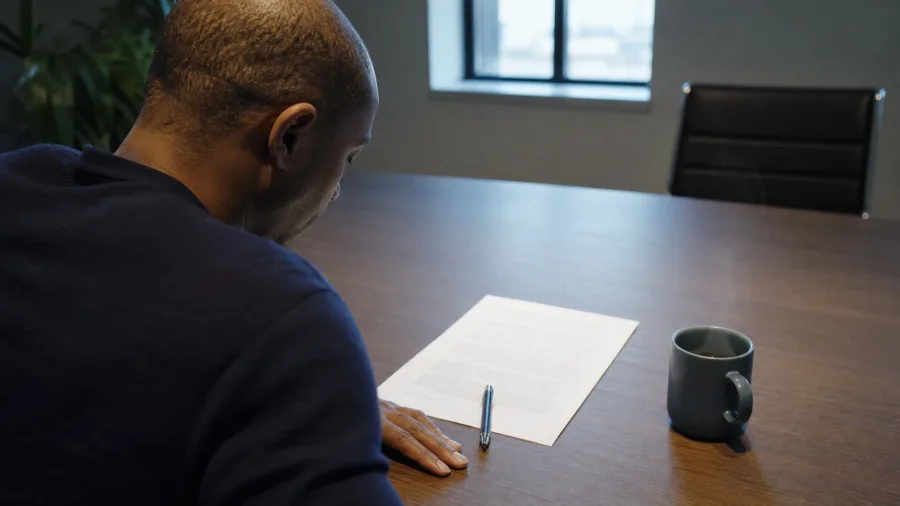
External accountability structures help, but there is one condition that aligns incentives from the inside – when both parties stand to lose the same thing if something goes wrong.
Across my consulting work, the structural feature most consistently correlated with one party cutting corners was asymmetry in who bore the downside. In arrangements where one side was largely insulated from the consequences of a bad outcome – by contract, by role, by organizational distance – the protected party’s behavior looked different under pressure. Not always, and not everywhere. But the pattern was stable enough that I began asking about stakes structure before I asked about much else.
When both parties own the outcome, something shifts that no assessment process can replicate. Neither person needs to police the other because both are watching the same number, the same client relationship, the same reputation on the line. Incentives point the same direction without anyone having to enforce them.
The limit is real, though.
Shared stakes do not rehabilitate someone who has already shown a clear willingness to defect. What I observed in those cases was that shared-risk structures tended to concentrate the damage – the defection still came, and both parties absorbed it. Shared stakes amplify what is already there. They are not a corrective for an established pattern.
The question worth asking before entering any high-trust arrangement – professional partnership, co-leadership role, significant personal commitment – is this: what does this person actually stand to lose if things fall apart? If the honest answer is ‘not much,’ the relationship is already asymmetric, and it needs either rebalancing or additional accountability before significant trust is extended. I saw this most plainly in small partnership arrangements – family businesses, two-person co-leadership structures – where no one was structurally insulated from the other’s decisions. The trust in those settings was not softer or harder than anywhere else. It was simply better supported.
Fear Drives More Deception Than Calculation Does
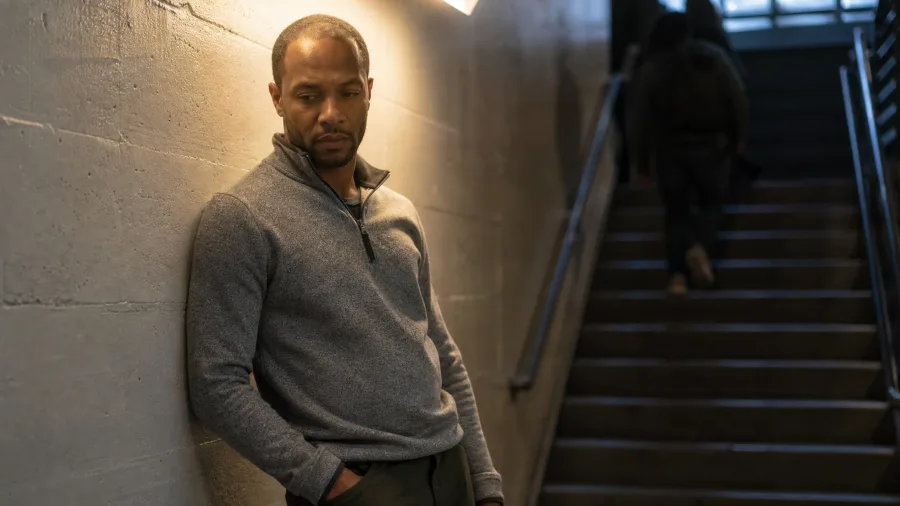
Shared stakes explain a great deal of trustworthy behavior. What they do not explain are the deceptions I observed from people who had everything to lose – and understanding those required a different question entirely.
Some of the most damaging concealments I encountered across 40 years came from people with significant skin in the game. They were not calculating an advantage. They were reacting to a perceived catastrophe. Someone hides a project failure not because they are angling for a better outcome but because disclosure, in the environment they are operating in, reads to them as career-ending – and the concealment arrives as reflex, before anything like a considered choice has taken place.
Once I recognized this pattern, I started asking a different follow-up question in assessments: not just what happened, but what did this person appear to be afraid of, and was that fear proportionate to the actual stakes? Disproportionate fear – someone treating a manageable mistake as if exposure meant annihilation – was often less about the person’s character than about the environment that had trained them to see it that way.
The implication cuts directly at how relationships are structured.
If honesty in an environment you control – a team, a household, a working partnership – reliably produces punishment, you are not creating a filter for deceptive people. You are generating the conditions that produce deception in people who would otherwise tell you the truth. That is a structural problem with a structural solution.
Understanding that fear drove a deception does not require you to absorb the cost of it or to extend trust again. Those are separate decisions. But it does change the register – and it changes what you build differently next time. When I went back over the three occasions in my own career where I was badly deceived, I found fear running through each of them. That was not visible to me when it happened. It only became clear after I had stopped asking who lied and started asking what they were most afraid I would do.
Gut Instinct Is a First Draft, Not a Verdict

Gut instinct is fast pattern-matching, running below the threshold of conscious thought – it is useful for exactly that reason, and it is wrong for exactly that reason too. It is only as accurate as the patterns you have been exposed to.
The category of person my gut most consistently misjudged was professionals from cultures with different norms around directness. Someone trained in a more formal register came across as evasive to my pattern library – the careful phrasing, the reluctance to state an opinion before being asked, the deference to hierarchy – when it was simply a different professional style. And the reverse happened too: directness I read as candor sometimes turned out to be performance, a confident register with nothing particularly honest underneath it.
What I developed, slowly, was a habit of treating the gut signal as a first hypothesis rather than a finding. I would note it, write it down if necessary, and then hold it against behavioral evidence gathered over the next several weeks before acting on it. That gap – between the feeling and the decision – is where most of the recalibration happened.
There is one exception I still honor. When a low-grade unease about someone refuses to lift – no single incident you can point to, nothing dramatic, just something that stays slightly off no matter how much positive evidence accumulates – that pattern turned out to be worth taking seriously. Across 40 years, that specific quality of unresolved discomfort was more predictive than I expected.
Intuition is a first draft, written from experience. It deserves to be read, not ignored. But it requires revision against what you actually observe – and that revision is what separates a framework from a feeling.
The Three Times I Was Badly Wrong, and What They Share
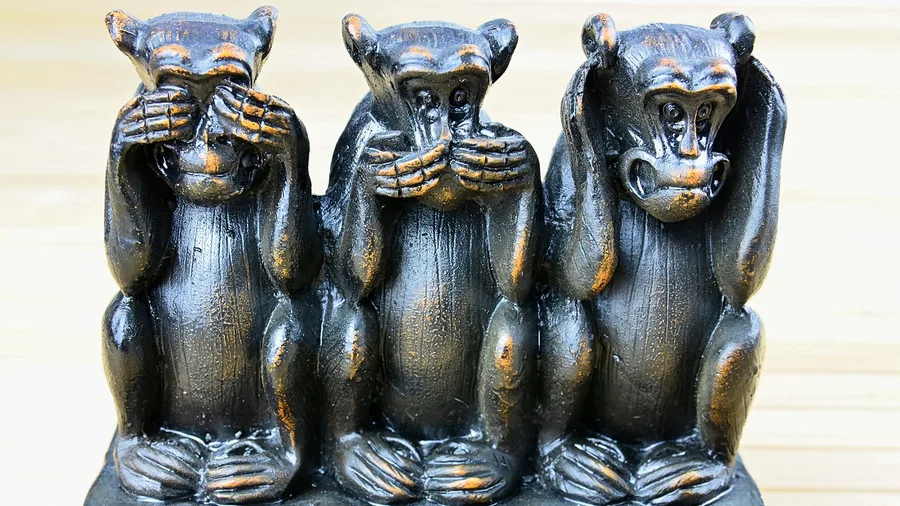
When I looked honestly at the three failures that reshaped this entire framework, the pattern was not about the other people at all. In each case I had a reason to want to be right – a business need, a relationship I valued, a self-image I was protecting – and that want had been doing work I had attributed to my judgment.
This is motivated reasoning. The mind searches for evidence that confirms what it already wants to be true, weights it more heavily, and quietly sets aside what points the other way. It is not a flaw in unusually weak people. It is the default operating mode of any mind that has a stake in the outcome – which, when trust is involved, is almost always.
After the third time, I started running a specific check before extending significant trust to anyone. I ask myself two questions explicitly: what do I gain if I am right about this person, and what do I actually lose if I am wrong? When the gain is large and personal – a deal goes through, a relationship holds together, I get to feel like a good judge of character – the reasoning that got me to ‘yes’ deserves another pass.
The check does not prevent error. What it does is create enough delay that behavioral evidence has a chance to accumulate before desire has already settled the question.
The revision I would hand every earlier version of myself is a single reframe: stop asking whether someone feels trustworthy and start asking what you have actually seen them do, in what conditions, with what at stake – and what you need to be true in order to trust them. That last part is the one that changes everything.
Frequently Asked Questions
Can you really tell if someone is trustworthy from a single conversation?
Not reliably — but a single conversation can surface two of the most predictive signals if you know where to listen: how someone speaks about absent others in unguarded moments, and whether their failure-response pattern uses denial, deflection, or genuine disclosure. Neither requires a formal assessment. They just require paying attention to what people volunteer when they are not performing.
What is the biggest mistake people make when trying to assess trustworthiness?
Conflating comfort with reliability. The person who makes you feel safest is not necessarily the most trustworthy — warmth and integrity are independent variables, and the halo effect makes us treat them as the same thing. After that, the second-biggest mistake is assessing character without assessing the structure the person is operating in. Even highly trustworthy people behave differently when the structure punishes honesty.
Is trusting your gut a reliable way to read people?
It depends on what your gut was trained on. Gut instinct is pattern-matching against prior experience, which makes it fast and useful — and also biased toward familiarity. Treat it as a hypothesis worth investigating, not a verdict. The one exception: persistent, low-level discomfort that does not resolve as you accumulate more data about someone. That specific pattern was consistently worth acting on across four decades of professional observation.
Why do people who seemed trustworthy sometimes start acting deceptively?
Often because the structure around them changed rather than the person. When accountability disappears, when incentives shift, or when disclosure becomes reliably punished, trustworthy behavior degrades — not because someone’s character changed, but because the external structure that supported the behavior is gone. This is the finding that most professionals are not prepared for, and it is why assessing the environment matters as much as assessing the individual.
How do I know if I am letting motivated reasoning affect my trust judgments?
Ask yourself two questions before extending significant trust: what do I gain if I am right about this person, and what do I lose if I am wrong? If the gain is large and personal — a partnership you want, a relationship you are invested in — the reasoning that produced your trust judgment deserves extra scrutiny. Motivated reasoning is not a character flaw; it is the default operating mode of any mind with a stake in the outcome.
Does being in a shared-risk arrangement make someone more trustworthy?
It makes trustworthy behavior more likely by aligning incentives — both parties lose together, so neither needs to monitor the other. But shared stakes do not rescue someone with an established history of deception. They only amplify what is already there. Use shared-risk structures to support trustworthy behavior, not to fix its absence.
What Trust Has Always Actually Required You to Watch
The mental shift I would hand every earlier version of myself is not a better personality test, a sharper interview question, or a more refined scoring rubric. It is a change in what you treat as evidence. Warmth is not evidence. Credentials are not evidence. Consistency in stable conditions is not evidence. They are signals about something else entirely — comfort, competence, habit — and the mind is wired to experience them as evidence of trustworthiness because they overlap with it often enough to feel reliable.
Actual evidence is behavioral, observable under conditions that cost something: how someone narrates their own failures, how they speak about people who have no power to hear them, whether their small promises hold without external pressure, and what a structure is rewarding and punishing around them. That is what 40 years of structured assessments, follow-up evaluations, and three personal failures eventually produced. Not a feeling to trust. A set of observations to collect.