
The cursor blinks at the top of a blank document while an unread email notification slides across the top right corner of the screen.
You are at your desk, struggling to string a single thought together, convinced your willpower is broken just because your phone is face down and silent.
But discipline has nothing to do with it. Your cognitive capacity is being actively drained by invisible daily routines before you even attempt the heavy lifting.
A half-dozen ordinary actions quietly siphon away your mental energy. Pinpointing exactly which of these structural leaks are running right now shows you where to place the psychological boundaries required to get your concentration back.
Quick Tips Before You Start
Audit your visual space
Notice exactly what sits on your desk while you work.
Check your defaults
Turn off all non-human application notifications immediately.
Track the friction
Note the exact time of day your mind starts wandering.
1. Keeping the Phone Visible Drains Cognitive Capacity
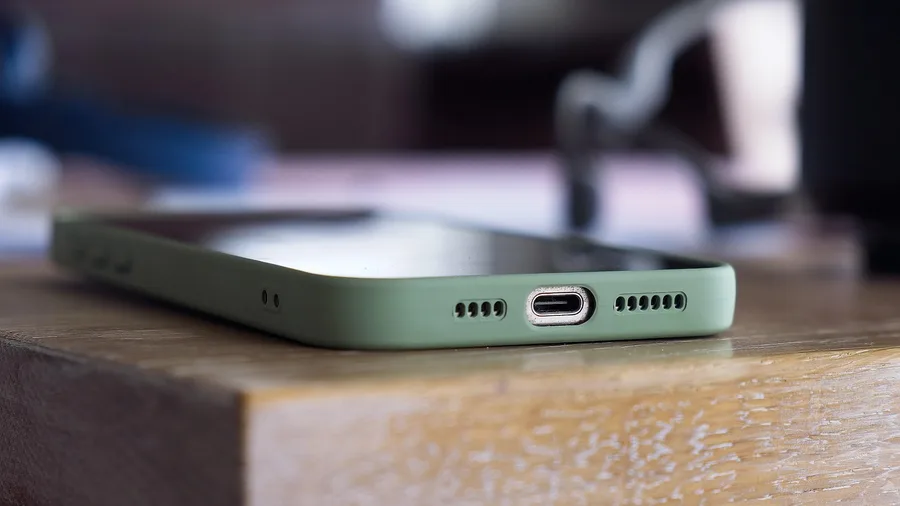
The common advice assumes muting notifications is enough, but leaving a quiet screen in your peripheral vision is an active threat.
You sit down to outline a difficult proposal, placing the dark rectangle next to your coffee. The ringer is off. You think, ‘I am going to focus on this document for one solid hour.’ Yet your working memory is immediately split, forced to monitor the physical object sitting inches away from your typing hands.
Resisting the urge to flip it over requires constant subconscious energy.
This dynamic creates a measurable, immediate drain on your processing power. Even without a single vibration or flash of light, the brain allocates resources to track the possibility of an alert. You end up trying to solve complex professional problems with a fraction of your actual cognitive capacity, fighting a completely invisible tax.
The mistake here is treating a proximity issue as a test of personal discipline. You cannot out-think a physical prompt that was explicitly engineered to command a human being’s visual and mental attention.
Fixing this requires changing the literal geography of your workspace. Moving the device to a different room, or burying it entirely out of sight inside a zipped bag, physically eliminates the cognitive tax. The brain simply stops allocating precious working memory to an object it can no longer see.
2. Task-Switching Leaves a Lingering Attention Residue

Operating at a fraction of your mental capacity is the direct price of how you handle transitions. While physical objects in the workspace drain initial energy, bouncing rapidly between applications depletes whatever focus remains. Ask yourself right now: how many times in the past hour did you pause a spreadsheet to check an incoming message?
If the answer is more than zero, you are creating a subjective rush of high productivity while actively crippling your output. The brain cannot instantly pivot from one context to another.
Every time you jump away, you leave behind an attention residue glued to the previous task. This mental hangover takes several minutes to clear entirely. Rapid switching guarantees that you are constantly operating at partial capacity, dragging the ghosts of previous thoughts into the current window instead of applying full cognitive weight.
Protecting your mental energy requires time-blocking single tasks with hard, unbroken boundaries.
The Cost of Task-Switching
⏱️ Recovery Time
Up to 23 minutes
🧠 Cognitive Load
Effectively doubled
📉 Error Rate
Noticeably higher
3. Pre-Work Scrolling Spikes Your Dopamine Baseline

The popular advice suggests that taking ten minutes to relax with your phone before starting a shift helps clear your head. The truth is that consuming highly stimulating content before the actual work even begins sets your attention up for failure. You are not resting; you are artificially spiking your dopamine baseline.
Viewing algorithmic feeds creates a massive contrast effect in the reward system. The brain suddenly perceives a standard spreadsheet as a dopamine deficit compared to the rapid novelty of a short video.
This habit extracts a heavy cost over time. Buying a few minutes of cheap entertainment builds a reality where slower, harder tasks feel painfully boring. Month after month, you train your mind to reject the exact kind of quiet friction required to accomplish anything that demands real sustained thought.
Regaining deep concentration means replacing that screen with a low-stimulation routine in the morning. Walking, making coffee, or simply sitting quietly resets the baseline so normal tasks become tolerable again.
The First 30 Minutes
Safe Buffers
- Watering indoor plants
- Listening to a full album
- Writing one goal on paper
- Attention holds for 45 minutes
Hidden Spikes
- Catching up on group chats
- Scanning news aggregators
- Firing off commute emails
- Tab-switching starts in 4 minutes
4. Open-Ended Work Sessions Dilute Your Urgency

Eight hours of an empty Saturday stretch out before you. A reset dopamine baseline handles the morning, but working until a project is finished removes the exact pressure required to stay sharp.
With no defined stopping point on the horizon, Parkinson’s Law takes hold. The brain recognizes an indefinite marathon and immediately starts conserving energy, thinning out your focus to make it last the distance. The work expands to fill the afternoon, replacing sharp execution with mental fatigue and a slow drift toward distraction.
Executing bounded work blocks requires defining a very specific state of being done before starting the timer.
💡 Tip: Set a visual timer across the room so you can see time passing without checking a screen.
⏱️ Structuring a Bounded Work Block
Define the Finish Line
Write down exactly what 'done' looks like for this specific block.
Hide Physical Triggers
Move the phone and close all unrelated browser tabs.
Set the Timer
Wind a physical timer for forty-five or sixty minutes.
Walk Away
When the timer rings, stop typing and stand up immediately.
5. Ignoring Biological Energy Dips Forces Artificial Focus

“I just need to push through and finish this.” Working within strict time blocks keeps a session contained, but attempting that block at three in the afternoon fights a biological reality.
Human attention runs on strict ninety-minute ultradian cycles layered over a daily circadian rhythm. Pushing high-concentration tasks into that natural afternoon lull forces an artificial state of alertness. The body demands recovery, and demanding deep work instead guarantees a wandering mind and heavy frustration.
Pushing through is an exception meant only for administrative cleanup that requires zero heavy lifting. Real focus requires mapping the high-friction work directly to your morning peaks.
Best Tasks for the Slump
6. Digital Clutter Triggers the Zeigarnik Effect

Leaving twenty browser tabs and three applications open for tomorrow feels like an act of careful preparation. Aligning your schedule with a morning energy peak handles your physical capacity perfectly well, but staring at an overcrowded screen creates a peripheral leak you cannot easily turn off.
Every half-written email and open spreadsheet sitting behind your active window acts as a constant visual stimulus. The visual cortex processes all that unhandled information continuously, checking for immediate threats or demands.
It feels exactly like trying to read a difficult contract while a television plays loudly just out of frame. These visible items trigger the Zeigarnik effect, proving that human memory holds onto interrupted tasks far more aggressively than completed ones. The brain refuses to let the background noise go entirely.
When dozens of open tabs represent deferred decisions, they pull your attention in multiple directions at once, exhausting working memory before you type a single word.
The boundary requires a distinct closing ritual to signal that the unhandled tasks are no longer active. Say out loud, ‘The office is closed for the day.’ Or tell yourself, ‘These links are safely saved, and I am not holding them tonight.’ The exact words matter far less than the physical action.
Install an extension that sweeps everything into a hidden list, or force yourself to quit every single application completely at five o’clock. A completely blank desktop the next morning offers zero background drain to process.
Where to Put the Phone
Frequently Asked Questions
How long does attention residue actually last?
It often takes ten to twenty minutes for your brain to fully refocus after checking an unrelated email or message. During that window, you are operating at reduced cognitive capacity.
Should I keep my phone in a drawer while I work?
A drawer is better than the desk, but moving it entirely out of the room is best. Your brain still expends energy knowing the device is reachable in the drawer.
What is the Zeigarnik effect?
It is a psychological tendency to remember uncompleted or interrupted tasks better than completed ones. Leaving tabs open weaponizes this effect against your focus.
How long should a bounded work block be?
Aim for forty-five to ninety minutes. Going longer than ninety minutes usually fights against your natural ultradian rhythms, leading to diminishing returns.
Breaking the Cycle, One Habit Today
Regaining deep concentration requires breaking these habits systematically, one by one, rather than attempting an overnight overhaul of your entire routine. A scattered mind struggling to focus is experiencing a structural environment failure, not a willpower deficit.
The single most impactful habit to tackle first today is removing the smartphone from the visible workspace entirely.
When the device is physically placed in another room, the magnetic pull across the desk vanishes. That half-written sentence finally gets finished, because your brain no longer has to spend energy actively ignoring a silent piece of glass.