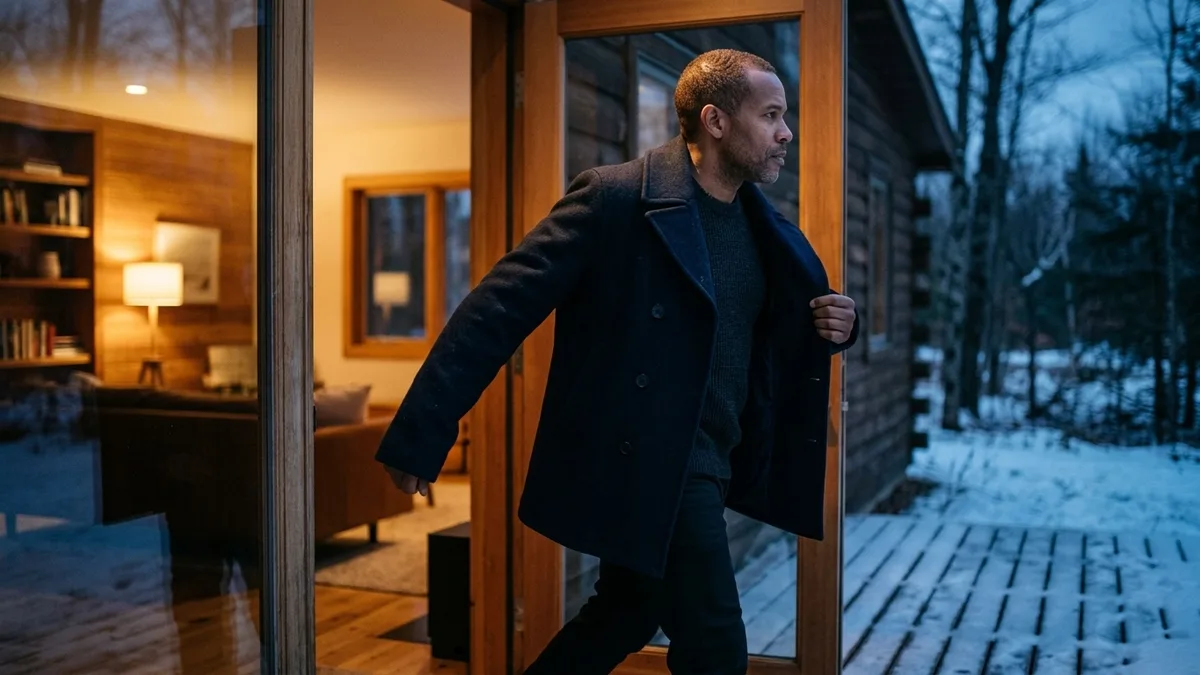
You would fail within sixteen days of severe freeze.
Modern humans assume cold or starvation destroys a medieval household first, but sensory isolation and indoor smoke break your psychological resolve long before fuel runs out. Without artificial light or background stimulation, your brain struggles to maintain mood stability during four consecutive months of dark, smoke-choked confinement.
Understanding this gap reveals how drastically modern conveniences have altered human psychological endurance and environmental tolerance under sustained winter conditions.
Medieval Winter Baseline — At a Glance
What actually happens to your mind when the sun sets at 3:30 PM?
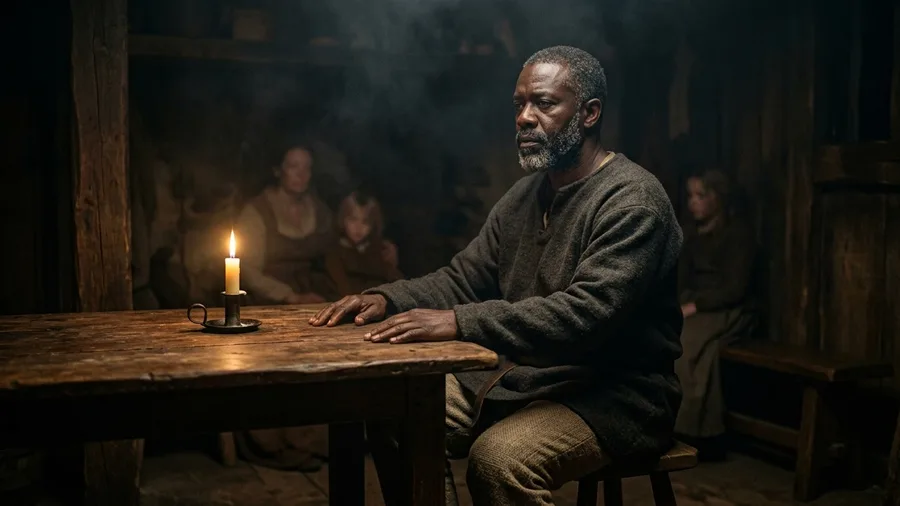
Wouldn’t you just light a few candles, huddle by the fire, and go to sleep early when night falls at three in the afternoon?
We mistake medieval darkness for cozy downtime, but tallow candles made from rendered sheep fat offered only a meager flicker, noxious smoke, and a rancid odor. Burning tallow for six hours produced less light than a single dim smartphone screen, forcing families to sit together in near-pitch blackness from late afternoon until dawn.
The physical gloom is only half the psychological trap.
In a fourteenth-century cottage, winter mud halted travel and shrank your social world to five relatives trapped in a twelve-foot room. Because the human brain requires continuous sensory input to maintain an emotional baseline, modern minds conditioned on constant stimulation rapidly disintegrate in that enforced quiet, suffering severe lethargy, disorientation, and acute depressive states within weeks.
🎯 THE SHORT ANSWER
The Direct Answer to Survival
Survival was a psychological endurance test rather than a physical brawl against snow. Most modern people lack the sensory tolerance for 18-hour darkness, constant eye-stinging hearth smoke, and complete lack of novel mental input.
Is it true that the cold itself is what breaks most people?
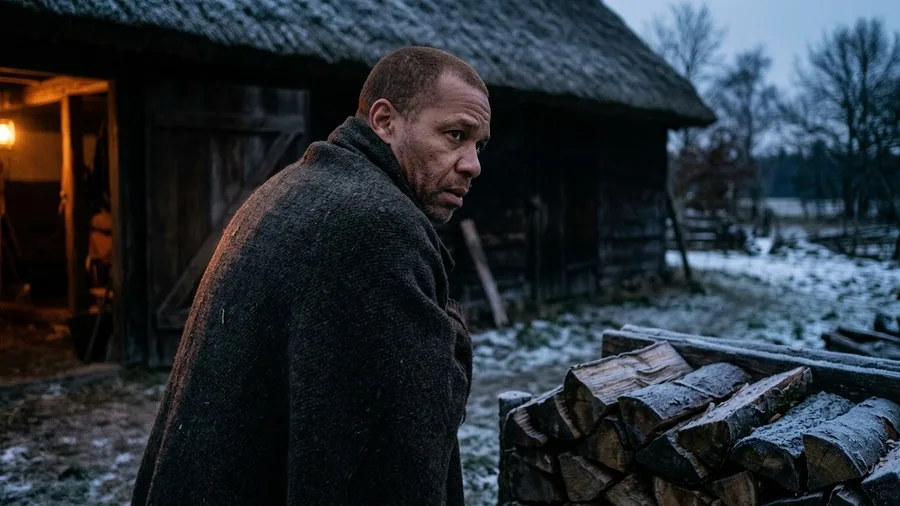
Most people assume the sheer freezing cold is what breaks you.
They expect to be shivering in a dark corner, but the cold is actually a background torment. The real threat is the daily compromise between freezing in the drafts and choking on green wood smoke.
Without chimneys, retaining heat meant sealing every crevice, trapping you in air heavy with soot and carbon monoxide. Meanwhile, your clammy wool clothing continuously drains your core temperature, forcing your metabolism to burn extra calories just to rest. That relentless physical discomfort quietly erodes your emotional regulation over the months, leaving you exhausted and incapable of clear decision-making.
Daily Peasant Household Winter Budget
How did peasants cope with months of confined indoor isolation?
“I just need twenty minutes of quiet to myself,” you say when your family grows too loud during a long winter weekend in a modern, heated house.
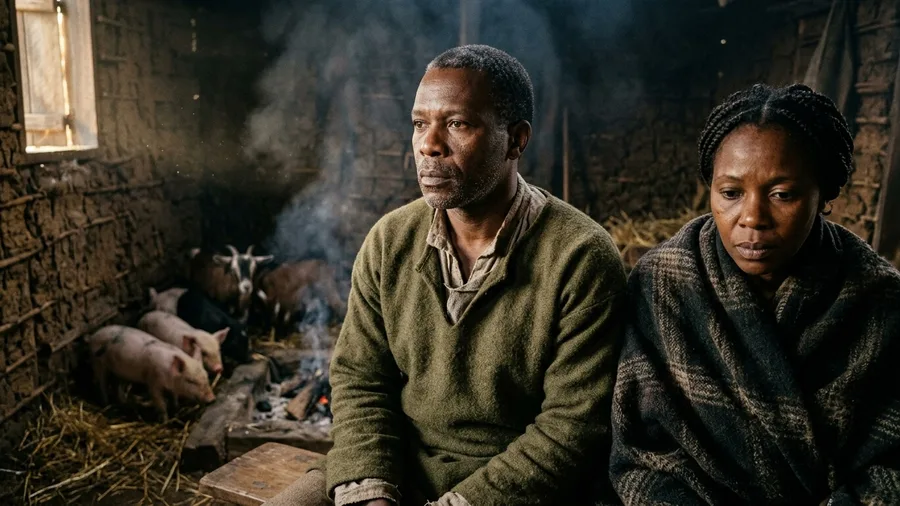
In the winter of 1300, that sentence was completely meaningless because physical separation was an impossible luxury. Entire families slept stacked together on straw mattresses around the central hearth, sharing heavy wool covers and the radiant heat of pigs and goats partitioned inside to survive nighttime freezes. The suffocating air was a permanent mix of damp fleece, smoke, and manure.
Privacy did not exist in medieval life. Every bodily function, volatile argument, and emotional breakdown occurred in full view of every relative and neighbor trapped inside the tiny, smoke-filled structure for five months.
Modern mindsets break rapidly when personal boundaries evaporate.
Peasants survived this total confinement by replacing individual expression with rigid social scripts and shared ritual. When severe friction broke out around the hearth, you did not vent feelings or demand space; you neutralized the tension with flat, accepted prose like, “The hearth is shared, leave the anger outside,” followed immediately by, “Mind the fire and keep peace.”
When personal space disappears entirely for five months, friction accumulates rapidly unless individual ego yields completely to the strict, unyielding demands of collective routine.
Winter Reality Comparison
Modern Winter Expectations
- Thermostat set to 70°F indoors
- Unlimited bright light at any hour
- Varied diet from global supply chains
- Instant digital entertainment and escape
Medieval Peasant Reality
- Indoor temperatures hover near 40°F
- 16 hours of dim ember illumination
- Monotonous grain porridge and salted lard
- Complete sensory quiet and dark isolation
Why does winter calorie math destroy modern psychological resilience?

You scrape the wooden spoon across the bottom of the grain chest, measuring three fingers of rye where five stood last week.
By late January, those dwindling rye rations often hosted damp ergot mold, releasing subtle alkaloids that induced mild tremors, sensory distortion, and unprovoked panic. Compounding that chemical strain was the relentless math of visible depletion, forcing the household into a permanent state of threat monitoring as February grain burned through reserves needed for March.
Modern minds accustomed to endless grocery restocking crumble under that measurable countdown, proving that visible scarcity breaks psychological resilience long before actual starvation sets in.
Winter Nutritional & Mental Decline
What made medieval winter darkness fundamentally different from modern darkness?
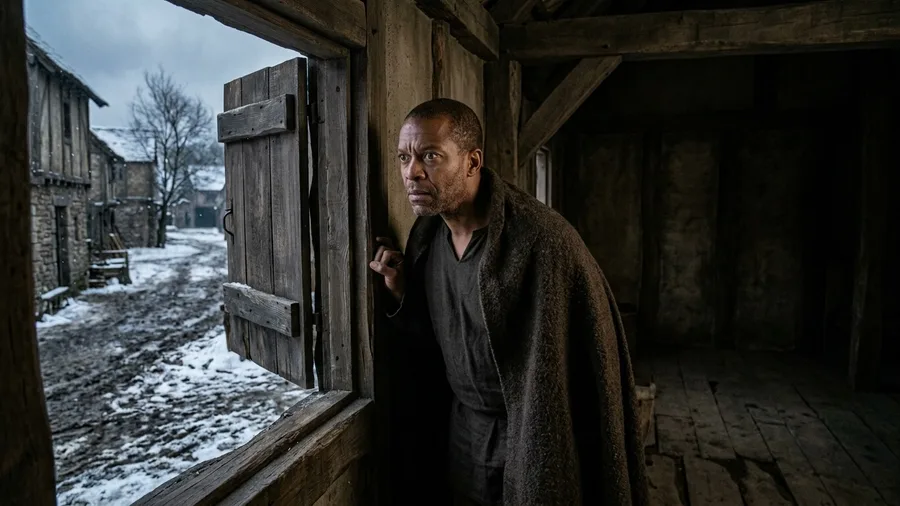
Modern darkness is a heavily filtered experience, broken by street lamps, standby switches, and the ambient glow of the nearest city.
Medieval darkness was total visual extinction.
Stand outside a rural hamlet on a cloudy January night, and you could not see your hand two inches from your nose. Researchers studying environmental perception note that adults plunged into complete, silent blackness experience rapid hyper-vigilance. Starved of visual data, the brain manufactures auditory hallucinations to fill the void.
Ask yourself what you do the second a sudden power outage hits at night. Do you wait calmly in the pitch black, or do you immediately scramble for your phone screen?
If you wait calmly, you inherently trust that your physical environment is safe. If you scramble for the light, your nervous system is already rejecting the vulnerability of being blind. Medieval peasants survived months of this visual deprivation, surrounded by unlit forests they knew were filled with wolves and blights.
In their cosmology, stepping outside meant stepping directly into the terror.
❄️ The Medieval Winter Psychological Arc
November Slaughter
Lesser livestock are butchered and salted before feed supplies run thin.
December Confinement
Daylight collapses to six hours, forcing households into indoor hearth routines.
January Monotony
Stored root vegetables spoil, leaving coarse rye bread and dry peas as main staples.
February Scarcity
Rations shrink as grain stores drop, triggering winter lethargy and irritability.
March Hunger Gap
Stored food touches bottom weeks before the first spring green crops emerge.
How do you know if your stress response would break under medieval conditions?
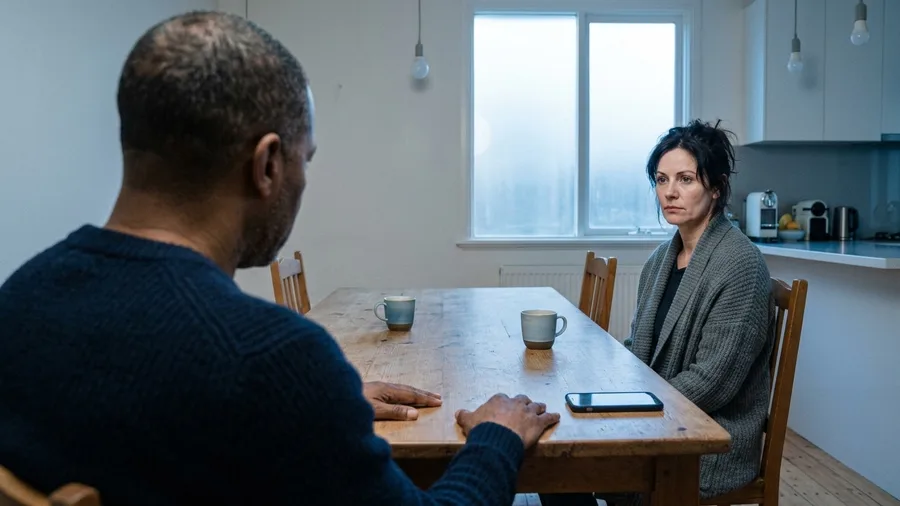
The fastest way to completely break a modern adult is to remove ambient heating and constant entertainment at the exact same time. Once both vanish, our baseline emotional regulation collapses rapidly. We assume we are highly adaptable, but our psychological stability is actually anchored to continuous external stimulation and immediate, controllable comfort.
Researchers who study human resilience consistently find the exact same pattern.
Modern coping mechanisms rely entirely on forward momentum and visible progress. We are trained to manage daily stress through active problem-solving, setting immediate goals, and continuous task execution to regain our control.
Surviving a medieval winter demanded deliberate metabolic hibernation, which is fundamentally incompatible with how we regulate anxiety today. You had to sit completely still in a dark, drafty room for hours on end, deliberately minimizing physical effort. Your primary job was to suppress the biological urge to seek immediate relief and simply endure it.
If you feel deeply restless after thirty minutes without your phone or become agitated during a brief power outage, your nervous system is tuned backward. You are wired for action, not profound passivity.
Evaluating your true capacity for this era requires assessing three specific sensory baselines. First, examine your tolerance for environmental discomfort like cold hands and damp air without complaint. Second, measure your ability to endure intensely repetitive, bland food without losing your appetite. Third, test how your mind handles long stretches of absolute silence without seeking out modern distractions.
Medieval Grain Store — At a Glance
🌾 Primary Crop
Rye & Winter Barley
🍞 Daily Bread
1.5 lbs coarse sourdough
🍺 Small Ale
2 pints hydrated grain brew
⚠️ Storage Risk
Damp mold & rodent loss
Critical Threshold
Losing 10% of stored grain to damp rot meant spring starvation.
What is the single biggest lesson modern humans can steal from medieval winter survival?
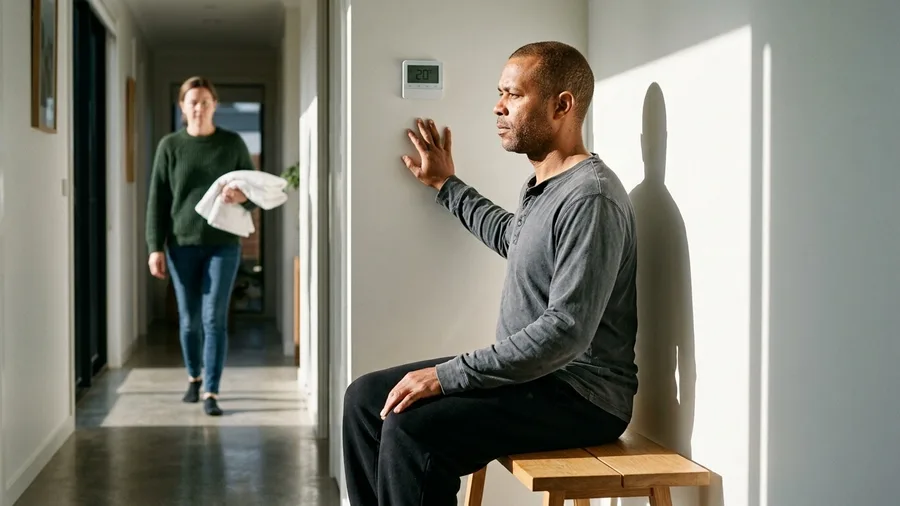
I spent years trying to outsmart the season by blasting artificial lamps at my face and cranking the instant climate control to simulate a July afternoon. I had the mechanics entirely backwards.
The medieval peasant survived by doing the exact opposite.
They possessed a tolerance for stillness and sensory monotony that modern culture has unlearned. The truth is that winter mental fatigue actually stems from our constant overstimulation. To reset your baseline stress response, practice intentional sensory reduction tonight. Lower your thermostat three degrees, turn off the artificial lights early, and sit in near silence.
Frequently Asked Questions
Did medieval peasants sleep all winter like hibernation?
They did not sleep continuously, but they adopted a segmented sleep pattern. Families often slept in two distinct multi-hour blocks split by an hour of quiet wakefulness around midnight to tend hearth embers.
How cold did peasant cottages get indoors during winter?
Temperatures inside an unheated wattle-and-daub cottage typically hovered between 35°F and 45°F, staying just above freezing due to body heat, animal warmth, and smoldering hearth coals.
What did medieval peasants do all day during dark winter months?
Daily chores included feeding livestock, mending wooden farm tools, spinning wool by hearth fire, baking rye loaves, and repairing leather gear in dim indoor conditions.
How did peasants avoid severe vitamin deficiencies in winter?
They relied heavily on stored root vegetables, fermented cabbage, dried herbs, and small ale brews made from sprouted grains that retained basic B-vitamins and minerals.
Did smoke from indoor hearths cause severe long-term health issues?
Yes, chronic respiratory illnesses, inflamed lungs, and eye infections were extremely common among medieval agrarian populations due to lifelong wood smoke exposure.
What I Would Test in Your Own Life First
Test your sensory baseline before winter arrives this year.
Try spending two hours after dark with all electric lights and digital screens switched off, sitting by simple candlelight without checking notifications or listening to audio. You will quickly discover how much modern comfort relies on artificial stimulation rather than genuine psychological stamina under quiet conditions.
Check Your Mental Resilience Baseline
Review the sensory deprivation breakdown in Section 1 to evaluate your tolerance for low-light, quiet environments.