The common image of medieval winter is pure, motionless misery.
Most popular history depicts peasants sitting in dark, freezing hovels for four months, staring at smoky fires and waiting for spring. But human psychology and survival realities do not allow four months of stagnant isolation without social breakdown.
By the end of this guide, you will understand how medieval agrarian communities restructured their daily focus, labor rhythms, and social psychology to survive winter intact.
Medieval Winter Survival — At a Glance
Why the Hibernation Myth Completely Misreads Human Psychology
Did agrarian families really just huddle in the dark and sleep through the winter to conserve calories? The popular myth of medieval hibernation sounds practical, but completely misreads human behavior under confinement.
Total idleness in a dark room guarantees rapid cognitive decline.
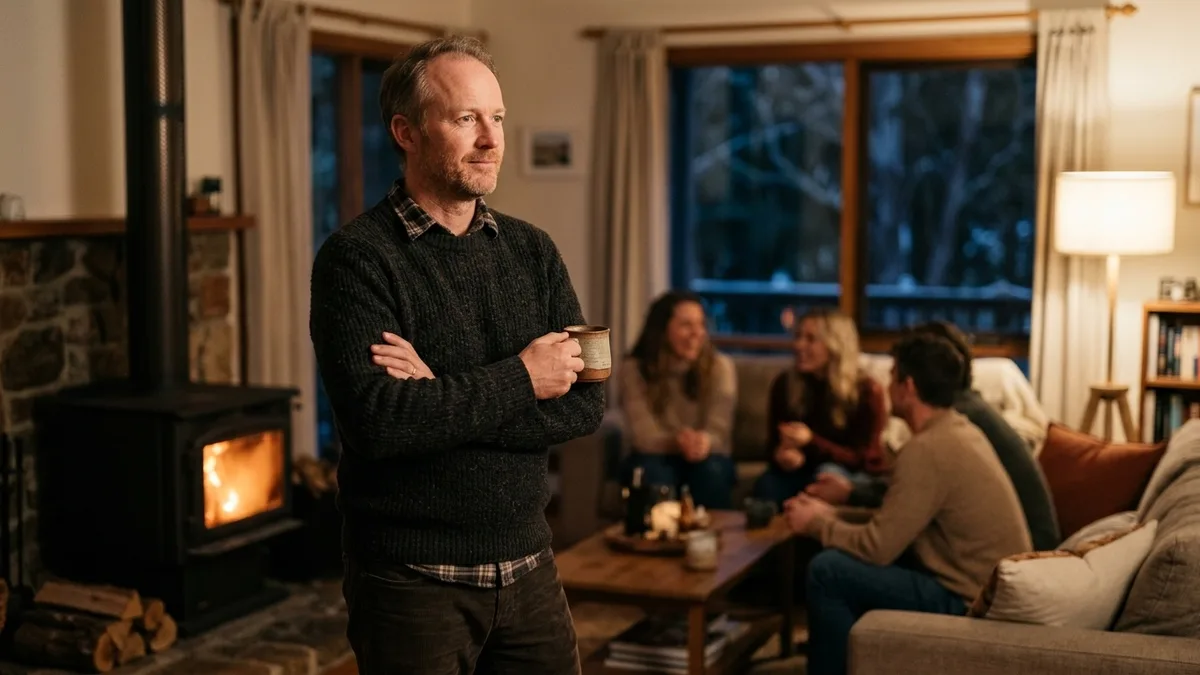
When the fields froze, the daily routine did not vanish. It simply shrank to the radius of the hearth. Social historians observe that communities immediately pivoted to an intense, hyper-localized focus on gear maintenance, textile production, and rigorous communal storytelling. Those shared rhythms were required to keep minds active and social bonds stable.
🎯 THE SHORT ANSWER
The Reality of Medieval Winter Life
Peasants did not hibernate; they transitioned to intensive indoor crafting, tool repair, animal care, and structured communal storytelling to maintain social stability during dark months.
How the Daily Routine Shifted When the Sun Went Down at Four
You are racing the sun. It is early January, and you have exactly seven hours to swing a flail in the freezing barn, drag the firewood across the yard, and secure the livestock before the sky bruises purple. When that narrow window of daylight slams shut just after four, the outdoor world effectively ceases to exist.
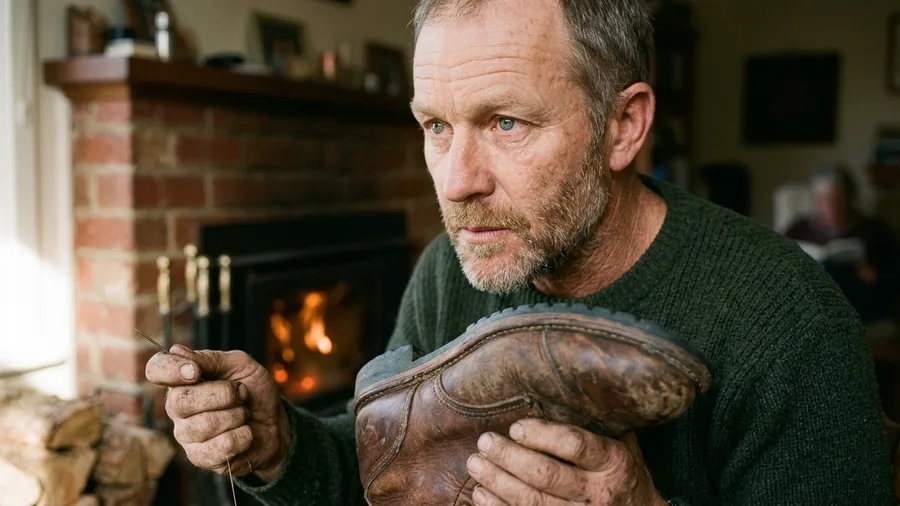
But the daily labor did not stop when the dark arrived. Activity simply collapsed inward to the central hearth, where the flickering glow of tallow dips illuminated the careful mending of heavy winter work gear.
We often picture this long evening confinement as a miserable, claustrophobic trap.
Look at it instead as a mandatory daily reset. Researchers studying environmental psychology consistently find that dimly lit, enclosed spaces naturally lower interpersonal defenses and promote self-disclosure. The evening fireside became an essential engine of social cohesion, where quiet conversation, shared practical knowledge, and local folklore knit the household together against the long freeze outside.
Did They Starve? The Caloric and Psychological Reality of Food
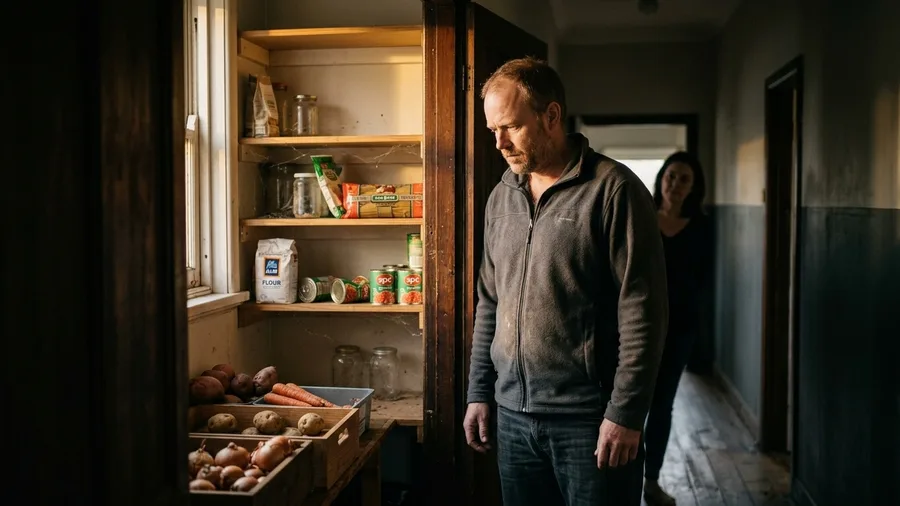
Misjudging the winter food supply by even a few weeks did not just bring physical hunger; it brought the kind of desperation that could permanently shatter a community. That terrifying cost was the reality of the season, and it meant every single meal required a staggering amount of psychological discipline to pace correctly.
Picture a family in a dim, freezing storeroom in late January. They are staring at a shrinking mound of root vegetables, calculating exactly how much salted pork can go into the barley pottage today.
Balancing daily consumption against a frost of unpredictable length meant living with constant, low-level anxiety. Coarse rye bread and dried peas were carefully rationed not just to maintain a physical buffer, but to manage the quiet dread of waking up to empty barrels in March.
This immense pressure made rationing a deeply shared effort. Families monitored their stores weekly and passed surplus to struggling neighbors, using mutual reliance to build trust and keep village panic at bay.
Estimated Daily Winter Caloric Intake
The Psychology of Winter Festivals and Social Reset Buttons
“I just need to get through February.”
That is the sound of someone white-knuckling a featureless season, which is exactly what medieval winter festivals were built to prevent. Milestones like the Twelve Days of Christmas and Plough Monday were essential psychological release valves. They forced a social reset, unsealed the feast foods, and gave an isolated community a clear cognitive milestone before returning to work.
Marking time prevents you from feeling trapped in the cold. Build your own release valve by sending this text: “Winter is dragging, so I am making soup Saturday. Bring nothing, just show up.”
Winter Mindset vs. Summer Mindset in Agrarian Life
Winter Psychological Mode
- Inward focus on domestic craft and repair
- Short work bursts dictated by daylight
- High reliance on narrative storytelling
- Conservation of physical energy
Summer Psychological Mode
- Outward focus on field labor and harvest
- 16-hour workdays driven by solar cycles
- High physical strain and fatigue
- Maximized caloric production
Managing Cabin Fever: Indoor Space, Smoke, and Coping Mechanisms
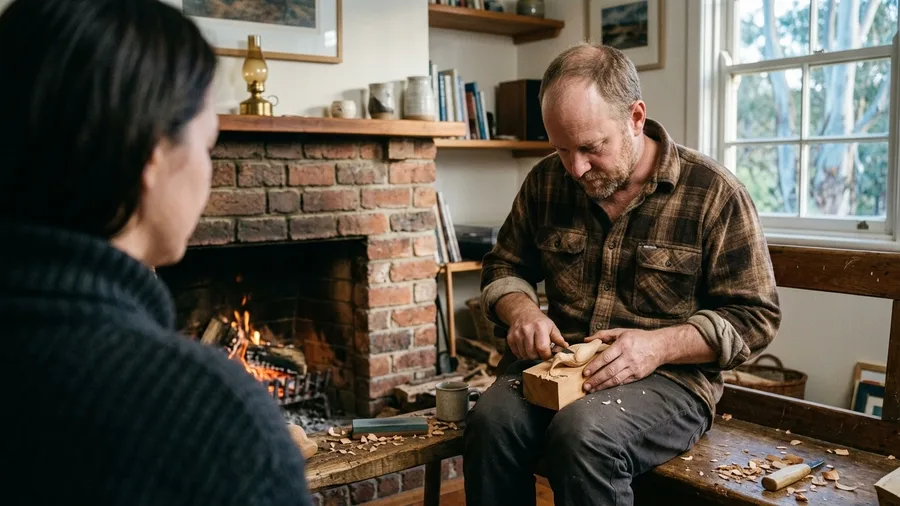
I used to assume that packing an entire peasant family and their livestock into a smoky, chimney-less cottage for four long winter months was a guaranteed recipe for constant, explosive psychological breakdown.
Yet researchers who study historical households consistently find that extreme physical proximity does not automatically produce destructive cabin fever. In a typical medieval cot, thick smoke from the central hearth hovered high under the thatched vents, forcing everyone to remain low to the floor. Surviving those dark months depended on rigid household etiquette rather than physical distance.
Crowded rooms survived because daily labor established invisible personal territory.
Near the fire, a child carded wool while an adult repaired leather tools in a designated corner. When tight quarters created petty friction, family members used quiet, procedural language to reset the room. “Keep your boots on your own side of the bench,” a father would say, continuing his wood carving without looking up.
Giving every household member a distinct indoor task provided genuine personal autonomy. When each person focuses on a clear role, physical crowding stops feeling like an emotional intrusion or a loss of control.
The line between comforting closeness and suffocating tension comes down to structural clarity. When a shared environment feels overwhelming, physical distance is rarely the only effective solution. Establishing non-overlapping activities and clear behavioral etiquette creates mental privacy, even when sitting two feet from someone else in a dark, smoky room.
📅 The Medieval Winter Psychological Arc
Late November (Martinmas)
Slaughter of excess livestock, salting meat, and final sealing of cottage walls.
December (Solstice & Yule)
Transition to indoor crafting and initiation of the Twelve Days of Christmas feast.
January (Plough Monday)
Symbolic blessing of agricultural equipment and resumption of light outdoor prep.
February (Candlemas)
Middle of winter audit of remaining grain stores and feed supplies.
Late March (Vernal Equinox)
Return to field plowing and planting as soil thaws.
What Modern Readers Can Learn About Seasonal Rest and Pacing

Modern productivity culture insists that your daily output in late December must exactly match your peak output in mid-June. When your energy naturally dips, the common advice is to push harder and treat the fatigue as a failure of discipline. That uniform expectation is an industrial invention that actively fights thousands of years of human adaptation.
To see which standard you are holding yourself to, look at your commitments for the coming week and ask yourself one question: are you forcing new growth, or are you performing winter maintenance?
Remember that slowing down is not a symptom of personal failing.
If you answered constant growth, you are running on a rigid clock that practically guarantees late-winter burnout. If you answered maintenance, you are honoring a deep psychological pattern forged over centuries, mirroring how medieval peasants actually paced themselves. Reclaiming these months for reading, building indoor skills, and deepening social connections is the deliberate maintenance that protects your mental clarity year-round.
Seasonal Shift in Mental Focus
Frequently Asked Questions
How did medieval peasants keep warm without chimneys?
Houses utilized central stone hearths where wood fires burned slowly. Smoke rose to thatched roofs, insulating the attic while escaping through small gable vents, keeping heat indoors.
Did peasants travel or visit other villages in winter?
Travel was severely limited by muddy, unpaved roads and short daylight hours. Most social interaction remained within the immediate village or manor, strengthening hyper-local community bonds.
What did children do during the long winter months?
Children learned domestic crafts early, assisting with wool carding, gathering kindling, tending indoor livestock, and learning village history through oral riddles and stories around the hearth.
How did peasants handle mental stress during winter?
Structured indoor routines, communal gatherings, shared meals, and festive winter holidays provided psychological relief and prevented feelings of overwhelming isolation.
Reclaiming the Seasonal Rhythm of Rest and Repair
Winter was never meant to look like summer.
The medieval peasant did not treat winter as a failure of productivity, but as an essential phase of repair, craft, and social consolidation. By accepting the natural contraction of dark months, they protected both their physical tools and their mental endurance.
You can apply this same wisdom today by honoring winter as a time to slow down, repair internal systems, and connect with those around your own hearth.
Reframing Your Seasonal Energy
Audit your winter workload today and convert one high-pressure expansion goal into a restorative system repair task.