Memory Clinic Director: 9 Early Dementia Signs That Appear 15 Years Before Diagnosis (Reversible If Caught)


You know that feeling when you walk into a room and completely forget why you’re there? Or when a neighbor’s name is right on the tip of your tongue, but your brain just refuses to spit it out?
We all do it. And usually, we laugh it off. “Must be getting old,” we say.
But here’s the thing—and I’m going to be honest with you because this is important—there is a difference between normal aging and the quiet, subtle whispers of a brain that is struggling.
For a long time, we thought dementia started the day someone got a diagnosis. But modern neuroscience has flipped the lights on a different reality. We now know there is a “Preclinical Window”—a period of 15 to 20 years where the disease is active in the brain, but the person still looks and acts mostly “normal.”
This isn’t meant to scare you. Actually, it’s the best news we’ve had in decades.
Why? Because if we can spot these signs 15 years early, we aren’t just watching a train wreck in slow motion. We can pull the brakes. We can change the track.
Let’s walk through the 9 early signs that experts—like memory clinic directors and neurologists—wish we paid attention to sooner. And more importantly, let’s talk about how to fix them.
The “Conductor” and the “GPS” (The 9 Early Signs)
We usually think dementia starts with memory. But often, memory is the last thing to go. The early signs are weirder, subtler, and easier to miss.
1. The Peanut Butter Test (Smell)

This is going to sound strange, but how is your left nostril doing?
The olfactory bulb (your smell center) is one of the very first places where Alzheimer’s pathology shows up—sometimes a decade before memory loss. Research from the University of Florida found something fascinating: people with early-stage Alzheimer’s often had a harder time smelling peanut butter with their left nostril compared to their right.
Why it happens: Your smell highway goes directly to the brain’s memory center (the entorhinal cortex). When that road gets potholed by disease, smell fades.
The Check: If you or a loved one suddenly can’t smell the coffee brewing or the garlic in the pan—especially if it’s uneven—don’t ignore it.
2. The “Conductor” Quits (Sequencing Issues)

Think of your brain like an orchestra. You have sections for language, movement, and vision. But you also need a Conductor (your prefrontal cortex) to tell them when to play. In early dementia, the musicians are fine, but the Conductor walks off stage.
What it looks like: You can chop the carrots. You can boil the water. But you can’t get the whole meal to land on the table at the same time.
The “House of Cards” Effect: Dr. Richard Restak notes that people might get irrationally angry when interrupted during a task. It’s not a mood swing; it’s because their brain can’t “hold” the sequence anymore. If you interrupt them, the whole house of cards collapses.
3. The “Walk and Talk” (Gait Changes)

We think walking is physical. It’s actually a high-level cognitive event. Your brain has to calculate balance, surface, speed, and direction in real-time.
If your brain is struggling, it has to rob resources from other areas just to keep you walking straight. This is called “Motoric Cognitive Risk.”
The Test: Walk with a friend and ask them a math question (like “what is 100 minus 7?”). If they stop walking to answer you, that’s a red flag. Their brain can no longer multitask. The Stat: A gait speed slower than 0.8 meters per second can predict decline up to 12 years in advance.
4. The “Emotional Widowhood” (Apathy)

This one breaks hearts. Families often say, “He’s just depressed.” But it might not be depression. It might be apathy.
Depression is sadness, hopelessness, and negative thoughts. Apathy is… nothing. It’s a lack of the “Go” signal.
The person sits in a chair for hours, staring at a wall. They aren’t sad; they just can’t initiate the next move. Neurologists call this “emotional widowhood” because the person is there physically, but the spark is gone.
5. The “Library” is Messy (Anomia)

Imagine your brain is a library. In normal aging, the librarian moves a bit slower. You might forget a name, but you find it eventually.
In early dementia, the librarian is blocked from the shelves.
The Sign: It’s not forgetting a name (proper noun). It’s forgetting the word for “watch” or “pen” (common nouns). Or saying, “Pass me the… you know, the thing for the soup” instead of “spoon.”
6. The “Brake System” Fails (Disinhibition)

We all have intrusive thoughts. (“I should tell him his haircut is awful.”) But our frontal lobes have a braking system that says, “No, don’t say that.”
When the brakes fail, you get disinhibition.
What it looks like: A sweet grandmother suddenly swearing. A frugal father buying three new cars. Or sudden, intense irritability over small things. It’s not a “grumpy old man” phase; it’s a biological failure of the brain’s inhibition circuits.
7. Scammed and Confused (Financial Errors)

Managing money is the ultimate brain workout. It requires memory, math, and judgment all at once. Research from USC shows that falling for scams or making sudden, poor financial decisions is often the single first functional loss—years before a diagnosis.
8. The Broken GPS (Disorientation)

We have “grid cells” in our brain that act like an internal GPS. These cells are some of the first to die in Alzheimer’s.
The Sign: It’s not just taking a wrong turn. It’s getting lost in your own neighborhood. It’s the feeling that the world has physically rotated.
9. Vision That Isn’t Vision (Spatial Issues)

You might have 20/20 vision, but your brain can’t process what it’s seeing.
The Sign: Struggling to see food on a white plate (contrast sensitivity). Trouble judging the distance of a step (depth perception). This is often why people stop driving—not because their eyes are bad, but because they can’t calculate the speed of the car coming toward them.
The “Fake” Dementias (Reversibility Type A)
Before you panic, stop. There is a very real chance that what looks like dementia is actually a “Mimic.” These are treatable conditions that fake the symptoms of brain failure. If you fix the problem, you “reverse” the dementia.
Here are the usual suspects you must rule out:
| The Mimic | Why it looks like dementia | How to fix it |
| The “Anticholinergic” Meds | Drugs like Benadryl, bladder meds (Oxybutynin), or sleep aids block acetylcholine—the exact chemical your memory needs. | Ask a doctor for a “Deprescribing” review. |
| Vitamin B12 Deficiency | Without B12, your neurons misfire, causing brain fog and gait issues. | A simple B12 shot or supplement. |
| UTIs (Infections) | In older adults, a UTI often doesn’t cause fever. It causes sudden delirium and hallucinations. | Antibiotics. |
| Thyroid Issues | Low thyroid slows down brain metabolism, making you sluggish and forgetful. | Thyroid medication. |
| Normal Pressure Hydrocephalus | Excess fluid in the brain. Signs: “Wet, Wacky, and Wobbly” (Incontinence, Confusion, Gait issues). | A surgical shunt can be miraculous. |
Changing the Future (The Lancet 2024 Update)
Okay, so what if it’s not a mimic? What if it really is the start of neurodegeneration?
Here is the most empowering statistic I can give you: Delaying the onset of dementia by just 5 years reduces the prevalence by nearly 50%.
If we can push the symptoms back from age 80 to age 85, many people will live their entire lives without ever suffering the severe end-stages of the disease. This is called “compressing morbidity.”
The 2024 Lancet Commission just released their updated list of 14 modifiable risk factors. These are the things within your control. Two of them are brand new additions that surprised everyone.
The New Players on the List:
- Untreated Vision Loss: If you can’t see well, your brain stops getting input. When neurons get bored, they die. Get those cataracts fixed. It’s a direct way to save your brain.
- High LDL Cholesterol: We used to think this was just a heart thing. We now know that “what’s bad for the heart is bad for the brain.” High bad cholesterol gums up the delicate vessels in your brain.
The Big Hitters (Midlife is Key):
- Hearing Loss: This is the #1 modifiable risk factor. If you need hearing aids, get them. Straining to hear burns cognitive energy that should be used for thinking.
- Social Isolation: Dr. Richard Restak has a beautiful quote for this: “When you have more than you need, build a longer table, not a higher fence.” Loneliness is toxic. Conversation is the ultimate brain workout because it’s fast, unpredictable, and emotional.
Home Brain Checks
No MRI? No problem. Try these 3 simple checks.
1. The Clock Drawing
2. The “Walk & Talk”
Go for a walk. Ask your companion to spell “WORLD” backwards while walking.
3. The SAGE Test
A valid medical test downloadable from Ohio State University.
You don’t always need an MRI to spot the early warning signs. Here are three simple checks.
1. The Clock Drawing: Test Grab a piece of paper.
- Step 1: Draw a circle.
- Step 2: Put in the numbers of a clock face.
- Step 3: Set the hands to 10 past 11.
- The Fail: If the numbers are all squished on one side, or if they draw the hands pointing at the 10 and the 11 (instead of the 2), it indicates the executive center of the brain is misfiring.
2. The “Walk and Talk“: Go for a walk. Ask your companion to spell “WORLD” backwards while keeping up their pace. If they have to stop walking to think, their brain is struggling with dual-tasking.
3. The SAGE Test: This is a valid medical test you can download from Ohio State University. It takes 15 minutes and can spot mild cognitive impairment better than some standard office tests.
Need More Help? Tools to Support Your Brain Health
While no gadget can cure dementia, having the right tools in your home can make a massive difference in monitoring your health and engaging your brain. These aren’t just “products”; think of them as your daily gym equipment for cognitive resilience. Whether it’s training your sense of smell (which is directly linked to memory centers) or challenging your spatial awareness, these picks are practical ways to take action today.
Here are 5 useful items to consider:
1. NeilMed Smell Restore Kit

Since smell loss is often the very first sign (Sign #1), “olfactory training” is becoming a popular way to engage the nose-brain connection. This kit uses essential oils (Eucalyptus, Lemon, Rose, Clove) to help stimulate and retrain those neural pathways.
2. ProsourceFit Exercise Balance Pad

To combat “Motoric Cognitive Risk” (Sign #3), you need to work on stability. A foam balance pad forces your brain to make micro-adjustments to keep you upright, strengthening the communication between your brain and your body. It’s safe, low-impact, and effective.
3. Manta Sleep Eye Mask
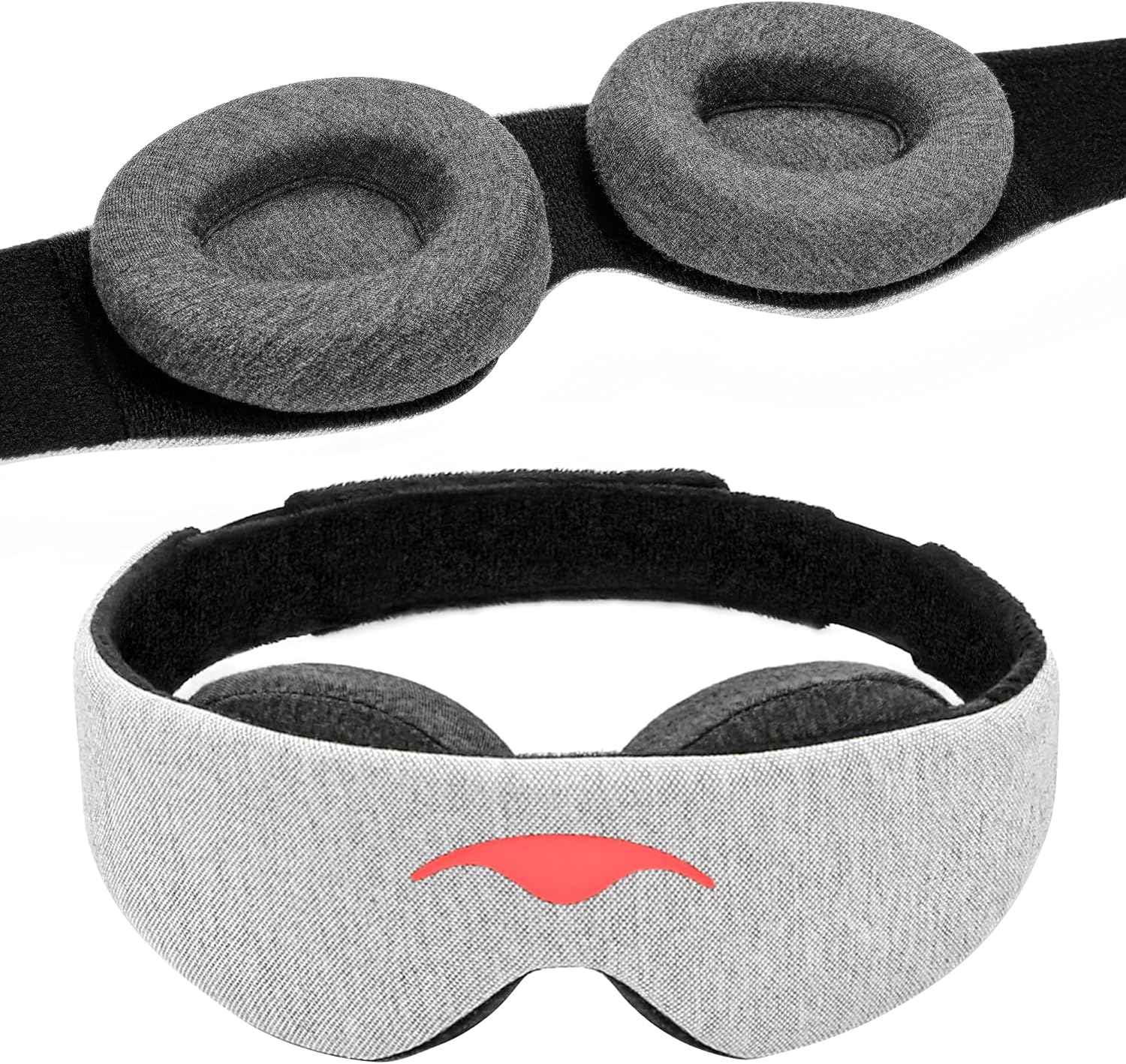
Poor sleep prevents the brain from “washing” itself of toxins at night. This mask is a favorite because it has contoured cups that don’t press on your eyes, allowing for total darkness which is essential for deep, restorative sleep cycles.
4. White Mountain 1000-Piece Puzzles

We talked about “Visuoconstruction” (Sign #9). Doing a complex jigsaw puzzle isn’t just a hobby; it’s a workout for your parietal lobes. It forces you to mentally rotate shapes and visualize the whole picture, keeping those spatial circuits firing.
5. Panda Planner Pro (Daily Executive Function Organizer)

If your “Conductor” (Sign #2) is starting to struggle with sequencing, offload the work. This planner is designed scientifically to break big goals into small, daily steps, reducing the cognitive load on your prefrontal cortex and lowering anxiety.