The Beach Vacation That’s Better When It’s Cold: 10 Epic Storm-Watching Spots on the West Coast

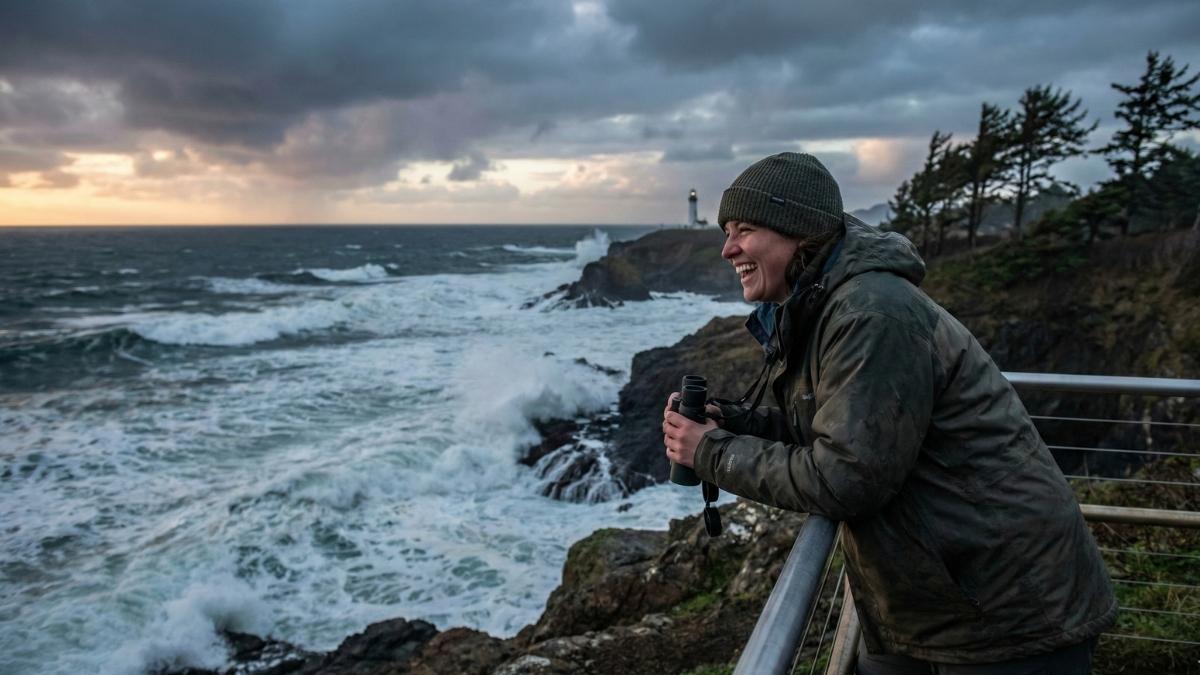
Chasing storms along the West Coast hits a different kind of thrill—the kind that turns cold winds, crashing waves, and dark skies into something beautifully addictive.
When the weather flips wild, the coastline wakes up with a boldness summer never manages. Salt spray hangs in the air, the tide roars with attitude, and every gust feels like nature leaning in to tell a secret.
If you’ve ever craved a beach trip that feels raw, electric, and unforgettable, storm season delivers it in full force. And the best part? Some coastal spots become even more spectacular when the temperature drops.
1. Tofino, Vancouver Island, BC
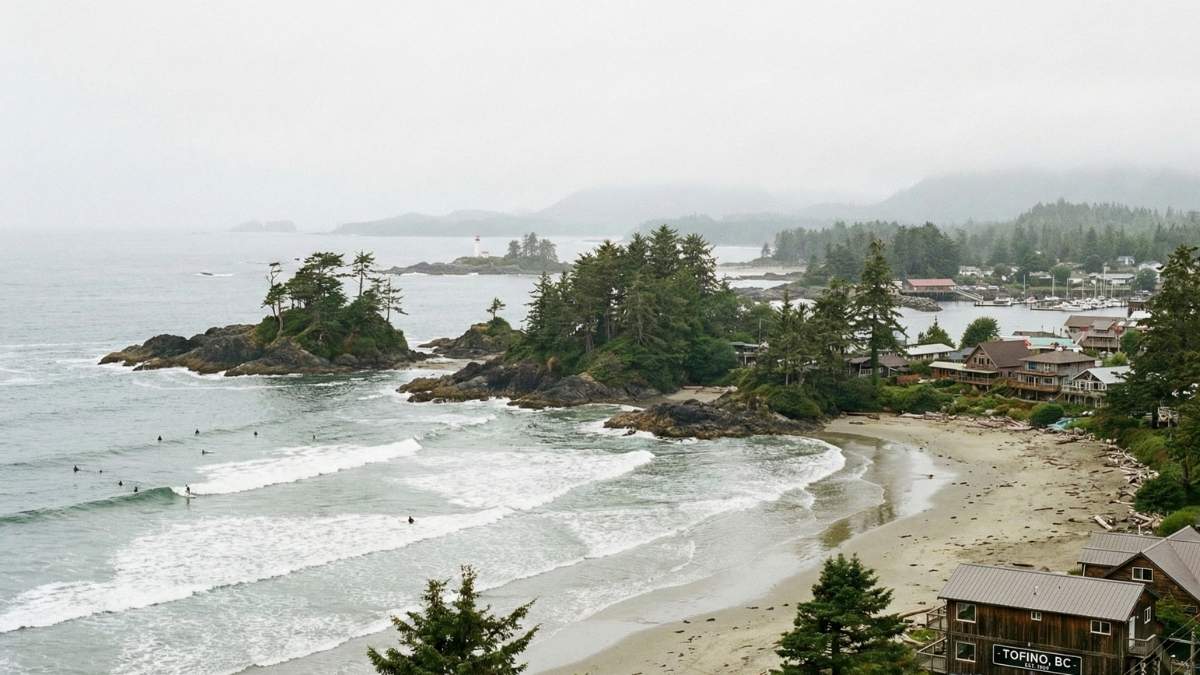
Tofino has a way of making storm season feel like the main event rather than the off-season. Waves slam the rugged coastline with a kind of cinematic energy, and the wind carries that unmistakable Pacific edge that wakes up every sense. When the clouds roll low and heavy over the rainforest, the whole place feels charged—like nature is fully awake and showing off a side that summer never quite reveals.
What makes Tofino especially striking is how wild and luxurious it feels at the same time. You can watch the ocean churn from a cedar hot tub, sip something warm while driftwood crackles in a fireplace, or walk along beaches where the wind rearranges the sand every few minutes. Even on the harshest days, you’ll find surfers paddling out; they talk about storm waves the way hikers talk about summiting a mountain.
Storm-watching here isn’t just about watching waves—it’s about the rhythm of the rainforest, the sound of storms breaking across massive coastal cliffs, and the thrill of knowing you’re in one of the world’s best places to witness the Pacific flex its power. It’s the kind of destination where being cold is part of the charm.
Quick Info
- Best Months: November–February
- Storm Intensity: High—excellent wave action
- Best Beachfront Spots: Chesterman Beach, Cox Bay
- What to Bring: Waterproof outer layers, boots with grip
- Closest Airport: Tofino-Long Beach Airport (YAZ)
2. Cannon Beach, Oregon
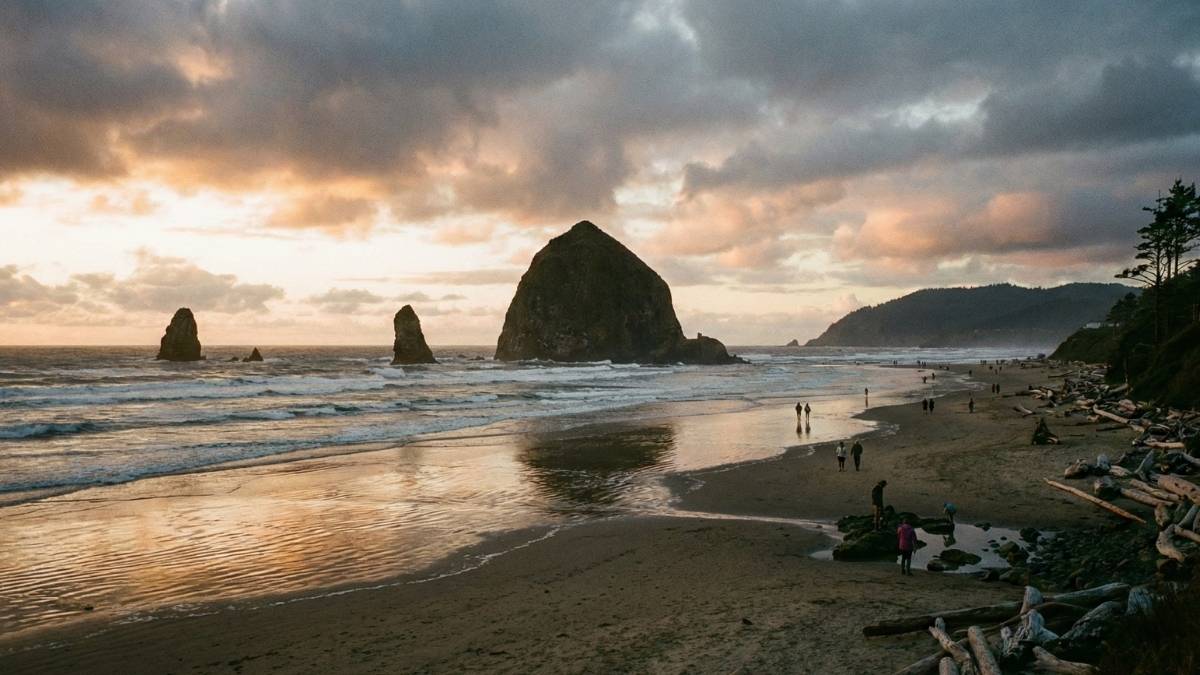
Cannon Beach is famous for Haystack Rock, but during storm season, the waves crashing around it turn the entire shoreline into a natural amphitheater. On stormy days, the sky darkens with a moody glow that makes the seafoam pop in bright white contrast. Even short walks along the beach feel dramatic, especially when the wind pushes against you like a challenge.
But the real highlight is how accessible yet powerful the storms feel here. You can stroll right out from your cozy rental onto the sand and watch rolling surf stack itself into towering breaks. Even when you’re safely inside, the large beachfront windows make the ocean feel like it’s only a breath away. The storm energy hits that perfect sweet spot: exciting but not overwhelming.
It’s an especially great destination if you love pairing nature with small-town charm. The cafés hum with people drying off from the weather, and the galleries feel even cozier when the rain taps the windows. Cannon Beach turns cold days into something to savor.
Quick Info
- Best Months: December–March
- Storm Intensity: Moderate to strong
- Best Oceanfront Spots: Tolovana Beach, Ecola State Park viewpoints
- Good For: Couples getaways, beginner storm-watchers
- Closest Airport: Portland International Airport (PDX)
3. Pacific City, Oregon
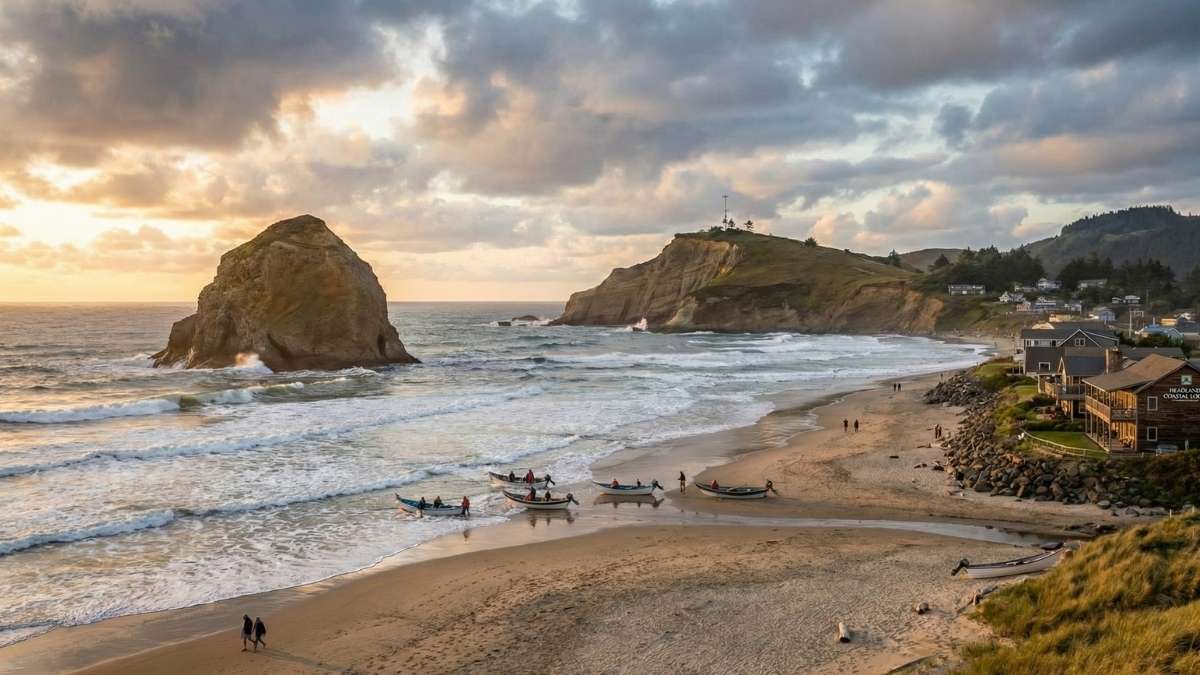
Pacific City takes storm-watching to another level thanks to its massive Cape Kiwanda headland, which funnels waves into explosive bursts. When storms hit, water crashes against the sandstone cliffs and sends spray into the air like fireworks. It’s one of the few spots where you can watch storms from above, below, or at sea level—each angle giving a completely different feel.
The vibe here is more laid-back than in other Oregon coast towns, and that adds to its appeal. You can settle into a waterside brewery, watch the waves smash the cape, and hear locals casually discuss swell height like they’re talking about the weather. The stormy backdrop only enhances the easygoing, coastal atmosphere.
Because the area stays quieter than the state’s more famous beaches, it becomes a place where storm-watching feels personal without being isolating. The mix of drama, open space, and jaw-dropping cliff formations turns every stormy day into a little performance from nature.
Quick Info
- Best Months: November–February
- Storm Intensity: Strong, especially near Cape Kiwanda
- Best Viewing Spots: Cape Kiwanda dunes, Pelican Brewing patio
- Good For: Scenic photography, cliffside views
- Closest Airport: Portland International Airport (PDX)
4. La Push, Washington
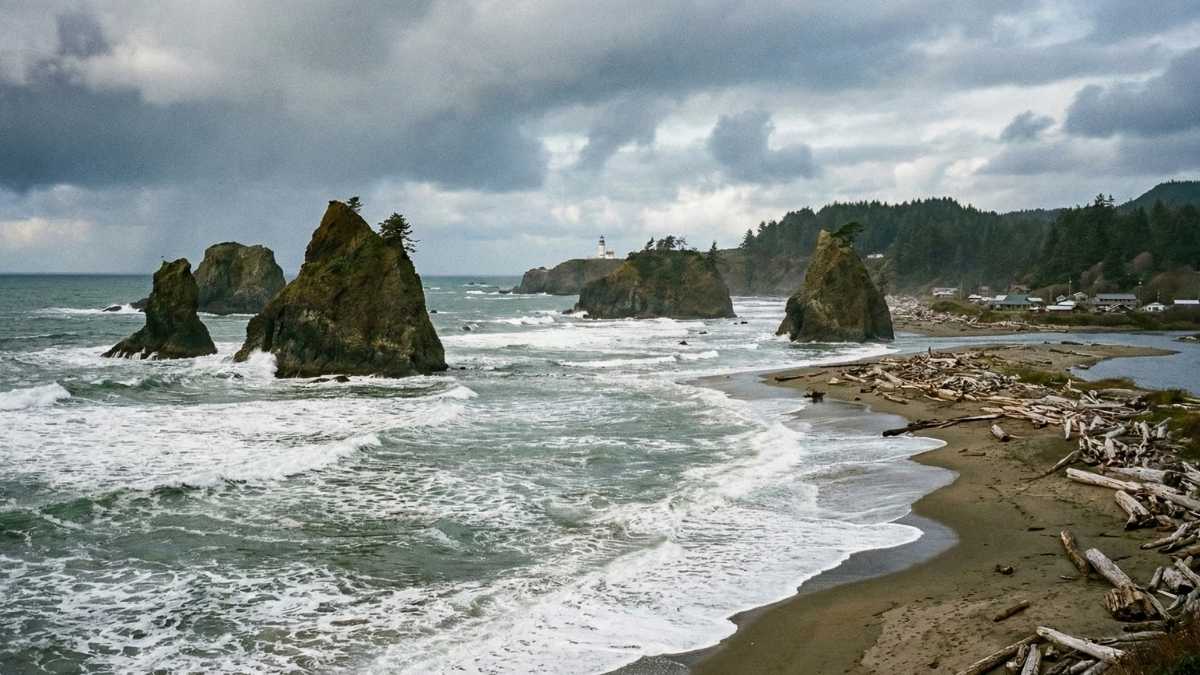
La Push delivers storm-watching with a dose of mythic Pacific Northwest energy—rugged sea stacks, roaring surf, and dense forest pressing right up against the sand. When storms roll in, the contrast between the dark ocean, misty air, and scattered driftwood turns the beach into a dramatic seascape that feels deeply rooted in the wild spirit of the region.
The waves here hit different. Long, rolling swells crash into the iconic offshore rock formations and send deep booms into the shoreline. When you’re standing there bundled up against the wind, the sound alone makes the whole coastline feel alive. And because the beaches are wide and open, you can take in the full scale of the storm safely from a distance.
La Push also has a way of balancing intensity with peace. Even during the harshest storms, the forest provides a natural buffer that adds calm to the chaos. It’s a place that feels both remote and grounding, making storm season one of the best times to visit.
Quick Info
- Best Months: October–March
- Storm Intensity: Very strong
- Best Beaches: First Beach, Second Beach
- Good For: Wild, untamed landscapes
- Closest Airport: Seattle-Tacoma International Airport (SEA)
5. Cape Disappointment, Washington
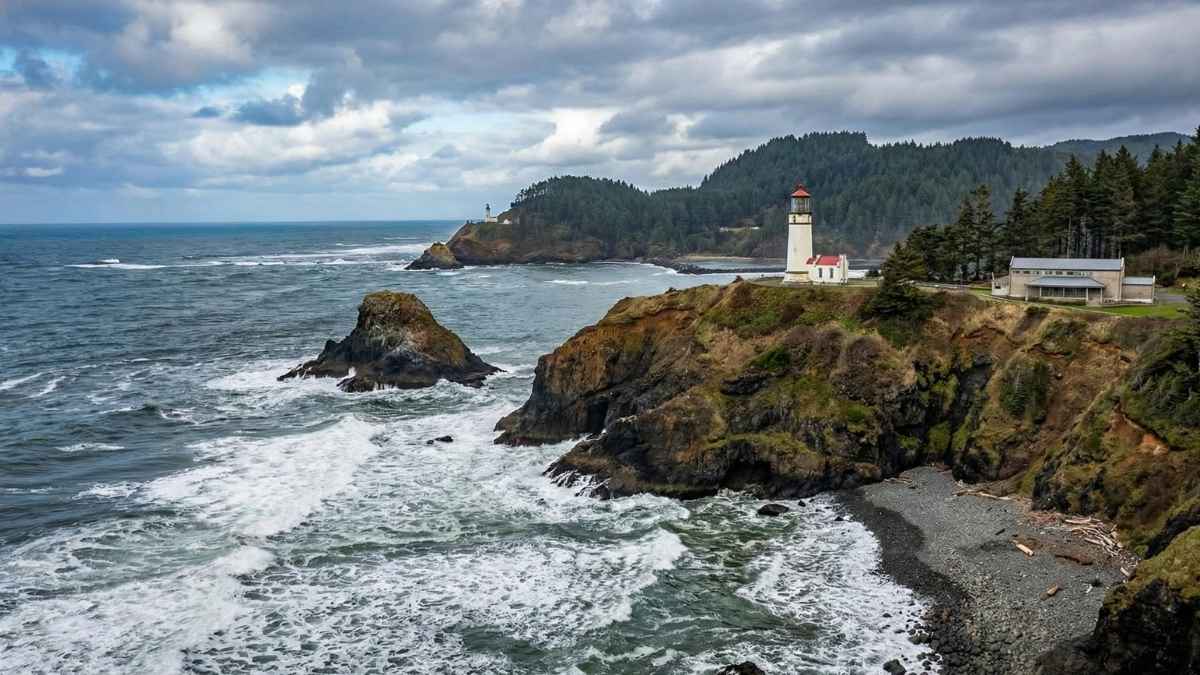
Cape Disappointment sounds like a name made for storms—and it absolutely delivers the opposite of disappointment. The waves here slam into the cliffs with thunderous sound, and the lighthouse perched on the point adds a dramatic silhouette when the skies darken. Storms funnel straight into the mouth of the Columbia River, creating conditions that feel uniquely powerful.
The state park makes storm-watching comfortable while keeping the raw nature intact. Trails wind through the forest and lead to clifftop viewpoints where the wind hits with full force. From above, the ocean looks like a living map of swirling slate and foam. When the storms really kick up, the coastline feels like a front-row seat to the Pacific’s untamed energy.
Despite the fierce conditions, the park has an oddly calming effect. When you’re sheltered under tall evergreens while rain thunders down, there’s a deep sense of connection to the landscape. Few places on the West Coast combine accessibility, history, and fierce ocean energy this well.
Quick Info
- Best Months: November–March
- Storm Intensity: Extremely strong near the cliffs
- Best Viewing Spots: North Head Lighthouse, Waikiki Beach overlook
- Good For: Dramatic cliff views, photography
- Closest Airport: Portland International Airport (PDX)
6. Bandon, Oregon
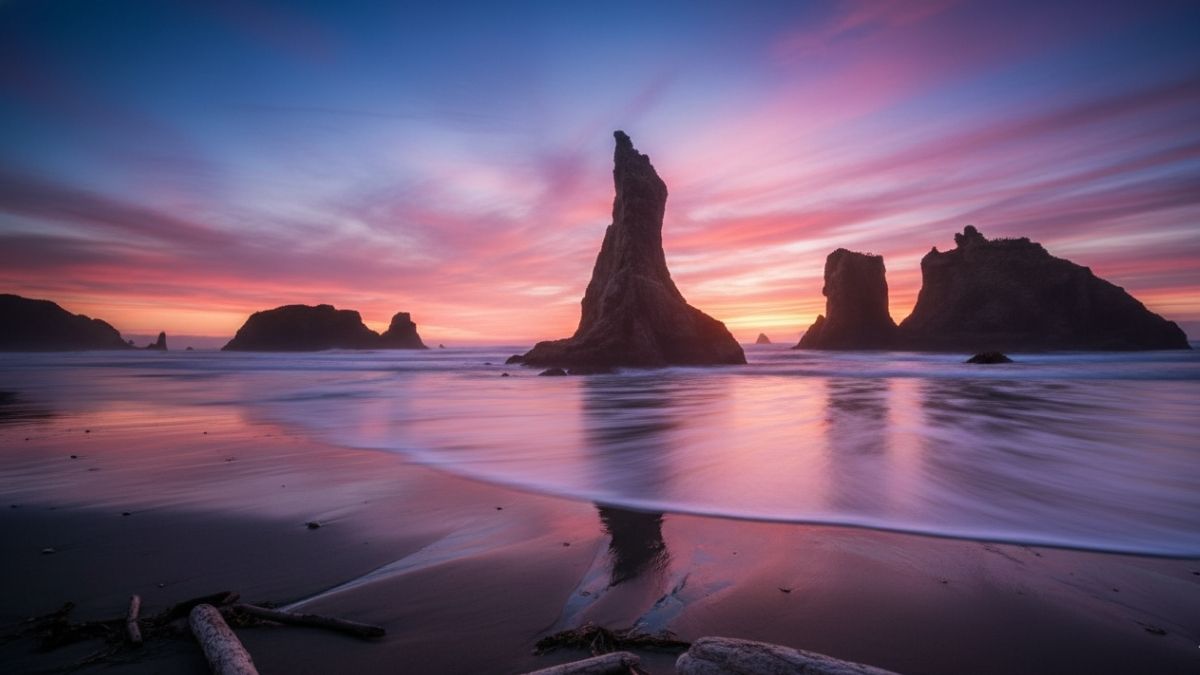
Bandon has a coastline that feels sculpted for dramatic weather. The rock formations—tall, jagged, and scattered like ancient monuments—create an atmosphere that turns every storm into a full visual experience. When the tide surges and the wind picks up, waves collide with the sea stacks in massive flourishes of spray that can be seen from far up the shore.
What people love about Bandon is how the landscape changes by the hour. One moment, the sky is a slate-gray blanket, and the next it breaks open with streaks of light hitting the wet sand like brushed metal. The beach is wide, giving you room to settle into a safe distance and watch the ocean perform without feeling overwhelmed by it.
Even during intense weather, Bandon maintains an inviting small-town rhythm. Bakeries warm up the mornings, galleries open their doors to storm-watching wanderers, and the whole coastline feels like it knows exactly how to embrace cold-weather travelers. It’s one of the most visually striking storm-watching spots in Oregon.
Quick Info
- Best Months: November–February
- Storm Intensity: Strong—excellent surf and spray
- Best Viewing Spots: Face Rock State Scenic Viewpoint, Coquille Point
- Good For: Photography, reflective beach walks
- Closest Airport: Southwest Oregon Regional Airport (OTH)
7. Fort Bragg, California
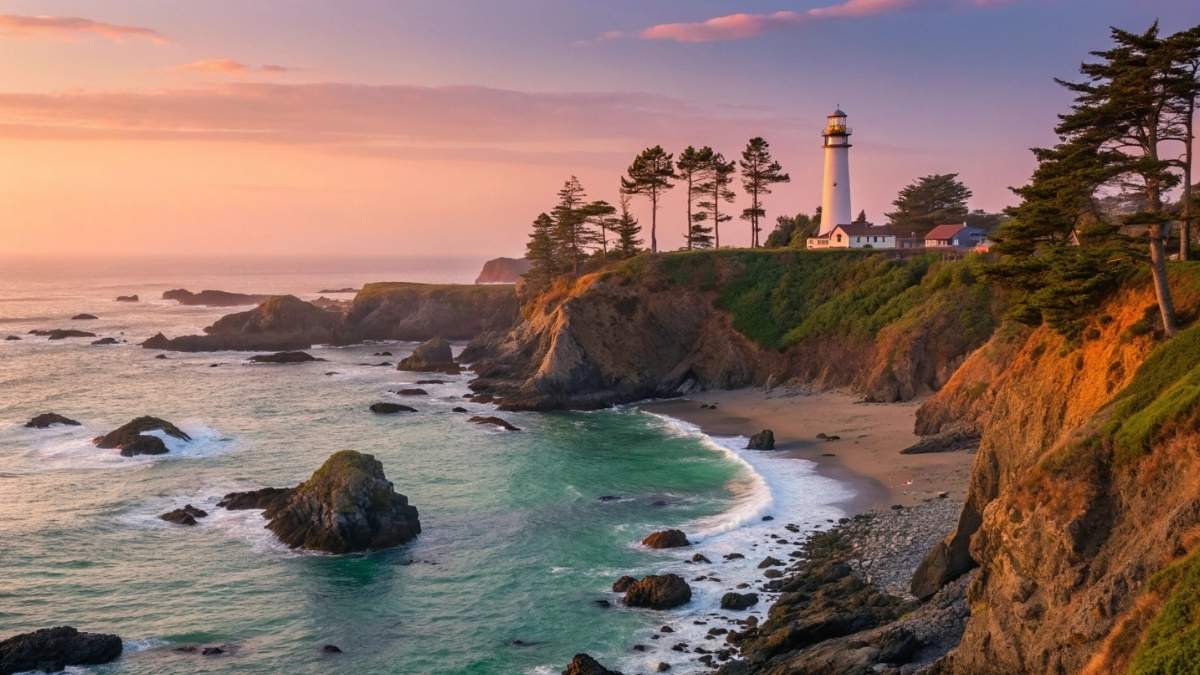
Fort Bragg brings a different kind of storm energy: less chaotic, more rhythmic, with long swells that crash into the cliffs in measured, powerful bursts. The famous stretch of coastline near Glass Beach becomes even more intense under stormy skies, where waves churn the shoreline into frothy layers of white and turquoise.
Unlike some West Coast stops where storms feel wild and unpredictable, Fort Bragg gives you a comfortable balance of drama and calm. You can watch the ocean from the coastal trails at MacKerricher State Park or from sheltered viewpoints where the wind whistles but never fully knocks you back. The cold-season storms reveal the rugged beauty that summer never quite captures.
Fort Bragg also rewards those who like exploring in between storm fronts. Small cafés, aquarium exhibits, and coastal pull-offs all offer easy breaks from the weather. The rugged cliffs, moody skies, and polished sea glass shoreline make cold days feel surprisingly inviting.
Quick Info
- Best Months: December–March
- Storm Intensity: Moderate to strong
- Best Viewing Spots: MacKerricher State Park bluffs, Glass Beach overlook
- Good For: Scenic drives, multi-stop coastal days
- Closest Airport: Charles M. Schulz–Sonoma County Airport (STS)
8. Westport, Washington
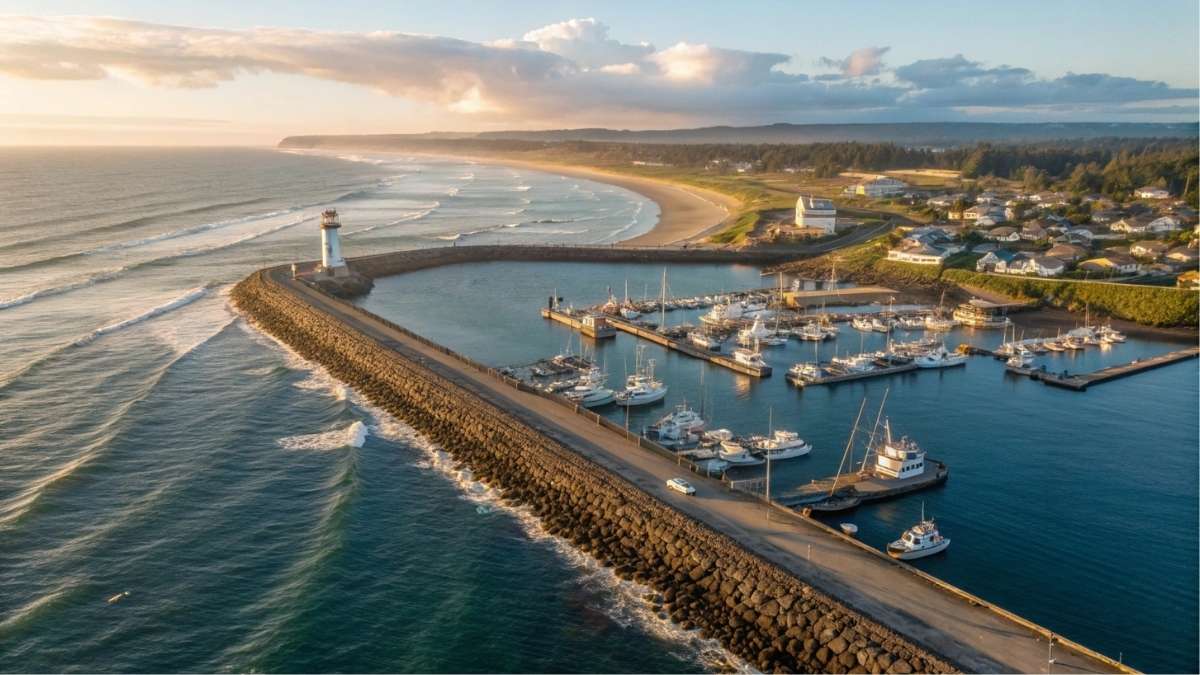
Westport is one of those places where the colder months bring out the best of the Pacific Northwest’s marine character. Storms here roll in with steady force, hitting the wide beaches and jetties with long, powerful waves that make the coastline feel alive. There’s a raw beauty in how the wind sweeps across the dunes and sets the sea in constant motion.
What keeps Westport interesting during storms is the combination of wide-open ocean views and friendly spots to warm up afterward. The marina stays active year-round, giving you flashes of local coastal life between storm fronts. And when the waves start pounding against the breakwater, the contrast between the rugged ocean and the quiet harbor makes for a fascinating dynamic.
Westport also stands out as a great storm-watching destination for beginners. You get all the excitement—towering waves, dramatic skies, roaring surf—without the cliffs or challenging access points found elsewhere. The ease of exploring the coastline makes it rewarding even on the windiest days.
Quick Info
- Best Months: November–March
- Storm Intensity: Moderate
- Best Viewing Spots: Westhaven State Park, jetty viewpoints
- Good For: Safer, more accessible storm-watching
- Closest Airport: Seattle-Tacoma International Airport (SEA)
9. Mendocino, California
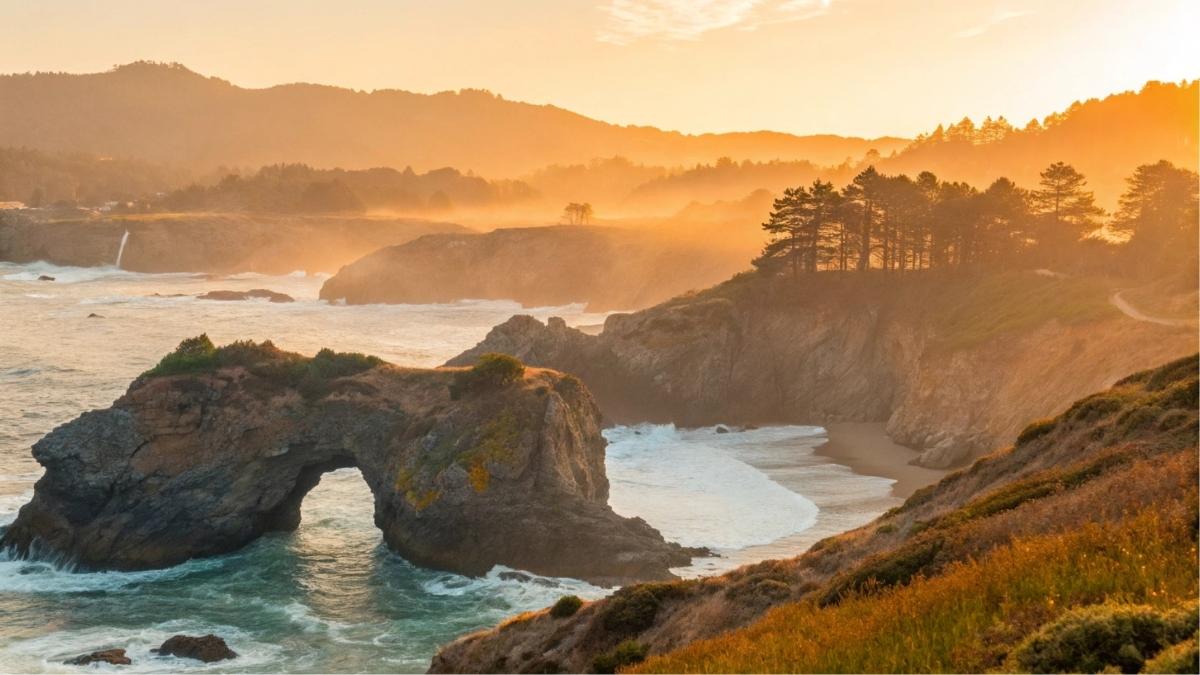
Mendocino feels like a storm-watching retreat carved straight into the cliffs. Its historic village sits right above the Pacific, giving you a constant front-row view of the shifting ocean. When winter storms approach, the waves hit the bluffs with deep, echoing force, creating a soundscape that blends perfectly with the town’s quiet, coastal charm.
The coastline here feels dramatic in a different way: not wild and rugged like northern coasts, but elegant and windswept. The headlands trail winds along the edge of the cliffs, offering panoramic views where storm clouds sweep in fast and leave just as quickly. On stormy days, even the coves and inlets churn with motion, giving you an evolving landscape to watch.
What makes Mendocino especially appealing is the atmosphere of the town itself. Small bookshops, warm cafés, and Victorian-era inns feel tailor-made for cold-weather stays. It’s a place where you can experience fierce ocean energy without losing the feeling of calm coastal stillness.
Quick Info
- Best Months: December–March
- Storm Intensity: Moderate to strong
- Best Viewing Spots: Mendocino Headlands State Park, Big River mouth
- Good For: Clifftop views, cozy small-town stays
- Closest Airport: Charles M. Schulz–Sonoma County Airport (STS)
10. Long Beach Peninsula, Washington
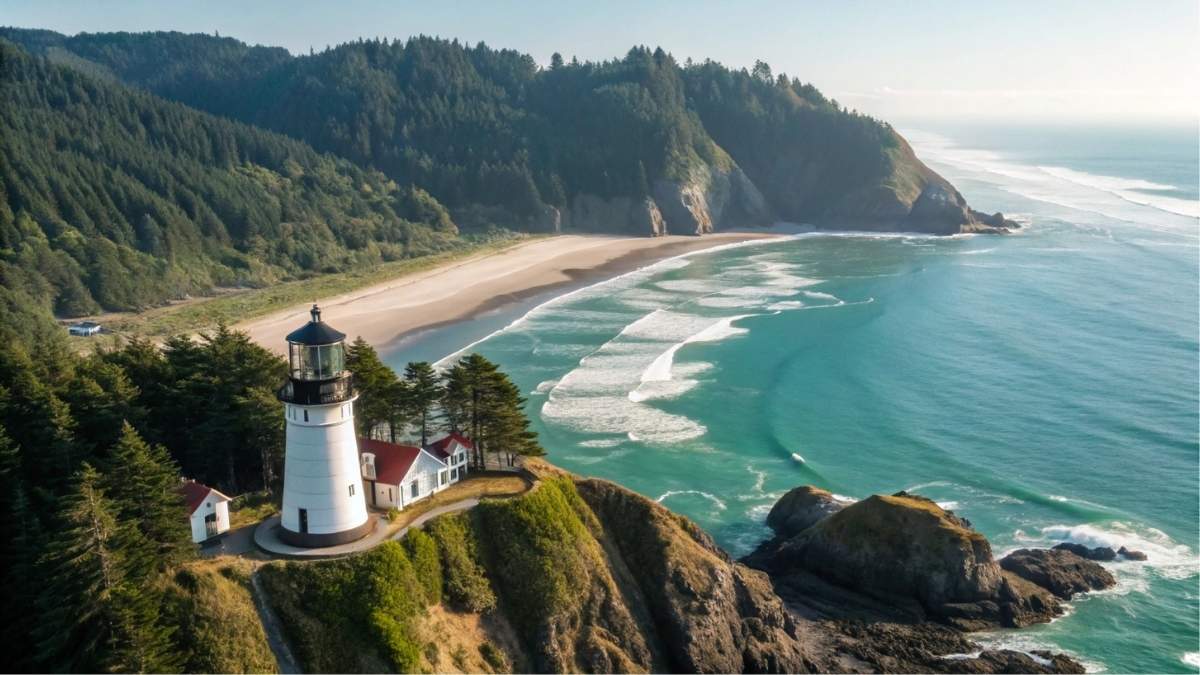
Long Beach Peninsula offers a totally different storm-watching experience thanks to its vast, open shoreline—the kind where the beach feels like it stretches on forever. When storms come in, the horizon turns into a shifting blend of silver, blue, and deep charcoal, with waves rolling in long, thundering lines that travel surprisingly far up the sand.
The peninsula’s unique shape gives you multiple vantage points. You can watch storms arrive from the south, move across the coast, and then fade northward, all without leaving the area. The boardwalk behind the dunes provides a protected path when the weather turns extra fierce, letting you feel close to the storm without being right in its path.
Those who love space, openness, and moody skies tend to fall quickly for Long Beach. It’s not as rugged as some Washington coastlines, but it excels at providing wide-angle drama. Between storm fronts, the seafood shacks, lighthouses, and small harbor towns offer an easy, welcoming rhythm.
Quick Info
- Best Months: October–March
- Storm Intensity: Moderate
- Best Viewing Spots: North Head Lighthouse, Discovery Trail boardwalk
- Good For: Long walks, spacious ocean vistas
- Closest Airport: Portland International Airport (PDX)