Let’s be honest for a second. There is nothing worse than waking up with a flat stomach, feeling great, and then slowly, hour by hour, watching your belly expand until you look—and feel—six months pregnant by 4 PM.
It’s frustrating. It’s uncomfortable. And for about 18% of people worldwide, it’s a weekly reality.
If you’ve been down the Google rabbit hole, you’ve probably been told to cut everything out. No gluten. No dairy. No joy. But here’s the thing: for a lot of us, the problem isn’t just what we’re eating. It’s how we’re operating.
We tend to treat our bodies like cars—pour fuel in, and it should just go. But digestion is more like a complex orchestra. If the rhythm is off, it doesn’t matter how expensive the instruments (or the food) are; the result is noise.
I’ve dug through the clinical research to find seven specific “micro-habits” that fix the rhythm. These aren’t diet tips. They are physiological switches you can flip to help your body process food the way it was designed to, so you can stop unbuttoning your jeans after lunch.
Respect the “Cleaning Crew” (The Migrating Motor Complex)

If you threw a house party, and every time the cleaning crew tried to sweep the floor, you threw more confetti. The house would never get clean.
That is exactly what happens in your gut when you graze.
Your small intestine has a built-in cleaning cycle called the Migrating Motor Complex (MMC). It’s a wave of electromechanical activity that sweeps undigested food and bacteria out of your small intestine and into the colon. It’s your gut’s housekeeper.
Here is the catch: The housekeeper only comes out when the house is empty.
The MMC only activates when you are in a “fasted” state. As soon as you put anything with calories in your mouth—a handful of almonds, a milky coffee, a protein shake—the cleaning cycle stops immediately. If you eat every two hours, the cleaning crew never gets to work. The result? Leftover food sits there, fermenting and creating gas.
The Fix: Strategic Meal Spacing
You don’t need to starve, but you do need to give your gut a break.
| The Habit | The Why |
| Wait 3.5 – 5 Hours Between Meals | The cleaning cycle takes about 90 to 120 minutes to complete. You need to give it time to finish the job. |
| Stop the “Healthy” Snacking | Even healthy snacks stop the MMC. If you’re hungry, eat a bigger meal, then stop. |
| Water & Tea Only | Between meals, stick to water or black coffee/tea. No calories means the cleaning continues. |
Expert Take: Dr. Will Bulsiewicz, a gastroenterologist, puts it simply: our guts thrive on rest. Constant eating keeps the gut in a state of perpetual work, which is a recipe for bloating.
Chew Like You Mean It (The Cephalic Phase)
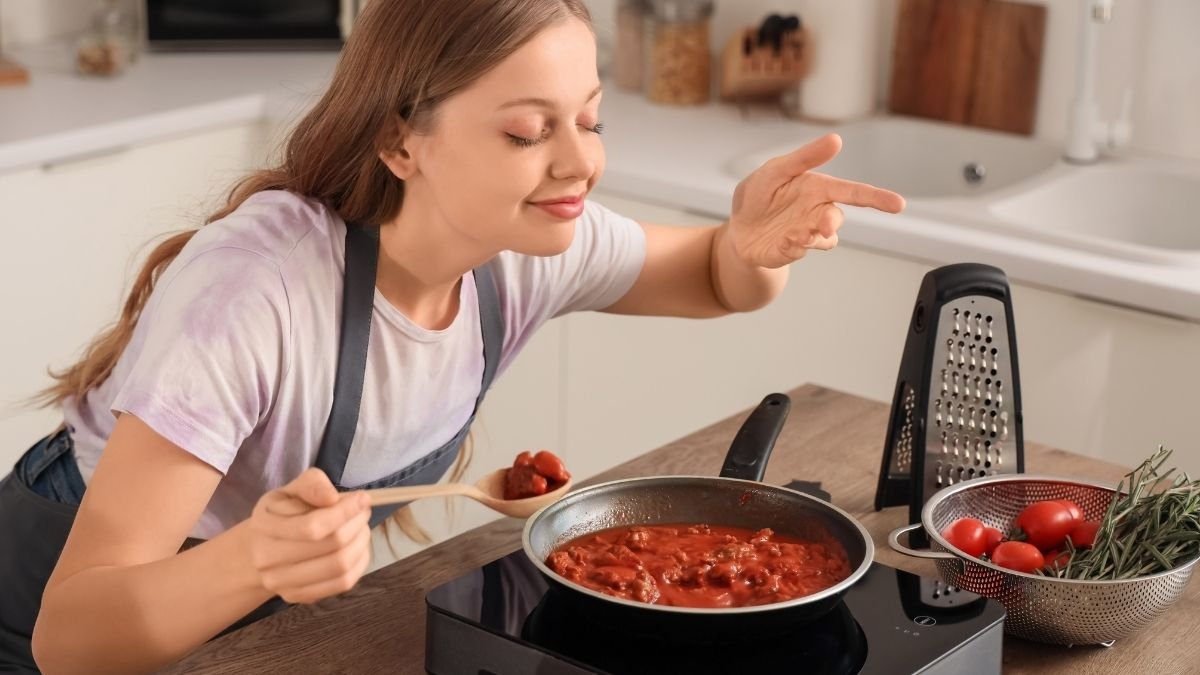
We often overlook this because it sounds so basic, but digestion actually starts in your brain, not your stomach. This is called the Cephalic Phase.
When you smell food or think about dinner, your brain tells your stomach to release acid and enzymes. If you scroll through Instagram while shoveling lunch into your mouth in five minutes, you bypass this signal. You’re dropping a “food bomb” into a stomach that isn’t ready for it.
Plus, your stomach doesn’t have teeth. If you swallow big chunks of food, your enzymes can’t break them down. Those chunks travel to your intestines, where bacteria feast on them. And when bacteria feast, they produce gas.
The Science of 40 Chews
It sounds like a lot, but the data backs it up. A study found that chewing almonds 40 times versus 10 times resulted in significantly better absorption of fats. Another study on runners showed that chewing more reduced simple gastrointestinal distress.
The Micro-Habit
Chew until it’s applesauce.
Before you swallow, the food should have lost its texture.
- Soft foods: ~20 chews
- Dense foods (steak, kale): ~40 chews
It’s weird at first. You’ll catch yourself trying to swallow early. Fight the urge. You are manually pre-digesting your food so your gut doesn’t have to struggle later.
The “Fart Walk” (Post-Prandial Movement)

I know, the name is funny, but the physiology is serious.
When you eat and then immediately sit on the couch or at your desk, you are compressing your abdomen. Gas gets trapped in the twists and turns of your intestines.
Walking immediately after a meal does two massive things:
- Mechanical Clearance: The gentle movement physically massages your intestines, helping move gas bubbles toward the exit before they can build up and cause pain.
- Blood Sugar Control: A 10-minute walk after eating can significantly lower your blood sugar spike compared to sitting still. Less sugar spike means less insulin, which is better for overall metabolic health.
The Protocol
- When: Within 30 minutes of finishing your last bite.
- How Long: 10 to 15 minutes is all you need.
- Intensity: Low. This isn’t a power walk. It’s a stroll. If you go too hard, your body pulls blood away from digestion to your muscles, which causes more bloating. Keep it chill.
Retrain Your Diaphragm (Stop the “Distension Reflex”)

Have you ever noticed that sometimes you don’t just feel gassy, you actually look like your belly has been inflated with a bicycle pump?
This is often due to something called Abdomino-Phrenic Dyssynergia (APD).
In a normal body, when the belly fills up, the diaphragm (the breathing muscle under your lungs) should move up to make room. But in people with chronic bloating, the wires get crossed. When they eat, their diaphragm contracts, pushing the stomach contents outward. It’s a muscular coordination error.
The Fix: Diaphragmatic Breathing

You can actually retrain this reflex. It acts like a “reset button” for your gut-brain axis, stimulating the vagus nerve to calm everything down.
Try this “Balloon Breathing” technique:
- Lie down or sit comfortably.
- Place one hand on your chest and one on your belly.
- Inhale: Breathe in through your nose for 4 seconds. Focus on inflating your belly like a balloon. Your chest shouldn’t move.
- Exhale: Blow out through pursed lips (like you’re cooling soup) for 6 seconds. Feel your belly flatten.
- Repeat: Do this for 5 minutes a day, or right before a meal.
Studies have shown that this simple biofeedback can significantly reduce visible distension.
Sync Your Gut Clock (Circadian Rhythm)
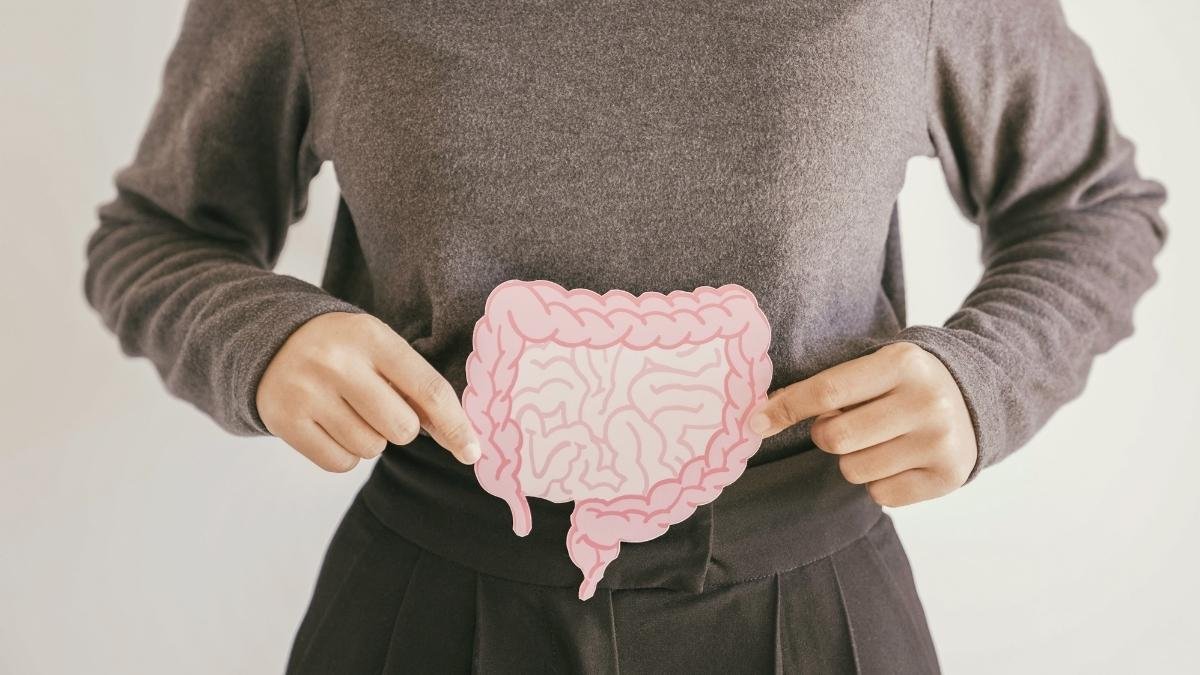
Your gut has its own clock. Literally.
The cells lining your digestive tract operate on a 24-hour rhythm. They have different jobs during the day (digestion/absorption) than they do at night (repair/cleaning).
If you eat late at night, you are throwing a party while the cleaning crew is trying to work. This “circadian misalignment” confuses your gut bacteria and slows down motility, leading to morning constipation and bloating.
Two Habits to Align the Clock:
- Morning Light: Get sunlight in your eyes within an hour of waking up. It sounds unrelated, but morning light sets your master clock, which then synchronizes your gut clock.
- Early Dinner: Try to finish eating 3 to 4 hours before bed. This ensures your stomach is empty when you sleep, allowing your body to focus on that deep “housekeeping” clean we talked about earlier.
Warm Water, Not Ice Cold

This one is controversial, but hear me out. While cold water isn’t “bad” for you, warm water can be medicinal for a bloated gut.
Warm water acts as a vasodilator—it widens blood vessels and increases blood flow to the tissues. This helps relax the smooth muscles of the digestive tract, easing cramps and helping things move along.
Cold water, on the other hand, can cause a slight shock or contraction. If your gut is already sensitive or spasming, ice water might just tighten things up more.
The Strategy:
- Start your day with a cup of warm water (maybe with lemon).
- Sip warm water slowly during the day.
- Avoid chugging huge amounts of liquid during meals, as this can add volume and swallow air (aerophagia), adding to the bloat.
The “I Love U” Massage
Sometimes, things just get stuck. Gas gets trapped in a bend in the colon, and no amount of wishing will move it. You need a manual override.
The “I Love U” massage is a physical therapy technique that mimics the path of your large intestine to push gas toward the exit.
How to do it (Lie on your back):
- “I”: Stroke down your left side (from ribs to hip) 10 times. (This clears the exit.)
- “L”: Stroke across your upper belly (right to left) and then down the left side. 10 times.
- “U”: Stroke up the right side, across the top, and down the left side. 10 times..
Note: Always go clockwise (from your perspective). Going the other way pushes things back up!
Need a Little Extra Help? Use These Tools
Look, habits are the foundation, but sometimes you need a little immediate relief or a tool to make the habits stick. I’ve rounded up a few things that actually help with the mechanics of digestion and comfort. I’m not talking about magic pills, but rather practical tools that support the biology we just talked about—like getting your body in the right position to eliminate or soothing the nerves in your gut when they’re screaming at you.
1. Squatty Potty The Original Toilet Stool
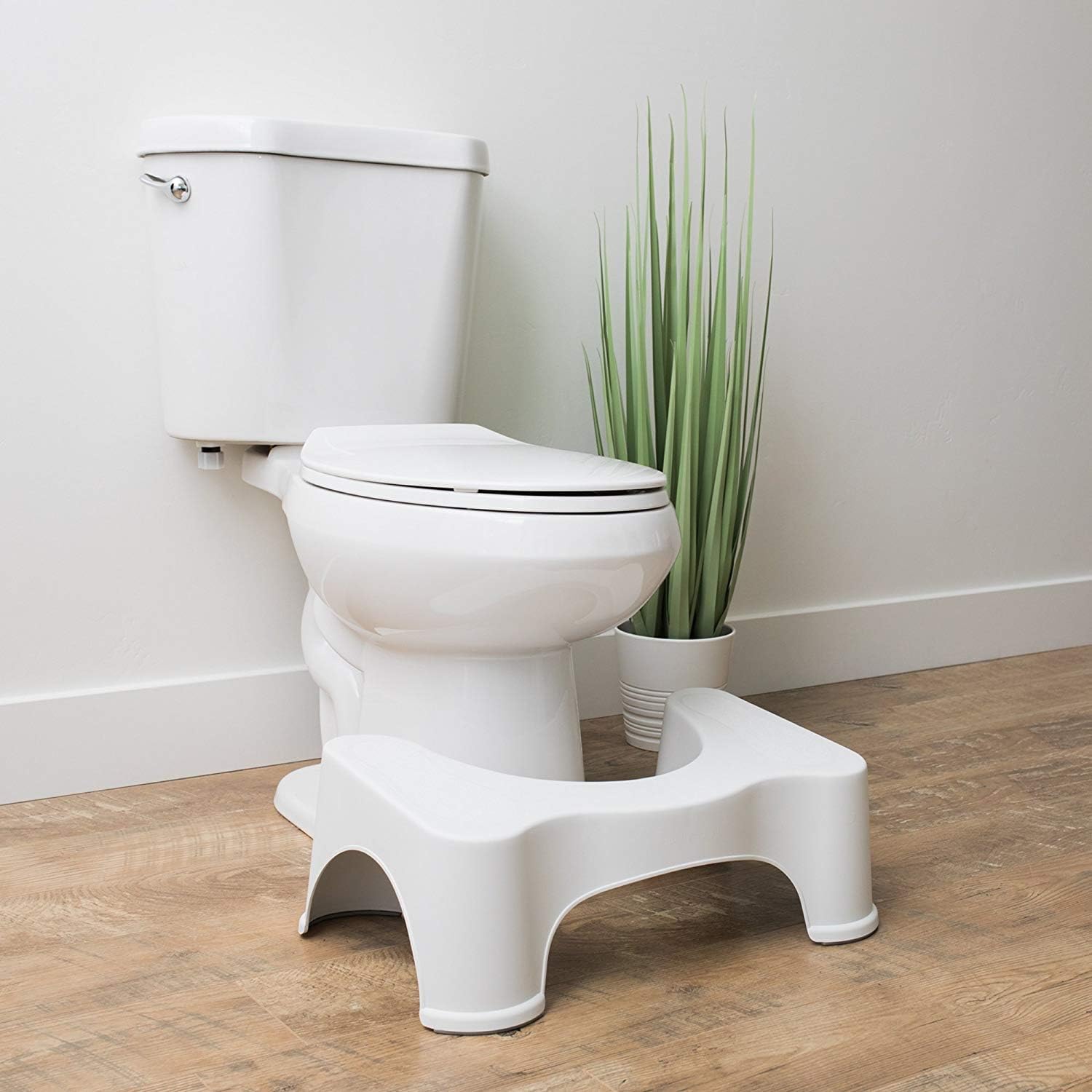
If you’re dealing with bloating, incomplete elimination is often the culprit. This simple stool puts your body in a natural squatting position, unkinking your colon and making it significantly easier to empty your bowels fully. It’s a game-changer for “mechanical” bloating.
2. Traditional Medicinals Organic Belly Comfort Peppermint Tea

Sipping this between meals is a great way to stay hydrated without breaking your MMC fast. Peppermint is a natural antispasmodic, meaning it helps relax the smooth muscles of your gut to release trapped gas.
3. Sunbeam Heating Pad for Pain Relief

When you have that “I look 6 months pregnant” distension, heat is your best friend. It increases blood flow and relaxes the cramping muscles that are contracting against the gas. A simple heating pad can provide almost instant relief from the pain of bloating.
4. IBgard Daily Gut Health Support

If tea isn’t strong enough, these are concentrated peppermint oil capsules designed to release specifically in the small intestine. They are widely used for IBS and can help calm the “visceral hypersensitivity” we discussed in Habit 4.
5. Fiber Fueled by Dr. Will Bulsiewicz

I mentioned Dr. Bulsiewicz in the section on the MMC. If you want to go deeper into the science of why restricting foods is bad for your gut microbiome and how to train your gut to handle fiber again, this book is the manual.
Myth-Busting: Don’t Fall for These Traps
While we’re fixing habits, let’s stop wasting money on things that don’t work.
Myth 1: “I need to cut gluten and dairy immediately.”
Reality: Unless you have Celiac disease or a diagnosed allergy, it might not be the gluten. Recent research suggests many people are actually reacting to FODMAPs (fermentable sugars) or just the stress of eating. Before you cut out pizza forever, try the habits above. You might find you can tolerate a slice just fine if you chew it well and walk afterwards.
Myth 2: “Greens powders will cure my bloat.”
Reality: Be careful here. Many green powders are packed with inulin or sweeteners that can actually cause massive bloating in people with sensitive guts. Whole foods are generally safer and cheaper.
Myth 3: “Detox teas clean you out.”
Reality: Most “detox” teas just contain senna, a laxative that irritates your bowel lining. That’s not health; that’s just forced evacuation. Your MMC (Habit 1) is the only detox you need.
Putting It All Together
You don’t have to be perfect. Trying to do all seven of these tomorrow might just stress you out—and stress causes bloating too!
Start here:
- Tomorrow morning: Drink warm water and get some sun.
- At lunch: Chew your food until it’s boring.
- After dinner: Go for a 10-minute walk.
Once you master those, layer in the meal spacing and the breathing.
It’s not about restricting your life. It’s about working with your biology, not against it. Your gut knows what to do; we just need to get out of its way.