We tend to think of our brains as these isolated computers sitting in our skulls. We assume that if we’re forgetting names, struggling to focus, or feeling that mid-morning slump, it’s a character flaw. Maybe we’re just “not morning people,” or we’re “getting older.”
But here’s the truth I’ve found in the research: Cognitive performance isn’t a trait; it’s a state.
Your brain’s ability to hold onto a memory or process a complex idea at 11:00 AM is directly determined by the biological signals you sent it at 7:00 AM. It’s about chemistry, not willpower.
We are going to look at seven specific “tweaks”—based on chronobiology, neurochemistry, and biomechanics—that flip the switches on memory and focus. And we’re going to do it by leveraging the body’s own hardware: light, movement, temperature, and vision.
The Light Switch: Why “Bright Enough” Isn’t Enough

If you only take one thing away from this, let it be this: Light is a drug.
We usually think of light just as a way to see things. But to your brain, light is a timing signal. Deep inside your eyes, you have a specific set of cells (ipRGCs) that don’t care about shapes or colors. They only care about brightness (irradiance). When they get hit with enough blue light, they signal the master clock in your brain (the Suprachiasmatic Nucleus) to start the day.
This triggers the Cortisol Awakening Response (CAR). Now, cortisol gets a bad rep as a “stress hormone,” but in the morning, it’s magic. A sharp spike in cortisol right after waking is what clears out the “sleep fog” (adenosine) and preps your immune system and metabolism.
The “Window” Problem

Here is where most of us mess up. We wake up, look at our phone (which isn’t bright enough), walk into the kitchen, and drink coffee. We think we’re seeing light, but we aren’t getting enough lux (light intensity) to flip the biological switch.
Check out the difference in intensity:
| Light Source | Intensity (Lux) | Biological Impact |
| Direct Sunlight | 100,000+ | Instant Wake-Up Signal |
| Full Daylight (Cloudy) | 10,000 – 20,000 | Effective, takes a bit longer |
| Through a Window | 500 – 1,000 | Biologically “Dark” |
| Office/Home Lights | 300 – 500 | Negligible |
The Data: Research shows that looking through a window filters out the specific wavelengths and scatters the photons so much that it’s 50 times less effective than being outside.
The Tweak: The Photonic Anchor
You need to get outside. Not through a windshield, not through sunglasses.
- Sunny day: 5–10 minutes.
- Cloudy day: 10–20 minutes.
- Overcast: 20–30 minutes.
Why this helps memory: By anchoring your circadian rhythm, you’re also setting a timer for tonight’s sleep. But more immediately, you are ensuring your alertness peaks around 10:00 AM—right when you need to get deep work done.
The “Sprint” Effect: Fueling the Brain with Lactate

For years, I thought lactate (lactic acid) was the enemy—the stuff that made my legs burn. Turns out, for the brain, lactate is high-octane rocket fuel.
When you do high-intensity movements—like a sprint—your muscles produce lactate. This lactate travels to the brain, where neurons gobble it up. But it gets better. High lactate levels trigger the release of BDNF (Brain-Derived Neurotrophic Factor).
Think of BDNF as “Miracle-Gro” for your brain. It encourages new neurons to grow and strengthens the connections between existing ones.
Intensity Matters

You can’t just jog for this effect. You need intensity. Studies comparing moderate continuous exercise (like a light jog) vs. Sprint Interval Training (SIT) show that the sprints elicit a much sharper spike in BDNF.
Table: Choosing Your Movement
| Exercise Type | BDNF Response | Mental State 1-Hour Later |
| Sprints (SIT) | High Spike | High Focus, Fast Processing |
| Jogging (Steady) | Moderate | Mood Boost, Calm |
| Lifting Weights | Variable | Confident, Grounded |
The Tweak: The Micro-Dose
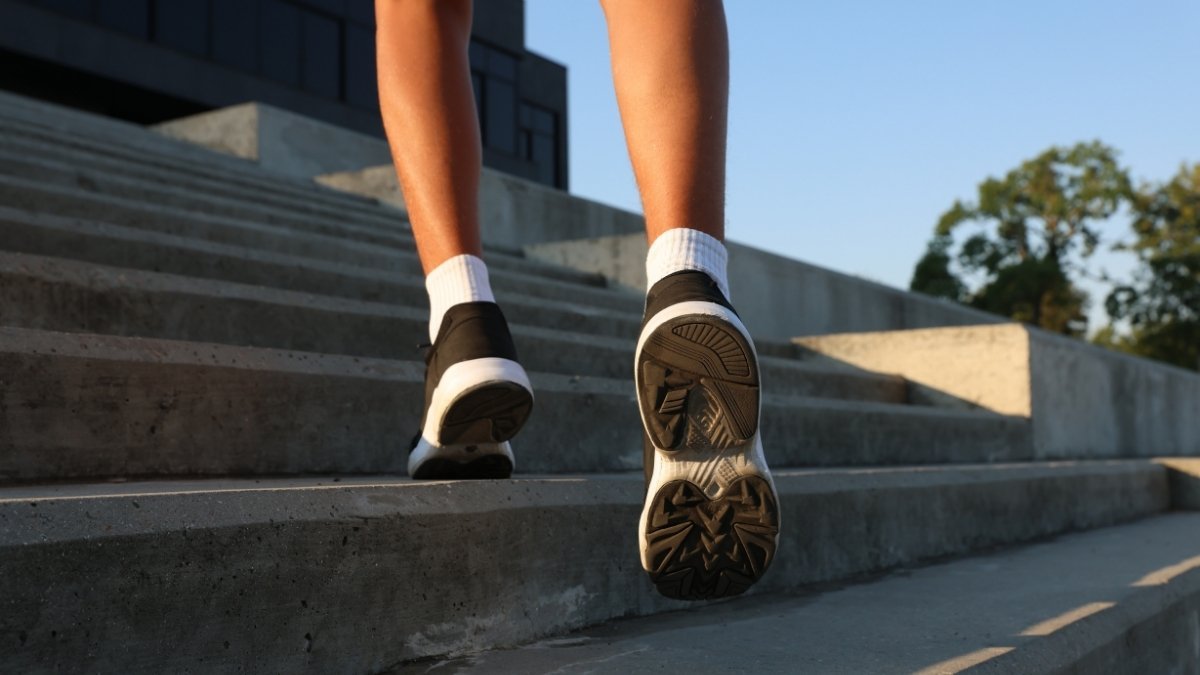
You don’t need a 60-minute workout. Try this “snack” before you shower:
- 3 x 20-second all-out bursts.
- This could be running up stairs, pedaling a bike, or even jumping jacks.
- The goal is to get your heart rate high and feel the “burn”.
The Visual Reset: Widen Your View to Shrink Your Stress

Have you ever noticed that when you’re stressed or hyper-focused on a deadline, you literally stare at one spot? That’s “focal vision,” and it’s hardwired to your sympathetic nervous system (fight-or-flight).
Dr. Andrew Huberman describes the opposite state as “Panoramic Vision” or “Optic Flow”. This is when you look at a horizon or move through space (walking, running) and let the visual world wash past you.
Why Optic Flow Works
When your eyes move laterally (side-to-side) while you move forward, it signals the amygdala (your threat detection center) that you are safe and moving. It quiets the anxiety circuits.
If you wake up and immediately stare at a phone (focal vision), you are priming your brain for anxiety. If you get outside and walk, letting your eyes scan the horizon, you are priming your brain for calm.
The Tweak: The Horizon Walk

Ditch the treadmill if you can. The visual data on a treadmill is static; you aren’t moving through space.
- Go outside.
- Soften your gaze. Don’t look down at your feet or phone. Look at the trees, the sky, the horizon.
- Walk for 10–20 minutes. This “visual reset” lowers the background noise in your brain so you have more RAM available for memory tasks later.
Backward Walking: The “Neurobics” of Looking Silly

Okay, this one sounds ridiculous, but stay with me. Walking forward is automatic—you don’t think about it. Walking backward (retro-locomotion) is a high-level cognitive task.
Because you can’t see where you’re going, your brain has to switch from relying on vision to relying on proprioception (body awareness). This forces the cerebellum and prefrontal cortex to talk to each other intensely.
The Cognitive Load

Research on “dual-tasking” shows that backward walking requires significant working memory resources. By doing it for just a few minutes, you are effectively “warming up” the circuits used for complex thinking. It’s like a crossword puzzle for your body.
The Tweak: The Retrograde Motion
Find a safe, flat spot (a hallway or an empty track).
- Walk backward for 2–5 minutes.
- Focus on rolling from toe to heel.
- Feel the ground. This mindfulness element is key.
Cold Water: The “Slap” Your Brain Needs

We all struggle with “sleep inertia”—that groggy feeling that lingers. You can wait for it to fade, or you can chemically blast it away.
Cold exposure (like a cold shower) triggers a massive release of Norepinephrine (focus/vigilance) and Dopamine (motivation). We’re talking about increases of 200–500%.
It’s About the Duration
Unlike the dopamine hit from sugar or scrolling social media (which spikes and crashes), the dopamine increase from cold exposure is sustained. It gives you a “hum” of drive that lasts for hours.
The Tweak: The Thermal Shock
- End your shower with cold water.
- Aim for 1–3 minutes. It needs to be cold enough that you want to get out.
- Control your breathing. This teaches your brain to stay calm under stress.
- Pro Tip: Don’t turn the warm water back on. Let your body reheat itself; this boosts the metabolic effect.
Green Exercise: Restoration Theory
Where you move matters just as much as how you move. This comes down to Attention Restoration Theory (ART).
City environments are “hard” on the brain. Traffic, signs, noise—they all demand “directed attention” (top-down processing). This drains your battery. Nature, on the other hand, provides “soft fascination.” The rustling leaves or moving clouds engage your attention without draining it, allowing your focus circuits to recharge.
The Data
Studies show that a walk in an arboretum improves working memory significantly more than a walk in a city, even if the heart rate and duration are identical.
The Tweak: The Green Detour
If you have a choice between walking down a busy street or cutting through a park, always take the park. Even viewing images of nature has a measurable effect if you can’t get outside.
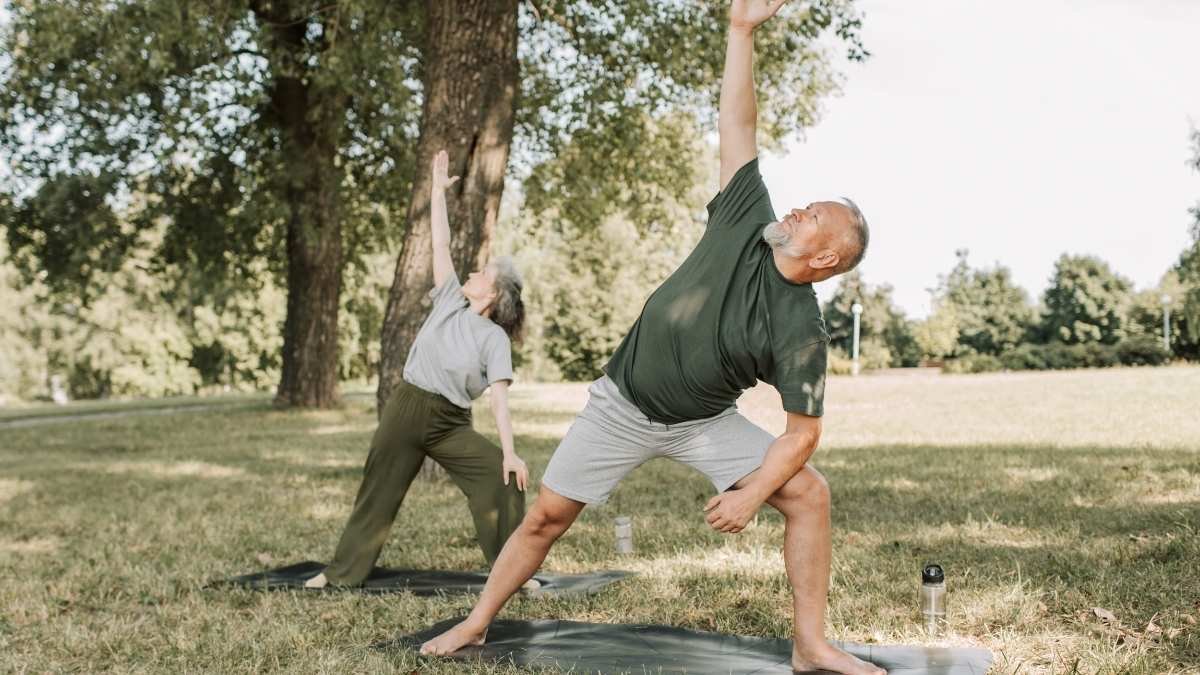
The “Brake”: Yoga and Tai Chi

We’ve talked a lot about “revving up” the system (Cortisol, Norepinephrine, Lactate). But a high-performance brain also needs a brake. If you’re too amped up, that’s just anxiety.
Yoga and Tai Chi are unique because they increase GABA, the brain’s primary inhibitory neurotransmitter. They also improve Heart Rate Variability (HRV), which is a key metric of stress resilience.
The Tweak: The Mindful Cool-Down

You don’t need a 60-minute class. Just 5–10 minutes of slow, controlled movement with deep breathing (extending the exhale) is enough to engage the parasympathetic nervous system. This ensures that all the energy you just created is channeled into focus, not jitters.
Putting It All Together: The “Memory by Lunchtime” Stack
You don’t need 3 hours for this. Here is how you stack these tweaks into a 30-45 minute morning routine that hits every single biological button we just discussed.
Morning Protocol
Optimizing Biology in 35 Minutes
(Cortisol/Lux)
(Amygdala/ART)
(Prefrontal Cortex Priming)
(BDNF Release)
(GABA)
(Norepinephrine/Dopamine)
The Result
By the time you sit down at your desk, you aren’t just “awake.” You have:
- Cleared the sleep fog (Adenosine).
- Primed your hippocampus for learning (BDNF/Cortisol).
- Quieted your anxiety circuits (Optic Flow/GABA).
- Locked in a sustained dopamine drive.
It’s not magic. It’s just biology. Give your brain the inputs it needs, and it will give you the output you want.
Need More Help For Your Morning? Look Into These
Look, the beauty of these tweaks is that they are mostly free. You have the sun, you have gravity, and you have your breath. But I also know that real life happens. Sometimes it’s pitch black at 6 AM during winter, or you live in a concrete jungle where “green space” is a distant dream.
If you want to remove the friction and make this routine easier to stick to, there are a few tools that can help bridge the gap between “good intentions” and “biological reality.”
1. Verilux HappyLight Luxe
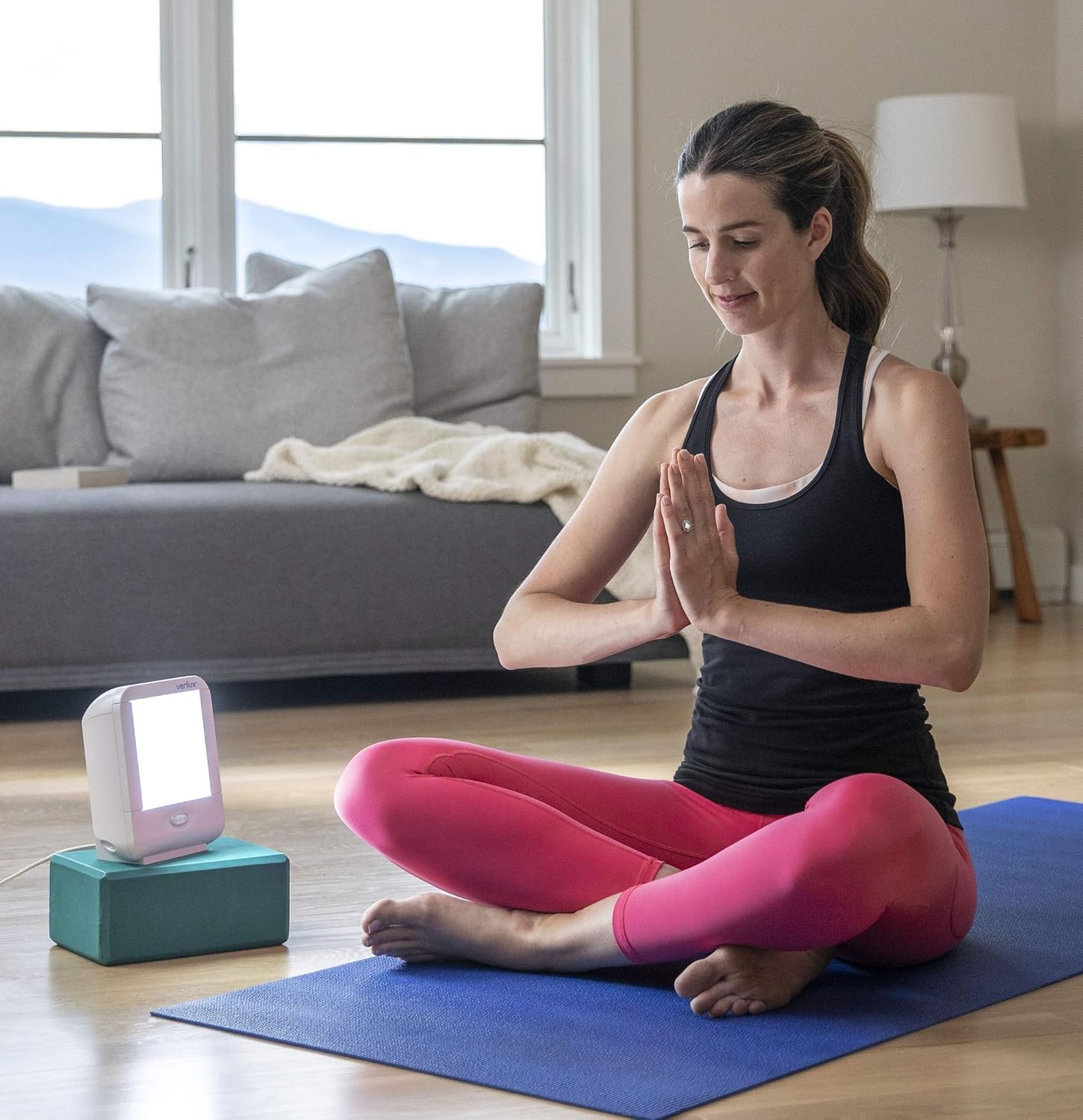
If you wake up before the sun, or if you live in a gloomy climate (hello, Seattle/London), you physically cannot do Tweak #1 without help. A standard lamp won’t cut it. You need 10,000 lux to trigger that cortisol wake-up signal. This is the gold standard for simulating that morning sun on your desk while you sip your coffee.
2. Cascade Mountain Tech Trekking Poles

For Tweak #3 (Optic Flow) and Tweak #6 (Green Exercise), having poles turns a walk into a full-body rhythmic movement. This is “Nordic Walking,” and it engages your upper body and core, increasing the metabolic demand without feeling harder. Plus, they add a rhythm that helps you zone out into that “soft gaze” state.
3. SKLZ Quick Ladder

Remember Tweak #2 (Sprints) and Tweak #4 (Coordination)? You don’t need a track field. Throwing this agility ladder down in your living room or driveway gives you an instant target for complex footwork drills. It forces your brain to focus intensely on where your feet are going, spiking that alertness and BDNF.
4. Yes4All Balance Pad

This is the perfect “intro” to proprioceptive training (Tweak #4) if you aren’t ready to walk backward down the street yet. Standing on this while brushing your teeth or doing your morning stretches forces your cerebellum to work overtime to stabilize you. It wakes up your nervous system before you even leave the house.
5. The Circadian Code by Satchin Panda, PhD
If you want to understand the “source code” for everything we talked about regarding light and timing, this is the manual. Dr. Panda is the leading expert on circadian rhythms. Reading this will convince you—with hard data—why that morning light exposure is non-negotiable for your memory and your waistline.