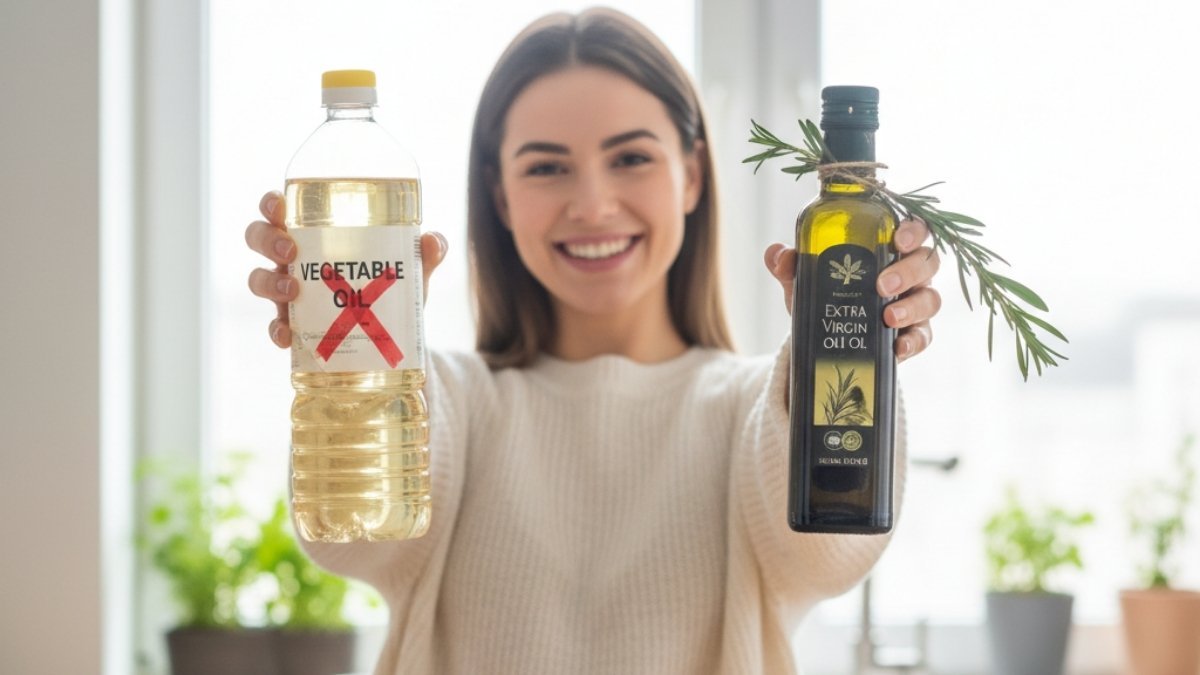
You know that moment in the grocery store aisle? You’re just trying to buy a bottle of cooking oil. For years, you heard “swap butter for vegetable oil, it’s heart-healthy!”. You did it. You bought the big, clear bottle of “vegetable oil” and felt good about it.
And now, suddenly, the internet is screaming that those same “healthy” oils are “toxic”. You see lists of the “hateful eight” seed oils that are supposedly causing chronic inflammation and a laundry list of modern diseases.
It’s confusing. It feels like nutritional whiplash.
So, let’s just take a breath. Let’s clear this up, you and me, with the actual science. Because the problem isn’t that these oils are “poison.” The problem is much quieter and, honestly, much easier to fix.
It’s not about poison. It’s about imbalance.
This whole complicated story really comes down to two main characters: Omega-6 (omega-6) and Omega-3 (omega-3).
Why This Even Matters: A Quick “What ‘s-the-Deal” with Inflammation

Omega-6s and Omega-3s are both polyunsaturated fatty acids, or PUFAs. Our bodies can’t make them, so they’re “essential”—we have to get them from food.
But here’s the key: they have different, and often opposing, jobs.
Think of it this way:
- Omega-6s (mostly from seed oils): These are, generally speaking, pro-inflammatory. They are your body’s “gas pedal” for inflammation.
- Omega-3s (mostly from fish, flax, walnuts): These are anti-inflammatory. They are the “brake pedal.”
Now, inflammation isn’t “bad.” You need it. When you get a cut, your body uses inflammation to protect you from infection and heal the wound. You need the gas pedal.
The problem is when the gas pedal is floored, 24/7, and the brake pedal is rusty and disconnected. This is chronic inflammation, and scientists now believe it’s a driving force behind many of our most serious modern diseases: heart disease, metabolic syndrome, diabetes, arthritis, and even some cancers.
This isn’t just a theory. A large-scale 2023 study that followed over 85,000 people found that a higher omega-6 to omega-3 ratio was strongly associated with higher mortality. Comparing those with the highest ratio to the lowest, researchers saw a 26% higher risk of total mortality, a 31% higher risk of cardiovascular mortality, and a 14% higher risk of cancer mortality.
And here’s the real gut-check: recent evidence from 2025 suggests a high omega-6 omega-3 ratio can actually lessen or cancel out the benefits of the omega-3 supplements you might be taking.
That’s right. You could be dutifully taking your fish oil, but if your diet is flooded with $\omega$-6s, it might not even matter. You can’t out-supplement an imbalanced diet.
How Did We Get Here? The 1,000-Fold Increase
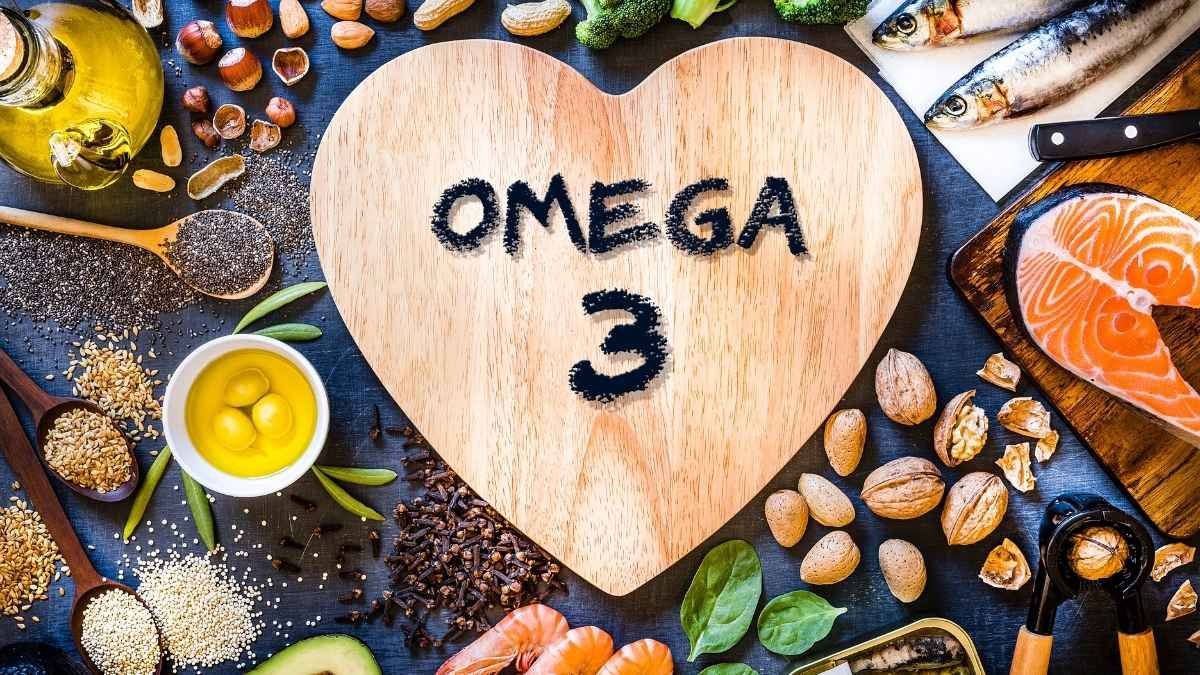
This is a modern problem. Our human ancestors are thought to have evolved on a diet with an omega-6 to omega-3 ratio of roughly 1:1.
Today, the typical Western diet has a ratio estimated between 15:1 and 20:1, with some researchers placing it as high as 50:1 in certain groups.
How did this happen? It’s not that complicated. It’s mostly one, single food: Soybean Oil.
During the 20th century, the per capita consumption of soybean oil in the U.S. increased by more than 1,000-fold. It went from 0.009 kg per person in 1909 to 11.64 kg in 1999.
Why? Because it’s incredibly cheap and versatile. It became the default fat for the entire food industry. It’s the “vegetable oil” in that big clear bottle. It’s in your salad dressing, your mayonnaise, your chips, your crackers, your frozen dinners, and it’s what most restaurants use for cooking and frying. This one oil is the main reason our diet is flooded with omega-6s.
In Simple Terms: The Factory Analogy
Think about why the ratio matters more than the absolute amount.
Imagine your body has a “factory” with a limited number of workers and machines (these are your enzymes). This factory processes both omega-6s and omega-3s to turn them into those active, signaling molecules.
- An omega-3 (ALA) comes in. The factory turns it into powerful anti-inflammatory products (like EPA and DHA).
- An omega-6 (LA) comes in. The factory turns it into pro-inflammatory products (like arachidonic acid).
In a 1:1 ancestral diet, the factory floor is balanced. But in our 20:1 modern diet, the factory is hit with a 20-to-1 flood of omega-6 “orders”. The workers and machines are completely overwhelmed, churning out pro-inflammatory products.
When that one little omega-3 “order” finally shows up, the workers are too busy. It gets lost, shunted aside, or just plain ignored.
This is a simple way of understanding that “attenuation” effect. You can’t just shove more omega-3s in the factory door. You must slow down the flood of omega-6s to give the good stuff a fighting chance.
Okay, So ALL Seed Oils are Bad? (Nope. Let’s Bust This Myth.)
This brings us to the “hateful eight” list that floats around the internet (canola, corn, cottonseed, soy, sunflower, safflower, grapeseed, and rice bran).
This is the laziest, most confusing part of the whole trend. Lumping all “seed oils” together is biochemically wrong. It’s not where the oil comes from (a seed) that matters. It’s the fatty acid profile inside.
Look at the data for yourself.
A Cheat Sheet: Not All Oils Are Created Equal
This table shows just how dramatically different these oils are. The “swap” we’re talking about is moving from the oils at the top of this list to the oils at the bottom.
| Oil Name | Approx. ω-6:ω-3 Ratio | Primary Use / Note |
|---|---|---|
| High $\omega$-6 Problem Oils | ||
| Grapeseed Oil | 696:1 | Cooking, Dressings |
| Safflower Oil (Regular) | 133:1 | Cooking, Dressings |
| Sunflower Oil (Regular) | 125:1 | Cooking, Processed Foods |
| Corn Oil | 83:1 or 50:1 | Cooking, Processed Foods |
| Soybean Oil | 8:1 | Cooking, Processed Foods |
| Neutral / Better Oils | ||
| Olive Oil | ~12:1 | Cooking, Dressings (High in MUFA) |
| Canola Oil | 2:1 | All-Purpose Cooking |
| High $\omega$-3 Solution Oil | ||
| Flaxseed Oil | 1:4 | Cold Use Only (Finishing, Dressings) |
The “Cold” Swap: Your New Secret Weapon
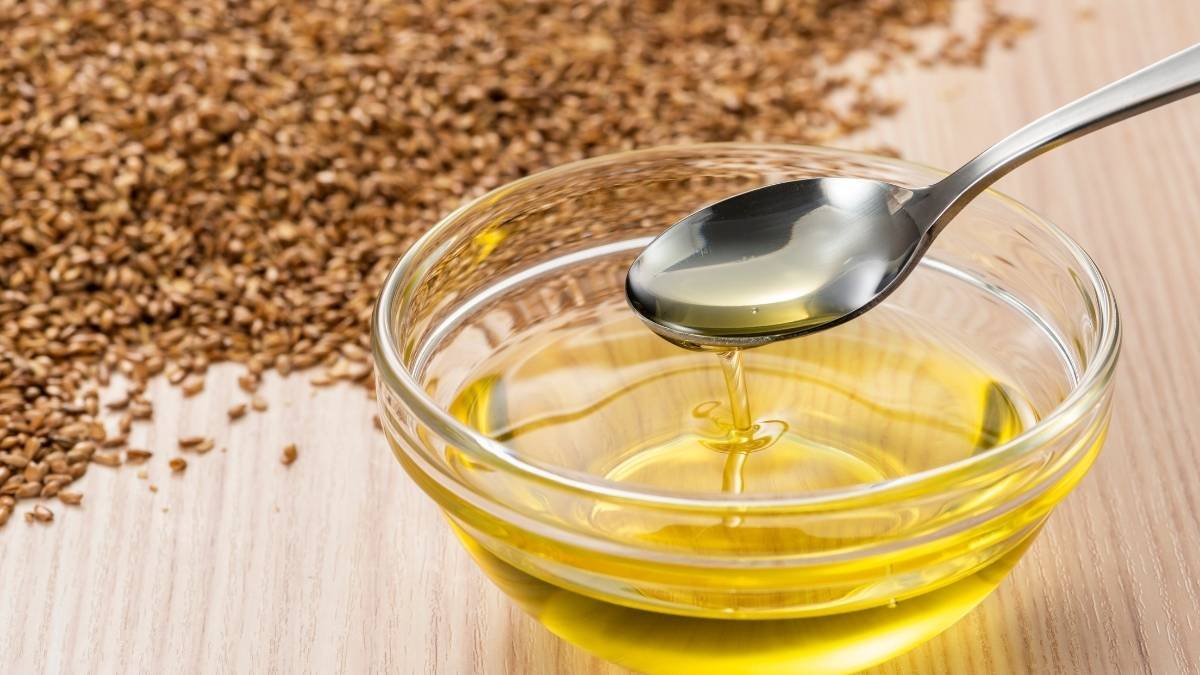
So, here’s the first and most powerful part of the swap. We need to introduce a new oil to your kitchen.
Meet Flaxseed Oil.
This stuff is the most potent, common plant-based source of the essential omega-3 fatty acid, alpha-linolenic acid (ALA). Look at its ratio: 1:4 (omega-6:omega-3). It’s the mirror image of the problem oils. It doesn’t just stop adding to the problem; it actively reverses it by flooding your “factory” with the good stuff.
The effects are measurable. In one 1995 study, subjects who were given flaxseed oil for 23 days more than doubled their levels of EPA (a key anti-inflammatory molecule) and saw a significant decrease in platelet aggregation—a risk factor for blood clots.
The One Big Rule: You CANNOT Cook With This
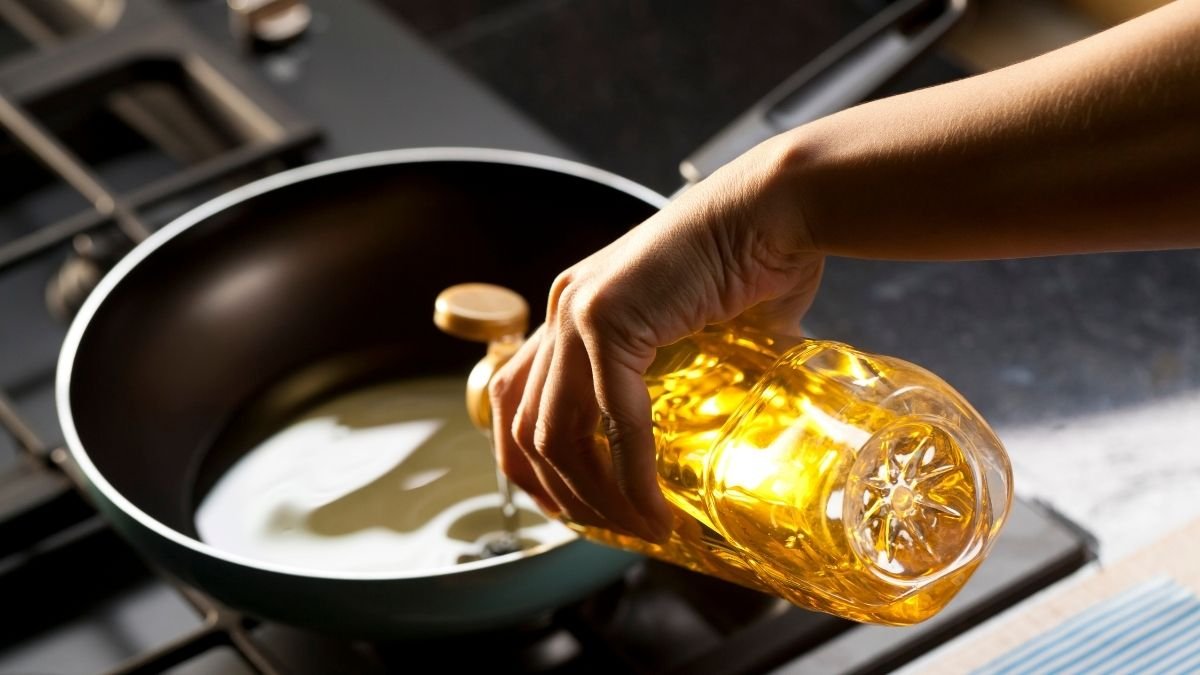
This is the non-negotiable part. You must treat flaxseed oil as a “finishing oil,” not a “cooking oil.”
It has a very low smoke point, around 225°F. The very $\omega$-3s that make it so healthy also make it incredibly unstable. Heat, light, and air all damage it (a process called oxidation).24 Heating it doesn’t just destroy the benefits; it can create harmful compounds.
- How to Use (Cold Applications):
- Use it as the base for salad dressing.
- Drizzle it into a smoothie or a protein shake.
- Pour it over your food after it’s cooked—on vegetables, potatoes, or grains.
- How to Store (Prevent Rancidity):
- It must be stored in the refrigerator. No exceptions.
- Buy it in a small, opaque (dark) bottle to protect it from light.
- Keep the lid tightly sealed to protect it from air.
Okay, So What Do I Actually Cook With?

If flax oil is the “cold” swap, we still need a “hot” swap. This is the oil that replaces that big bottle of corn or soybean oil next to your stove.
Here’s the catch: it’s not just flax oil that’s unstable. Many of those high-omega-6 oils, like regular sunflower and corn oil, are also unstable when heated. When you fry with them, they can release nasty toxic compounds called aldehydes, which are linked to cell damage.
So, your ideal cooking oil is:
- Low in pro-inflammatory omega-6s.
- High in monounsaturated fats (MUFAs).
MUFAs (the main fat in olive and avocado oil) are way more chemically stable. They resist heat and oxidation, making them a much safer choice for cooking.
The Great Sunflower Seed ‘Myth’
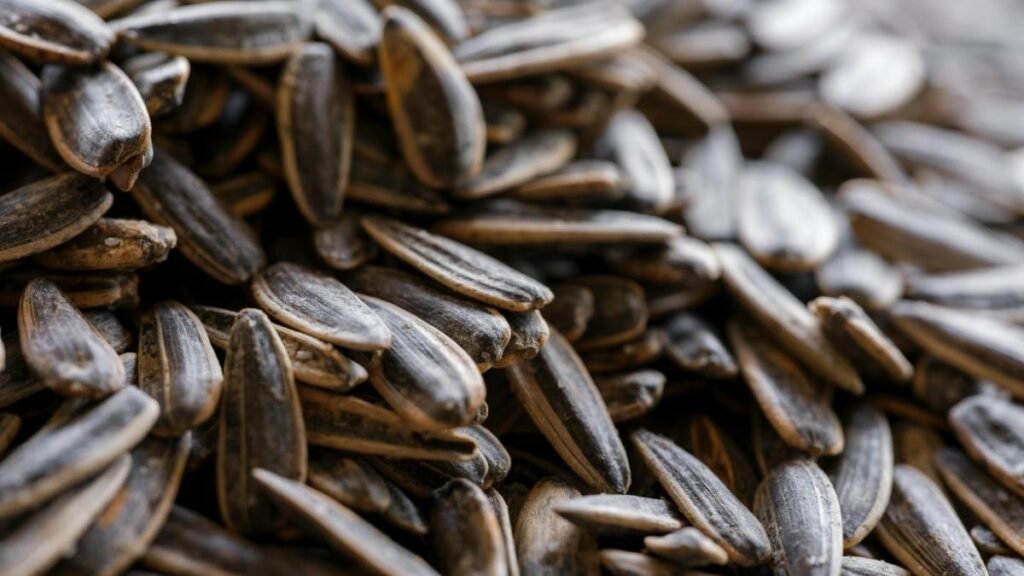
This is where that “hateful eight” list is so unhelpful. You see “Sunflower Oil” on the bad list with a 125:1 ratio. But then you see “High-Oleic Sunflower Oil” on the shelf.
These are not the same product.
- Traditional Sunflower Oil: This is the high-$\omega$-6 (high-linoleic) one. Avoid it.
- High-Oleic Sunflower Oil: This comes from a different variety of sunflower, one specially bred to be high in stable monounsaturated fat.
This high-oleic version is a fantastic cooking oil. It’s super stable, has a high smoke point (450°F), and a completely different profile: as much as 83.7% healthy MUFAs and as little as 3.6% inflammatory omega-6s.
Re-evaluating Canola Oil (The Big Misunderstanding)
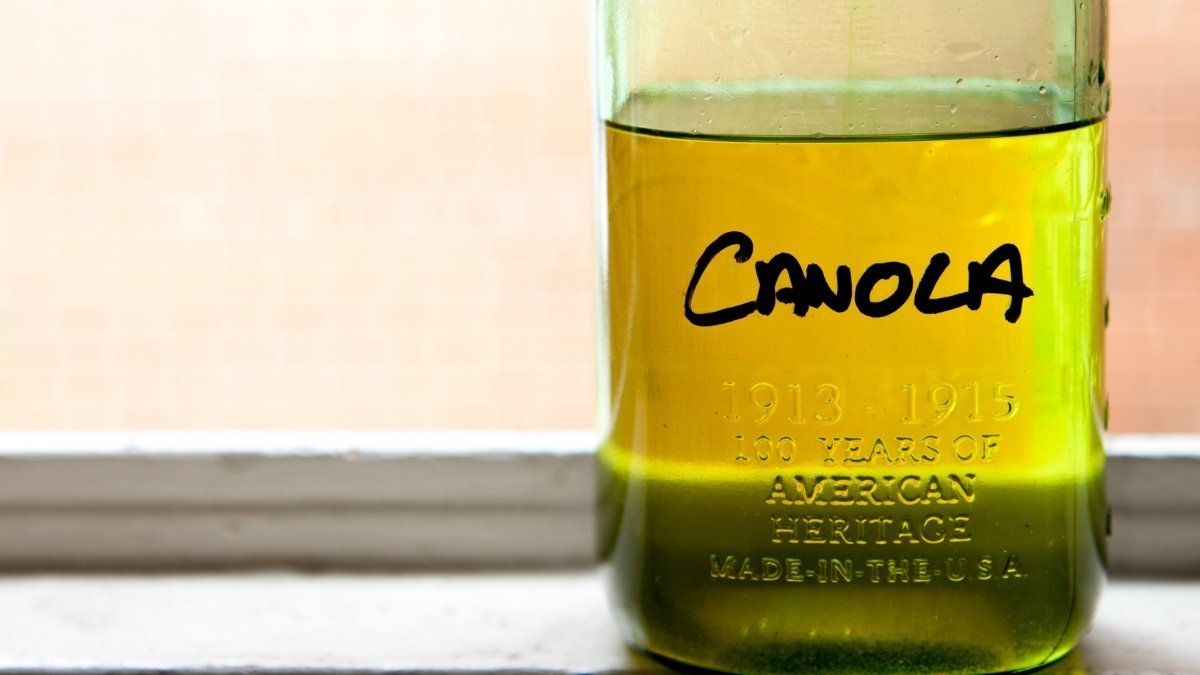
And now for the most demonized oil of all: canola. Let’s just address the claims head-on.
- The Claim: “It’s processed with hexane, a chemical solvent! It’s refined with high heat that creates trans fats!”.
- The Reality Check: Yes, it’s a refined, bleached, and deodorized (RBD) oil. But expert analysis concludes the trace levels of hexane (which is used to extract most vegetable oils) are “very little reason for concern”. The high-heat process does create a very small amount of trans fat and reduce some of the omega-3s.
But… you have to look at the final product you’re actually buying. Its nutritional profile is, frankly, excellent:
- Ideal Ratio: It has a near-perfect omega-6:omega-3 ratio of 2:1.
- Low Saturated Fat: It’s the lowest of all common oils at just 7%.
- High in MUFAs: It’s packed with 63% stable monounsaturated fats.
- Source of omega-3: It’s one of the best sources of plant-based omega-3 ALA (9-11%), second only to flax.
Because of this strong profile, a growing body of evidence supports canola oil as a “health-promoting component of the diet”. It has a good smoke point (around 400°F) and it’s affordable. It is a fantastic, balanced, all-purpose cooking oil.
Your 3-Step Pantry Makeover. (You Can Do This Today.)

This isn’t about fear. It’s about making a few smart, quiet swaps. Here’s the game plan.
Step 1: Identify and Replace (The “Hidden” Swap)
This is the single most important step. The real problem isn’t the oil you’re using at home; it’s the oil hidden in everything else.
As registered dietitian Julia Zumpano from the Cleveland Clinic puts it, “Most seed oils are utilized in the form of packaged foods, fast foods and eating out… and that’s where most of the danger lies”.
She nails it with this quote: “When people say they’re cutting seed oils from their diet, what they really end up doing is cutting out many processed foods… it’s less about the seed oils themselves and more about the fact that they’re so often found in ultra-processed foods”.
- Your Action: Go on a “label-reading” mission. Check your salad dressings, mayos, crackers, chips, and frozen meals. If “soybean oil,” “corn oil,” “cottonseed oil,” or “vegetable oil” is one of the first few ingredients, find an alternative.
Step 2: Swap Your Cooking Oil (The “Hot” Swap)
- Your Action: Stop buying regular corn oil, soybean oil, generic “vegetable oil,” and regular (high-linoleic) sunflower/safflower oil.
- Your Action: Replace them with a new “workhorse” cooking oil.
- For High-Heat Searing/Frying: Refined Avocado Oil, Refined High-Oleic Sunflower Oil.
- For All-Purpose Sautéing/Baking: Canola Oil or Extra Virgin Olive Oil.
Step 3: Add Your Finishing Oil (The “Cold” Swap)
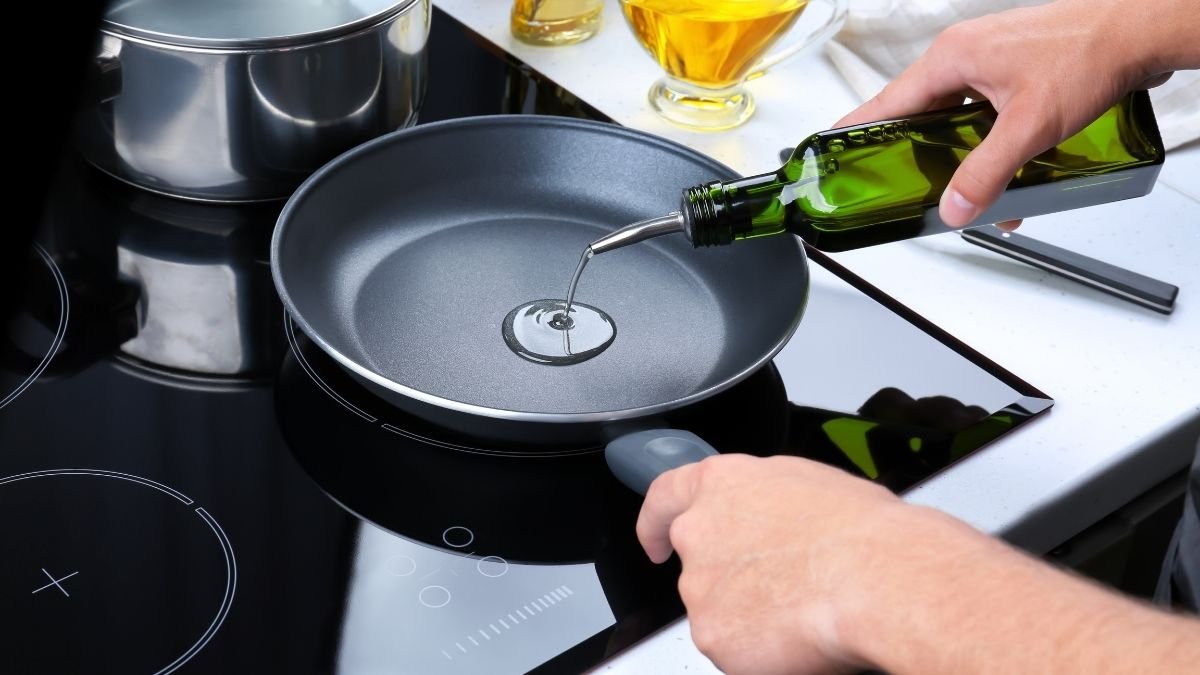
- Your Action: Buy a small, opaque bottle of cold-pressed flaxseed oil.
- Your Action: Put it in your refrigerator as soon as you get home.
- Your Action: Get in the habit of adding one teaspoon to one tablespoon to your daily smoothie, your salad, or just drizzled over your dinner.
TABLE 2: Your New Pantry: A ‘Swap This, For That’ Cheat Sheet
🍳 Healthy Cooking Oil Swaps: Balance Your Omega Ratio 🥑
| Cooking Method | Ditch This (High $\omega$-6) | Use This Instead (Better Swap) | Why? (The Health Advantage) |
|---|---|---|---|
| High-Heat Frying/Searing 🔥 | Corn Oil, Soybean Oil, Regular Sunflower Oil | Refined Avocado Oil, Refined High-Oleic Sunflower Oil | High Smoke Point (450°F+), high in stable MUFAs (Monounsaturated Fatty Acids). |
| General Sautéing/Baking 🧈 | “Vegetable Oil” (Soybean/Corn) | Canola Oil, Extra Virgin Olive Oil | Good Smoke Point (375-400°F), high in MUFAs, and a more balanced omega ratio. |
| Salad Dressings/Dips 🥗 | Soybean Oil, Grapeseed Oil | Flaxseed Oil, Extra Virgin Olive Oil | Powerful 1:4 (omega-6:omega-3) ratio to help correct the modern dietary imbalance. |
| Smoothies/Finishing ✨ | (N/A – Avoid High omega-6 Here Too) | Flaxseed Oil | The easiest way to add anti-inflammatory omega-3 ALA to your day. |
So, Are Seed Oils “Toxic”? Let’s Be Real.
A sober look at the evidence just doesn’t support the “toxic” label. This fear-mongering narrative is at odds with what top-level nutrition scientists are saying.
- Dr. Matti Marklund (Johns Hopkins): “There is abundant evidence suggesting that seed oils are not bad for you. If anything, they are good for you… The fatty acids typical in seed oils—like linoleic acid—are associated with lower risk of chronic diseases like cardiovascular disease, heart attack, strokes, and diabetes”.
- Dr. Christopher Gardner (Stanford): “It’s so odd that the internet has gone wild demonizing these things. They are not to be feared”.
Dr. Gardner clarifies that omega-6 fats aren’t “pro-inflammatory” in a vacuum; it’s just that omega-3s are more anti-inflammatory. Your body needs both.
The true villain isn’t the oil itself, but its context. All the experts agree: the real problem is the overconsumption of ultra-processed foods (UPFs), which are loaded with sodium, added sugars, and, yes, high-omega-6 oils. The oil is just one part of an unhealthy package.
As Dr. Gardner says, when you use these oils to… say… make a vegetable stir-fry, they “are helping you enjoy more healthy foods”.
The Takeaway: You’re Not Afraid, You’re Just Rebalancing
You don’t need to live in fear of your pantry. The goal is not elimination; it is rebalancing.
Our ancestral 1:1omega 6 omega-6 3 ratio got distorted into a 20:1 mess, largely driven by that >1000-fold spike in soybean oil hidden in our food supply. This imbalance, not an inherent “toxicity,” creates a biological environment that favors chronic inflammation.
The solution is a simple, quiet, two-part strategy—a single “swap” in concept:
- Reduce the “Hot” omega-6: Swap your high-ratio cooking oils (soybean, corn, regular sunflower) for more stable, high-MUFA oils (like high-oleic sunflower) or balanced-ratio oils (like canola). This stops adding to the problem.
- Add the “Cold” omega-3: Add a small, refrigerated bottle of flaxseed oil as a “finishing oil” for your salads, smoothies, and vegetables. This actively fixes the problem.
That’s it. No fear, no “hateful” lists. Just a simple, evidence-based swap to take back control of your health and shift your body back toward a state of balance.
Want to Make the Swap? Here’s a Little Help.
Okay, I get it. All this talk about “high-oleic” this and “cold-pressed” that can make the grocery store feel like a final exam. You just want to grab the right bottle and get on with your day. To make it a little easier, here are a few highly-regarded products that fit the “swap” we’ve been talking about. This isn’t an exhaustive list, but it’s a great place to start.
1. For the “Cold” Swap (Finishing Oil): Barlean’s Organic Lignan Flax Oil

This is the quintessential “cold” oil we talked about. It’s organic, cold-pressed, and known for its quality. This is the one that must live in your fridge and is only for non-heat uses: think smoothies, salad dressings, or drizzling over yogurt or oatmeal.
2. For the “Hot” Swap (High-Heat Cooking): Chosen Foods 100% Pure Avocado Oil

This is your new high-heat workhorse. It’s consistently named a “Best Overall” pick because it’s 100% pure and naturally refined, giving it a very high smoke point that’s perfect for searing, roasting, and frying. This is what you use when you need serious heat.
3. For the “Hot” & “Cold” (All-in-One): Graza “Drizzle & Sizzle” Extra-Virgin Olive Oil Set

This duo perfectly captures the whole concept. “Sizzle” is their all-purpose cooking EVOO in a convenient squeeze bottle, and “Drizzle” is their more flavourful, higher-antioxidant finishing oil. It’s a great way to visualize the two-part approach for your counter.
4. For the “Hot” Swap (Everyday Cooking): California Olive Ranch Everyday Extra Virgin Olive Oil

If you just want one great, reliable, all-purpose olive oil, this is a “Best Overall” pick for everyday cooking. Its flavor is balanced, making it a go-to for sautéing, roasting vegetables, or baking.
5. For the “Cold” Swap (Finishing EVOO): La Tourangelle Organic Smooth & Fruity Extra Virgin Olive Oil
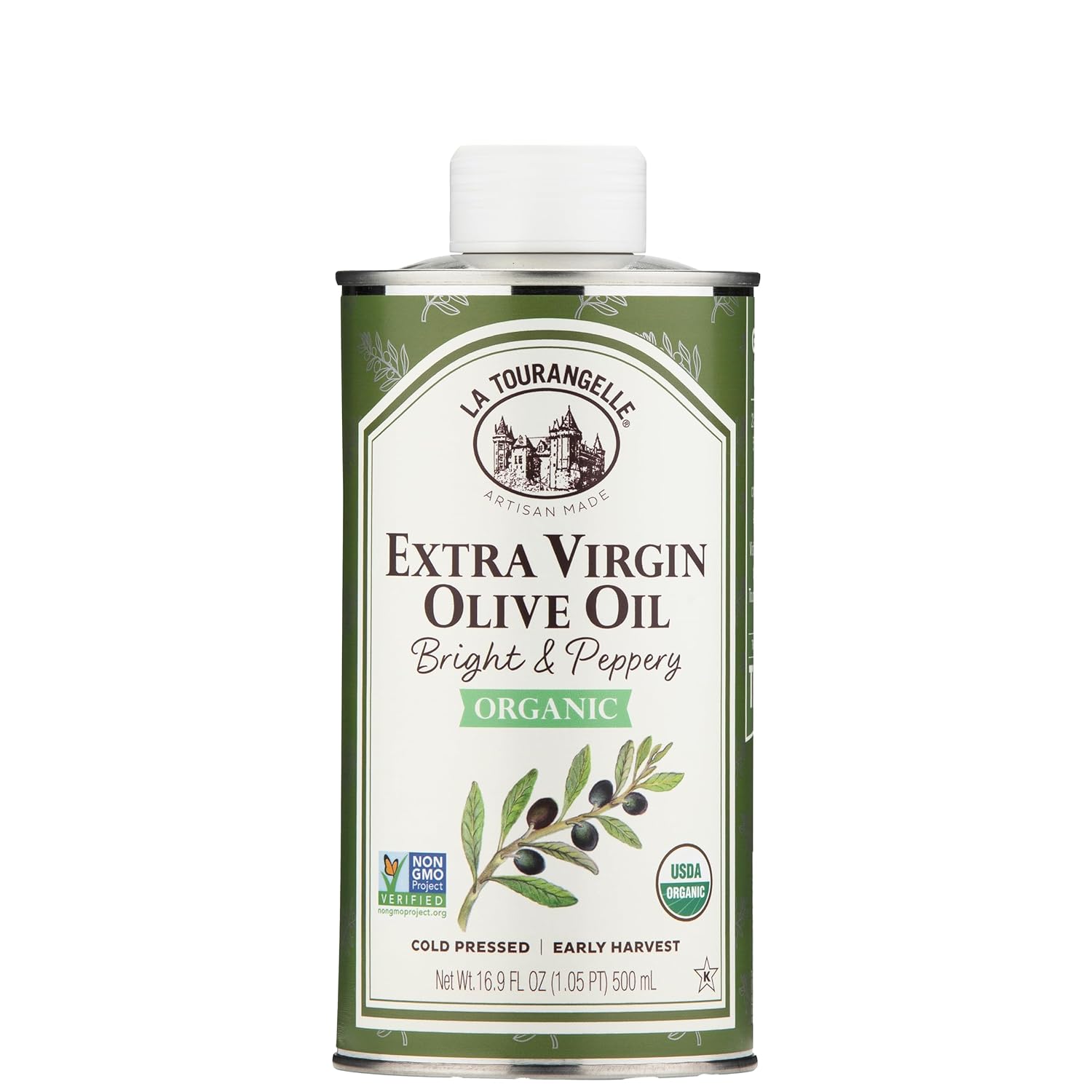
If you want a dedicated organic finishing oil for salads and dipping bread, this one is often highlighted as a “Best Finishing Oil”. It has that smooth, fruity, flavourful profile you want for raw applications.